Fabric Grain, Nap and One-Way Cutting for Apparel
Grainline, fabric structure, surface direction and motif direction are separate controls. Learn how brands record them before one-way marker planning and sample approval.
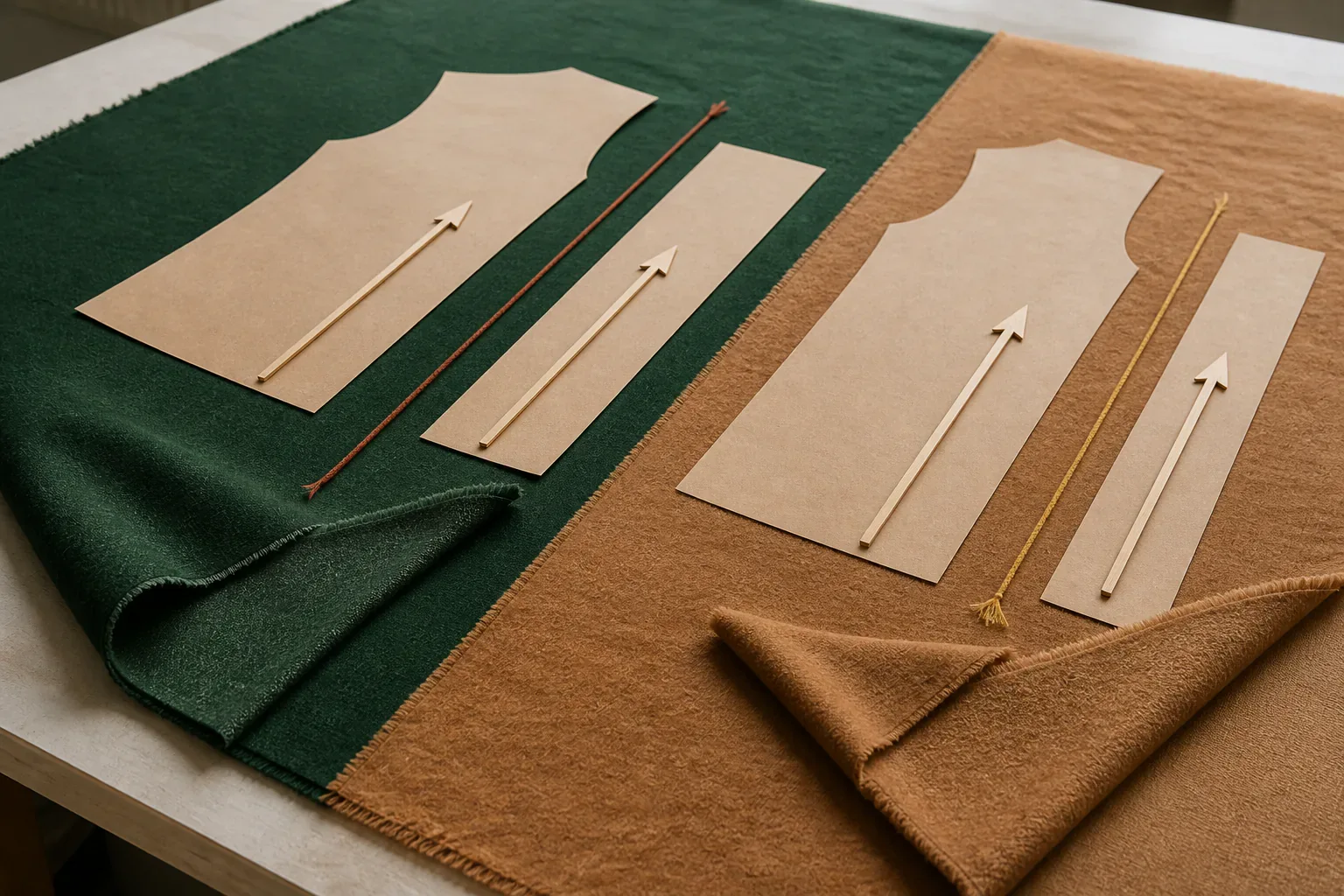
For apparel cutting, a brand should approve a direction map—not merely write “cut on grain.” The map identifies fabric face and back, structural directions, each pattern piece's grainline, any nap or surface direction, any one-way motif, and the pairing rule for left/right components. Those controls then travel into the marker, lay, cut-panel check and production-intent sample.
Grain, nap and print direction are related but not interchangeable. A piece can follow its approved grainline while its motif points upside down. Two pieces can share a motif direction while one is cut from the wrong fabric face. A marker can be geometrically tight but invalid because a direction-sensitive piece was rotated.
This is a factory-development guide, not a home-sewing layout tutorial. The cutting-machine guide owns equipment and execution; the marker-efficiency guide owns utilization and KPI comparability.
Use Five Separate Direction Controls
| Control | What it identifies | Approval question |
|---|---|---|
| Fabric face and back | Which surface is intended to face outward or inward | Is every component cut from the approved face, including mirrored pairs? |
| Structural direction | Warp/weft for a woven or wale/course for a knit | Which axis is the pattern grainline referencing? |
| Pattern-piece grainline | Approved orientation of that piece on the material | Is rotation allowed, prohibited or limited by an approved rule? |
| Nap or surface direction | Directional pile, brushing, sheen or texture response | Must all visible pieces run the same way? |
| Motif and pairing direction | Up/down print, plaid/stripe match and left/right relationship | Which points must align, mirror or remain upright? |
ISO 3572:1976, currently under systematic review, provides formal weave vocabulary including warp, weft or filling, face and back. That vocabulary describes fabric structure. It does not decide how a designer intends one garment piece to hang, where a plaid should match or whether a napped surface must run one way.
A pattern grainline is therefore a design and engineering instruction applied to a known material. Original research on computational garment patterns treats grain alignment and woven-fabric anisotropy as explicit fabrication constraints rather than decoration. The pattern, material and intended garment behavior have to be reviewed together.
Grainline Is Not the Selvedge Alone
A straight selvedge can help identify roll direction, but it does not prove that every yarn, course or printed line is geometrically straight across the usable width. Fabric can contain bow or skew, and a printed geometry can depart from the underlying structure.
ASTM D3882-08(2025) covers bow and skew in filling yarns of woven fabrics, courses of knitted fabrics and printed geometric designs. Its public significance statement notes that manufacturing and finishing tensions can induce bow or skew, and that distortion can be especially visible in plaids and horizontal stripes. This matters before cutting: aligning a pattern only to a distorted visible stripe may not answer the same question as aligning it to the intended structural direction.
Keep these records distinct:
- roll direction and technical face/back;
- structural yarn or loop direction;
- observed bow, skew or print distortion;
- approved pattern-piece grainline;
- permitted orientation or tilt, if any; and
- motif match and placement points.
Do not “correct” the marker by eye when the material itself is distorted. Hold the affected roll or sample, measure under the agreed route and let the responsible parties decide whether the material, pattern instruction or visual match rule controls.
Nap and Surface Direction Can Change Appearance
Nap is a directional surface effect created by raised fibers, pile or brushing. Corduroy, velvet-like pile, brushed flannel and some fleeces can appear lighter, darker, smoother or rougher when viewed or stroked in opposite directions. Even without a high pile, directional sheen or finishing marks can create a one-way visual response.
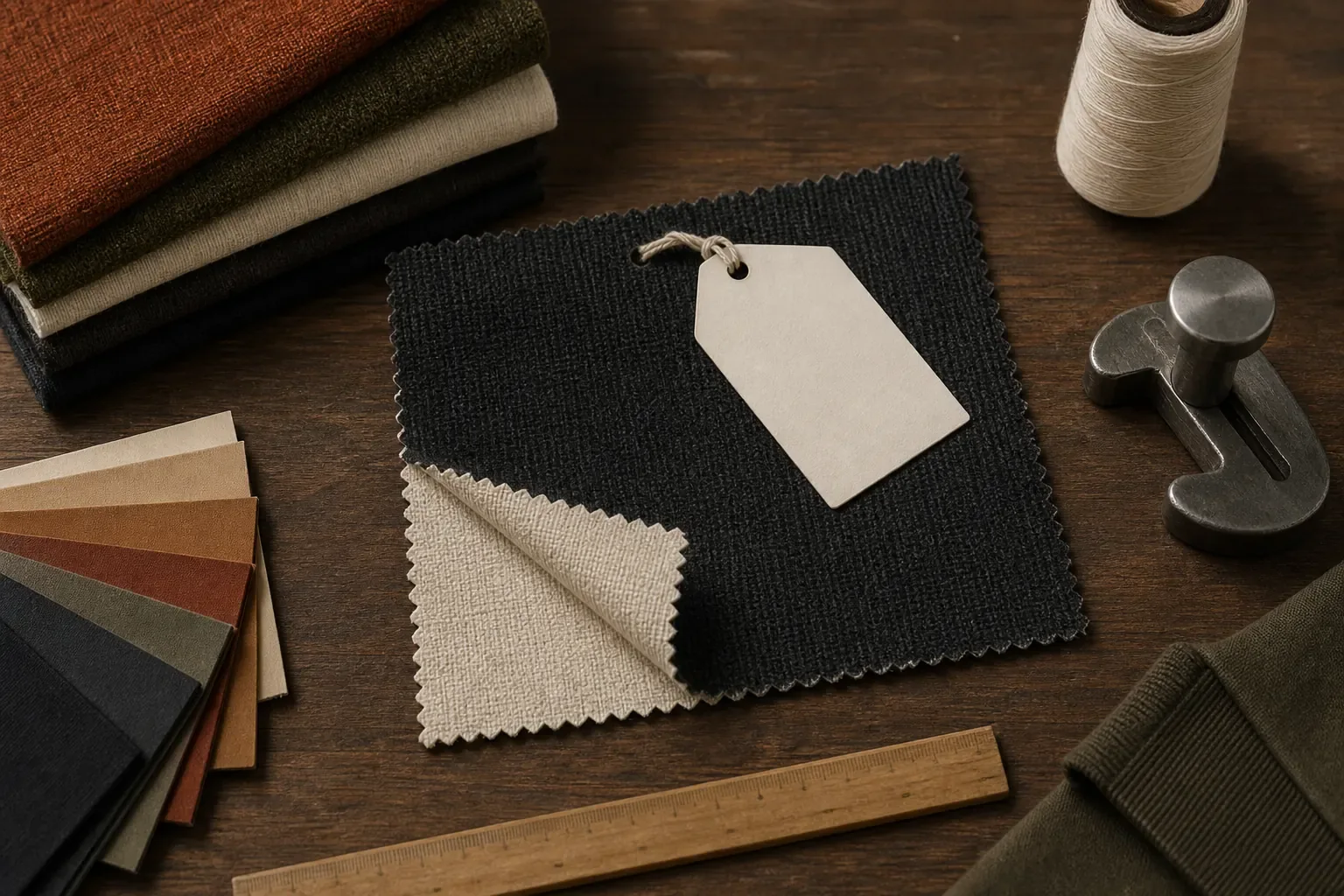
Test the production-intent material rather than assigning direction from a trade name. Mark a full-width swatch with roll direction, face/back and two ends; turn one half 180 degrees under the intended viewing light; then record whether the difference is visible and which direction the approved sample uses. Repeat after the intended finish or wash if that exposure could alter the surface.
For corduroy, direction is only one part of the material record. The corduroy rib-scale guide shows how to pair the actual wales per inch with the identified swatch and garment-level matching decisions.
A corduroy-collar work-jacket reference shows why shell and napped trim need separate arrows. A plaid flannel-shirt reference adds line matching and an up/down relationship. A camouflage cargo-shorts reference adds print orientation and paired panels.
These links are visual design references only. Their product names or images do not establish composition, grain tolerance, nap direction, print repeat or approved cutting rule for another project.
What One-Way Cutting Actually Constrains
A one-way marker keeps direction-sensitive pattern pieces in the approved head-to-tail orientation. That may be required for a directional nap, an asymmetric motif, engineered artwork, shading response or another documented surface condition. It reduces the rotations available to the marker planner; it does not by itself specify a machine, spreading mode or acceptable utilization.
One-way can mean different things, so write the rule:
| Rule | What stays controlled | What remains open |
|---|---|---|
| All visible pieces one direction | Every named outer piece shares the approved top-to-bottom surface direction | Hidden components may need their own decision |
| Motif one direction | Artwork or repeat remains upright on named pieces | Nap may still need a separate rule |
| Pairing rule | Left/right pieces are mirrored from the approved face and direction | Nested geometry must still preserve piece identity |
| Match-point rule | Stripe, plaid or repeat meets at named seams or landmarks | Unnamed seams are not automatically matched |
| Controlled exception | A named component may rotate under an approved reason | The exception does not authorize other pieces to rotate |
An original summer-dress marker study found that a nap-one-way plan affected fabric utilization in that case, but the magnitude belongs to that style, fabric width and pattern set. Do not convert one case study into a universal penalty. Ask for the actual marker basis and compare only like-for-like alternatives.
Grain Approval and Marker Efficiency Are Different Decisions
An off-grain rotation can sometimes create a numerically denser layout. That does not make it acceptable. A 2008 study by Dirgar, Kansoy and Kırtay examined fabric-usage effects of tilting pattern pieces off grain; its premise itself separates fabric utilization from appearance and fit constraints. Any permitted tilt must come from a documented product decision, not an operator improvisation after seeing the marker.
The order of decisions should be:
- Approve material identity, face, structural direction and surface/motif behavior.
- Approve the pattern and grainline for every piece.
- Define one-way, pairing, matching and any named exceptions.
- Build a marker within those constraints and the verified usable width.
- Evaluate utilization without removing an approved product constraint.
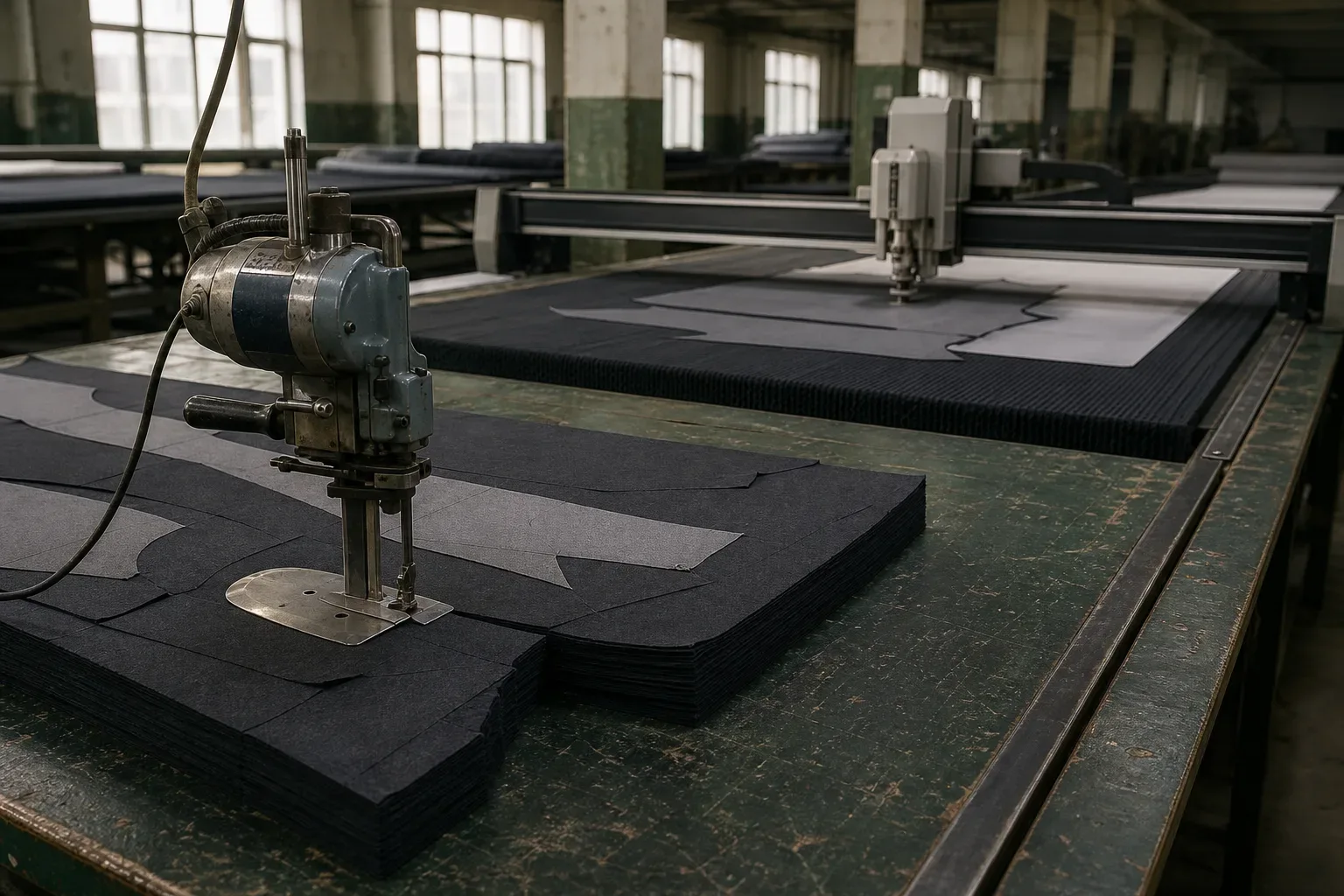
- Cut a controlled set and compare panel identity, direction and notches.
- Assemble and expose the production-intent sample to the intended finish or wash.
A higher efficiency figure cannot overrule the approved grainline. Conversely, “one way” should not become a vague reason for unexplained fabric use. The marker owner should show which real constraints were active.
Build the Direction Map Before the Marker
The map can live in the tech pack or controlled pattern data. For every pattern piece, record:
- piece name, pattern ID, size and revision;
- cut quantity and whether a mirrored pair is required;
- approved grainline and any permitted rotation;
- material and color application;
- face-up/face-down or face-pairing rule;
- nap, sheen or brushing direction;
- print or motif top and repeat reference;
- stripe, plaid or artwork match points; and
- approved exception, owner and date.
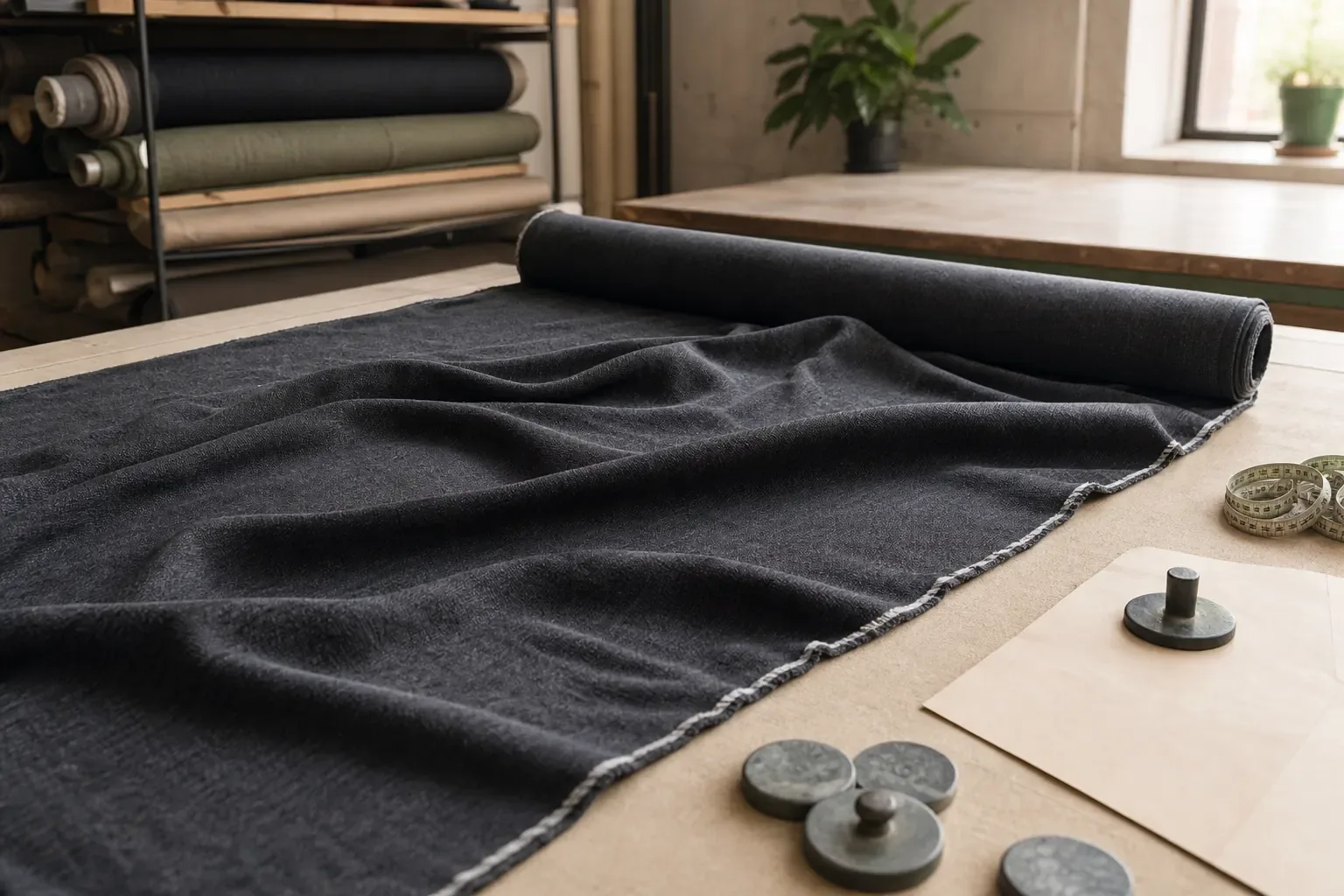
The fabric-swatch checklist explains how to mark face/back and warp/weft or wale/course on the physical material. The fabric-relaxation guide owns the tension-free pre-cut state and usable-width release. These inputs should be resolved before a marker is treated as production-ready.
ISO 22198:2006 specifies determining fabric width and length in a tension-free relaxed state. ASTM D3774-18(2024) covers full width and usable width for woven or knitted fabric. Neither standard sets a garment grainline, but both show why the width and material state attached to the marker must be explicit.
Verify the Rule at Four Gates
Material gate: mark the roll and approved swatch, then identify distortion, nap, motif and usable width. Pattern gate: check every piece's grainline, pairing and quantity. Marker/cut gate: verify no prohibited rotations, face reversals or unmatched references; retain marker ID and revision with cut bundles. Sample gate: compare hang, symmetry, panel shade/sheen, motif direction, matched landmarks and post-finish behavior.
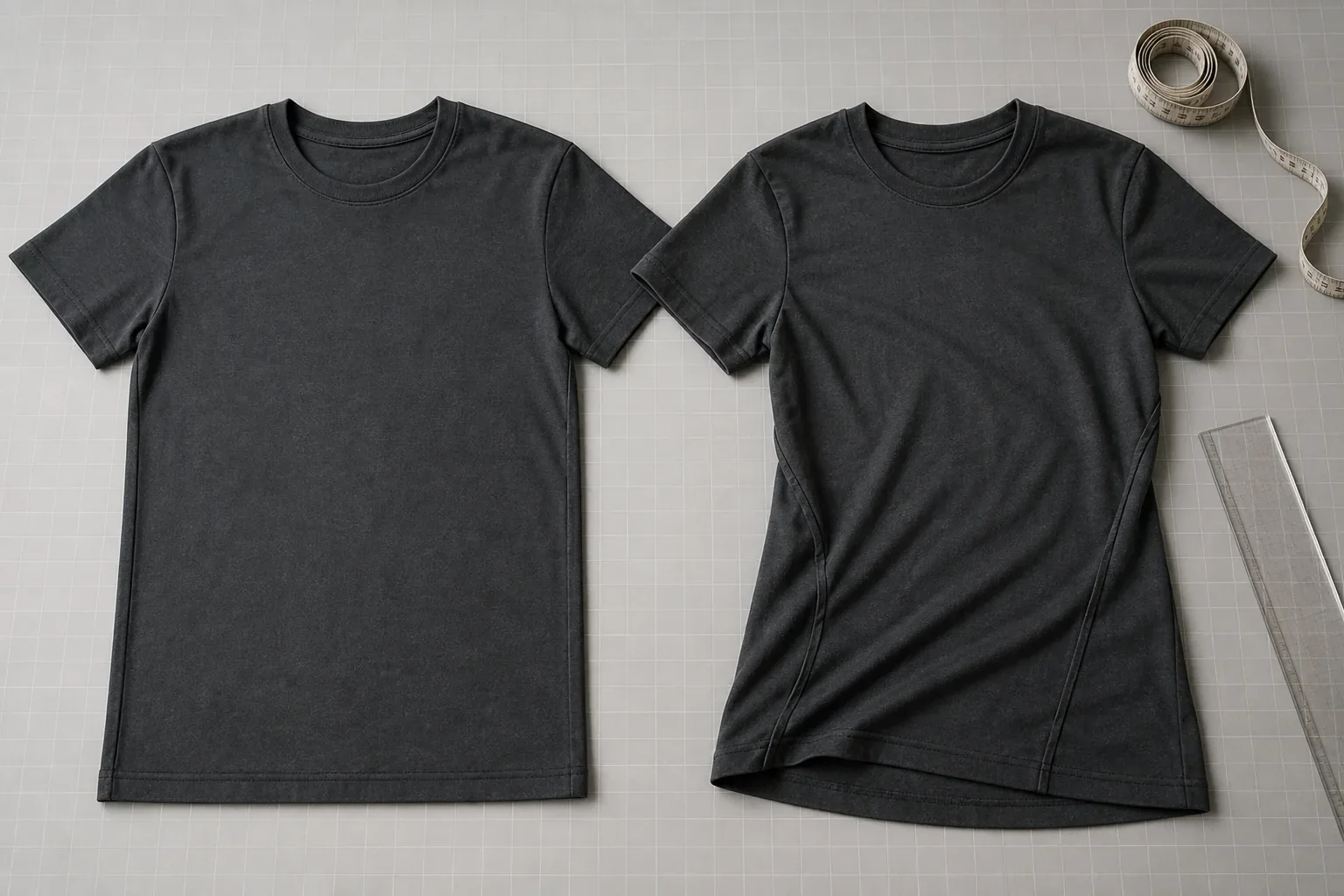
When a failure appears, preserve its geometry. A whole body that rotates after laundering is not automatically a cutting error; use the side-seam-twist guide to separate material skew, spirality, assembly displacement and dimensional change. A local upside-down motif with otherwise stable geometry points to a different control failure.
What Jiashun Can Review
Jiashun can review the approved pattern, material face and direction, nap or motif behavior, one-way and matching requirements, usable width and production-intent sample within a custom cut-and-sew project. The correct rule depends on the actual fabric, design and approved pattern.
Jiashun does not publish one grain tolerance, one marker penalty or a promise that every directional material can be rotated for savings. Send the fabric swatch or roll reference, tech pack, pattern revision, artwork/repeat file and any matching requirement so the direction map can be agreed before bulk cutting.
Frequently Asked Questions
What is fabric grain in apparel cutting?
Fabric grain refers to structural direction in the material, such as warp and weft in a woven. A garment pattern adds an approved grainline showing how each piece should orient to that structure. The two records must be connected but should not be confused with nap or print direction.
Is nap direction the same as grainline?
No. Grainline controls pattern orientation relative to fabric structure. Nap describes a directional surface response. A piece may be on its approved grainline and still show the opposite nap direction, so both controls belong in the cutting brief.
When is a one-way marker needed?
Use one when the approved product requires named pieces to share a top-to-bottom direction because of nap, sheen, motif, engineered artwork or another verified surface condition. Define which pieces and exceptions are included instead of applying the phrase without a map.
Can pattern pieces be rotated to improve marker efficiency?
Only within an approved orientation rule. A numerical gain does not authorize off-grain cutting, reversed nap, upside-down motifs or broken match points. Evaluate a proposed exception on controlled samples and record who approved it.
How can a brand check grain and nap before bulk cutting?
Approve a marked full-width material reference, a piece-by-piece direction map and the constrained marker. Then inspect identified cut panels and a production-intent sample for face, orientation, pairing, motif matching, hang and post-finish behavior.
References
- International Organization for Standardization, ISO 3572:1976, Textiles — Weaves — Definitions of general terms and basic weaves — official vocabulary scope and current review state; retrieved 2026-08-10.
- ASTM International, ASTM D3882-08(2025), Standard Test Method for Bow and Skew in Woven and Knitted Fabrics — bow/skew scope, sources and patterned-fabric implications; retrieved 2026-08-10.
- International Organization for Standardization, ISO 22198:2006, Textiles — Fabrics — Determination of width and length — tension-free relaxed-state width/length scope; retrieved 2026-08-10.
- ASTM International, ASTM D3774-18(2024), Standard Test Method for Width of Textile Fabric — full and usable width for woven and knitted fabrics; retrieved 2026-08-10.
- Dirgar, Kansoy and Kırtay, The Effect of Tilting Patterns Off-Grain on Fabric Usage Amount, Textile and Apparel 18(2), 2008 — original study separating grain constraints from utilization experiments; retrieved 2026-08-10.
- Pietroni et al., Computational Pattern Making from 3D Garment Models, 2022 — original research treating grain alignment and anisotropic woven behavior as fabrication constraints; retrieved 2026-08-10.
- Enes and Kipöz, The Role of Fabric Usage for Minimization of Cut-and-Sew Waste Within the Apparel Production Line: Case of a Summer Dress, Journal of Cleaner Production 248, 2020 — original case study including a nap-one-way marker condition; retrieved 2026-08-10.