Garment Marker Efficiency: What Brands Should Ask About
Marker efficiency is meaningful only with its pattern set, usable width, length and direction constraints. Learn what a clothing brand should compare before approving fabric use.
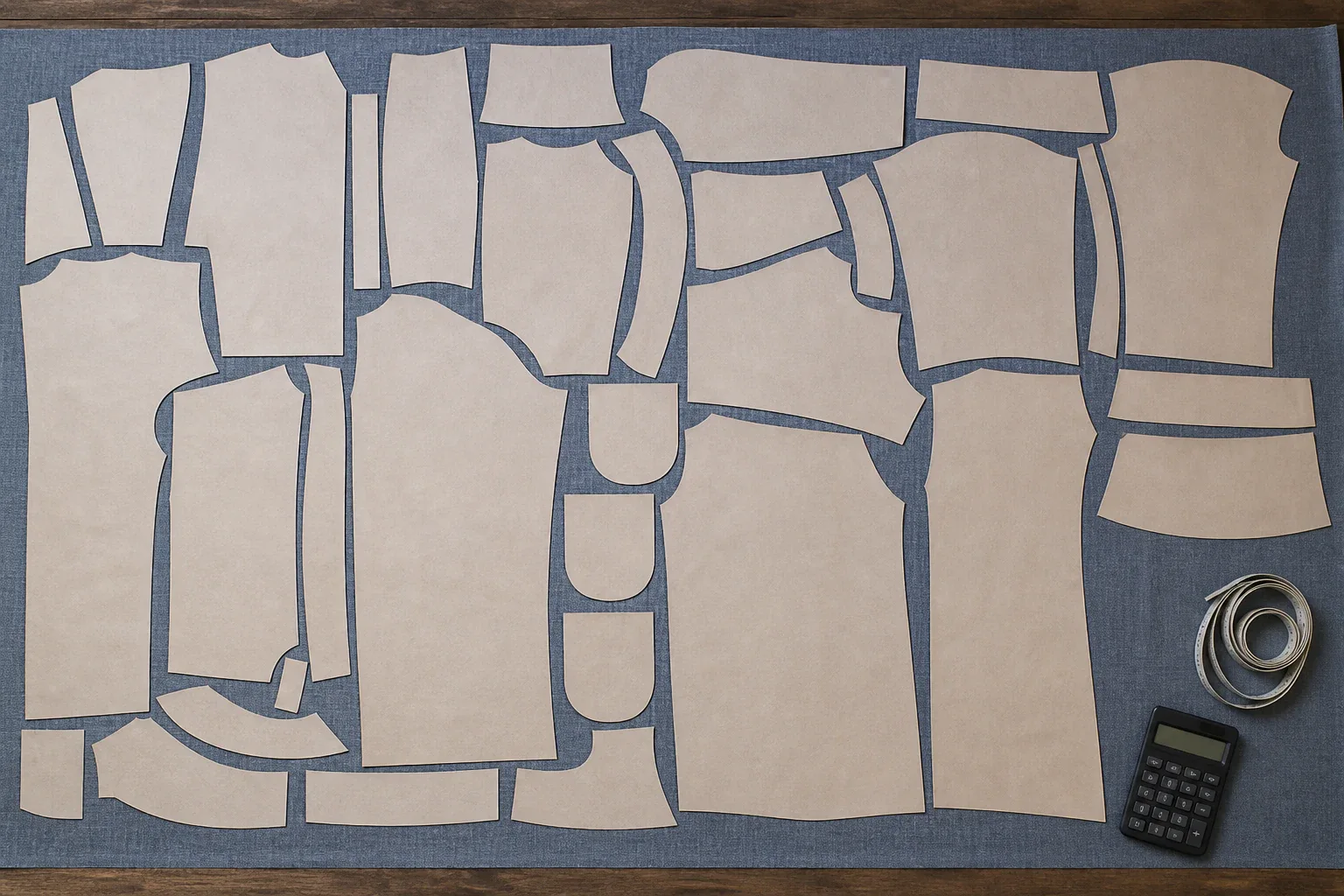
Garment marker efficiency compares the area occupied by approved pattern pieces with the rectangular area of the marker that contains them. The percentage is useful only when the pattern revision, included pieces and sizes, usable width, marker length, grain/nap/motif rules and calculation convention are all identified. A higher number from a different basis is not automatically a better production plan.
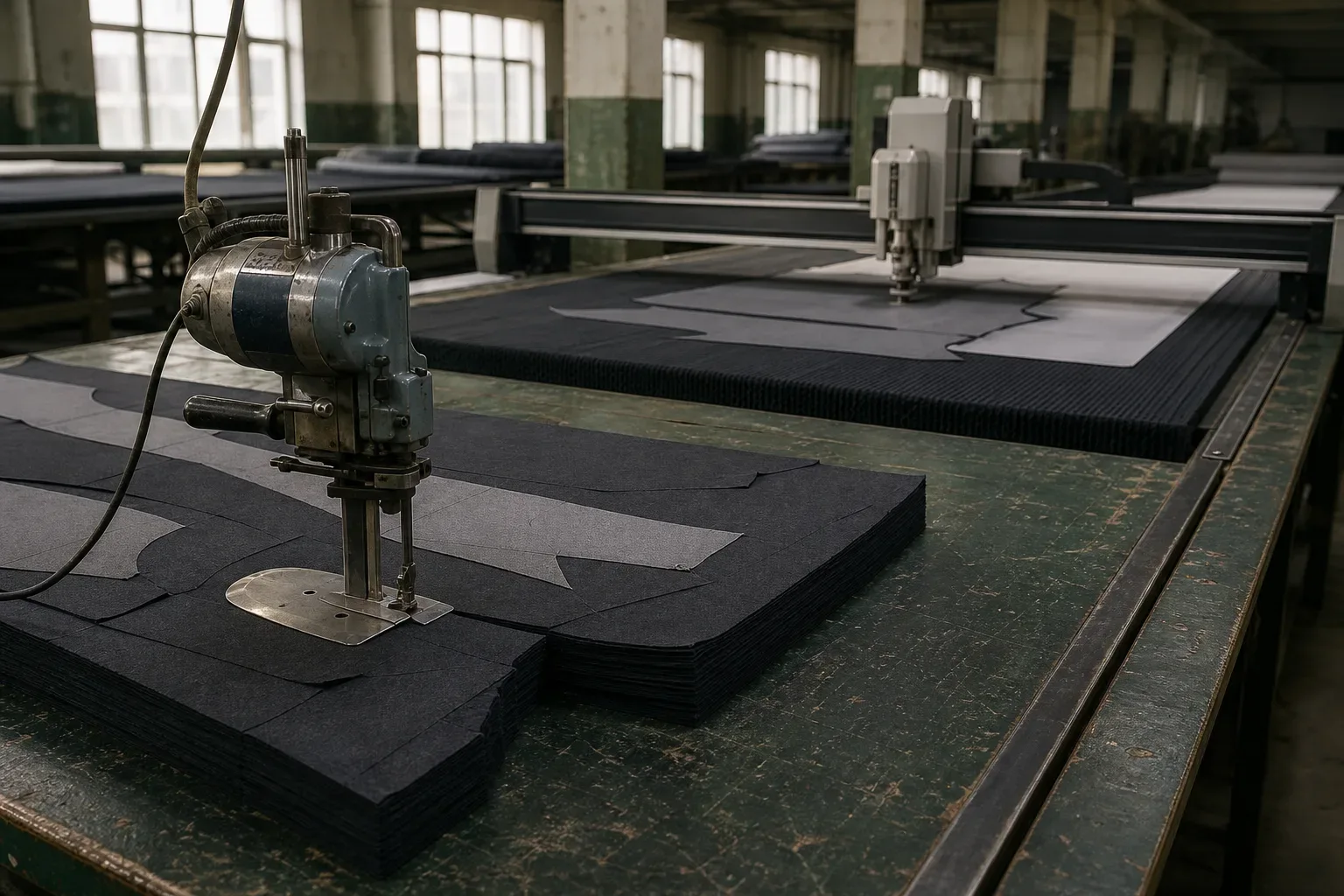
Marker efficiency is a layout metric, not total fabric consumption, order yield, cutting accuracy or garment quality. It does not include every loss that can occur before and after the marker, and it must never be improved by rotating a piece against an approved grainline or surface direction. The cutting-machine guide owns how equipment executes the approved lay and marker.
Read the Percentage With Its Denominator
A common geometric expression is:
marker efficiency = total area of the included pattern pieces ÷ (marker width × marker length) × 100%
The arithmetic is simple; the definitions are not. Ask whether marker width means verified usable fabric width, a narrower planning width or another software field. Confirm whether the piece area includes every production component and the correct size quantities. Record the exact marker length and revision rather than copying a percentage into a sourcing sheet by itself.
Wong and Leung's original marker-planning research defines the operation as arranging garment pattern pieces of different sizes and styles within a fixed width and variable length to improve fabric utilization. It also notes that irregular pattern geometry leaves unusable areas. The study supports the geometry of the metric; it does not provide one target for every garment.
| Field attached to the result | Why it matters | Stop if missing |
|---|---|---|
| Marker ID and revision | Connects the percentage to one controlled layout | A screenshot with no version |
| Pattern set and revision | Proves which garment geometry was nested | Old pattern or omitted component |
| Size assortment and quantities | Defines which size pieces occupy the marker | “Mixed sizes” without a ratio |
| Marker width and length | Defines the denominator | Fabric width substituted for usable marker width |
| Direction/matching constraints | Explains legal rotations and spacing | Nap, motif or grain rules absent |
| Piece-area and efficiency convention | Makes the calculation reproducible | Percentage only |
A Synthetic Comparison Shows Why the Basis Matters
Imagine a fictional marker containing 6.00 square metres of approved pattern-piece area. At a 1.50 metre planning width and 5.00 metre length, the rectangle is 7.50 square metres and the geometric efficiency is 80%. If a valid rearrangement keeps the same pieces, width and constraints but reduces length to 4.80 metres, the rectangle is 7.20 square metres and the result is about 83.3%.
That comparison is useful because only the layout changed. It would not be like-for-like if the second marker omitted a pocket facing, used another size ratio, widened beyond usable fabric, rotated one-way pieces or removed match allowances. The numbers are a teaching example, not Jiashun data, a recommended target or an industry benchmark.
Usable Width Is a Marker Input, Not a Label Number
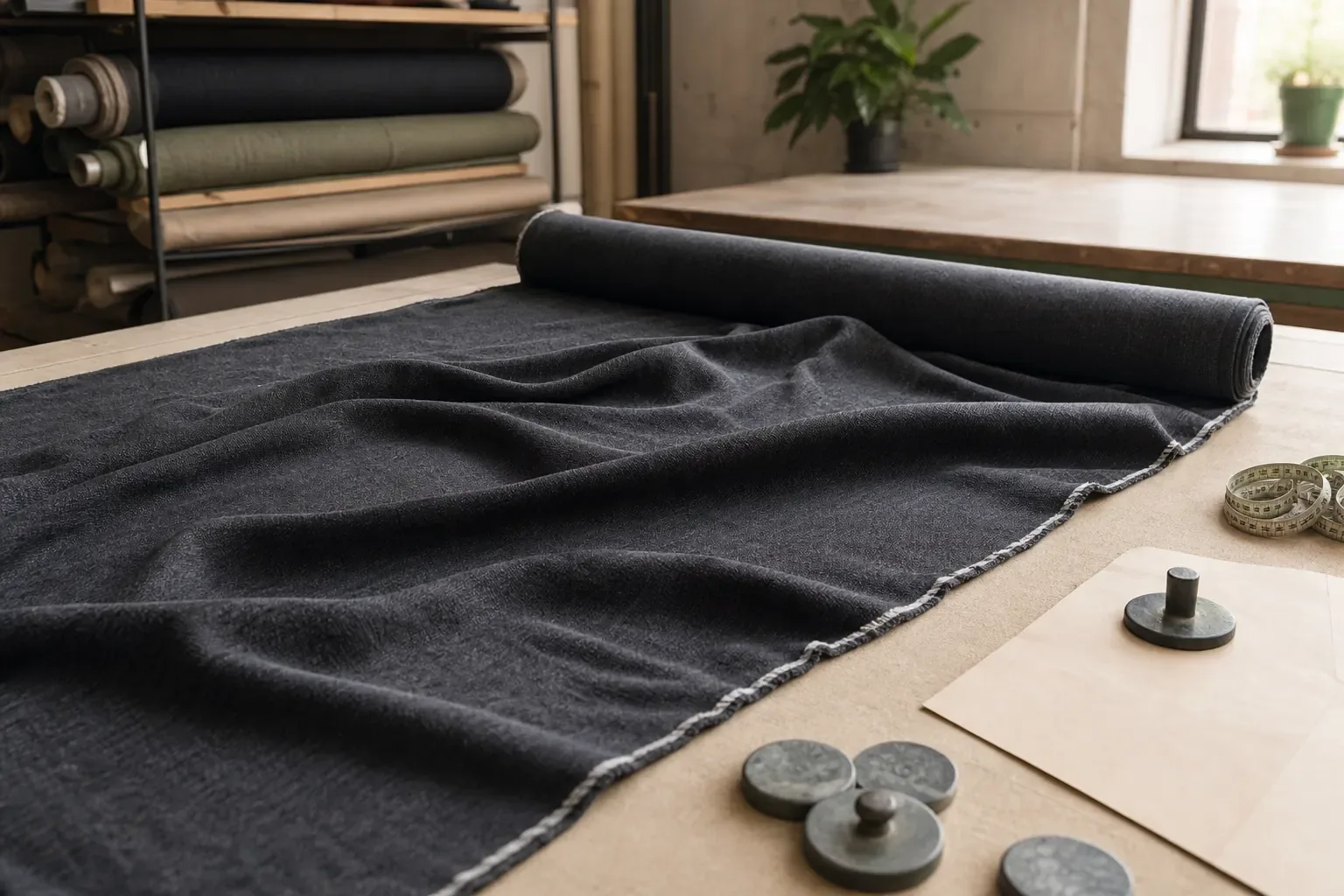
A supplier may state a nominal or full fabric width while the marker uses a smaller verified usable width. Selvedges, edge behavior, coatings, defects or an agreed exclusion can affect what is actually available to pattern pieces. Record the material state and measurement basis; the fabric-relaxation guide owns the low-tension pre-cut state and release decision.
ASTM D3774-18(2024) covers measuring width and usable width of woven or knitted fabrics on rolls or short specimens. ISO 22198:2006 addresses width and length in a tension-free relaxed state. These methods do not calculate a garment marker, but they show why “fabric is 60 inches wide” is not enough unless state, usable boundary and units are aligned.
An original study by Naveed and co-authors generated marker plans for fitted shirts and trousers across 36 fabric widths and found a statistically significant relationship between width and marker efficiency in that study. The practical lesson is not “wider is always better.” It is that width changes the nesting problem, so two supplier offers should not be ranked from efficiency results generated at different widths.
Size Mix and Pattern Geometry Change the Puzzle
A marker for one size is not directly comparable with a marker combining several sizes. Large and small pieces may fill different gaps, while the order ratio determines how many complete sets the marker must contain. Sleeve shape, body length, hood pieces, facings, pockets, panels and asymmetric details all alter the available geometry. The T-shirt manufacturing guide keeps the broader end-to-end cutting context.
Before comparing alternatives, verify:
- the same approved pattern revision and seam allowances;
- every self and contrast-material component assigned correctly;
- the same sizes, quantities and complete-garment set count;
- the same cut-pair and symmetry rules;
- the same required gaps or cutting constraints; and
- no piece duplicated, omitted or nested into a prohibited area.
A French-terry hoodie reference brings body, sleeve, hood, pocket and rib applications into the discussion. A baggy denim-pants reference brings shaped legs, waistband, yokes and pockets. A plaid flannel-shirt reference adds repeat matching and directional constraints.
The links are visual design references only. They do not prove the production pattern, material width, size ratio, marker result, consumption or price for another order.
Nap, Motifs and Matching Reduce Legal Placements
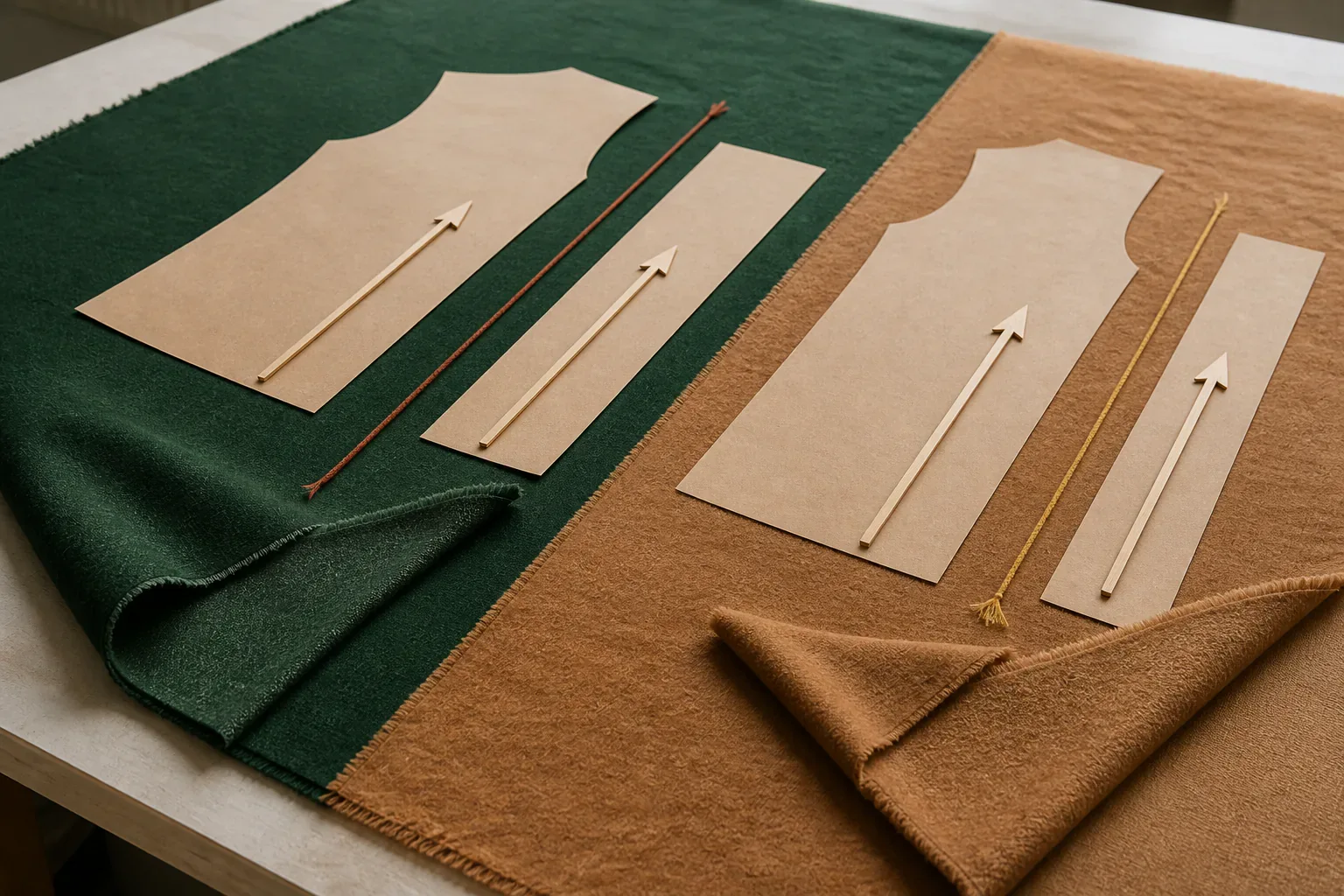
The grain-and-nap guide owns the direction map. For efficiency review, the key point is that each approved constraint removes some otherwise possible rotations or positions:
- one-way nap or directional sheen can require named pieces to share one orientation;
- an up/down print can prohibit 180-degree rotation;
- plaid or stripe matching can anchor pattern landmarks to the repeat;
- engineered artwork can tie a piece to a precise location; and
- mirrored pairs and face rules can restrict how left/right pieces nest.
Enes and Kipöz compared marker variants for a summer dress across different widths and fabric-direction conditions in an original case study. The results belong to that dress and those scenarios, but the study demonstrates that width and directional/asymmetric conditions change cut-and-sew waste. A brand should therefore ask to see the real constraints, not demand that every style hit a percentage copied from another product.
Marker Efficiency Is Not Total Fabric Consumption
A marker rectangle does not automatically include every order-level fabric need. Depending on the production plan, total consumption or booking may also need to address:
- end and splice allowances;
- defects and avoidance decisions;
- roll and shade-lot separation;
- spreading or ply-plan constraints;
- relaxation or dimensional allowance;
- matching losses outside the geometric piece area;
- recuts, sampling and testing needs; and
- remnants and order-rounding rules.
Some items may already be represented in a particular marker or costing convention; others may be added elsewhere. Ask where each allowance lives so it is not omitted or counted twice. Total-estimate inputs belong to a separate fabric-consumption analysis; keep this page's job narrow: explain the marker result and its comparability.
A low marker efficiency can expose a genuine layout opportunity, but it can also reflect a necessary product constraint. A high efficiency can still sit inside an inaccurate order estimate or an invalid marker. Review both the layout and the wider fabric-control plan; the factory-quote comparison guide explains why unlike material and scope assumptions cannot be compared as one price.
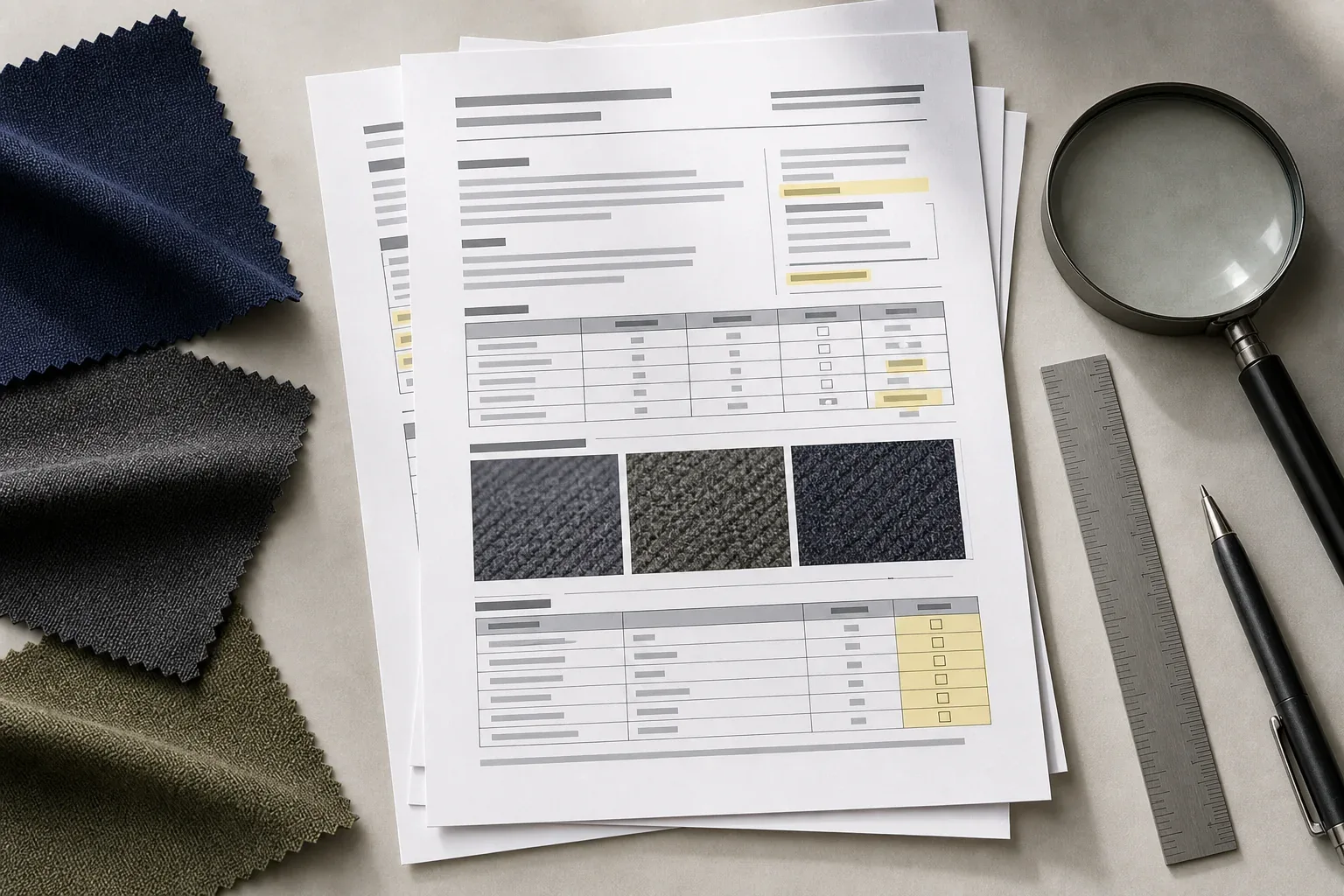
Ask for a Marker Comparison Pack
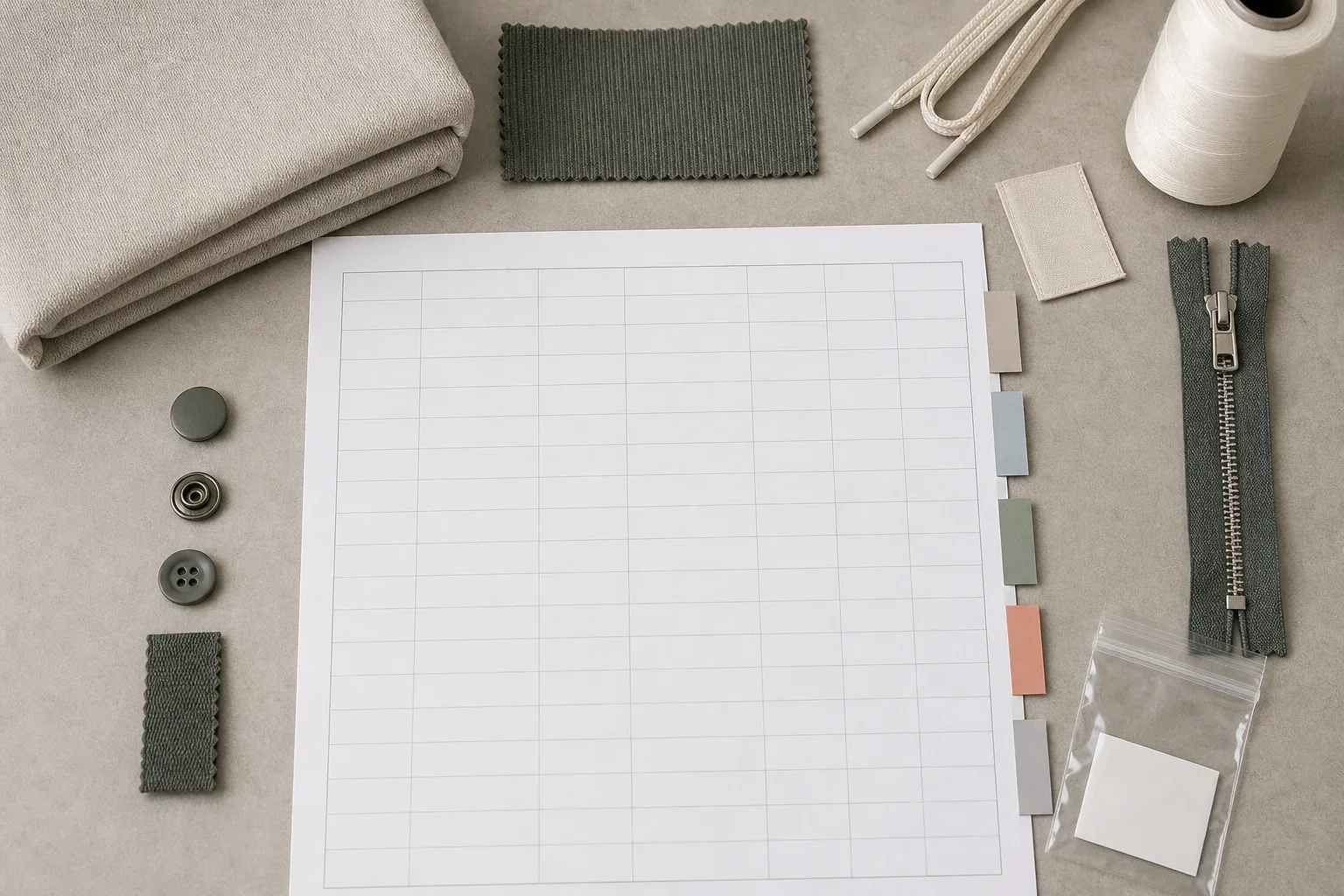
For an important fabric-use decision, request:
- Marker ID, software/export version or controlled file, date and owner.
- Fabric quality, color application, verified usable width and material state.
- Pattern style, revision, included pieces, sizes, quantities and complete sets.
- Grainline, nap, motif, matching, pairing and rotation rules.
- Marker width, length, piece area, stated formula and resulting percentage.
- A view that makes omissions, overlaps and prohibited rotations reviewable.
- The separate consumption/booking calculation and its allowances.
- The approved sample or decision that authorizes any changed constraint.
If two marker trials are compared, change one defined input at a time where possible. A width comparison should keep pattern, assortment and constraints constant. A size-mix comparison should keep width and pattern constant. Otherwise, document every changed field and avoid attributing the difference to one factor.
Approval Questions for Brands
Ask the factory or marker team:
- Does this marker contain every current pattern piece and complete garment set?
- Which width is used, and how was usable width established?
- Which sizes and quantities are nested, and do they match the order ratio?
- Which pieces are one-way, paired, matched or allowed to rotate?
- Are contrast materials and rib or lining components in separate valid markers?
- What formula and software fields produced the reported efficiency?
- What losses sit outside this percentage in the consumption or booking plan?
- Which pattern, fabric or order change requires a new marker?
Treat the answer as revision-controlled evidence. A marker should reopen when the pattern, size mix, usable width, nap/motif rule, component allocation or other material constraint changes.
What Jiashun Can Review
Jiashun can review production-intent patterns, size ratios, fabric identity and usable width, direction and matching constraints, marker alternatives and the linked sample within a custom cut-and-sew project. The result must remain attached to the real style and material.
Jiashun does not publish one internal marker-efficiency number or guarantee a universal target. Send the approved pattern/tech-pack revision, order size ratio, material width evidence, surface or motif rules and any brand-specific fabric policy so a comparable marker basis can be discussed.
Frequently Asked Questions
What is garment marker efficiency?
It is the proportion of a marker's rectangular area occupied by the included approved pattern pieces, under a stated calculation convention. Read it with the pattern revision, sizes, width, length and direction constraints.
What is the formula for marker efficiency?
A common geometric formula is total included pattern-piece area divided by the marker rectangle (marker width multiplied by marker length), then multiplied by 100%. Confirm how the software defines piece area and width before comparing results.
What is a good marker-efficiency percentage?
There is no defensible universal percentage for every garment. Pattern geometry, size mix, usable width, nap, print direction, matching and cutting constraints change the legal layout. Compare valid trials for the same product basis instead of using a borrowed benchmark.
Does higher marker efficiency always reduce fabric consumption?
It can reduce the rectangular marker area for the same valid piece set and constraints, but total order consumption may include other allowances and losses. A higher figure is not useful if the marker omits pieces or violates an approved rule.
When should a garment marker be recalculated?
Recalculate when a relevant input changes: pattern revision, included component, size ratio, usable width, material state, nap or motif direction, match requirement, cut-pair rule or another production constraint.
References
- Wong and Leung, A Hybrid Planning Process for Improving Fabric Utilization, Textile Research Journal 79(18), 2009 — original marker-planning research defining the fixed-width layout problem and irregular-piece waste; retrieved 2026-08-10.
- Naveed et al., Influence of Woven Fabric Width and Human Body Types on the Fabric Efficiencies in the Apparel Manufacturing, AUTEX Research Journal 20(4), 2020 — original 36-width marker experiment for fitted shirts and trousers; retrieved 2026-08-10.
- Enes and Kipöz, The Role of Fabric Usage for Minimization of Cut-and-Sew Waste Within the Apparel Production Line: Case of a Summer Dress, Journal of Cleaner Production 248, 2020 — original case study comparing marker variants by width and fabric-direction condition; retrieved 2026-08-10.
- ASTM International, ASTM D3774-18(2024), Standard Test Method for Width of Textile Fabric — full and usable width measurement scope; retrieved 2026-08-10.
- International Organization for Standardization, ISO 22198:2006, Textiles — Fabrics — Determination of width and length — width/length measurement in a tension-free relaxed state; retrieved 2026-08-10.