Why Fabric Relaxation Before Cutting Matters
Fabric relaxation lets roll goods reach an agreed low-tension cutting state before the marker becomes cut panels. Learn what to record, how usable width changes and why elapsed time alone is not a release test.
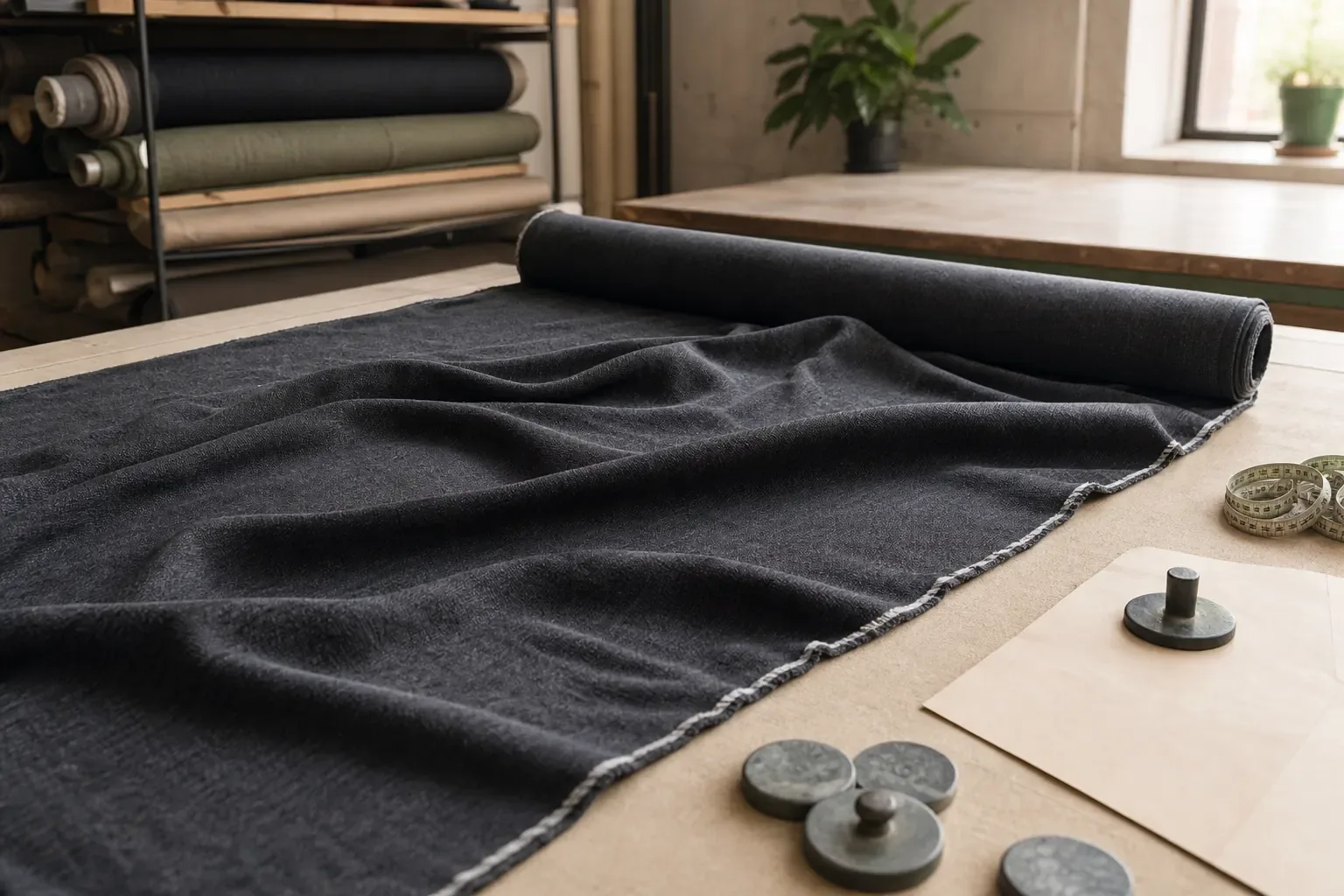
Fabric relaxation before cutting means allowing received roll goods to reach an agreed low-tension, measurable state before they are spread and cut. The goal is not to make every fabric dimensionally perfect. It is to avoid locking a temporary roll, handling or processing condition into permanent pattern pieces.
The clock alone cannot prove that state. Fiber, yarn, construction, finishing, roll tension, storage and room conditions can all affect how a fabric changes after it is opened. A useful release decision therefore combines the material identity, relaxation method, usable-width evidence and an explicit cut-or-hold status.
What Is Fabric Relaxation Before Cutting?
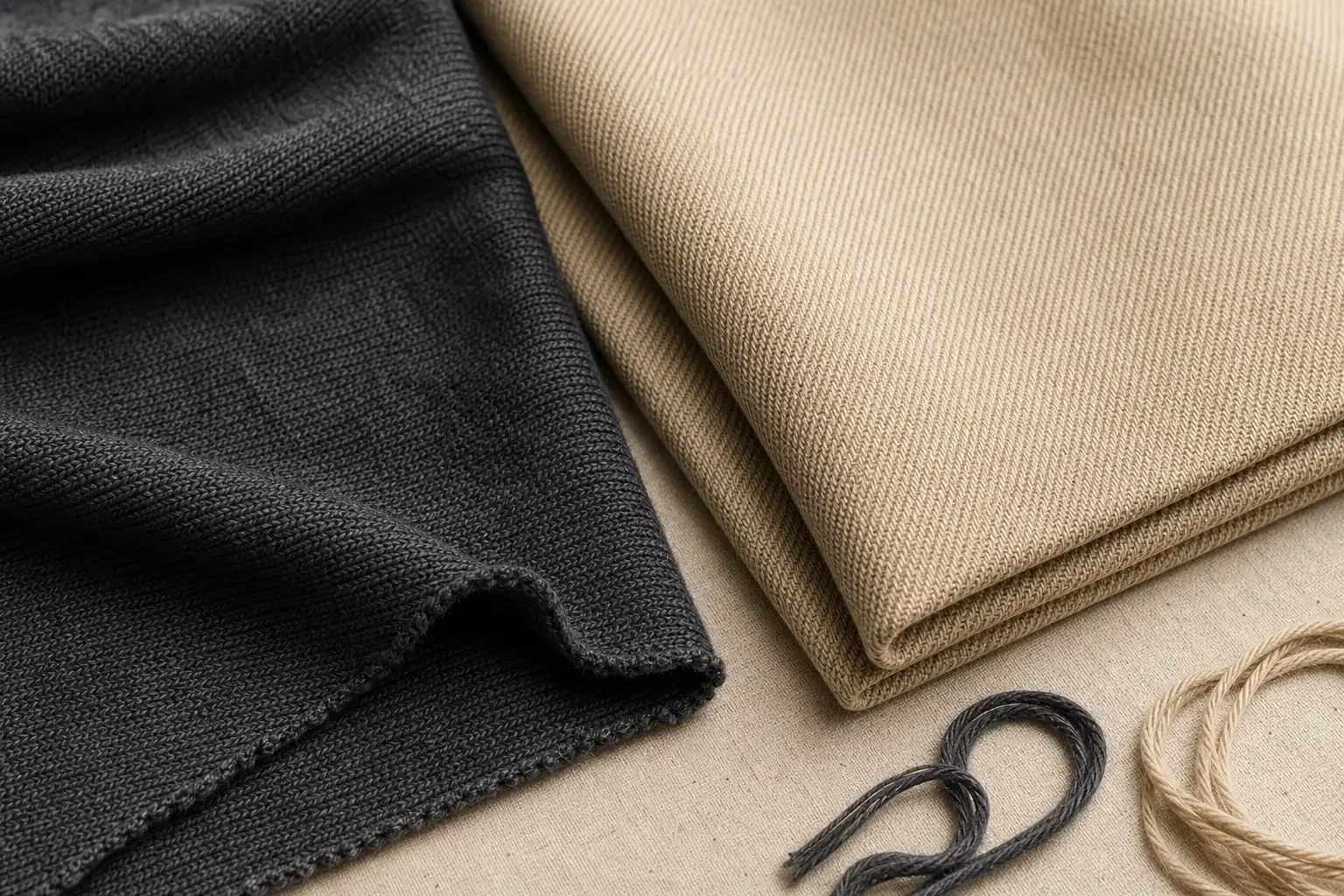
Textile production and finishing move fabric through guides, rollers, washing, drying, compaction and winding. Those stages can lengthen, narrow, compress or distort a flexible structure. Shipping and storage then hold it in a roll, bale, flat fold or tubular form. When that restraint is removed, the material may change width, length, edge curl or surface shape.
Relaxation gives the material an opportunity to settle under the handling conditions chosen for the cutting plan. Depending on the fabric and supplier guidance, that can involve low-tension unrolling, flat resting, controlled spreading or a validated mechanical process. The method should not pull the fabric into a visually tidy but temporarily stretched state.
CottonWorks notes that knit fabrics are generally more open and loose in structure than wovens and can be more susceptible to instability and dimensional change. It also identifies fiber, yarn, construction, wet processing, finishing, cut-and-sew technique and care as interacting factors. That is why “all cotton” or “all knits” cannot share one universal release rule.
Is Relaxation the Same as Pre-Shrinking or Test Conditioning?
No. Search results and factory conversations often mix four different controls:
| Control | Question it answers | Typical output | What it does not prove |
|---|---|---|---|
| Pre-cut relaxation | Is the received material in the agreed state for spreading and cutting? | Roll/lot record, relaxation method, usable width and release decision | Future dimensional change after laundering |
| Textile-lab conditioning | Is a test specimen at the atmosphere or moisture equilibrium required by the selected method? | Conditioned specimen and recorded test conditions | That a production roll is ready to cut |
| Relaxation drying or compaction | Has an upstream finishing process mechanically reduced distortion or residual shrinkage? | Finished fabric with a defined supplier process and result | That later storage or spreading added no tension |
| Dimensional-change testing | How does a specimen change after an agreed wash and dry procedure? | Length/width result under the named method | The cutting-room state of every roll in a shipment |
ISO 139:2005, confirmed current in 2025, defines standard atmospheres for conditioning and testing textiles. ASTM D1776/D1776M-20(2024) covers conditioning when a textile test method calls for it and describes bringing specimens to moisture equilibrium. These are laboratory controls. They should not be copied into a production relaxation SOP as if they prescribe a universal cutting-room duration.
Upstream mechanical finishing is separate too. CottonWorks describes relaxation drying as a finishing stage that uses mechanical action to relieve distortion and reduce shrinkage, and compaction as mechanically compressing a fabric structure. It also notes that rolling after compaction can introduce undesirable tension. A supplier's “compacted” declaration is useful evidence, but the factory still needs to understand the state received.
The cotton shrinkage guide owns laundering methods, dimensional-change calculations and tolerance decisions. Fabric relaxation before cutting owns the earlier question: what state is being converted into panels?
Why Is There No Universal Fabric Relaxation Time?
A fixed elapsed-time rule is easy to place on a checklist, but time is only one process variable. It does not identify how tightly a roll was wound, how the fabric was finished, whether it was opened without tension or whether its usable width is still changing.
A garment-manufacturer study of dimensional-change problems examined fabric types, storage distortion, layout and reported relaxation practices within the same production survey. It does not establish one duration for every material. The useful operational principle is therefore material-specific and evidence-based: use supplier guidance, prior validated behavior and current roll/lot observations to define the method and release point.
Risk signals that deserve an explicit plan include:
- looped or highly extensible constructions;
- elastic yarns or fabrics that grow under a small handling force;
- tubular goods, tight rolls, folds or visible compression marks;
- recent wet finishing, compaction or other state-changing treatment;
- edge curl, bow, skew, creases or inconsistent width;
- shade or finish lots that should remain separate;
- a marker that has little clearance against the expected usable width.
Wovens are often more stable than knits, but “woven” is not a waiver. Denim, twill, poplin and flannel can still arrive with roll tension, bow, skew, creasing or width variation. The check should follow the actual material and order risk.
What Evidence Shows Fabric Is Ready to Cut?
A buyer does not need a factory's private internal form. It can ask for a compact release record that makes the decision auditable:
- Identity: supplier fabric code, color, roll/lot ID and received format
- Specification: fiber, construction, finished weight and declared finish
- Method: how the fabric was opened, supported or spread without deliberate stretch
- Timing: start, observation and release times as process evidence—not proof by themselves
- Usable width: agreed measurement definition, locations and results
- Visible state: edge curl, creases, bow/skew indicators, face/back and direction
- Related evidence: supplier dimensional-stability data or current shrinkage report where required
- Decision: released, held or escalated; affected rolls and approved marker/pattern revision
ISO 22198:2006, confirmed current in 2023, specifies determining fabric length and width in a tension-free relaxed state. ASTM D3774-18(2024) covers the width and usable width of woven or knitted fabrics on full rolls or short specimens. These standards demonstrate why the measurement state and width definition matter. They do not require every factory to use either method for every order.
A practical release can be based on an agreed process and consistent observations. If the state remains unclear or the usable width no longer supports the approved marker, the evidence should trigger a hold and review—not a silent pull on the fabric to make it fit.
How Does Relaxation Affect Usable Width and the Lay?
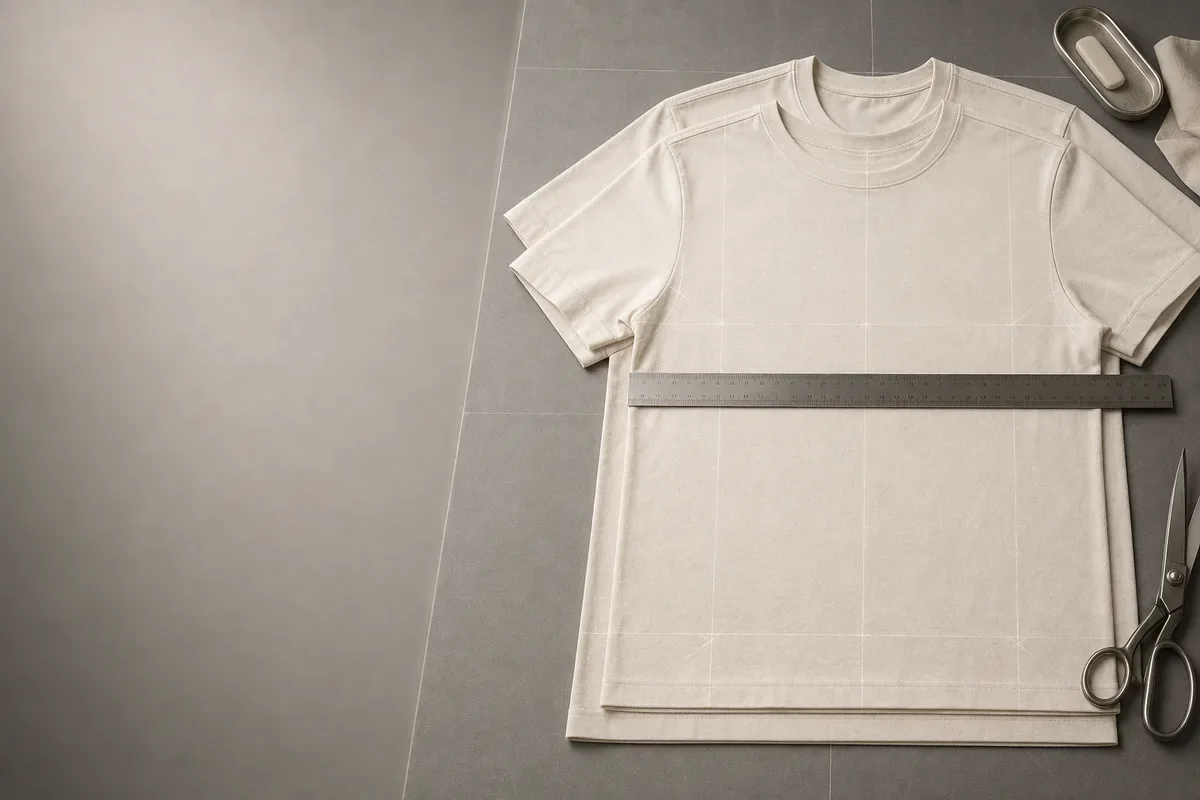
A marker nests pattern pieces across an available width. If the planning width came from fabric under a different tension than the cutting width, one of two things can happen: the marker no longer fits, or the material is pulled during spreading and later moves after it becomes panels. Both disconnect the digital plan from the physical cloth.
The cutting room therefore needs three dimensions to agree:
- The fabric width used for consumption and marker planning.
- The usable width observed in the agreed relaxed state.
- The low-tension width maintained while the lay is built.
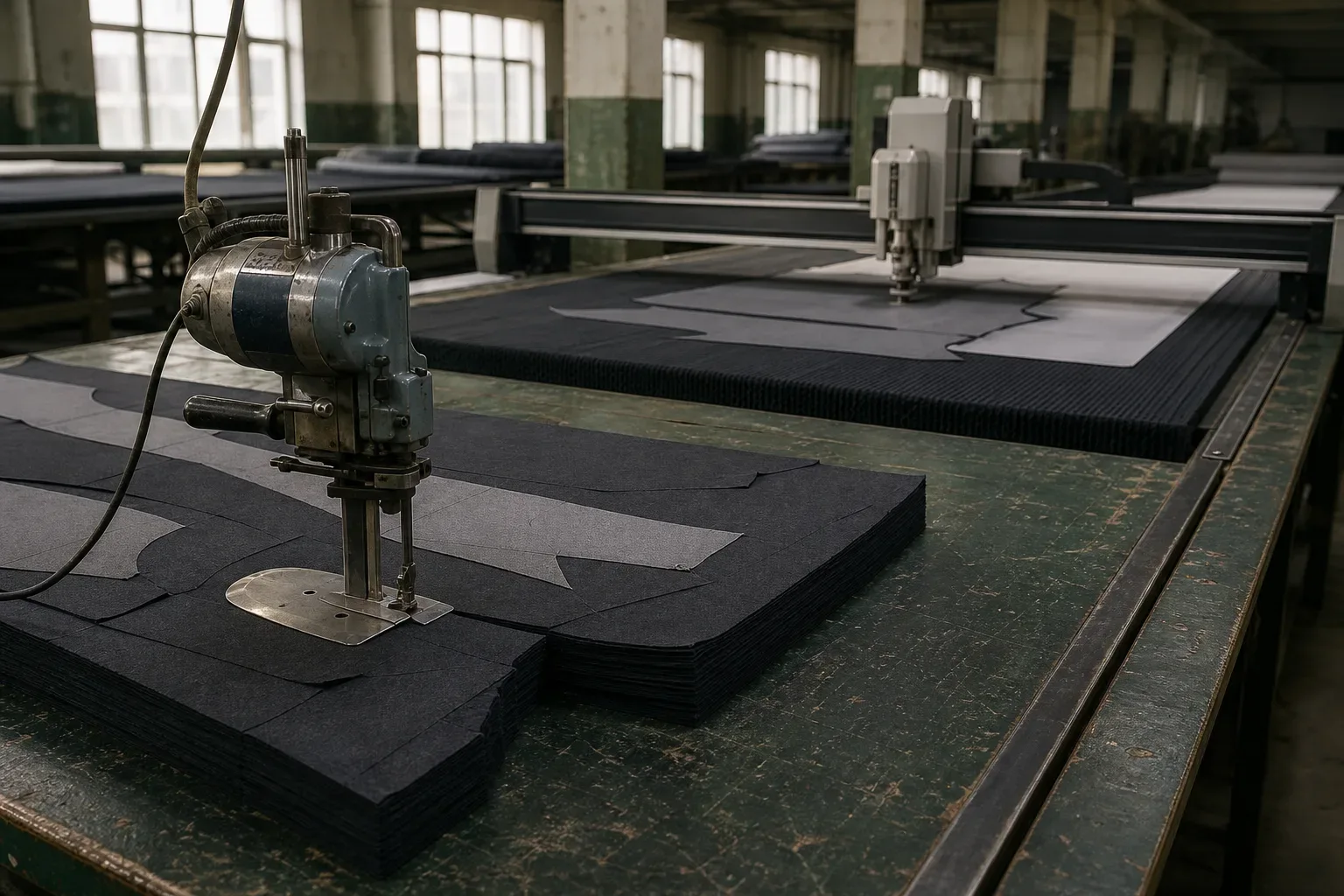
Lectra describes its Gerber fashion spreader as a tension-free spreading solution. That is a vendor description, not proof of any Jiashun machine or a universal zero-force state, but it shows the engineering purpose: spreading should align plies without deliberately stretching the material.
The industrial fabric cutting machine guide owns cutters, vacuum beds and equipment history. It also makes the owner boundary clear: a cutter can repeat a path, but it cannot decide whether a knit has relaxed enough to cut. This article owns the state and evidence before that path is executed.
What Can Go Wrong If the State Is Unclear?
An unstable or poorly recorded state can appear downstream as mismatched panel dimensions, distorted seams, uneven hems or disagreement between the sample and bulk. Those symptoms are not a diagnosis by themselves. Similar results can also come from pattern revisions, spreading tension, cutting error, feeding, wash, shrinkage or mixed lots.
Investigate by stage instead of declaring “insufficient relaxation” from a finished garment:
| Observation | Evidence to compare first | Adjacent owner |
|---|---|---|
| Cut panels differ from the pattern | Roll/lot, usable width, lay tension, marker and cut-panel measurements | Cutting equipment and execution |
| Garment changes after laundering | Before/after dimensions and named wash/dry method | Shrinkage and tolerances |
| Knit body twists or skews | Fabric direction, bow/skew, panel grain and wash state | Knit vs woven behavior |
| Sample and bulk fit differ | Fabric revision, pattern revision, POM chart and finished state | Size chart and POM control |
Do not prescribe steam, heat, washing or chemical treatment as a generic correction. Each can change color, hand, finish or dimensions and belongs to a material-specific plan agreed with the supplier and factory.
What Should a Brand Ask for Before Bulk Cutting?
Ask questions that connect the fabric record to the garment rather than requesting a photograph of rolls sitting on a rack:
- Which fabric, color, finish and lot does the record cover?
- What received format and supplier handling guidance apply?
- Which low-tension relaxation or spreading method was selected, and why?
- How was usable width defined and checked for the marker?
- Which dimensional-stability or shrinkage evidence is separate from this release?
- Which pattern and marker revision will be cut?
- What condition would hold an affected roll or require a new marker review?
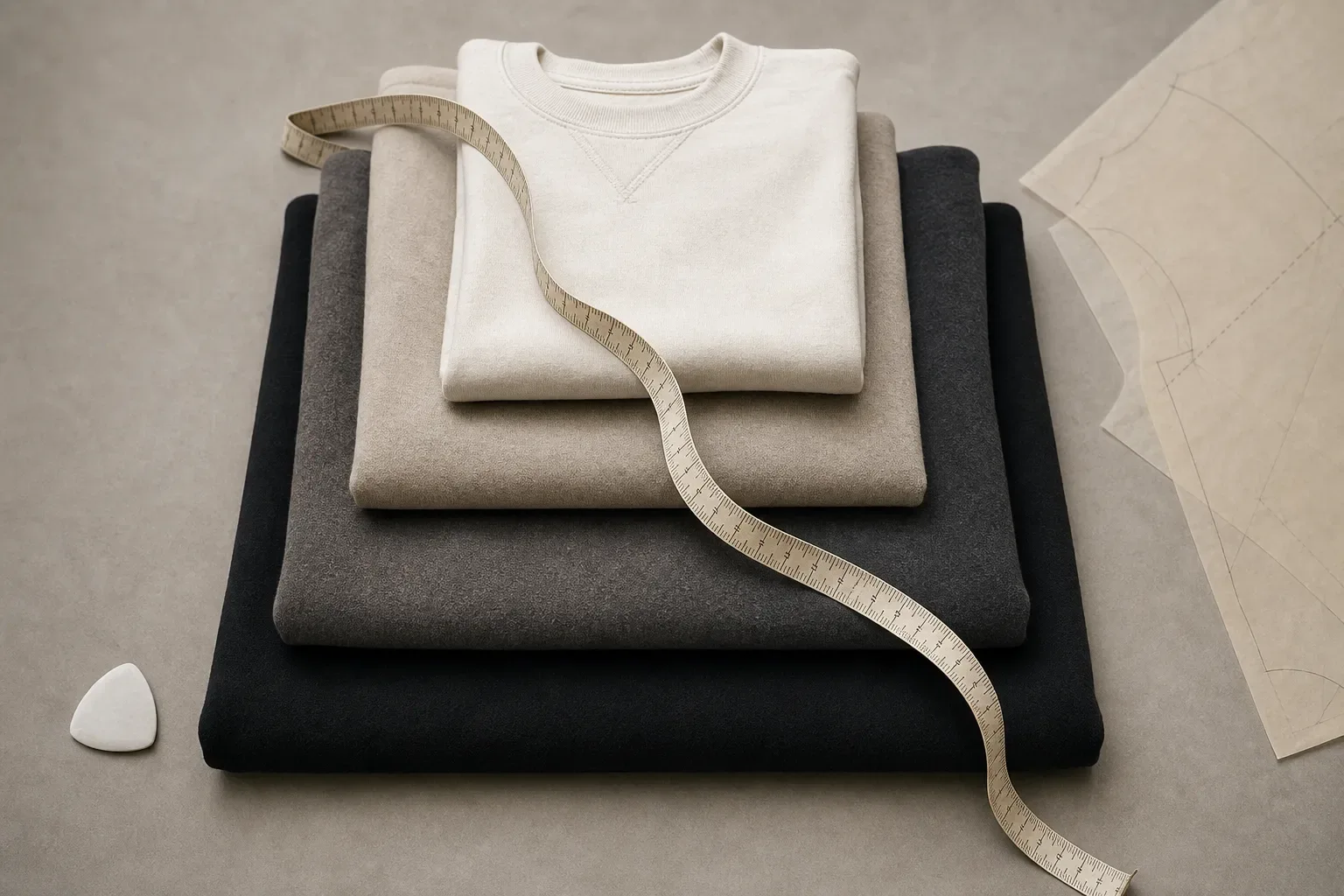
Product references can communicate a garment direction, but they cannot supply this evidence. A 100% cotton french terry essentials hoodie, a cropped boxy flannel button-up and stone-washed baggy denim pants represent different catalogue directions. The actual fabric construction, finish, roll state and cutting plan must still be confirmed for a new project.
The how a T-shirt is made guide shows where roll goods become a marker and cut panels. Jiashun sources fabric and manufactures cut-and-sew garments; the supplier, finishing, relaxation and testing route is project-specific. Public content should not turn a recommended buyer checklist into a claim that every Jiashun order follows one unchanging internal SOP.
For a project review, send the fabric or garment reference, known construction and fabric grain or directional requirements, target hand and finished weight, intended wash or care route, sample size and POM chart, pattern or tech pack, and order quantity by color and size. Jiashun's fabric sourcing service can then connect the material direction to sampling and cutting requirements.
Frequently Asked Questions About Fabric Relaxation Before Cutting
What is fabric relaxation in garment manufacturing?
It is a controlled step that lets received fabric settle toward an agreed low-tension state before spreading and cutting. The record should identify the roll or lot, method, usable width, observations and release decision.
How long should fabric relax before cutting?
There is no universal duration for every fabric. Construction, stretch system, finishing, roll condition, received format and handling all matter. Use supplier guidance and a validated process, then confirm the material state with agreed evidence instead of releasing it by the clock alone.
Is fabric relaxation the same as pre-shrinking?
No. Pre-cut relaxation addresses the material state used for spreading and cutting. Pre-shrinking or compaction is an upstream finishing intervention intended to reduce later dimensional change. A laundering test measures change under a named wash-and-dry procedure. The controls can support one another but are not interchangeable.
Do woven fabrics need relaxation before cutting?
Wovens are often more dimensionally stable than open knits, but they can still show roll tension, width variation, creasing, bow or skew. Use a risk-based plan for the actual material rather than exempting all wovens or assigning them one fixed time.
What should a clothing brand request as proof?
Request fabric and lot identity, the selected low-tension handling method, usable-width evidence, visible-state observations, the cut-or-hold decision and the pattern/marker revision. Keep any shrinkage report separate so that pre-cut state and post-laundering behavior remain clear.
References
- CottonWorks by Cotton Incorporated, “Shrinkage & Skewing” — interacting construction, processing, finishing and dimensional-stability factors, including greater instability in many knits.
- CottonWorks by Cotton Incorporated, “Mechanical Finishing” — relaxation drying, compaction and the risk of reintroducing tension through rolling after compaction.
- International Organization for Standardization, ISO 139:2005 — standard atmospheres for conditioning and testing textiles; confirmed current in 2025.
- ASTM International, ASTM D1776/D1776M-20(2024) — conditioning and moisture equilibrium when specified by a textile test method.
- International Organization for Standardization, ISO 22198:2006 — determination of fabric width and length in a tension-free relaxed state; confirmed current in 2023.
- ASTM International, ASTM D3774-18(2024) — measurement of fabric width and usable width for woven and knitted fabrics.
- Kalkancı and Kurumer, “Investigation of dimensional changes during garment production and suggestions for solutions”, Fibres & Textiles in Eastern Europe (2015), DOI 10.5604/12303666.1151688 — garment-manufacturer study of storage distortion, fabric layout, relaxation time and dimensional-change problems.
- Lectra, “Fashion solutions” — first-party description of Gerber Spreader for Fashion as a tension-free spreading solution; cited as a vendor capability statement, not independent performance proof.