Set the actual size.
Specify dimensions and placement from a fixed point on the garment.
Jiashun / The printing workshop
Custom printing for clothing brands. Develop screen, digital and raised finishes with your fabric and garment, then approve the sample before bulk production.
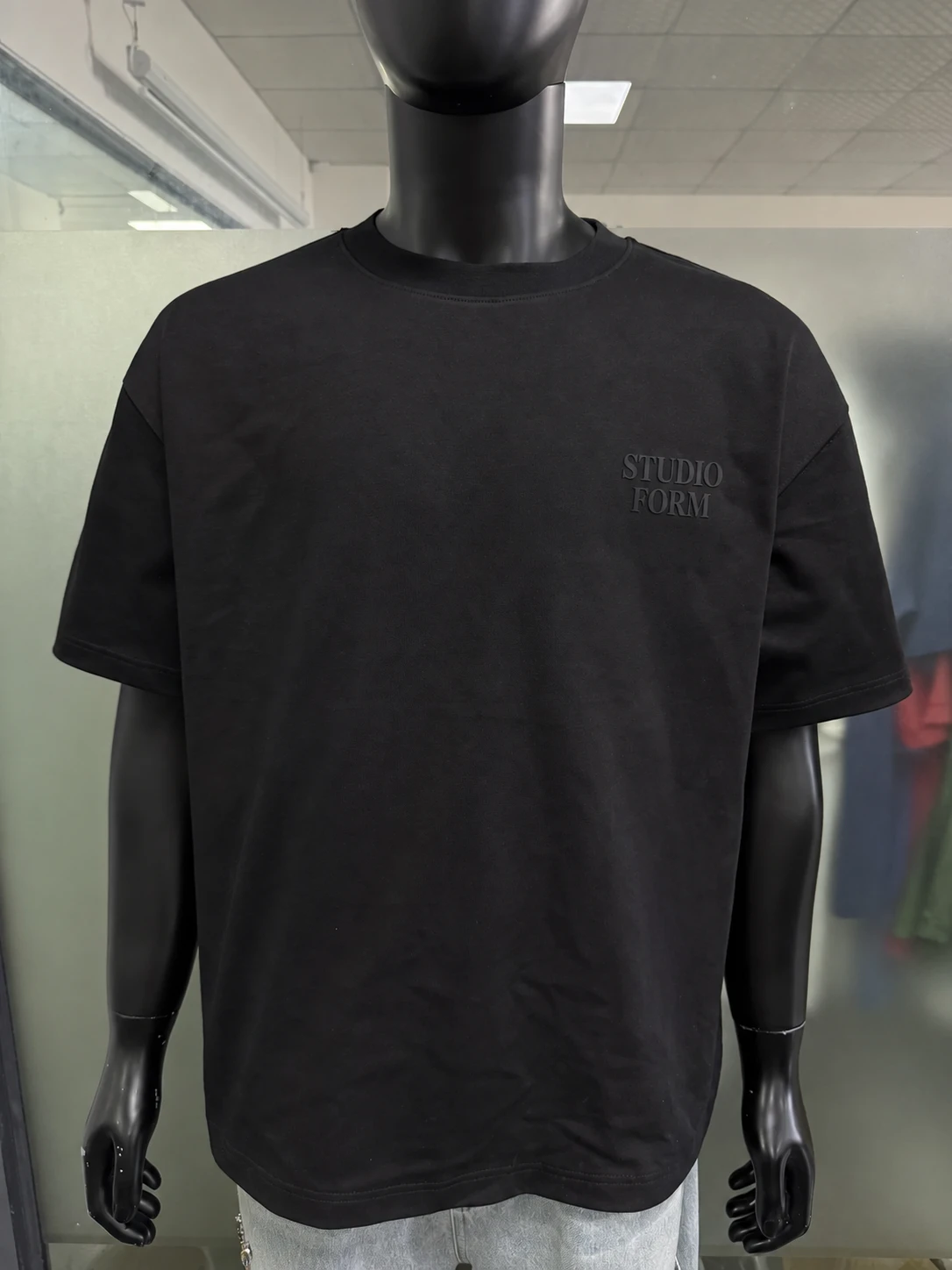
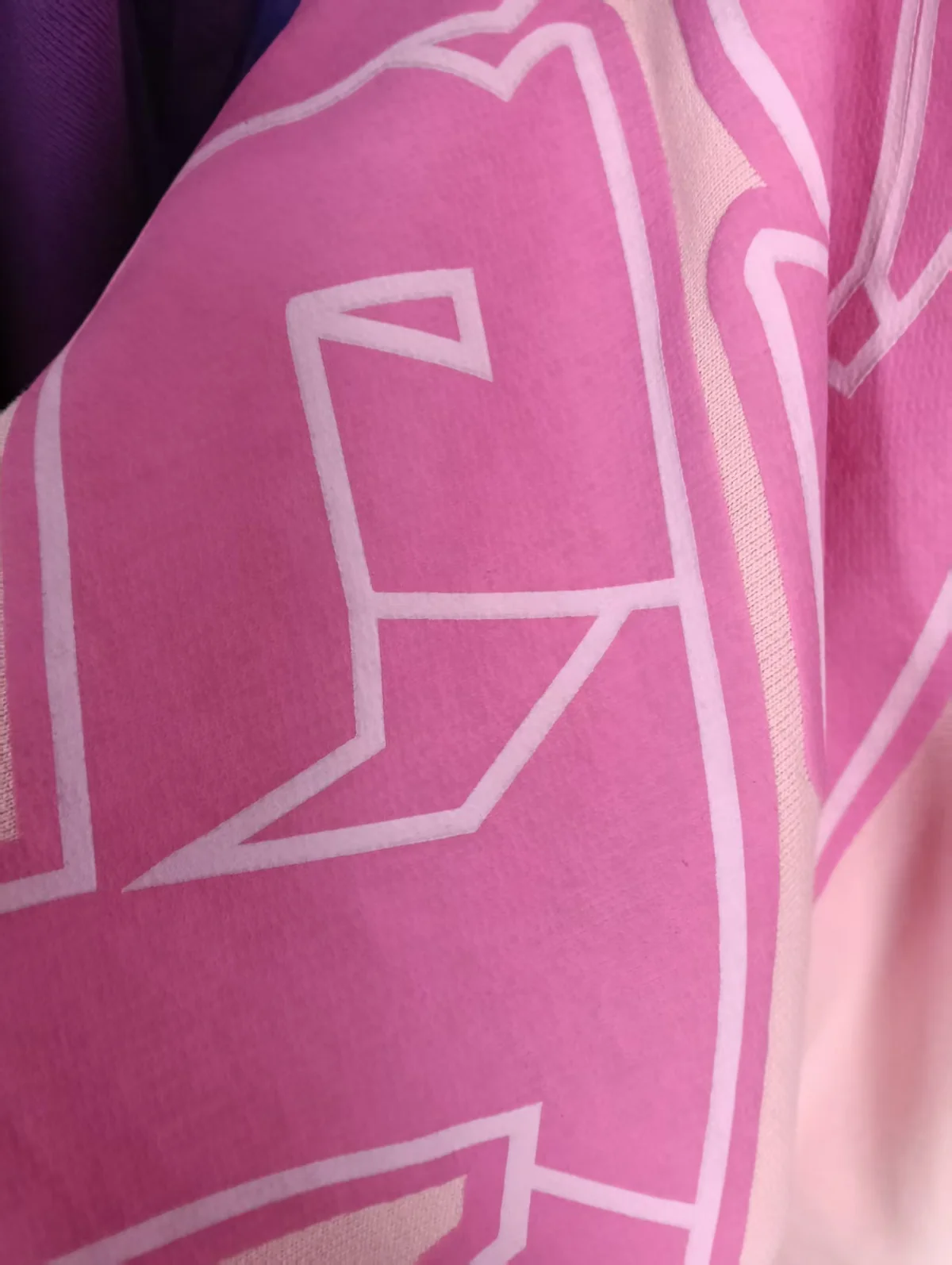
01 / The print library
Compare the feel, common uses and sample checks. Flock and discharge need an individual project review.
Swipe to explore all 8 finishes
Flat graphics · ink options
Choose water-based or plastisol inks to suit the fabric and finish. Each colour and print location contributes to the production setup.
Water-based and plastisol are ink systems within screen printing. Test the chosen ink on the intended fabric and garment colour.
Detailed graphics · tonal colour
DTG prints directly onto compatible fabrics, including cotton. It suits artwork with fine shading, photographs or many colours.
Distressing can be part of the artwork. Approve the intended worn look alongside the required wash performance.
Full colour · film transfer
DTF prints the artwork onto film, then heat-applies it to the fabric. Check heat compatibility and the feel of the transfer on your garment.
DTF is one heat-transfer method. A silicone transfer or a sewn badge is a different application.
Raised graphics · expanded texture
Puff ink expands to create a raised surface. Bold lettering and open shapes give the effect room to develop.
Fine lines and close gaps can change as the ink expands. Approve the artwork at its actual print size.
Raised graphics · defined edges
High-density screen printing builds up ink for a defined raised profile. The outline stays a key part of the design.
Agree the print height and ink build from a sample on the selected fabric.
Raised graphics · smooth surface
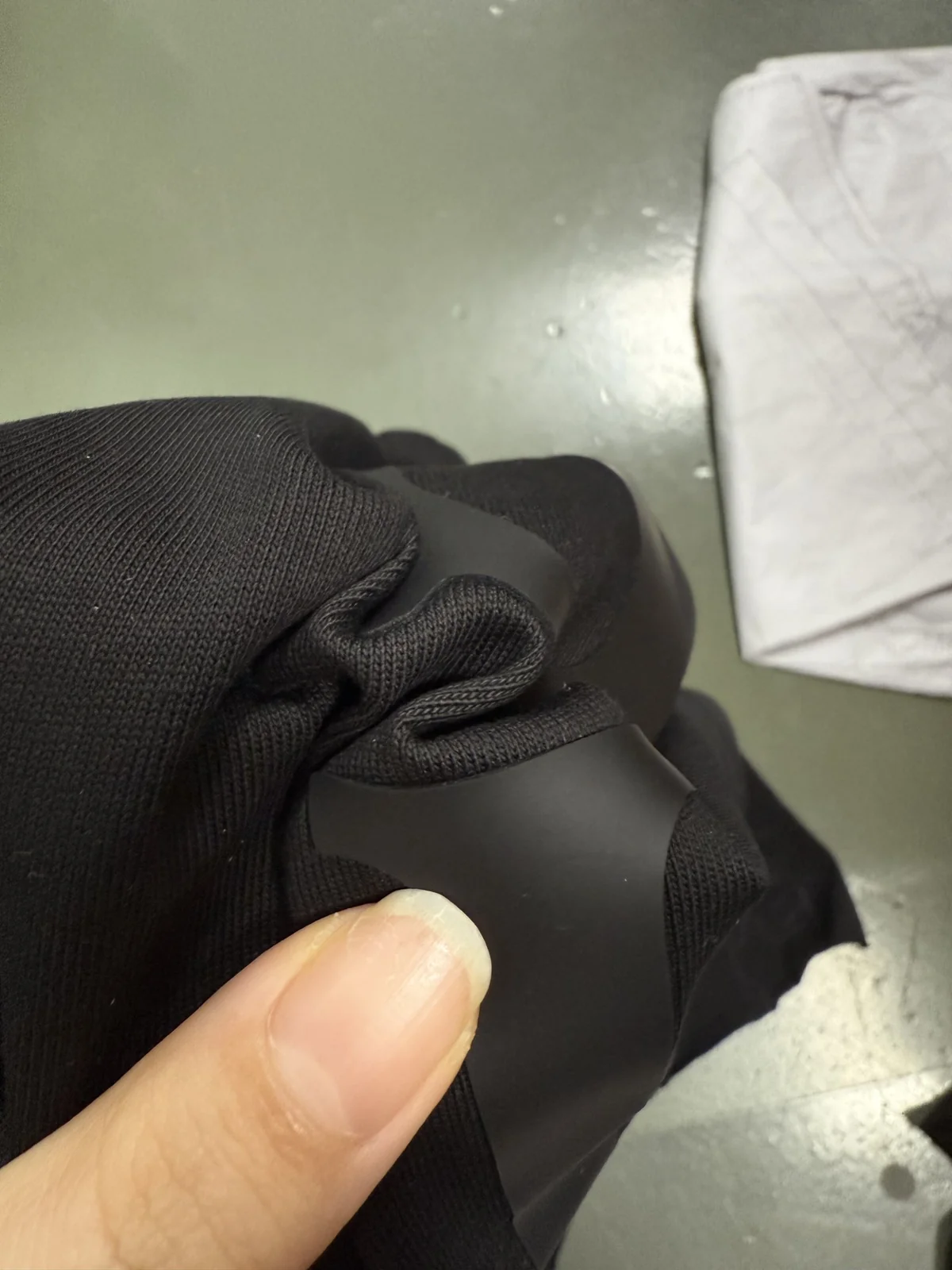
Silicone creates smooth, raised logos and lettering. The application route depends on the artwork and fabric; some designs require separate tooling.
Direct silicone decoration, silicone transfers and sewn silicone badges are not interchangeable. We confirm the route for your design.
Special finish · texture review
Availability confirmed per project
Flock adds a velvety texture. Availability depends on the reference, artwork and fabric, so this finish needs a project review first.
This is a finish to evaluate against your reference. Availability and process are confirmed for the individual project.
A soft finish
starts with
the right base.
Special finish · fabric and dye review
Fabric test required
Discharge printing depends on how the garment dye responds. Test the intended fabric first to establish the final colour and feel.
Discharge, water-based printing and a distressed DTG graphic can aim for a similar mood through different processes.
02 / Find your print direction
Choose what you’re creating. Get a starting method, an alternative and the sample checks that matter for your design.
Your print direction
Choose a scenario and a few details to narrow down the options.
Scroll across to compare every detail
| Print method | Choose it for | Surface feel | Main tradeoff | Cost factors | Check in the sample |
|---|---|---|---|---|---|
| Screen printingAdd to brief | Solid logos, lettering and colour-separated graphics. | Varies with water-based or plastisol ink and coverage. | Each colour and placement adds production setup. | Colour count, screens, locations and quantity. | Colour coverage, layer alignment and handfeel. |
| DTG printingAdd to brief | Photographs, gradients and detailed illustrations. | Depends on pretreatment, fabric and white ink coverage. | Fabric and garment colour influence the printed result. | Print area, ink coverage and garment preparation. | Fine detail, tonal transitions and large-area feel. |
| DTF transfersAdd to brief | Detailed, multicolour logos and open graphics. | A surface layer, especially noticeable in solid areas. | Heat compatibility and transfer feel need checking. | Transfer size, coverage, locations and application. | Edges, flexibility and adhesion after the agreed wash. |
| Puff printingAdd to brief | Bold lettering, outlines and rounded raised accents. | Raised and rounded, with softer edges. | Expansion can change fine lines and close gaps. | Colours, print area and finish development. | Expansion, spacing and flexibility at actual size. |
| High-density screen printAdd to brief | Dimensional logos and lettering with defined edges. | Structured ink with a distinct raised profile. | Height, small gaps and flexibility need balancing. | Ink build, colours, print area and setup. | Height, corners, small gaps and flexibility. |
| 3D siliconeAdd to brief | Smooth tonal logos, lettering and raised details. | Smooth and rubber-like, with defined edges. | Application route varies; some designs need tooling. | Application route, size and any tooling. | Edge, height, attachment and flexibility. |
| Flock printingProject review requiredAdd to brief | Textural logos and selected graphic accents. | Velvety and textile-like. | Availability and process require a project review. | Confirmed process, coverage and application. | Pile, edges, attachment and wash compatibility. |
| Discharge printingProject review requiredAdd to brief | Vintage graphics on compatible dyed fabrics. | Soft, depending on the fabric and dye response. | Fabric dye must respond; colour needs a test. | Fabric testing, colours, coverage and setup. | Dye response, final colour and wash sequence. |
Cost factors are a guide, not a price ranking. Final cost and suitability depend on your artwork, fabric, quantity and approved sample.
03 / Silicone in context
A tonal finish changes with its scale and placement. Compare the compact front print with the taller back lettering, then check the edge and feel up close.
Explore sample development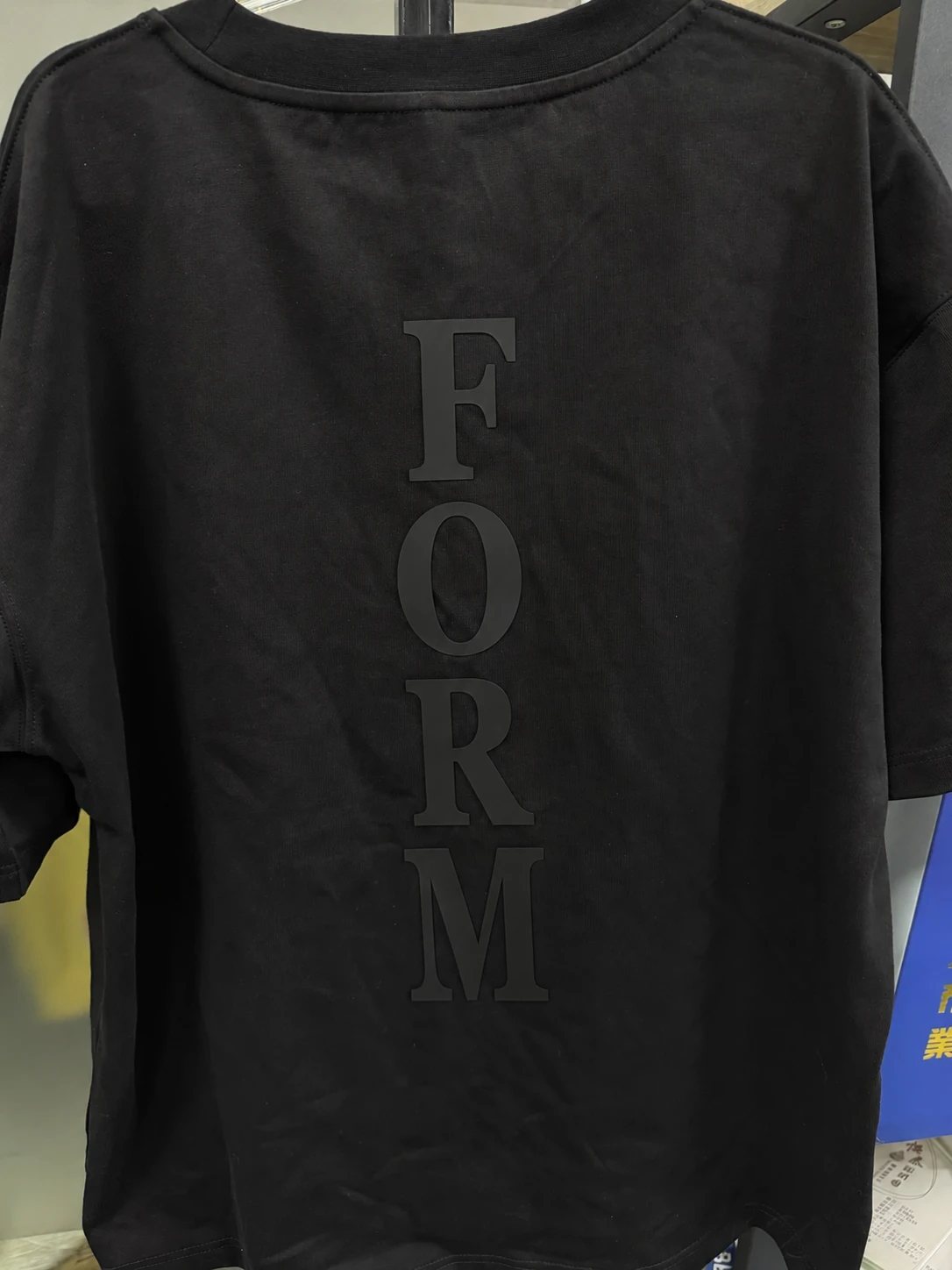
04 / Before bulk production
Four checks to settle before bulk production.
Specify dimensions and placement from a fixed point on the garment.
Check colour, coverage and texture on the chosen fabric and garment colour.
Approve the intended look after washing and agree any performance tests.
Review the close-up finish, then the scale and placement on the finished garment.
Follow the sample review
Inside the process: a short Jiashun workshop clip shows screen printing in production.
Watch the workshop clip (opens in a new tab)05 / Your print brief
Include your fabric, print size, placement and quantity. We can help choose the method.
06 / Questions before sampling
Start with the artwork and the feel you want. Fabric, print size, colour count and order quantity help narrow the choice; you can send a brief without selecting a method.
Yes. A screen-printed chest logo and a DTG back graphic can be developed on one garment. Fabric, placement and wash sequence need to work with both methods; printing over raised decoration requires a separate check.
Puff expands for a rounded surface. High-density ink builds a more defined profile. Silicone has a smooth, rubber-like feel. Compare the edge, height and flexibility on a sample.
A worn look can come from the artwork, printing or washing. Agree the appearance and performance requirements separately, then assess the sample and any requested wash tests.
We can review suitable projects. All-over describes coverage; sublimation is a process for compatible fabrics. Fabric composition and garment layout determine feasibility, including coverage across seams.
Method, size, colour count, coverage, print locations, fabric and order quantity affect the quote. Screens or moulds can add setup costs.
Send vector artwork where available, or a high-resolution image at the intended print size. Include colour references and measured placement. A close-up finish reference is useful for textured prints.