Acid Wash Beyond Denim: How the Effect Works on Hoodies and Tees
No acid involved: how the marbled effect is actually produced on fleece and jersey, why black bases win, and the four decisions that spec an acid wash correctly.
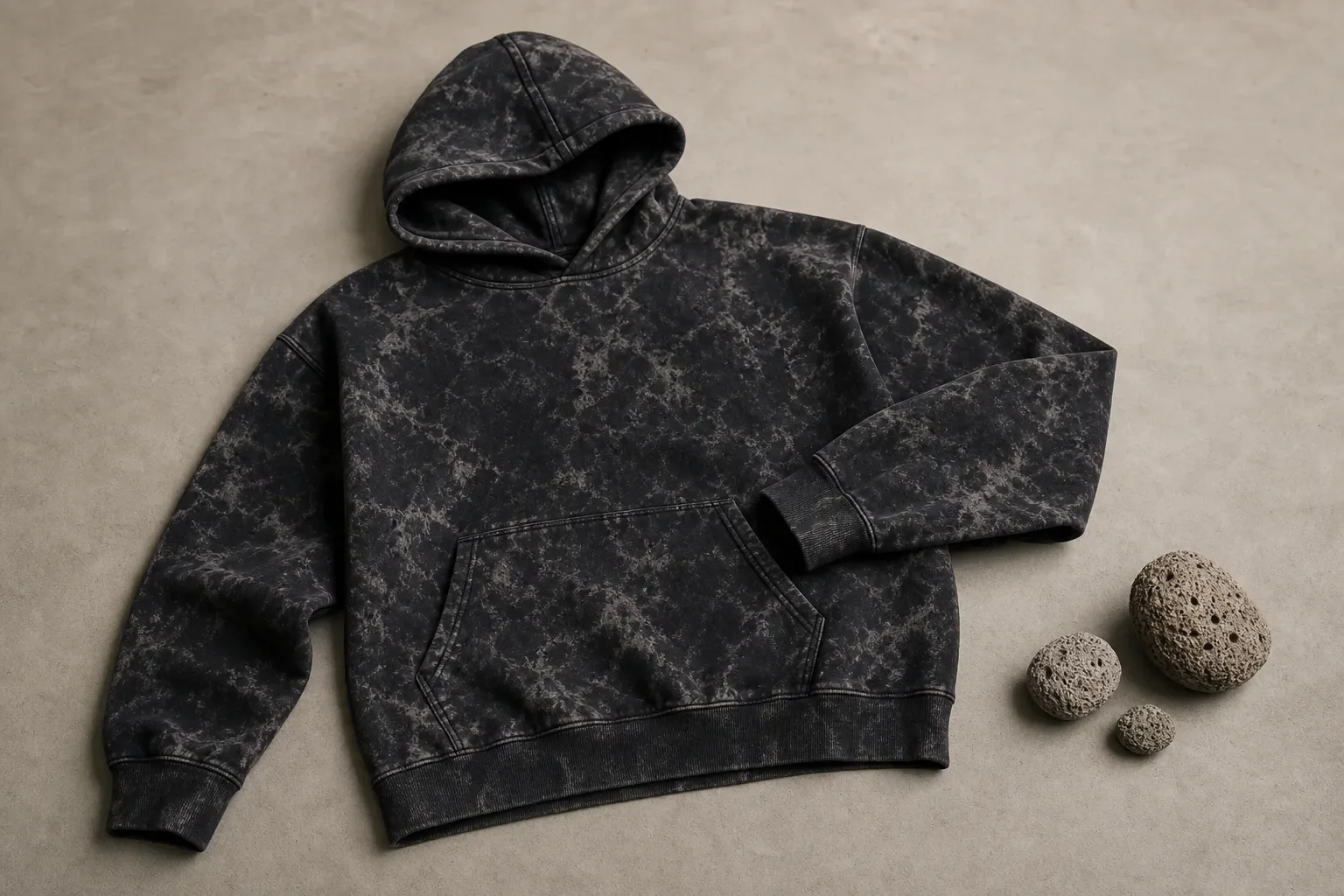
Acid wash is the single most requested finish in our current production mix — and most of it is not on denim. The marbled, lightning-streaked look that defined a certain era of jeans has migrated onto heavyweight hoodies and boxy tees, where it reads as instant vintage. This guide covers how the effect is actually produced on fleece and jersey, why it behaves differently than on denim, and how to spec it so your sample lands close.
The process, demystified
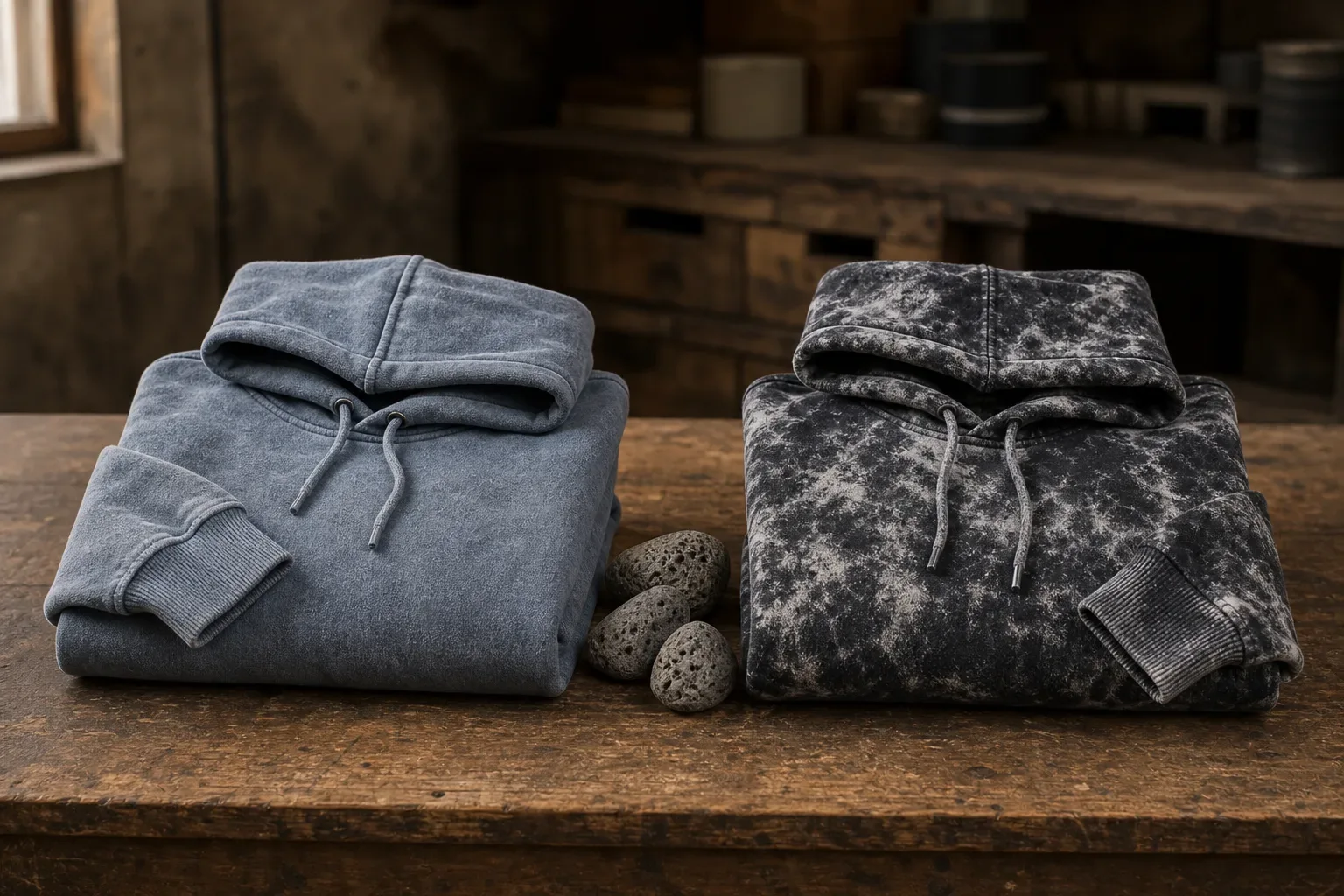
Despite the name, no acid is involved. Porous stones — traditionally pumice — are soaked in a bleaching agent and tumbled with the garments in a dry or barely-damp machine. Wherever a stone touches fabric, it strips color; wherever it doesn't, the original shade survives. The result is the characteristic high-contrast marble: not a pattern that was printed on, but a record of physical contact, which is why no two pieces ever match.
On denim, the bleach strips indigo from the surface of a woven fabric. On fleece and jersey the mechanics differ in three ways that matter to your spec:
1. Knits absorb the effect deeper. Jersey and fleece are knitted, loftier structures — the bleach reaches further into the fabric than it does on dense woven denim. The contrast reads softer and more diffused, less "streaky" than classic denim acid wash.
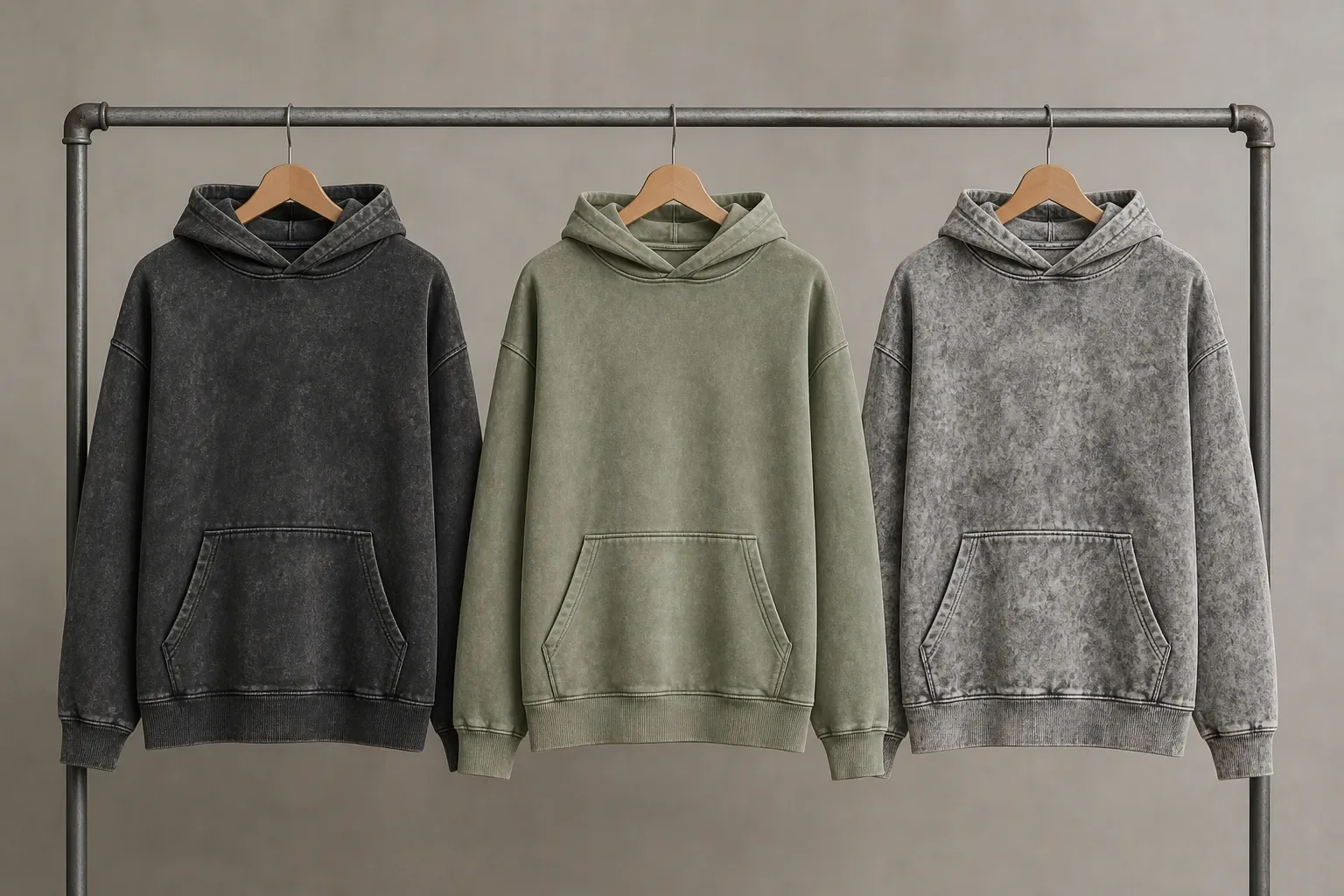
2. The base color decides the drama. Acid wash on black fleece produces the strongest look — deep black marbled with grey-orange highlights. On mid-tones (washed navy, faded brown) the effect is subtler. On light colors it can almost disappear. If your reference photo shows high contrast, it was almost certainly a black or very dark base.
3. Fleece weight buys stability. The tumbling is physically demanding. Heavyweight fleece in the 350-500 gsm range takes the process comfortably; lightweight jersey needs gentler settings. This is one reason acid wash pairs so naturally with the heavyweight boxy silhouette — the fabrics that suit the look structurally also survive the wash mechanically.
Why the final MOQ can change
Acid wash runs in machine batches, and a batch below a certain size doesn't tumble properly — the stones need garments to work against. MOQ starts at 50 pieces; the final minimum depends on the product, fabric, wash and customization, and we confirm it at design review before you commit. Simple samples typically take 10-18 working days after project details are confirmed; complex wash development or processes take longer. Pricing is confirmed after project review, and the sample is where the wash tone gets locked — because an acid wash can only be judged on a physical garment.
Speccing an acid wash: the four decisions
- Base fabric and color — dark, heavyweight bases give the classic look. Send your target garment color before wash; we advise how it will read after.
- Contrast level — subtle mottle or full lightning-marble? Reference photos communicate this better than words.
- Decoration order — printing over an acid wash gives clean graphics on a chaotic ground; washing over a print ages the artwork along with the garment. Both are valid; they are different products. (Our print methods guide covers which techniques survive washing best.)
- The variance conversation — you approve a target tone and an acceptable band, not a pixel match. Piece-to-piece variation is the point of the finish. When wash-stage production photos are part of the agreed project checkpoints, they show the batch's range rather than just one unit.
Reference styles from our floor
Three made-to-order builds that show the range of the effect:
- Acid Wash Oversized Distressed Ripped Print Hoodie — acid wash layered with distressing and print on French terry
- 500 gsm Vintage Acid Wash French Terry Zip-Up Hoodie — the heavyweight zip-up build
- Acid Wash Plaid Zip Hoodie — the effect over a patterned base
All reference styles are made to order. MOQ starts at 50 pieces, and the final minimum depends on the product, fabric, wash, and customization — we produce your version, to your spec.
FAQ
Will an acid wash weaken the garment? A properly run wash on an appropriately heavy fabric, no — the settings are matched to the fabric at design review. This is also why we steer very light jerseys toward gentler wash effects instead.
Can you acid wash a garment that has embroidery? Yes, and the thread survives better than prints do — embroidery over acid wash is a popular premium combination. Sequencing is decided per design.
Why does my sample look different from the product photo I referenced? Base color and fabric weight, almost always. The same recipe on different foundations produces meaningfully different results — which is exactly why the physical sample, not the reference photo, is what you approve for bulk.
How consistent will 100 pieces be? Consistent in character, individual in detail: same tone family and contrast level, unique marbling per piece. We agree the acceptable range with you on the sample and QC the batch against it.