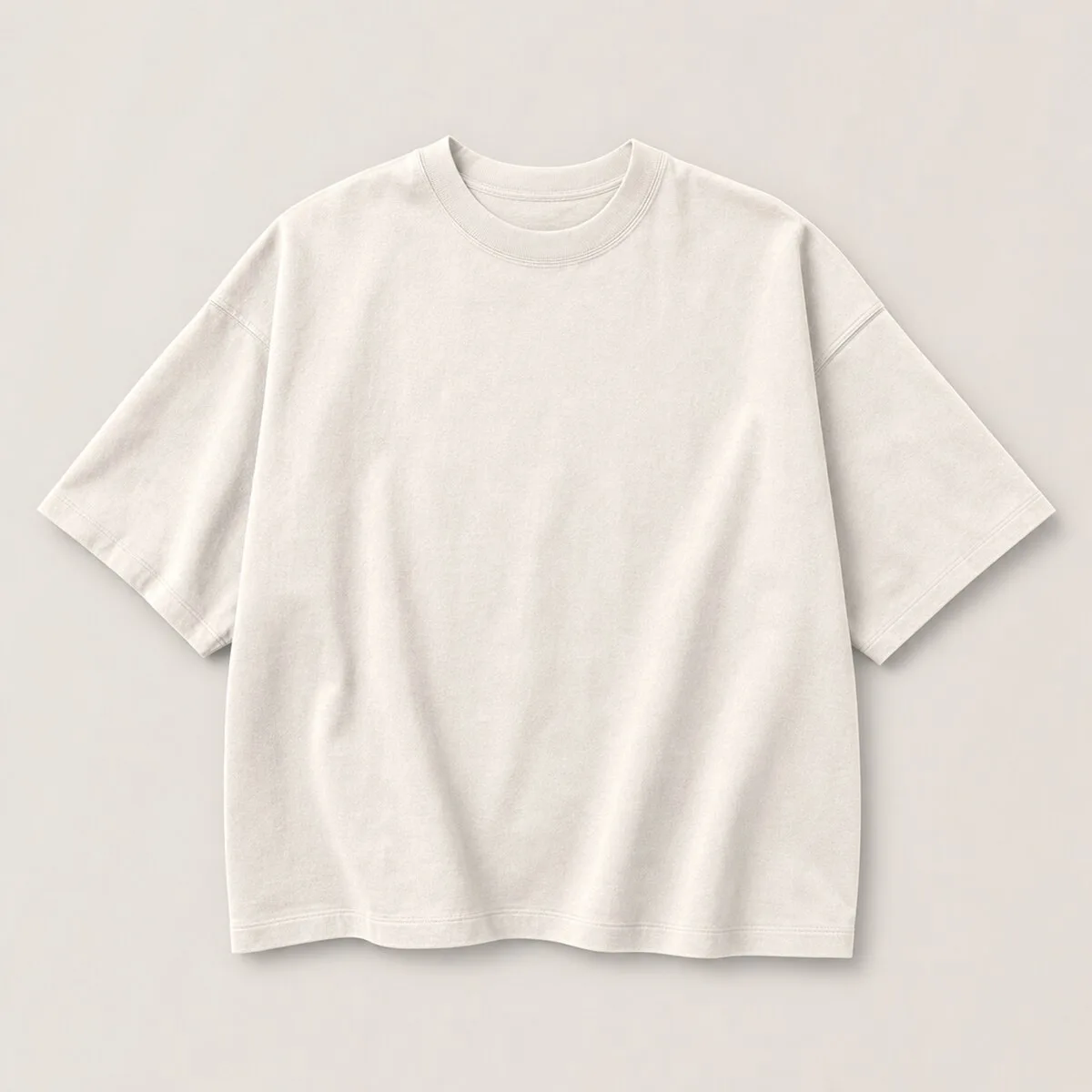
01 / Regular or relaxed / clean jersey
Clean everyday tees
Start with the body length, shoulder and neckline. Choose the jersey weight and add your own labels.
Jiashun / Cut & sew T-shirt production
Heavyweight, graphic and washed tees cut and sewn to your pattern, fabric and labels. Develop yours with our factory in Humen, Dongguan — from the first reference to an approved sample and bulk production.
MOQ 50 pieces per style, per color.
Made around your design
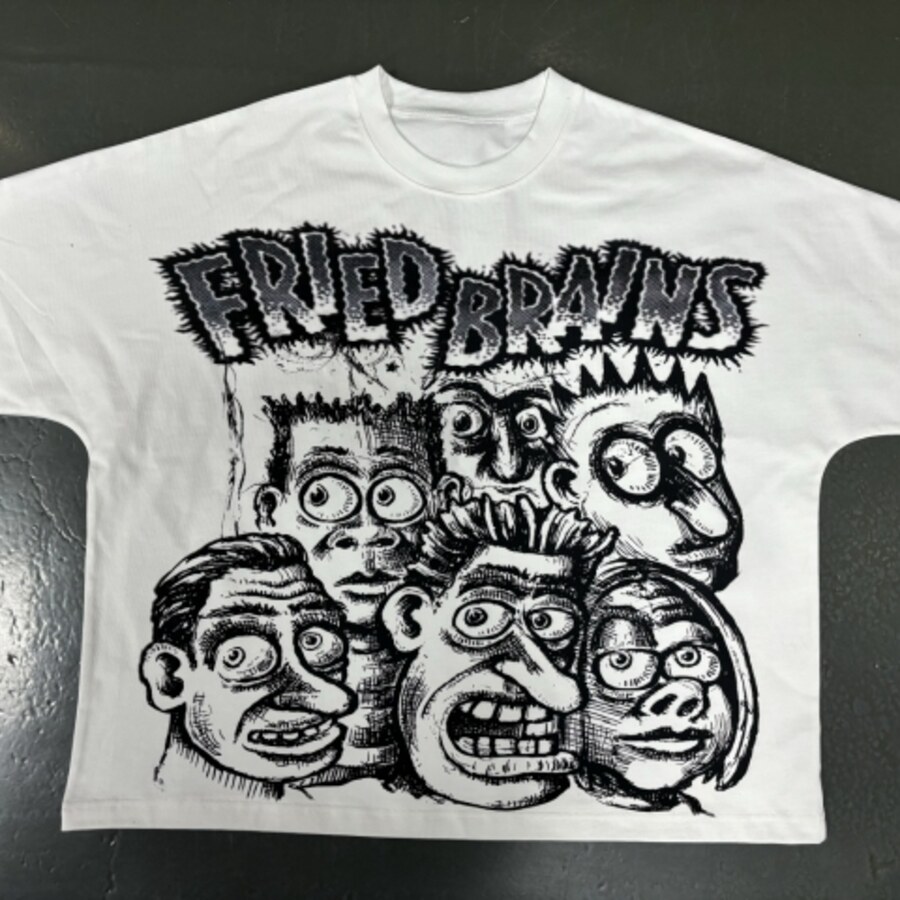
01 / Choose a starting point
Choose a reference to start your inquiry, then tell us what to change. Fit, fabric, finish and branding are developed for your project.
Swipe to compare styles →
01 / Regular or relaxed / clean jersey
Start with the body length, shoulder and neckline. Choose the jersey weight and add your own labels.
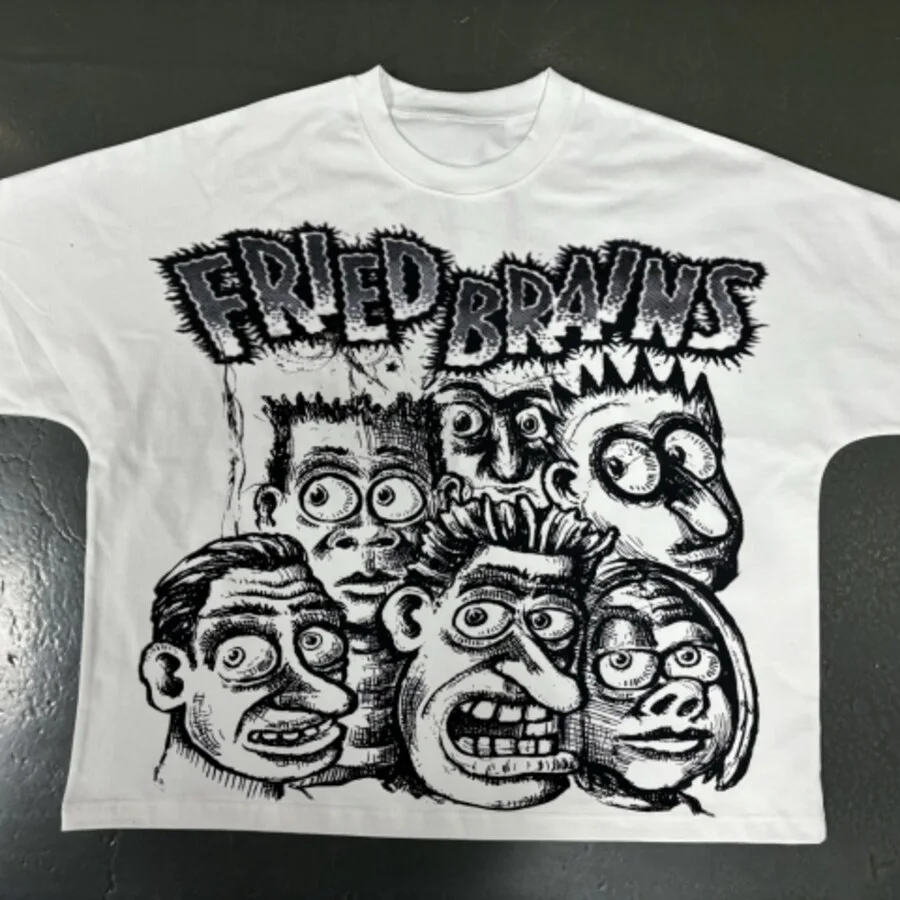
02 / Artwork-led / screen, DTG, puff or embroidery
Set the print method, size and placement around your artwork. Review scale and handfeel on your sample.
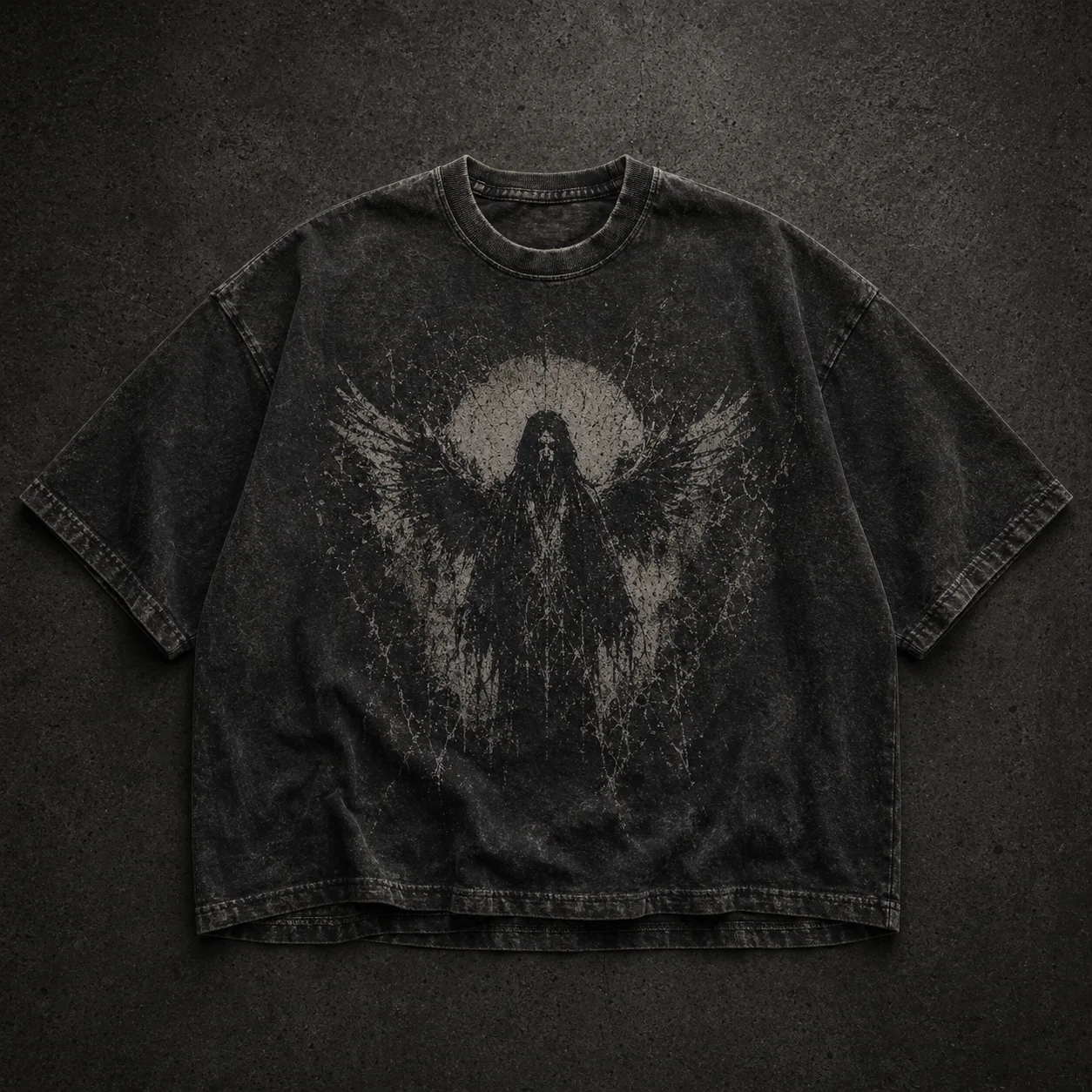
03 / Garment wash / faded colour
Develop the wash tone together with the fabric and decoration. Set the acceptable variation before bulk.
Building a boxy or drop-shoulder silhouette? See our custom oversized tee manufacturer.
02 / Build the base
Weight is one part of the brief. Share a reference tee or measurements so the knit, body width, length and shoulder work together.
100% cotton ring-spun jersey
Merch runs and graphic-led drops where the print carries the design
Combed cotton, tighter knit
Everyday brand staples with a cleaner drape than promo blanks
Dense ring-spun or open-end cotton
The premium streetwear staple — structured drape and a clean collar
Cotton jersey + garment wash
Acid, enzyme or sun-faded finishes applied to the finished garment
Cotton jersey with rib cuffs
Cold-season drops and sleeve-print layouts
Indicative development ranges. Confirm the fabric, measurements and wash behaviour on the physical sample.
03 / Make it yours
Screen print, DTG, puff print, embroidery decals, garment dye and distressing are developed with the fabric, then approved on the sample before bulk.
Set the collar width, rib recovery, shoulder position and body length. Review measurements after washing.
Plan the fit →Screen print, DTG, puff print or embroidery: choose the method after reviewing the artwork, fabric and quantity.
Compare decoration options →Define the target tone, faded effect and acceptable variation. Review the finish with the chosen decoration.
Explore wash finishes →Complete the tee with neck labels, care labels, hem tags, hang tags and your packing requirements.
Plan private labels →Your T-shirt project
Send a reference, artwork or tech pack. We review your requirements before confirming feasibility, the quotation and sample plan.
Attach your tech pack, reference images or artwork now, or describe the project in the form.
Discuss on WhatsApp04 / From reference to production
Work through the fabric, fit and decoration on a physical sample. Bulk follows the approved specifications after materials and production details are confirmed.
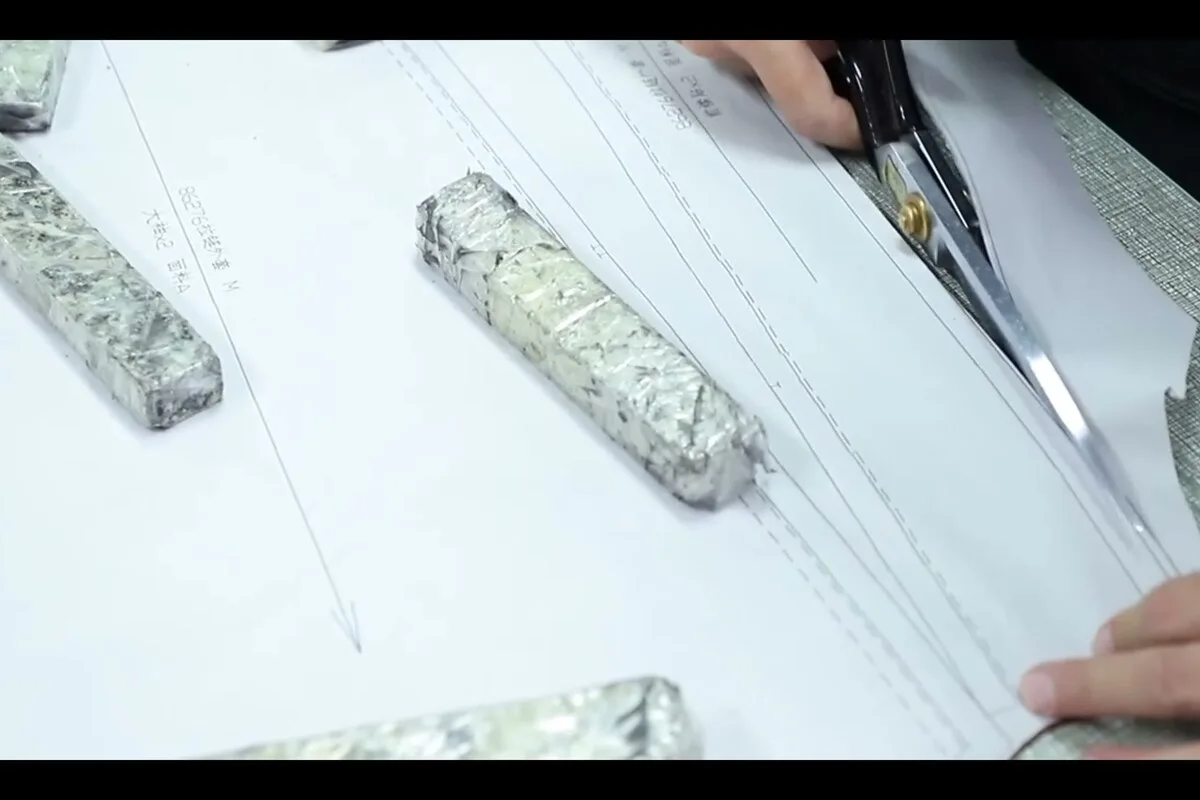
Jiashun factory · Humen, Dongguan
Send artwork files, a tech pack or a reference tee by form, email or WhatsApp. We check fabric weight, fit and whether your artwork suits screen print, DTG, puff print or heat transfer, then reply with a formal quotation after sufficient project details are reviewed.
Simple samples take 10-18 working days after project details are confirmed. Pricing and delivery are confirmed after project review. The sample uses your real fabric, print method and labels, so what you approve is exactly what bulk follows.
Check fit, fabric handfeel, print position and color on the physical tee. If the neck ribbing, print size or body measurements need a change, we adjust the pattern or artwork and re-photograph or re-sample before bulk.
Bulk starts after sample approval and material confirmation. MOQ is 50 pieces per style, per color. Project-specific production updates and checkpoints are agreed before work begins.
Each tee is checked and packed to your neck labels, hang tags and polybag spec. Shipping options, timing, cost, and trade terms are confirmed for the project and destination.
Tees usually ship alongside the rest of a drop. We also develop custom hoodie manufacturer, full cut-and-sew programs and private label streetwear as your custom streetwear manufacturer.
See the cut-and-sew floor at our factory in Humen, Dongguan.
Questions & answers
MOQ is 50 pieces per style, per color.
Sample pricing and delivery are confirmed after project review.
Simple samples take 10-18 working days after project details are confirmed. Bulk production takes 20-30 working days after sample approval and material confirmation. Delivery timing is confirmed by destination and shipping method.
Screen print suits solid-color artwork and larger runs; DTG handles photographic or many-color designs without screen costs. We recommend a method during design review based on your artwork, fabric and quantity.
Yes. Heavyweight 250-300 gsm cotton, garment dye and vintage washes are regular tee builds for us — the exact tone and handfeel are locked on the sample before bulk.
Payment methods and terms are confirmed in the formal quotation and invoice for each project.
250-300 gsm reads as premium heavyweight in streetwear. Above 300 gsm the tee gets stiffer and warmer — some brands want exactly that. We send fabric options with real weights at design review, and the physical sample settles it.
Yes — send the blank or its measurement chart and we build the pattern to that fit as a starting point, then adjust. Many brands move to cut-and-sew exactly this way: keep the fit customers already know, upgrade the fabric and construction.
A print shop decorates blanks it bought; T-shirt vendors resell stock designs. We are the factory — pattern, fabric, cutting, sewing, printing and labels under one roof — which is what makes true boxy patterns, 250-300 gsm weights and custom ribs possible in the first place.
Review the fit, material, decoration and approval decisions that support a clearer custom t-shirts brief.
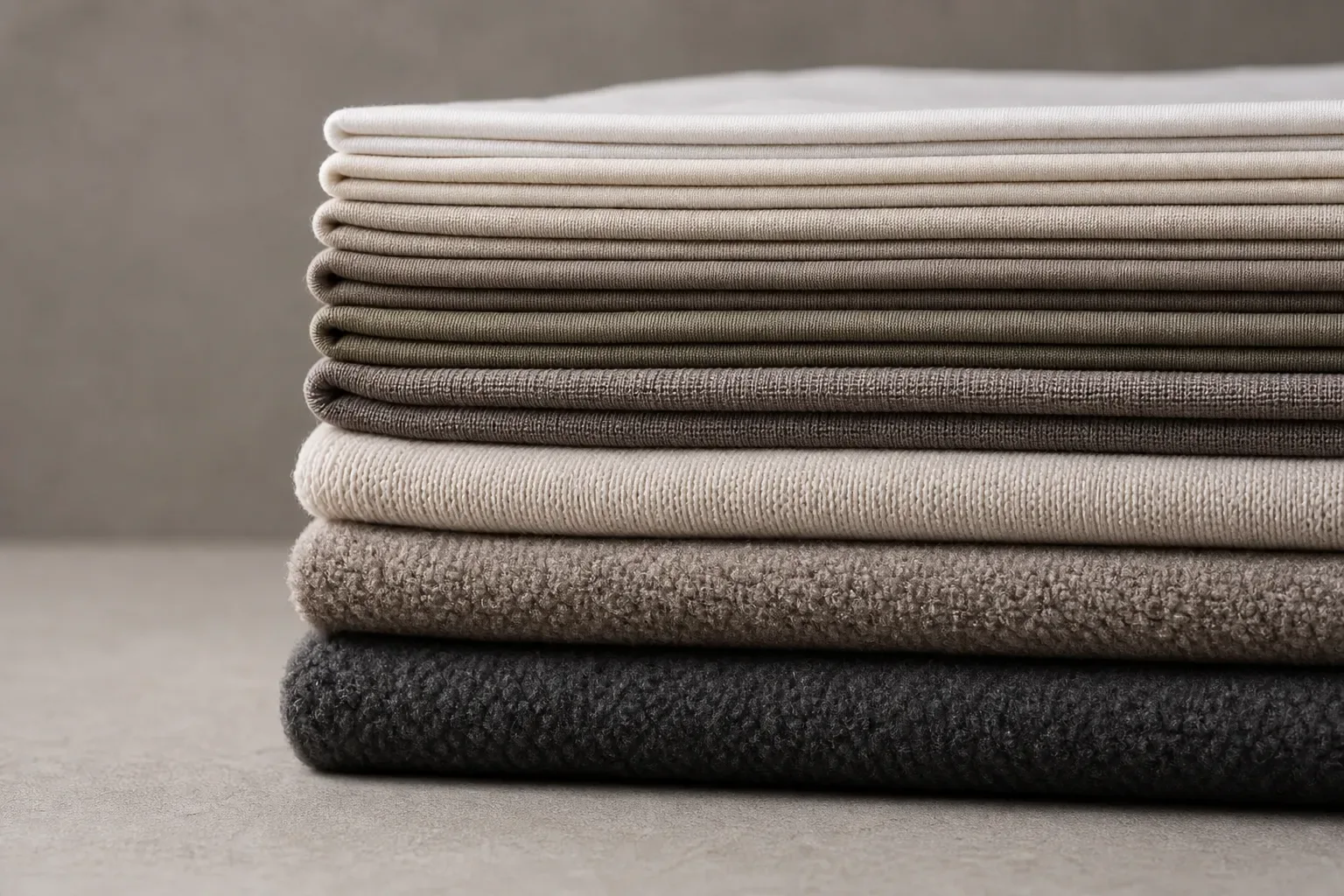
GSM measures finished fabric mass per area—not thickness, quality or finished garment weight. Compare candidate fabrics fairly, estimate component mass, and approve the actual garment sample.
Read guide →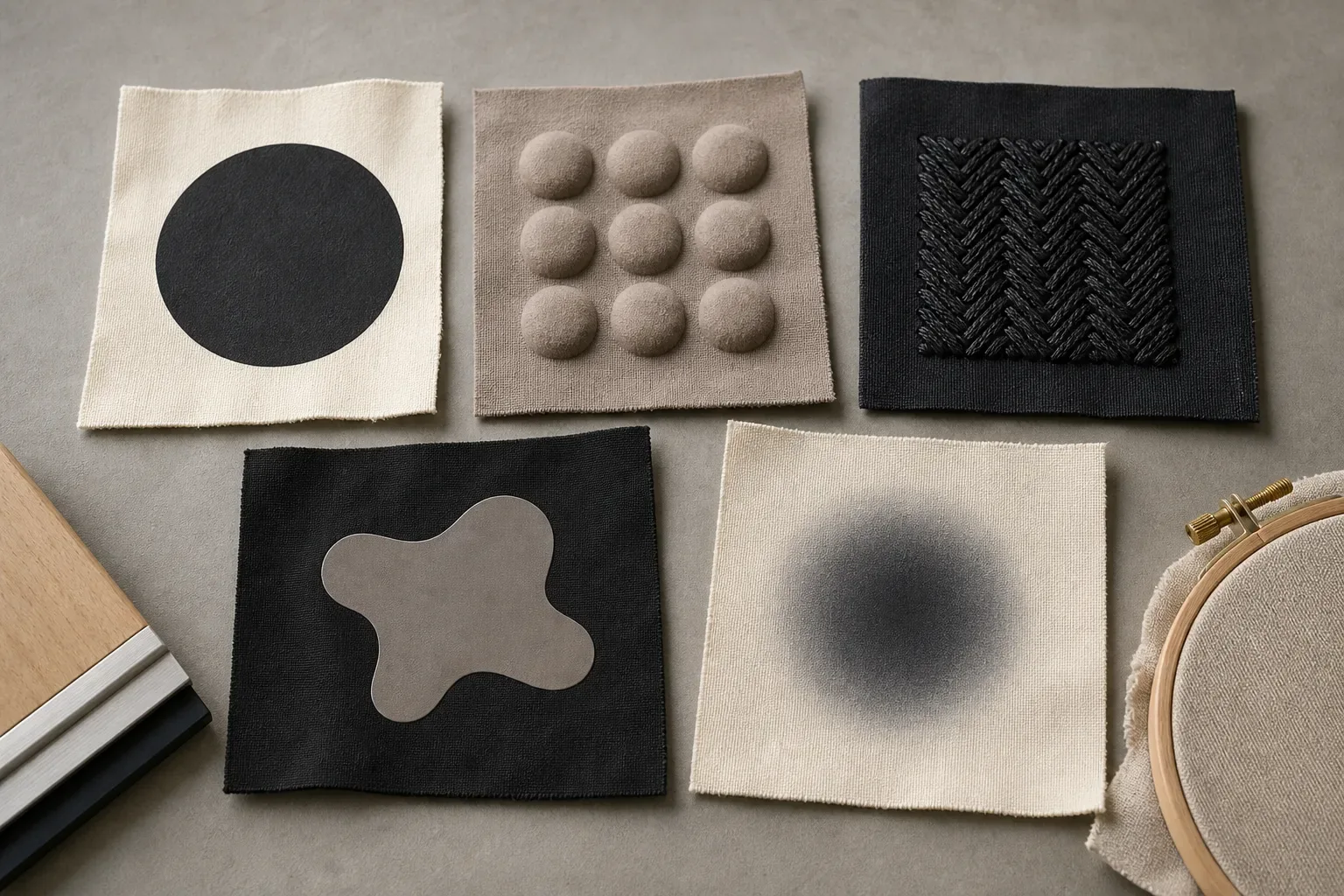
The five decoration methods compared where it counts: the 24-piece cost crossover, a method-by-fabric matrix, color capabilities, and a decision tree — from the factory floor that runs all five.
Read guide →
When 100% cotton is a technical requirement, when a blend serves the design better, and why fiber content is not a quality grade on its own.
Read guide →