Streetwear Manufacturers for Small Brands: 2026 Comparison
Compare ten streetwear suppliers by production model, public minimums, development route and brand stage, with a source-checked shortlist process.
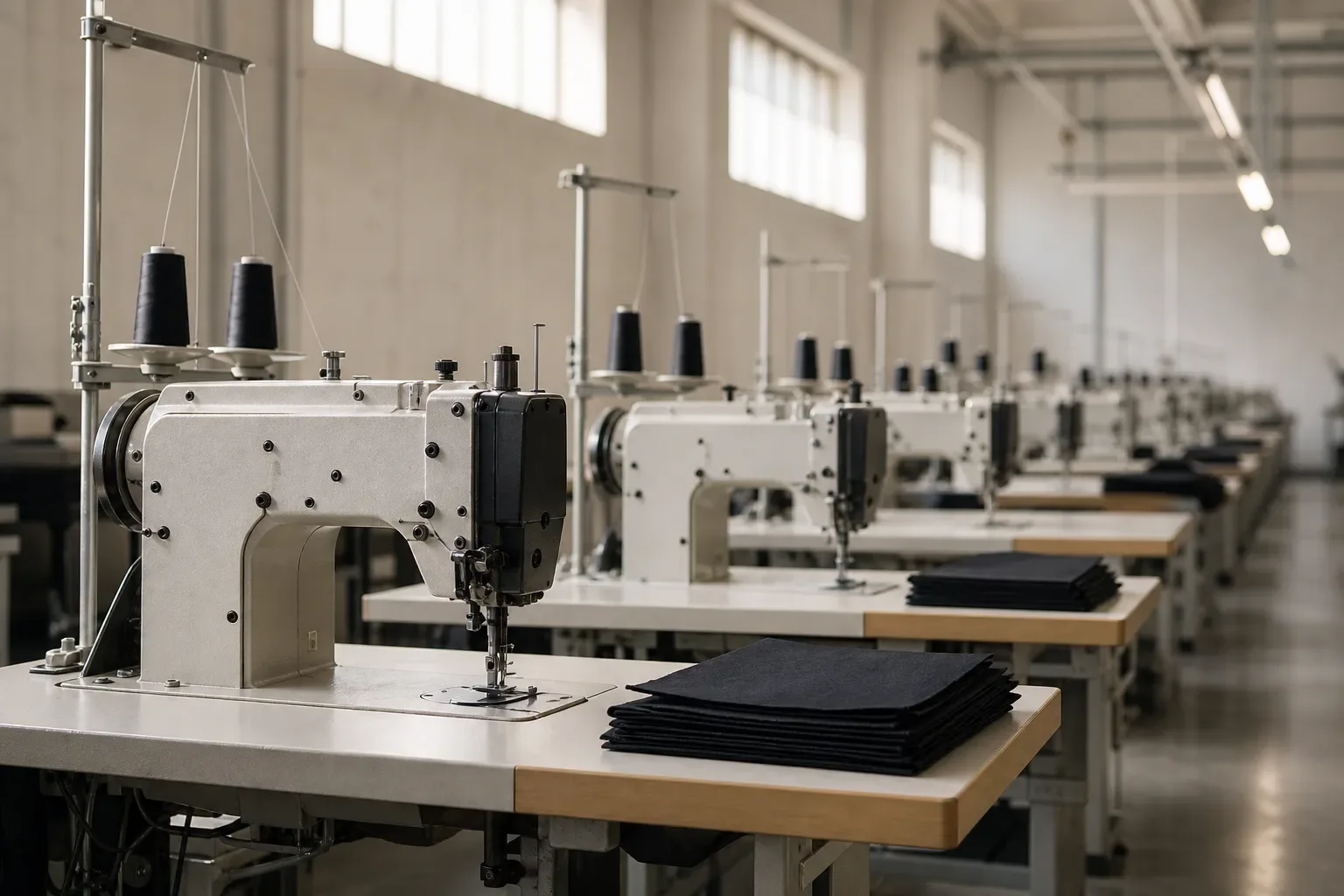
The right supplier depends on what you are making and what you have already proved. Print-on-demand works for testing graphics without inventory. A development studio helps turn an idea into production files. Cut-and-sew becomes relevant when the fit, fabric, wash and construction must belong to your brand.
This is a research-only comparison of ten current options, not a quality ranking. We reviewed each company's public website and terms on September 4, 2026. We did not place test orders with every company or audit their facilities, so public locations, minimums and capabilities below remain supplier-reported and should be reconfirmed for your project.
Jiashun Clothing publishes this article and is included in the comparison. Our interest is therefore explicit. Direct links below go to the companies' own websites, without affiliate tracking.
Key Takeaways
- Choose the production model before choosing a company: POD, on-demand knit, development studio, full-package cut-and-sew and CMT solve different problems.
- A public MOQ is not a quote. Confirm how the minimum splits across styles, colors and sizes, and what services the price includes.
- Build a shortlist of two or three candidates, send each the same controlled RFQ, then verify the actual transaction party and production route before paying.
Compare the production routes first
| Option | Production model | Reported route | Public minimum | Practical fit |
|---|---|---|---|---|
| Jiashun Clothing | Full-package cut-and-sew | Humen, Dongguan, China | Starts at 50 pieces | Original patterns, fabrics, washes and combined decoration |
| Apliiq | POD and private labeling | United States | No order minimum for POD | Testing graphics on catalog garments |
| Printful | POD and fulfillment | Global fulfillment network | No order minimum | Zero-inventory products across regions |
| Tailored Industry | On-demand 3D knitting | Brooklyn, New York | No order minimum on paid membership routes | Catalog, modified or original made-to-order knitwear |
| Lefty Production Co. | Development and full-package production | Los Angeles, California | Not publicly fixed | Brands needing local product development |
| Apparel Production Inc. | Development plus domestic and overseas production | New York, China, Indonesia and Dominican Republic routes | 200 to 350 per style, with specified color counts | Established projects comparing several production regions |
| Hawthorn | Managed overseas production | UK team, overseas factories | From 50 per design and color for some casual wear | UK brands wanting a UK-based management team |
| Hongyu Apparel | Blank, relabel and full-custom routes | Humen, Dongguan, China | 50 for blank or relabel; 100 for full custom on its homepage | Multi-category sourcing with different service levels |
| BOMME Studio | CMT and full-package production | Los Angeles or Tijuana CMT; Vietnam full-package | Streetwear page: CMT 200 per style; full-package 600 | Brands with production-ready inputs or larger full-package orders |
| FUSH | OEM and full-package production | Two factories in Serbia | Streetwear page: 500 per design/color; broader terms vary by fabric | Registered businesses with repeatable European production volumes |
Public terms can change, and the same company may set different minimums for blanks, custom patterns, knitwear, colors or special materials. Use this table to choose a route, not to approve a supplier.
What the production models mean
- Print-on-demand (POD): a provider decorates and fulfills products after a customer orders. It limits inventory exposure, but choices usually stay within the provider's product catalog.
- On-demand knit: knitwear is programmed and produced as ordered. This is a distinct route for sweaters and knitted products, not a substitute for every tee, hoodie, denim or outerwear program.
- Development studio or full-package production: the supplier can coordinate some or all of design development, material sourcing, patterns, samples and bulk production. Confirm which work is internal and which is subcontracted.
- CMT: cut, make and trim production normally expects the brand to supply production-ready specifications and often materials. Responsibilities vary, so define them in the quotation.
- Full-custom cut-and-sew: the garment is built around an approved pattern, fabric, construction and finish rather than decorated as a catalog blank.
If you are deciding between catalog products and an original garment, use the fuller POD versus cut-and-sew decision guide before contacting factories.
Ten options, matched to a specific use case
The sequence below is not a quality score. It starts with low-inventory models, moves through development-led services, and finishes with production routes that publish higher minimums.
1. Jiashun Clothing - For first custom cut-and-sew drops
- Model: Full-package cut-and-sew menswear.
- Reported location: Humen, Dongguan, China.
- Public minimum: Starts at 50 pieces; the final minimum depends on product, fabric, wash, customization and color breakdown.
- Sampling path: Simple samples typically take 10 to 18 working days after project details are confirmed; complex styles or processes take longer. Bulk production typically takes 20 to 30 working days after sample approval.
- Best fit: Brands moving beyond catalog blanks into their own patterns, heavyweight fabrics, washes, labels and combined print or embroidery.
Jiashun's custom streetwear manufacturing is structured for custom menswear rather than one-off fulfillment. A brand should still confirm its exact quantity matrix, development scope, sample charge, bulk lead-time trigger and delivery term before treating these public starting points as an offer.
2. Apliiq - For testing graphics without inventory
- Model: POD, catalog-product decoration, private labeling and fulfillment.
- Reported location: United States.
- Public minimum: No order minimum for print-on-demand.
- Sampling path: Order the selected catalog product and decoration before promoting it as an approved brand product.
- Best fit: New brands validating artwork or selling limited graphic products without holding stock.
Apliiq also publishes private-label options. The central constraint is the production model: a no-minimum POD order does not mean unrestricted control over the base pattern, fabric or wash. Check the exact product, branding option, fulfillment location and current subscription or service terms.
3. Printful - For multi-region POD fulfillment
- Model: POD, catalog-product decoration and fulfillment.
- Reported location: A global fulfillment network.
- Public minimum: No minimum order quantity.
- Sampling path: Place a sample order for the exact catalog SKU, color and decoration method you plan to sell.
- Best fit: Graphic merchandise, demand testing and products sold into more than one region without pre-purchasing inventory.
Printful offers printing, embroidery and some all-over-print products, but its product catalog defines the available construction routes. Compare the landed cost, product availability by fulfillment region and branding choices against your expected order pattern rather than comparing only the base product price.
4. Tailored Industry - For on-demand knitwear
- Model: 3D-knit product development, on-demand production and Shopify fulfillment.
- Reported location: Brooklyn, New York.
- Public minimum: Its paid membership routes state no order minimum.
- Sampling path: Boutique selects from more than 300 market-ready styles; Studio modifies those styles; Flagship adds support for an original product. Approve the applicable catalog or development route before activating orders.
- Best fit: Brands building sweaters or other knit-to-shape products without committing to a conventional bulk run.
Tailored Industry is here because on-demand knitwear fills a different gap from printed blanks. It should not be treated as a general solution for fleece hoodies, woven jackets or denim. Confirm membership fees, development charges, yarn choices, fulfillment terms and ownership of the approved program.
5. Lefty Production Co. - For Los Angeles development support
- Model: Design support, sourcing, pattern making, sampling, production and packaging.
- Reported location: Los Angeles, California.
- Public minimum: Lefty describes low minimums for clients developing products with its team but does not publish one fixed number.
- Sampling path: Begin with development and sampling, then obtain the style-specific production minimum and quote.
- Best fit: Brands that value local development access and need help turning a concept into production inputs.
"Low minimum" is not a usable quantity until it is tied to a style, color, fabric and development scope. Ask which processes happen in Los Angeles, which may be external, and whether the quoted production minimum depends on completing development with Lefty.
6. Apparel Production Inc. - For comparing New York and overseas routes
- Model: Product development with domestic and overseas production options.
- Reported location: New York, with published China, Indonesia and Dominican Republic routes.
- Public minimum: Its current FAQ lists 200 per style in three colors for New York; 300 in four colors for China or Indonesia; and 350 in three colors for the Dominican Republic.
- Sampling path: Development and pre-production approval are linked to the intended production order and route.
- Best fit: Brands with enough volume to compare local access against overseas production options.
This is not simply a small-run New York workshop. Route, responsibility and minimum change with production location. Ask the company to identify the legal seller, production site, included development work and current minimum on the same quotation.
7. Hawthorn - For UK-managed overseas production
- Model: Clothing development managed by a UK team, with bulk production in overseas factories.
- Reported location: London office and overseas production network.
- Public minimum: Hawthorn's FAQ says some casual wear can start at 50 units for each design/color combination, while knit products typically start at 100.
- Sampling path: Product development and sample approval precede a qualifying production order.
- Best fit: UK brands that want a nearby account and development team while accepting an overseas production route.
A UK office is not the same as UK manufacturing. Ask where cutting, sewing, decoration and packing will occur for your order, then price freight, duties, communication and dispute handling around the disclosed route.
8. Hongyu Apparel - For multiple service levels from one supplier
- Model: Ready-made blanks, relabeling and full-custom development.
- Reported location: Humen, Dongguan, China.
- Public minimum: Hongyu's homepage lists 50 pieces for blank or relabel orders and 100 pieces per style and color for full customization.
- Sampling path: The route chosen determines whether the buyer approves a catalog garment, decoration sample or fully developed sample.
- Best fit: Brands comparing faster blank-based launches with a separate full-custom route across several apparel categories.
Current Hongyu pages publish conflicting full-custom minimums. Treat the homepage figures as a lead, not a settled term. Require the current style and color breakdown, production site, sample route and included services in writing.
9. BOMME Studio - For production-ready CMT or larger full-package orders
- Model: CMT and full-package production.
- Reported location: Los Angeles cutting and quality control, sewing in Los Angeles or audited Tijuana facilities for CMT; Vietnam for full-package production.
- Public minimum: BOMME's streetwear page states 200 units per style with no more than two colorways for CMT, and 600 per style for full-package production.
- Sampling path: Development readiness depends on the route; CMT expects more buyer-owned production inputs than full-package work.
- Best fit: Brands with production-ready materials for CMT or enough demand for a higher-minimum full-package program.
Other current BOMME pages publish a 150-unit CMT minimum, so its own website is inconsistent. Use the streetwear-specific figure only as a planning lead and require the applicable MOQ on the quote. The CMT and full-package routes should not be combined into one vague "small batch" claim; ask for a responsibility matrix covering patterns, grading, material purchasing, decoration, transport between sites and final quality approval.
10. FUSH - For established European production volumes
- Model: OEM and full-package apparel production.
- Reported location: Two factories in Serbia.
- Public minimum: Its streetwear page states 500 pieces per design and color. Its broader production page instead states 500 per design or color for cotton clothing and 150 for polyester clothing.
- Sampling path: FUSH describes paid sample making as a mandatory first step before production.
- Best fit: Registered businesses with repeatable demand that want a disclosed European factory route.
FUSH states that clients must be registered companies with valid VAT and EORI numbers. Its streetwear minimum makes it a different-stage option from a 50-piece first drop, while the fabric-specific page shows why the exact product must be confirmed. Verify product eligibility, the precise quantity split, sample fee, fabric responsibility, approvals and commercial terms before comparing it with lower-minimum routes.
If the ten options do not fit: use a sourcing platform
Sewport is a marketplace, not a manufacturer. A buyer posts a project, receives proposals from suppliers and can use the platform's formal offer and payment workflow. This can widen the candidate pool for an unusual project, but platform participation is not evidence that a particular supplier fits your order. Apply the same legal, facility, capability and payment checks to each respondent.
Build a shortlist without comparing unlike offers
Start with two or three candidates that match the same production model. Sending a POD listing, a CMT factory and a full-package studio the same vague message will produce prices for different products and services.
Send every shortlisted supplier one controlled input pack:
- Product revision: style code, tech-pack version, artwork files and the specific features that must match a reference garment.
- Quantity matrix: units by style, color and size, plus any requested price breaks.
- Scope: who supplies fabric, trims, patterns, grading, labels, packaging and freight.
- Sample request: sample type, included revision rounds, charge, courier cost and the approval that starts bulk production.
- Timing: sample lead-time trigger, bulk lead-time trigger and requested shipment window.
- Commercial boundary: currency, payment milestones, named delivery place and requested Incoterm rule.
- Production route: legal seller, payment beneficiary, and the facility responsible for cutting, sewing, decoration, inspection and packing.
The clothing manufacturing RFQ checklist shows how to keep those inputs under revision control. When quotations return, use the factory quote comparison guide to normalize inclusions and assumptions before comparing unit prices.
Discovery is only the first gate. Before paying, verify the entity, actual facility, order-specific capability, subcontracting route and payment authority using the manufacturer vetting framework.
Frequently asked questions
What is the best streetwear supplier for a small brand?
There is no defensible universal winner without a defined product, quantity, region and service scope. POD fits a zero-inventory graphic test. A development studio fits a concept that still needs production files. A full-custom cut-and-sew route fits a garment whose pattern, fabric and construction must be original.
What MOQ should a new streetwear brand accept?
Use the lowest quantity that still supports the intended product and does not force an unsafe cash commitment. Then ask how the minimum applies across styles and colors. "50 pieces" can mean 50 total, 50 per style, or 50 per style and color, which creates very different inventory exposure.
Is an overseas production route automatically riskier than a local one?
No country label answers that question by itself. Cross-border orders add freight, customs, time-zone, communication and enforcement variables. Local routes can simplify access but may change costs and available capacity. Compare the named supplier, actual sites, contract, controls and recovery options for the specific order.
Should I order a sample before bulk production?
Use the sample and approval route appropriate to the production model. For a custom garment, document what the approved sample proves, which changes remain open and what starts bulk production. Some development businesses do not accept standalone samples without a production program, so ask about that policy before paying a development charge.
How often should this comparison be rechecked?
Recheck supplier terms before every RFQ. This article was reviewed on September 4, 2026, but minimums, facility routes, membership terms and services can change without notice. The signed quotation and contract for your current project should control the decision.
Choose the route, then verify the company
Use POD to test demand, development support to close missing production inputs, and cut-and-sew when the garment itself needs to be proprietary. Once the route is clear, shortlist two or three suppliers and compare the same product revision, quantity split and commercial boundary.
If your project is a custom menswear drop rather than a catalog-based POD launch, send your brief to Jiashun Clothing, a custom streetwear manufacturer in Dongguan. We will confirm whether the product, minimum, development path and timing fit before quoting.