Print-on-Demand vs. Cut-and-Sew: When Should Your Brand Switch to a Factory?
A practical comparison of print-on-demand and cut-and-sew: how to compare costs, where custom manufacturing changes the product, and a three-question switching test.
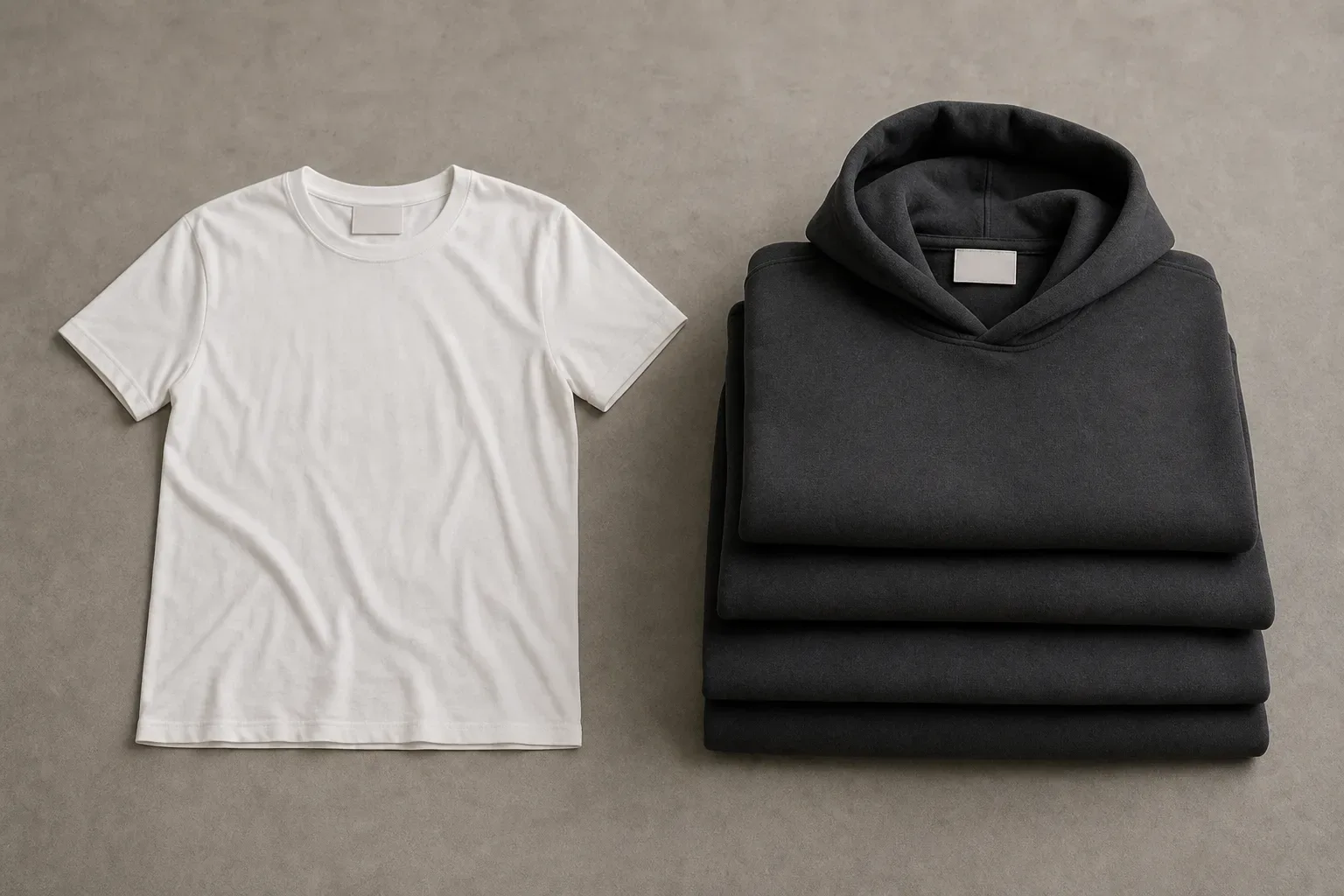
Many streetwear brands do not start with a factory. They start with Printful, Apliiq or another print-on-demand service: upload a design, a customer orders, and a decorated blank is fulfilled. That can be a practical way to test demand without placing a stock order — and we say that as a cut-and-sew factory.
As a brand grows, two questions tend to appear: whether a proven product could support better unit economics, and whether the next design needs more control than a standard blank provides. This article explains how to assess that moment with your own numbers.
What POD is actually costing you
Provider pricing structures differ. For example, Printful says its base product price includes the blank, one print or embroidery placement and fulfillment, while shipping, taxes and optional extras are separate. The useful comparison is therefore not a generic internet price: it is your current landed POD cost after all applicable decoration, fulfillment, shipping and platform charges.
Cut-and-sew changes the cost structure. You fund product development and a bulk production run, while the factory quotes the actual fabric, pattern, construction, decoration, labels and packing. Whether it is cheaper per sellable unit depends on that specification, the order quantity, freight and your inventory sell-through.
The commercial model side by side:
| Print-on-demand | Jiashun cut-and-sew | |
|---|---|---|
| Cost basis | Provider price for a catalog blank, decoration and fulfillment | Project quote for the approved specification and production run |
| Production minimum | Depends on the POD provider; often ordered one at a time | Starts from 50 pieces; final minimum varies by product, fabric and customization |
| Upfront commitment | Usually no bulk stock order | Sample development, then an approved bulk order |
| Timing | Fulfilled per customer order under the provider's terms | Simple sample: typically 10-18 working days after confirmation; complex styles or processes take longer; bulk: typically 20-30 working days after approval |
| Product control | The provider's available blanks and options | Custom fabric, pattern, construction, decoration and labels |
Where standard POD blanks can limit the product
Cost is only half the comparison. The other half is the product itself:
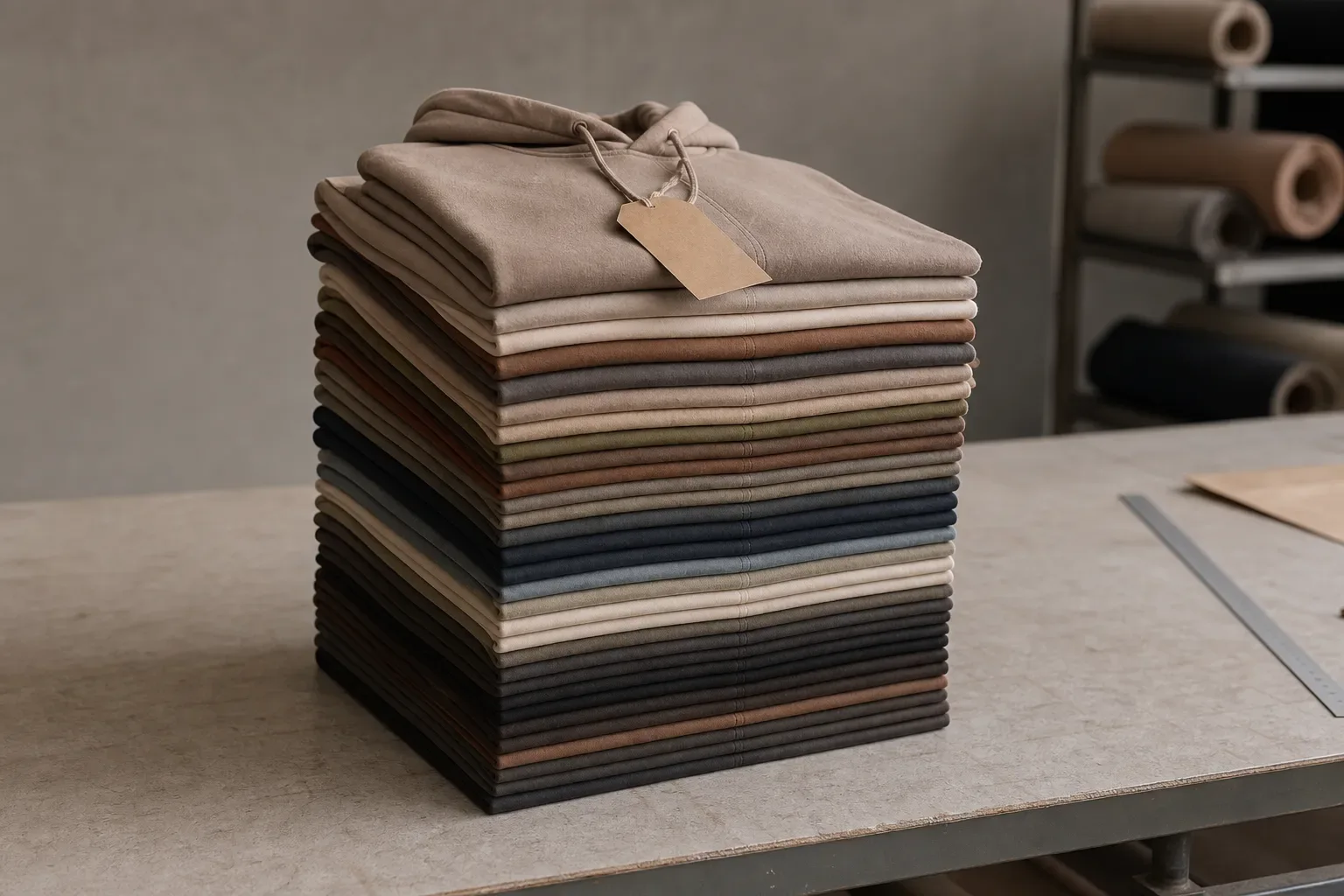
- Fabric weight and handfeel. With a standard blank, you choose from the provider's fabric catalog. Cut-and-sew lets the fabric be specified for the product.
- Fit. Drop shoulders, cropped bodies and specific sleeve proportions require control of the pattern rather than selection from a fixed blank size chart.
- Washes. Stone, enzyme, acid and sun-fade effects are garment-development processes that must be sampled and approved; availability varies across POD catalogs.
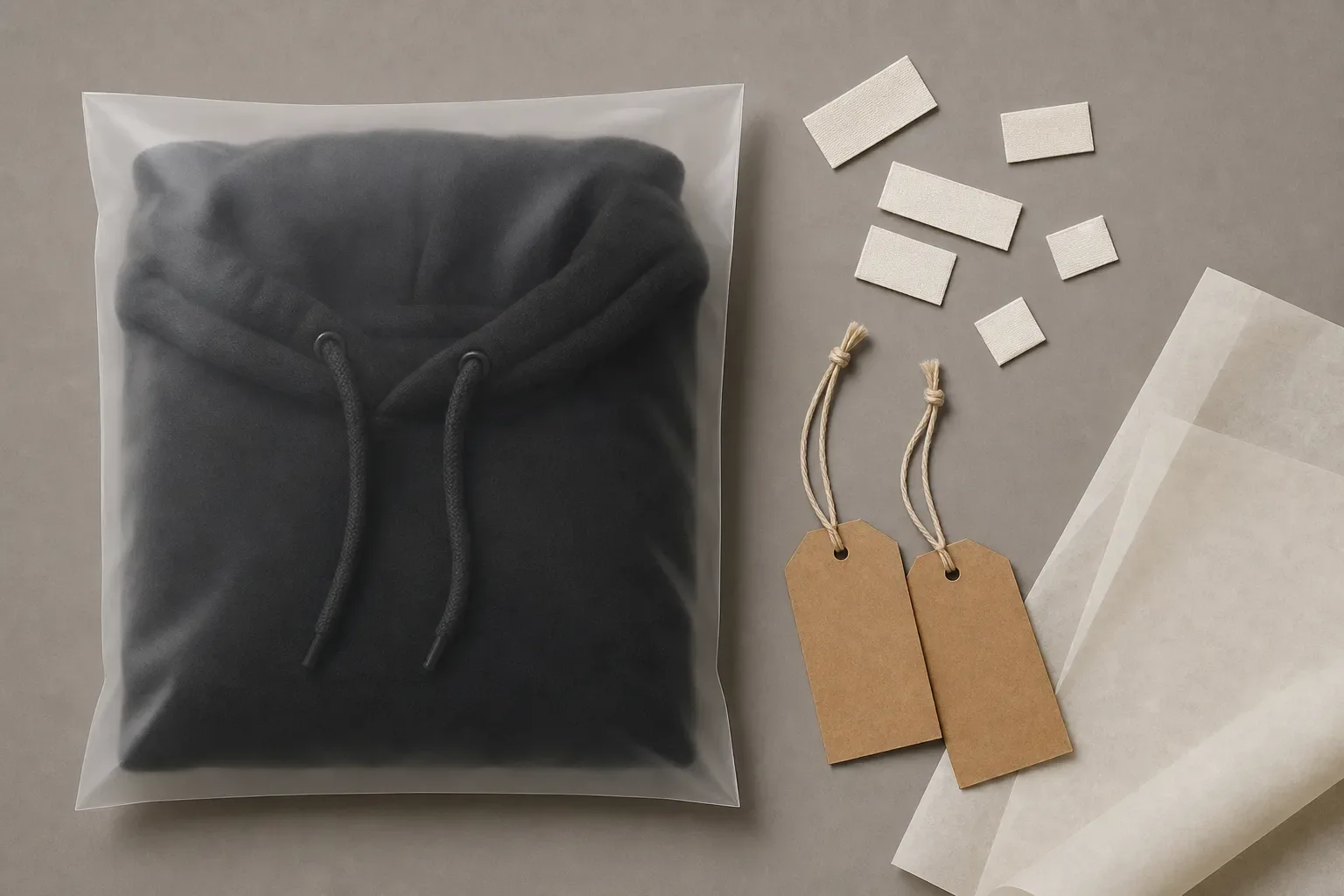
- Private label details. Some POD services offer relabeling — Apliiq is one published example — while a cut-and-sew program can coordinate the complete private label package, including labels, trims and packing selected for the project.
If your roadmap depends on these details, ask whether the current POD provider offers them at the control level you need. If not, a cut-and-sew quote gives you a concrete alternative to compare.
The switching test: three questions
1. Does one design have proven, repeatable demand? A consistent POD sales history gives you evidence for estimating a planned production run. That design can be the first cut-and-sew candidate to quote and sample.
2. Can you plan a production run? Our cut-and-sew orders start from 50 pieces. The final minimum depends on the product, fabric and customization, so confirm it from the actual brief rather than assuming one number applies to every design.
3. Can you plan for development and bulk production? Simple samples typically take 10-18 working days after project details are confirmed; complex styles or processes take longer. Bulk production typically takes 20-30 working days after sample approval. Final timing depends on the project, logistics and timely buyer feedback, so build the confirmed schedule into the drop plan.
If the answers are yes for one proven design, it is worth comparing a factory quote with the real landed cost and constraints of your current POD setup.
To widen the shortlist without mixing production models, the streetwear manufacturers compared by brand stage separates POD, studios and cut-and-sew factories before you request like-for-like quotes.
What switching actually looks like
At our factory the path is: share the design and product requirements, confirm the details needed for a project-specific quote, develop and approve the sample, then move into the agreed bulk run. Orders start from 50 pieces, while the final minimum, sample fee, schedule and any production updates are confirmed for the project. Timely answers to material, fit and artwork questions help keep development moving.
A custom factory sample serves a different purpose from a POD product sample: it validates your own fabric, pattern, wash, artwork and label specification before bulk production. Record the approved details on the physical garment and the sample approval checklist, not only on a mockup.
Keep POD — for the right jobs
Switching does not have to be all-or-nothing. A brand can use both models for different jobs:
- Core products with proven demand → compare cut-and-sew when more product control and the projected unit economics justify a stock order.
- New design tests → POD, to limit the stock commitment while testing demand.
- Long-tail and merch — one-off collabs, fan pieces, regional tests → POD, where inventory would be dead weight.
POD can remain a testing and fulfillment channel. Cut-and-sew becomes relevant when a product needs a custom specification and the brand can support a planned production run. The right split follows the product and the numbers, not a rule that one model must replace the other.
FAQ
What quantity makes cut-and-sew cheaper per unit than POD? There is no universal crossover quantity. Ask for a quote on the actual design after the product details are clear, then compare the factory's landed cost per sellable unit with your current POD cost, including fulfillment, freight, fees and expected unsold stock.
Do I need a tech pack to leave POD? Not necessarily for our initial project review. Send reference photos, target sizing and artwork files, and we confirm which specifications are still needed before the project can be quoted and sampled.
What happens if the factory sample is not right? Document the gaps against the brief, agree the revision scope, timing and any fee, then re-sample the affected details before bulk approval.
Can I switch just one product? Yes. Quote and sample one proven product, then compare its landed cost, product control and inventory risk with the current POD route. Move that product only if the comparison works; the rest of the catalog can stay on POD.