Dead Cotton White Specks in Fabric: A Buyer Investigation Guide
Dead cotton white specks are an appearance to investigate, not a diagnosis from a photo. Build a traceable roll-and-lot record before holding, testing or releasing material.
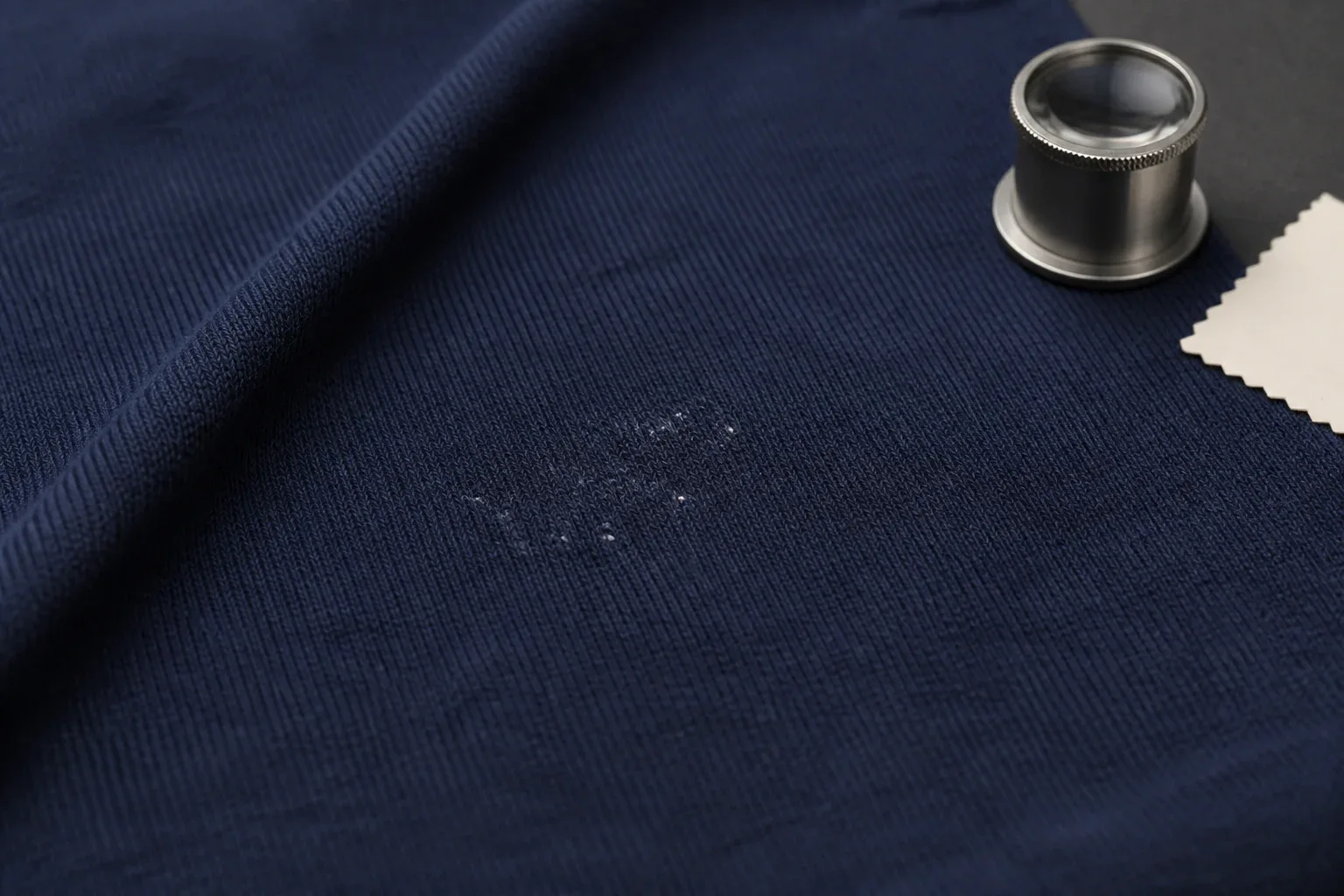
Dead cotton white specks are commonly discussed when small pale points become conspicuous on dyed cotton fabric. Textile research associates white-speck neps with entangled immature or undeveloped cotton fibers that color differently from the surrounding material. That description defines a technical problem; it does not prove that every pale mark in a buyer's photograph has the same origin.
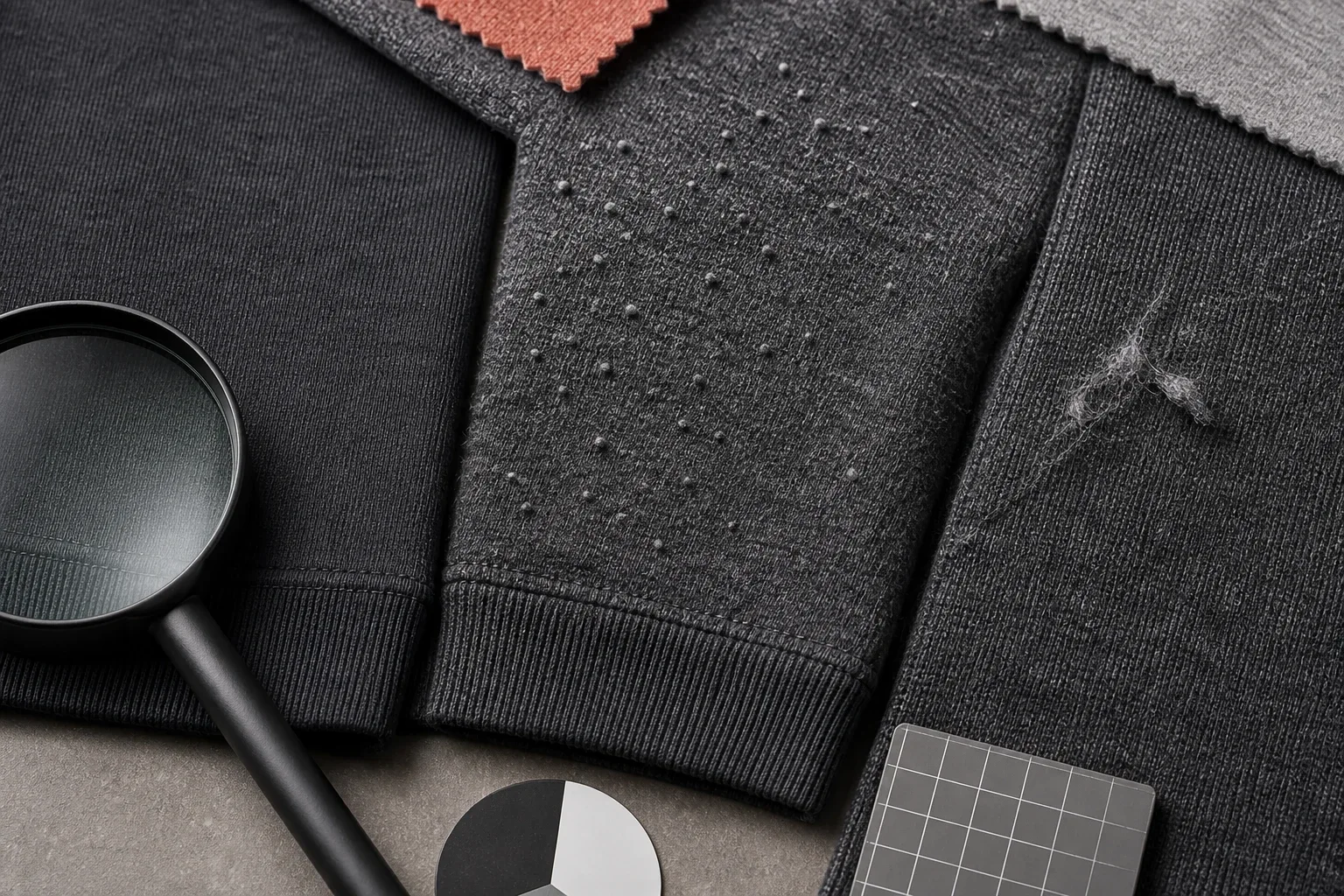
Loose lint, attached pills, a missed area in a print, directional barré and an intentional slub can produce different kinds of light marks. Before naming a cause, identify what was inspected, where it came from and whether the feature is embedded in the fabric or merely resting on its surface.
This guide owns the buyer-side investigation: appearance classification, sample identity, roll-and-lot mapping, evidence requests and a decision record. It does not set spinning or dyeing parameters, diagnose a mill process remotely or create a universal tolerance.
What Do Primary Sources Actually Establish?
USDA Agricultural Research Service describes white-speck neps as being composed of immature cotton and notes that they may be difficult to detect before dyeing. Its technical abstract says the contrast is particularly visible in dark shades. Dyeing can therefore expose the appearance more clearly; that observation alone does not show when or where the underlying fiber condition arose.
A separate USDA record describes a Fiber Image Analysis System that labels highly translucent fiber sections as “dead.” That research compared maturity measurements with white-speck levels across 16 cottons. The label, preparation and relationship belong to that defined system and study. They are not a visual test a buyer can apply to one finished garment.
ASTM D1442-06(2024) covers maturity measurement for loose, chemically untreated cotton fibers, including fibers taken before processing or unraveled from a textile product. Its public significance statement explains that cottons with the same Micronaire reading can differ greatly in maturity, and it identifies between-laboratory precision limitations for acceptance testing. A Micronaire value by itself therefore cannot confirm why a finished fabric has white points.
Published detection studies are also method-specific:
- A USDA image-analysis study evaluated eight plain-weave and 35 sateen fabrics with a defined imaging system. Its finding about 24 three-by-four-inch images describes that experiment, not a universal apparel inspection plan.
- A Journal of Cotton Science study developed human inspection techniques for dyed yarn and fabric made from that yarn. Dyed-yarn readings were less variable than readings on dyed knit tubes in the study, and the authors said the yarn method showed promise. That result does not create a portable pass/fail count for production fabric.
The useful conclusion is narrow: qualified measurement can support an investigation when the specimen, method and scope are named. None of these sources allows a root-cause verdict from an isolated image.
Separate White-Speck Candidates From Look-Alikes
Photograph the original condition before brushing, washing or cutting. Then route the observation according to what the evidence shows.
| Appearance in the identified sample | First evidence question | Canonical next route |
|---|---|---|
| Small pale points that appear embedded in dyed cotton | Do they remain part of the yarn or fabric under close examination? | White-speck investigation; still not proof of cause |
| Loose pale fibers that can be lifted from the surface | Is this external lint or handling contamination? | Contamination and handling review |
| Raised fuzz or attached fiber balls | Is the surface change fuzzing or pilling rather than an embedded speck? | Fabric pilling guide |
| Pale gaps confined to artwork, an edge or one decoration layer | Does the substrate remain normal outside the decorated area? | Print or strike-off evidence, not this owner |
| Repeated bands following a fabric direction | Is the observation a directional or repeating structure? | Barré evidence guide |
| Regular slubs or neps matching the approved material reference | Was this texture intentionally accepted? | Fabric swatch approval |
Different symptoms may coexist. If a garment has both removable lint and embedded points, record them separately. A successful removal check for the lint does not close the embedded observation.
Build a Traceable Evidence Package
Start with identity, not adjectives such as “bad fabric” or “many specks.” For each affected or comparison sample, record:
- purchase order, style, color and garment or material component;
- supplier article, declared composition and knit or weave construction;
- roll, fabric lot and coloration batch where those records exist;
- greige, prepared, dyed, finished, cut-panel, sewn or after-care state;
- exact roll position or garment panel, face/back and fabric direction;
- full-width or full-garment view, close view with scale, and an adjacent comparison under the same light;
- number and selection basis of rolls, cuttings or garments examined; and
- physical sample ID, storage location and every handling step after discovery.
Map the distribution rather than reporting only the worst image. State whether points occur across the width, at isolated positions, on one roll, across related rolls, in one color or after a particular recorded state. If upstream yarn, bale or process relationships are unavailable, mark them unavailable. Do not infer them from speck spacing or garment location.
An apparently clean control is useful only when its identity and viewing conditions are comparable. It does not prove that every unexamined roll is clear.
Ask a Mill or Laboratory a Bounded Question
Send the evidence package with questions that a responsible technical party can answer from records and specimens:
- How is the observed feature classified, and which alternatives were excluded?
- Which affected and control specimens were examined, in what state and by what named method?
- What roll, lot, yarn or other production relationships are documented rather than assumed?
- Does the result describe appearance, distribution, fiber maturity or a supported cause? What remains uncertain?
- If a change is proposed, what identified trial and comparison will test it before any broader disposition?
A photograph is not a basis for prescribing carding, spinning, preparation, dyeing or finishing settings. Nor does the research above establish that a specific commercial mill or laboratory offers a particular analysis. Confirm provider capability, method, specimen requirements and reporting scope for the actual project.
When a report arrives, check issuer, sample identity, method and edition, preparation, individual results, limitations and represented population. The textile test report guide keeps the technical result separate from the buyer's commercial decision.
Turn the Evidence Into a Controlled Decision
There is no universal white-speck count or shade rule in the sources cited here. The buyer and supplier need a project-specific visual reference, examination basis, sampling scope and disposition authority.
| Buyer state | Minimum record |
|---|---|
| Temporary hold | Exact rolls, panels, garments or work in progress; location; prohibited next step; decision owner |
| Inspect or test | Selection basis, specimen IDs, method, comparison reference and agreed decision rule |
| Controlled trial | Changed condition named by the responsible party, separate trial identity, control and resubmission gate |
| Release a defined scope | Exact material released, evidence supporting separation and any tracking or use restriction |
| Reprocess and resubmit | Authorized route, new process-state identity and evidence required before reuse |
| Replace or reject | Quantified scope, segregation record and commercial authorization |
One affected cutting does not automatically justify rejecting a full lot. One clear cutting does not justify releasing it either. Expand or narrow the hold according to traceable relationships and results from the agreed examination plan.
Reopen the decision when the material identity, lot, color process, finish, after-care state or proposed reprocessing changes in a way that affects the evidence. State which earlier records still apply and which questions need a new specimen or comparison.
Use a compact case record:
Issue ID / PO / style / color:
Material article / construction / declared composition:
Roll, lot and available upstream links:
Observed process state and location:
Affected and comparison sample IDs:
Image set / physical sample location:
Distribution map and selection basis:
Method, result, limitations and open questions:
Hold scope / permitted next step:
Decision, owner, date and exact released or rejected quantity:
Frequently Asked Questions
Are all white specks in dyed cotton “dead cotton”? No. White-speck neps are a documented cotton-fiber phenomenon, but lint, pills, print gaps, directional bands and intentional texture can look pale. Preserve and classify the sample before assigning the label.
Why are the specks often easier to see on dark colors? USDA research notes that white-speck neps become visible after dyeing and are particularly noticeable in dark shades. The stronger contrast reveals the appearance; it does not prove that the dark dye created the fiber condition.
Can a Micronaire result confirm dead cotton in a finished fabric? No. ASTM's public information for D1442 explains that cottons with the same Micronaire reading can have very different maturity. A result must be tied to a suitable specimen, method and qualified interpretation.
How many white specks are acceptable? The cited sources do not supply one acceptance limit for every fabric, color or garment. Agree a visual reference, viewing condition, sampling plan, represented scope and disposition rule for the order.
Should the whole order be rejected when one garment shows specks? Not by assumption. Hold the identified item and plausibly connected material, preserve evidence and map rolls and lots. Widen, release or reject scope only when the traceability and agreed inspection evidence support that decision.
Sources
- USDA Agricultural Research Service, Cotton Quality: White Speck Neps from Fiber to Fabric — immature-cotton association, visibility after dyeing and particularly dark-shade context; retrieved 2026-08-27.
- USDA Agricultural Research Service, Fiber Longitudinal Measurements for Predicting White Speck Contents of Dyed Cotton Fabrics — FIAS “dead” fiber definition and the 16-cotton research scope; retrieved 2026-08-27.
- USDA Agricultural Research Service, White Speck Detection: Image Analysis as a Consistent and Objective Means of Quantifying — defined image-analysis system, fabric sets and study-specific image count; retrieved 2026-08-27.
- Journal of Cotton Science, White Speck Quantification: A Human Inspection Technique — defined dyed-yarn and FAK knit-tube comparison and stated method limitations; retrieved 2026-08-27.
- ASTM International, ASTM D1442-06(2024): Standard Test Method for Maturity of Cotton Fibers — public scope, Micronaire-versus-maturity caution and acceptance-testing limitations; retrieved 2026-08-27.