How to Read a Textile Test Report: A Buyer Guide
Read a textile test report by checking the stated sample, method edition, options, deviations, units, results, requirement source, decision rule and report status.
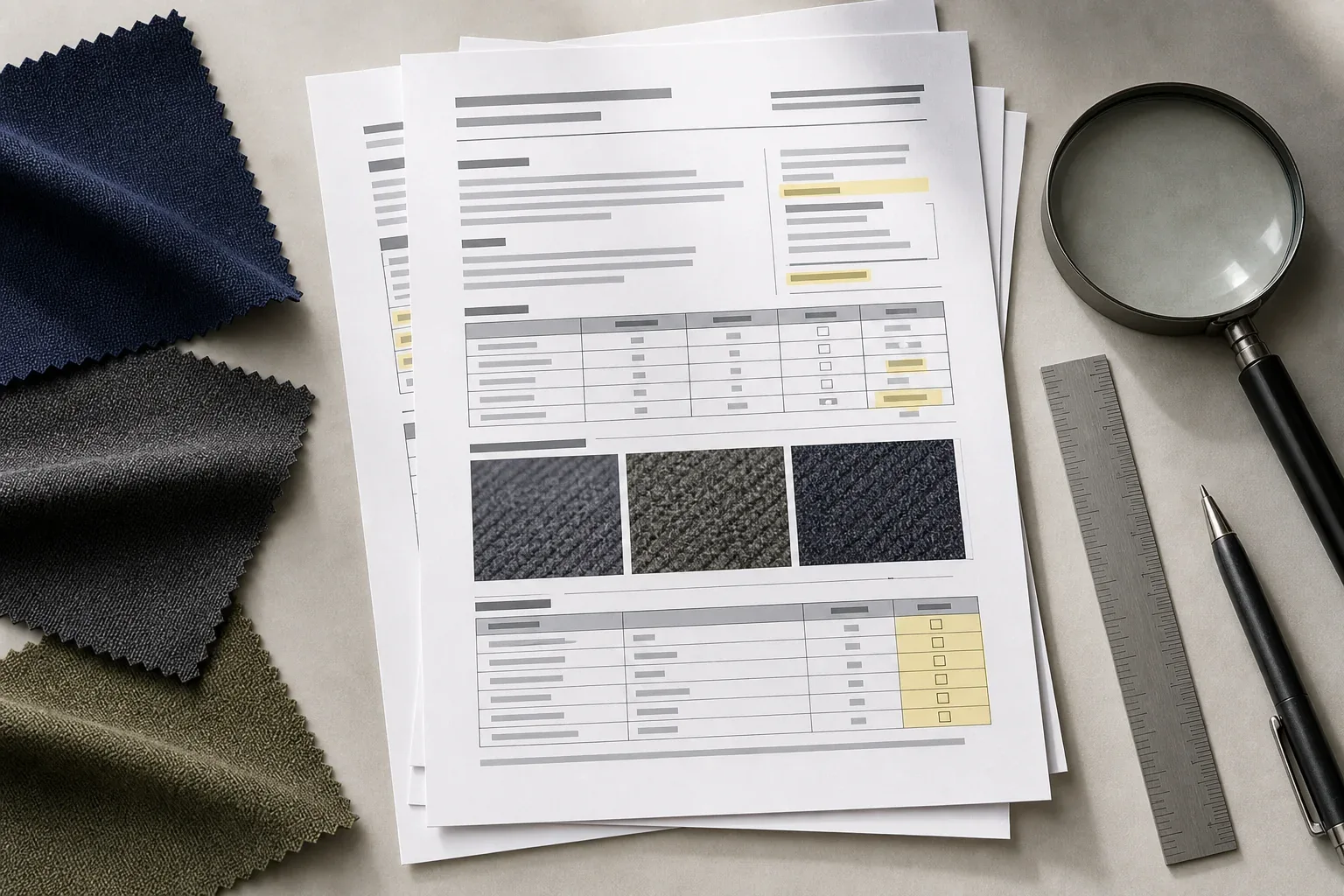
To read a textile test report, first match the laboratory, report number, dates and stated sample to your project; then verify the method edition, options, deviations, specimen direction, units and result; finally identify the requirement source, decision rule, accreditation scope, authorization and amendment status. A report supports only the sample and work stated on its pages. A word such as “PASS” is useful only when it is tied to an identifiable criterion and the rule used to make that conformity decision.
This is a document-literacy guide for apparel buyers. It does not select a test, reproduce a protected standard, calculate a result, set a grade or threshold, or decide what to do with a failed material. Those jobs belong to the product requirement, qualified laboratory or compliance adviser and the relevant test-specific guide. It also does not describe a fixed Jiashun laboratory, testing SOP, certification or report-approval system; project requirements and external evidence must be confirmed for each order.
For water claims specifically, the water-resistant versus waterproof fabric guide routes surface repellency, penetration and finished-garment ingress evidence; this report guide still owns document interpretation, not the acceptance threshold.
Start With Identity, Not the Pass Box
A certificate-like layout can pull attention to a green conclusion while the identity is wrong. Confirm the laboratory and site, report number, page sequence, issue and status, customer or applicant and any validation route. Then match the supplier, style or material, color, finish, sample, lot, order and revision—and the receipt, test and issue dates—to the controlled project item. Not every field applies, but the description must distinguish the sample and show whether testing preceded a material change or amendment.
| Report field | What it should let the buyer establish | Question if unclear |
|---|---|---|
| Report and page identity | One complete, traceable document | Are any pages, annexes or referenced results missing? |
| Sample and project identity | The exact submitted material or garment | Which style, color, lot and revision does this cover? |
| Receipt, test and issue dates | The evidence sequence | Did testing happen before or after the relevant change? |
| Document status | Whether this is current evidence | Is this final, amended, replaced or still a draft? |
One Report Covers the Stated Sample and Scope
Do not silently expand a sample result into a claim about a roll, dye lot, shipment or entire order. Read who selected and submitted the sample, how it is described and whether the laboratory states that sampling was outside its responsibility. A buyer-selected production specimen, a supplier-submitted development swatch and a laboratory-drawn sample can answer different assurance questions even when the test method is identical.
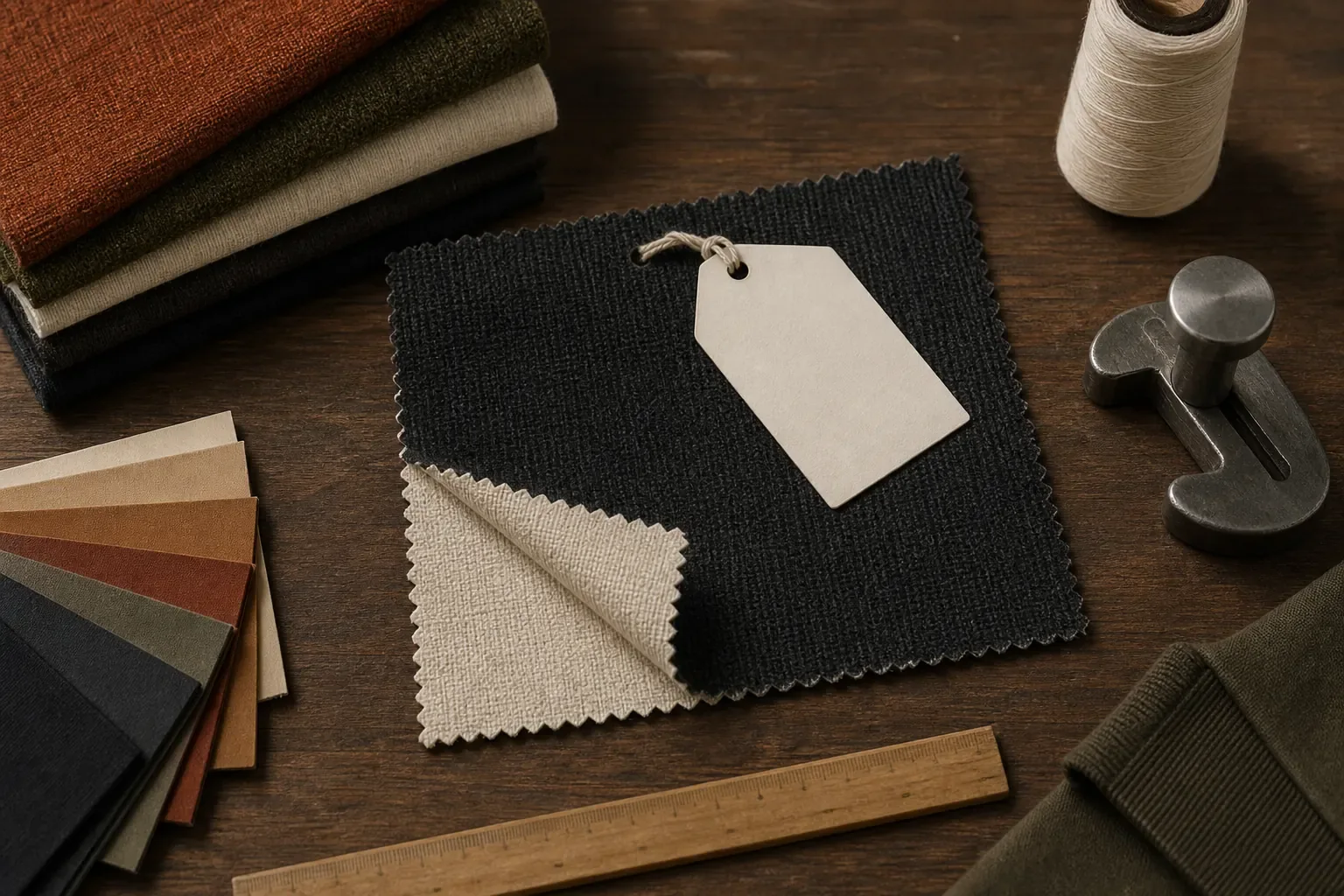
The tested stage matters too. Greige fabric, finished fabric, washed garment and decorated garment are not interchangeable descriptions. If a wash, print, coating, resin, enzyme treatment or other process occurred after the submitted stage, the earlier report does not automatically cover the later state. Link the report to the controlled sample record rather than to a generic product name; the fabric-swatch approval checklist explains how to preserve that physical and documentary identity.
When a report contains several tests, check the scope row by row. Some results may apply to one color only, one component, one direction or one conditioning state. A report header that names three colors does not prove that every test was performed on all three.
Read the Method as a Complete Instruction
A method designation without its edition can be ambiguous. Record the issuing organization, method number, edition, named part and applicable options: specimen type, exposure, care route, load, endpoint, assessment, preparation, conditioning and unit. The question is whether the laboratory executed the version and option the requirement called for.
Deviations deserve their own line. “Modified,” “in-house,” “as received,” “customer method” or a note that a specified step could not be completed may be legitimate, but it means you must decide whether the result is comparable to the requested evidence. Never delete a deviation when copying results into a sourcing tracker.
Conditioning is a useful example of why the method details matter. ASTM's public page for ASTM D1776/D1776M-20(2024) describes conditioning and testing textiles when conditioning is specified by a test method, and also identifies preconditioning as relevant in stated circumstances. That does not make D1776 the required preparation for every report. It shows why a buyer should check what the governing method requested and what the laboratory recorded, rather than inventing an atmosphere or copying a condition from another test.
Read Results Without Losing Direction, Unit or Condition
Move across a result row, not straight to its last cell. Identify the property or observation, specimen condition, direction, unit, individual readings or reported summary and any qualifier or uncertainty the laboratory supplies. Warp and weft, wale and course, face and back, dry and wet, before and after treatment or different colorways can produce separate reported results. Preserve those labels when sharing the data.
Keep measured values separate from visual grades, categories, observations and detection statements. Do not turn a symbol, range, “not detected,” “below reporting limit” or qualitative observation into zero unless the laboratory defines that conversion. An average also does not reveal every specimen result: confirm whether the requirement governs individuals or a summary statistic, and ask the laboratory to explain the named method instead of reconstructing a calculation from an unauthorized extract.
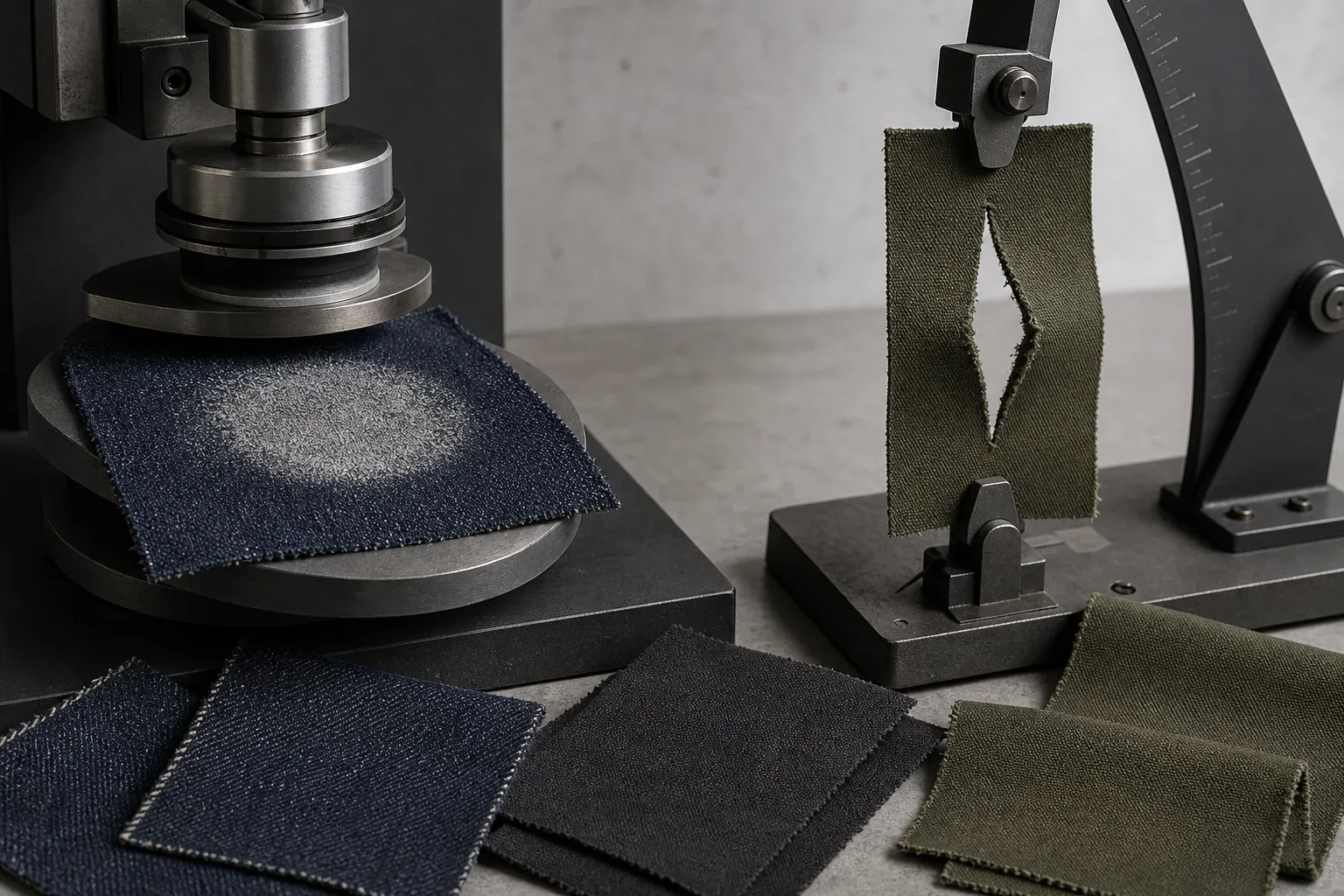
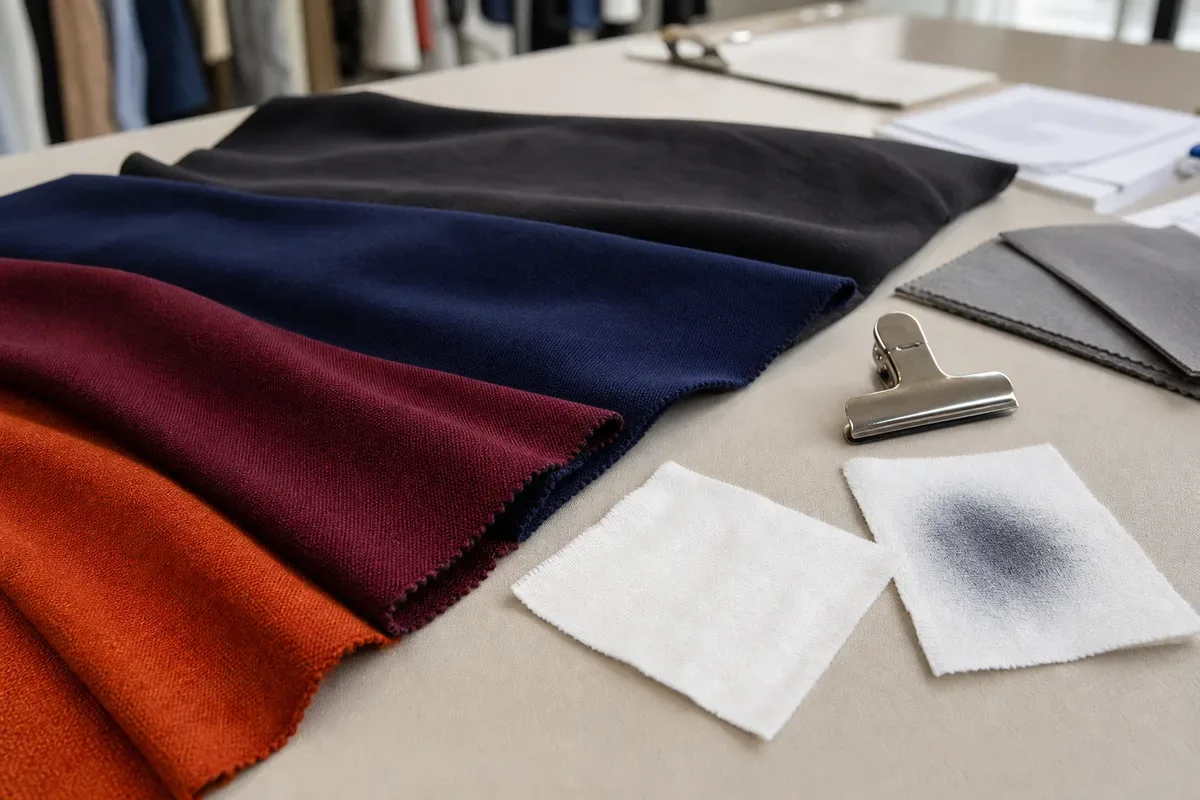
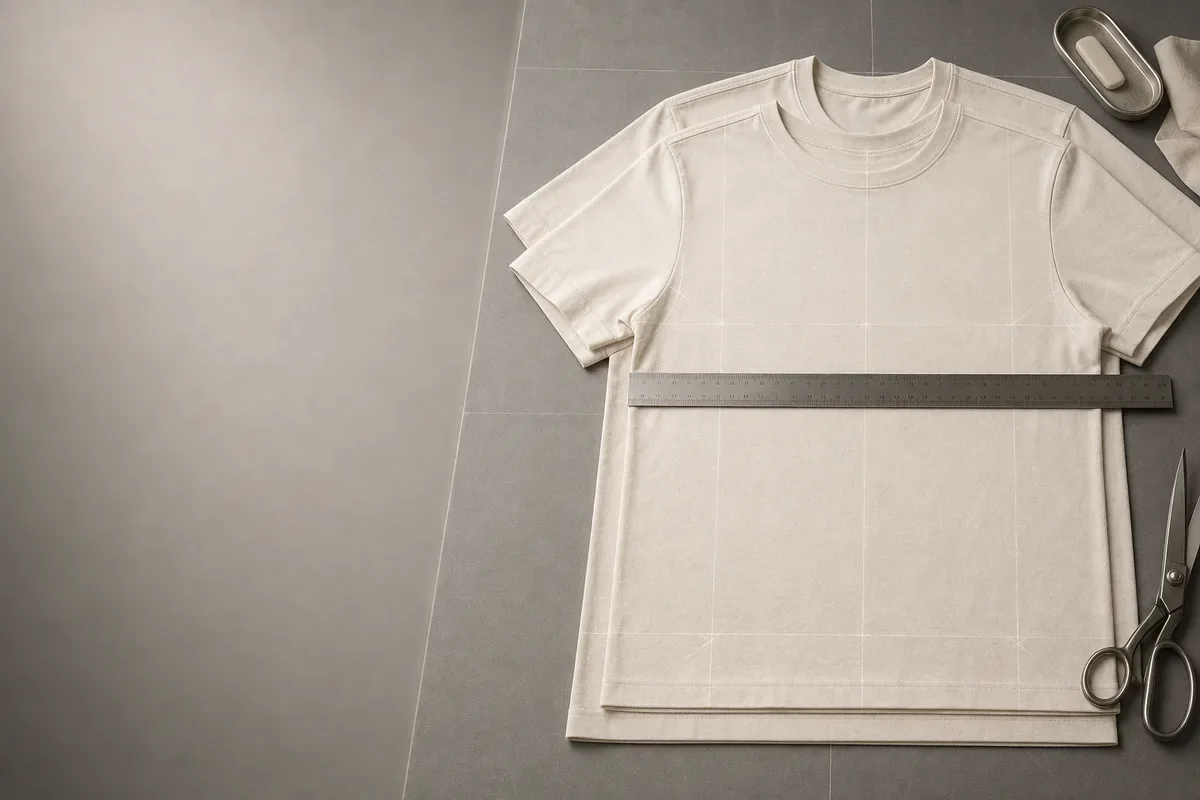
Test-specific interpretation remains with the dedicated owners. Use the abrasion-versus-tear guide to separate two mechanical questions, the colorfastness testing guide for exposure and assessment distinctions, and the cotton shrinkage guide for dimensional-change planning. This page does not repeat their formulas, grades or acceptance levels.
Separate the Result, Criterion and Decision Rule
A test method tells a laboratory how to produce a result; it is not automatically the buyer's acceptance requirement. Find the source of the criterion beside every pass/fail statement. It may come from a dated buyer specification, contract, retailer manual, regulation or a separate product standard. Record the title, identifier, revision and applicable market or product scope. “Buyer requirement” without a document reference is not auditable.
Then identify the decision rule: how the laboratory determined conformity when comparing the result with the criterion, including how measurement uncertainty was handled when relevant. ILAC's notice for the revised ILAC G8:09/2019 says the guidance addresses decision rules used when laboratories issue statements of conformity to specifications or standards. The buyer does not need to invent that rule after seeing the result. It should be agreed or identified and reported clearly enough to understand the statement.
Use a four-part reading chain:
Reported result -> identified criterion and revision -> identified decision rule -> conformity statement
If any link is missing, treat the conclusion as unresolved for the buying decision. Do not add your own “PASS” to a raw result, and do not treat a laboratory's conformity statement as permission to release bulk production. Commercial release may also depend on sample approval, material identity, order scope and other project controls.
Walk Through a Synthetic Report Example
The following fields are entirely fictional and use invented names and “demo units.” They illustrate the reading sequence only; they are not a real method, textile limit, standard table or Jiashun laboratory record.
| Synthetic field | Fictional report entry |
|---|---|
| Identity and scope | Report TR-DEMO-018; sample SW-DEMO-42; navy finished fabric; submitted lot reference L-DEMO-7 |
| Method | Buyer Method BM-DEMO-1, Revision 3, Option B; no deviation stated |
| Result | Direction A: 42 demo units |
| Requirement | At least 40 demo units under Buyer Specification BS-DEMO-7, Revision 2 |
| Decision rule | DR-DEMO-2, identified by the fictional laboratory |
| Statement | Conforms for the tested sample and stated test item |
Read this example in order. First, confirm that SW-DEMO-42 and its finished state match the project item; a similar navy swatch is not enough. Next, preserve the complete method, revision and option with the result's direction and unit. Then locate the named requirement and decision rule before accepting the conformity statement. The defensible conclusion stops at the reported sample and test scope: it does not certify the fictional factory, prove every unit in lot L-DEMO-7 or release a garment order. If the actual report omitted Option B, the requirement revision or DR-DEMO-2, the buyer would pause and request clarification rather than fill the gap from this example.
What Accreditation Does—and Does Not—Show
The official ISO/IEC 17025:2017 page describes the standard as requirements for the competence, impartiality and consistent operation of testing and calibration laboratories; it also says accreditation bodies use ISO/IEC 17025 as assessment criteria. That supports confidence in laboratory work, but the accreditation evidence still needs to be read precisely.
Check the accreditation body's identity, the laboratory site, current status and scope. Confirm that the relevant testing activity or method sits inside that scope rather than assuming every service offered by an accredited organization is accredited. ILAC's FAQ explains that ILAC itself does not accredit laboratories or issue test reports; accreditation bodies do the assessment, and laboratories perform activities defined in their accreditation scope.
Accreditation is not product certification, approval of a textile style or a guarantee that every regulator, buyer or foreign market will accept the result. ILAC's publications list expressly includes guidance on the difference between accreditation and certification, and its FAQ notes that international acceptance is not automatic. The test method, market requirement, product scope and receiving party still matter.
Check Authorization, Amendments and Reissued Pages
Confirm who authorized the report and how authorization is represented. A name, role, signature, secure electronic approval or validation record should be read in the context of the laboratory's report format. A sales contact forwarding a PDF is not the same thing as the report's authorized issuer.
For a revised or amended report, identify the earlier report, amendment number or date, changed pages and stated reason if provided. Ask whether the amendment changes sample identity, method, result, criterion, decision rule or only an administrative field. Archive the superseded version, but mark it superseded so it cannot be used accidentally. Do not splice a corrected page into an older PDF and call the hybrid document final.
Build a Buyer-Side Report Register
Keep the original report intact. In a separate register, index its ID, laboratory/site, sample/lot/color/stage/revision, dates, method/options/deviations, direction/unit/result, requirement and decision rule, accreditation-scope check, authorization/amendments and linked buyer decision. Keep that decision separate from the laboratory result. Shipment sampling and defect acceptance remain with the garment inspection AQL guide.
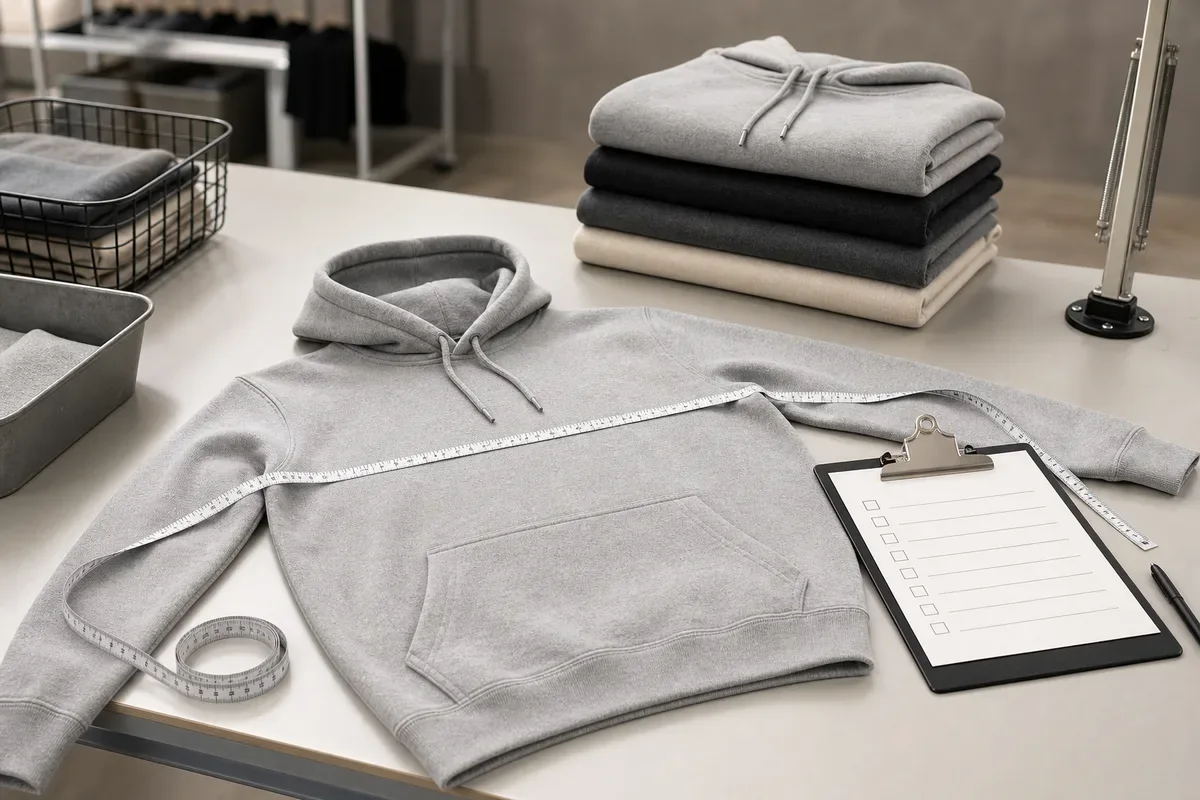
Product pages can help a team discuss silhouettes and visual design direction. A 280 gsm long-sleeve reference, French terry hoodie reference and baggy denim pants reference are used here only in that visual context. Their product-page names or imagery do not prove material identity, composition, test selection, laboratory scope, a result, compliance or approval for another project.
A Ten-Minute Review Before You File the Report
Before filing, confirm one complete current report, laboratory site and authorizer; match the sample, lot, color, stage, revision and dates to the project; preserve method options, deviations, condition, direction and unit with each result; connect every conformity statement to its requirement and decision rule; check any claimed accreditation scope and amendment history; and record the separate buyer decision with its owner and affected scope.
Pause the decision when pages are missing, the sample cannot be matched, the method is incomplete, a deviation is unexplained, units or directions are absent, or “PASS” has no visible basis. A clarification or formally amended report is stronger evidence than an assumption written into an email.
Frequently Asked Questions
Does “PASS” on a textile test report mean bulk production is approved?
No. It means only what the report's stated result, criterion, decision rule and scope support. Bulk release may depend on other records, including material and sample approval, order scope and unresolved project risks. Preserve the laboratory conclusion and record the separate buyer decision.
Does an accredited laboratory report prove that the product is certified or compliant everywhere?
No. Accreditation concerns the laboratory and the activities within its scope; it is not product certification. Acceptance also depends on the applicable product, market, method, requirement and receiving party. Verify each of those rather than relying on a logo alone.
Can one tested swatch represent the entire fabric lot or garment order?
Only if the sampling basis and agreed assurance plan support that scope. A report by itself covers the sample and work it states. Do not extend a development swatch result to an unnamed production lot, colorway or post-treatment garment.
What should I do if the method edition, option or deviation is missing?
Ask the laboratory or report owner for clarification and, when the missing information affects interpretation, a controlled amended report. Do not select an edition from memory or borrow an option from a different report. Keep the decision open until comparability is clear.
Can I compare results from two laboratories?
Only after aligning sample identity and stage, method and edition, test options, conditioning, specimen direction, units, deviations, reporting format and decision basis. A numerical side-by-side comparison can be misleading when any of those differ. Ask qualified laboratories to explain material differences in execution or reporting.
References
- ISO — ISO/IEC 17025:2017, General requirements for the competence of testing and calibration laboratories — accessed 2026-08-09.
- ILAC — Publications List — accessed 2026-08-09.
- ILAC — Revised ILAC G8 published — accessed 2026-08-09.
- ILAC — Frequently Asked Questions — accessed 2026-08-09.
- ASTM International — ASTM D1776/D1776M-20(2024), Standard Practice for Conditioning and Testing Textiles — accessed 2026-08-09.
Related guides
 Fabric Abrasion vs Tear Strength: Which Evidence Does a Brand Need?
 Colorfastness and Crocking Tests for Clothing Brands
 How Much Does Cotton Shrink? The Science, the Standards, and the Tolerance to Put in Your Tech Pack
 AQL 2.5 Explained: What Garment Buyers Should Specify
 Fabric Swatch Approval Checklist for Clothing Brands