Fabric Pilling in Clothing: Causes, Tests and Buyer Checks
Pilling, fuzzing, matting, snagging and abrasion are not interchangeable defects. Learn how buyers should classify surface change, choose evidence, and write an approval criterion that a factory can execute.
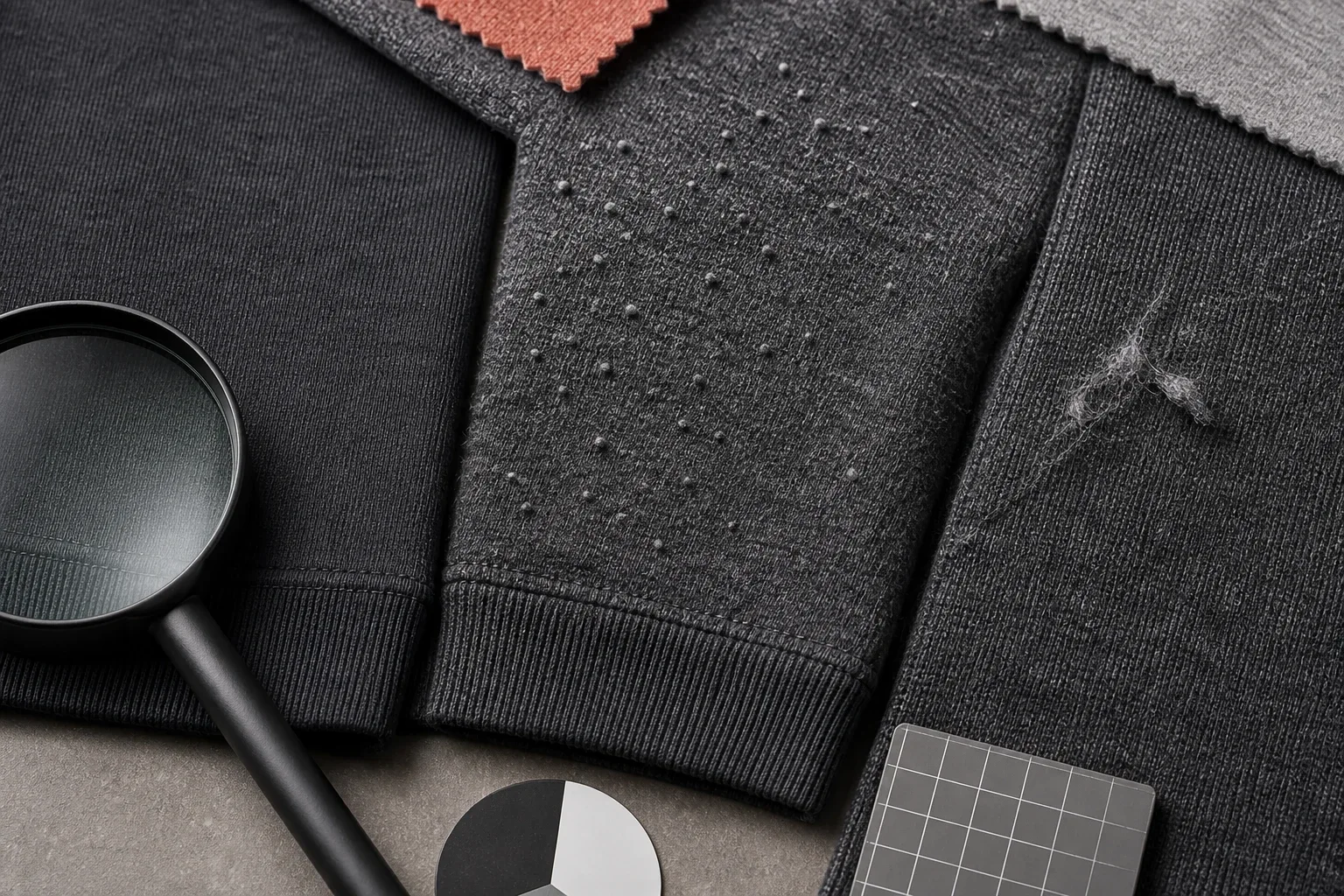
Fabric pilling is the formation of small fiber balls on a textile surface after rubbing and use. But not every rough, hairy or damaged surface is pilling. Fuzzing, matting, snagging, abrasion, loose contamination and broken fabric each point to different evidence and potentially different corrective work.
For an apparel buyer, the most important control is not a universal “anti-pill” promise. It is a reproducible requirement that states the test method and version, specimen state, preparation or care condition, assessment point, visual reference and buyer acceptance criterion together. A grade without that context cannot reliably release fabric or garments.
Classify the Surface Change Before Naming a Cause
| Observation | What it looks like | Where to route the next check |
|---|---|---|
| Pilling | Discrete balls of entangled fibers attached to the surface | Pilling method, specimen state, material construction and finish |
| Fuzzing | Raised loose fibers without clearly formed pills | Same surface-change review; record separately when the method permits |
| Matting | Fibers compressed or entangled into a flattened area | Surface structure, rubbing condition, washing and finish |
| Snagging | Pulled, looped or protruding yarn caused by catching | Snagging-specific evidence and garment exposure points |
| Abrasion | Progressive surface wear or specimen breakdown from rubbing | Abrasion-specific method and endpoint |
| Contamination | Removable lint or foreign fibers resting on the face | Cleaning check, source identification and handling controls |
These symptoms can coexist. A dark sweatshirt may show loose pale lint, fuzzy fibers and attached pills in the same zone. Photograph the surface before brushing or cleaning it, then determine which material is attached and which is removable. Do not convert one photo into a laboratory grade or a root-cause conclusion.
What Causes Fabric Pilling?
Pilling develops through an interaction, not one label on the BOM. Fibers work toward the surface, friction entangles them, and the formed pill either remains attached or eventually sheds. The visible outcome can be influenced by:
- fiber properties and blend composition;
- yarn twist, hairiness and structure;
- knit or weave construction and surface exposure;
- brushing, raising, sanding or other surface development;
- mechanical and chemical finishing;
- garment construction and contact zones;
- laundering, drying and care conditions; and
- the type, duration and direction of rubbing in use.
That list is diagnostic context, not a ranking that applies to every fabric. It is unsafe to claim that one fiber always pills more than another, that natural fibers do not pill, or that a higher GSM prevents pilling. A dense surface can behave differently from an open one, but mass alone does not describe fiber anchorage, yarn structure, finish or use.
The fleece weight guide retains the specific decisions around loopback versus brushed fleece, raising and fleece construction. This guide stays at the cross-garment level: classify the observed surface change and define the evidence needed for the actual material.
Why Garment Location Is Useful Evidence
Map the symptom to the garment before cutting a swatch or blaming the fabric.
Common friction zones include underarms, side body, inner sleeves, cuffs, pocket contact points, seat, inner thighs, shoulder-bag contact and areas touching hook-and-loop closures or rough packaging. A problem limited to one zone may suggest a local contact or construction interaction. The same change across unused sample surfaces may suggest a broader fabric, finish or handling condition.
Record:
- style, color, size and sample or lot identity;
- exact location and side of the garment;
- whether the garment was unworn, worn, washed or dried;
- care procedure and number of completed cycles when known;
- adjacent material, trim or contact surface;
- whether loose fibers can be removed; and
- the distribution across submitted units and fabric rolls.
This observation map helps choose the next test. It does not replace a sampling plan. One photographed unit cannot establish the incidence across a production lot, and an intentionally selected worst area should not be presented as a random specimen.
Pilling Test Methods Are Not Interchangeable
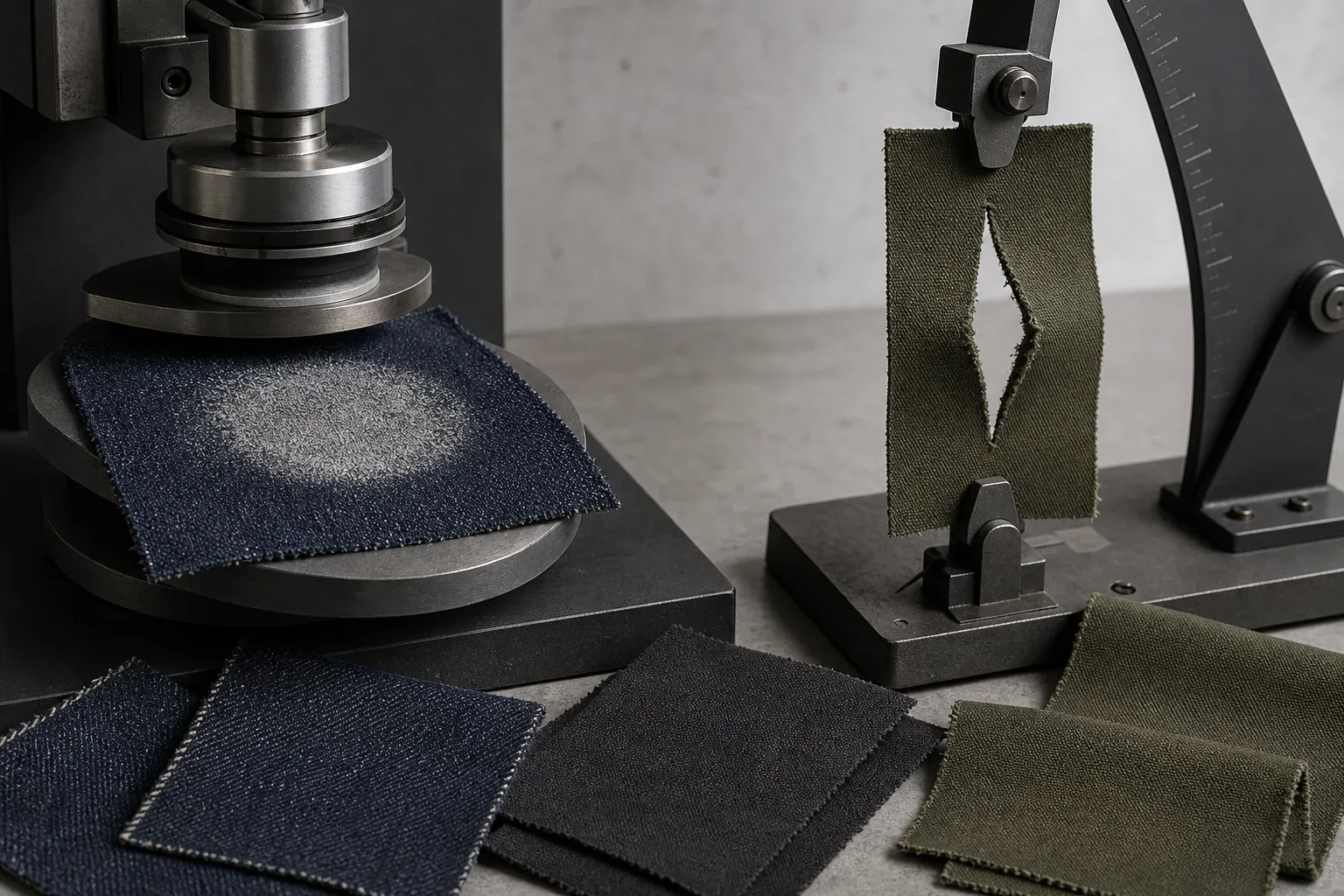
Several standardized methods create rubbing or tumbling conditions and then support visual assessment. They do not represent one universal test with convertible grades.
Pilling box
ISO 12945-1 covers determination of pilling, fuzzing or matting using a pilling box method. Use the edition and procedure agreed for the order. Do not copy an equipment setting or acceptance threshold from another program merely because both reports say “pilling box.”
Modified Martindale
ISO 12945-2 and ASTM D4970/D4970M cover Martindale-based pilling resistance. The word “Martindale” alone is incomplete: Martindale pilling is not the same evidence as a Martindale abrasion-breakdown result. The abrasion versus tear guide owns that performance distinction.
Random tumble
ISO 12945-3 and ASTM D3512/D3512M cover random-tumble approaches. The ISO scope includes some napped fabrics but also identifies applicability limits, so the chosen method still needs to suit the material. A result from one apparatus should not be converted into a result from another by assumption.
Visual assessment
ISO 12945-4 covers visual assessment of pilling, fuzzing and matting. As a buyer-side control, record the assessment environment, specimen presentation, evaluator and chosen reference so the reported description has context. State whether the report includes pilling alone or separates additional surface changes.
Standards define method scope and procedure. They do not automatically define the buyer's pass level for a particular garment. The purchase specification or agreed test protocol must state that decision.
The public ASTM catalog pages also flag acceptance-testing limitations for D3512 and D4970 because results may require laboratory correlation or agreed interpretation. If either method is used for commercial acceptance, buyer and supplier should name the laboratory basis, how comparative differences will be handled and who applies the disposition. Do not treat a context-free laboratory grade as an automatically portable acceptance rule.
Write a Complete Buyer Requirement
A useful pilling requirement has six linked parts.
| Requirement part | What to name | Why it matters |
|---|---|---|
| Method | Standard, edition and applicable procedure | Stops method substitution |
| Specimen | Fabric article, color, lot and process state | Stops results moving to another material |
| Preparation | Original or after a named wash/dry/care condition | Makes pre- and post-care results distinguishable |
| Assessment | Named assessment stage and visual basis | Gives the grade a point in the procedure |
| Acceptance | Buyer target/tolerance and disposition rule | Separates measurement from commercial decision |
| Scope | Sampling plan, represented lots/colors and exclusions | Defines what the approval covers |
For example, write “test finished bulk fabric article X, color Y, from identified lot Z, using the order's named method and edition; prepare and assess at the stated condition; compare with the agreed visual basis; apply buyer criterion Q.” The actual method, stages and criterion must come from the project. Do not lift a grade or cycle count from this article.
If the buyer wants both original-state and after-care evidence, issue two identified requirements. Do not allow a report heading such as “pilling after wash” to stand in for the actual care and assessment record. ISO 15487 concerns appearance after domestic washing and drying; it does not make every pilling method or buyer threshold identical.
Read the Test Report as Evidence, Not a Guarantee
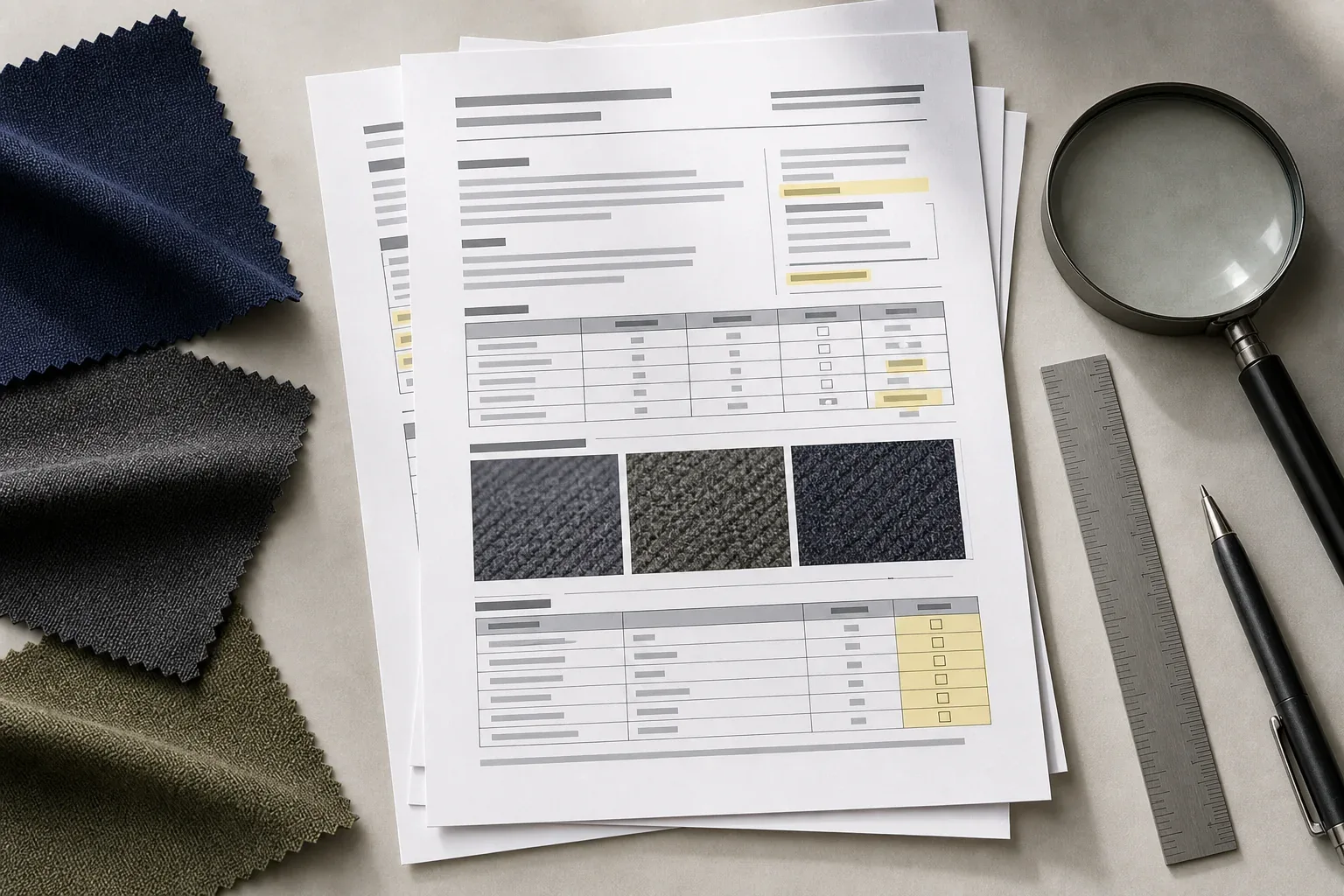
Before accepting a pilling result, verify:
- report issuer and report number;
- test dates and named method/version;
- exact specimen description and submitted state;
- fiber and construction identity where supplied;
- color, lot, roll or sample references;
- preparation and care condition;
- assessment stage and reported characteristic;
- individual results rather than only a summary where required;
- buyer criterion and the person applying it; and
- any deviation, limitation or excluded scope.
The report's “pass” field may reflect a laboratory criterion, supplier instruction or buyer requirement. Confirm which one. Our textile test report guide covers issuer, specimen, method, result and disposition as separate controls.
A laboratory result cannot guarantee a fixed wearing life. Actual garments encounter changing contact surfaces, care routines and use conditions. Use the result to support a defined purchase decision, not to promise that no pill will ever appear.
Separate Fabric Approval From Garment Investigation
A passing fabric submission does not close every garment-level question. Sewing, trims, garment wash, handling and contact geometry can create local interactions not represented by a flat fabric specimen.
When a sample or production garment shows surface change:
- Quarantine the claim. Identify affected style, color, size, unit and lot; do not generalize to all bulk.
- Preserve the condition. Photograph overall and close views before brushing, washing or destructive analysis.
- Classify the symptom. Separate pills, fuzz, matting, snags, abrasion and removable contamination.
- Map the location. Note seams, trims, contact surfaces and repeated zones.
- Compare references. Review approved fabric, retained garment sample and unused production material when available.
- Choose evidence. Apply the project's agreed pilling, snagging, abrasion or appearance method to the correct specimen state.
- Bound the disposition. State represented lots, colors, quantities and any hold, rework, retest or release.
If the surface change appears after garment washing, preserve the exact care route and route the process investigation through the garment wash defects guide. That owner covers wash-process causation; this article covers surface-change classification and pilling evidence.
Supplier Questions Before Bulk Approval
Ask questions that can be answered with identified evidence:
- Which finished fabric article, color and lot did the specimen represent?
- Was the specimen original, conditioned, laundered or otherwise prepared?
- Which method, edition and procedure were used?
- Were pilling, fuzzing and matting assessed separately or together?
- Which visual reference and assessment environment were used?
- Is the reported result an individual value, average, minimum or other summary?
- What buyer acceptance criterion was applied, and where is it approved?
- Which colors, lots and production quantities remain unrepresented?
- Did a finish or process route differ from the approved submission?
- What change would require resampling or reopening approval?
Avoid asking “Is this fabric anti-pill?” as a yes-or-no shortcut. “Anti-pill” may describe an intended finish, a marketing claim or a result under a named test. Ask what material state, method, care condition and criterion support the statement.
Product Examples: Check the Actual Exposure
Product links can show construction and likely contact zones, but they are not test evidence for a new order.
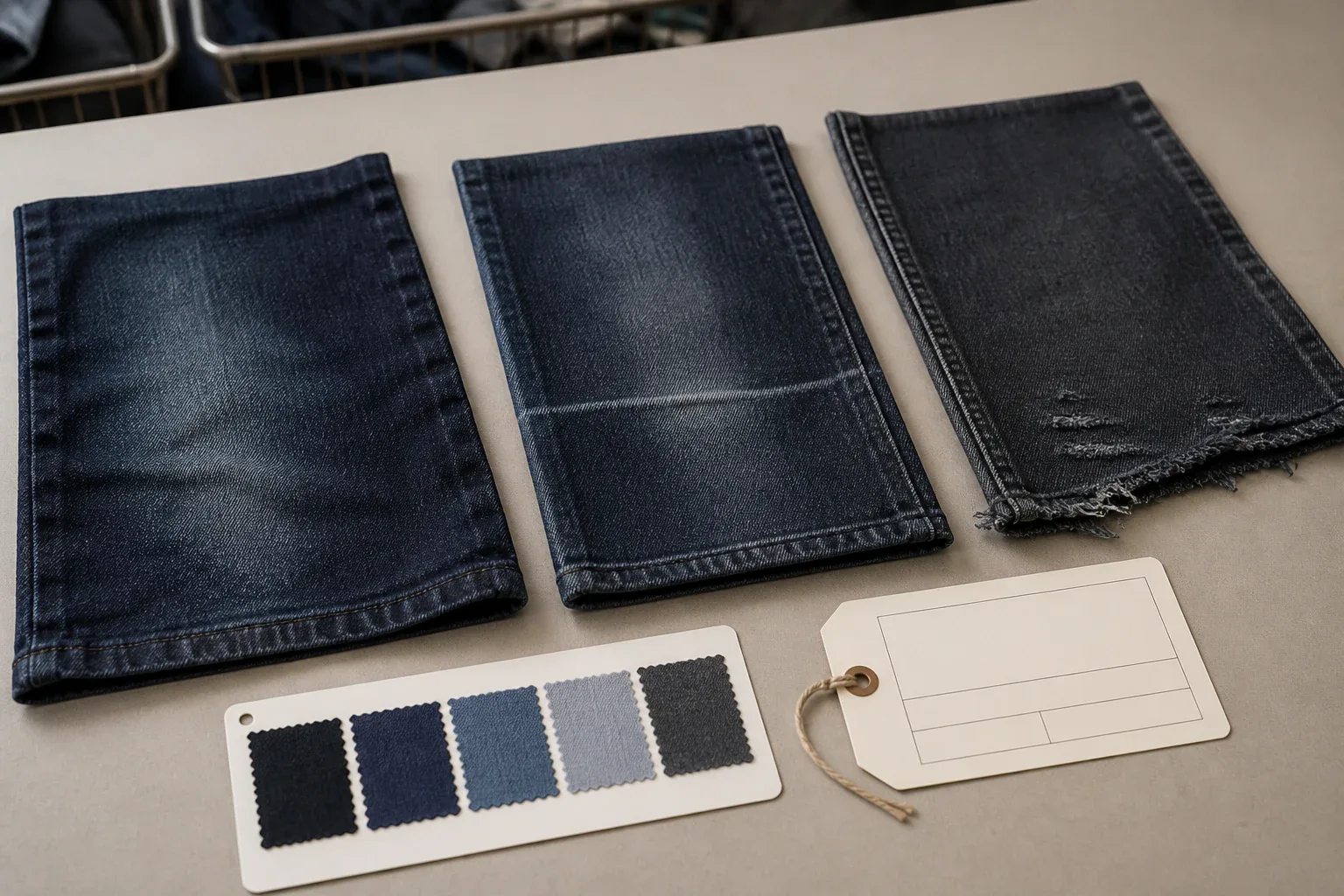
On a heavyweight French-terry pullover hoodie, examine the body, underarm, cuff and pocket-contact zones separately and identify whether the reviewed face is loopback, brushed or otherwise finished. A 450 gsm acid-wash zip hoodie also requires the approved wash route to remain attached to the specimen record. For stone-washed baggy denim pants, a pulled surface yarn or localized thigh wear should not automatically be labeled pilling.
These examples show why the fiber name or garment category is insufficient. The actual order needs its own material article, surface state, method, sampling scope and acceptance record.
Approval and Investigation Checklist
- The observed change is classified as pilling, fuzzing, matting, snagging, abrasion or contamination.
- Style, color, size, lot and garment zone are identified.
- Photos preserve the original condition before cleaning or testing.
- The named method and edition match the material and purchase requirement.
- Pilling and abrasion methods are not treated as interchangeable.
- Specimen state and any wash/dry preparation are recorded.
- Assessment stage and visual basis are named.
- The buyer criterion is separate from the method.
- Individual results and report limitations are reviewed where required.
- Sampling scope and unrepresented lots/colors remain visible.
- Finish or material changes reopen affected approval.
- Garment-level findings are routed to the correct fabric, wash, trim or construction owner.
Jiashun can help review the evidence plan for a custom program, but the test selection and acceptance basis are project-specific. Send the material specification, surface/finish description, colors, intended care route, garment construction, quantity and buyer test protocol. Production can start from 50 pieces per style, subject to fabric, colors, decoration and final project review.
Frequently Asked Questions About Fabric Pilling
What is the main cause of fabric pilling? There is no single universal cause. Fiber properties, yarn and fabric structure, surface finish, friction, laundering and use interact. Diagnose the actual material and garment zone rather than assigning cause from fiber content or GSM alone.
Are fuzzing and pilling the same thing? They are related surface changes but not identical observations. Fuzzing is raised surface fiber; pilling is discrete entangled fiber balls attached to the surface. A test or investigation should state what was assessed.
Is Martindale pilling the same as Martindale abrasion? No. They use different standards, procedures and endpoints. Name the complete method rather than reporting only “Martindale,” and do not convert a pilling grade into abrasion resistance.
Does a higher GSM mean a fabric will not pill? No. GSM measures mass per unit area. It does not by itself describe fiber anchorage, yarn hairiness, surface structure, finish or actual rubbing conditions. Test the finished material under the agreed method and specimen condition.
What should be written next to a pilling grade? At minimum, state the method/version, material and specimen state, preparation or care condition, assessment point, visual basis, result, buyer criterion and represented scope. A grade without these details is incomplete approval evidence.
Turn a Surface Complaint Into a Controlled Decision
Pilling control starts with accurate language. Separate pills from fuzz, matting, snags, abrasion and lint; preserve the garment location and condition; then choose evidence that fits the actual material and purchase requirement.
The most useful result is not a context-free grade. It is a traceable result tied to a method, specimen, preparation, assessment, acceptance criterion and bounded quantity. That record gives the buyer, mill, laboratory and factory one decision they can reproduce.
References
- ISO, ISO 12945-1:2020, Textiles — Determination of fabric propensity to surface pilling, fuzzing or matting — Part 1: Pilling box method — method scope only; retrieved 2026-08-15.
- ISO, ISO 12945-2:2020, Part 2: Modified Martindale method — method scope only; retrieved 2026-08-15.
- ISO, ISO 12945-3:2020, Part 3: Random tumble pilling method — method scope and applicability only; retrieved 2026-08-15.
- ISO, ISO 12945-4:2020, Part 4: Assessment of pilling, fuzzing and matting by visual analysis — visual-assessment scope only; retrieved 2026-08-15.
- ISO, ISO 15487:2018, Textiles — Method for assessing appearance of apparel and other textile end products after domestic washing and drying — appearance-assessment scope only; retrieved 2026-08-15.
- ISO, ISO 25086-1:2026, Textiles — Determination of the snagging resistance of fabrics — Part 1: Mace (spiked ball) test method — used to distinguish snagging-specific evidence; retrieved 2026-08-15.
- ISO, ISO 12947-2:2016, Textiles — Determination of abrasion resistance of fabrics by the Martindale method — Part 2 — used to distinguish abrasion breakdown from pilling; retrieved 2026-08-15.
- ASTM International, ASTM D3512/D3512M-22, Pilling Resistance and Other Related Surface Changes of Textile Fabrics: Random Tumble Pilling Tester — method scope only; retrieved 2026-08-15.
- ASTM International, ASTM D4970/D4970M-22(2026), Pilling Resistance and Other Related Surface Changes of Textile Fabrics: Martindale Tester — active method scope and public acceptance-testing caution; retrieved 2026-08-15.