AQL 2.5 Explained: What Garment Buyers Should Specify
AQL 2.5 is one input to a garment acceptance-sampling plan, not a promise that 2.5% defects are allowed. Learn what buyers need to agree before inspection.
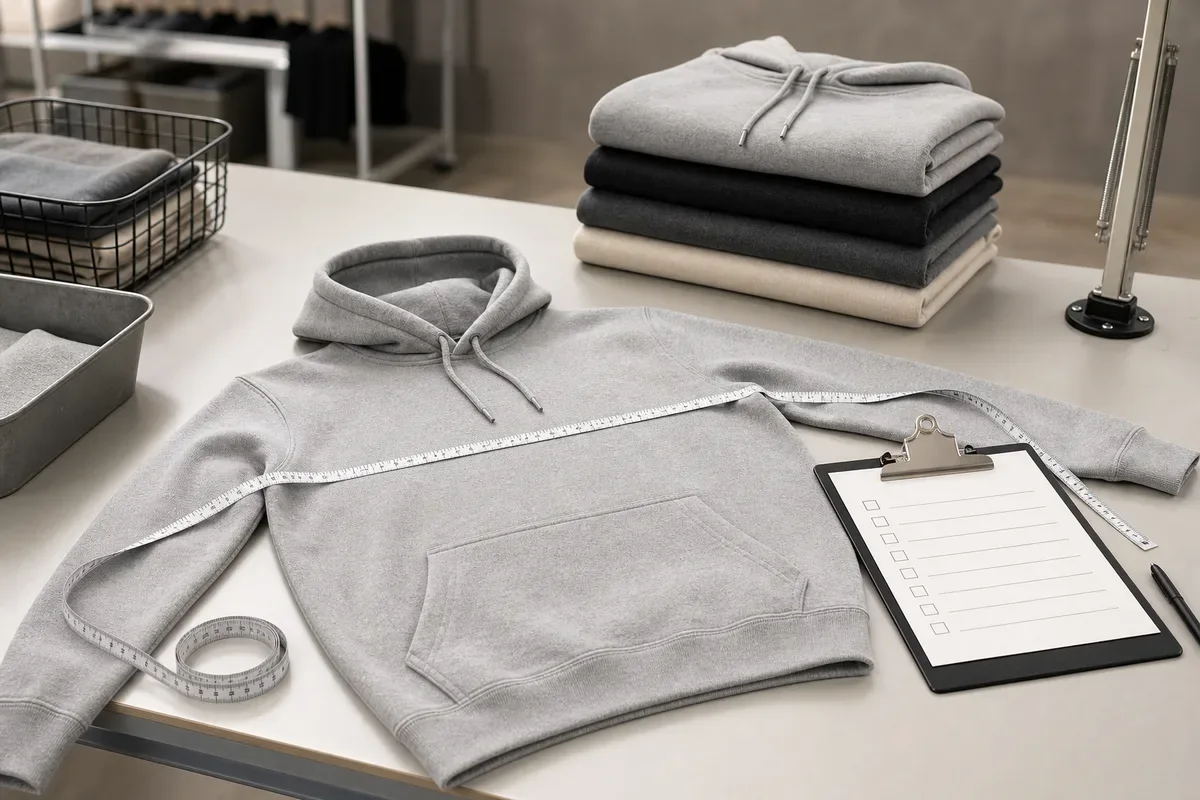
"AQL 2.5" appears in many garment inspection briefs, but the number cannot define an inspection by itself. It is one setting inside an acceptance-sampling plan. The buyer and inspector still need to agree which goods form the lot, how the plan is selected, what counts as a defect, what else will be checked, and what happens if the result does not meet the agreed criteria.
This guide explains those decisions without reproducing the licensed numerical tables in the standard.
What AQL 2.5 does — and does not — mean
ISO 2859-1:2026 describes an acceptance-sampling system for inspection by attributes, indexed by Acceptance Quality Limit (AQL). The current publication is Edition 3, published in January 2026.
In plain language, an inspector evaluates a randomly selected sample from a defined lot and applies the sampling plan agreed for the order. "AQL 2.5" helps select the acceptance criteria within that plan. It does not mean exactly 2.5% of the garments may be defective, and a passing result does not certify that every piece in the lot is defect-free.
The lot-size, sample-size and acceptance values belong to the standard. ISO states that reproducing its content requires permission, so this article does not republish those tables. The buyer, factory and inspector should work from the same current, authorized standard or from an inspection provider's agreed plan rather than copying an old chart from a blog.
The decisions behind an inspection plan
Before inspection, put these inputs in writing:
| Buyer and inspector agree | Why it matters |
|---|---|
| Lot definition and inspection stage | Defines which goods are being evaluated |
| Standard and current edition | Prevents teams from applying different versions |
| Sampling-plan settings | Determines how the authorized plan is selected |
| Defect classes and AQL values | Defines the acceptance criteria for each class |
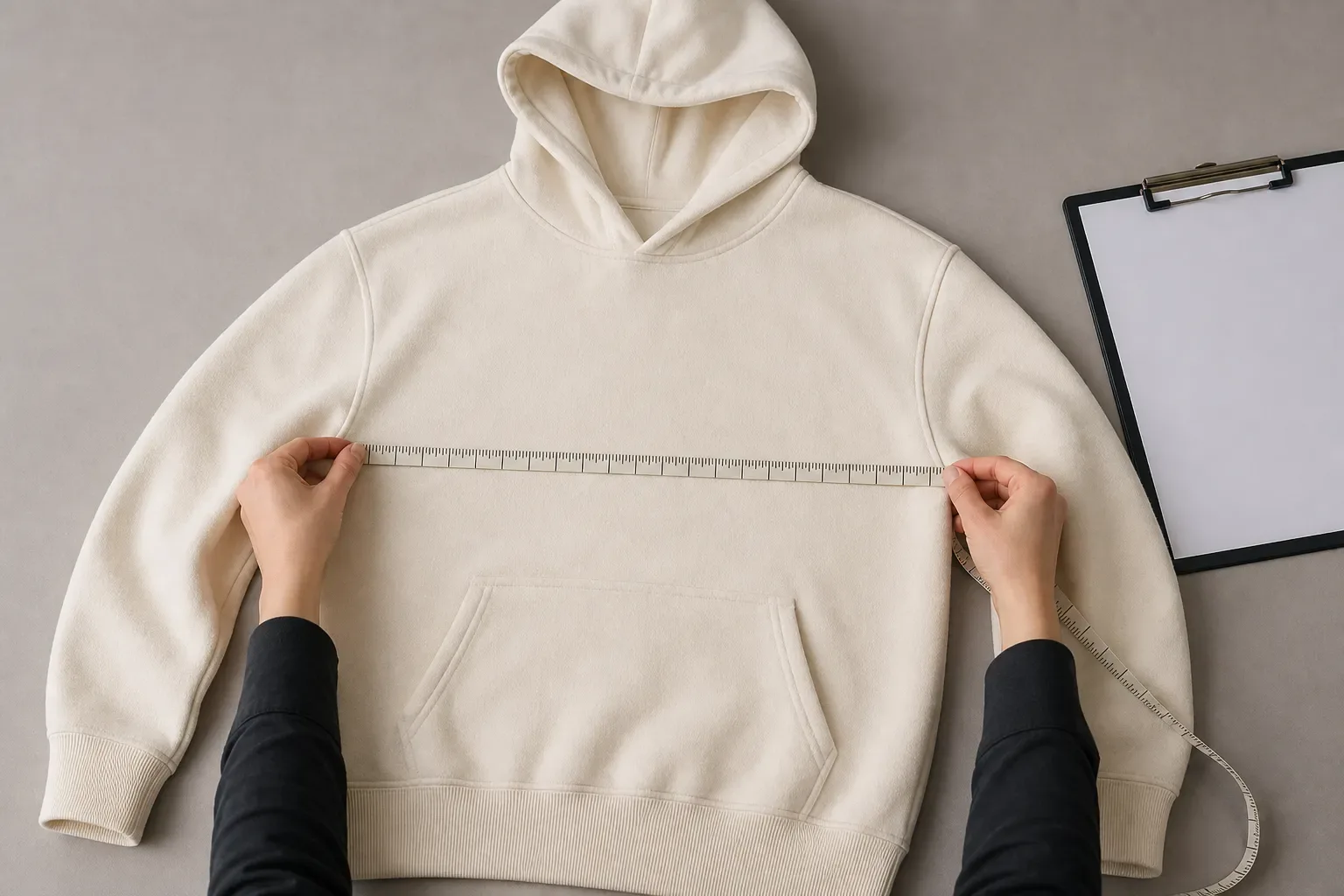
| Measurements, tests and packing checks | Defines what the inspector will examine beyond visible workmanship |
| Correction and reinspection rules | Prevents disputes if the lot does not meet the agreed criteria |
Do not treat a line such as "AQL 2.5" as a complete quality clause. At minimum, the inspection brief should identify the standard, sampling-plan settings, defect classification, selected AQL values, product specification and disposition process. Controlled performance checks such as garment colorfastness testing belong in the wider quality plan; an AQL inspection does not silently replace them.
Critical, major and minor garment defects
Garment inspection briefs commonly separate defects by their consequence. The exact definitions and examples should be agreed for the product because a detail that is cosmetic on one garment can affect safety, legal compliance or use on another.
| Defect class | Practical meaning | Garment examples to discuss |
|---|---|---|
| Critical | A safety or regulatory concern | A remaining needle fragment or a dangerous sharp component |
| Major | A problem likely to affect sale or normal use | An open seam, hole, broken stitching, wrong label or measurement outside the agreed tolerance |
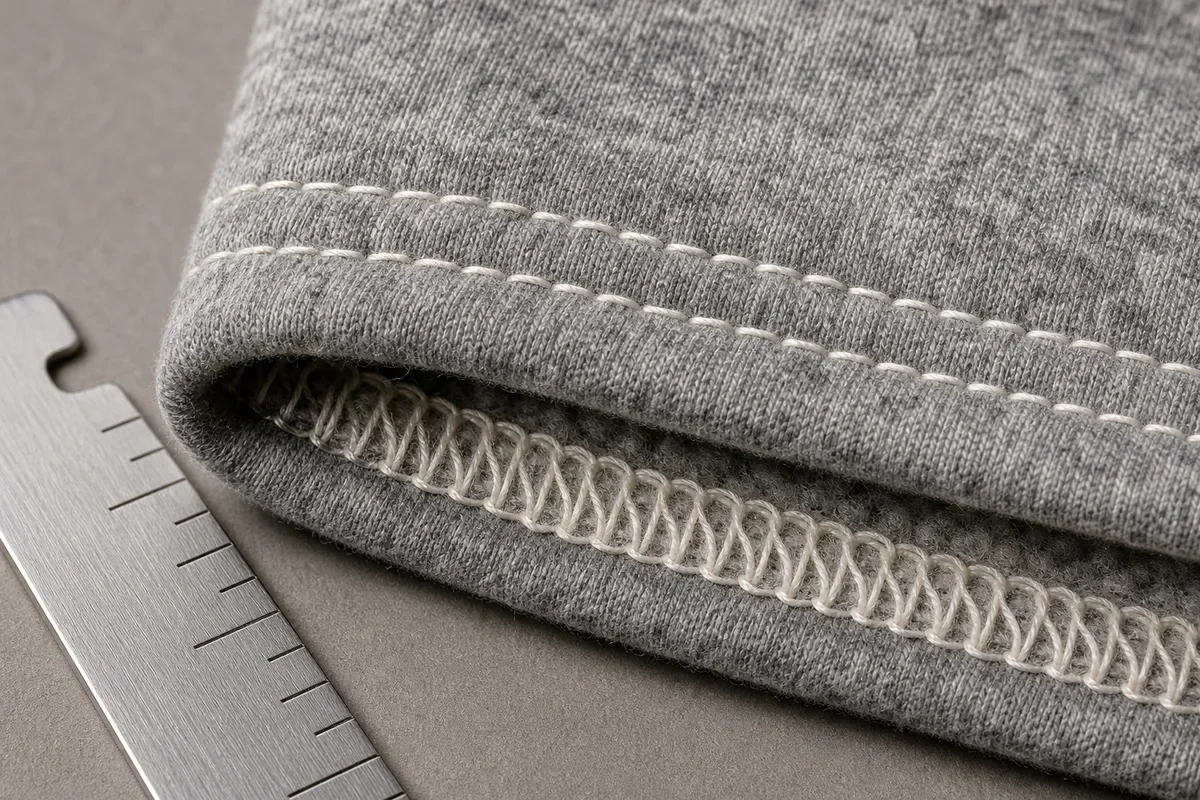
| Minor | A workmanship issue that does not normally prevent use | A loose thread or small, localized appearance issue |
You may see buyers use different AQL values for these classes, including the shorthand "0 / 2.5 / 4.0." That shorthand is not a universal rule. State the values and definitions in the order's inspection plan instead of assuming every factory or inspection company uses the same convention.
Where inspection fits in production
An AQL result is only one part of garment quality control. Inspection can occur at several stages:
| Stage | Typical purpose |
|---|---|
| Pre-production | Confirm materials, trims, references and requirements before quantity production |
| During production or inline | Identify workmanship or process drift while correction is still possible |
| Before delivery or final random inspection | Compare finished goods with the agreed product and inspection criteria |
The appropriate stage depends on the product and the buyer's risk. Laboratory testing for shrinkage, colorfastness, fiber content or other performance requirements is separate from visible-workmanship sampling. Fit and construction should also be resolved through the approved sample and size specification; see our sample approval checklist and seam field guide.
What Jiashun checks
At Jiashun, finished garments receive a piece-by-piece basic appearance and workmanship check before packing. Measurement checks, special tests, AQL sampling and third-party inspection are agreed according to the order or inspection plan. Third-party inspection can be arranged under the agreed project terms.
These activities solve different problems. A basic check on each finished garment can catch visible issues before packing, while an AQL inspection is statistical lot-acceptance sampling against an agreed plan. One does not automatically replace the other. Our public process overview is on the quality control and packing page.
Buyer checklist before inspection
- Identify the product, quantity and lot to be inspected.
- Name the current standard and all sampling-plan settings the inspector needs.
- Define critical, major and minor defects for this specific product.
- State the AQL value for each applicable defect class.
- Attach the approved sample, measurement chart, tolerances, artwork and packing requirements.
- List any measurement sampling, functional checks or laboratory tests separately.
- Agree who inspects, when access is needed and how the result is reported.
- Agree the correction, review and reinspection path before a nonconforming result occurs.
This gives the factory and inspector a usable quality brief without exposing a buyer's customer identity or a factory's internal operating details.
FAQ
Does passing AQL 2.5 mean fewer than 2.5% of the garments are defective? No. AQL is an index used within an acceptance-sampling plan. It is not a direct statement of the exact defect percentage in one delivered lot.
Is 0 / 2.5 / 4.0 mandatory for apparel? No. It is a shorthand buyers may encounter for critical, major and minor defect classes, but the order should state its own class definitions and selected values.
Does a piece-by-piece factory check replace AQL inspection? No. A piece-by-piece basic check and statistical lot sampling have different purposes. The agreed inspection plan should say which checks apply to the order.
What happens when a lot does not meet the inspection criteria? Follow the correction and reinspection process agreed for the order. The appropriate response depends on the defect, the goods and the buyer's requirements; it should not be improvised after the result.
Can a buyer arrange third-party inspection? Yes, it can be arranged under the agreed project terms. Confirm the inspection company, scope, timing, access and reporting requirements before the inspection date.
Official sources
- ISO 2859-1:2026 — Sampling procedures for inspection by attributes
- ISO copyright guidance
- Intertek textile and apparel inspection
- Intertek textile and apparel auditing
- SGS final random inspection
Sources reviewed July 18, 2026.