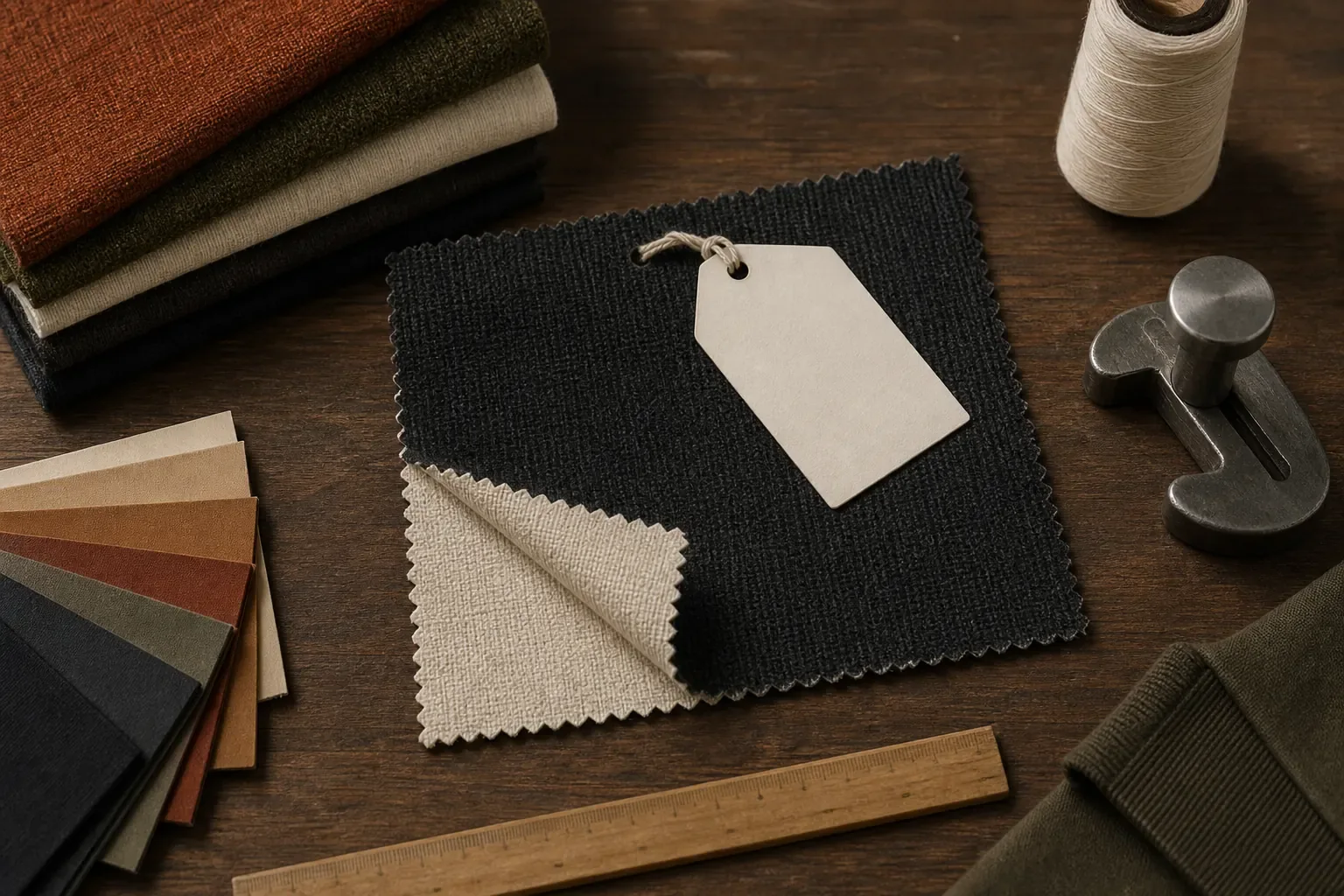
Water-Resistant vs Waterproof Fabric: A Buyer Evidence Guide
Water-resistant and waterproof are not interchangeable sourcing shortcuts. Learn how to separate surface wetting, fabric penetration and finished-garment ingress before approving an outerwear program.
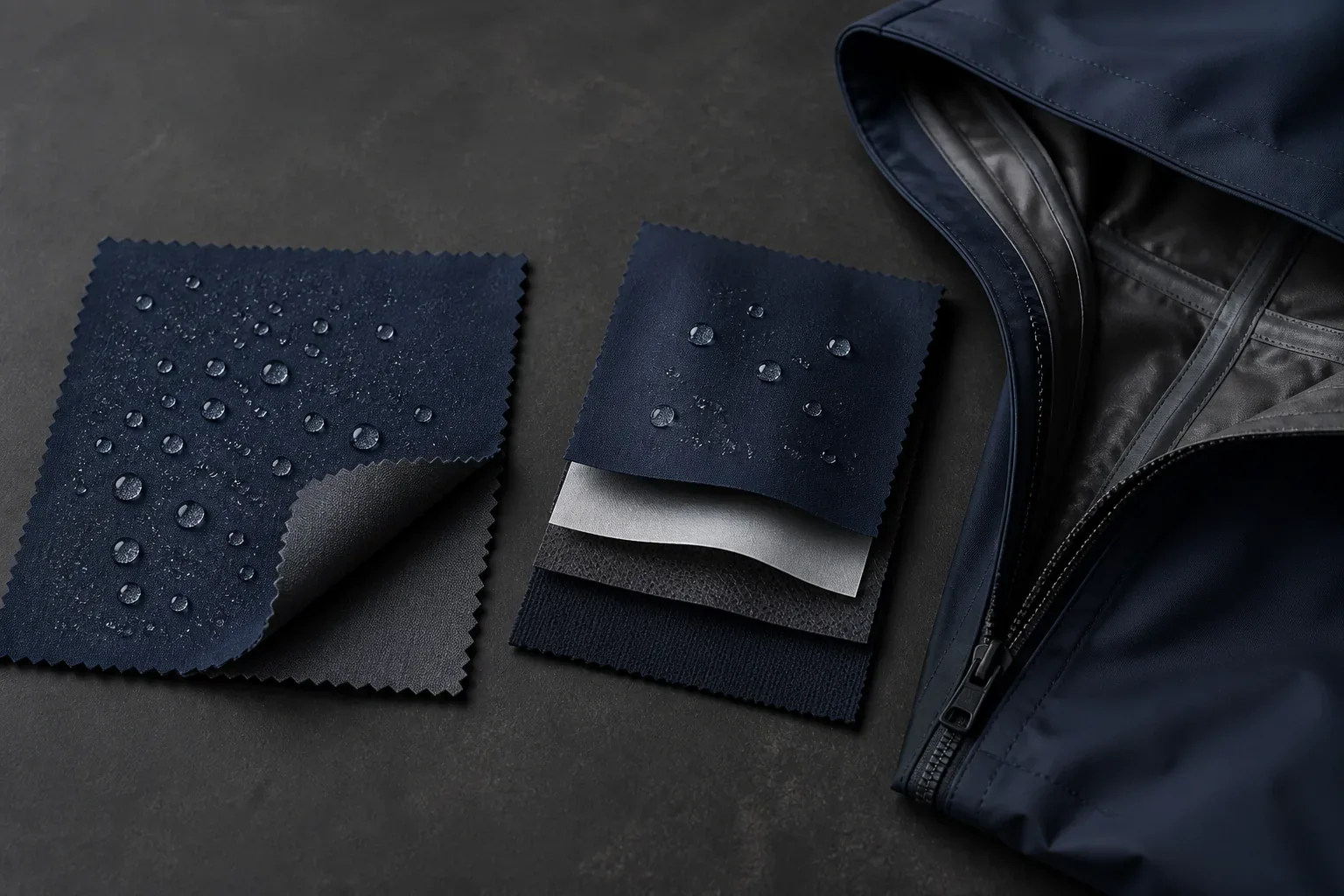
Choose a claim only after the evidence matches the product, material state and expected exposure. A surface spray result can describe how an identified fabric wets. A water-penetration result can describe that fabric under a different method. Neither result, by itself, proves that a finished jacket will keep water out through its seams, zipper, pockets, hood or other openings.
That distinction is the practical answer to water-resistant vs waterproof fabric. The two phrases are often used as marketing labels, but a purchase specification needs measurable criteria. Start with the intended use, identify the tested material and then build evidence from fabric to garment.
This guide does not assign a universal waterproof rating and does not promise a coating, membrane, seam-sealing process or finished-garment capability. Those decisions belong to the specific development brief and approved evidence.
The Three Questions Buyers Must Keep Separate
| Evidence layer | Buyer question | What a result can support | What it cannot establish alone |
|---|---|---|---|
| Surface wetting | Does water bead or spread on the face of this identified fabric? | The fabric's resistance to surface wetting under the named method and state | Resistance to water passing through the fabric or entering a garment |
| Fabric penetration | How does water pass through this identified fabric under a named pressure or spray exposure? | The specimen's response under that method, preparation and conditioning | Performance of seams, zippers, pockets, vents, hems or the assembled garment |
| Finished-garment ingress | Where does water enter the completed style under the agreed use simulation? | Location-specific evidence for the tested garment and exposure | A universal promise for other styles, materials, care states or exposure conditions |
The first information gain is therefore simple but important: surface repellency, loose-fabric penetration and finished-garment ingress are three approval questions, not three names for one property.
Water-Resistant and Waterproof Are Specification Boundaries
“Water-resistant” can be a useful description when the buyer has defined a limited exposure and a corresponding acceptance method. “Waterproof” is a broader product claim and requires the buyer to define what must resist water, for how long, in which material and garment state, and around which construction details.
Do not approve either word from a fiber name, coating name, supplier declaration or water-beading video. Instead, write the claim boundary into the brief:
- intended activity and exposure, such as intermittent splash, light rain or a more demanding wet-use scenario;
- the exact shell article, color, lot, finish and material state being assessed;
- the named test method, version, conditioning and care state;
- the buyer's acceptance criteria, agreed before testing;
- whether the evidence applies to a fabric specimen, a component assembly or a complete garment;
- the seams, closures and openings included in the garment review; and
- the change triggers that require another assessment.
This makes the claim auditable. It also prevents a result from one shell swatch being copied onto a changed style or a finished garment without support.
Surface Wetting Is Not Water Penetration
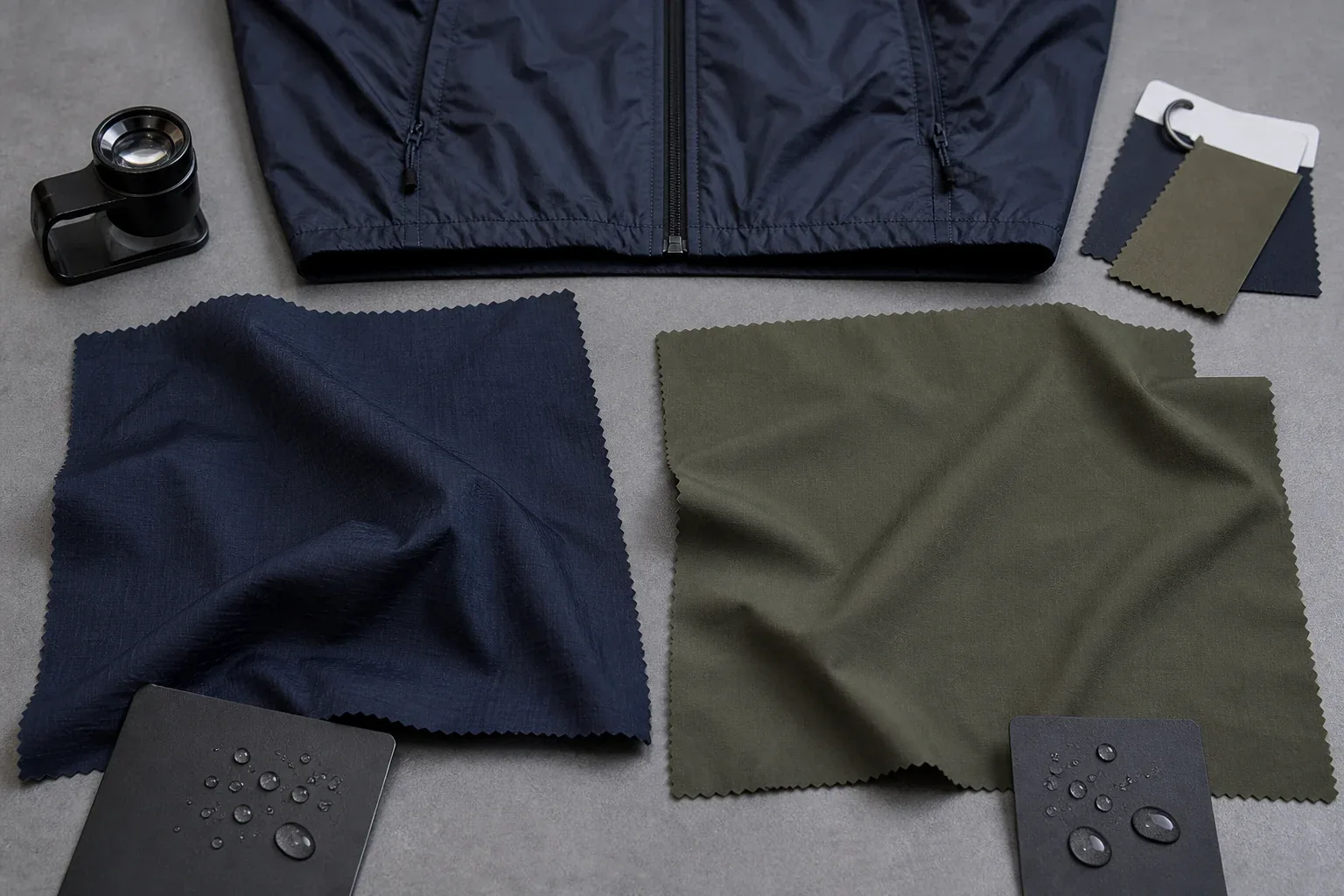
ISO 4920:2012 describes a spray method for assessing resistance to surface wetting. Its public scope explicitly says the method is not intended to predict rain penetration because it does not measure water passing through the fabric. AATCC TM22 likewise addresses resistance of textile fabrics to wetting by water and is especially useful for evaluating a water-repellent finish.
For a buyer, those methods can answer a bounded question: how did this identified fabric surface respond in this stated condition? They do not answer whether water crossed the fabric, and they do not inspect the garment's assembly.
Record at least:
- shell supplier and article code;
- fiber declaration and construction description;
- face and back identification;
- color and lot;
- finish name or supplier finish code;
- as-received, conditioned, washed or otherwise prepared state;
- method and edition; and
- report number, laboratory and test date.
A finish may be part of the result, but its trade name is not the result. If care, abrasion, decoration or another process can alter the tested surface, define the relevant post-process state before approval.
Fabric Penetration Needs Its Own Method and Record
ISO 811:2018 covers resistance of fabric to water penetration under hydrostatic pressure. Its scope includes water-resistant fabrics, whether or not they have received a water-resistant or water-repellent finish. This is a penetration question, unlike the surface-wetting question in ISO 4920.
ISO 22958:2021 addresses water penetration through fabrics by the impact of a horizontal water spray and notes its relevance to apparel fabrics. A buyer may select a method because it resembles a defined risk in the brief, but no one result should be relabeled as every kind of wet-weather performance.
When comparing two reports, check identity before comparing the numbers or classifications:
- Are the fabric article, color, finish and lot the same as the purchase candidate?
- Is the material state the same: greige, finished, conditioned or after the agreed care route?
- Is the method and edition the same?
- Are the units, specimen preparation and reported result format aligned?
- Does the report identify the testing party and date?
- Were the acceptance criteria agreed before the result was generated?
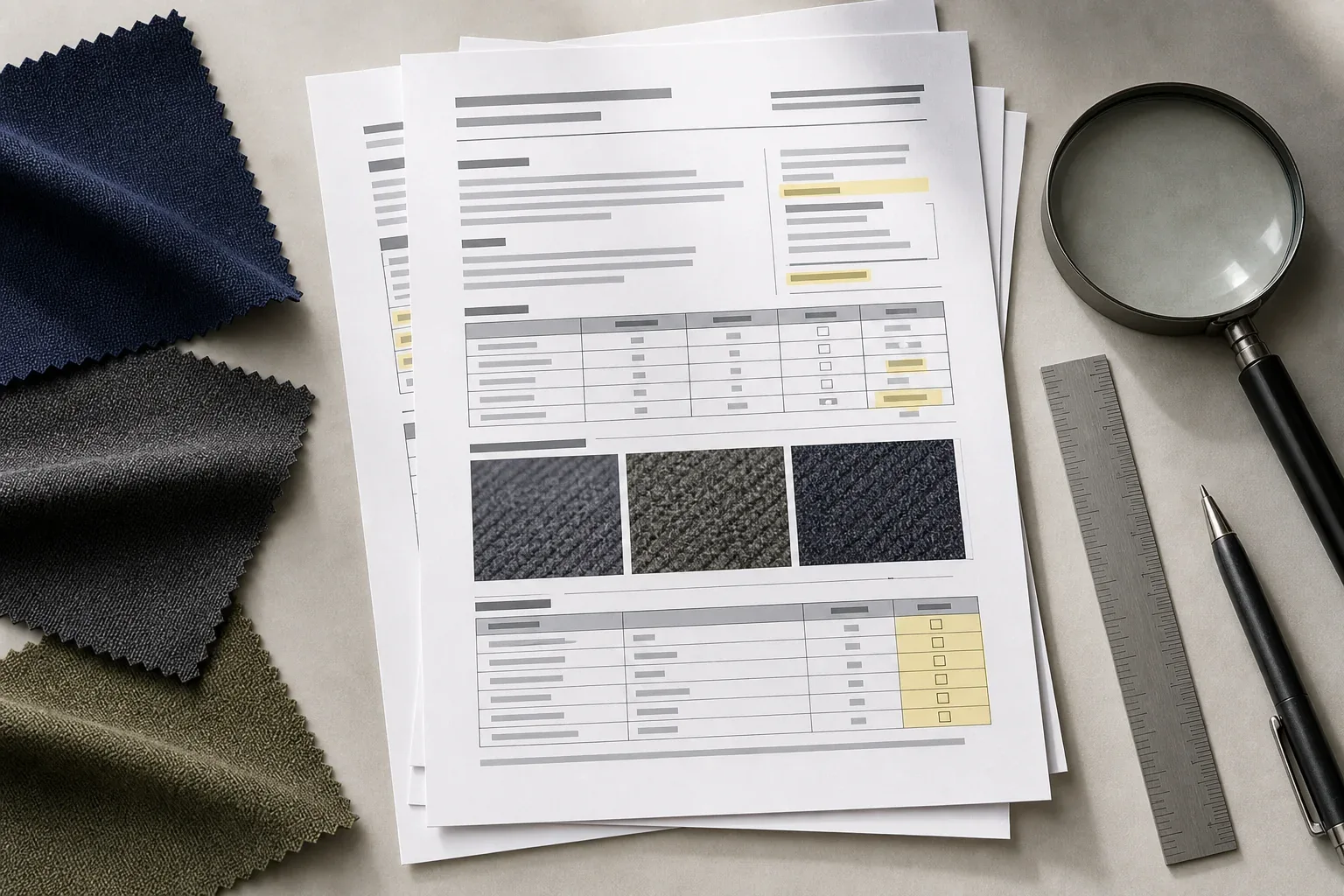
The textile test report guide explains how to bind a report to the sample, method, result and decision. Do not accept a cropped screenshot that omits those identifiers.
A Fabric Result Does Not Approve a Finished Jacket
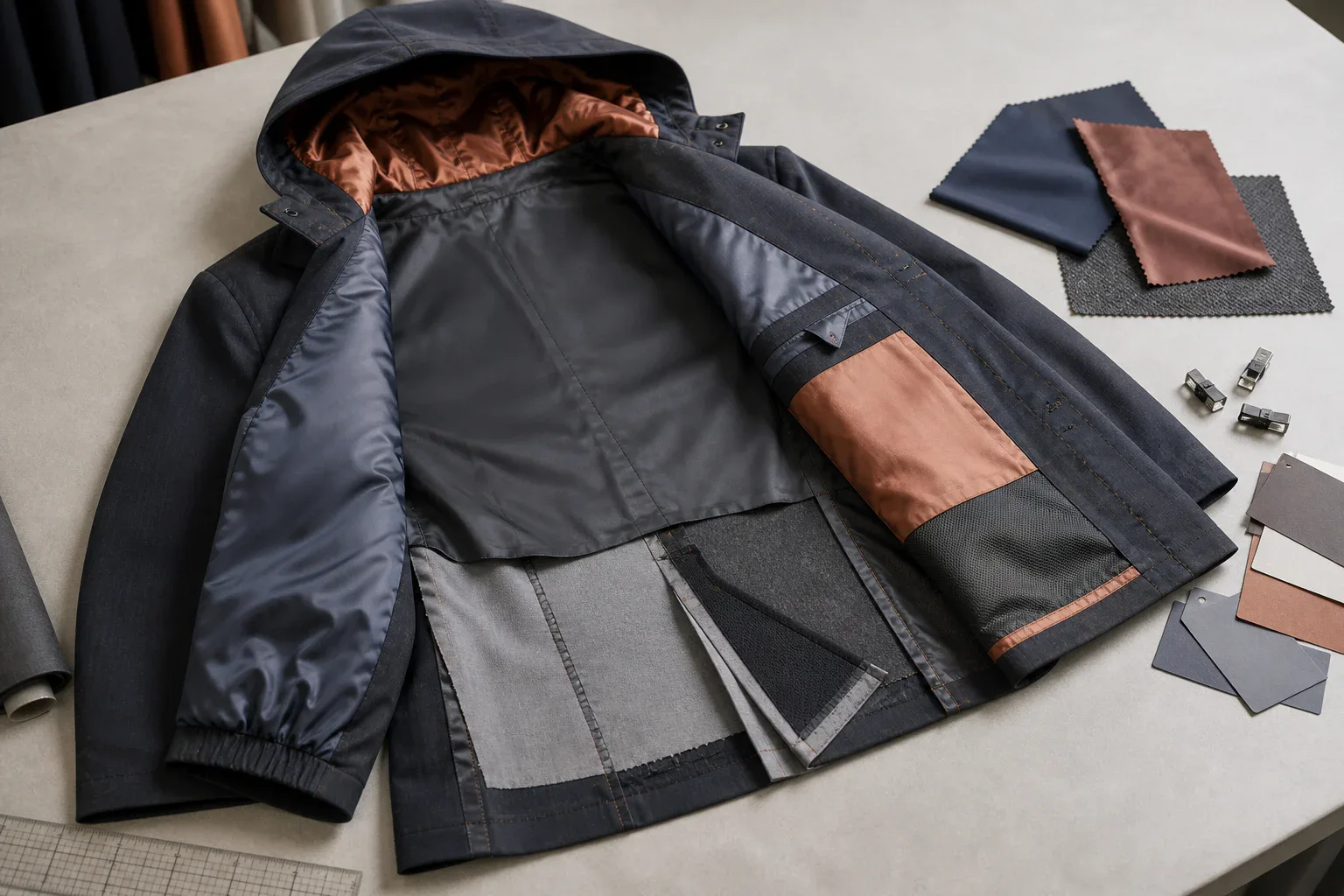
Even when the shell fabric meets a buyer's penetration criterion, water can still enter an assembled product at interfaces. Map the finished garment rather than asking for one vague “waterproof test.”
Review these locations on the actual style:
- shoulder, armhole, side and hood seams;
- stitch holes and seam intersections;
- front zipper and zipper ends;
- pocket openings and pocket-bag attachment points;
- snaps, eyelets, drawcord exits and ventilation openings;
- hood-to-neck attachment and front-neck closure;
- cuffs, hems and adjustable openings;
- quilt lines or other stitching through the shell system; and
- transfers, embroidery or other decoration that changes the shell.
For each location, state the construction, the intended barrier, the inspection or exposure method and the acceptance decision. If seam sealing, a membrane or a special closure is proposed, it must appear in the bill of materials and workmanship standard; it cannot be inferred from the shell name.
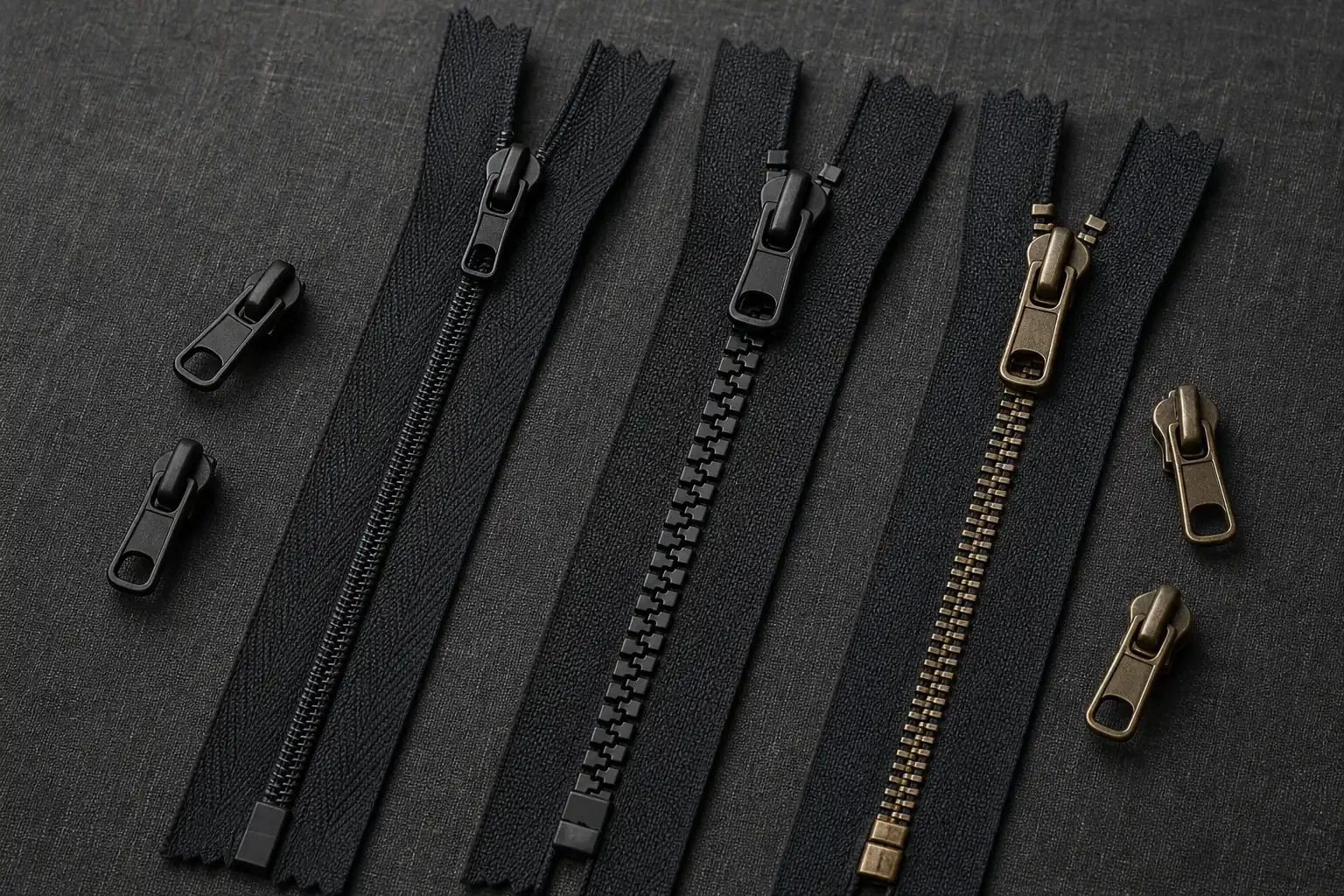
The zipper guide remains the owner for zipper type and approval. This article owns only the question of whether a chosen closure and its installation support the garment's defined water-ingress brief.
Build an Approval Matrix Before Sampling
The second information gain is a compact record that joins material identity, method and garment location. A useful matrix looks like this:
| Approval object | Required record | Decision evidence |
|---|---|---|
| Shell surface | Article, lot, color, face, finish, care state | Named surface-wetting method, edition, report and buyer criterion |
| Shell penetration | Same material identity and state | Named penetration method, report units or classification and buyer criterion |
| Seam assembly | Seam type, thread, needle, stitch and any barrier operation | Identified seam specimen or garment location, exposure and result |
| Front closure | Zipper or closure code, tape, slider, guard and installation | Location-specific review under the agreed exposure |
| Pockets and openings | Construction, orientation and protective features | Entry location, exposure condition and acceptance result |
| Finished garment | Style, size, color, sample stage and revision | Garment-level method or agreed use simulation, observations and disposition |
| After-care state | Care route and cycle count selected by the buyer | Repeat evidence where durability of the claim is required |
Avoid writing “passed waterproof” in the disposition field. Write what passed: the identified specimen or garment, the method or exposure, the criterion, the date and the approved revision.
Use the Garment as a Location Map
Catalogue images can help a buyer point to construction zones during a brief. For example, a reversible puffer with multiple closures and panel seams, a reversible bomber with a front zipper, rib edges and mixed faces, and a quilted zip-up puffer with pockets show different places where a buyer might mark seams, openings and material transitions.
These three pages are visual layout references only. Their titles, images and product-page wording do not prove water resistance, waterproof performance, a rating, seam sealing, a membrane, a coating or the construction that will be used for a new order. The approved specification and sample evidence control the program.
Define Change Triggers, Not Just a First Approval
The third information gain is a change-control rule. A result should be reviewed when the item that generated it no longer matches the production proposal.
Typical triggers include:
- shell supplier, article, lot, color or finish changes;
- coating, laminate or other layer changes;
- print, embroidery, heat transfer or wash changes;
- seam type, needle, thread, stitch density or barrier operation changes;
- zipper, pocket, vent, hood, cuff or hem construction changes;
- care labeling or buyer-required after-care state changes;
- factory route or subcontracted process changes that affect the barrier system; or
- a failed inspection, complaint or production observation at a mapped location.
The response is not automatically “repeat every test.” The buyer and technical team should assess which evidence was affected, record the decision and run the relevant confirmation on the changed material or assembly.
Buyer Handoff Checklist
Send a factory a decision-ready brief rather than the instruction “make it waterproof.” Include:
- intended use and the exact claim you intend to make;
- reference style, construction drawing and mapped ingress locations;
- shell article, face, finish, color and care state;
- all layers that form the proposed barrier system;
- seams, closures, pockets, hood, cuffs, hem and decoration details;
- named methods and buyer acceptance criteria for each evidence layer;
- required sample stage and garment revision;
- report and sample identifiers that must appear in the approval record; and
- change triggers and responsible approver.
Jiashun can review a custom men's outerwear brief through the fabric-sourcing process. Bring the intended use, physical reference, material proposal and evidence requirements. Feasibility and test scope must be confirmed for the actual project; this article is not a performance guarantee.
FAQ
Is water-resistant fabric the same as waterproof fabric?
No. Treat both as claim boundaries that need defined evidence. A material may resist surface wetting or a limited penetration exposure without supporting a broader finished-garment waterproof claim.
Does a spray rating prove that a fabric is waterproof?
No. ISO 4920 expressly addresses surface wetting and says it is not intended to predict rain penetration. Use a separate, appropriate penetration question and do not extend a fabric result to the garment.
Does a hydrostatic-pressure result prove that a jacket is waterproof?
No. It is evidence about an identified fabric specimen under the named method. The jacket's seams, zippers, pockets, hood, cuffs, hem and decoration still require garment-level consideration.
Are nylon fabrics waterproof and polyester fabrics only water-resistant?
No. Fiber family does not determine the final claim. Construction, finish, layers, material state, assembly and the selected evidence all matter. Use the nylon vs polyester jacket fabric guide for the fiber comparison.
When should water-performance evidence be reviewed again?
Review it when the shell identity or state, finish, care route, decoration, seam, closure, opening or other relevant construction changes. Record which evidence is affected and confirm the changed part at the appropriate level.
What should a buyer send before asking for a waterproof garment quote?
Send the intended use and claim, construction drawing, material proposal, mapped ingress locations, sample stage, named test methods, acceptance criteria, care state and change-control requirements. A product photo and the word “waterproof” are not a complete specification.
Primary Technical Sources
- ISO 4920:2012 — Textile fabrics: Determination of resistance to surface wetting (spray test), accessed August 17, 2026.
- ISO 811:2018 — Textile fabrics: Determination of resistance to water penetration — Hydrostatic pressure test, accessed August 17, 2026.
- ISO 22958:2021 — Textiles: Water resistance — Rain tests: exposure to a horizontal water spray, accessed August 17, 2026.
- AATCC TM22-2024 — Water Repellency: Spray Test, accessed August 17, 2026.
- AATCC Test Methods and Evaluation Procedures, accessed August 17, 2026.