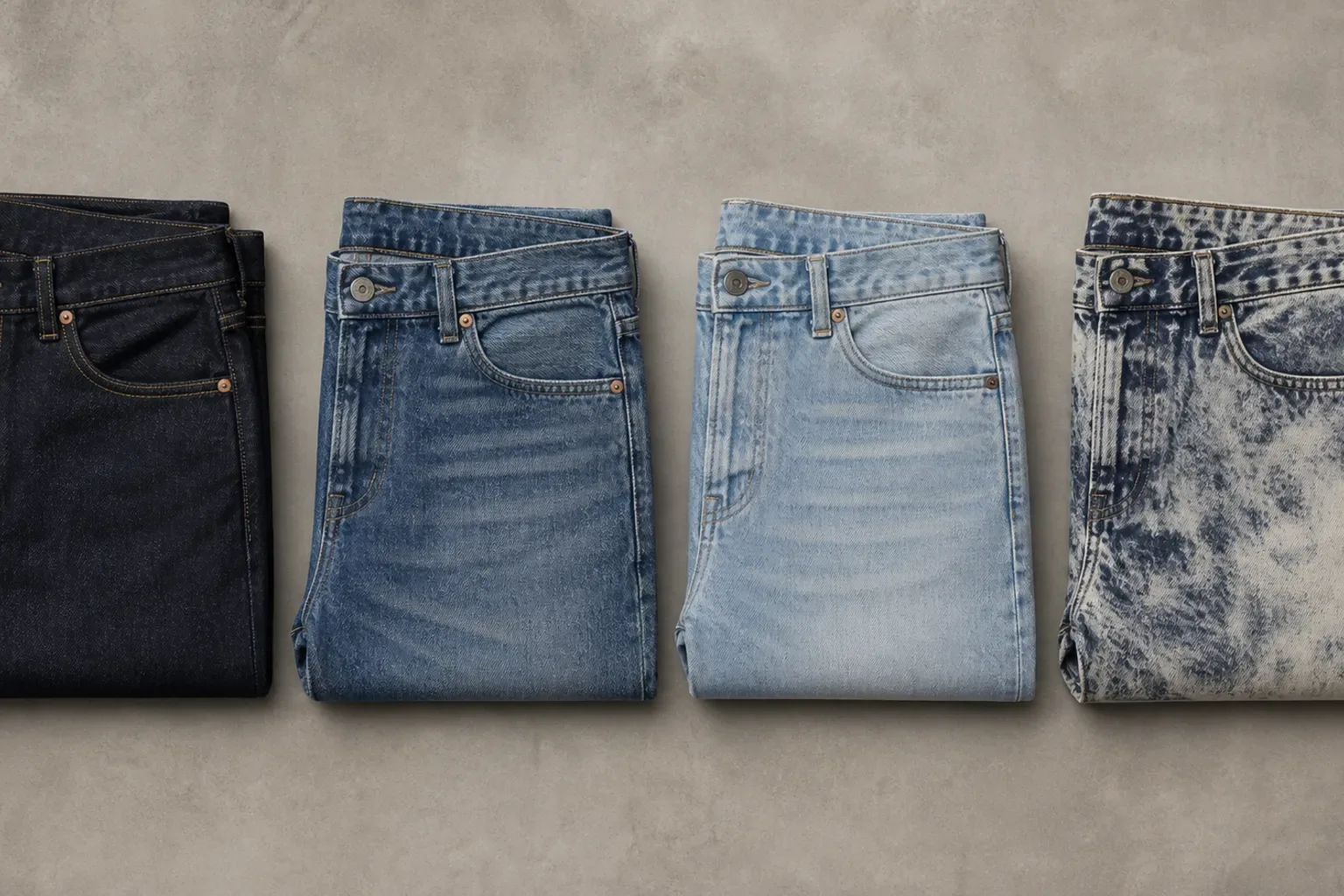
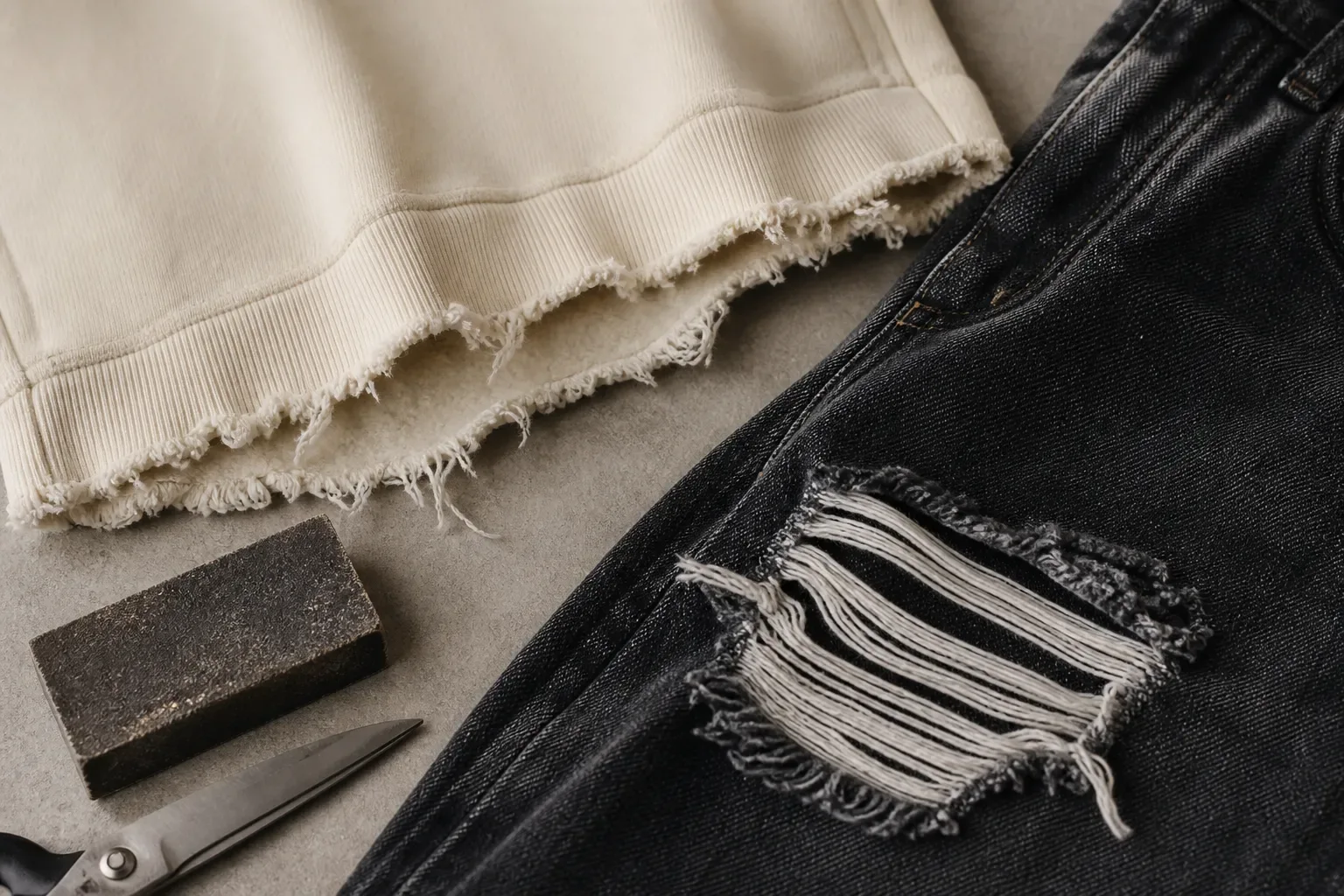
Denim Mills vs. Jeans Garment Factories: How to Choose
Denim sourcing can mean fabric mills, garment factories, vertically integrated groups, development houses or supplier platforms. Compare nine options by the service they publicly describe.
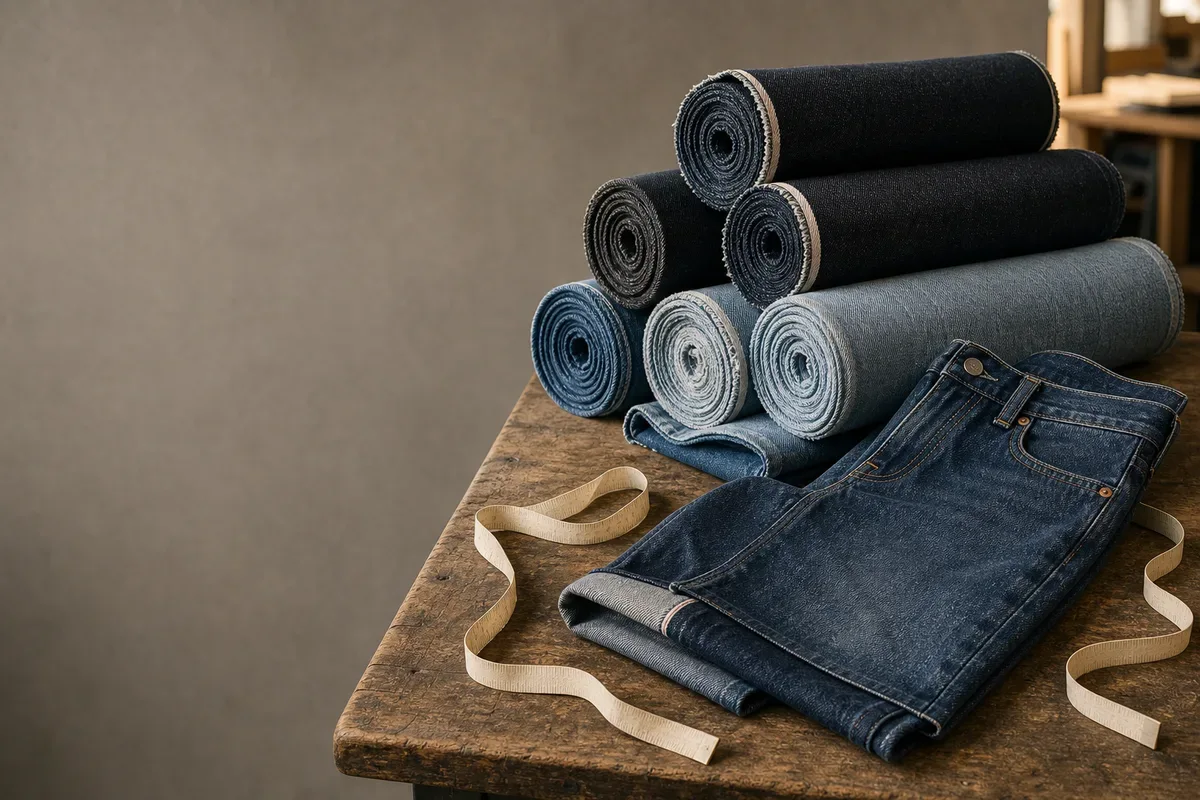
Searching for a denim supplier can lead to several different kinds of business. A fabric mill develops and produces denim cloth. A jeans garment factory turns cloth into finished products. A vertically integrated group may do both, while a development house or supplier platform plays a different role again.
This guide compares nine sourcing options by the services they describe publicly. It is designed to help you contact the right type of provider, not to declare a universal winner.
Methodology and disclosure
Reviewed July 18, 2026. Jiashun Clothing publishes this comparison and appears in it. We reviewed each provider's own public website to classify the services it currently describes: denim fabric, finished-garment production, product development, or supplier matching. We did not independently test workmanship, pricing, MOQs, lead times, certifications, customer relationships or current commercial availability.
The guidance below is not a quality ranking. Buyers should confirm capabilities and project terms directly with each provider before ordering.
The options at a glance
| Provider | Publicly described model and footprint | What a buyer should verify |
|---|---|---|
| Jiashun Clothing | Custom garment factory in Humen, Dongguan, China | Product, fabric, wash and project-specific minimum |
| Saitex | Jeans production, fabric mill and microfactory operations in Vietnam and Los Angeles | Which facility and program model fit the project |
| Soorty | Vertically integrated denim and jeans production in Pakistan and Bangladesh | Current product scope, availability and commercial terms |
| Artistic Milliners | Denim fabric and garment production in Pakistan, with a wider group footprint | Which group operation would handle the project |
| ISKO | Denim and fashion fabric company in Turkey | Fabric selection, access and nominated garment-production route |
| Cone Denim | Denim mill and fabric supplier with manufacturing described in Mexico and China | Fabric availability and how finished garments will be produced |
| Candiani Denim | Vertically integrated denim mill in Italy, with custom-garment initiatives | Whether the need is fabric, development or a finished-garment service |
| The Evans Group (TEG) | Apparel development and production house in Los Angeles, USA | Current denim capability, production route and project terms |
| Sewport | Online supplier-matching platform | Provider identity, factory capability and contract terms |
Jiashun Clothing — custom jeans and streetwear garments
Jiashun operates a main facility of 3,000 m² in Humen, Dongguan. Our denim work includes custom jeans, jackets and shorts, with patterns, sewing, washes and decorative details developed around the approved brief.
Orders start from 50 pieces. The final minimum depends on the product, fabric, wash and other customization requirements. Simple samples typically take 10-18 working days after project details are confirmed; complex washes, styles or processes take longer. Bulk production typically takes 20-30 working days after approval. The confirmed schedule remains project-specific and also depends on timely buyer feedback. See the cuts, wash options and enquiry path in our custom denim program.
Saitex — jeans production across several operating models
Saitex describes itself as a jeans producer. Its Vietnam page describes five facilities there, including a fabric mill, while its Saitex USA page describes a Los Angeles microfactory.
That means the name alone does not tell a buyer which facility, development route or commercial model applies. Confirm where the project would be developed and produced, along with current minimums and availability.
Soorty — vertically integrated denim and jeans production
Soorty describes a vertically integrated denim and jeans business spanning Pakistan and Bangladesh. Its published operations include spinning, denim fabric, garments, laundry and recycling.
For a buyer, the useful question is not whether vertical integration is automatically better. Ask which operation would own the fabric, garment and wash stages for your project, then compare the resulting sample, terms and schedule with other routes.
Artistic Milliners — fabric and finished-garment operations
Artistic Milliners describes denim fabric and garment manufacturing, supported by spinning, weaving, dyeing, finishing and other group operations. Its business overview shows why it belongs in the vertically integrated category.
The group has also announced a majority investment in Cone Denim. Buyers should therefore confirm the specific business, location and production route behind a current proposal rather than relying on an older company label.
ISKO — denim and fashion fabric
ISKO presents itself as a denim and fashion fabric company. Its research and development page describes fabric-collection and textile-development work in Turkey.
Contact a fabric company when the main decision is the cloth itself. If you need finished jeans, also establish who will develop the pattern, cut and sew the garments, execute the wash, and take responsibility for the approved result.
Cone Denim — denim mill and fabric supplier
Cone Denim describes a global denim mill and fabric-supply business with roots in Greensboro dating to 1891. A company manufacturing update describes capabilities in Mexico and China.
Because Cone is now connected to Artistic Milliners through the announced investment above, buyers should ask whether a proposal covers fabric only or a wider group solution. The answer should be explicit in the quote and sample plan.
Candiani Denim — Italian denim mill and custom initiatives
Candiani Denim describes a family business and a vertically integrated denim fabric mill in Italy. The company also publishes its Candiani Custom jeans microfactory, so "fabric only" is no longer a safe shorthand for everything under the Candiani name.
Ask which service is commercially available for your project: fabric selection, development support, a custom garment, or another route described by the company.
The Evans Group — apparel development and production
The Evans Group describes Los Angeles services covering design, sourcing, patterns, samples, cut-and-sew and small-volume production, as well as support for larger factory runs.
Its public positioning is broader than denim alone. If you are considering TEG for jeans, verify current denim experience, wash development, the production location and who will hold responsibility from approved sample through bulk.
Sewport — supplier matching rather than a factory
Sewport is a platform that lets brands publish an enquiry, receive proposals and compare providers. That can widen the search, but a platform listing is not proof of factory ownership or denim capability.
Vet each respondent as an individual supplier: legal identity, actual production location, product capability, wash route, sample process, inspection terms and commercial agreement.
Which type should you contact?
Choose from the deliverable backwards:
- You need denim fabric: begin with a mill or fabric company and confirm how the cloth can be sampled and purchased.
- You need finished jeans, jackets or shorts: speak with a garment factory that can explain the pattern, fabric sourcing, sewing, wash and approval route.
- You need product development close to your design team: compare a development house with factories that provide development directly.
- You need more candidates: a supplier platform can collect proposals, but you still need to verify the company behind each response.
In every case, send enough product detail for a meaningful answer: reference images or tech pack, target measurements, fabric direction, wash references, decoration, labels, quantity and destination. Ask for a project-specific minimum, sample plan, production schedule, quality plan and shipping basis. A supplier cannot confirm reliable terms from the words "custom jeans" alone.
If the supplier offers finished garments, the jeans manufacturing process guide maps the fabric handoff, pattern, cutting, sewing, wash and approval stages that its proposal should cover.
Denim-specific checks before bulk
- Confirm who sources or produces the fabric and who is responsible for garment production.
- Confirm where the wash is developed and performed.
- Approve a washed physical sample, because the wash can affect tone, handfeel and final measurements.
- Define the acceptable variation for wash and distressed details.
- Put measurement, workmanship, packing and any third-party inspection requirements in the order's inspection plan.
FAQ
What is the difference between a denim mill and a jeans garment factory? A mill produces denim fabric. A garment factory develops and produces the finished jeans, jacket or shorts. Some groups are vertically integrated and describe both activities, so confirm which entity and facility will handle your order.
Do I need to contact a mill and a garment factory separately? Not always. A garment factory may source an appropriate fabric or work with a nominated mill. If the fabric origin is essential to the product, put it in the brief and confirm availability before sampling.
What MOQ should I expect for custom denim? There is no universal denim MOQ. Jiashun orders start from 50 pieces, while the final minimum depends on the product, fabric, wash and customization. Other providers should confirm their own current terms from the actual project brief.
Does inclusion in this guide mean Jiashun endorses a provider? No. Inclusion means the provider had a relevant public business model when reviewed. It is not a workmanship test, commercial recommendation or guarantee of current availability.