How Are Jeans Made? From Denim to Final Inspection
Follow finished denim through approval, pattern making, cutting, sewing, washing, measurement and final inspection—and see what a brand must decide at each handoff.
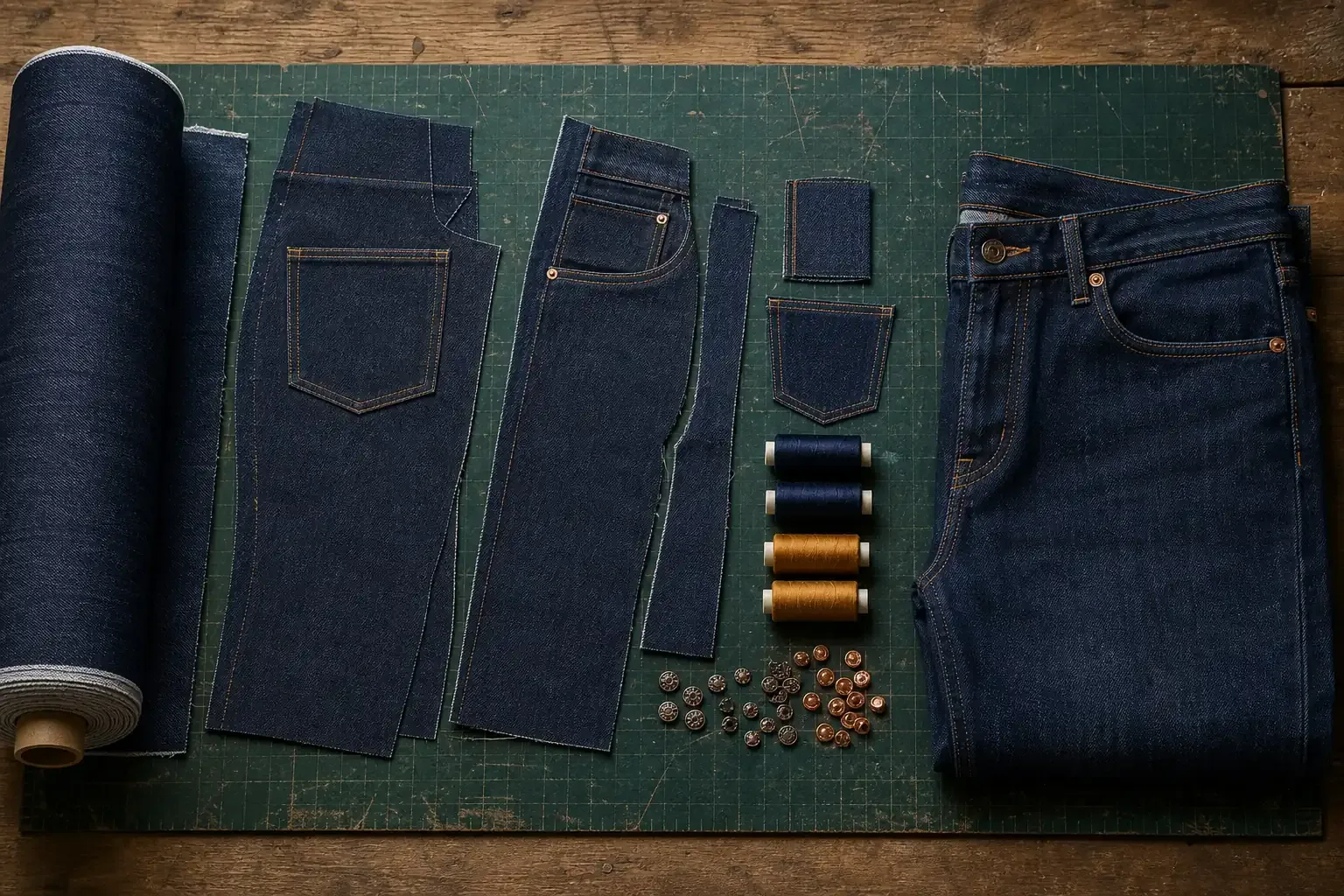
Jeans are made by turning finished denim rolls into pattern pieces, sewing those pieces into a garment, applying the approved wash or finish, and then measuring, inspecting and packing the result. The exact order of some decoration and hardware steps changes with the design, but the main path is consistent: approve, pattern, cut, sew, finish, check.
One boundary matters from the start. Spinning cotton, dyeing yarn and weaving denim are upstream textile operations. A jeans garment factory receives or sources finished denim and turns it into clothing. Jiashun follows the second model: we source denim to the approved direction and manufacture finished garments. We do not spin the fiber, dye the yarn or weave the denim.
Where Does Finished Denim Enter the Jeans-Making Process?
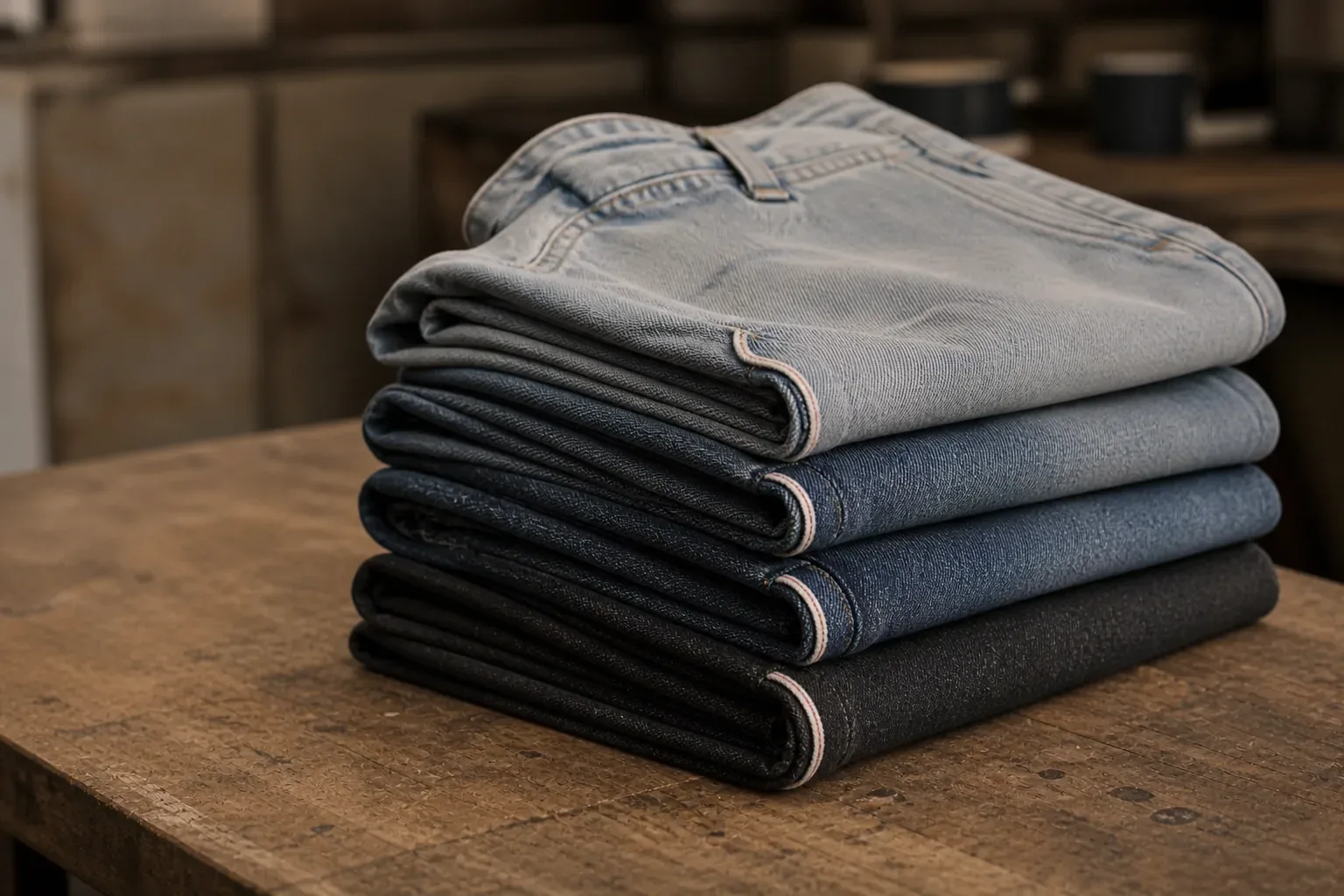
Finished denim reaches a jeans factory after an upstream textile supply chain has produced the cloth. Depending on how suppliers are organized, spinning, yarn dyeing, weaving and fabric finishing may happen within an integrated mill or across several specialists. In classic indigo denim, the warp yarn is commonly indigo dyed while the filling, or weft, remains undyed. Indigo concentrates near the yarn surface around a lighter core, which is why later abrasion can reveal a faded contrast. CottonWorks documents this construction in its denim manufacturing reference.
The handoff to garment production is a finished roll with defined properties—not loose cotton or cones of yarn. Pattern development, cutting, sewing, the applicable garment-finishing route, inspection and packing are coordinated from that point. A separate finishing partner may perform a specified wash; the physical production route is project-specific.
For a buyer, this distinction defines the first sourcing question: do you need cloth or finished jeans? A mill specification and a garment-production brief solve different jobs. For Jiashun projects, fabric sourcing means selecting finished denim against the approved structure, composition, stretch, handfeel and finishing direction. It does not mean that Jiashun spins, dyes or weaves the cloth.
What Must a Brand Approve Before Cutting?
Cutting converts a reversible roll of fabric into style-specific pieces, so the key inputs must be clear first. Start with the material: fiber composition, weight, stretch, handfeel, usable width, surface character and expected wash direction. Then connect it to the garment: fit reference, size chart, pattern notes, bill of materials, thread, zipper or button-fly choice, rivets, labels, pocket details and decoration.
The fabric standard should be physical and descriptive. A swatch or approved roll cutting communicates more than “premium blue denim.” Record what the sample represents and which details remain open. Keep rolls in compatible shade groups, because indigo shade variation that is subtle on a roll can become obvious when unlike panels meet in one washed garment.
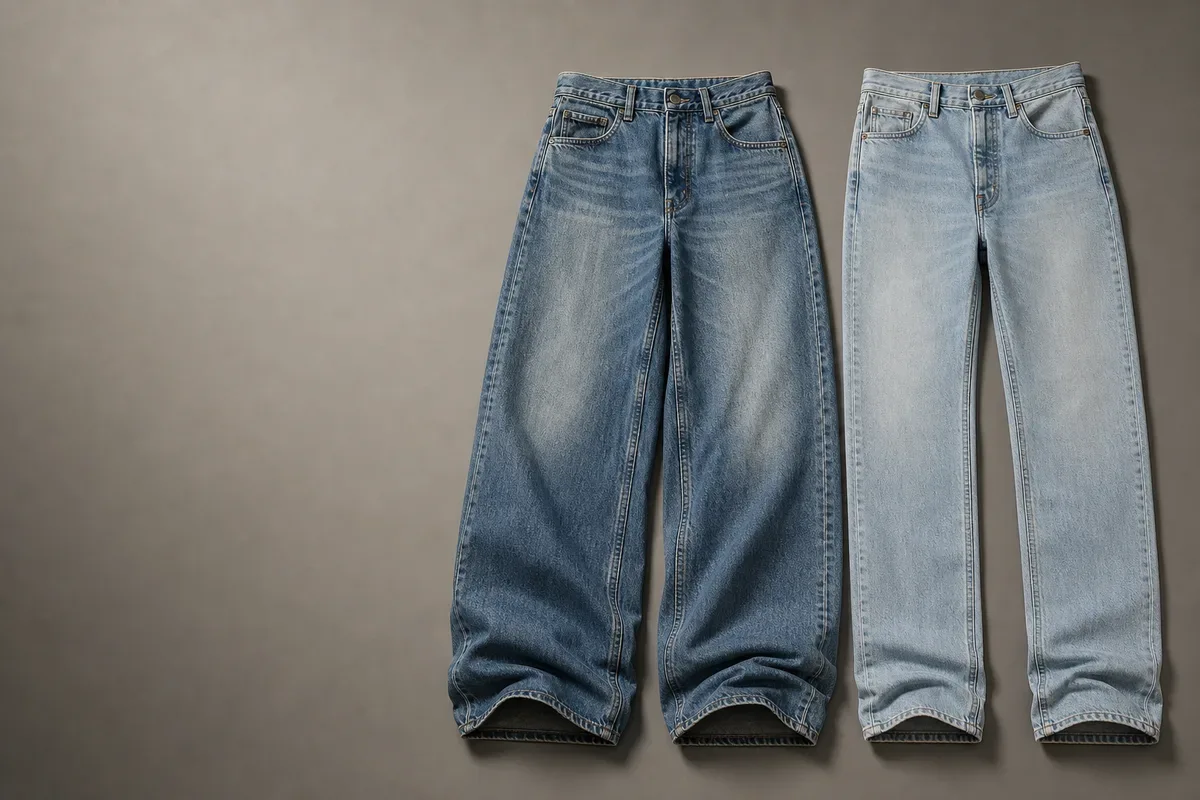
Weight and fit must be considered together. The denim weight guide explains how cloth structure affects drape and wash response, while the denim fits and cuts guide separates baggy, straight, relaxed and other silhouettes. A product reference such as these stone-washed baggy heavyweight denim pants can show a direction, but its name and photos do not replace a project-specific fabric, pattern and wash brief.
The cutting release is therefore a decision gate: the buyer and factory agree what material is being cut, which approved pattern applies, and what the finished garment is intended to look and measure like after its planned processing.
Pattern Development and Denim Cutting
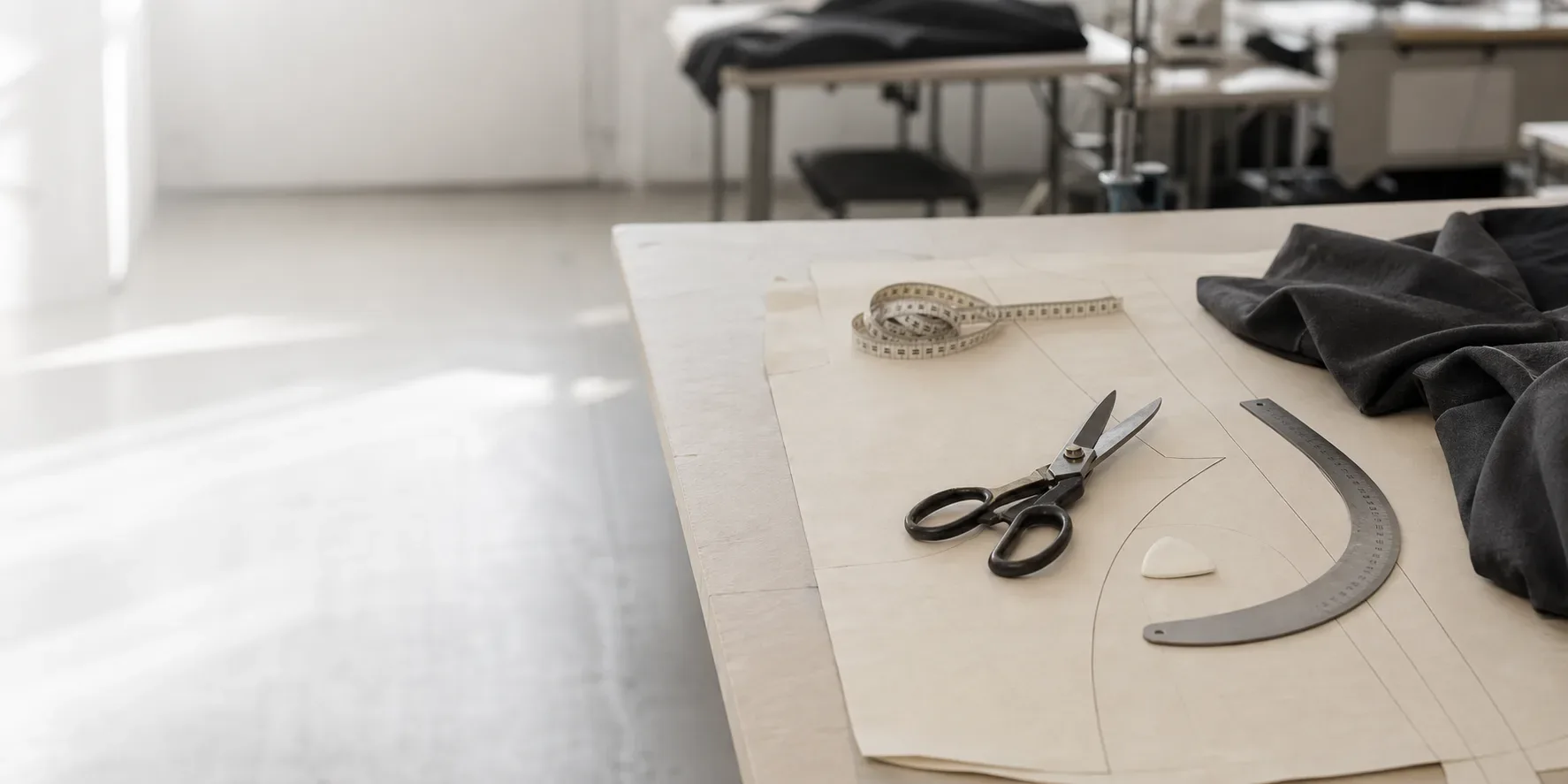
The pattern translates the design into flat components. Development may begin with a fit block, a tech pack, a reference garment or clear images, but the result still needs actual pattern pieces: fronts, backs, yokes, waistbands, pocket bags, facings, fly parts, belt loops and any style-specific panels. A sample tests how those pieces behave as a garment. Grading then creates the planned size range, which should be checked against the agreed points of measure.
In the cutting room, rolls are assigned by compatible fabric and shade group. Denim is spread in aligned plies, defects and roll changes are marked, and a marker nests the required pattern pieces and sizes across the usable width. The marker controls material yield, while the pattern controls shape. Those are different responsibilities.
The lay is cut, and matching components are kept in identified bundles so that sizes, color groups and style parts do not mix. Pocket placement marks, notches and drill points guide later sewing. A cut panel cannot be corrected as freely as a digital line, so unclear pocket geometry, rise shape or seam allowance should be resolved before this stage. Our industrial fabric cutting guide explains the equipment choices; the buyer-facing point is simpler: accurate cutting depends on an approved pattern, controlled spreading and traceable bundles.
How Are Jeans Sewn and Reinforced?
Jeans assembly follows a planned sequence, but there is no universal operation list for every five-pocket, cargo, double-waist or decorated style. A typical route prepares coin and front pockets, constructs the fly and front, sets back pockets and yokes, joins leg seams, closes the rise and seat, then attaches the waistband, belt loops and hems. Factories adjust that sequence when an operation needs a flat panel, when a decoration must avoid a seam, or when a component must wait until after washing.
Construction and appearance meet at the stitch line. Coats' seam classification guide describes the lap-felled seam as a strong construction commonly used on jeans to enclose edges and resist fraying; it is generally sewn with a 401 chainstitch. That does not make one seam mandatory everywhere. The designer and factory still choose seams, stitch types, thread sizes and visible topstitch rows for the fabric and intended look.
Bartacks and rivets are reinforcement decisions, not generic decoration. They are placed at selected stress points such as pocket openings or belt-loop ends. Levi Strauss & Co.'s history of riveted denim traces the use of metal rivets to reinforce pocket openings and seams under strain. Decorative stitching has a different job: these washed baggy straight-leg jeans with spider-web stitching show a visible motif layered onto the garment direction. The structural seam plan must still work underneath it.
How Do Washing and Finishing Create the Final Look?
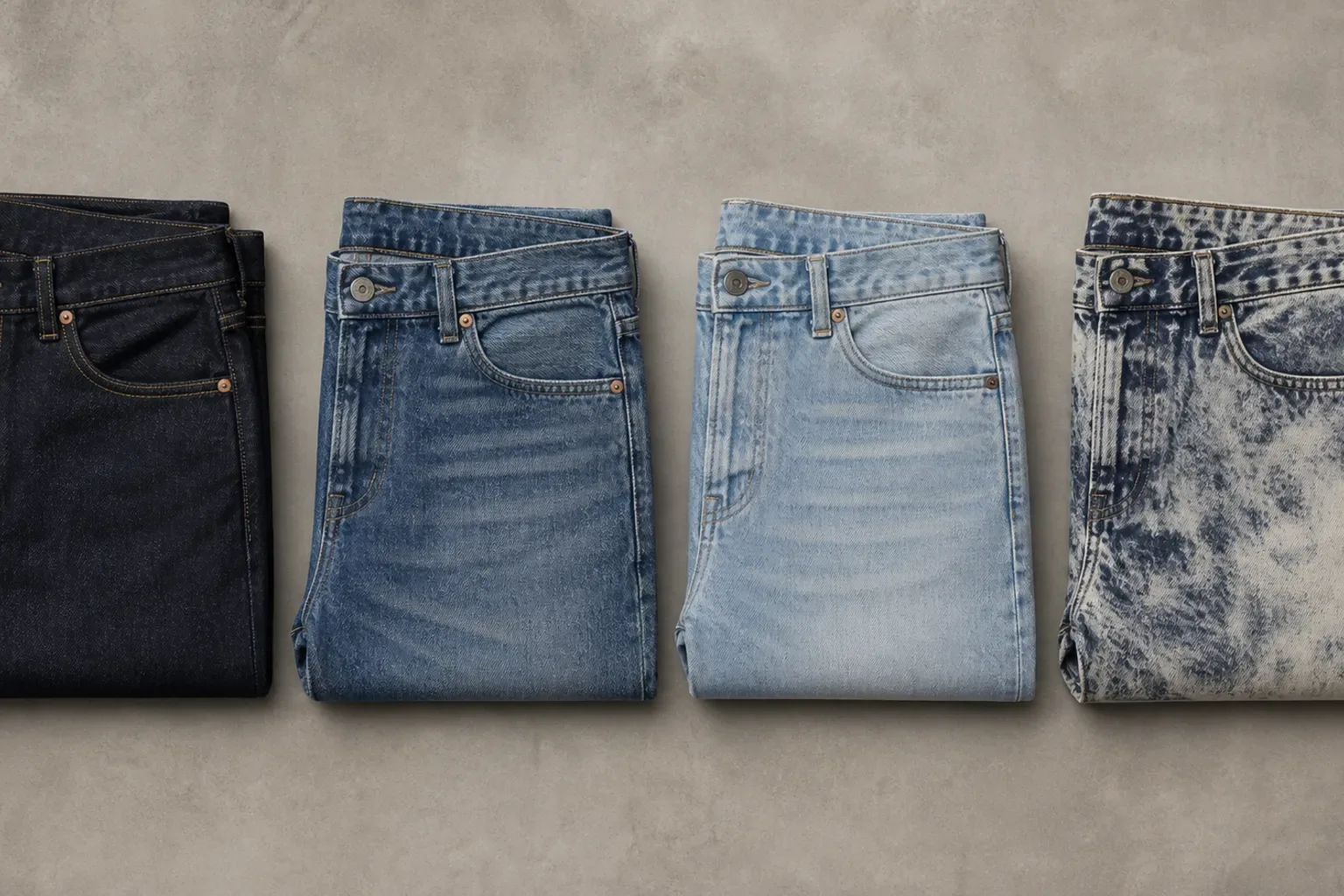
Some jeans remain raw or receive only limited finishing; many fashion jeans are washed after sewing. Wet and mechanical processing can remove weaving size, soften the cloth, shift the color and expose more of indigo's lighter yarn core. Distressing can add controlled abrasion or edge damage. These processes create the face of the product, but they also act on its seams, thread, dimensions and hardware.
That interaction is why wash cannot be treated as a color name added at the end. Coats' denim wash bulletin identifies color, softness, dimensional stability and handle as wash outcomes, with results affected by processing conditions. Thread or trim that looks correct before processing may change differently from the denim. Depending on the design and treatment, selected hardware or decoration may be installed before or after wet processing; the route should be decided during development rather than assumed.
Our denim washes guide covers stone, enzyme, acid and appearance-led directions, while the denim wash chemistry guide explains the underlying color change. A vintage light-wash baggy style with side-flower embroidery and a distressed hem illustrates how silhouette, wash, embroidery and edge treatment can meet in one reference. It does not define a universal recipe or sequence.
For Jiashun projects, Jiashun reviews the finish direction against the approved brief and sample, then confirms the applicable production route. Where washing is physically performed is project-specific.
How Do Factories Control Fit, Shade and Wash?
Control comes from comparing production with agreed references at the points where risk changes. A pre-wash fit can confirm construction, but it cannot by itself prove the finished measurement after wet processing. A wash reference can confirm the desired tone, but it does not replace a size chart. Fabric shade, pattern, construction and wash must be controlled as one system. If an inseam or outseam rotates, the jeans leg-twist guide separates original-fabric skew, panel alignment, local sewing displacement and post-wash change before bulk approval.
Sample names also describe different questions. A proto or fit sample explores shape and construction. A size set checks how the pattern grades. A pre-production sample can combine approved materials, trims and finish before bulk. A top-of-production sample represents current production. Not every program uses every label, and the exact approval route should be written into the order. The garment sample types guide explains those roles in detail.
| Stage | Buyer approval | Risk it helps prevent |
|---|---|---|
| Before cutting | Fabric, shade group, pattern and size chart | Wrong cloth or geometry entering the cut |
| Before bulk | Washed construction sample and trim direction | Fit, finish or hardware mismatch at scale |
| During production | Current workmanship and wash comparison | Drift away from the approved reference |
| After finishing | Post-wash measurements and appearance | Shipping a visually right garment in the wrong size |
When care-performance testing is required, the method and acceptance criteria should be named. ISO 6330:2021 defines domestic washing and drying procedures for textile testing, while ISO 5077:2007 covers determining dimensional change after specified washing and drying. These are test frameworks, not an industrial denim-wash recipe, and they do not create a pass limit unless the buyer and supplier agree one.
What Is Checked Before Jeans Are Packed?
Final inspection is the last gate, not the first quality activity. A useful plan begins with incoming fabric and trims, continues through inline checks of construction, pocket placement, seams and hardware, and returns to the garment after washing for shade, appearance and measurement review. Packing checks then confirm the approved labels, assortment and presentation for the order.
Post-wash appearance deserves its own attention because several materials have been processed together. ISO 15487:2018 describes evaluating washable textile products for effects including color change, pilling or fuzzing, seam appearance and damage to components such as buttons or zippers. A project may use that standard, another agreed method, or selected checks from its own quality plan. ISO 15487 is a test reference, not a universal Jiashun procedure.
An AQL final inspection can provide a sampling and acceptance framework for the finished lot. It does not replace incoming checks, inline control, the approved sample or post-wash measurement. Those controls answer different questions. Jiashun's public workflow states that finished garments are checked before packing; the project-specific inspection method, acceptance criteria and any third-party inspection requirement should still be agreed in the order.
What Should You Send for a Custom Jeans Quote?
A factory can give a useful development answer only when the brief connects design intent to measurable choices. Send one organized message rather than a folder of unexplained inspiration:
- Product: jeans style and reference or tech pack
- Fit: silhouette, sample size and size chart
- Denim: composition, weight, stretch, handfeel and color direction
- Finish: raw or wash reference, contrast and distress placement
- Construction: pockets, fly, seams, topstitch and reinforcement
- Trims: button, rivets, zipper, patch and labels
- Decoration: artwork, placement, dimensions and technique direction
- Order: quantities by color and size, packing needs and destination
Mark which lines are fixed and which need factory recommendations. If a reference garment matters, state whether it is the fit standard, wash standard, construction standard or only visual inspiration. Those are not interchangeable.
Jiashun's custom denim program starts from a tech pack, reference garment or clear product photos, then reviews fabric, fit, finishing and hardware for the project. The quote and development route follow the actual brief. That is the practical end of how jeans are made: each production step must connect back to something the buyer and factory can identify and approve.
FAQ
What is the raw material of jeans?
Jeans are usually made from denim, a woven fabric traditionally based on cotton. Modern denim may blend cotton with fibers such as elastane for stretch or other fibers for a different hand and performance. The fiber content, yarn, weave, weight and finish all affect the finished garment; “denim” alone is not a complete material specification.
Why are many jeans blue?
Classic blue denim commonly uses indigo-dyed warp yarns with undyed filling yarns. Indigo is concentrated near the outside of the yarn rather than fully coloring its core. Wear, abrasion and controlled washing remove surface color and reveal lighter material below, creating the high-and-low fading associated with blue jeans.
Are jeans sewn before or after washing?
Most garment-washed jeans are substantially assembled before the wash so that seams, edges and panels develop the intended effect together. Raw jeans skip that garment-wash route. The timing of embroidery, patches, rivets, buttons and other details varies with the process, so their sequence should be confirmed during sample development.
When does a jeans factory receive the denim?
The garment stage starts with finished denim rolls made by the upstream textile supply chain. From there, the jeans program develops patterns, cuts, sews, confirms the applicable finishing route and inspects garments. Integrated groups may cover more than one stage. Jiashun sources finished denim and manufactures garments; it does not spin, dye yarn or weave denim.
Why should fit be checked after the approved wash?
Wet processing can change dimensions, handfeel and how seams settle. A correct pre-wash measurement can therefore land differently after the planned finish. The approved washed sample and post-wash size chart connect the visual target to fit, while an agreed laundering test can evaluate later dimensional change under stated care conditions.
References
- Jiashun Clothing, “Denim & Jeans Manufacturer for Streetwear Brands”, retrieved 2026-08-01.
- CottonWorks by Cotton Incorporated, “Denim Construction”, retrieved 2026-08-01.
- Coats Group, “Seam Types”, retrieved 2026-08-01.
- Coats Group, “Denim Wash”, retrieved 2026-08-01.
- International Organization for Standardization, ISO 6330:2021, domestic washing and drying procedures for textile testing.
- International Organization for Standardization, ISO 5077:2007, determination of dimensional change in washing and drying.
- International Organization for Standardization, ISO 15487:2018, appearance assessment after domestic washing and drying.
- Levi Strauss & Co., “Celebrating the Evolution of Riveted Denim”, retrieved 2026-08-01.