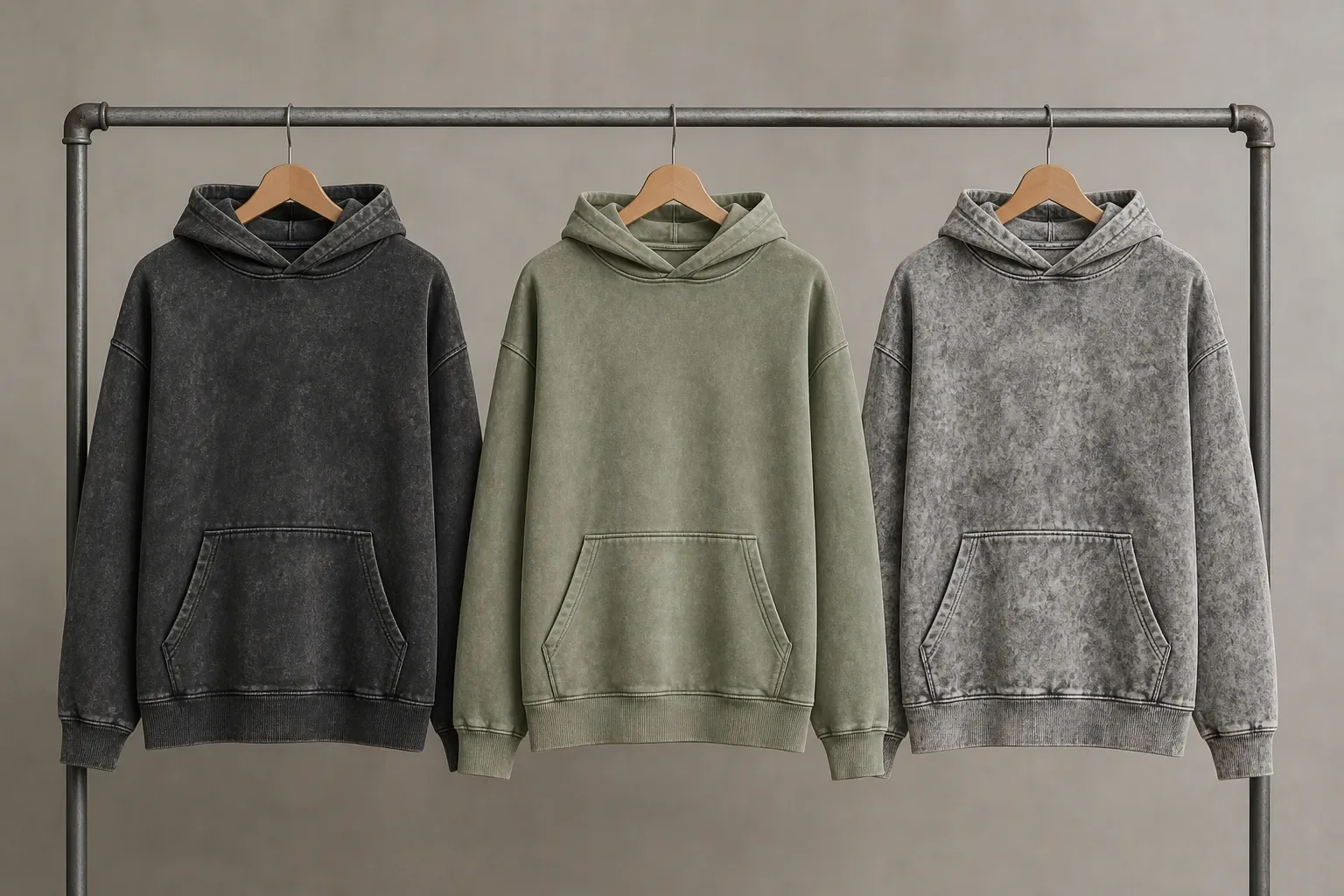
Denim Washes Explained: Stone, Enzyme, Acid and Sun-Fade — and How to Approve Them
What stone, enzyme, acid and sun-fade washes actually do to denim, why washed pieces vary by nature, and how to spec a wash so the sample lands close.
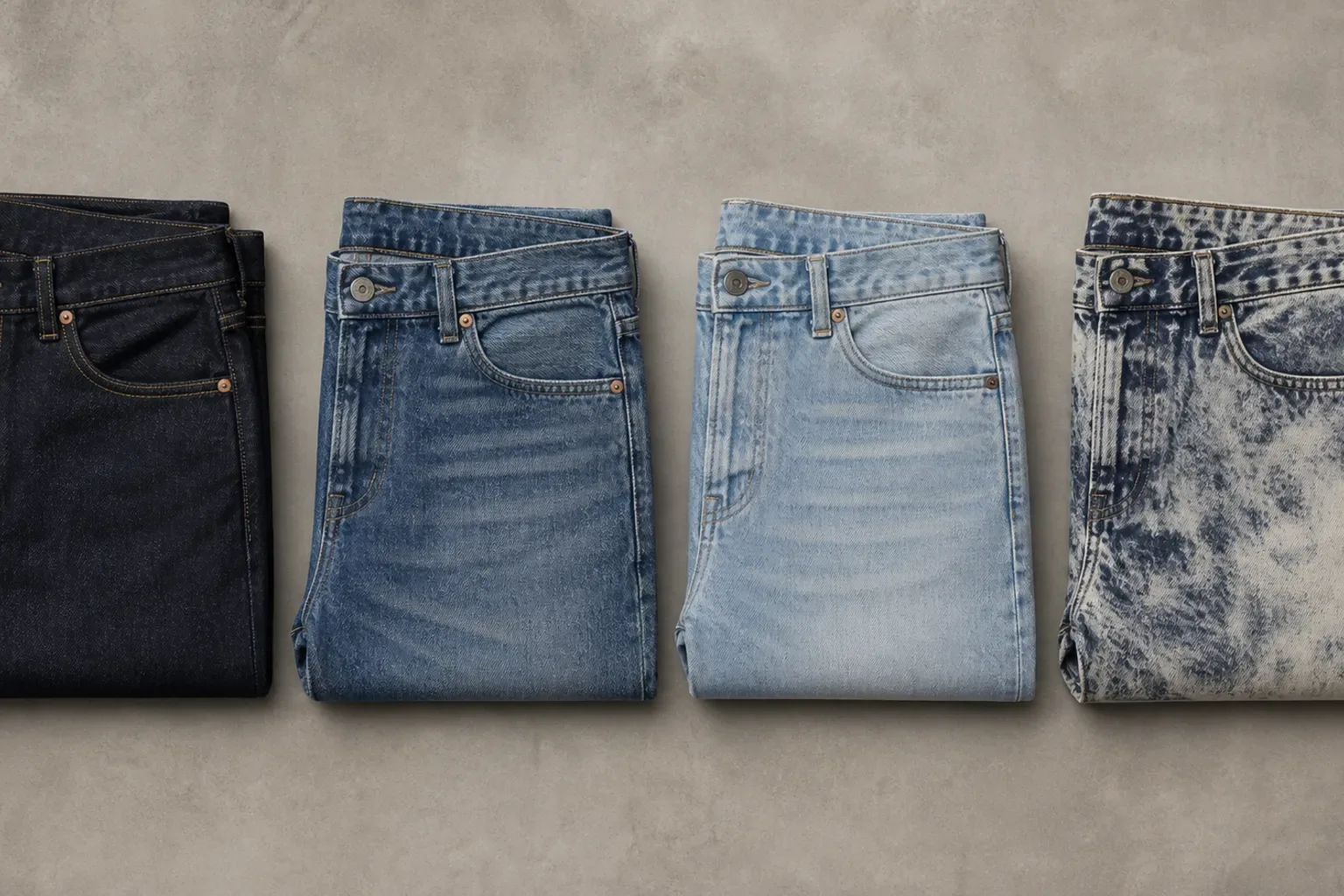
Two pairs of jeans cut from the same roll of denim can look and feel completely different, and the wash is one of the largest manufacturing variables. Washing is where denim gets much of its character — and it is also where sourcing misunderstandings happen, because a wash is a process, not a color picked from a chart. The garment washing explainer covers that factory-stage concept across fabrics; this page covers the denim finishes themselves. We develop washed denim for streetwear brands at our factory in Humen, Dongguan; this is the plain-language version of what each wash does and how to get the result you want.
Raw denim: the starting point
Unwashed denim is stiff, deep indigo and uniform. Finishing can remove or redistribute color, change the surface and soften the hand to create a particular face. The result depends on the starting fabric and the chosen mechanical, chemical or programmed process. The science underneath — including ring dyeing and why indigo is concentrated near the yarn surface — is covered in our denim wash chemistry guide.
The four washes, in factory terms
Stone wash. The jeans tumble with abrasive stones that physically scrub dye off the surface, hitting seams, pocket edges and high points hardest. The result is the classic broken-in blue with natural-looking contrast. Longer tumbling means lighter color and softer hand — and more stress on the fabric, which is why heavy stone washes pair with sturdier denim.
Enzyme wash. Cellulase hydrolyzes the cotton fiber surface, helping remove loosened surface fibers and some color. The result depends on the enzyme system, pH, temperature, time, mechanical action and base fabric. Enzyme and stone processes may also be combined to build a particular tone and contrast.
Acid wash. This describes a high-contrast, mottled appearance rather than one universal recipe. A traditional route tumbles garments with carrier media treated with an oxidizing agent, while laser, ozone and other systems can create related effects with different levels of repeatability. Specify the desired contrast and placement instead of assuming the name defines the method.
Sun-fade. This is also an appearance target rather than a single industry formula: controlled fading is placed where long exposure might naturally lighten the garment, while selected seams or panels remain darker. The factory should state the proposed process and reproduce the approved look on the actual fabric.
CottonWorks' denim-finishing overview explains how enzyme, mechanical, chemical, ozone and laser routes can produce different effects.
Garment dye, for completeness, runs the other direction: instead of removing color it adds it, dyeing the finished garment for saturated, slightly irregular tones. We covered it against vintage washing in our vintage wash vs garment dye vs acid wash guide.
Why every washed piece is slightly different
Wet batch processes can produce natural piece-to-piece variation because garments do not receive identical mechanical and chemical exposure. Programmed techniques such as laser finishing can repeat placement more closely. Neither result should be left undefined; the production method has two sourcing consequences:
- Approve the target and its tolerance. The physical sample establishes the intended tone and placement, while the order should state what variation is acceptable for the chosen method.
- Batch size matters. Wash processes and materials affect practical production minimums. Our custom denim orders start from 50 pieces; the final minimum depends on the product, fabric, wash and other customization details, and is confirmed during project review.
How to spec a wash so the sample lands close
- Send wash photos, not wash names. "Stone wash" spans an enormous range; three photos of garments with the tone and contrast you want communicate more than any vocabulary.
- Say where the contrast should live. Whiskers at the hips? Seat fade? Clean panels with hit seams? Placement is a spec, not an accident.
- Flag the base fabric early. Wash outcome depends on the denim's weight, weave and stretch content — the same recipe reads differently on rigid 14 oz and on a stretch blend. This is why we source fabric and develop the wash together rather than sequentially.
- Approve on the physical sample. Wash tone cannot be judged reliably from a screen alone. The approved physical sample becomes the production reference for tone, handfeel and placement.
Once the product and wash requirements are clear, we confirm the project-specific quote and development plan. Simple samples typically take 10-18 working days after project details are confirmed; complex washes, styles or processes take longer. Bulk production typically takes 20-30 working days after sample approval. Final timing depends on the fabric, wash complexity, order details and timely buyer feedback. Any progress updates or production photos are agreed for the project. The full program is on our custom denim page, and for a market view of the field our denim manufacturer roundup maps who does what.
FAQ
Which wash is most durable for the garment? No wash name alone determines durability. The base fabric, recipe, intensity, cycle, chemistry and finishing all affect the result. Approve the actual combination on a physical sample and specify any required performance testing for the order.
Can a wash be corrected if the sample is too light or too dark? A sample that is too dark may be moved lighter with further controlled processing. If it is already too light, removed indigo cannot simply be restored; redevelopment or an agreed tint or overdye route may be needed. Any correction should be re-sampled before bulk.
Do washed jeans shrink differently? Garment washing exposes the fabric and seams to a wet-and-dry process and can reduce some residual dimensional change, but it does not guarantee a pre-shrunk garment. The pattern should account for the actual fabric and wash, and final dimensional change should be verified under the agreed care and test method. CottonWorks explains why residual shrinkage and skew depend on the material and process.
What is the minimum order for washed denim? Custom denim orders start from 50 pieces. The final minimum depends on the product, fabric, wash and customization requirements, so it is confirmed after we review the project.