What Is Puff Print? How It Works, What It Suits and Care
Puff print explained for clothing brands — how the ink rises, how it differs from high-density ink and 3D puff embroidery, which designs suit it, what drives the cost and how to care for it.
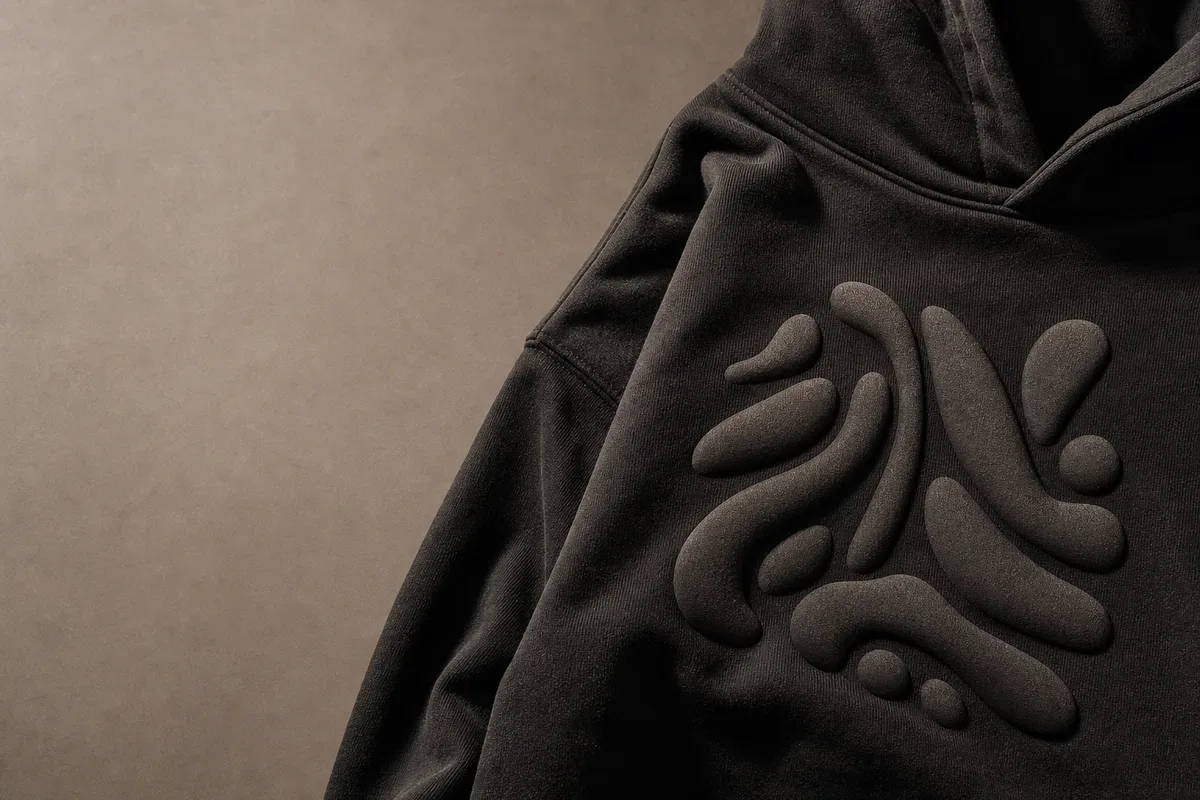
Puff print is a screen-printing technique in which the ink contains an expanding additive. When the printed garment is heated, the ink rises off the fabric and sets into a raised, rounded, slightly spongy layer. The result is lettering or a graphic you can feel with your fingertips and see as a soft shadow from across a room.
It is a print, not embroidery: no thread or foam is stitched into the garment.
How does puff printing work?
Puff printing uses the same equipment as ordinary screen printing. The artwork is separated by color, a screen is made for each color, and a squeegee pushes ink through the open mesh onto the garment. The difference is in the ink. A puff ink, or a standard ink with a puff additive mixed in, carries a blowing agent that stays flat until it is heated.
The garment then goes through a heat stage. The blowing agent expands, the ink swells upward and outward, and the layer cures into its final raised shape. Puff systems are commonly plastisol-based; water-based puff inks also exist and behave differently, so the ink route is chosen together with the fabric.
The final height and roundness depend on the ink deposit, the additive and base ink, the fabric and the heat, so the same logo can come out differently from two printers. The effect is judged on a physical sample, not a screen mock-up.
How is puff print different from screen print, high-density and 3D puff embroidery?
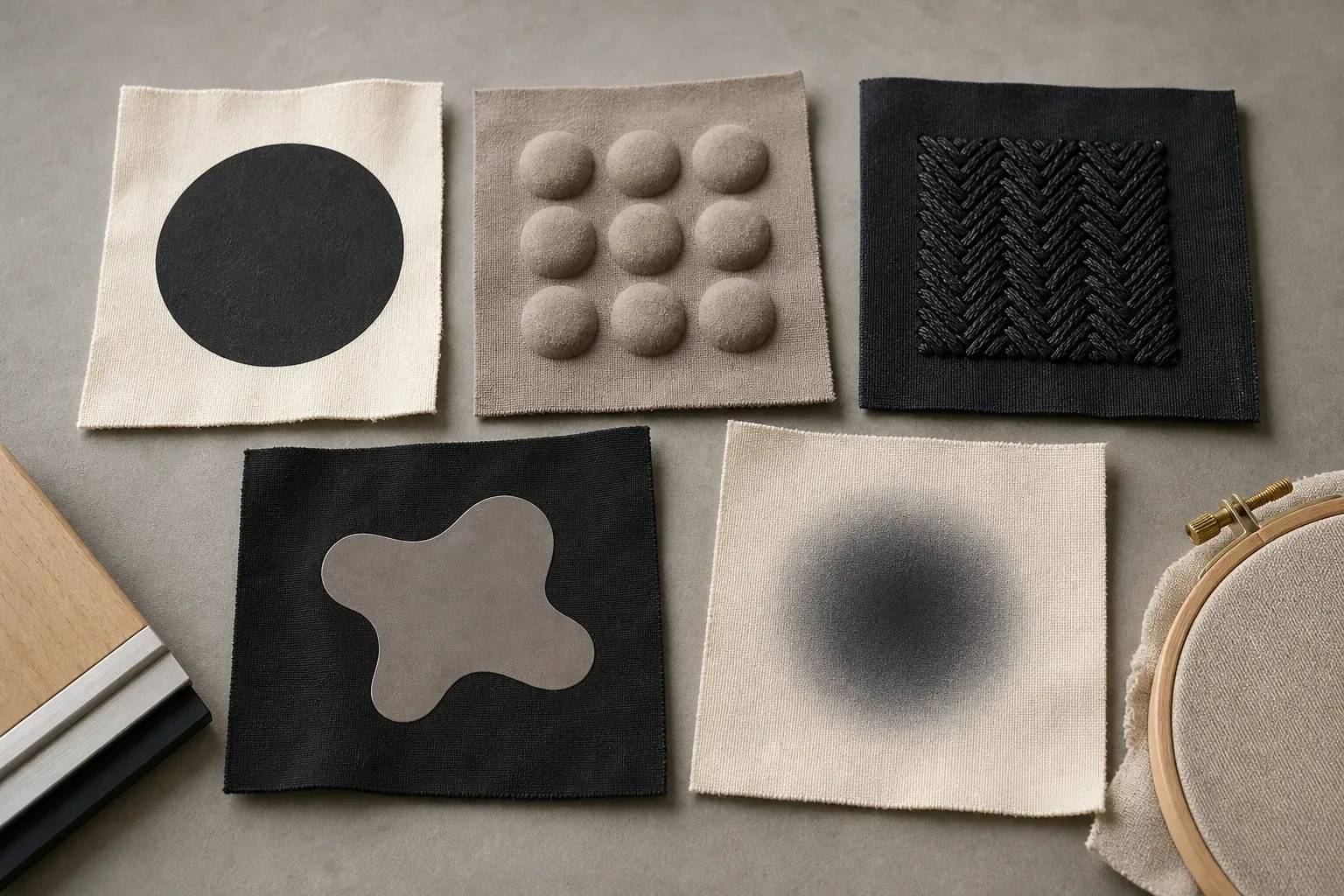
Buyers often use "3D print", "puff" and "high-density" for the same thing. They are different builds, and each gives a different edge and feel; our printing page shows puff, high-density and silicone side by side.
| What creates the relief | Edge and surface | Artwork it handles best | |
|---|---|---|---|
| Flat screen print | No relief; a thin ink layer sits on or in the fabric | Crisp edge, flat surface | Solid logos and graphics, with finer lines and smaller text than puff can hold |
| Puff print | Ink with a blowing agent expands under heat | Rounded, softer edge; matte, slightly spongy surface | Bold lettering, outlines, open shapes |
| High-density print | A thick layer of ink built up through a thick stencil; it does not expand | Sharp, upright edge; smooth, structured surface | Logos and lettering where a defined edge matters |
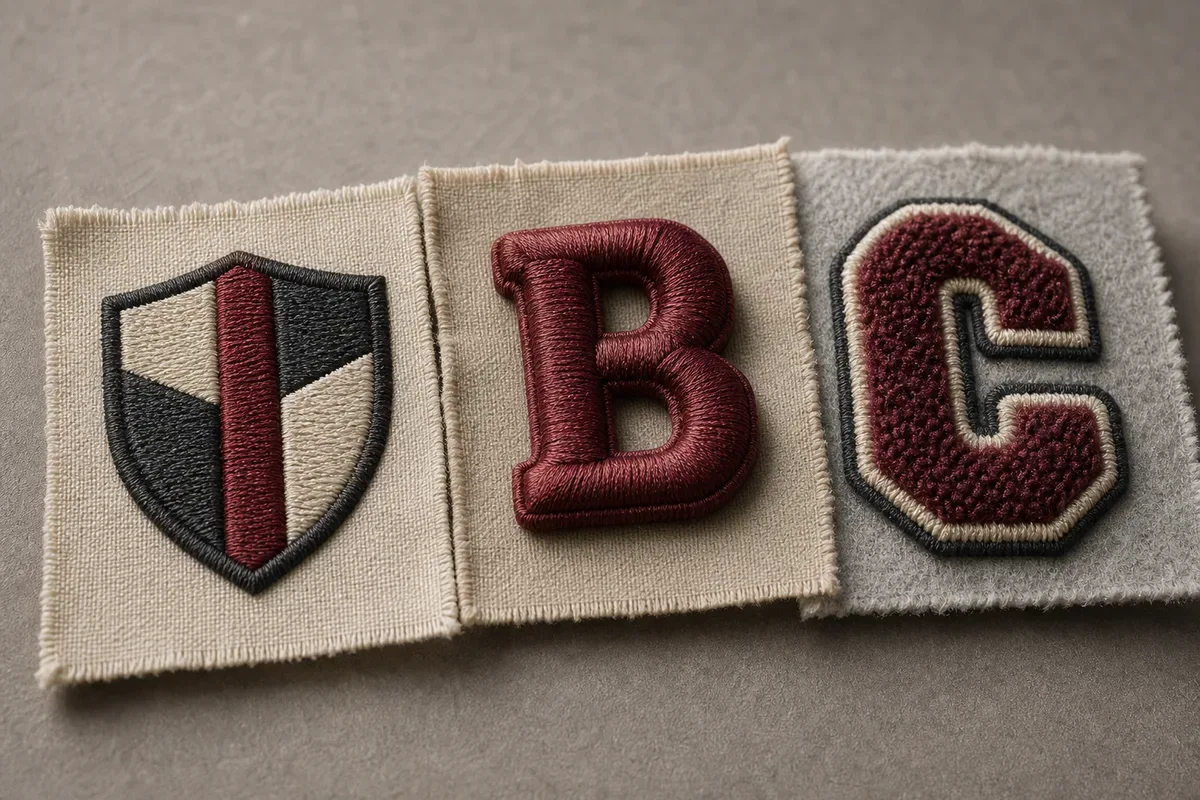
| 3D puff embroidery | Thread stitched over a foam layer | Sculpted, stitched edge | Bold logos and letters that can hold foam |
If you are choosing between print and thread more broadly, the flat, 3D puff and chenille embroidery guide covers the stitched options, and the print method comparison sets puff against screen, DTG, DTF and embroidery.
What designs and garments suit puff print?
Because the ink spreads as it rises, puff rewards simple, bold artwork: block letters, thick outlines, logos with open space between shapes. Thin strokes, small text and tight gaps tend to fill in, and photographic detail does not carry over. A design does not have to be puffed everywhere: fine parts can stay flat while the bold shapes rise.
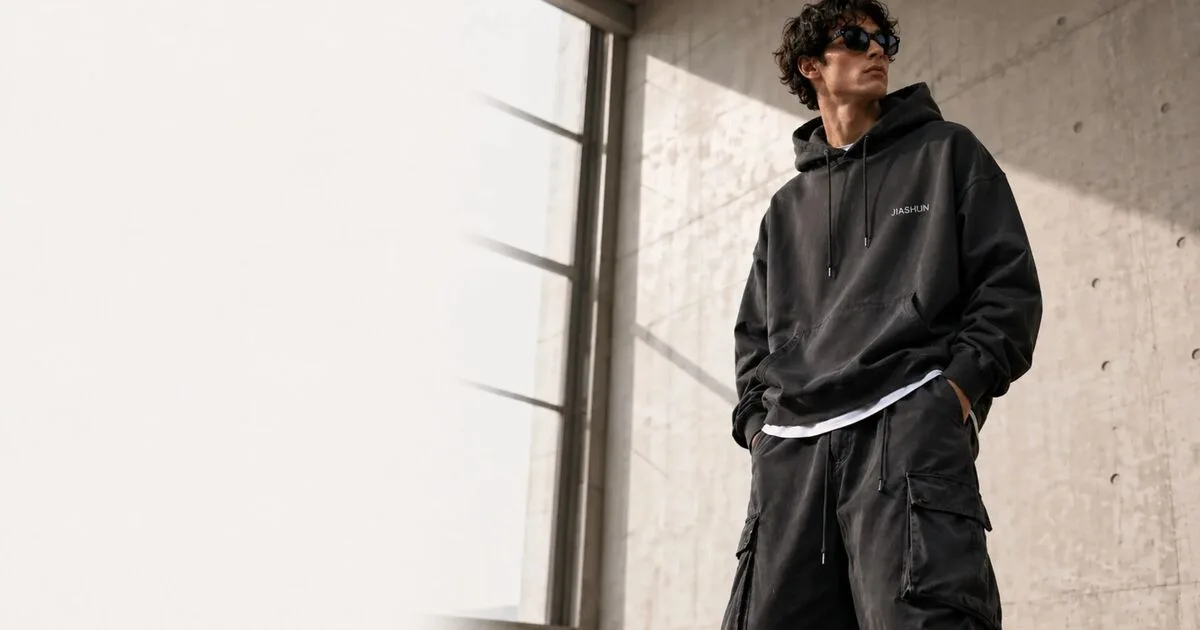
The base fabric matters as much as the artwork. Smooth, tightly knitted cotton and cotton-rich jersey and fleece give the ink an even surface to rise from. A heavyweight white tee is the classic base: on smooth, dense fabric in a light color, the relief looks its sharpest. On fleece hoodies, the denser and smoother the face, the more dimension the print shows; at Jiashun the ink deposit is tuned to your fabric during sampling.
Very stretchy fabrics need care, because a raised ink layer can stretch less than the knit beneath it. Large, solid puff areas also make that part of the garment stiffer and less breathable, so many brands keep puff to a chest hit, a back logo or a sleeve mark.
What does puff print cost?
Puff is priced like screen printing, plus the work of developing the raised finish. The main cost drivers are:
- Colors and screens. Each color needs its own screen, and screens can add setup cost.
- Print area and placements. A large back print costs more than a small chest logo, and each extra location adds work.
- Finish development. Getting the height and edge right on your fabric.
- Quantity. Setup is shared across the run, so the cost per piece falls as quantity rises.
There is no single price for "a puff print". At Jiashun, pricing is confirmed in the project quotation once the artwork, garment, print size and quantity are known.
How do you care for a puff print hoodie?
Heat made the print rise, and heat applied again can flatten it. The usual care advice for puff garments is:
- turn the garment inside out before washing;
- wash cool and avoid harsh detergents or bleach;
- tumble dry on low or hang to dry;
- never iron directly over the print.
Wash results depend on the ink system, the cure, the fabric and how the piece is washed, so use the care instructions you agree for that garment and print them on its care label.
What can go wrong with puff print?
Common faults include uneven rise across one print, letters filling in, soft or undefined edges, and areas that collapse flat or crack later. Each has different evidence and a different fix, so we cover them separately in our puff print hoodie defects and approval guide.
How do you order puff print clothing?
Send the artwork at the size it will be printed, the garment and fabric, the placement on the panel, the color references and your quantity. Thin lines and close gaps can then be flagged before the sample is made.
At Jiashun, the MOQ is 50 pieces per style, per color. Simple samples take 10–18 working days once the project details are confirmed, and new styles normally need a paid sample. After the sample is approved and materials are confirmed, bulk production takes 20–30 working days. Puff print can also sit on the same garment as other decoration, for example a printed back with an embroidered chest, and the combination is checked on the sample.
Puff print FAQ
Is puff print the same as 3D print? Not always. "3D print" is a loose label that can mean puff ink, high-density ink, silicone or 3D puff embroidery. Name the effect you want, or send a reference photo, so the printer quotes the right build.
Does puff print work on T-shirts as well as hoodies? Yes. Tees, hoodies and jackets can all carry puff. Smooth, dense fabric gives the clearest result, so the effect is approved on the actual garment rather than on a test cloth.
What is the next step?
Ready to put a raised logo on your next drop? Send your artwork, garment and quantity through our puff print clothing manufacturing page, and our team checks the details, then confirms feasibility, the quotation and a sample plan.