Where to Manufacture Streetwear: USA vs Portugal vs Turkey vs Pakistan vs China (MOQ, Cost, Lead Time)
A country-by-country comparison of streetwear manufacturing in the USA, Portugal, Turkey, Pakistan and China: typical MOQ, cost level, lead times, sourcing depth, shipping and who each option suits.
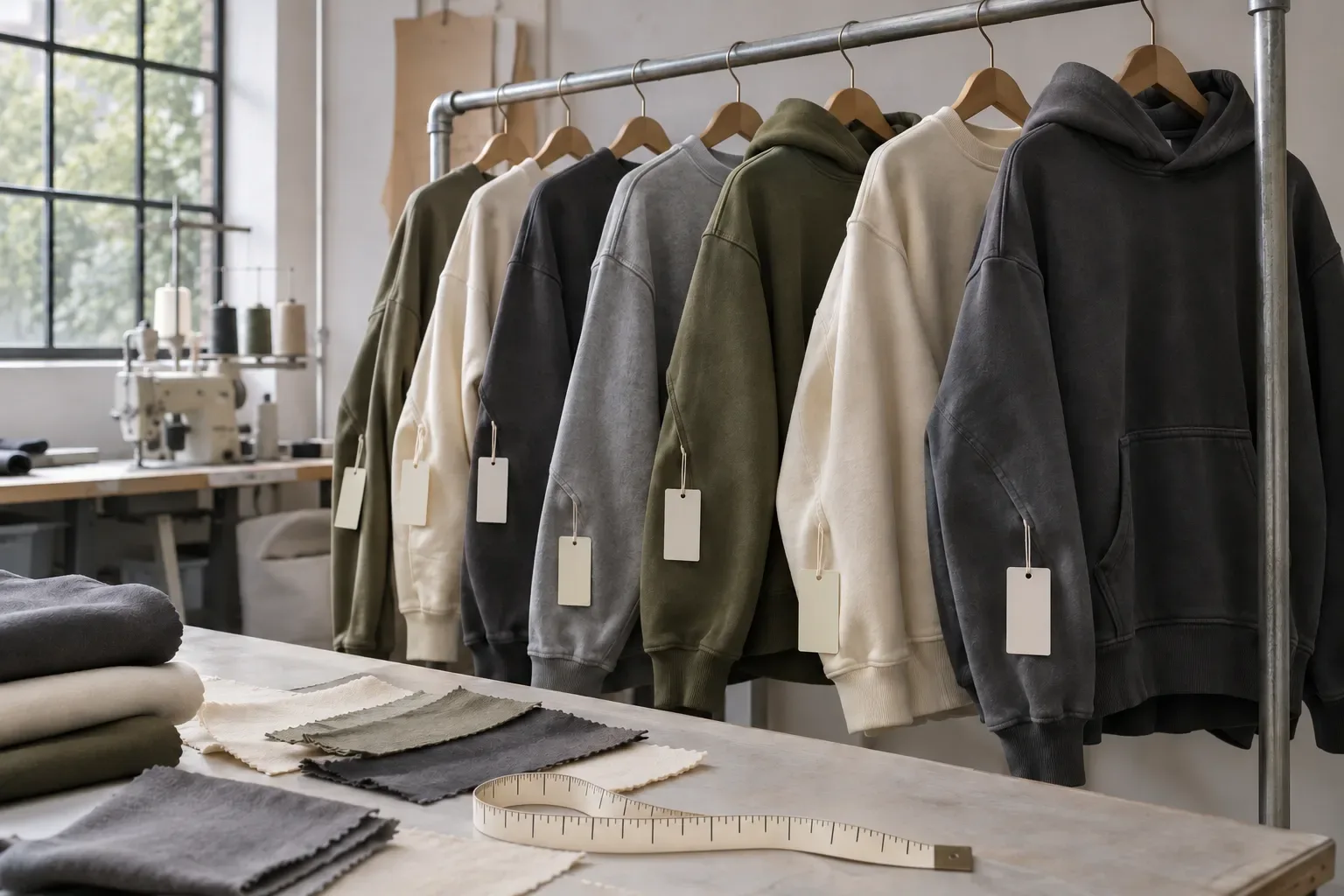
Where to manufacture streetwear depends on three numbers before it depends on any factory: how many pieces the first drop needs, how much of the retail price can go to production, and how many weeks sit between the design and the launch date. The USA, Portugal, Turkey, Pakistan and China all make good streetwear, and they trade those three numbers off differently.
The five differ on the criteria a brand actually negotiates: typical minimum order quantity (MOQ), indicative cost level, sample and bulk lead time, fabric and trim depth, what each region does best, shipping and duties to the US, UK and EU, and working hours.
Key takeaways
- Minimums are lowest in the USA and at low-MOQ cut-and-sew specialists in China, and highest in Turkey and Portugal. Unit cost is lowest in Pakistan and China and highest in the USA.
- Speed is about distance and fabric. Near-shore and domestic production wins on shipping time; Asia wins on fabric and trim choice.
- Duties depend on the HS code, the country of origin and the destination, so confirm them for your own garment before comparing landed prices.
How do the five countries compare at a glance?
| Criteria | USA | Portugal | Turkey | Pakistan | China |
|---|---|---|---|---|---|
| Typical MOQ per style | Commonly 50 to 300; some studios go lower | Commonly 200 to 500; knitwear specialists vary | Commonly 300 to 1,000 | Commonly 100 to 500 | Commonly 100 to 500; low-MOQ cut-and-sew from 50 |
| Indicative cost level | Highest | Medium to high | Medium | Lowest on basics | Low to medium; strongest value on complex builds |
| Sample lead time | Typically 1 to 3 weeks | Typically 2 to 4 weeks | Typically 2 to 3 weeks | Typically 1 to 3 weeks | Typically 2 to 3 weeks |
| Bulk lead time after approval | Typically 3 to 6 weeks | Typically 4 to 8 weeks | Typically 4 to 6 weeks | Typically 4 to 8 weeks | Typically 4 to 6 weeks |
| Fabric and trim depth | Narrow; much is imported | Strong in knit and jersey mills | Strong in denim, jersey and woven fabrics | Strong in cotton fleece and jersey | Deepest range of fabrics, trims, washes and hardware |
| Best at | Speed to market, small runs, domestic shipping | Quality knitwear and EU-made labelling | Denim, washes, mid-size runs for Europe | Basics, fleece and cost | Heavyweight fleece, wash effects, decoration, one-stop cut and sew |
| Shipping to US, UK, EU | Domestic ground freight in days | Road freight to the EU in days; to the US by air or sea | Road or sea to the EU in days to a couple of weeks | Air in about a week; sea in a month or more | Air in about a week; sea in four to six weeks door to door |
| Time zone vs US East / UK | Same or close | Close to the UK; US hours overlap in the morning | UK plus 2 to 3 hours | Roughly 5 hours ahead of the UK | 7 to 8 hours ahead of the UK; overlap is early morning in the US |
| Suits | First drop of under a hundred per style, tight deadlines, made-in-USA labels | EU-based brands, premium knits, repeat styles at a few hundred | Denim programs and 500-plus runs for EU and UK | Large basics volumes at a tight unit price | First drops of 50 to 100 and styles with heavy wash, print or embroidery |
What criteria does this comparison use?
Streetwear manufacturing by country is judged here on the same seven points: the MOQ per style, the cost level once labor, fabric and trims are priced, sample lead time, bulk lead time, how deep the local fabric and trim supply is, the distance to the customer's warehouse, and the working hours the two teams share. Cost is shown as a level, not a price, because unit cost moves with fabric weight, wash, decoration and quantity far more than with the country.
A brand with a 50-piece first drop and a brand with a 2,000-piece repeat order should not choose the same country, so the choice starts with the order type.
Is the USA the right place to make streetwear?
The USA wins on speed. A domestic cut and sew studio can turn a sample in one to three weeks, a rework in days, and bulk in three to six weeks, and the goods arrive by ground freight with no customs entry. That makes it the practical choice for a launch with a hard date, for small private label streetwear runs, and for brands that want a made-in-USA label.
The costs are the other side of that. Labor is the highest of the five, fabric is often imported, and heavyweight fleece, garment washes and specialty trims are harder to source locally. Many US studios work from stock blanks with custom decoration; fewer cut custom patterns in 400 GSM fleece. Expect the highest unit cost of the group, with MOQs that can still be low, commonly 50 to 300 per style. For US-bound orders from abroad, import duty on apparel changes by origin and over time, so confirm the HS code and current rates with a customs broker before pricing. The USA streetwear manufacturer page covers the overseas route to US buyers.
What does Portugal offer streetwear brands?
Portugal is the near-shore choice for EU brands. Its strengths are knit and jersey mills, careful finishing and a "made in Portugal" label that suits premium positioning. Streetwear brands use it for tees, hoodies and knitwear at a few hundred pieces per style, commonly 200 to 500.
Samples typically take two to four weeks and bulk four to eight weeks, and road freight reaches most EU warehouses in a few days with no customs border inside the EU. Cost is medium to high, above Turkey and well above Pakistan or China. Portugal fits less well when the brief calls for very low minimums, unusual wash effects or a wide choice of heavyweight fabrics, because the local fabric range is narrower than in Asia. For UK buyers, EU-made goods move under trade agreement rules of origin, and the paperwork needs checking per shipment; the UK streetwear manufacturer page covers the import side for UK brands.
Why do brands choose Turkey for streetwear?
Turkey is strongest in denim, wash finishing and woven and jersey fabrics, with mills and laundries close to the factories. For European brands it pairs mid-range cost with short transport: trucks and short-sea freight reach EU markets in days to a couple of weeks, and the customs union between Turkey and the EU covers most industrial goods, though duties and origin rules still depend on the product.
Turkish factories commonly ask for 300 to 1,000 pieces per style, so the route suits brands past their first test drop, particularly denim programs and repeat bodies. Samples typically take two to three weeks and bulk four to six weeks. Cost sits in the middle: lower than Portugal, higher than Pakistan for basics. Brands that want a first drop of 50 pieces will usually find the minimums too high.
When is Pakistan the better choice?
Pakistan is the cost leader for cotton basics. Vertically integrated cotton, spinning, knitting and dyeing keep the price of fleece, jersey and terry low, and factories commonly run 100 to 500 pieces per style. Hoodies, tees, sweatpants and tracksuits at volume are the core of the offer.
Sample turnaround is typically one to three weeks, bulk four to eight weeks, and shipping to the US, UK and EU runs by air in about a week or by sea in a month or more. The trade-offs are a narrower range of trims and decoration effects than China, more variation between factories, and a time zone five hours ahead of the UK that makes live fitting sessions harder for US brands. It is the right call when volume is high, the style is simple and the unit price is the deciding number.
Where does China fit for streetwear?
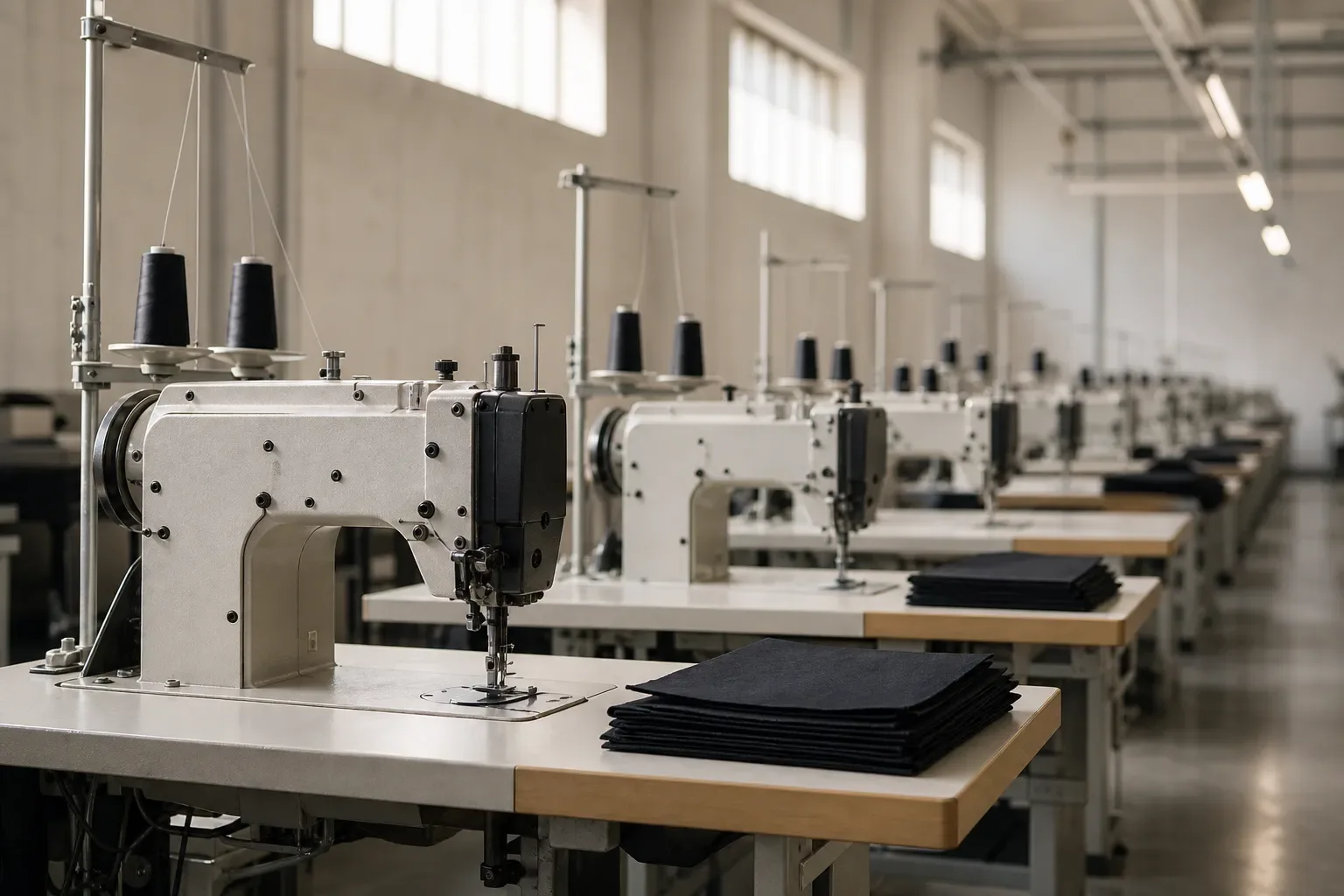
China has the deepest supply base of the five: fabric mills, trim and hardware suppliers, wash houses and embroidery and print specialists sit within a few hours of each other. That is why it handles complex streetwear, such as heavyweight fleece, acid and stone washes, puff print, chenille and combined decoration, with the lowest friction. Typical factories ask for 100 to 500 pieces per style, while low-MOQ cut-and-sew specialists start lower. Samples typically take two to three weeks and bulk four to six weeks, with sea freight to the US, UK or EU at four to six weeks door to door, or air in about a week.
Jiashun Clothing in Humen, Dongguan is one concrete example of the low-MOQ end. MOQ is 50 pieces per style, per color. Simple samples take 10-18 working days after project details are confirmed. Bulk production takes 20-30 working days after sample approval. A heavyweight washed hoodie is USD 27.60–31.90 per piece, by quantity. Brands comparing a custom hoodie manufacturer with the other regions will find the details there, and the cut and sew manufacturing page explains how a one-factory build from pattern to wash and label runs.
China's drawbacks are distance and time zone. Sea freight takes weeks, the working day is seven to eight hours ahead of the UK, and duties on goods from China depend on the HS code and destination, which makes the landed cost worth calculating early.
How do shipping and duties compare for US, UK and EU buyers?
Distance sets the transit time: domestic ground freight in days for the USA, road freight in days for Portugal and Turkey into the EU, and air freight in about a week or sea freight in a month or more for Pakistan and China. Air costs several times as much per kilo as sea, so brands often split a launch: a small air shipment for the drop date and the rest by sea.
Duties are set by the HS code of the garment, its country of origin and the destination market, and trade agreements can change the rate between two countries. Rates and rules also change over time, so use a customs broker or the freight forwarder's quote for the figure that matters, and compare suppliers on a landed cost that includes freight, duty and VAT or sales tax. Shipping terms such as FOB, DDP and EXW decide who pays which part; the shipping terms guide explains each.
How do you choose between these countries?
Start with the order, not the country.
- First drop of 50 to 100 per style: a USA studio when speed and domestic delivery matter most, or a low-MOQ cut-and-sew factory in China when the design needs heavy fleece, washes or decoration.
- A few hundred pieces, EU customers, premium knits: Portugal.
- 500 pieces and up, denim or wash-heavy programs for Europe: Turkey.
- 1,000 pieces and up of simple basics, price first: Pakistan.
- Complex decoration, many fabric options, one factory for the whole garment: China.
Many brands use two regions: a fast near-market source for restocks and a lower-cost one for the core line. Order a sample from your top two choices with the same tech pack, then compare fit, fabric handfeel and the quote, line by line. For wider supplier comparisons, see top streetwear manufacturers and streetwear manufacturers for UK brands.
Frequently asked questions
Which country has the lowest MOQ for streetwear?
The USA and low-MOQ cut-and-sew specialists in China have the lowest minimums, commonly from 50 pieces per style. Portugal and Turkey usually ask for a few hundred, and Pakistan sits in between. Low MOQ streetwear manufacturers by country differ most on what the minimum counts: per style, per color or per order.
Which country is cheapest for hoodies and tees?
Pakistan is usually cheapest for plain cotton basics at volume. China is often cheaper once the garment adds heavyweight fabric, washes, embroidery or print, because the supply chain for those finishes is local. The USA is the most expensive and Portugal sits above Turkey.
Is near-shore production always faster than Asia?
Transit is faster, but sampling and bulk times are similar. A Portuguese or Turkish factory delivers to the EU in days, while a Chinese factory ships in weeks, so the total from approved sample to warehouse is shorter near-shore. Splitting a launch between air and sea closes much of that gap.
Can I make private label cut and sew streetwear in any of these countries?
Yes. Private label cut and sew streetwear, with your own labels, fabric and pattern, is available in all five, though the fabric choice and the minimum differ by region. Ask each factory whether the MOQ applies to a custom pattern or only to stock blanks with decoration.
How do I compare quotes from different countries?
Ask for the same garment spec, quantity and Incoterm from each factory, then add freight, duty and VAT or sales tax to the ex-factory price. Compare the landed cost per piece, not the quote alone.