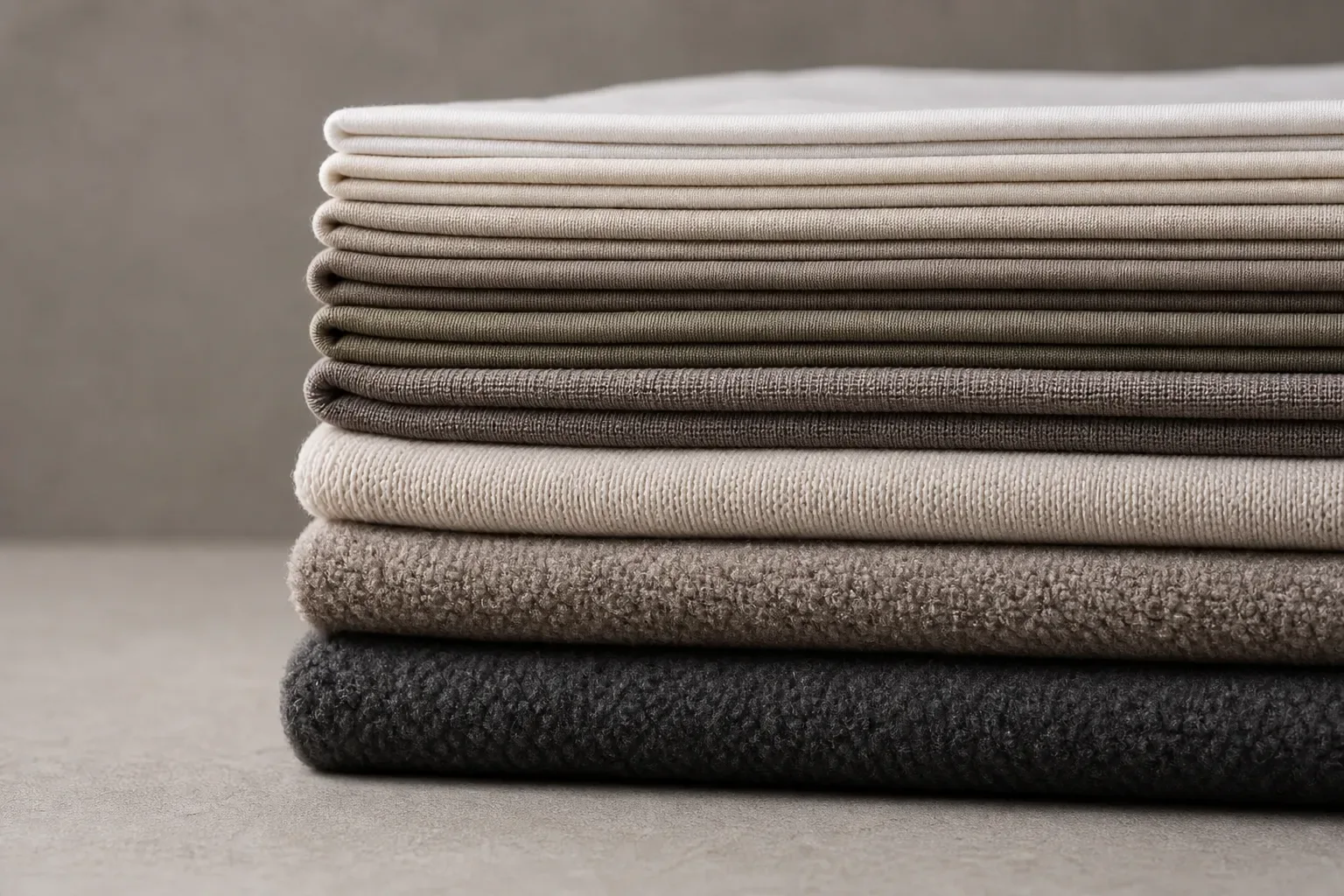
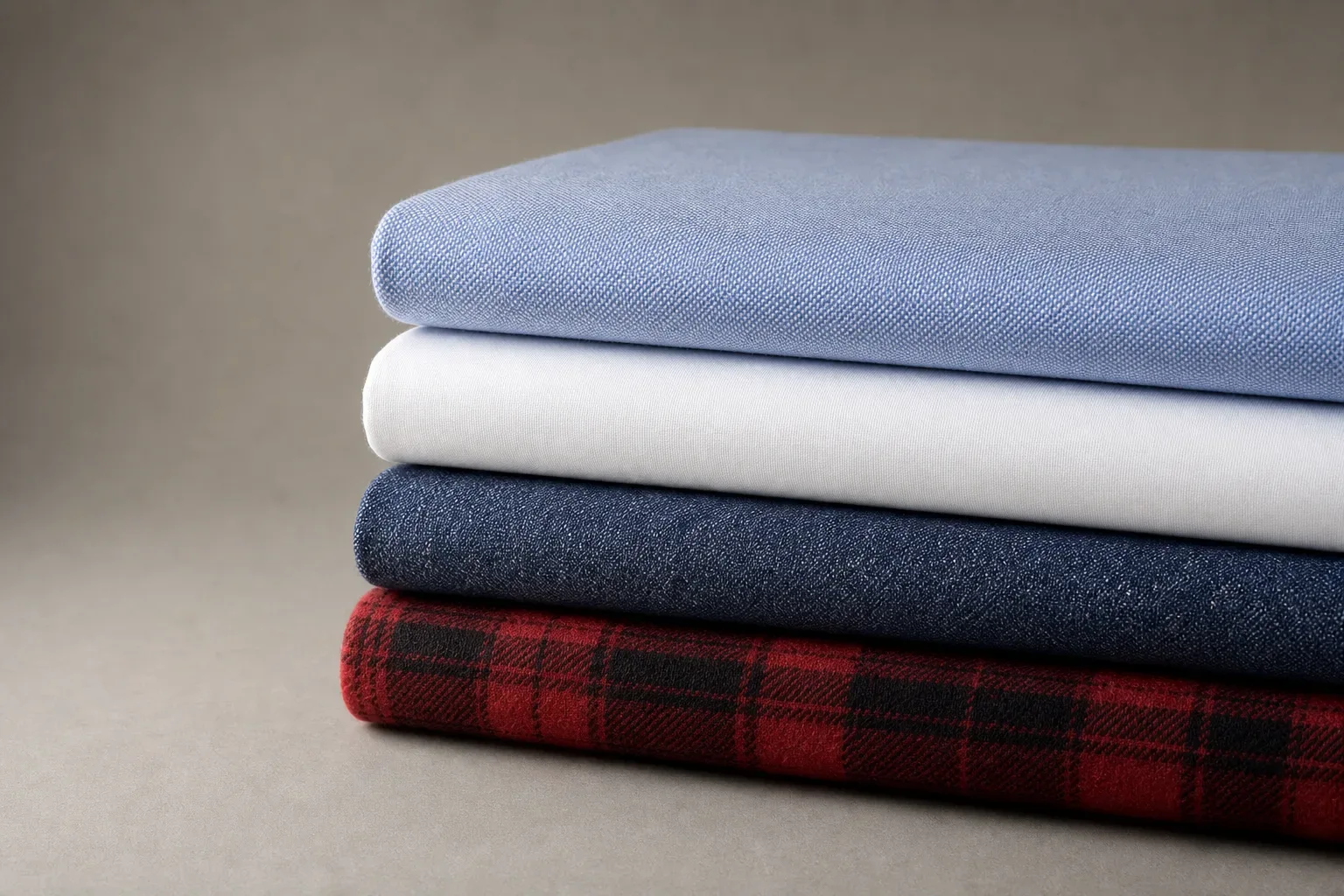
Does 100% Cotton Matter? Fiber Content Decisions for Streetwear
When 100% cotton is a technical requirement, when a blend serves the design better, and why fiber content is not a quality grade on its own.
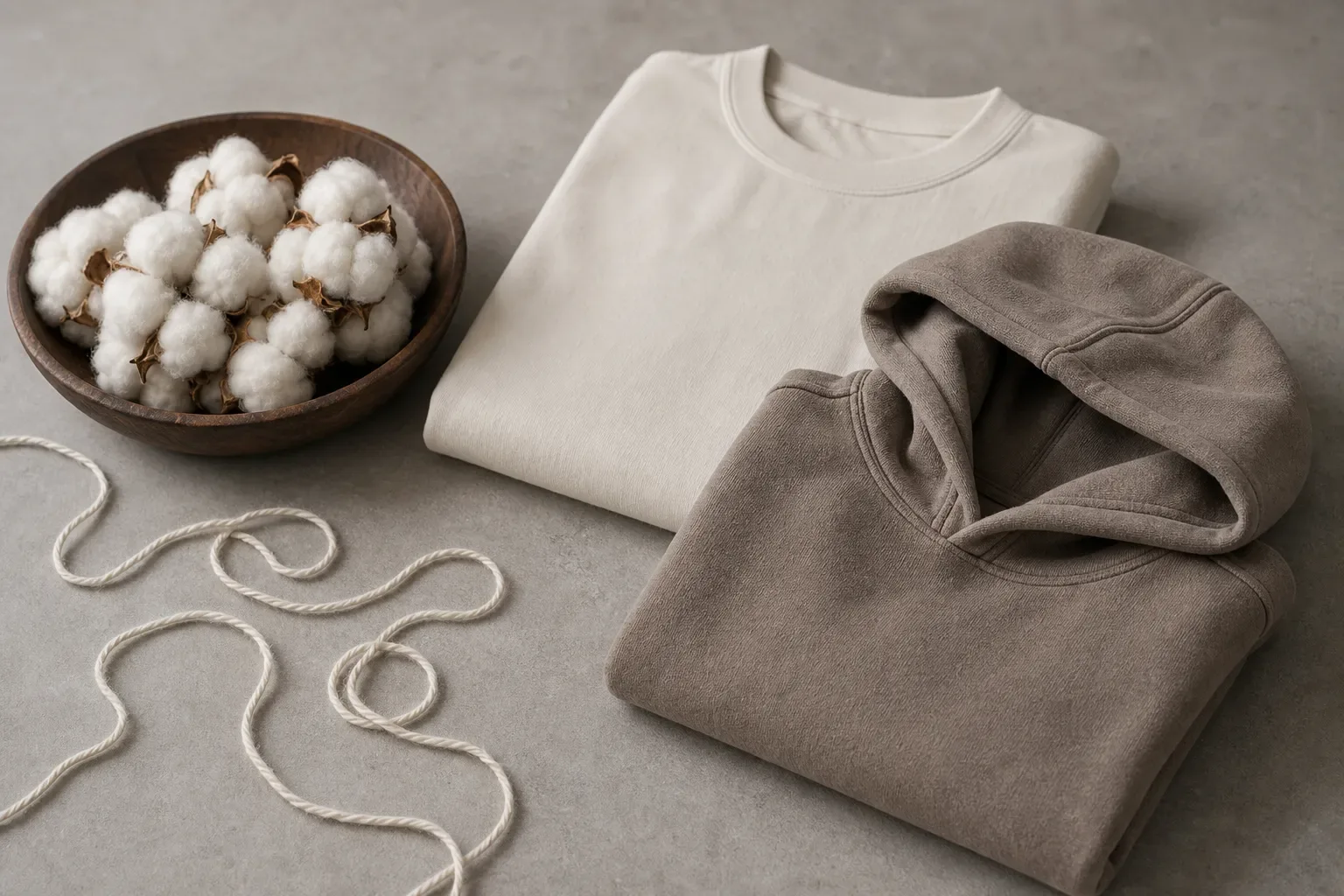
"100% cotton" is the most common fabric request we receive, usually delivered as a quality statement rather than a specification. Sometimes it's exactly right. Sometimes a blend would serve the design better and the request is really about avoiding the thin, shiny polyester of bad fast fashion. This guide separates the reflex from the reasoning, because fiber content quietly decides half of your garment's behavior: hand, shrinkage, wash response, print compatibility and price.
What cotton actually buys you
Hand and breathability. Cotton's matte surface and dry hand are the baseline "quality" feel in streetwear. It breathes, it softens with wear, and it takes on character over time rather than pilling into decline.
Wash and dye response. This is the big one for our production mix: the washes that define current streetwear — stone, enzyme, sun-fade, acid wash, garment dye — all work by manipulating dye in cellulose fiber. Cotton is the canvas these effects need. A 50/50 blend acid-washes into a muted, half-strength version of itself because the polyester half won't release its color. If your line leans on washes, high cotton content is not a preference, it is a technical requirement.
Print compatibility. DTG printing strongly prefers cotton; screen printing and embroidery are content-agnostic. Puff and transfer sit somewhere between. Fiber and decoration method should be chosen together — our print methods guide covers the pairings.
What blends buy you
Dimensional and wrinkle behavior. Fiber content is one input, not a result or a universal threshold. When dimensional change controls approval, use the cotton shrinkage tolerance guide for the identified finished material and care route. When wrinkling controls the decision, use the fabric wrinkle recovery guide for a named method, comparable material state and buyer criterion rather than assuming that one polyester percentage settles it.
Loft, recovery and cost. Poly-blend fleece keeps its interior loft through repeated washing; elastane (1-5%) adds stretch and recovery where fit demands it; and blends generally price below equivalent-weight pure cotton.
Performance behavior. Moisture-wicking and quick-dry are polyester's native talents. Cotton absorbs and holds; poly moves and releases.
The honest decision table
| Design brief | Recommended content | Why |
|---|---|---|
| Washed, dyed or faded looks | 100% cotton (or ≥80% cotton) | Technical requirement, not taste |
| Heavyweight boxy tees and hoodies | 100% cotton | Category standard; the structured drape of dense loop-back cotton is the look. Most of our 350-500 gsm fleece runs are pure cotton for this reason |
| Fitted pieces that must hold measurements | Consider 10-20% poly | Polyester tames shrinkage and holds measurements |
| Anything with stretch in the fit brief | Cotton + 2-5% elastane | Stretch and recovery where fit demands it |
| Budget-led basics without wash effects | A good blend | A good blend beats a bad "100% cotton"; fiber content is only one axis of fabric quality |
That last point deserves a sentence: "100% cotton" is not a quality grade. A loosely-knit 160 gsm pure cotton tee is a worse garment than a densely-knit blend. Content, weight, and knit quality together make the fabric — which is why our quotes state all three, and why comparing factory quotes on fiber content alone misses where the real differences hide.
Speccing it in production
State fiber content alongside weight and knit: "100% cotton, 400 gsm loop-back French terry" is a complete fabric line; "100% cotton" alone is a third of one. Care labels legally must state the true content in major import markets (the US under FTC textile labeling rules, the EU under Regulation 1007/2011), and it's confirmed — along with hand and shrinkage behavior — on the physical sample. Simple samples typically take 10-18 working days after project details are confirmed; complex styles or processes take longer. Bulk typically takes 20-30 working days after approval. MOQ starts at 50 pieces; sample pricing and the final minimum are confirmed after project review.
Reference styles from our floor
- 280 gsm Heavyweight Cotton Loose Fit Long Sleeve T-Shirt — pure cotton at tee weights
- Heavyweight Cotton Boxy Zip-Up Hoodie with Distressed Faux Fur — cotton body carrying mixed-material trims
- Oversized Fit Digital Print Washed Hoodie — the cotton + wash + digital print combination
All are made to order to your fiber spec. MOQ starts at 50 pieces, and the final minimum depends on the product, fabric, wash, and customization.
FAQ
Is organic cotton available? Fiber sourcing follows your spec — raise it at design review and we quote against it. We don't hold certifications ourselves and won't claim any; if certified inputs matter to your brand, we discuss what's verifiable honestly.
Why did my 100% cotton hoodie shrink more than my blend one? Because that's cotton's nature. Production compensates: patterns carry shrinkage allowances matched to the specific fabric, which is one of the quiet things a size chart and sampling process handle for you.
What content is best for acid wash specifically? As close to 100% cotton as the design allows. The effect degrades roughly in proportion to the polyester share.
Does higher cotton content always cost more? Usually, at equal weight and quality tier — but weight and knit density move price more than content does. Ask for the quote itemized and the trade-offs become visible.