Fabric Weight (GSM) Guide for Streetwear: 180-500 GSM
GSM measures finished fabric mass per area—not thickness, quality or finished garment weight. Compare candidate fabrics fairly, estimate component mass, and approve the actual garment sample.
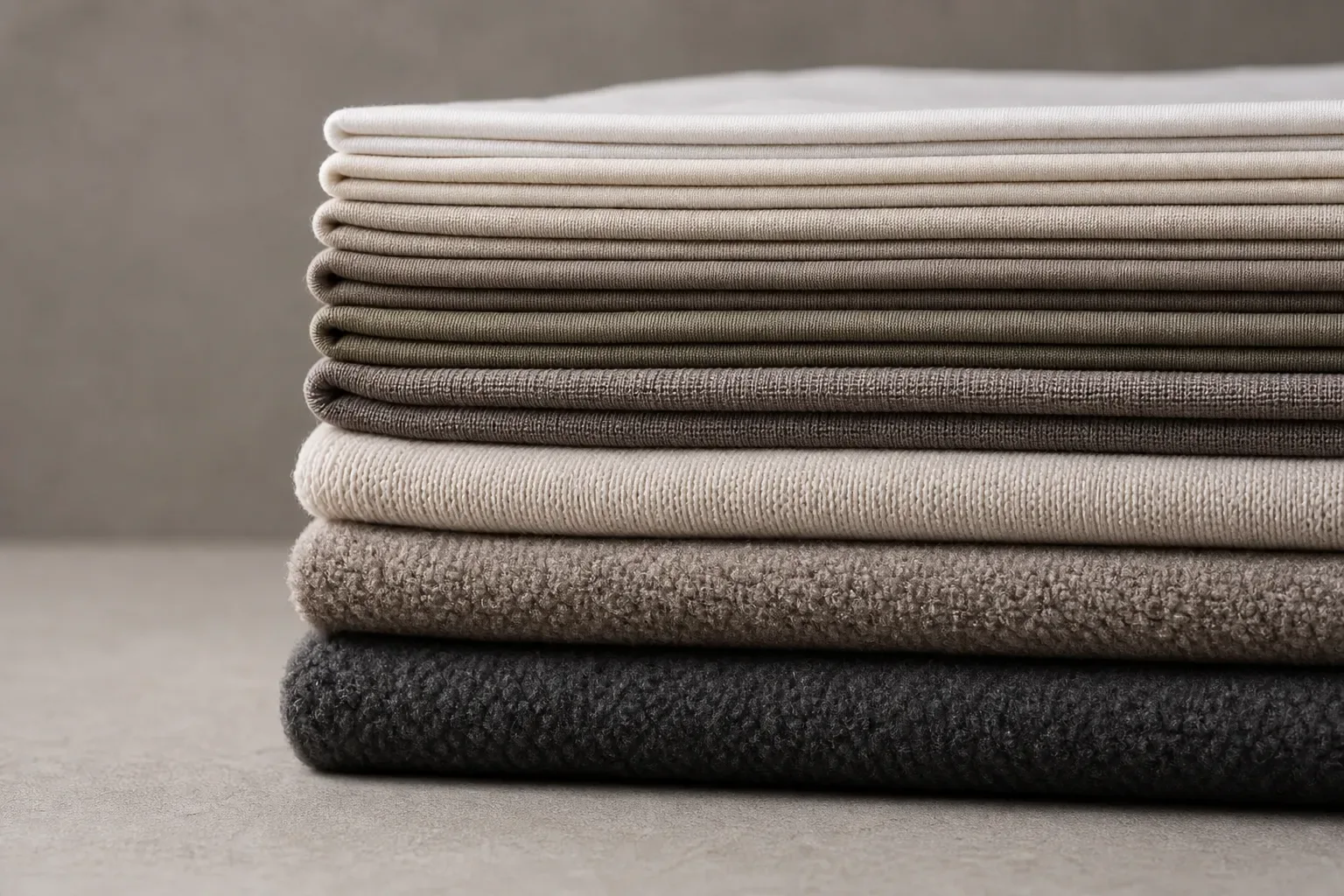
Fabric finder / For your next sample
Which fabric weight fits your brief?
Choose your product, feel and wearing context. Get a starting GSM range and a fabric direction to discuss with our team.
A number is the starting point
Choose the cloth.
Then confirm the garment.
Your result includes a candidate weight range, a fabric construction to explore and what to compare in a physical sample.
GSM measures mass per area. It cannot tell you softness, warmth or quality on its own.
Already have a swatch or an ounce weight? Use the fabric GSM calculator →
GSM means grams per square metre: the mass of a fabric area in a stated test condition. It does not directly measure thickness, softness, warmth, durability or quality, and it is not the weight of one finished garment. A hoodie made from 400 GSM fabric does not automatically weigh 400 grams because the garment is not exactly one square metre of one material.
Use the fabric weight finder above to choose a sampling direction, or the fabric GSM calculator and unit converter to measure a swatch or convert oz/yd².
Use GSM to identify and compare candidate fabrics. Then approve the exact finished fabric, the intended size and the completed garment sample. This keeps three numbers separate:
| Number | What it measures | What it cannot prove alone |
|---|---|---|
| Finished-fabric GSM | Fabric mass per unit area in the named finished and conditioned state | Thickness, quality, drape, opacity, stretch, shrinkage or garment weight |
| Finished-garment net weight | One completed garment in a named size, colorway and finish state | Packed shipping weight or every unit in bulk |
| Packed or shipment weight | Garment plus the named bag, tags, inserts, carton and other packing | Courier chargeable weight in every route |
The safest streetwear specification records all three only when each is commercially relevant. It never substitutes one for another.
What GSM Actually Measures
ASTM D3776/D3776M describes methods for measuring fabric mass per unit area and applies to most fabrics. Its current active version is D3776/D3776M-20(2025). The method does not choose a target or tolerance for a brand, and a small specimen does not automatically represent every roll or lot.
Condition matters because textile mass responds to moisture and process state. ISO 139 defines standard atmospheres for conditioning and testing physical and mechanical textile properties. A supplier result, an independent laboratory result and a buyer check are directly comparable only when the fabric identity, finish state, sampling basis, method and conditioning are compatible.
For teams using ounces per square yard, the unit conversion is approximately:
1 oz/yd² = 33.9057 g/m²
That converts units, not products. A result recorded as 12 oz/yd² and one recorded as about 407 GSM may express similar area mass, but they still need the same material-state and sampling questions before a buyer treats them as equivalent.
GSM also measures total conditioned fabric mass per area—not just fibre. Yarn, dye, print, coating and other finishing material can contribute to the result. The phrase “more GSM means more cotton” is therefore unsafe unless composition, area and finished state are all genuinely comparable.
Why Two Fabrics at the Same GSM Can Feel Different
GSM is one coordinate in a material specification. Two swatches with the same reported number can differ because of:
- fibre composition and blend ratio;
- yarn construction, count, twist and preparation;
- knit or weave structure and stitch or thread density;
- thickness, loft and surface hair;
- finishing, compaction, brushing, coating or washing;
- stretch, growth and recovery;
- opacity, drape and bending behaviour; and
- color, moisture state and test variation.
A dense single jersey and a lofty brushed fleece can share an area-mass result while behaving like different materials. Even within one family, equal GSM does not guarantee equal bulk, hand or garment silhouette. The french terry and brushed fleece guide owns that surface-and-construction comparison; this guide keeps the mass-per-area decision in its own lane.
Mechanical finishing can also change the number. CottonWorks explains, in cotton-processing context, that compaction reduces fabric length and can increase mass per unit area as the structure is compressed. That is one process example, not a universal conversion. Record whether the result describes greige, dyed, printed, washed, compacted or otherwise finished material. The greige-versus-finished guide explains why a pre-finish value cannot release finished bulk.
Streetwear GSM Bands Are Sampling Lanes, Not Standards
Jiashun works with custom streetwear fabrics across roughly 180-500 GSM. The ranges below are practical starting lanes from our production experience, not ASTM, ISO or AATCC product grades. They do not promise a particular quality, climate comfort, opacity, price or silhouette.
| Product direction | Candidate lane to discuss | Questions still open |
|---|---|---|
| Lighter or regular T-shirt | 180-210 GSM | Opacity, drape, recovery, neck support, print base and wash result |
| Structured streetwear T-shirt | 220-260 GSM | Boxy silhouette, shoulder fall, surface, heat comfort and finished weight |
| Heavy T-shirt or jersey overshirt | 260-300 GSM | Stiffness, mobility, seam bulk, finish and intended season |
| Lighter sweatshirt or hoodie | 280-360 GSM | Loop-back or brushed surface, layering, rib balance and hood construction |
| Heavyweight hoodie or sweat set | 380-450 GSM | Loft, panel stability, hood and pocket build, decoration and packed weight |
| Very heavy statement piece | 450-500 GSM | Mobility, seam intersections, wear climate, sample handling and logistics |
Use the lanes to choose swatches worth testing. Do not approve from the table. A 240 GSM jersey can support a structured tee in one construction and drape softly in another. A 400 GSM loop-back and 400 GSM brushed fleece can differ in loft and surface. The physical swatch and production-intent garment decide whether the number serves the design.
GSM Is Not Finished Garment Weight
Finished garment weight includes every material that remains in the unit:
- shell panels and seam allowances;
- rib, lining, pocketing, facings and reinforcement;
- hood, collar, placket and multi-layer areas;
- sewing and embroidery thread;
- zipper, buttons, snaps, eyelets, drawcord and cord ends;
- labels, patches and other attached branding; and
- print, coating, wash or other retained finish effects.
Size and pattern geometry matter as much as area mass. An oversized body, double-layer hood and large kangaroo pocket use more fabric than a compact silhouette in the same GSM. A zipper and hardware set can change unit mass without changing the shell fabric. A wash can change dimensions and moisture state, so the point at which the garment is weighed must be named.
For early engineering, estimate each fabric component separately:
component mass (g) ≈ complete pattern-piece area (m²) × finished GSM (g/m²)
Add the estimated mass of every different fabric and trim, then treat the sum as planning—not approval. A marker consumption figure can include unusable space, end allowance and cutting loss, so marker length multiplied by usable width is not the net area sewn into one garment. The fabric-consumption guide owns marker and booking logic.
The approval value should come from the actual finished sample in the specified size, colorway, wash and conditioning state. When consistency matters, weigh more than one representative unit and record the observed range rather than selecting one convenient number.
Net Garment Weight, Packed Weight and Chargeable Weight
Keep logistics records separate from product records.
Net garment weight is the completed wearable unit under the agreed weighing condition. State whether removable tags, spare parts or accessories are included.
Individually packed weight adds the named polybag or other unit pack, hangtags, tissue, inserts and any included accessory. A packaging revision can change this number without changing the garment.
Carton gross weight adds all packed units, the carton, dividers, tape and other shipping materials. Record the assortment and unit count.
Chargeable shipping weight is carrier- and route-specific. Carriers may compare actual packaged weight with dimensional weight, so neither fabric GSM nor one unit's net weight is a freight quote. Confirm the packed dimensions, gross weight, route and current carrier rules for the shipment.
How to Compare Two GSM Options Fairly
1. Identify both fabrics
Record supplier, article code, composition, construction, color, finish, usable width, lot and exact process state. “240 GSM cotton” does not identify a reproducible fabric.
2. Confirm the measurement basis
Ask for the method/version, specimen state, conditioning, sampling location and individual or summary results. A nominal catalogue value and a tested production-lot result are different evidence.
3. Compare physical properties side by side
Review face and back, hand, surface, thickness, loft, opacity, drape, widthwise and lengthwise behaviour, edge handling and recovery. Do not force these observations into the GSM number.
4. Test the intended decoration
Decoration suitability depends on surface, stability, pretreatment, artwork, deposit or stitch construction and the actual process—not on GSM alone. Put the intended print, embroidery, patch or other application on the candidate material, then inspect appearance, distortion and hand after the agreed care route. The print-method comparison retains method selection.
5. Make production-intent samples
Use the correct pattern revision, rib or lining, trims, wash and decoration. Compare silhouette, movement, seam intersections, collar or hood shape and actual finished-garment weight. If a fabric change affects the pattern or construction, revise and reapprove the affected records.
What Washing and Finishing Change
Fabric and garment dimensions can change after relaxation, washing and drying. Direction and magnitude depend on the actual fibre, yarn, structure, finishing history and care procedure; knits do not all shrink in one fixed direction or percentage.
Approve the named finished state. If a garment-dyed or washed style is the product, an unwashed fabric result is development evidence rather than the final garment state. Record the care method, sample identity and before/after measurements. The cotton shrinkage guide explains how method, specimen and buyer tolerance must travel together.
Recheck GSM when the agreed finish can materially change area or retained mass. Recheck the finished garment when dimensions, components or wash route change. A fabric approval and garment approval answer related but different questions.
Cost Does Not Rise by One Universal GSM Formula
For equal pattern area and comparable material state, moving from 200 to 300 GSM raises the nominal body-fabric mass contribution by 50 percent. It does not prove that the garment contains 50 percent more cotton or costs 50 percent more. Composition, fabric price basis, yield, width, finish, trim set, decoration, labor, rejects, packing and freight can all change independently.
Fabric may be quoted by kilogram, metre, yard, piece or a project basis. A higher-GSM fabric can affect material and logistics cost, but only the current supplier quote, approved consumption and packed shipment establish the commercial result. Use GSM to define the product; use the RFQ and sample to price it.
Buyer Approval Record for Fabric and Garment Weight
| Record block | Minimum detail |
|---|---|
| Fabric identity | Supplier, article, composition, construction, color, finish, width, lot/roll |
| GSM evidence | Target and agreed tolerance, method/version, specimen state, conditioning, sample location and result set |
| Physical reference | Identified face/back swatch and approval date |
| Garment identity | Style, size, colorway, pattern/BOM revision, wash and decoration |
| Net unit weight | Weighing condition, included/excluded items, units tested and observed result or range |
| Pack record | Unit-pack contents and weight; carton count, dimensions and gross weight when relevant |
| Decision | Approved scope, open points, approver, date and reopen triggers |
Reopen the affected decision when the fabric article, lot, construction, finish, color, pattern area, size, rib/lining, hardware, decoration, wash or packaging changes. “Same GSM” is not a substitute-approval rule.
Product pages can help explain silhouette, not approve a new order. A 230 GSM boxy T-shirt and a 450 GSM acid-wash zip hoodie show two visibly different directions. Their published numbers do not prove the mass, fit, finish or test result of another style.
Buyer Checklist Before Bulk
- The value is clearly fabric GSM, net garment weight, packed weight or carton gross weight.
- Fabric supplier, article, construction, color, finish and lot/roll are identified.
- GSM uses the agreed method, specimen state, conditioning and sampling basis.
- A physical face/back swatch is linked to the result.
- Equal-GSM candidates were compared for hand, thickness, loft, opacity, drape and stretch/recovery.
- Decoration was sampled on the actual candidate fabric.
- The finished garment uses the controlling pattern, BOM, wash and decoration revision.
- Unit weight names the size, colorway, state and included items.
- Packaging and carrier chargeable-weight questions remain separate.
- Tolerances are project-approved rather than copied from a generic chart.
- Substitution or process changes reopen the affected evidence.
Jiashun can review candidate fabrics and production-intent samples for a custom men's streetwear program. Send the style, target silhouette, reference garment or swatch, size range, expected quantity, decoration, wash and destination. MOQ starts from 50 pieces and varies by product, fabric and customization; the final minimum is confirmed after project review.
Frequently Asked Questions About Fabric GSM
Does 400 GSM mean a hoodie weighs 400 grams?
No. GSM is grams per square metre of fabric. A hoodie's net weight depends on pattern area, size, shell, rib, hood layers, pocket, thread, hardware, decoration and finish. Weigh the actual finished sample in the named condition.
Does higher GSM mean better quality?
No. GSM measures mass per unit area. Quality decisions also depend on fibre, yarn, construction, finish, dimensional behaviour, color, surface, sewing and whether the material suits the design.
Can two fabrics with the same GSM feel different?
Yes. Construction, yarn, density, thickness, loft, brushing, coating and other finishes can produce different hand, drape, opacity and stretch at the same nominal GSM. Compare identified finished swatches.
What GSM should a streetwear T-shirt use?
Jiashun's initial sampling lanes commonly run from about 180 to 300 GSM for T-shirt directions, but that is not an industry pass/fail standard. Choose candidates around the intended silhouette and climate, then approve the physical fabric and finished garment sample.
What GSM should a heavyweight hoodie use?
About 380-450 GSM is a useful Jiashun sampling lane for many heavyweight hoodie directions, with 450-500 GSM reserved for especially heavy concepts. Construction and loft can make equal-GSM fabrics behave differently, so the actual hood, pocket, rib, movement and packed weight still need review.
How should a buyer specify GSM?
Name the exact finished fabric, method/version, specimen state, conditioning, lot or roll, target and mutually agreed tolerance. Link the result to a physical swatch and to the production-intent garment revision.
Choose the Material, Then Prove the Garment
GSM is valuable because it replaces vague words such as “heavy” with a measurable fabric property. It becomes misleading when it is asked to prove thickness, quality, garment weight or freight by itself.
Use the number to identify candidates. Use controlled testing to approve the finished fabric. Use the completed sample to approve silhouette, construction and net garment weight. That sequence keeps one simple unit from making decisions it was never designed to make.
References
- ASTM International, ASTM D3776/D3776M-20(2025), Standard Test Methods for Mass Per Unit Area (Weight) of Fabric — method scope and current version; buyer targets and tolerances remain project-specific; retrieved 2026-08-16.
- International Organization for Standardization, ISO 139:2005, Textiles — Standard atmospheres for conditioning and testing — conditioning and test-atmosphere scope; confirmed current in 2025; retrieved 2026-08-16.
- National Institute of Standards and Technology, NIST Guide to the SI, Appendix B.9 — unit-conversion basis for ounce per square yard and SI mass-per-area units; retrieved 2026-08-16.
- Cotton Incorporated, CottonWorks, “Mechanical Finishing” — cotton-processing context for compaction and area-mass change; not a universal conversion; retrieved 2026-08-16.
- Cotton Incorporated, CottonWorks, “Shrinkage & Skewing” — dimensional-change and process context; retrieved 2026-08-16.
- UPS, “Shipping Dimensions and Weight” — carrier example showing actual and dimensional weight as separate shipping inputs; route-specific rules must be confirmed; retrieved 2026-08-16.
Related guides
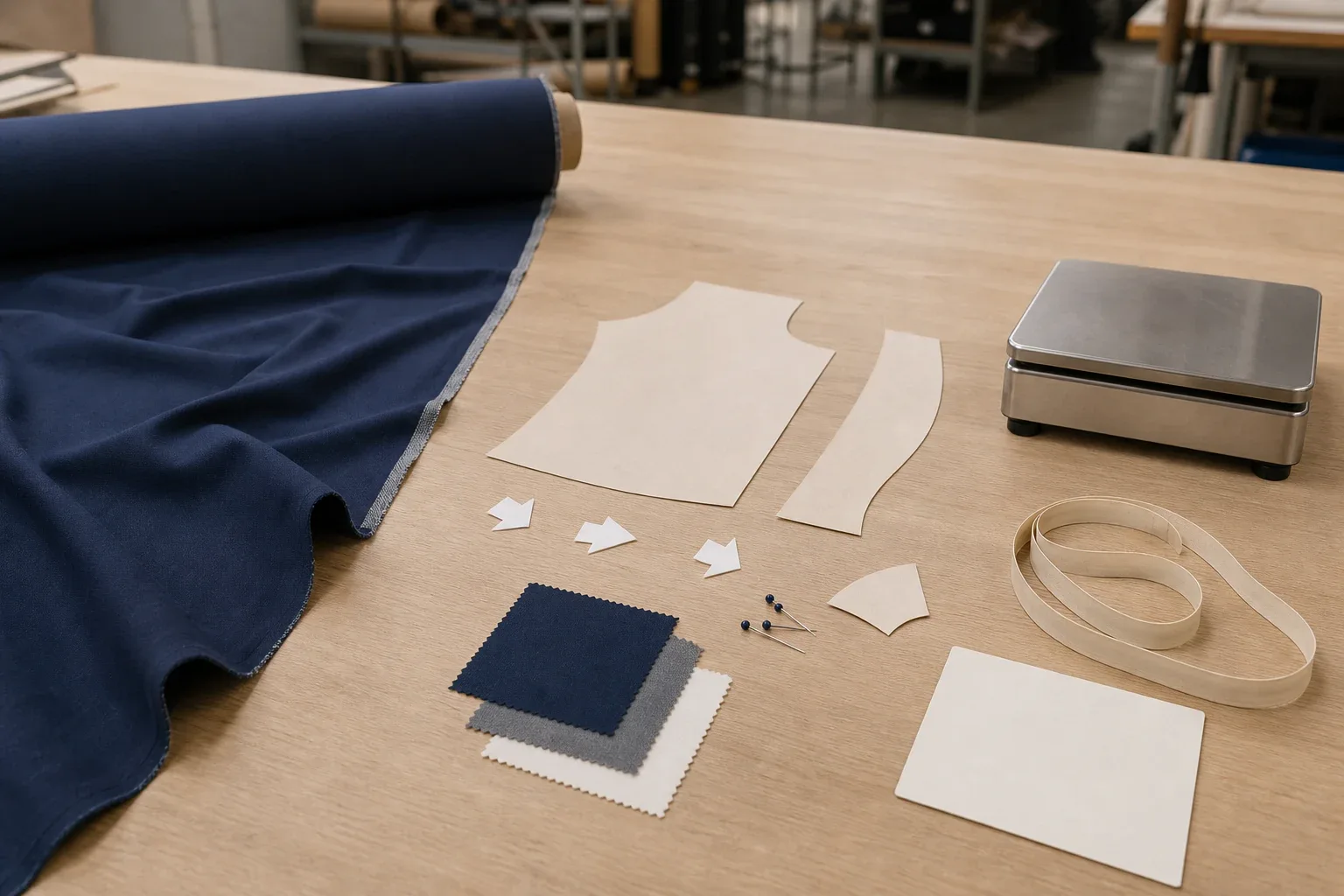 Fabric Consumption in Garment Manufacturing: What Sets the Estimate
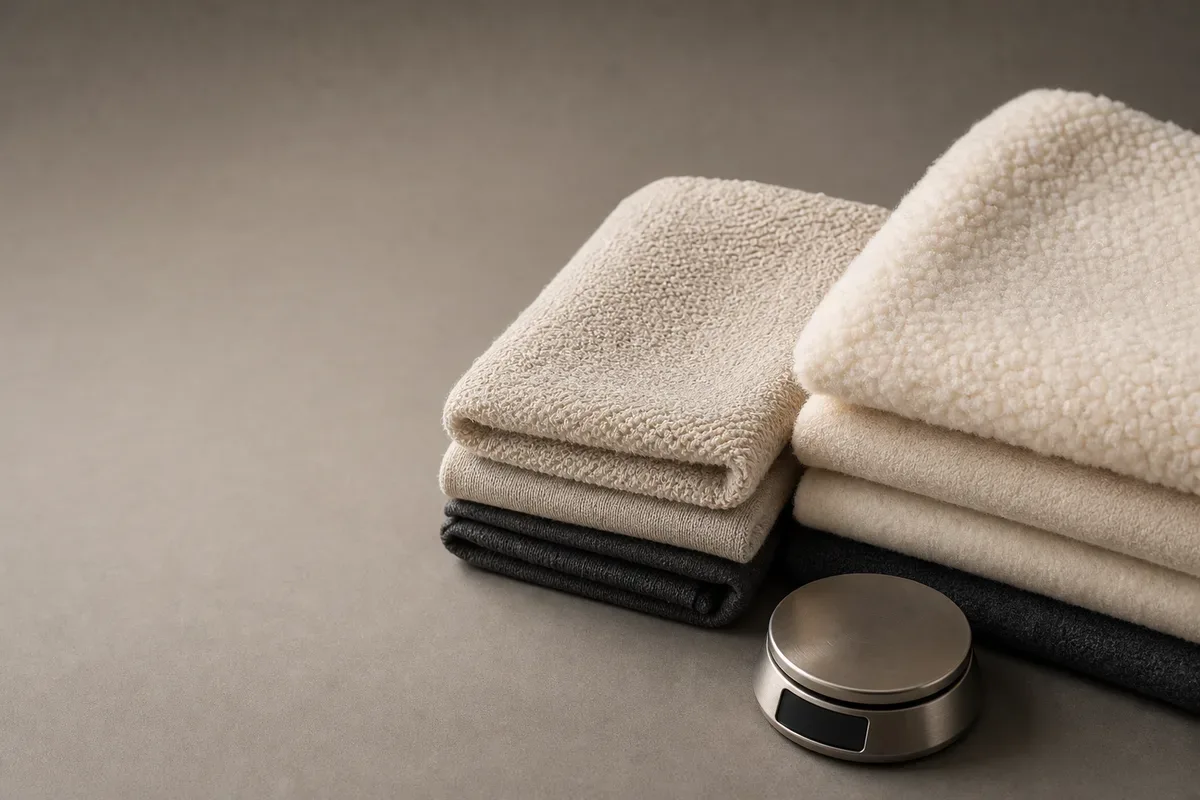 French Terry vs Brushed Fleece: Why Equal GSM Feels Different
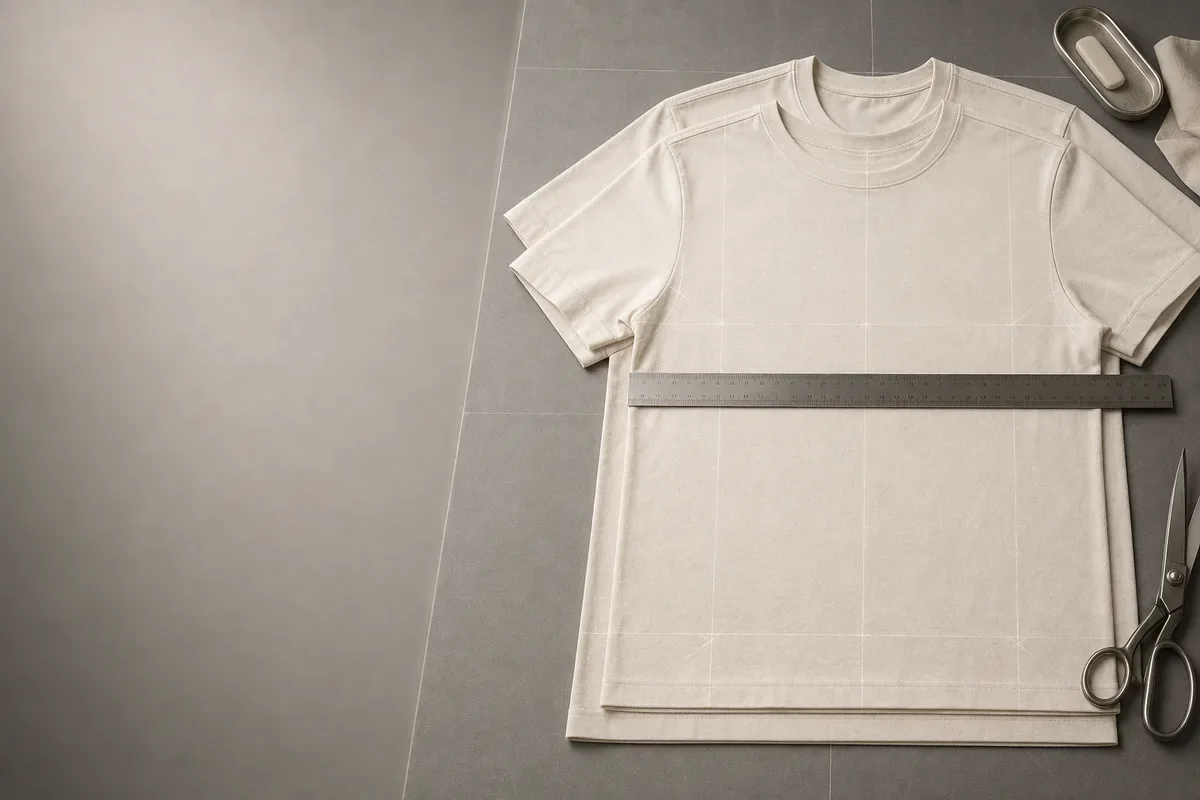 How Much Does Cotton Shrink? The Science, the Standards, and the Tolerance to Put in Your Tech Pack
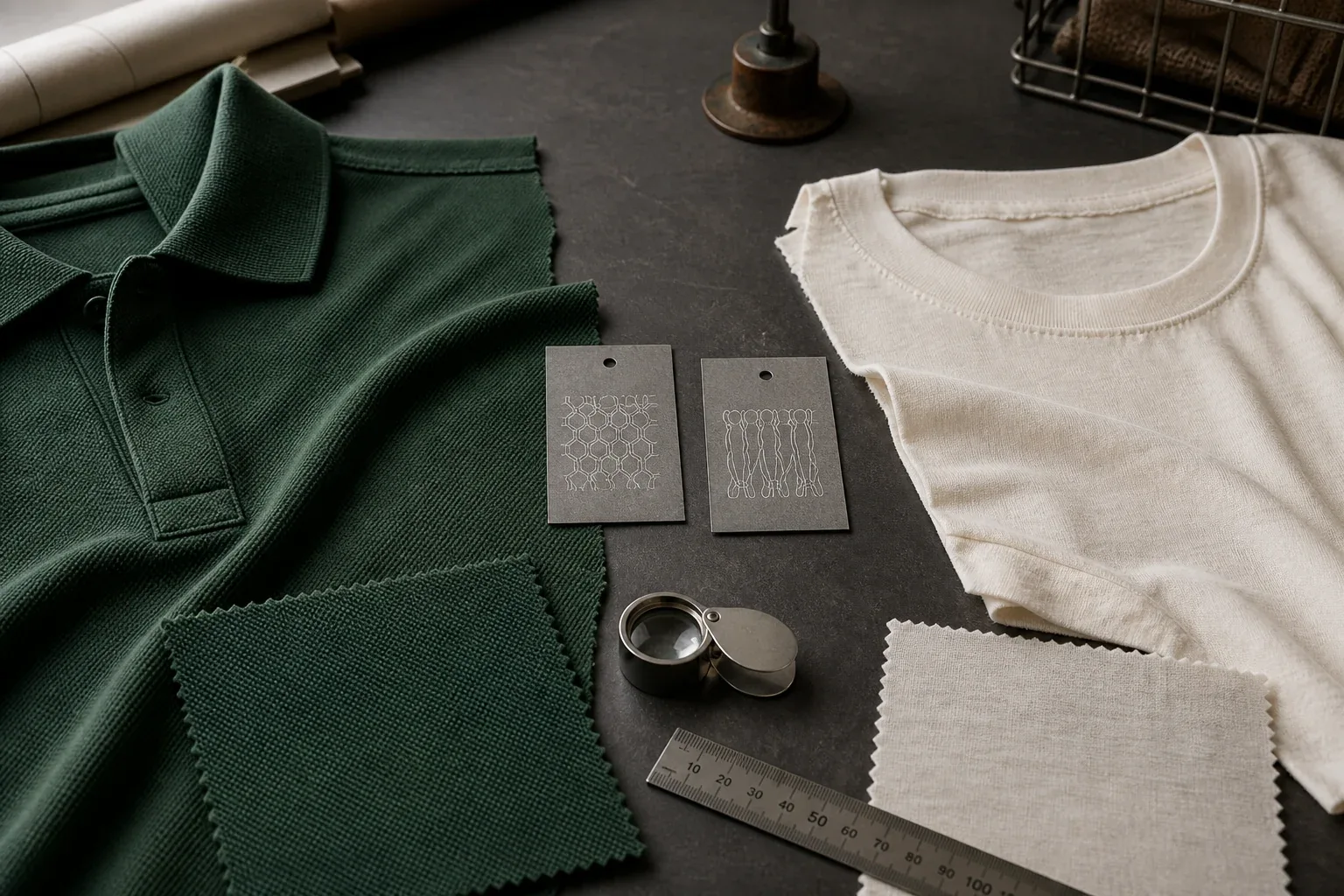 Pique vs Jersey Fabric: Choosing Knit for Polos and T-Shirts
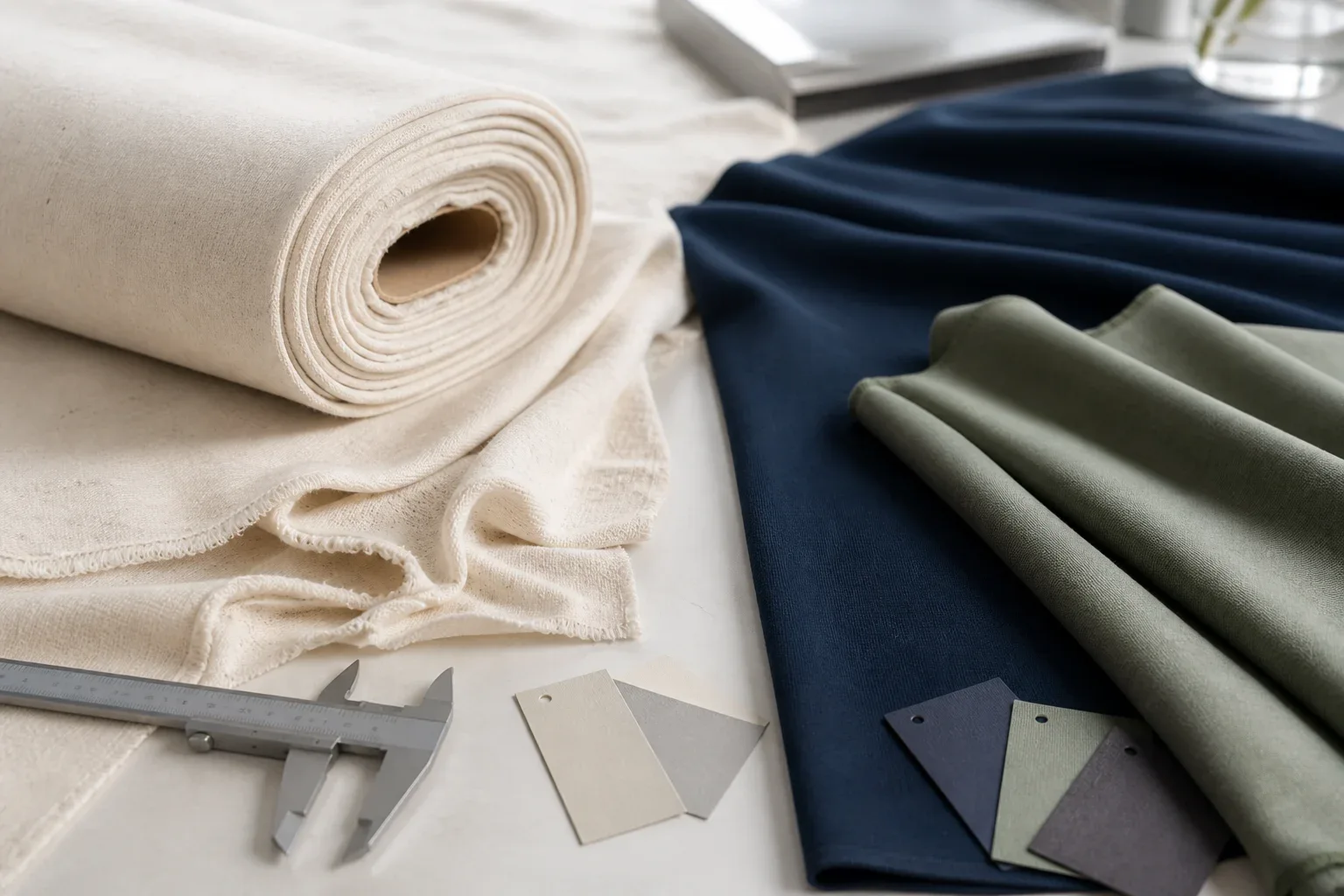 Greige vs Finished Fabric: What Buyers Must Approve