Stone Wash vs Acid Wash: Differences in Look, Feel and Fabric
Compare the softer, worn-in look of stone wash with acid wash's mottled contrast, then choose a finish for jeans, hoodies or tees based on the actual fabric.
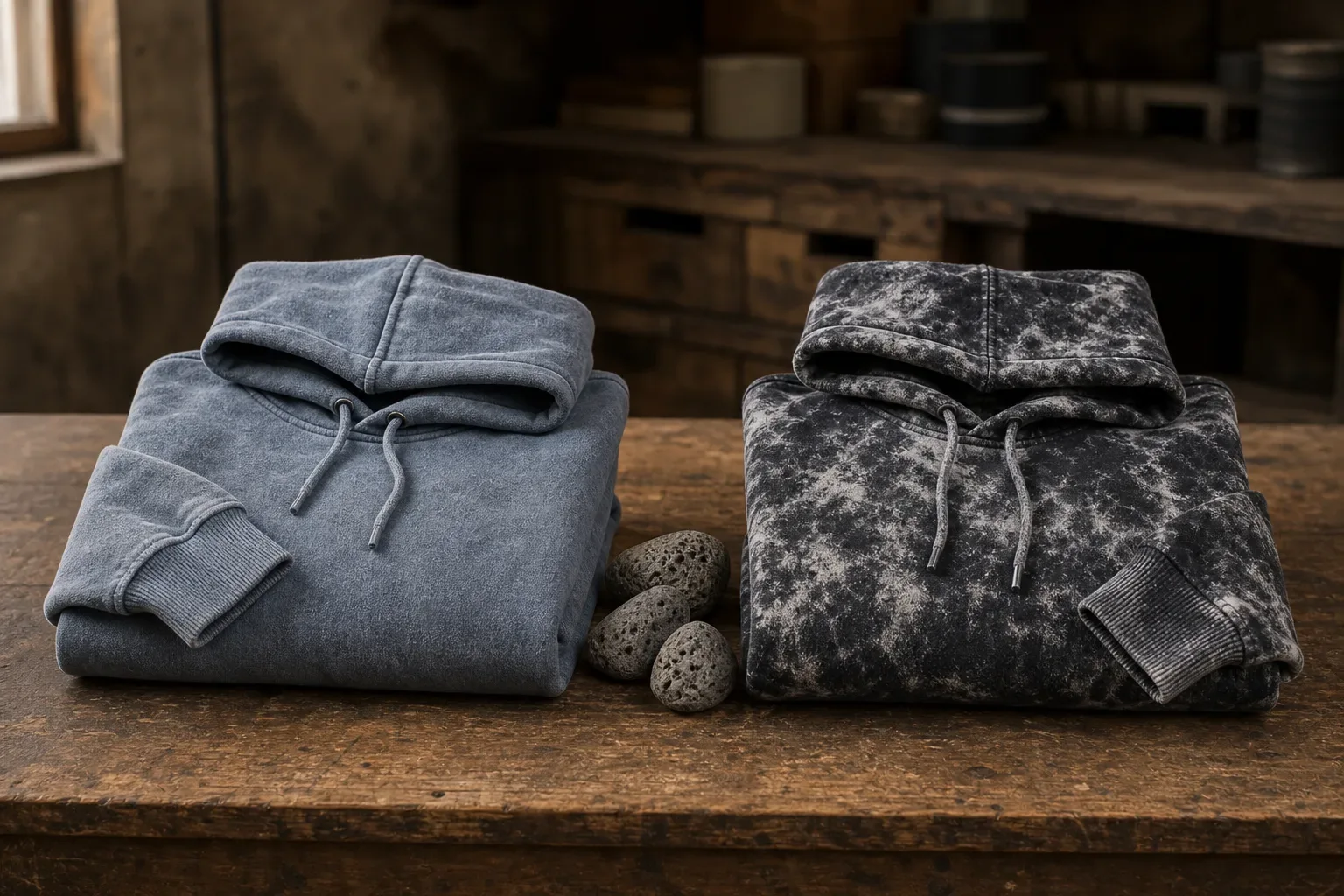
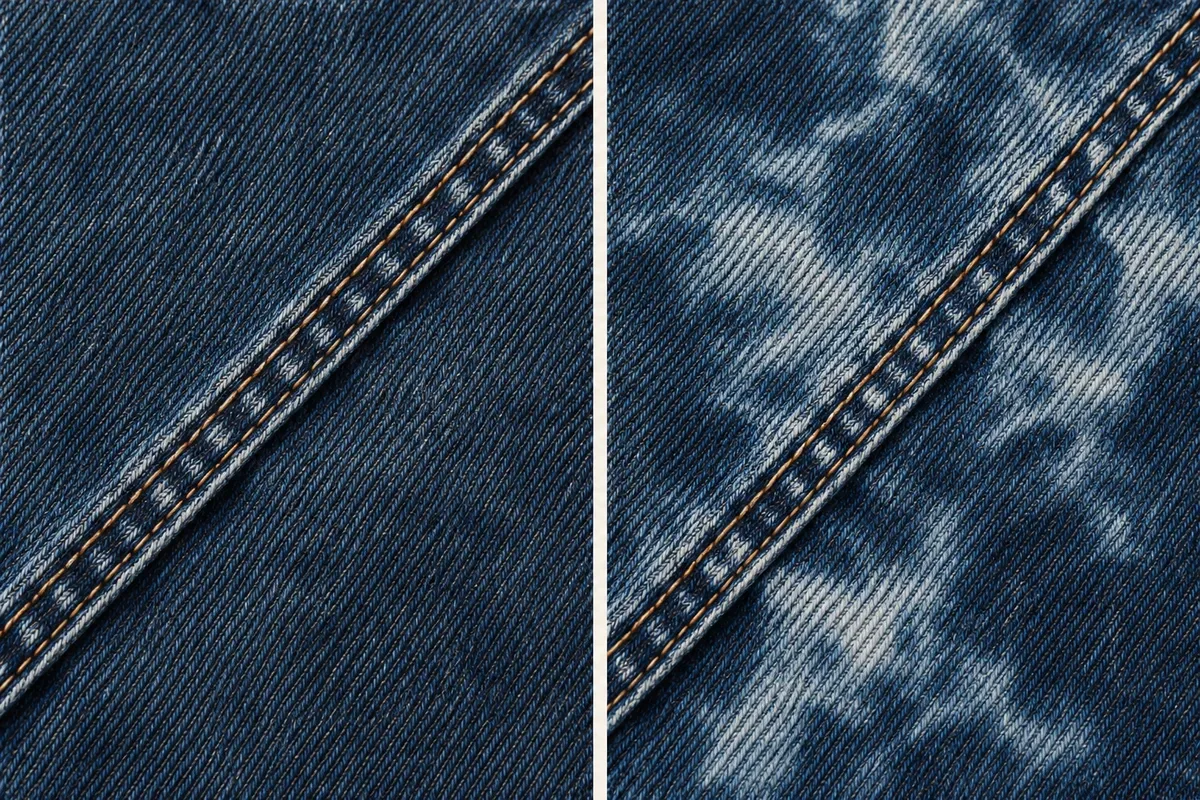
Stone wash usually gives clothing a softer, worn-in appearance with fading around seams and raised areas. Acid wash is associated with more obvious light-and-dark patches and a mottled or marbled look. Traditional stone washing relies on abrasion; traditional acid washing uses an oxidizing agent carried on stones or other media to remove colour locally.
For a subtle vintage finish, start with a stone-wash reference. For visible marbling, start with an acid-wash reference. Then check the result on the fabric you intend to use: a wash name alone cannot specify the finished garment.
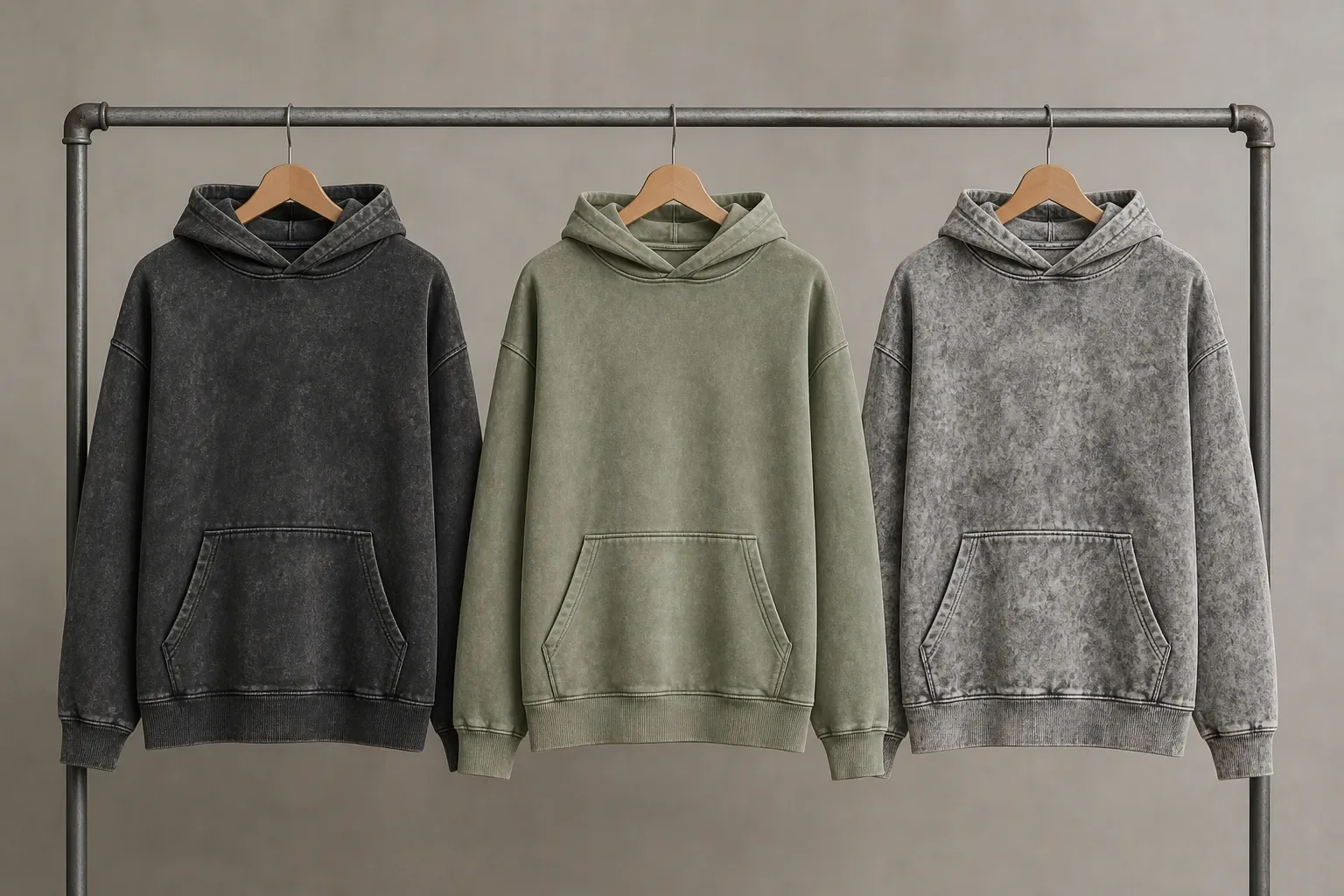
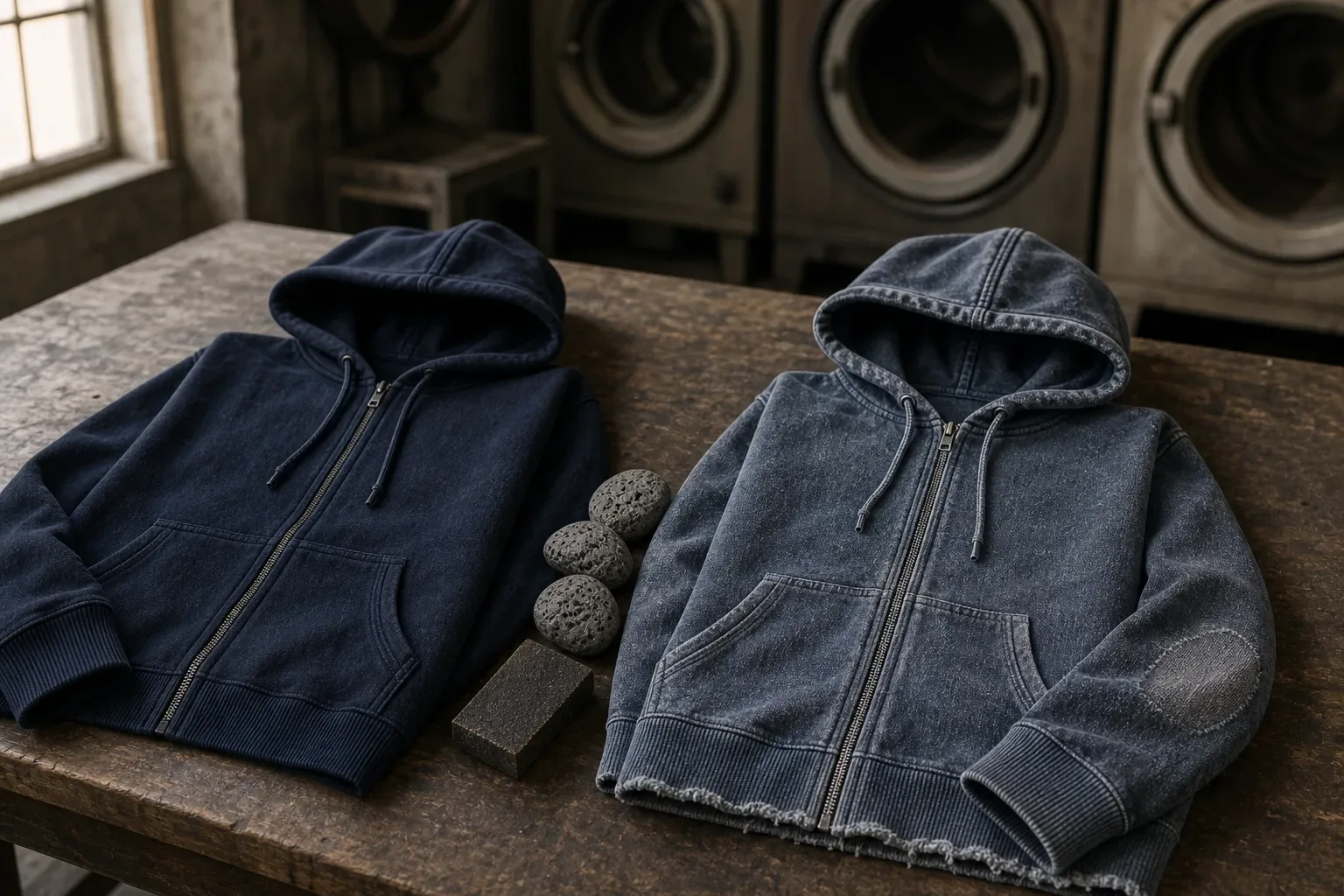
Cover comparison: the left hoodie illustrates a softer faded direction; the right illustrates stronger marbled contrast. Use these as visual references, not proof of a particular production method.
Stone wash vs acid wash at a glance
| What you are comparing | Stone wash | Acid wash |
|---|---|---|
| Typical appearance | Worn-in fading, with seams and edges standing out | Irregular pale areas against a darker ground |
| Traditional mechanism | Mechanical abrasion with pumice | Local colour removal using an oxidizing agent on carrier media |
| Handfeel | Often softer and more broken-in | Depends on the base fabric and the complete finishing sequence |
| Visual emphasis | The garment's shape, texture and worn edges | The contrast and distribution of the wash pattern |
| Sample check | Fade depth, edge wear and handfeel | Contrast, patch size, placement and handfeel |
| Cost comparison | Requires a quote for the same garment and quantity | Requires a quote for the same garment and quantity |
These are useful starting distinctions, not guaranteed outcomes. CottonWorks explains that wash names can describe an appearance, a process or a marketing term, and that their use overlaps between producers. Its garment-finishing guide also describes both traditional processes.
How the two washes work
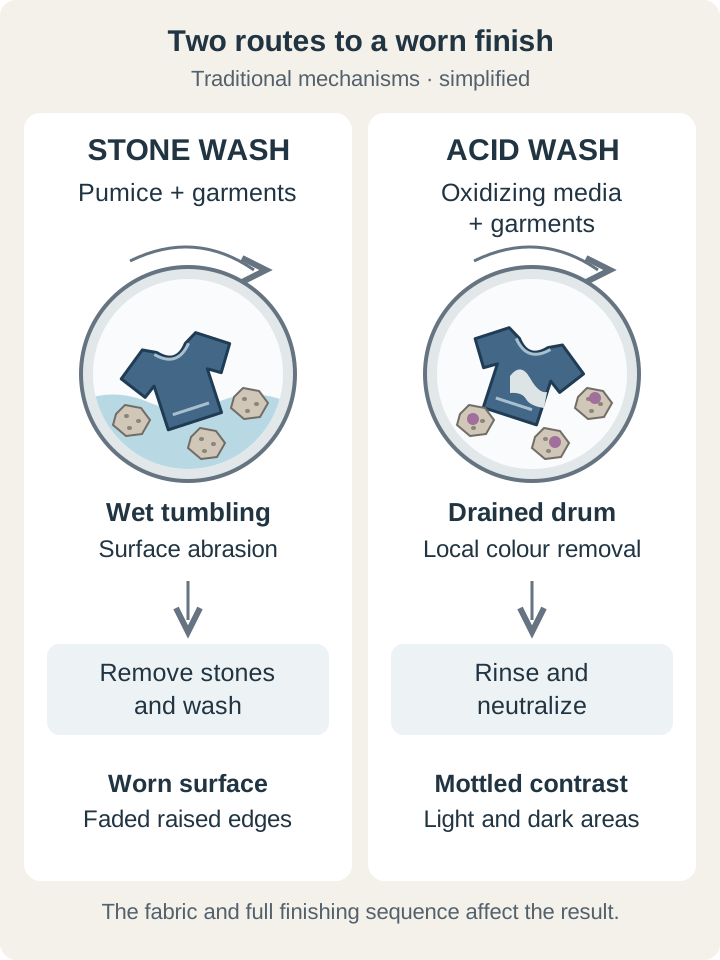
Stone wash: abrasion creates the worn surface
In traditional stone washing, garments tumble with pumice in a wet process. Abrasion removes some surface fibre and colour. Seams, folds and edges can show stronger wear; the result is not necessarily an even fade across every panel.
Stone size, load, time and machine action affect the result. Ask whether a proposed finish uses stones, enzymes or a combination. The label on a reference garment does not tell you the complete recipe.
Acid wash: local colour removal creates contrast
A traditional acid-wash route tumbles garments with media carrying an oxidizing agent, such as potassium permanganate or sodium hypochlorite, in a drained drum. Subsequent rinsing and neutralization are part of the process. The name does not mean the garment is soaked in an acid bath.
For sourcing, describe the pale areas and the darker ground separately. A small, cloudy pattern and large, sharply contrasting patches can both be called acid wash. They are different approval targets.
What changes on jeans, hoodies and T-shirts?
Choose the fabric and wash together. A finish that works on one denim or sweatshirt fabric is not a reliable recipe for another.
Denim: look beyond fabric weight
Indigo denim often uses ring-dyed yarn, with colour concentrated near the outside and a lighter core within. That structure helps explain its characteristic fading. CottonWorks' Denim Basics connects the finished look to fabric construction, dyeing and garment finishing.
Higher weight alone does not establish dye penetration or predict stronger contrast. When comparing denim samples, keep the starting fabric consistent and judge the finish on the same seams, pockets and panels. For a broader comparison with enzyme and sun-fade finishes, see denim washes explained.
Hoodies: test the whole garment
For a hoodie, review the body fabric, rib cuffs, waistband, hood and pocket together. A body-panel swatch cannot show whether all those components will produce an acceptable combined result.
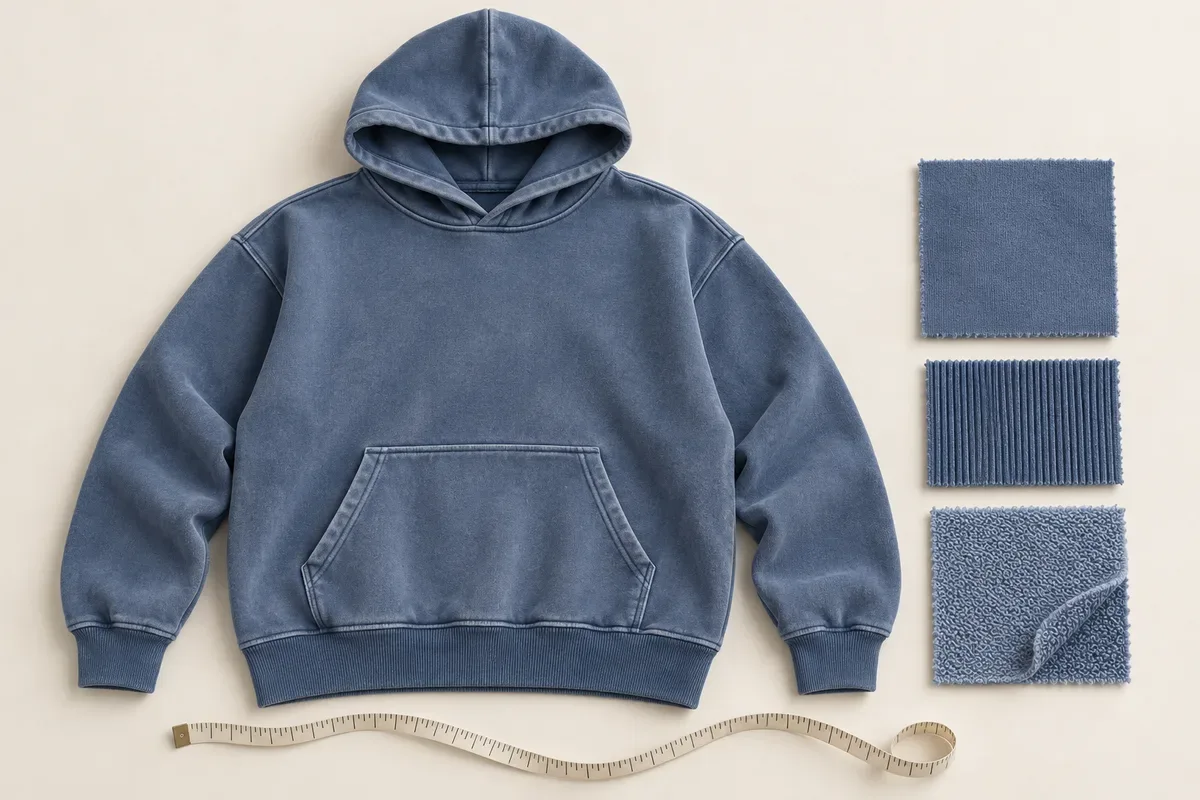
Fabric weight is only one part of the assessment. Ask the wash supplier to review the actual fabric construction, fibre composition, dye system and intended treatment. Review a finished sample for handfeel, surface damage and measurements. The hoodie and T-shirt acid-wash guide covers the garment-specific brief in more detail.
T-shirts: specify the effect before choosing the route
For a tee that needs a soft, faded appearance, ask whether an enzyme or other controlled finish can meet the reference. If marbling is essential, request a trial on the intended dyed jersey.
Neither “100% cotton” nor a dark starting colour guarantees the result you want. Blends also need their own assessment. Include the print, embroidery and trims in the sample plan so the approval covers the complete design.
Which is softer, and which lasts longer?
Do not rank durability from the wash name. Stone-wash abrasion and acid-wash chemistry describe different treatments; neither label tells you the intensity of treatment or the condition of the finished fabric.
For buying or sample approval, check three things:
- Handfeel: compare garments made from the same base fabric. A thicker hoodie and a lighter tee do not reveal which wash is softer.
- Condition: look at seams, pocket corners and ribbing for unwanted thinning, holes or distortion. For production, agree the relevant fabric and seam-strength checks with the supplier.
- After-care performance: wash the sample according to the proposed care label, then assess its dimensions, colour and surface. Set shrinkage tolerances before approving bulk.
For home care, follow the garment label. As a denim-specific example, Levi's care guidance recommends cold water, a gentle cycle and drying inside out in shade. A hoodie's fabric, decoration or trims may require different instructions.
Is acid wash more expensive than stone wash?
Compare quotes for the same garment, fabric and order quantity. Prices for two different finished hoodies cannot isolate the cost of their wash treatments.
Ask each quotation to identify the proposed finish, sample development, quantity per colour and any testing or special handling. A useful comparison is the same blank garment developed in two wash directions, with the same decoration and approval requirements.
Keep appearance and price together during that review. A cheaper sample that misses the intended contrast is not an equivalent option. Confirm the minimum order for the actual programme rather than treating a catalog minimum as a rule for every wash.
Choosing a wash for your design
Choose a stone-wash direction when you want worn edges, a quieter faded surface and a broken-in look. Choose an acid-wash direction when the distribution of light and dark is a major part of the design.
For the design context behind choosing an aged finish, see why new clothes are made to look old.
For either direction, define what variation you will accept. “Every piece is unique” is not an approval standard. Record the acceptable shade range, the amount of contrast and any areas where strong pale patches would interfere with the design.
Before sampling, prepare:
- A reference garment or clear photos showing the front, back and close-up texture.
- The intended fabric, base colour and garment construction.
- Notes on fade depth, patch size, placement and desired handfeel.
- Artwork and trims, with the proposed decoration and washing sequence.
- Measurements and finish tolerances to check on the completed sample.
Use a sample approval checklist to record the agreed result. If you are ready to develop a style, send those details through the washed clothing development service for a feasibility review and project quotation.
FAQ
Is stone wash the same as acid wash?
No. Traditional stone wash uses abrasion to create wear and fading. Traditional acid wash uses local chemical colour removal to create contrasting patches. Similar-looking effects can come from different finishing sequences, so confirm the method and approve a sample.
Does acid wash actually use acid?
The name does not describe an acid bath. The traditional effect uses oxidizing agents such as potassium permanganate or sodium hypochlorite. Ask the supplier to identify the proposed process rather than interpreting the name as a chemical specification.
Is stone wash or acid wash better for hoodies?
Start with the appearance you want: a softer faded direction or visible marbling. Then test that direction on the intended body fabric, ribbing and finished construction. There is no single fabric weight that guarantees suitability.
Can every piece match the sample exactly?
Set a controlled range rather than requiring an identical pattern. Approve the overall tone, contrast and acceptable variation, and ask how the supplier will check the batch against those references.
Related guides
 Vintage Wash vs Garment Dye vs Acid Wash: Which Finish?
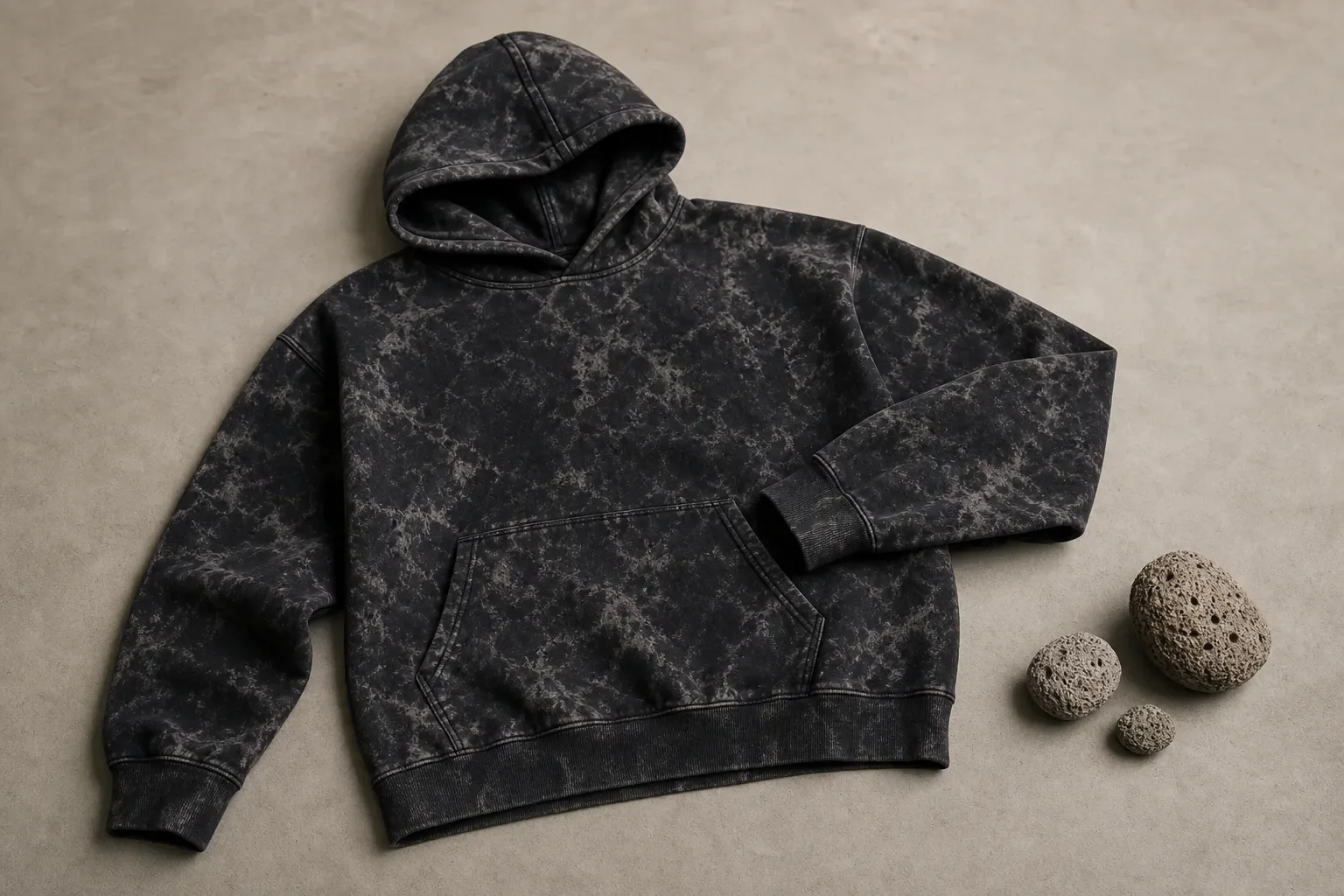 Acid Wash Beyond Denim: How the Effect Works on Hoodies and Tees
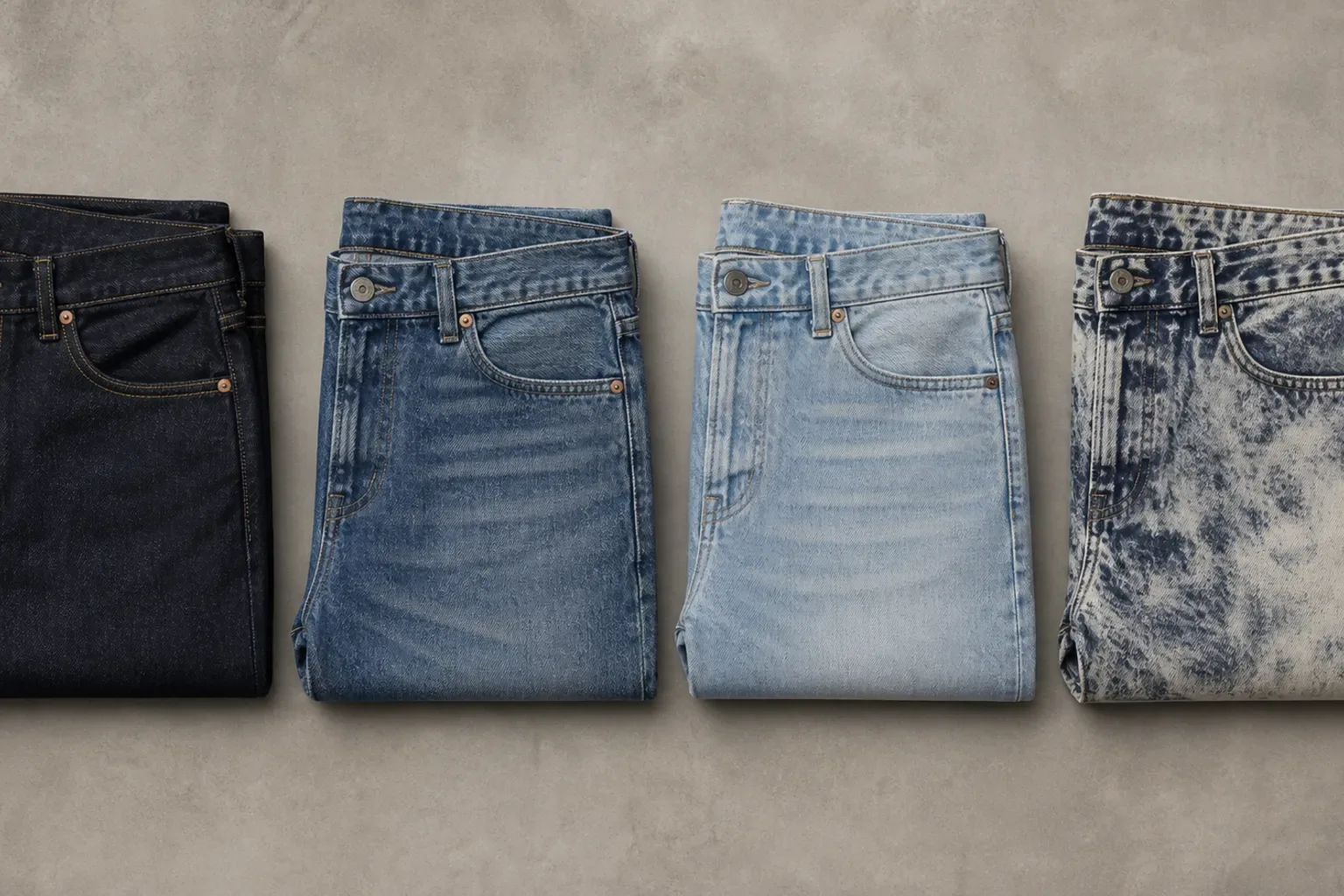 Denim Washes Explained: Stone, Enzyme, Acid and Sun-Fade — and How to Approve Them
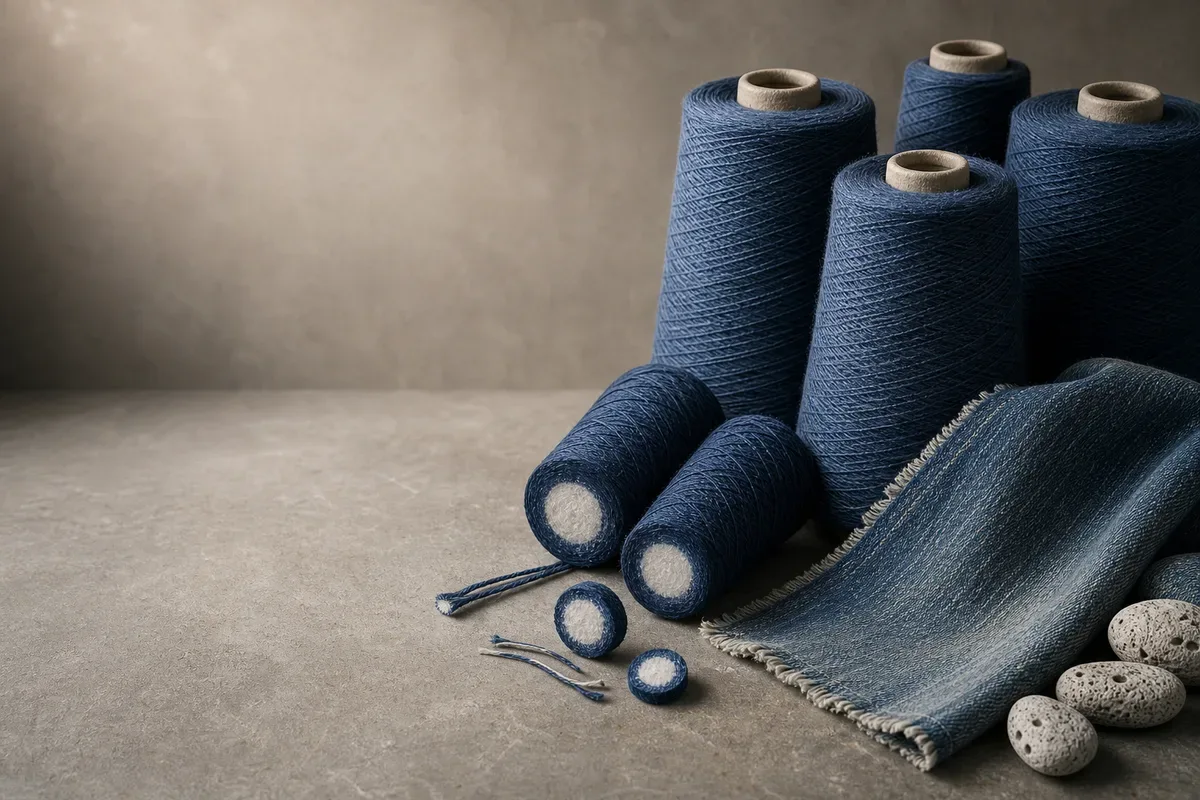 The Chemistry of Denim Washes: Why Jeans Fade, and What Each Process Actually Does
 Why New Clothes Are Made to Look Old