Garment Washing Explained: What 'Washed' Means in Clothing Manufacturing
What garment washing actually is, why factories wash sewn garments, the main wet and dry process families, and what to specify, sample and approve before bulk.
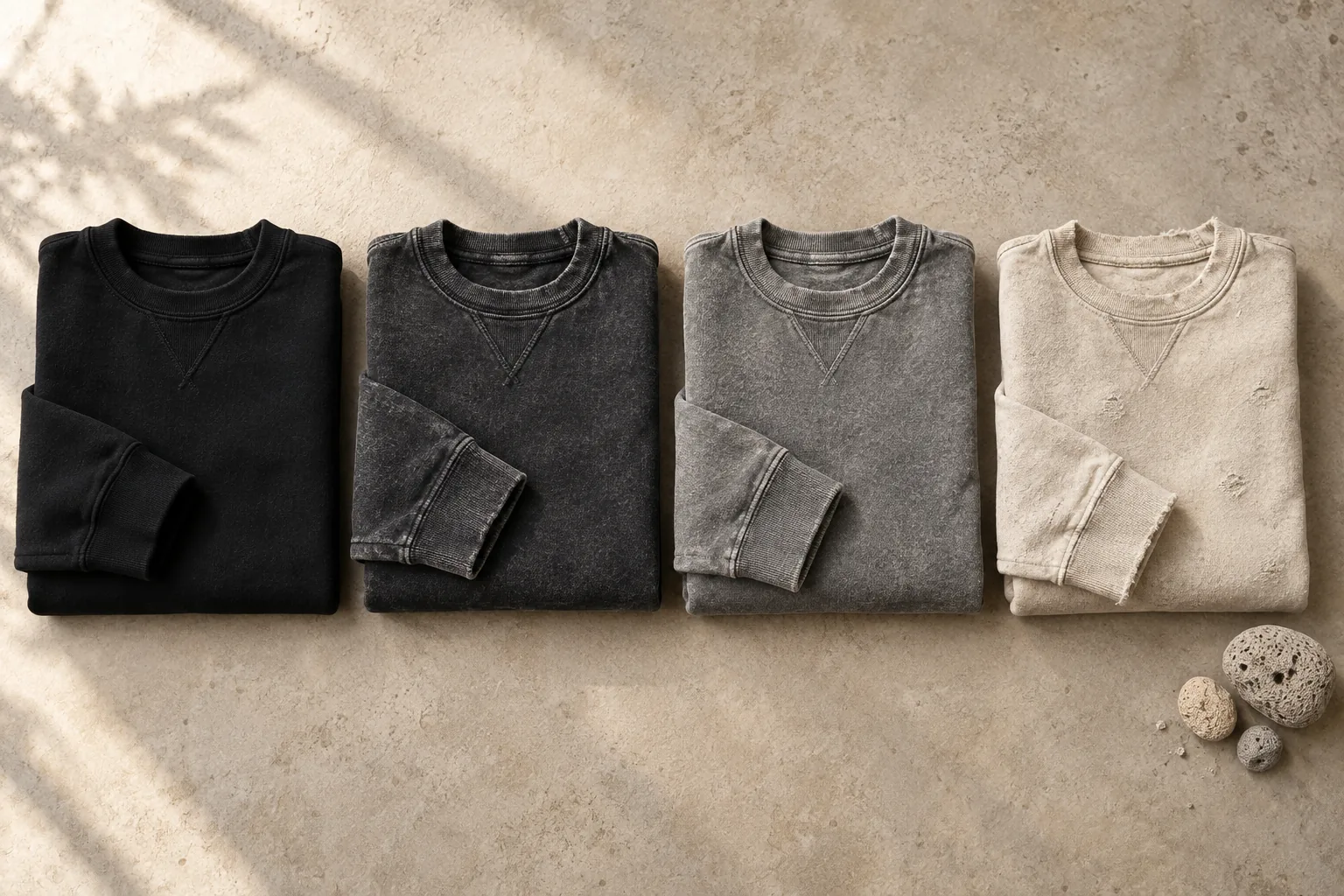
Garment washing is a treatment applied after a garment is sewn, using washing or wet finishing to change its handfeel, appearance or dimensions. It can clean the garment, soften it, remove or add colour, and reduce residual shrinkage. Garment finishing is the broader category: laser marking, sanding and pressing can be part of a finishing route, but those steps alone do not establish that a garment has been washed.
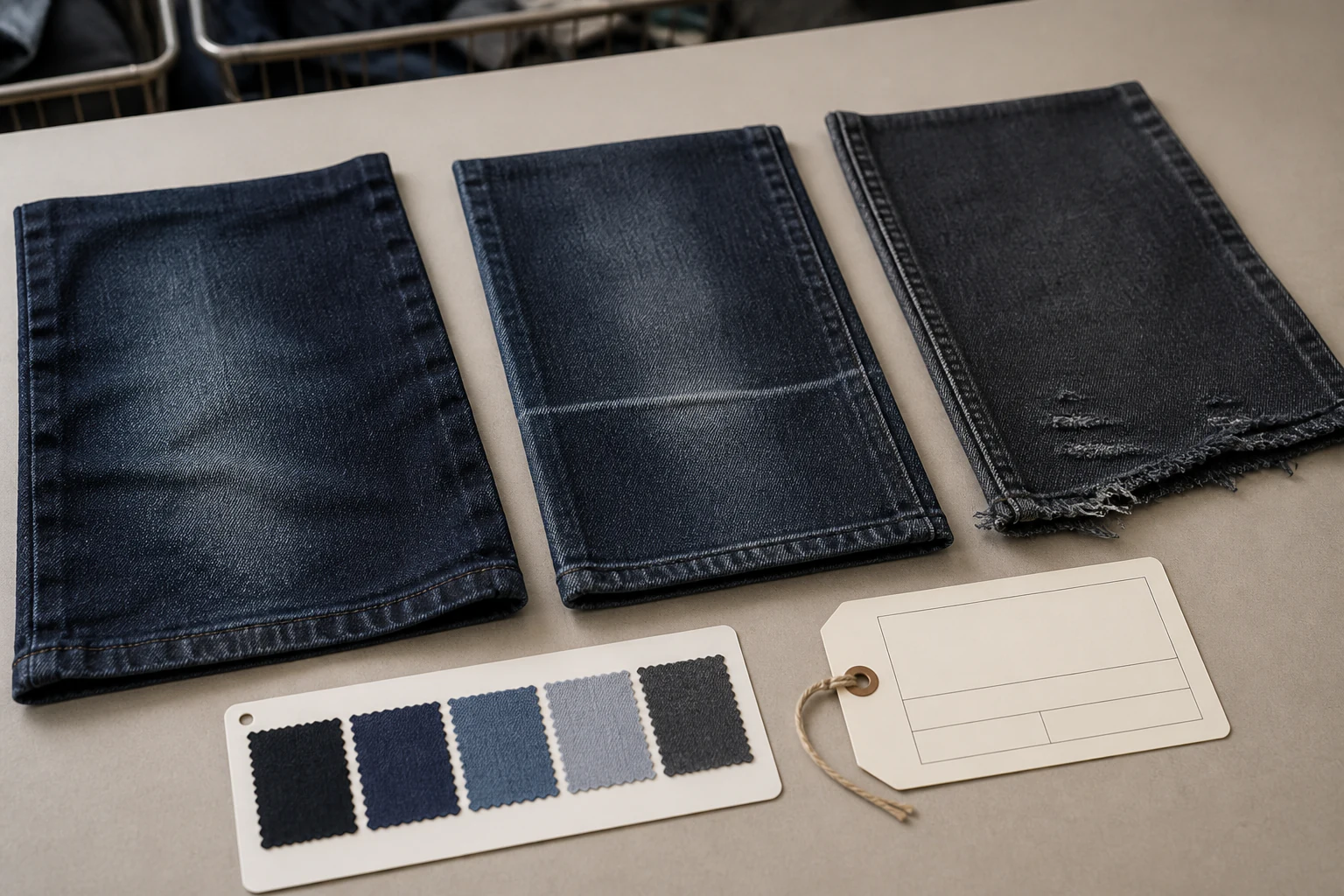
The cover is a generated editorial illustration of progressively washed cotton garments. It is not a factory photograph, customer order or production sample.
“Washed”, “vintage wash”, “acid wash”, “dirty wash” and “sun-fade” appear on product pages, lookbooks and tech packs as if each name described one fixed thing. On the wash floor they describe a sequence: a base fabric, a set of wet or dry treatments, controlled variables such as chemistry, temperature and mechanical action, and a physical target that someone has to approve. This page is the general map of garment washing — what it is, why factories do it, the process families, what it changes, and what a brand should put in a brief. The specialist pages linked throughout own the details of each finish and each defect.
“Washed” is a process, not a colour
CottonWorks separates the vocabulary in a useful way: washing removes impurities or processing aids from a substrate, while finishing gives a fibre, yarn, fabric or garment desired characteristics beyond preparation and coloration (CottonWorks, Garment Finishing). In the trade, the two words overlap. A factory may run a simple rinse that only removes size and dirt, then describe the same garment as washed. Another may combine desizing, abrasion, colour discharge, softening and tumble drying in one route and also call it washed.
Four consequences follow from that:
- A wash does not imply one particular appearance. Two “washed” garments can sit at opposite ends of the shade range if their routes differ.
- A wash is not automatically a pre-shrunk guarantee. Dimensional change depends on the fibre, structure, finishing history and the care procedure applied — the cotton shrinkage guide explains why the method and comparison state have to be named.
- A wash is not automatically soft. A rinse that preserves a rigid hand, or a resin treatment that sets creases, can leave a washed garment firm.
- Many popular names are market labels rather than recipes. CottonWorks describes names such as snow wash and ice wash as generic terms that can refer to an appearance, a process or market identity. Specify the target appearance and ask for the proposed route.
Why factories wash garments
Handfeel and comfort
Rigid denim and densely knitted fleece are stiff off the machine. Tumbling in a drum, abrasive media, surface-fibre removal by cellulase enzymes and softening agents all change how the fabric bends and drapes. The fleece weight guide covers why the same process reads differently on a 250 gsm loopback and a 450 gsm brushed fleece.
Appearance
A wash can remove colour evenly, remove it unevenly, or concentrate effects in selected zones. Stone tumbling abrades high points and edges; discharge chemistry can remove colour locally; laser marking can place programmed wear patterns, while hand sanding and grinding depend on the operator and an agreed placement reference. The distressed details guide maps the dry-and-wet route a factory typically follows.
Colour addition
Garment dye and overdye run the other direction: instead of removing colour, they add it to the finished piece. This is a different starting point from fabric dyed at the mill as yardage, and it is one of the three finishes compared in the vintage wash guide.
Clean-up and preparation
Desizing removes the warp sizing that makes denim harsh and can interfere with later chemistry. Washing also removes dirt, oil and grease picked up through cutting and sewing. A rinse wash may be the whole finish: desize, soften, fix, dry.
Dimensional behaviour
Wet processing plus tumble drying can relax the fabric and reduce residual shrinkage. That does not make a washed garment shrink-proof. Check the actual material and garment construction after the proposed finish, then assess further change under the agreed care procedure.
ISO 5077:2007 covers determining dimensional change after specified washing and drying. ISO 6330:2021 supplies domestic washing and drying procedures; machine, detergent and drying choices affect comparability. In the AATCC system, TM135 applies to fabric specimens and TM150 applies to garments. TM150 notes that it may not suit garments made from certain stretch fabrics. Agree the method, specimen, measurement points and acceptance limits with the test provider before ordering a test.
Market identity
A washed hand and faded surface can be part of the intended product identity. A market name helps communicate the direction, but the fabric, finish route and approved sample define what the factory needs to reproduce.
Fabric finishing vs garment washing: know which stage you mean
Both stages use overlapping words, which is where briefs go wrong. A useful split:
| Stage | Typical processes | What it fixes |
|---|---|---|
| Fabric stage | Preparation, dyeing, compaction, surface finishing | Fabric colour, width, handfeel and shrinkage potential |
| Garment stage | Wash, dye or other finishing after sewing | Final shade, dimensions, seams and component condition |
So “washed denim” can describe a fabric bought in a washed state or a garment finished after sewing. When a spec says a garment is washed, record which state each measurement refers to: greige, finished fabric, sewn but unwashed, or post-wash. The greige vs finished fabric guide and the handfeel specification guide both explain why an earlier state does not automatically approve the next one.
The main process families
Most commercial finishes combine several of these families in one sequence. The denim washes guide covers how the named denim finishes are built; the wash chemistry guide goes deeper on mechanisms.
On a narrow screen, scroll the comparison sideways to read all three columns.
| Family | Method | Main effect |
|---|---|---|
| Clean-up / desizing | Detergent; amylase for starch size | Removes processing aids and prepares for later steps |
| Mechanical abrasion | Drum action with stones or other media | Softens and wears high points and edges |
| Enzymatic | Cellulase, laccase or amylase | Acts on surface fibre, indigo dye or starch respectively |
| Discharge / bleach | Chemistry selected for the dye and material | Reduces colour; application controls all-over or local effects |
| Dye / tint | Garment dyeing, overdyeing or pigment application | Adds colour after sewing |
| Ozone treatment | Controlled gas exposure in a closed machine | Changes shade through oxidation; does not itself place a drawn pattern |
| Localised effects | Laser marking, sanding, grinding, spraying or brushing | Places wear or contrast; repeatability depends on the method |
Cellulase acts on cellulose fibres; laccase can break down indigo colour; amylase removes starch size. These enzymes are not interchangeable. Discharge acts on the dye, so cotton content alone cannot establish whether a colour will discharge as intended. Chemical routes also need the appropriate washing, neutralisation or other after-treatment specified by the process provider.
Dry work and wet steps are sequenced together where the target calls for both. A machine can control exposure time and dose without controlling the position of every fade. For localised marks, approve a placement reference as well as shade; for an all-over ozone treatment, approve the resulting shade range on the actual material.
Two cautions from the sources are worth repeating. Cellulase enzymes remove surface fibre, so they can reduce fabric weight and strength if the route is pushed too far. And CottonWorks describes traditional distressing methods such as stone washing, potassium permanganate spraying and hand sanding as methods with environmental and worker-safety downsides that lasers increasingly replace — which is one reason the same visual target can be produced by very different routes with different costs and tolerances.
What a wash changes — and what needs checking
- Handfeel and drape. Approve these on the physical washed sample, not on the greige fabric.
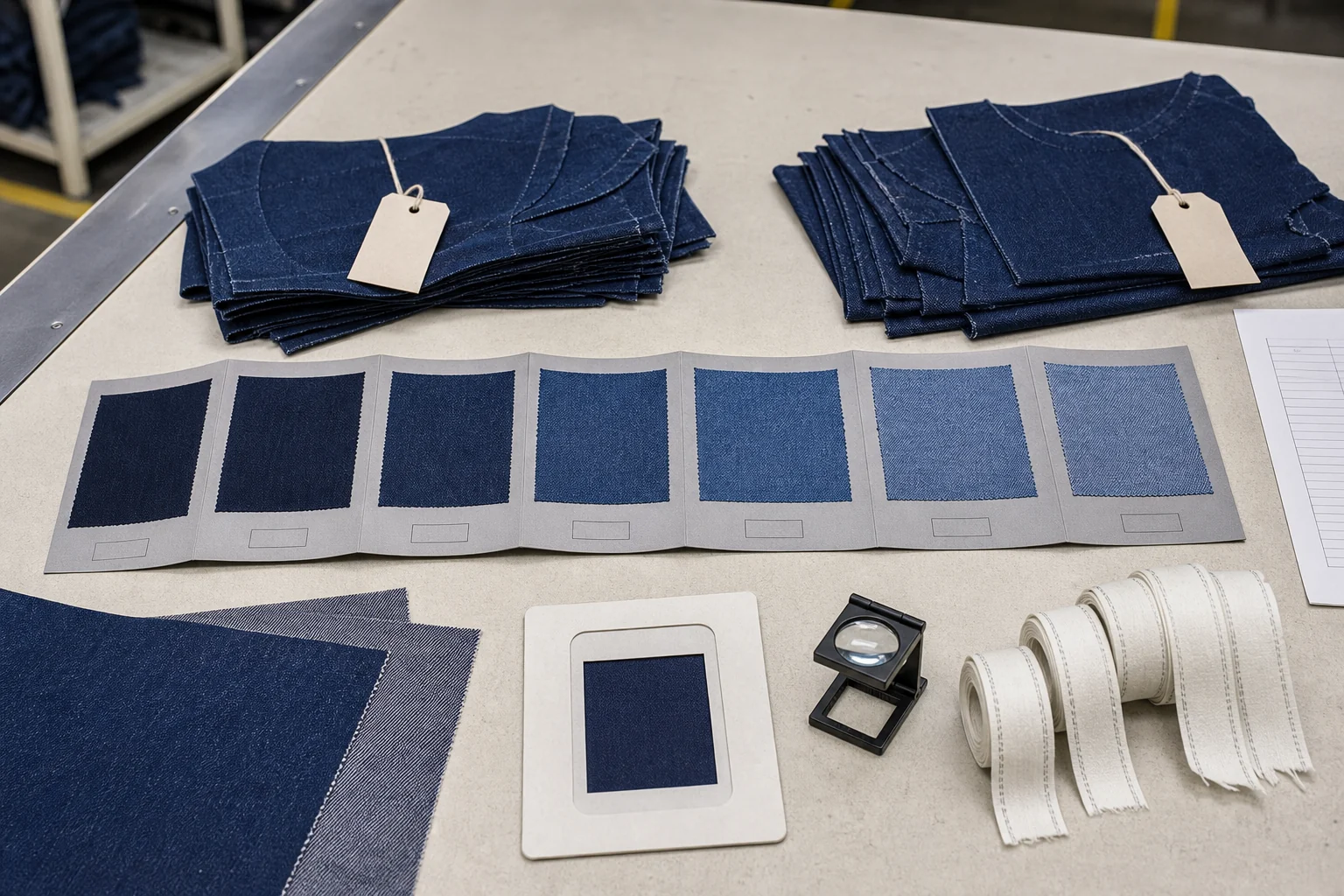
- Shade and piece-to-piece variation. Wet batch processing gives garments slightly different exposure, so tone can vary. A programmed laser pattern can help repeat placement, but neither machine controls nor a digital pattern guarantee identical shade on every piece. The shade band guide covers how to define an accepted production range, and the panel shade variation guide covers within-garment differences.
- Surface condition. Abrasion can thin cloth, expose yarns or open holes; laser cutting and after-wash can create intentional holes that still need to be specified.
- Dimensions. Wash and dry can change length, width and skew. Measure after the intended finish, under the agreed method, on the actual fabric.
- Components. Buttons, zips, rivets, elastic, labels and thread all pass through the same drum. Check function and appearance after the wash, not before (button and zipper guides cover the properties that matter).
- Decoration sequence. Print or embroidery applied before the wash is exposed to the process; decoration applied after it must fit post-wash dimensions and surface. The print durability guide and embroidery vs screen printing guide explain the dependency.
- Colourfastness and backstaining. Discharged or redeposited colour can show up as unwanted staining. The garment wash defects guide separates visible signatures from causes, and the colourfastness guide covers test planning.
Appearance after washing is broader than shade. ISO 15487:2018 defines an assessment of apparel appearance after domestic washing and drying that includes colour change, pilling, fuzzing, matting, smoothness of fabric and seams, crease retention, and damage to components such as buttons and zips — a useful reminder that fabric, seams and trims need separate observations.
How to brief a wash so the sample lands close
- Send references, not only names. “Stone wash” spans an enormous range. Photos or a reference garment showing the tone, contrast level and placement communicate more than vocabulary. The stone wash vs acid wash guide shows how far two effects can differ.
- Name the base fabric. Fibre content, dye method and structure decide what a process can do. Cellulase acts on cellulose fibres, while discharge feasibility depends on the dye and material; blends need their own assessment. See yarn-dyed vs piece-dyed fabric for the dyeing side.
- State the target and the tolerance. Decide whether you want an even all-over fade, localised contrast, or a heavily distressed look, and what variation is acceptable for the chosen method.
- List decoration and trims. Sequence matters, and some components tolerate a wash better than others.
- Approve on a physical washed sample. Screen colour is not a wash standard. The sample approval checklist and fabric swatch approval checklist show how to keep the evidence traceable.
- Record the route and the evidence. Keep identifying references for the sample, wash lot, declared process and matched before/after results. The pilot run guide covers the same discipline before bulk.
A wash brief you can adapt
This is an illustrative hoodie brief, not a customer order or a tested recipe. Replace the reference IDs and open questions with your own project details.
Product and material: Pullover hoodie. Proposed cotton fleece and matching rib; attach fibre composition, fabric weight, dye information and swatch ID. Ask the factory to confirm wash compatibility.
Target appearance: Soft hand with a charcoal fade and subtle edge wear. Attach reference A for overall shade and reference B for edge contrast. No holes or sharply bleached patches.
Decoration and components: Chest print should stay crisp. Review printing after washing and test adhesion on the finished surface. Include labels, sewing thread, drawcord and eyelets in the component review.
Measurement state: Finished measurements refer to the post-wash, dried and conditioned sample. Ask for matched measurements before finishing and after finishing. Agree the care-test method, cycles and dimensional limits separately.
Approval record: Assign a sample ID and fabric lot. Agree a physical shade band and placement references before bulk. Record approved handfeel, dimensions and component condition; an image alone does not approve these.
Quantity, timing and decision owner: Add units by colour and size, required delivery date and the person who will approve revisions. Ask for the proposed route, sample sequence, cost and timing once the material is confirmed.
This brief lets the factory assess the intended look, component sequence and missing inputs. If the dye information or physical shade target is missing, resolve it before treating the first sample as an approval standard. If crisp printing fails on the washed surface, review the ink, cure or decoration sequence and resample. If the shade is outside the agreed band, review the material and process record rather than approving bulk from a screen image.
Why a wash affects MOQ, cost and lead time
Washing is a batch process. The load is set by machine capacity and liquor ratio, so a very small run is not just more expensive per piece — it may not hold a consistent standard at all. The final minimum and colourway breakdown depend on the fabric, the process, the target effect and the number of colours, and are confirmed during project review; production starts from 50 pieces per style.
Cost is driven by chemistry, stones or media, water and energy, machine time, the amount of skilled handwork such as spraying, brushing or sanding, drying, and rework if the result misses. Because a wash recipe is developed on the actual fabric and construction rather than chosen from a chart, the route is sampled first: simple samples typically take 10-18 working days after project details are confirmed, and complex washes, styles or processes take longer. Bulk production typically takes 20-30 working days after sample approval.
FAQ
What does “washed” mean on a clothing product? It usually indicates washing or wet finishing after sewing, such as a rinse, enzyme wash or stone wash. A finishing route may also include dry work, but laser marking, sanding or pressing alone does not prove a garment was washed. Ask for the process route and approve the physical result; the label does not identify one fixed recipe.
Is garment washing the same as fabric finishing? No. Fabric finishing happens at the mill before cutting — examples include compaction, calendering and surface treatments. Garment washing happens after sewing. Both can change hand, colour and dimensions, so a brief should say which state it is describing.
Does a garment wash stop my clothes from shrinking later? It can reduce residual shrinkage, but it is not a guarantee. Residual dimensional change depends on the fibre, structure, finishing history and the care route. Verify with the agreed test method on the actual fabric and construction rather than assuming “washed” means pre-shrunk.
Why does bulk wash look different from the approved sample? Wet batch processes do not expose every garment identically, so some piece-to-piece variation is natural. The approved sample and written tolerance define the accepted range. A result outside the approved sample or shade band and agreed tolerances needs defect review. Unapproved backstaining, patchy shade or component damage also needs review, even when the overall shade is acceptable.
Can any fabric be washed? Not every material can tolerate every wash or achieve every effect. Cellulase acts on cellulose fibres, while discharge depends on the dye chemistry as well as the material. Blends, stretch fibres and components require their own compatibility checks. Confirm the proposed treatment on the actual material before sampling.
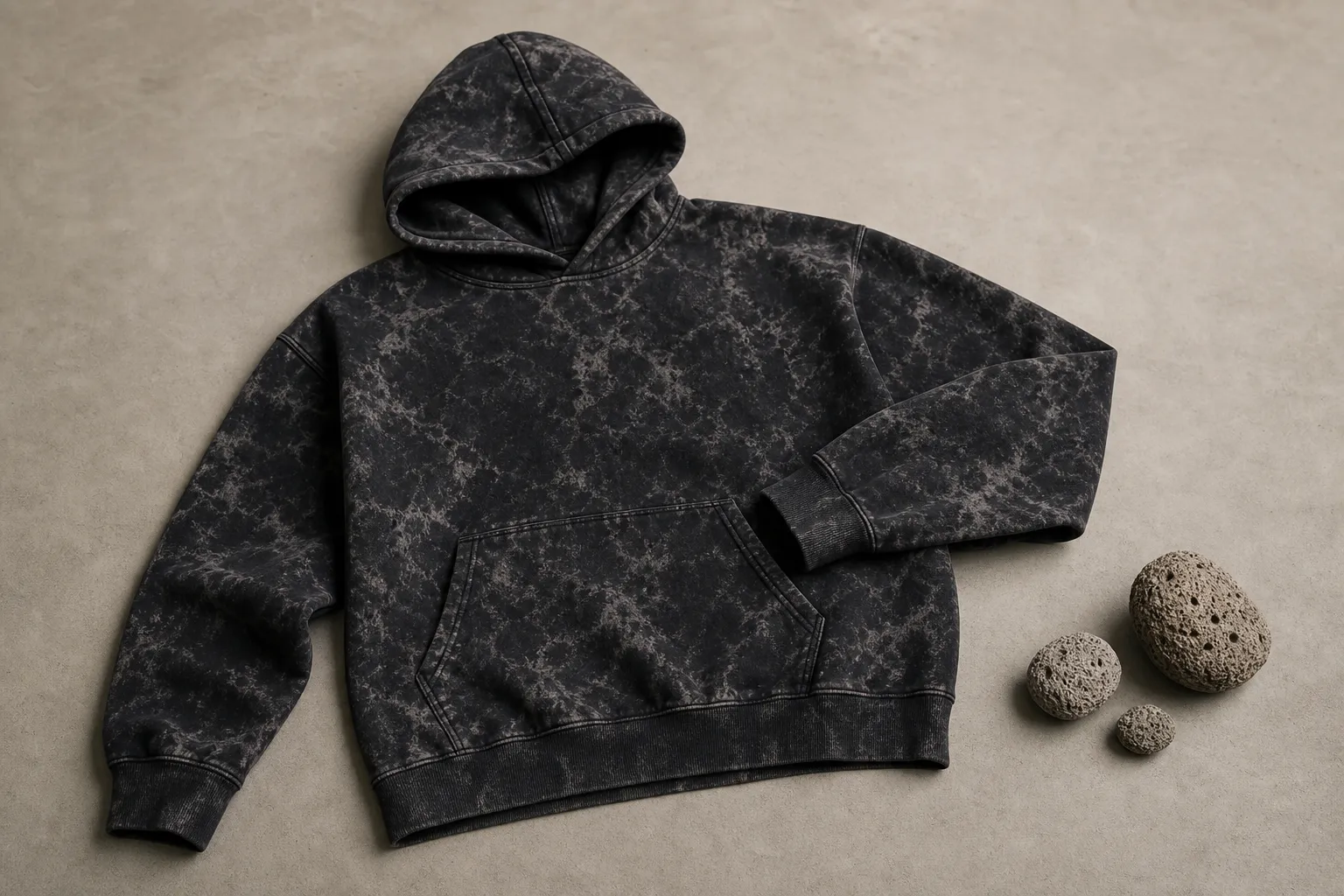
Is acid wash actually acid? The name does not mean an acid bath creates the effect. CottonWorks describes the traditional acid-washed look as colour discharge using agents such as potassium permanganate or sodium hypochlorite. Ask for the proposed route, including its after-treatment, and approve the appearance rather than relying on the name.
Send the wash brief
For a project review, share the garment type, quantity by colour and size, base fabric, a reference for the target effect, planned decoration and trims, and your timing. Jiashun reviews wash direction within custom cut-and-sew programs through its washing and garment-dye capability; the appropriate route, sample sequence and project-specific quotation are confirmed once the product details are clear.
References
- CottonWorks by Cotton Incorporated, “Garment Finishing” — definitions of washing, finishing and garment wet finishing; process descriptions for desizing, stonewashing, enzyme washing, discharge, potassium permanganate, bleaching, ozone and laser; accessed September 13, 2026.
- CottonWorks by Cotton Incorporated, “Mechanical Finishing” — fabric-stage finishing processes including drying and compaction; accessed September 13, 2026.
- CottonWorks by Cotton Incorporated, “Shrinking & Skewing” — residual shrinkage and skew depending on material and process; accessed September 13, 2026.
- International Organization for Standardization, ISO 15487:2018, Textiles — Method for assessing appearance of apparel and other textile end products after domestic washing and drying — appearance scope covering colour change, pilling, smoothness and component damage; accessed September 13, 2026.
- International Organization for Standardization, ISO 5077:2007, Textiles — Determination of dimensional change in washing and drying — dimensional-change method scope; accessed September 13, 2026.
- International Organization for Standardization, ISO 6330:2021, Textiles — Domestic washing and drying procedures for textile testing — multiple procedures and the parameter-comparability warning; accessed September 13, 2026.
- American Association of Textile Chemists and Colorists, TM135 Test Method for Dimensional Changes of Fabrics after Home Laundering — fabric dimensional-change scope; accessed September 13, 2026.
- American Association of Textile Chemists and Colorists, TM150 Test Method for Dimensional Changes of Garments after Home Laundering — garment dimensional-change scope and stretch-fabric limitation; accessed September 13, 2026.
Related guides
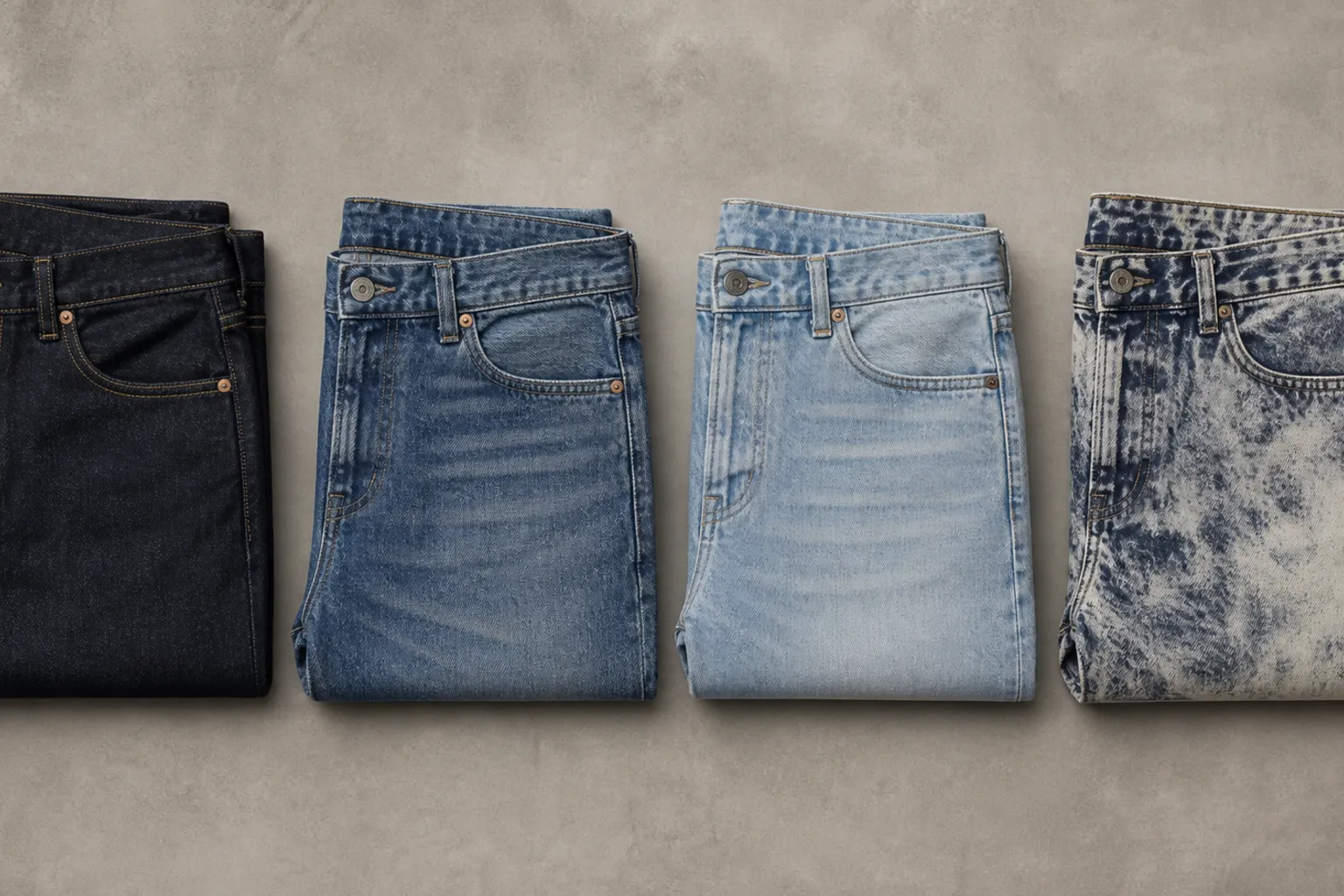 Denim Washes Explained: Stone, Enzyme, Acid and Sun-Fade — and How to Approve Them
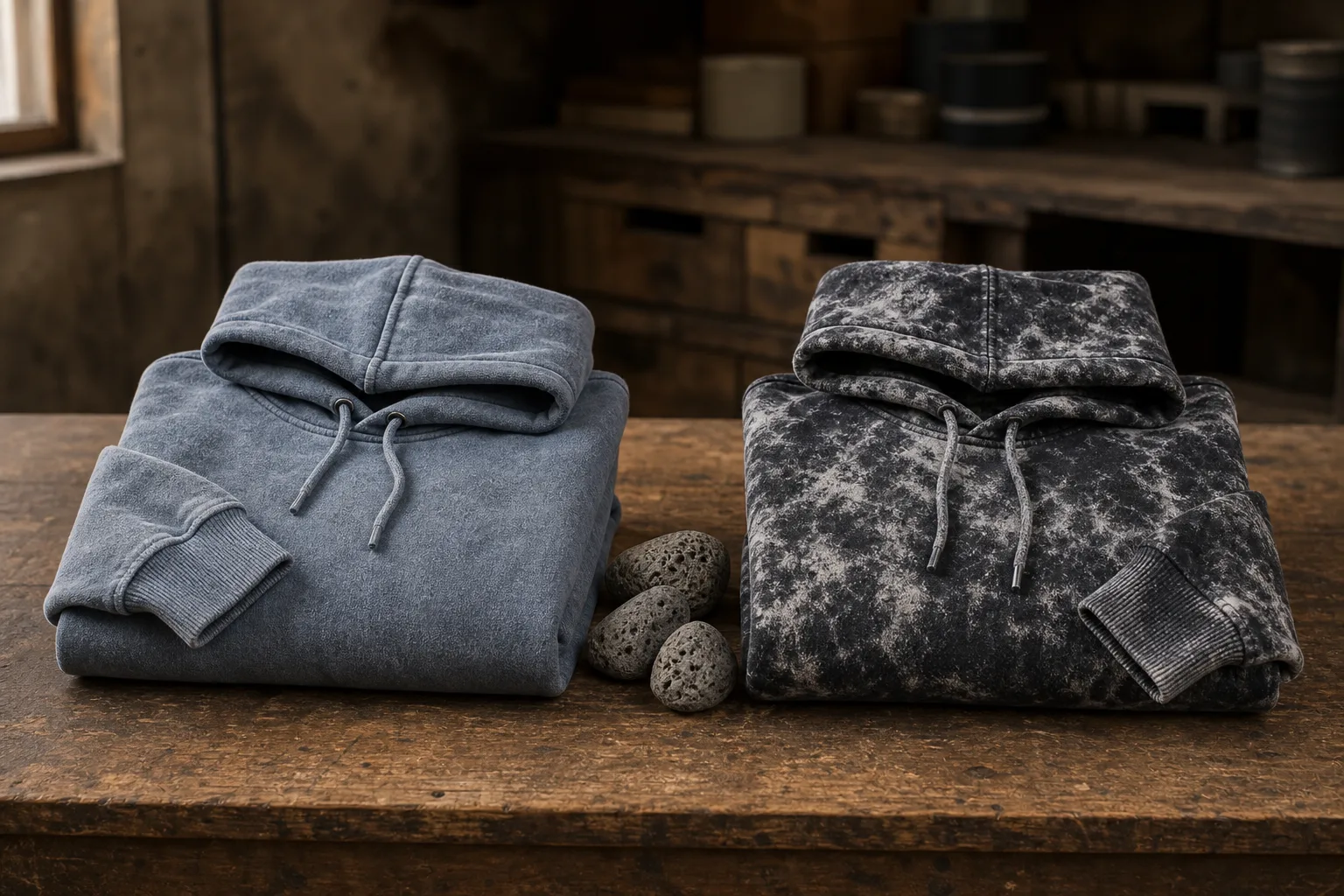 Stone Wash vs Acid Wash: What Actually Happens in the Drum
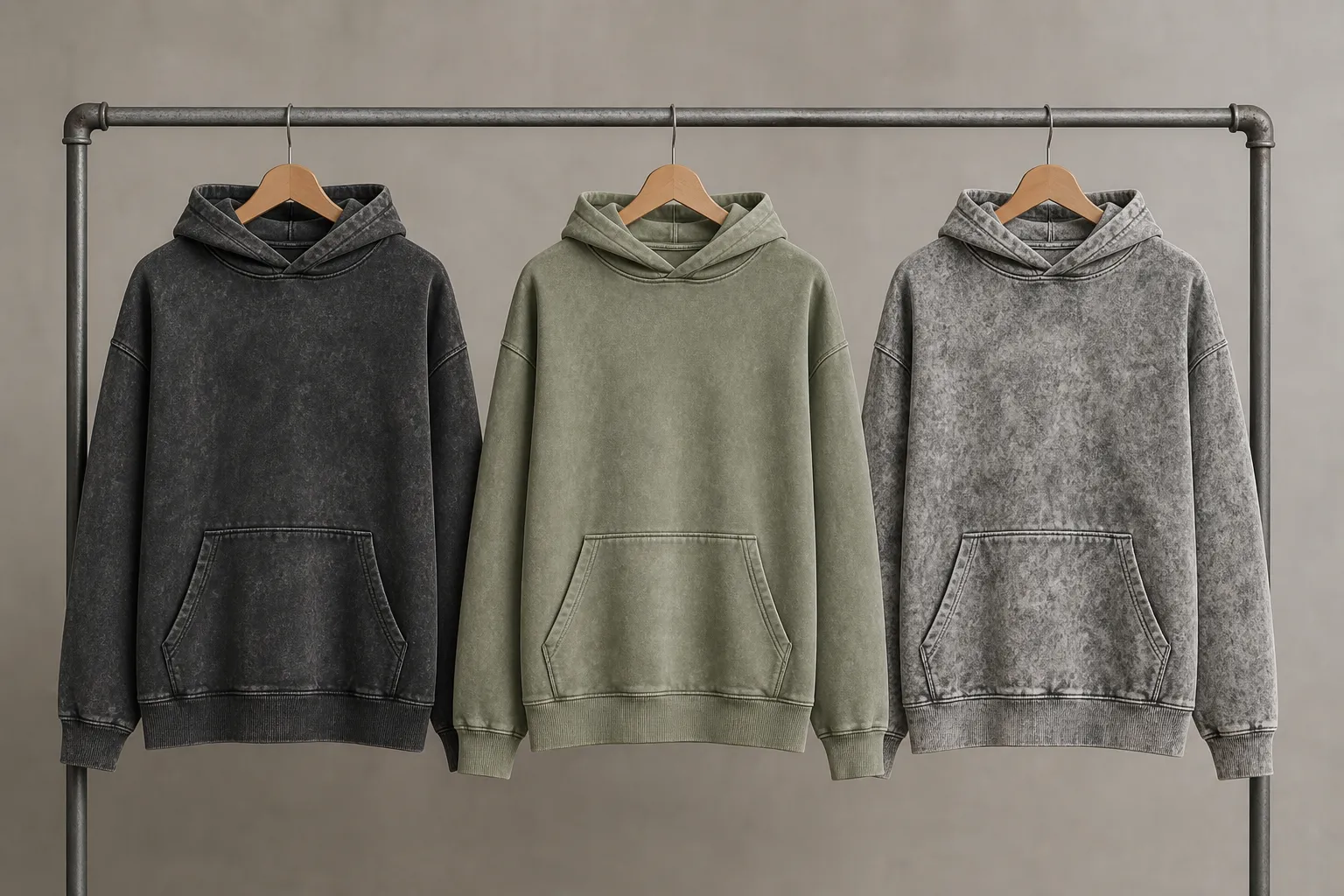 Vintage Wash vs Garment Dye vs Acid Wash: Which Finish?
 Garment Wash Defects: Causes, Evidence and Approval Questions
 Garment Shade Band Approval: Control the Production Color Range
 Acid Wash Beyond Denim: How the Effect Works on Hoodies and Tees