Custom Jacket Styles Compared: Choosing the Right Build for Your Brand
Choosing a custom jacket means choosing a construction family, each with distinct materials, decoration surfaces, and cost logic. This guide compares varsity, puffer, denim, and chore-coat builds for streetwear brands.
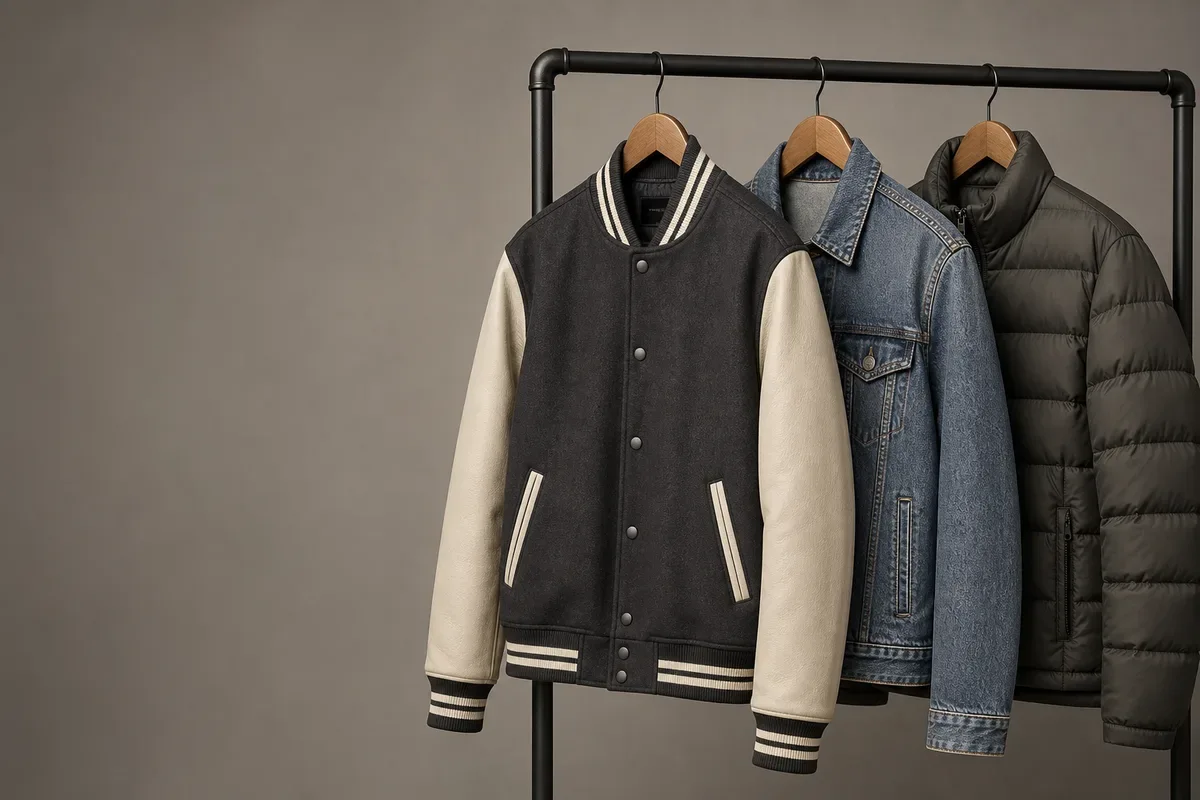
Jackets are the highest-stakes garment most streetwear brands make: the highest unit cost, the most components, and the piece customers photograph most. Choosing the style is really choosing a construction family — each comes with its own materials, decoration surfaces and cost logic. This guide compares the four builds we see most in briefs. We run a cut-and-sew factory in Humen, Dongguan; jackets and outerwear are core categories for us.
Varsity: the decoration platform
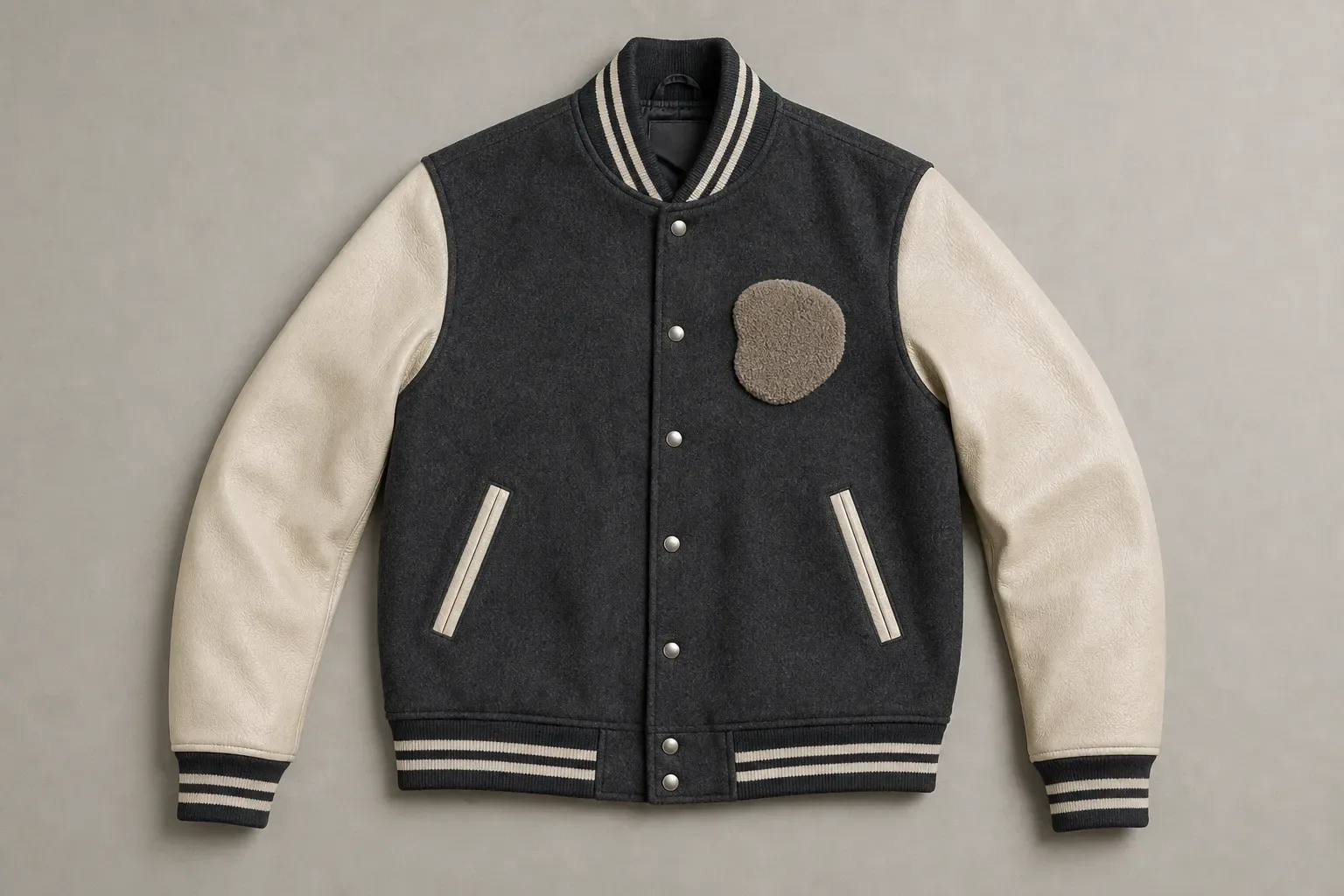
The varsity (letterman/baseball) jacket is the style built around decoration — chenille patches, embroidery, leather or faux-leather sleeves, ribbed collar, cuffs and hem. Its identity comes from surface work, which makes it the strongest branding canvas in outerwear: a varsity with faux-leather sleeves on a wool-blend body or a 3D chenille embroidered college jacket carries the brand on every panel. The spec lives in the details: rib colorways, patch inventory, sleeve material, lining. There are also lighter expressions — a stand-collar spring varsity trades the winter body for a windproof shell. Use the dedicated varsity jacket sample-approval guide to lock the reviewed revision, rib-stripe phase, sleeve identity and specified panel relationships before bulk.
Puffer: the insulation decision
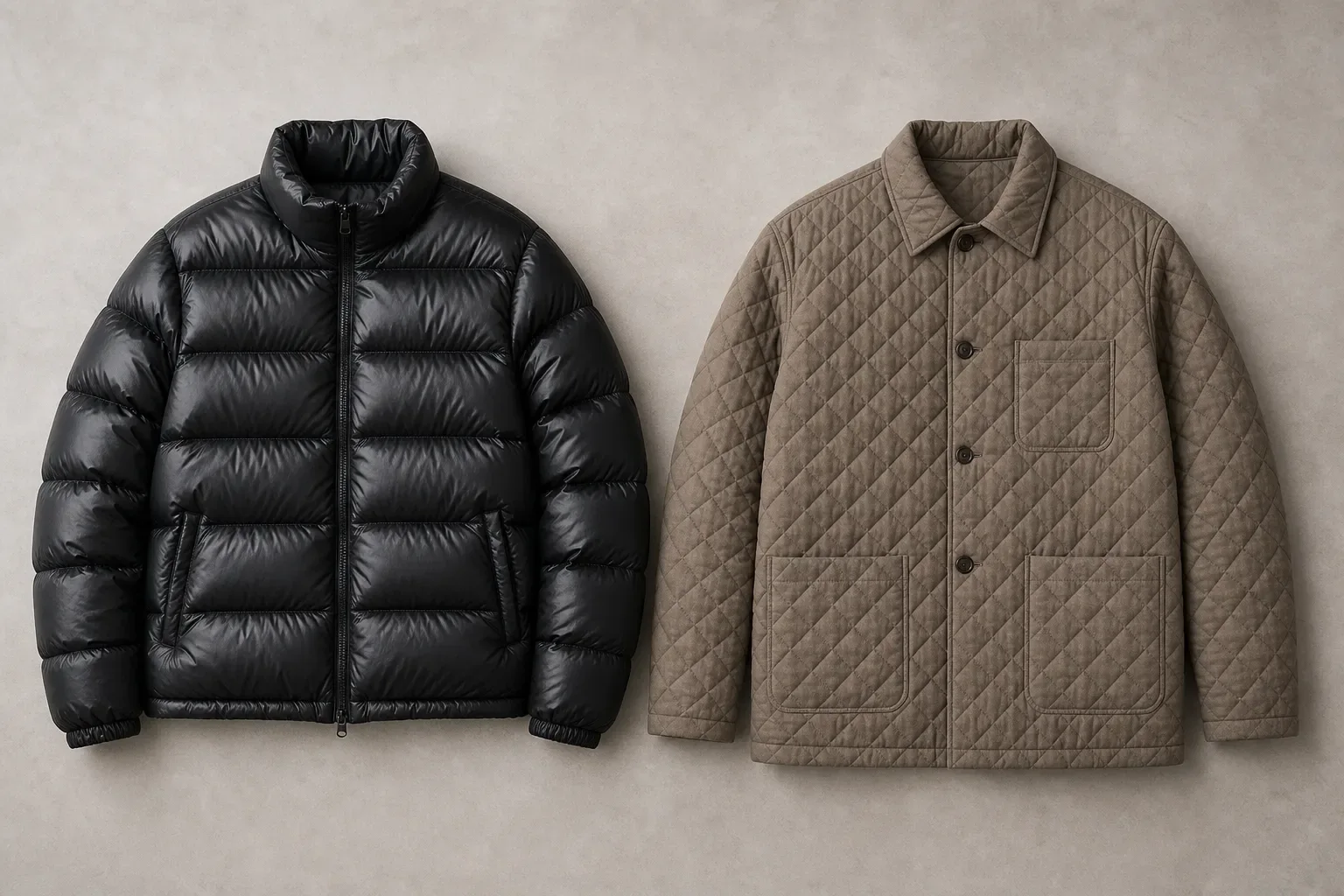
A puffer is defined by its fill and its baffles. The first decision is insulation type — down or padded synthetic — which sets warmth, weight, care behavior and price; our down vs padded jackets guide covers that call in detail. The second is baffle design: channel width and stitching pattern are the visual identity. Features multiply from there — a reversible camouflage hooded puffer is effectively two jackets sharing one fill, and the quote reflects the doubled facing work. Decoration on puffers is constrained (quilted surfaces fight large prints), so branding moves to hardware, labels and colorblocking.
Denim jacket: the wash canvas
The denim jacket is the outerwear expression of everything that makes denim work: it is cut oversized, washed to spec, and aged. Fades, vintage washing and distressing are the design language — an oversized faded vintage-washed denim jacket gets its character from the wash tank, not the print table. Like denim pants, fit approval happens on a washed sample, and intensive washes can raise the final minimum. The same logic extends to non-denim washed outerwear — an acid-wash distressed heavyweight coat is specced exactly like a washed denim piece. Our denim washes guide covers the finish vocabulary.
Chore coat: the workwear minimalist
The chore (work) jacket is the quiet build: boxy body, patch pockets, minimal hardware. Its quality reads through fabric and finishing rather than decoration — selvedge details, blanket linings, repair-style stitching. A blanket-lined selvedge chore coat with visible repairs shows the maximal version: the "wear" is designed in. Chore coats suit brands whose identity is fabric-first; they are also the most layering-friendly build, so oversized fits dominate. Lining families and their approval records get their own treatment in the jacket and coat lining guide.
The four builds at a glance
| Build | Decoration surface | Season | Relative cost |
|---|---|---|---|
| Varsity (snap front, ribbed collar/cuffs/hem, contrast sleeves) | The whole surface: chenille patches, embroidery, sleeve material, rib colorways, lining | Winter when lined; lighter stand-collar spring versions exist | Higher: more materials and operations per unit |
| Puffer (fill held in baffles, down or padded synthetic) | Constrained: hardware, labels and colorblocking, since quilted surfaces fight large prints | Winter | Higher: fill plus facing work; reversible builds double the facing |
| Denim jacket (cut oversized, washed to spec, aged) | The wash itself: fades, vintage washing, distressing | Three seasons | Lower unit cost; intensive washes can raise the final minimum |
| Chore coat (boxy body, patch pockets, minimal hardware) | Fabric and finishing: selvedge details, blanket linings, repair-style stitching | Three seasons | Lowest: fewest components, no fill, no rib program |
Choosing between them: three questions
- Where does your brand live on the garment? Surface decoration → varsity. Wash and age → denim. Silhouette and fill → puffer. Fabric and restraint → chore.
- What season and price point? Puffers and lined varsities are winter-weight and winter-priced; denim jackets and chore coats span three seasons at lower unit cost.
- What does your existing line say? Jackets sell best when they extend a language your tees and hoodies already speak — same washes, same patch styles, same fits (the same oversized/boxy grammar applies).
How to brief a jacket in one message
Reference photos front, back and lining if visible; the build family from this guide; materials intent (body, sleeves, fill, lining); decoration inventory (each patch/embroidery counted); hardware notes; quantity per colorway. Jackets have the longest component lead times of anything we make, so the project-reviewed quote comes back with a component-by-component breakdown worth reading — our guide to reading quotes explains the line items.
Planning numbers: MOQ starts at 50 pieces; the final minimum and sample pricing depend on the product, fabric, wash and customization. Simple samples typically take 10-18 working days after project details are confirmed; complex outerwear styles or processes take longer. Bulk typically takes 20-30 working days after approval. The full outerwear program is on our jacket manufacturer page and the broader outerwear program page.
FAQ
Varsity or bomber — what is the difference? Construction cousins, different details: the classic varsity has a snap front, ribbed collar/cuffs/hem and contrast sleeves; the bomber typically zips, uses a knit or stand collar and one body material. Decoration-heavy briefs almost always want the varsity platform.
Which jacket style is cheapest to start with? Usually the chore coat or an unlined denim jacket — fewest components, no fill, no rib program. Varsities and puffers carry more materials and operations per unit.
Can you mix builds — say, a quilted varsity? Yes, hybrid builds are normal custom work: quilted bodies with rib trims, washed shells over padding. Spec the parent build plus the borrowed elements and we will flag any construction conflicts at design review.
Do jackets share the 50-piece MOQ? MOQ starts at 50 pieces. The final minimum depends on the product, fabric, wash, customization, and any component minimums; the quotation flags what applies.