Jacket and Coat Lining Types: A Brand Specification Guide
Specify an outerwear lining as a material-and-assembly system, then approve how it moves, hangs and changes with the shell across body, sleeve, pocket, hood, hem and vent zones.
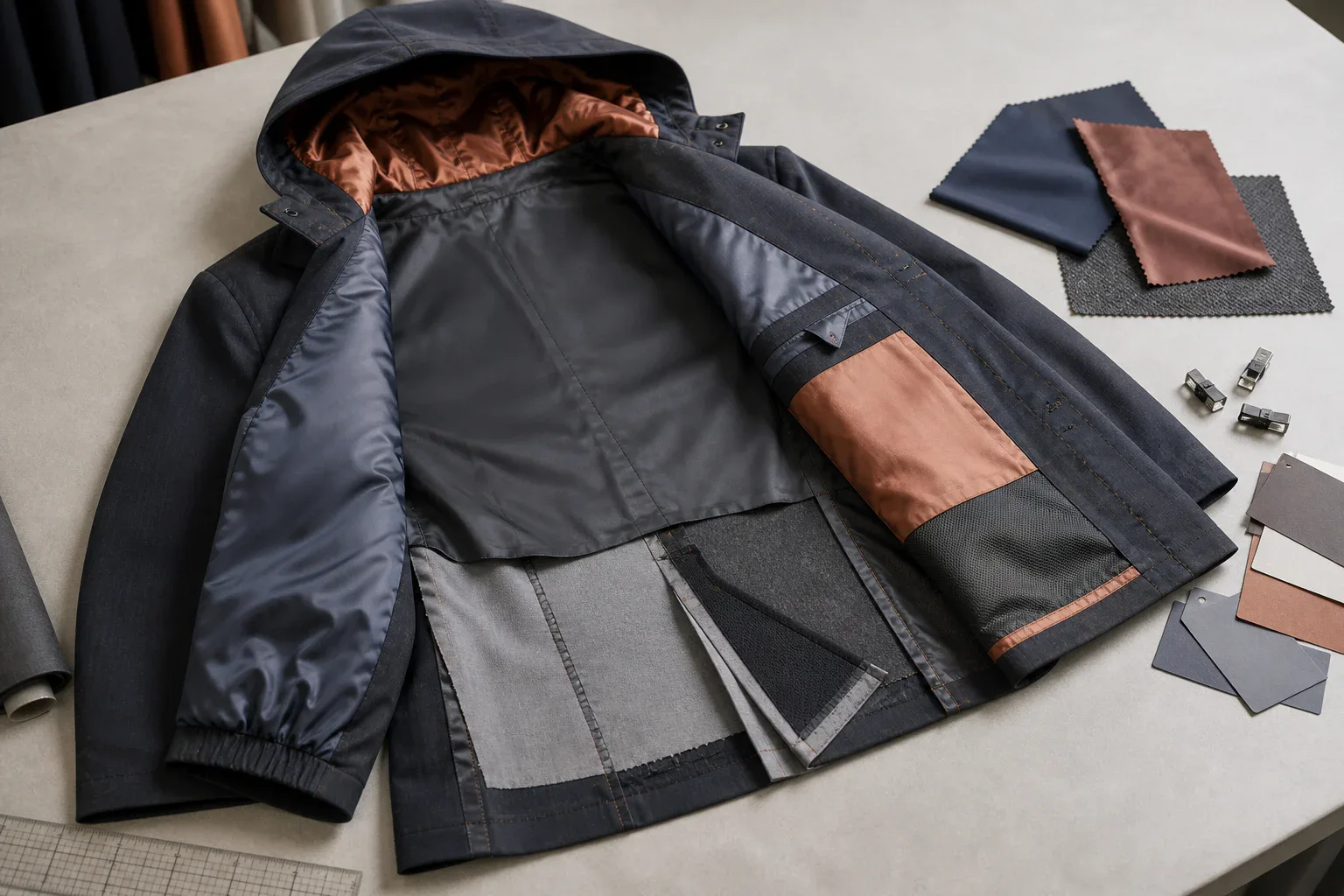
Garment lining types should be specified on two separate axes: how much of the jacket or coat is lined, and which identified material is used in each lined area. “Fully lined polyester jacket” still leaves critical decisions open. It does not identify the supplier article, construction, color and finish, stretch direction, care response, pattern geometry, ease, attachment, pocket treatment or approved physical reference.
For a clothing brand, the useful choice is therefore not a generic ranking of the “best” lining. It is a controlled shell-and-lining system that produces the intended movement, internal finish and appearance after the agreed care or finishing route. This guide owns that specification and approval job for jackets and coats. The wider outerwear program remains in the coat and outerwear manufacturing guide, while silhouette selection stays in the custom jacket styles guide.
Start With Assembly Coverage, Not a Fiber Name
Brands often use lining type to mean both construction coverage and fabric family. Separate them before sourcing.
| Assembly route | What it means for the garment | Approval focus |
|---|---|---|
| Full lining | A separate lining assembly covers the main inside body and sleeves, with openings and edges finished according to the design | Movement through body and sleeves, attachment points, hem and vent behavior, pocket access and inside appearance |
| Partial or zone lining | Lining is limited to named areas such as the upper body, sleeves, hood or selected panels | Exact start and stop lines, exposed internal construction, transitions and whether each zone performs its intended job |
| Unlined construction | No separate lining assembly covers the main interior; seam allowances, facings and other inside details remain visible or receive their own finish | Internal finish, comfort, opacity, structure and whether omitted lining changes fit or drape |
These routes do not describe the lining fabric itself. The same nominal material may behave differently when cut on another direction, combined with another finish or attached to a different shell.
Lining also is not a synonym for every hidden layer. New Mexico State University's guide, Selecting Interfacings, Underlinings, and Linings, distinguishes a lining made as a separate inner unit from underlining handled with the garment fabric and interfacing used to reinforce or support selected areas. Insulation and other interlining layers can add another job in padded outerwear. Define those layers separately instead of letting one BOM row called “lining” cover all of them. Fill and quilting decisions remain with the puffer and padded jacket guide; fusible-versus-sew-in interfacing is a separate owner.
Specify the Material as an Identified Article
Fiber names are useful identification fields, not complete performance grades. Polyester, viscose, acetate, cotton, nylon and blends can appear in lining supply, but a fiber label alone does not establish hand, opacity, surface friction, stretch, dimensional response, durability or compatibility with the shell.
Build one BOM row for every lining quality or application that must remain independently controlled:
| Field group | What to record | Why it matters |
|---|---|---|
| Identity | Component and zone, supplier, article or quality code, declared fiber content and fabric construction | Prevents a generic market name from replacing the approved material |
| Physical state | Color, surface and back, finish, usable width, weight when relevant, stretch direction and other project-approved characteristics | Defines what was actually sampled without implying a universal target |
| Pattern and assembly | Pattern piece or zone, cut direction, seam and attachment details, ease or pleat location, opening, hem and vent relationship | Connects the material to the way it must move with the shell |
| Approval | Swatch or sample ID, applicable colorway and size, care or finishing route, test/report reference where used, status and approver | Makes the decision traceable and prevents one approval from silently covering another state |
If body lining, sleeve lining, hood lining or pocketing use different materials, give them separate identities. A smoother sleeve quality, for example, should not be substituted into the body merely because both are the same color. Use the apparel BOM guide to keep applicability and revision status visible.
Review the Lining by Garment Zone
A lining can look clean on a hanger and still fail when the garment is worn. Inspect how each zone interacts with the shell, openings and adjacent components.
| Zone | Shell-lining interaction to define | Evidence to retain |
|---|---|---|
| Body | Vertical hang, room for movement, facing coverage, balance at center front and side seams | Front, back and inside views on the intended layer; shell and lining seam alignment; any pulling or excess |
| Sleeve and armhole | Reach and bend movement, sleeve-lining length, underarm freedom, cuff or opening attachment | Arm-forward and bent-arm views; inside sleeve orientation; drag, twisting or lining exposure at the opening |
| Pocket-bag material, opening support, attachment to lining or shell and access without pulling the lining | Both faces of the pocket, bag position, layer capture and repeated access on the sample | |
| Hood and collar | Whether the area is self-lined or separately lined, edge roll, neckline attachment and movement against the shell | Hood up/down views, collar roll, opening symmetry and the inside attachment path |
| Hem | Lining length relative to shell, attachment or free-hang design and clearance during movement | Level resting view, lifted and seated movement where relevant, and post-care comparison |
| Vent or slit | Lining shape, allowance for opening, attachment points and whether it crosses or restrains the vent | Vent open/closed views, inside construction and evidence of pulling, exposure or twisting |
This is a zone map, not a universal construction recipe. A cropped jacket, long coat, stretch shell, coated fabric and washed canvas program can require different geometry and evidence. New Mexico State University's outerwear guide treats outer fabric, lining and interlining as distinct materials and notes that outerwear fit must account for clothing worn underneath. The production specification still has to be developed from the actual design and approved sample rather than copied from a consumer pattern.
Approve the Shell and Lining as One System
The shell and lining can respond differently to sewing, pressing, garment finishing and care. Review them first as identified materials, then together in the finished assembly.
An approval plan can move through these gates:
- Material identity: confirm the supplier articles, faces, colors, finishes and intended zones on controlled swatches.
- Compatibility trial: examine the shell and lining together for hand, opacity or show-through where relevant, movement and the effects of the intended pressing or finishing route.
- Sewn sample: inspect every lined zone on the actual pattern, including pockets, closures, hem and vent—not only a flat fabric pair.
- Care or process exposure: apply the agreed route when laundering, drying, washing or another finish belongs to the product, then compare retained measurements and images.
- Approval and change control: identify exactly which materials, pattern revision, colorway, size and process state the decision covers.
- Bulk comparison: verify received identities and compare assembly, appearance and relevant post-process evidence with the approved reference.
AATCC TM150-2025 determines length and width changes of garments subjected to selected home-laundering procedures. Its public scope also says the method may not apply to garments made from certain stretch fabrics. A laboratory should confirm the applicable procedure. TM150 does not supply a brand's product tolerance, prove wear life or replace the visual and functional review of shell-lining interaction.
When home laundering is not the product's care route, do not cite TM150 as automatic coverage. Record the actual care instruction or finishing exposure, the measurement points, the material and sample revisions, and the acceptance criteria agreed for that project.
Read Failures as Evidence, Not as a One-Step Fix
Describe the failed state before changing pattern or material. The same visible symptom can come from several controlled inputs.
| Observed symptom | Evidence to compare | Decision direction |
|---|---|---|
| Lining hangs below the shell hem or shows at a vent | Before/after shell and lining lengths, attachment points, care state, hem and vent geometry | Identify whether dimensional change, pattern length, assembly or attachment changed before revising one part |
| Sleeve feels restricted or pulls the body | Layering condition, sleeve and armhole orientation, lining length/ease, seam alignment and shell stretch | Recheck the complete sleeve system rather than assuming a “slipperier” fabric solves geometry |
| Lining twists, ropes or migrates inside | Grain or stretch direction, notches, side-seam alignment, joining sequence and finishing state | Trace orientation and assembly against the approved sample |
| Rippling or puckering appears along an edge | Shell and lining dimensions, feeding, seam construction, pressing and differential change after care | Separate sewing distortion from material incompatibility before altering the pattern |
| Pocket or vent area tears or distorts | Opening geometry, bag position, layer capture, reinforcement, use direction and post-process condition | Locate where load entered and which layer failed; do not judge only the visible lining surface |
| A previously approved lining behaves differently in bulk | Supplier/article identity, color or finish, lot evidence, pattern and process revisions | Treat an unapproved substitution or state change as a reopened decision, not an equivalent by name |
Retain annotated inside and outside photographs with the sample disposition. “Lining issue” is not enough information for a factory to reproduce a correction.
Reopen Approval When a Controlled Input Changes
Recheck the affected zones when the shell or lining article changes; when a finish, coating, wash or care route changes; when pattern length, silhouette, sleeve, hood, pocket, hem or vent geometry changes; or when attachment and internal layers are revised. A color change may also require review if it arrives with a different finish, material state or visible interaction.
For bulk, confirm the article identities and applicable revisions first. Then compare orientation, layer capture, seam and opening condition, inside cleanliness, movement and any agreed post-process evidence against the approved sample. Sampling and disposition belong to the order's quality plan; this guide does not create a universal inspection threshold.
Bring the Lining Decision Into the Outerwear Brief
Jiashun can source lining candidates and develop the selected shell-and-lining assembly through an outerwear sample. Lining is a sourced component; this does not claim that Jiashun manufactures the textile in-house or that one article suits every jacket.
Bring the shell direction, intended layering, lined zones, color and surface intent, care or finishing route, pocket/hood/hem/vent details and open decisions to the outerwear program. The useful output is an identified BOM, controlled sample and approval record—not a generic request for “premium lining.”
For orientation, catalogue outerwear shows how different lining briefs land: a light black zip-up down puffer, a reversible camo bomber pairing waffle knit with black nylon and a waterproof windproof reversible down coat each commit to a different shell-lining-fill combination — the brief decides which trade-offs apply.
References
- New Mexico State University, Selecting Interfacings, Underlinings, and Linings.
- New Mexico State University, Making Outerwear with Down or Polyester Fiberfill.
- AATCC, TM150-2025, Test Method for Dimensional Changes of Garments after Home Laundering.
FAQ
What are the main garment lining types for jackets and coats?
Start with assembly coverage: fully lined, partially or zone lined, or unlined. Then identify the material used in each lined zone. These are separate decisions; “fully lined” does not tell a factory which fabric, pattern geometry, attachment or approval evidence to use.
What is the best lining fabric for a jacket?
There is no universal best lining. Compare identified supplier articles against the shell, silhouette, layering, lined zone, surface and movement needs, care route and intended finish. Approve the selected material in the sewn garment rather than ranking fiber names in isolation.
Are lining, underlining and interfacing the same thing?
No. A lining is a separate inner assembly that finishes or covers the garment interior. Underlining is handled with the garment fabric as a backing, while interfacing supports selected areas such as openings, collars or facings. Keep each layer and its approval scope on a separate BOM row.
What should a jacket lining BOM row include?
Record the zone, supplier and article code, declared composition and construction, color and finish, physical specification, stretch direction where relevant, pattern application, cut direction, attachment details, care or finishing route and approved sample reference. Separate body, sleeve, hood and pocket materials when they differ.
Why does a coat lining show below the hem after washing?
Possible causes include different dimensional change in shell and lining, incorrect pattern length, changed attachment points, sewing distortion or a substituted material. Compare the identified before-and-after materials, measurements, care procedure, hem and vent construction before deciding which input to revise.
Related guides
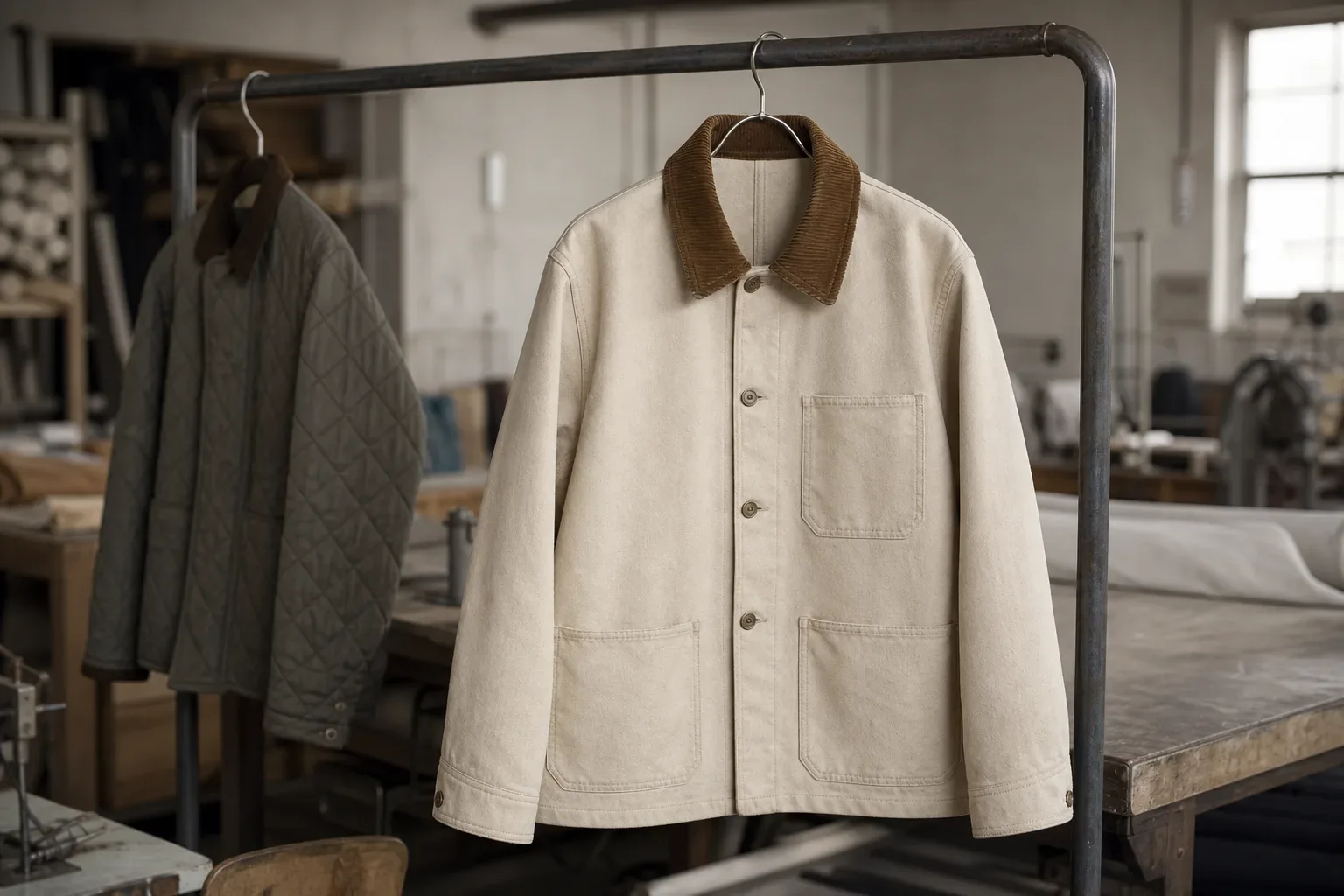 Coat and Outerwear Manufacturing: From Reference to Production
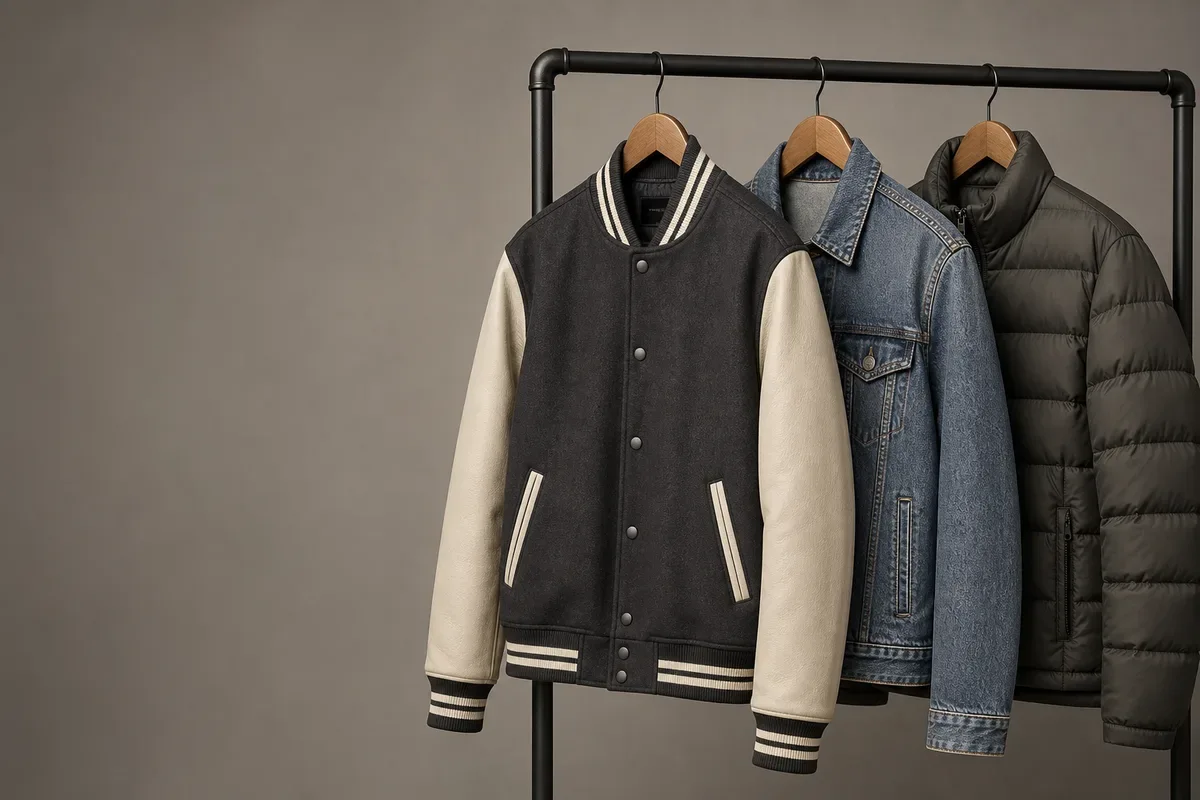 Custom Jacket Styles Compared: Choosing the Right Build for Your Brand
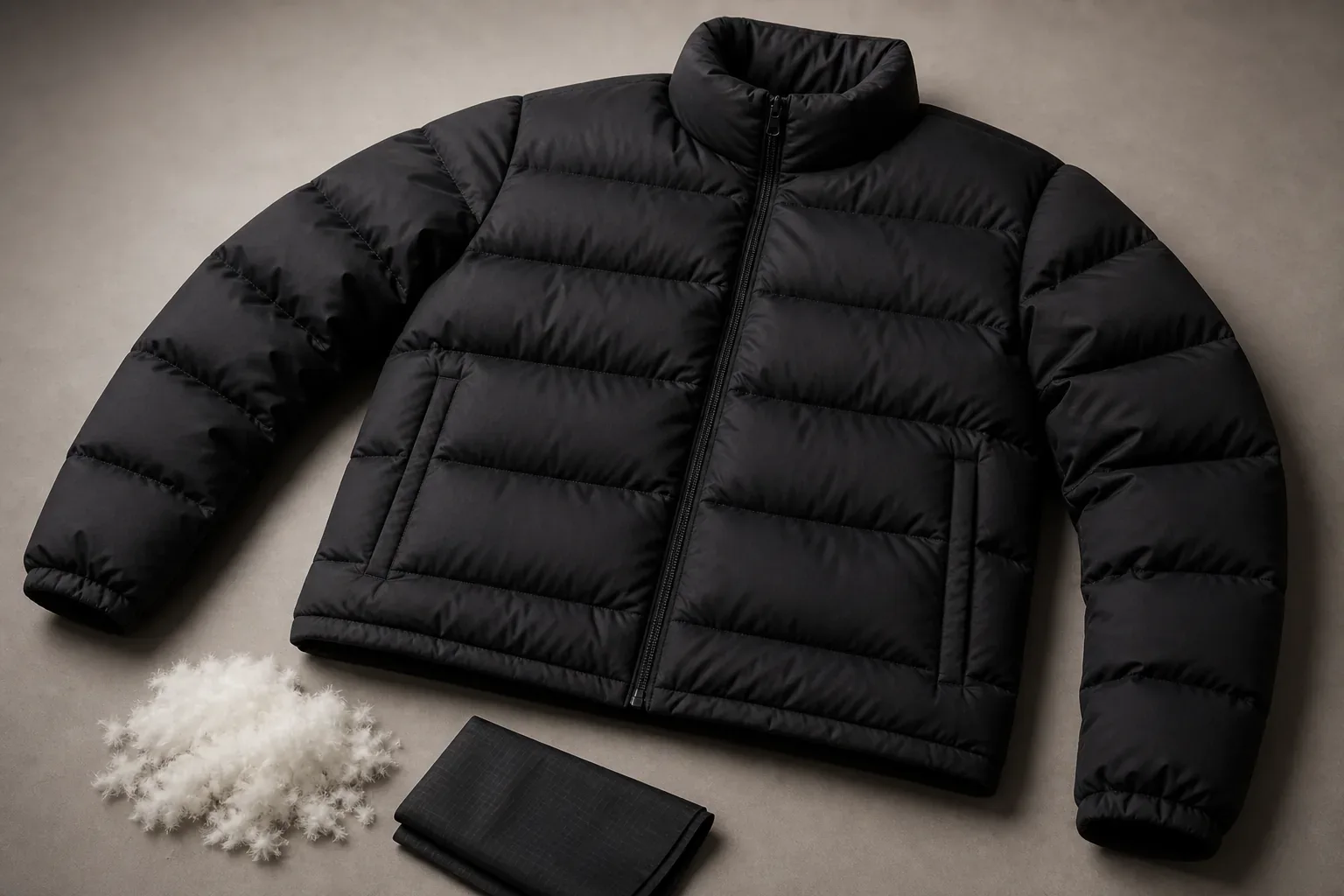 Custom Puffer and Padded Jackets: Fill, Quilting, MOQ and Timeline
 Apparel Bill of Materials: Fields, Versions and Approval Status
 Fabric Swatch Approval Checklist for Clothing Brands