Denim Weight Explained: Oz, GSM and Choosing the Right Cloth for Your Jeans
Denim ounces measure mass per unit area. They do not by themselves prove thickness, stiffness, hand, drape, stretch, wash response or durability; learn what evidence belongs beside the number.
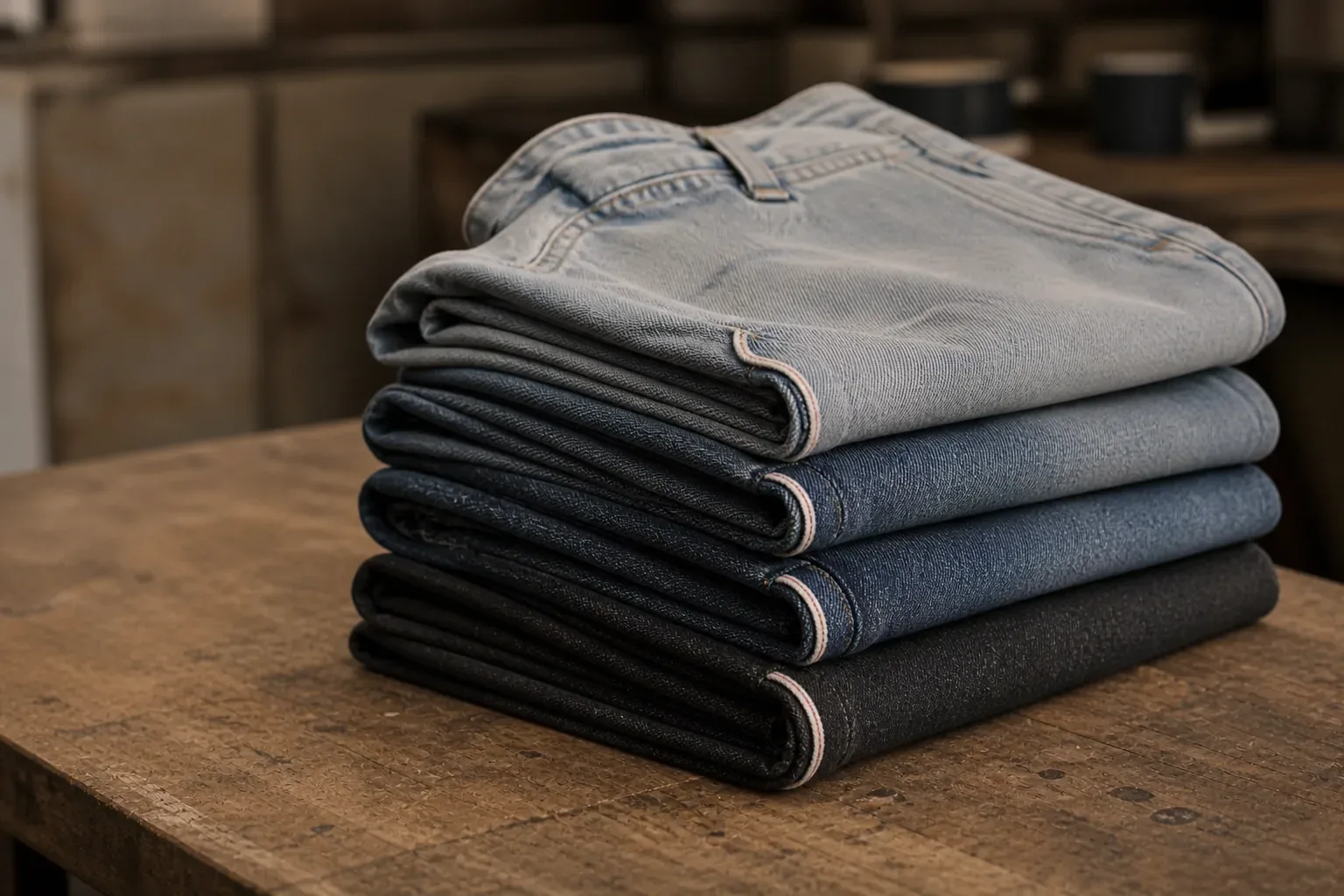
Denim weight is the mass of fabric per unit area, commonly stated as ounces per square yard (oz/yd²) or grams per square metre (g/m², usually written GSM). A 12 oz denim therefore describes area mass. It does not, by itself, prove thickness, stiffness, softness, drape, stretch, wash response, fiber composition or durability.
That boundary makes the number more useful, not less useful. Once the unit, method, sample and material state are recorded, weight becomes a comparable specification field. The buyer can then place separate evidence beside it for the characteristics that shape the finished jean.
What Denim Ounces Actually Measure
In a denim specification, “12 oz” normally means that one square yard of the represented fabric has a mass of 12 ounces. It is a ratio of mass to area, not the weight of a finished pair of jeans and not the mass of a running yard at an unspecified width.
ASTM D3776/D3776M-20(2025) covers mass per unit area of fabric and provides several options for determining it. The existence of different options is a reminder to name the method and specimen basis instead of treating a supplier label, sample-cut result and full-piece calculation as automatically interchangeable.
Keep four values separate in the record:
- Nominal weight: the supplier's or development target, such as 12 oz/yd².
- Observed test result: the value produced from identified specimens under the named method.
- Allowed project range: a buyer-supplier requirement, if one has actually been agreed.
- Finished garment mass: the mass of the complete jean, which also includes consumption, size, thread, trims, labels, pockets and any material added or removed during processing.
A nominal number can select candidates, but approval evidence still needs the material identity, sample scope and required method.
Convert Oz per Square Yard to GSM
The unit conversion is exact enough for practical specification work. The NIST Guide to the SI, Appendix B.9 gives the factor for ounce (avoirdupois) per square yard to kilograms per square metre as 3.390575 × 10⁻². Expressed in grams per square metre:
1 oz/yd² = 33.90575 g/m²
Use these equations:
GSM = oz/yd² × 33.90575
oz/yd² = GSM ÷ 33.90575
Examples, rounded for communication rather than rewritten as new tolerances:
| Stated denim weight | Converted area mass |
|---|---|
| 10 oz/yd² | about 339 GSM |
| 12 oz/yd² | about 407 GSM |
| 13 oz/yd² | about 441 GSM |
| 14 oz/yd² | about 475 GSM |
| 500 GSM | about 14.75 oz/yd² |
Conversion does not add precision. If a mill reports a nominal “12 oz,” write “12 oz/yd² (about 407 GSM),” not “406.86900 GSM.” Retain an unrounded test result in its original record when needed.
Also avoid converting ounces per linear yard as though they were ounces per square yard. A linear-yard value depends on fabric width. Confirm that the source unit includes the area denominator before using the formula.
Once the weight is locked in either unit, the next question is who cuts and sews to it — a custom streetwear sets manufacturer develops fleece and denim sets directly from your target GSM.
The Number Needs a Method, Sample and Material State
An area-mass result represents identified material under stated conditions. Before comparing two certificates or two denim candidates, ask:
- Which supplier article, color, roll or lot did the specimen represent?
- Was the value nominal, calculated or measured, and by which method option?
- What specimen count and sampling locations were used?
- What atmosphere and conditioning route applied?
- Was the fabric loom-state, finished, washed, dried or otherwise processed?
ISO 139:2005 specifies standard atmospheres for conditioning and testing textiles. Its public scope supports recording the conditioning environment when a project uses that method. The point is not to prescribe ISO 139 for every commercial conversation; it is to stop “measured in different states” from being mistaken for a material difference.
Name the state that matches the decision; there is no universal rule that denim weight must always mean “before wash” or “after wash.” If incoming cloth and washed-development states both matter, retain two labeled results.
One cut does not automatically represent every roll. The purchase specification or inspection plan must define sampling and disposition; this guide does not own lot acceptance.
Why Two Denims at the Same Ounce Weight Can Be Different
Area mass is one aggregate value. Different constructions can arrive at the same value through different yarns, yarn counts, densities, weave details, fiber blends and finishes. That means two 12 oz candidates can share approximately the same mass per square yard while differing visibly and mechanically.
Build the material identity beside the number:
- supplier and article code;
- fiber-content evidence required by the project;
- warp and weft description;
- weave or construction identity;
- usable width and selvedge status where relevant;
- stretch or rigid construction route;
- color and finish state;
- roll or lot identity; and
- applicable approval sample or test record.
This article does not own the broader construction and material-family comparison. The denim fabric types guide owns raw versus washed, sanforization, selvedge, dye and weave-family taxonomy. The rigid-versus-stretch denim guide owns the design and approval boundary between those two program routes. Do not use ounces as a substitute for either decision.
Keep Weight Separate From Thickness, Stiffness, Hand and Drape
These properties influence how a buyer experiences denim, but none is another spelling of GSM.
Thickness Is a Separate Measurement
ASTM D1777-26 covers textile-material thickness and defines it through distance between reference plates under a specified pressure. The public scope makes the key distinction clear: thickness needs its own apparatus and pressure condition. A heavier fabric may be thicker in a particular comparison, but area mass alone cannot prove it.
Record thickness with the required method, pressure and specimen basis. Do not convert ounces into millimetres.
Hand Is Multi-Axis Evidence
AATCC EP5-2025 provides guidance for subjective evaluation of fabric hand, including constituent elements and repeatable specimen presentation. A buyer who says “premium hand” may be combining softness, smoothness, fullness, flexibility, warmth or other sensations. One weight number cannot close that brief.
Use the fabric hand-feel specification to translate touch language into anchored comparisons, identified samples and separate evidence. A 12 oz candidate can feel different from another 12 oz candidate without either weight label being wrong.
Stiffness Needs Its Own Test or Approved Reference
ASTM D1388-23 covers fabric stiffness using bending-length and flexural-rigidity approaches. It does not turn area mass into stiffness. Finish, construction and state can change the way a fabric resists bending, so “heavier means stiffer” is a hypothesis to check, not a specification rule.
Drape Is a Garment-System Decision
Drape concerns the way material falls under gravity and interacts with pattern geometry, construction and scale. The fabric drape specification guide owns the drape evidence ladder. For denim development, compare identified cloth under a repeatable presentation, then review the actual garment silhouette at the approved sample stage. Ounces help identify the cloth; they do not predict the complete silhouette by themselves.
What Ounces Do Not Prove About Wash, Stretch or Durability
Wash Response
A denim weight does not promise a fade pattern, shade, softness, dimensional result or damage threshold. The denim washes guide owns the finish-direction decision and sample evidence.
ISO 5077:2007 covers determining dimensional change after an appropriate combination of specified washing and drying procedures. ISO 6330:2021 provides multiple domestic washing and drying procedures and notes in its public description that machine, detergent and dryer parameters can affect results. Together, those scopes reinforce why “after one wash” is incomplete evidence: state the procedure and compare matched identities.
A production garment wash is not automatically duplicated by a domestic textile test. Label each selected test or sample route accurately.
Stretch, Growth and Recovery
Elastane content or the word “stretch” is not encoded in ounces. ASTM D3107-26 covers stretch properties of fabrics woven wholly or partly from stretch yarns, including stretch, growth and recovery. Those results answer a different question from area mass. Keep construction identity and applicable stretch evidence beside the weight.
Durability and Fade Quality
Heavier does not automatically mean longer lasting, stronger or better fading. Wear performance can involve fiber and yarn condition, construction, seams, abrasion location, tear initiation, fit, care and the selected finish. Even a specific laboratory result has a limited claim boundary.
ASTM D4966-22(2026) covers Martindale abrasion resistance and explicitly cautions in its public significance statement that abrasion results should not be relied on alone to predict actual wear behavior or service durability unless there is data showing the relationship for the end use. If one abrasion method cannot make a universal wear-life promise, an area-mass number certainly cannot.
Use separate strength, seam, abrasion, wash and wear evidence when the project requires them. Avoid claims such as “14 oz lasts twice as long” or “heavier denim fades better” unless a defined comparison actually supports that narrow statement.
Compare Denim Candidates With a Matched Evidence Set
Use ounces as one column in a development matrix rather than the headline that erases every other property:
| Evidence field | What to record | What it prevents |
|---|---|---|
| Material identity | Supplier/article, construction, fiber record, color, roll/lot | Comparing unlike fabrics under one nickname |
| Area mass | Nominal target plus measured result, unit, method, sample and state | Treating “12 oz” as self-verifying |
| Thickness | Named method, pressure and result if required | Inferring millimetres from ounces |
| Hand and stiffness | Anchored physical references or named evaluation/test | Treating weight as softness or rigidity |
| Drape and silhouette | Repeatable cloth presentation plus identified garment sample | Predicting fit from GSM alone |
| Stretch/growth/recovery | Construction identity and selected method/results | Treating elastane behavior as a weight effect |
| Wash and dimension | Named wash/dry or sample route, before/after identities | Comparing different exposures as one result |
| Special performance | Project-specific seam, abrasion, tear, colorfastness or care evidence | Turning weight into a durability guarantee |
Keep candidate states aligned. Do not rank a softened, washed swatch against loom-state cloth as though only weight differs. At garment stage, match pattern revision, size, construction, trim and processing where feasible; disclose anything that differs.
A Buyer-Ready Denim Weight Spec
A useful tech-pack or material-card entry can be short:
Material supplier / article:
Construction and fiber-content reference:
Color and roll / lot scope:
Nominal area mass: ___ oz/yd² (about ___ GSM)
Measured area mass method / option:
Specimen count and sampling locations:
Conditioning / test atmosphere:
Material state: loom-state / finished / washed / dried / conditioned / other
Observed result(s) and agreed project range, if applicable:
Thickness method / pressure / result, if required:
Hand, stiffness and drape references:
Stretch / growth / recovery requirement, if applicable:
Wash, dimensional and special-performance evidence:
Approval sample ID, reviewer, date and reopen triggers:
Reopen the material approval when the supplier article, construction, fiber route, finish, roll or lot scope, measurement method, conditioning, material state or intended garment process changes in a way that invalidates the comparison. Do not silently carry a 12 oz approval from one identified denim to a different 12 oz article.
Product Pages Show Use Locations, Not Fabric Evidence
Product pages can anchor a development discussion around a garment type. An acid-washed baggy denim pant can locate wide-leg and wash-direction questions. A distressed vintage-wash jean can locate abrasion and edge-detail zones. A denim jacket-and-trouser set can locate cross-garment continuity questions.
Those pages are visual use-location references only. Their titles, images, displayed specifications or prices do not prove oz/GSM, fiber composition, hand, drape, wash result, material lot, current availability or approval for another order.
Denim Weight Review Checklist
- Confirm the unit is mass per area, not mass per linear yard or garment.
- Separate nominal target, observed result, allowed range and garment mass.
- Record article, construction, color, roll/lot, specimen and material state.
- Name the method, option and conditioning route.
- Compare thickness, hand, stiffness and drape separately.
- Keep stretch, wash and durability claims with their own evidence.
- Align candidate states and preserve unmatched variables.
- Reopen approval when the identity or evidence basis changes.
If you are building a denim program, send Jiashun the intended garment, reference, material state, wash direction and test requirements. We can review fabric candidates and sample sequencing within the project; final material approval remains tied to the agreed specification and identified evidence.
Frequently Asked Questions
What does 12 oz denim actually mean?
It normally means the represented fabric has an area mass of 12 ounces per square yard, about 407 grams per square metre. It does not mean a finished pair of jeans weighs 12 ounces, and it does not by itself define thickness, hand, stretch or durability.
How do I convert denim ounces to GSM?
Multiply oz/yd² by 33.90575. To convert GSM back to oz/yd², divide by 33.90575. Confirm that the original unit is per square yard before converting, and do not report more precision than the source measurement supports.
Can two 12 oz denims feel different?
Yes. They can use different yarns, densities, constructions, fiber blends and finishes while sharing similar area mass. Compare material identity, conditioned state and anchored hand evidence instead of treating the weight label as a touch specification.
Does heavier denim always mean thicker or stiffer?
No. Thickness is measured under a specified pressure, and stiffness has its own evaluation methods. Weight, thickness and stiffness may move together in a specific controlled comparison, but ounces alone cannot establish either property.
Does heavier denim last longer or fade better?
Not as a universal rule. Durability and fade involve construction, yarn and fiber condition, finish, seams, wear location, care and end use. Use the required abrasion, strength, wash, color and wear evidence rather than turning area mass into a service-life or fade guarantee.
Should denim weight be recorded before or after washing?
Record the state that belongs to the purchasing or approval decision. Incoming finished cloth and a washed development state can both matter, but they should be reported as separate identified results with their methods and conditions. “12 oz” without a state and material identity is incomplete.
References
- National Institute of Standards and Technology, NIST Guide to the SI, Appendix B.9: Factors for units listed by kind of quantity or field of science — official conversion factor used for oz/yd² to kg/m² and GSM; retrieved 2026-08-22.
- ASTM International, ASTM D3776/D3776M-20(2025), Standard Test Methods for Mass Per Unit Area (Weight) of Fabric — official public scope for determining fabric mass per unit area; retrieved 2026-08-22.
- International Organization for Standardization, ISO 139:2005, Textiles — Standard atmospheres for conditioning and testing — official public scope for textile conditioning and testing atmospheres; retrieved 2026-08-22.
- ASTM International, ASTM D1777-26, Standard Test Method for Thickness of Textile Materials — official public scope used to separate thickness under specified pressure from area mass; retrieved 2026-08-22.
- American Association of Textile Chemists and Colorists, AATCC EP5-2025, Evaluation Procedure for Fabric Hand Value — official public scope for constituent hand elements and repeatable subjective evaluation; retrieved 2026-08-22.
- ASTM International, ASTM D1388-23, Standard Test Methods for Stiffness of Fabrics — official public scope for bending-length and flexural-rigidity approaches; retrieved 2026-08-22.
- International Organization for Standardization, ISO 5077:2007, Textiles — Determination of dimensional change in washing and drying — official public scope for dimensional-change determination after specified washing and drying; retrieved 2026-08-22.
- International Organization for Standardization, ISO 6330:2021, Textiles — Domestic washing and drying procedures for textile testing — official public scope for multiple washing/drying procedures and parameter comparability; retrieved 2026-08-22.
- ASTM International, ASTM D3107-26, Standard Test Methods for Stretch Properties of Fabrics Woven from Stretch Yarns — official public scope used to separate stretch, growth and recovery evidence from area mass; retrieved 2026-08-22.
- ASTM International, ASTM D4966-22(2026), Standard Test Method for Abrasion Resistance of Textile Fabrics (Martindale Abrasion Tester Method) — official public scope and limitation on using abrasion results alone to predict actual wear or service durability; retrieved 2026-08-22.
Related guides
 Fabric Handfeel Specification: Turning "Soft" Into an Approvable Brief
 Fabric Drape for Apparel: How to Specify, Compare and Approve It
 Rigid vs Stretch Denim: What Brands Should Specify
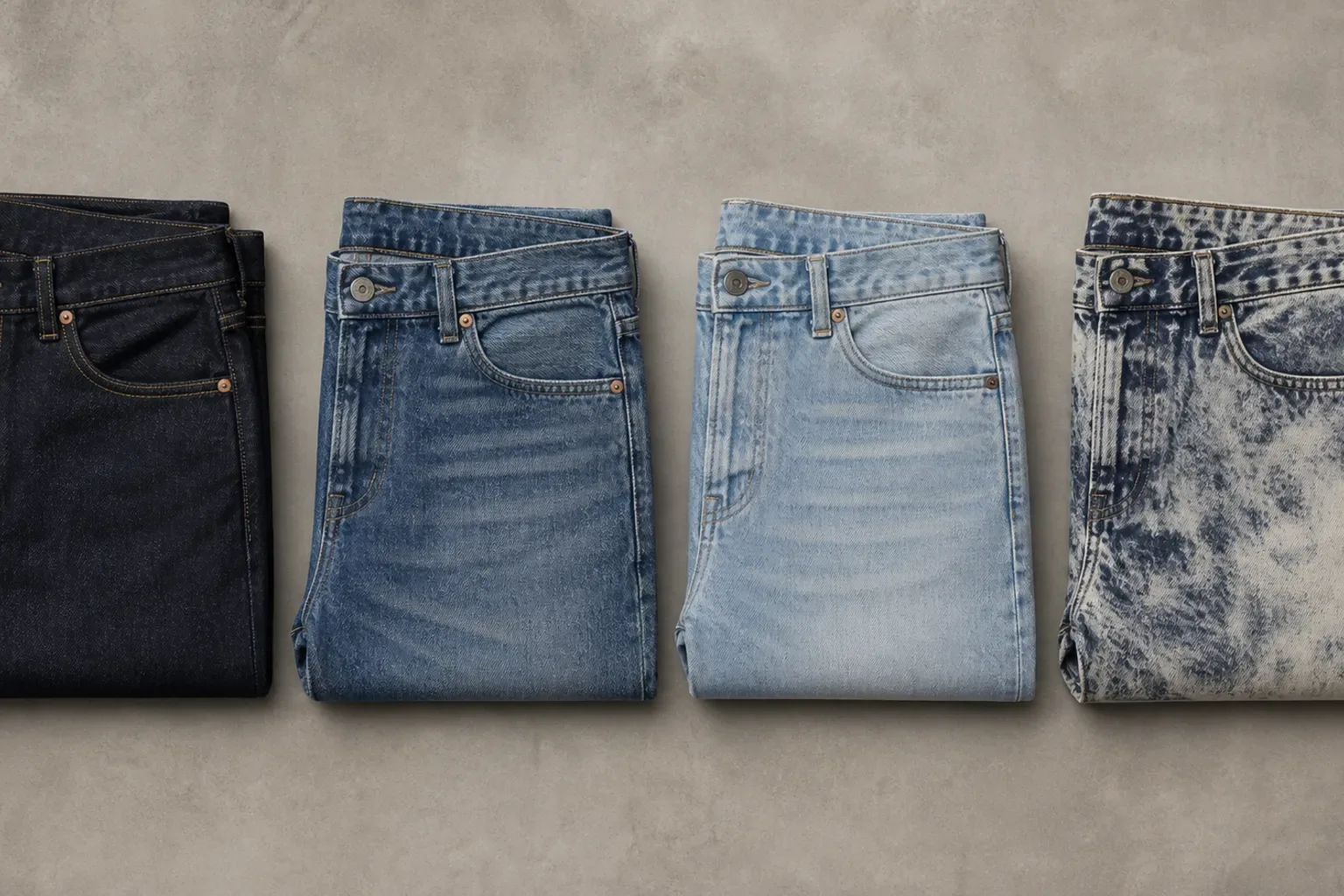 Denim Washes Explained: Stone, Enzyme, Acid and Sun-Fade — and How to Approve Them
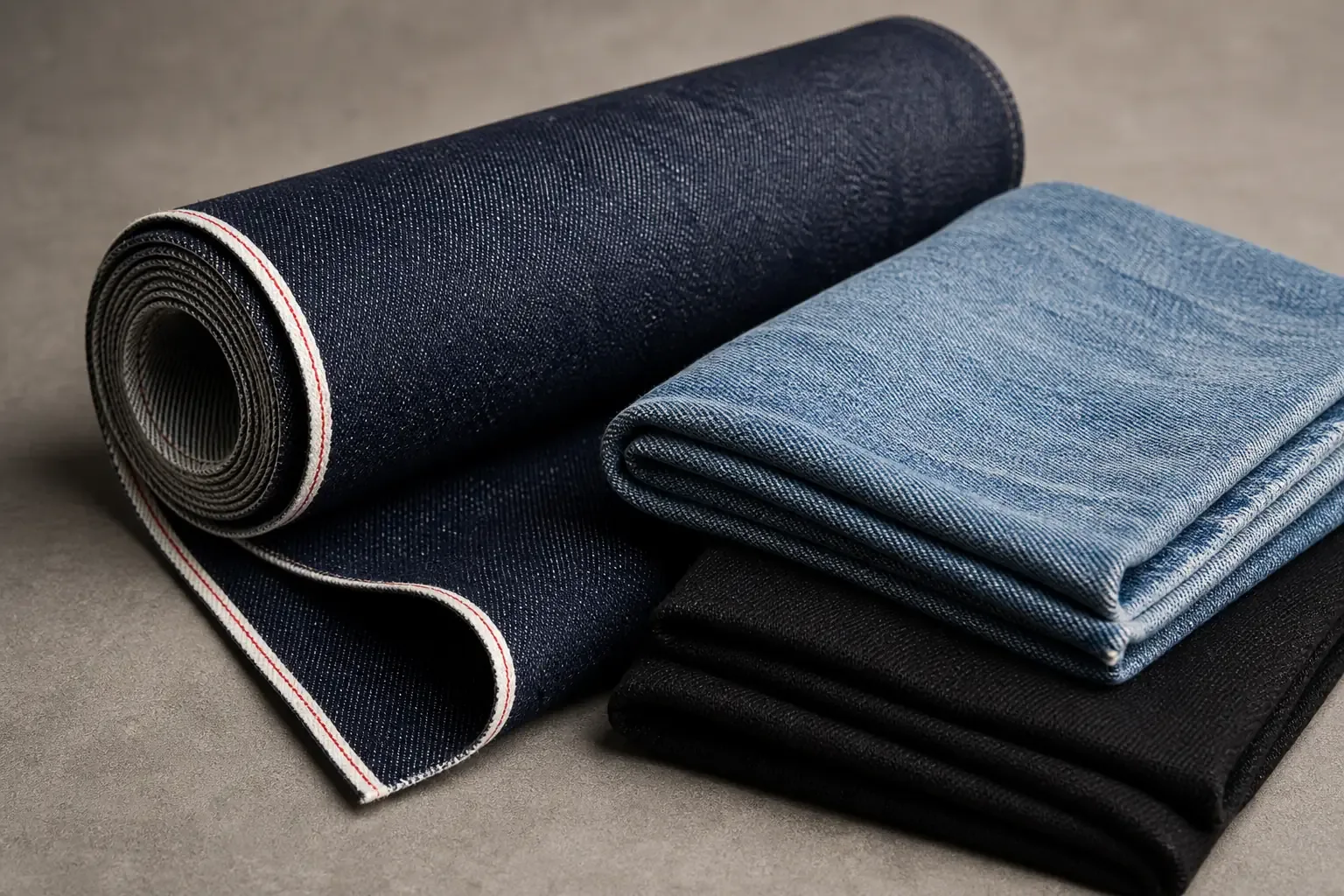 Types of Denim Fabric: A Factory Guide to Reading the Cloth