Types of Denim Fabric: A Factory Guide to Reading the Cloth
Every denim is one cloth with five decisions layered on it: raw or washed, sanforized or unsanforized, selvedge or wide-loom, rigid or stretch, and the dye route. A factory guide to the types of denim fabric and what each choice changes on the cutting table.
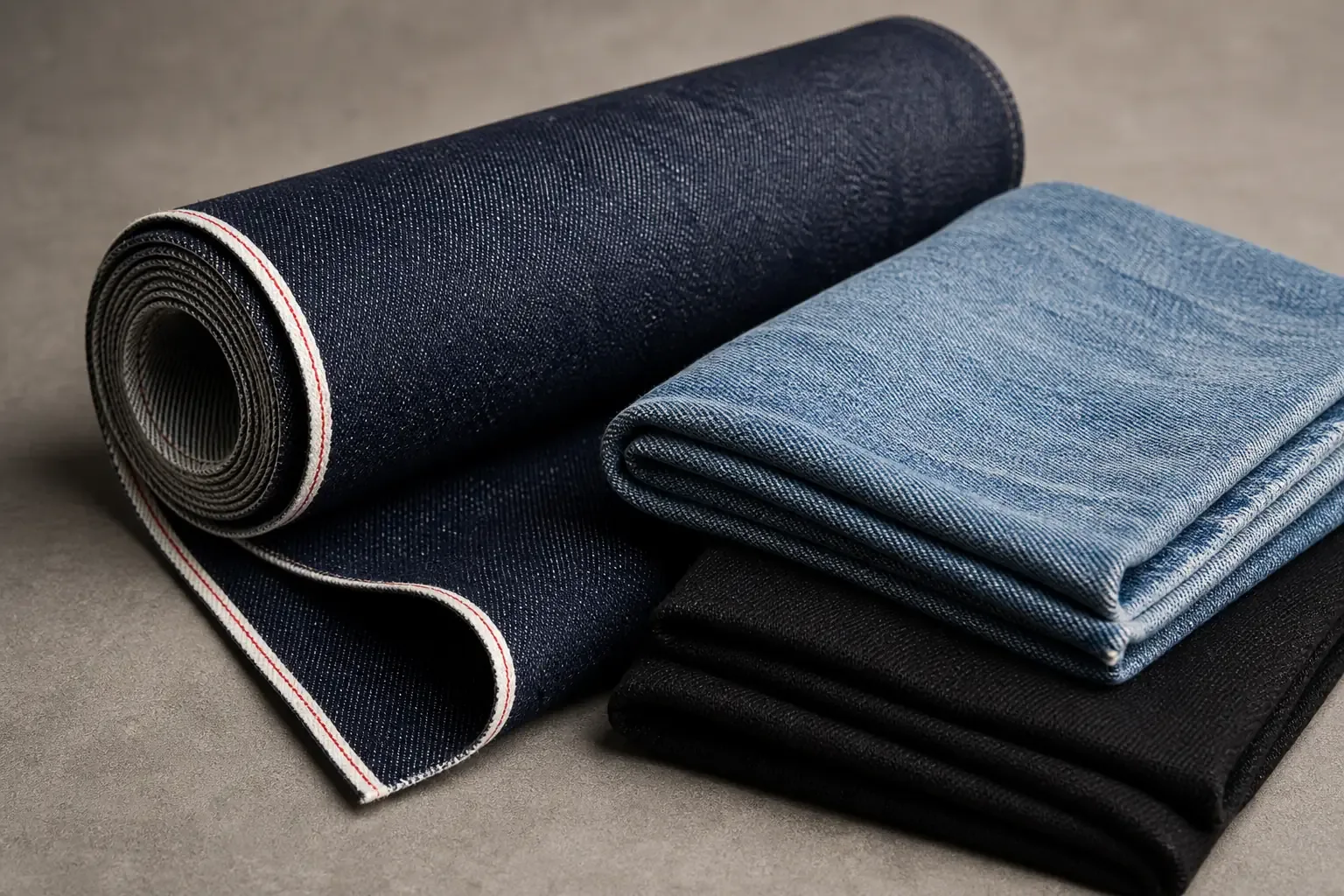
Every type of denim is the same fabric underneath: a warp-faced cotton twill, classically woven from an indigo-dyed warp and an undyed weft, which is why jeans are blue on the face and pale on the reverse. The types come from five decisions layered onto that one construction. Finishing state: raw or washed. Shrinkage control: sanforized or unsanforized. The loom: selvedge or wide. The yarn: rigid or stretch. The dye: indigo, black, colored or overdyed. Weight is a dial that runs through all five and has its own guide. Read a denim name as a position on each axis and marketing phrases like “Japanese selvedge” or “comfort stretch” resolve into spec lines a mill can quote. We cut and sew denim at our factory in Humen, Dongguan; this taxonomy is what we translate customer briefs into.
| Axis | The options | What it decides |
|---|---|---|
| Finishing state | Raw vs washed | Whether character comes from the wearer or the wash house |
| Shrinkage control | Sanforized vs unsanforized | Who absorbs the shrinkage: the mill, the factory or the customer |
| Loom | Selvedge vs wide-loom | The edge, the roll width, weaving speed and price |
| Yarn | Rigid vs stretch (plus ring-spun vs open-end) | Pattern, hem construction, recovery and hand |
| Dye | Indigo, black, colored, overdyed, ecru | Which wash effects are physically possible |
If the buyer's reference turns on the visible diagonal itself, use the separate right-hand, left-hand and broken twill denim guide. This page keeps denim-family taxonomy; the twill-direction guide keeps face direction and approval evidence.
Raw vs washed: the finishing split
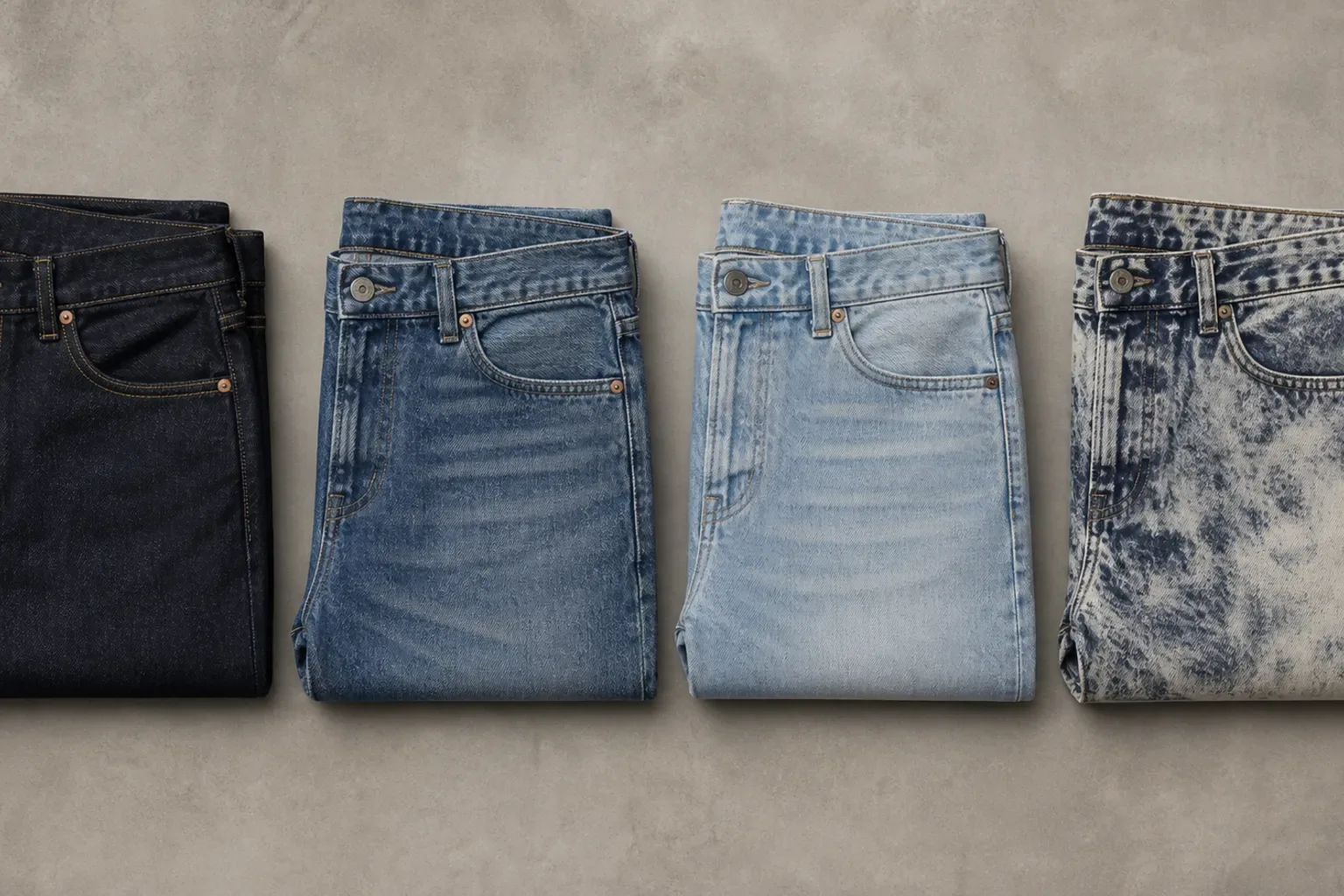
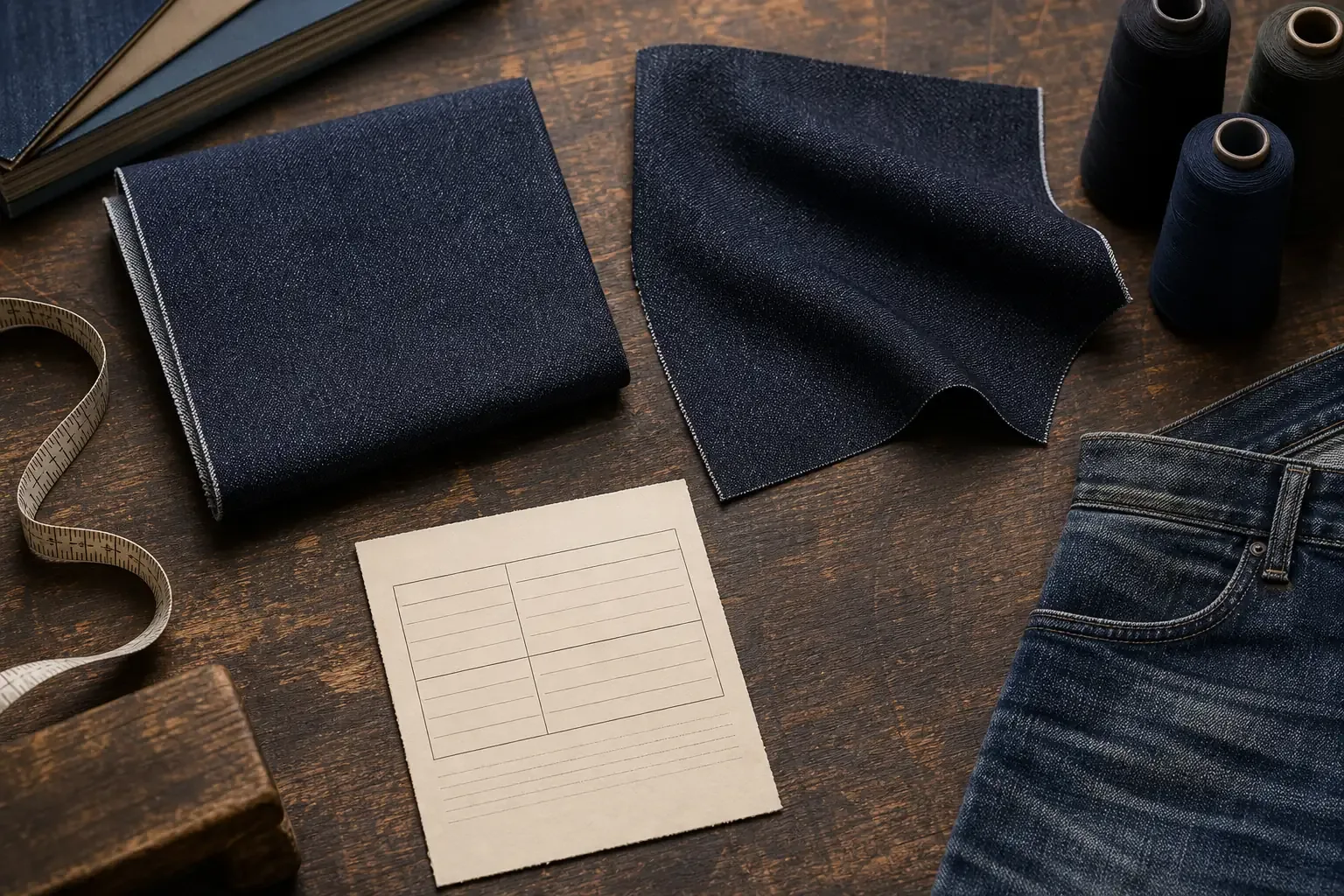
Raw denim (dry denim) goes into the garment exactly as it left the mill: never garment-washed, deep uniform indigo, stiff with the warp size still in the cloth, and prone to rubbing off blue while new. Its character arrives later, because the surface dye wears away wherever the owner creases it; the fades are earned one wearer at a time. Washed denim, as a fabric type, is usually the same cloth pointed at a different process: the garment is sewn oversized and then stone washed, enzyme washed or otherwise finished, so the character is designed and repeatable. The finish vocabulary lives in our denim washes guide; the fabric decision is simply which route the cloth is being bought for.
One naming correction: buyers often say “rigid” when they mean raw. Rigid properly describes yarn content (no stretch fiber, covered below); raw describes finishing state. A stretch denim can be sold raw, and most rigid denim gets washed.
The factory note: a raw program is not a wash program minus the wash. The customer's first soak at home does what our wash house would have done, only without control. So we agree shrinkage on the sample: the tech pack names whether measurements describe the garment raw off the line or after one rinse, and the sample is signed against that state before bulk cutting.
Sanforized vs unsanforized: who absorbs the shrinkage
Sanforization is a mechanical finishing step at the mill: the cloth is compacted against a rubber belt so most of its shrinkage is taken out before it is ever cut. Sanforized denim therefore holds close to its cut dimensions through washing. Unsanforized denim (often marketed as “loomstate” and sold at retail as “shrink-to-fit”) skips the step: it shrinks markedly on its first hot soak and keeps settling over the next few washes. That is standard textile behavior; heritage raw programs choose it deliberately for the denser, slightly livelier surface the first soak produces. You cannot reliably tell the two apart by hand; it is a spec line to confirm with the mill, along with shrinkage data for the lot.
The factory note: unsanforized cloth changes the cutting table. When we cut it, the marker carries a larger allowance taken from a wash test on the actual lot, and the size chart must name its state, before or after first soak, because the same garment honestly measures as two different sizes. Sanforized denim is the default for a reason: it is the version where the factory, not the customer, absorbs the dimensional risk.
Selvedge vs wide-loom: what the edge tells you
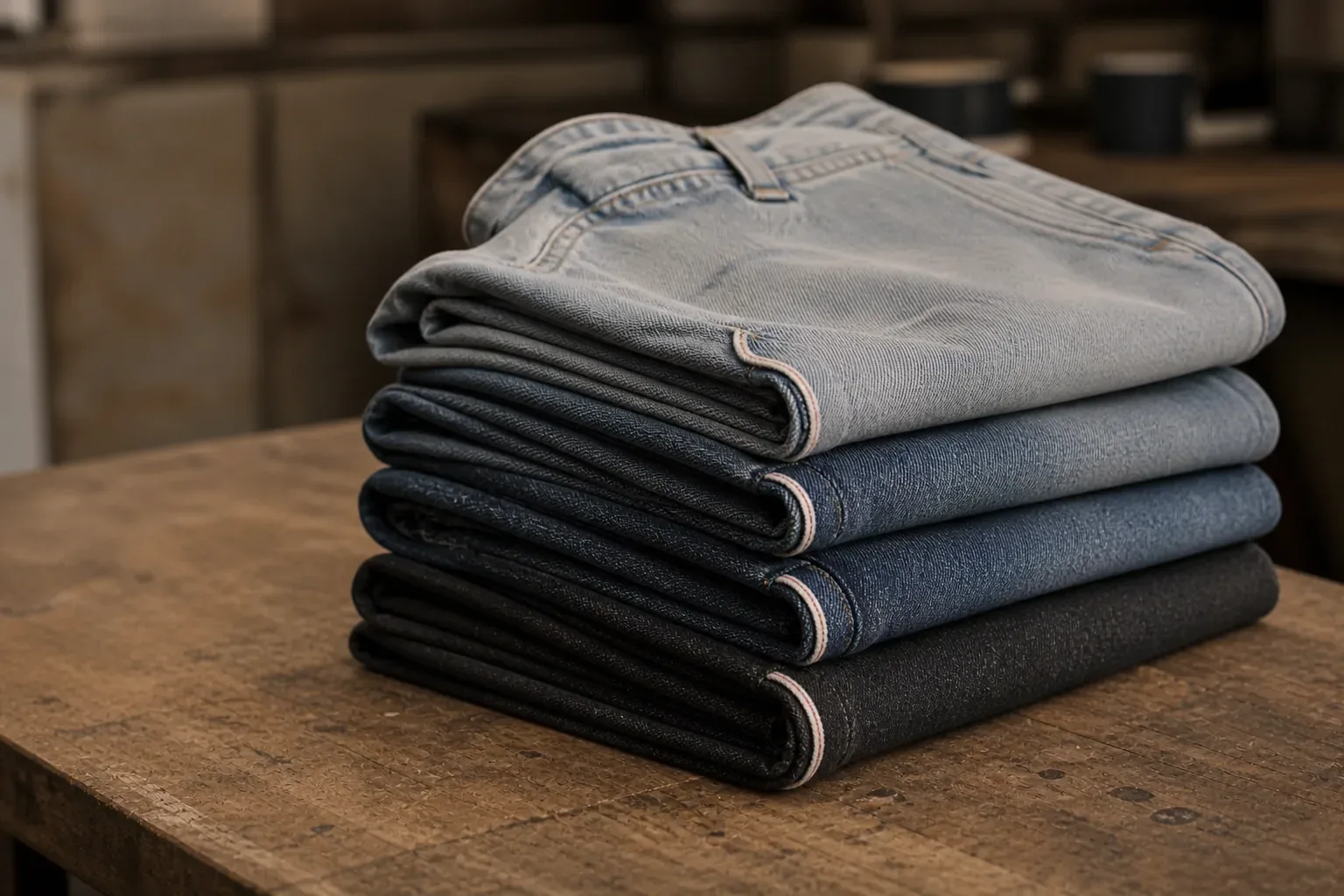
Selvedge denim (from “self-edge”) is woven on a shuttle loom: one continuous weft yarn travels back and forth, so the fabric edge comes off the loom already finished and cannot fray, usually with a colored ID yarn woven in. Wide-loom denim, the modern default, is woven on shuttleless looms that carry the weft across and cut it every pick, leaving a fringed edge that gets trimmed away or overlocked inside the garment.
Why selvedge costs more is arithmetic, not mystique: shuttle looms are slow, narrow and increasingly rare, so there is less cloth per hour, fewer pattern pieces per meter of the narrower roll, and a scarcity premium on machines few mills still run.
When should a brand care? Selvedge only pays if the garment is built to show it: the outseam laid along the fabric edge, finished plain, and displayed at a cuff turn-up. That suits raw, rigid heritage programs. On a washed streetwear jean with an overlocked outseam and a hem that never turns up, the customer never sees the edge, and the money is better spent on weight or wash development.
One adjacent axis usually gets smuggled into the selvedge conversation: spinning. Ring-spun yarn is slower to produce and gives the textured, character-rich surface associated with vintage denim; open-end (rotor-spun) yarn is faster, cheaper, and flatter and more uniform in character (the yarn story continues in our ring-spun cotton guide). Shuttle-loom denim is typically ring-spun, which is much of what people are actually feeling when they praise selvedge, but each is its own spec line, and wide-loom ring-spun denim is a perfectly ordinary thing to buy.
The factory note: showing the selvedge ID means the outseam must own the roll edge, which constrains both the marker and the seam construction. Decide it before pattern making.
Rigid vs stretch: what's in the weft
Rigid denim contains no elastic fiber; movement comes from pattern ease and the cloth breaking in. Stretch denim adds an elastane (spandex) component, most commonly a small share core-spun inside a cotton-covered weft yarn, so the give runs across the leg rather than along it. “Comfort stretch” is the low-elastane end: enough give to soften a slim block without changing how the cloth looks. Higher-stretch constructions exist for genuinely close fits.
Two honest cautions, both unpacked in our rigid vs stretch denim guide. First, elastane percentage describes identity while actual extension, growth in wear and recovery depend on yarn construction, weave density and finishing, so we spec measured behavior. Second, the stretch system is affected by wet processing, which is one more reason fit approval happens on a washed sample. When 100% cotton is a technical requirement and when a blend serves the design better is covered in our fiber content guide.
The factory note: stretch changes construction, not just fit. The pattern is drafted to the measured stretch of the actual cloth rather than reused from a rigid block. Hems and topstitched seams get their own feed and tension settings, because stretch denim sewn under tension relaxes after the needle and comes off the machine wavy. On our line, moving a program from rigid to stretch denim triggers a new fit sample.
Indigo, black, colored, overdyed: the dye axis
Classic indigo denim is ring-dyed: the warp yarn takes indigo only in a shell around a white core, which is the entire mechanical basis of fading and of every wash effect on the menu. The wash chemistry guide covers why. Everything else on this axis trades some of that fade behavior for color.
Black denim commonly runs a sulfur-dyed warp over the same pale weft and fades toward grey rather than pale blue. Colored denim is usually piece-dyed: the woven fabric, often ecru, is dyed as a whole, so color penetrates evenly, there is no white core to expose, and the cloth washes down with little of indigo's contrast. Overdyed denim layers a second dye bath over an already-dyed cloth or finished garment: black over indigo for extra depth, or a tint that casts a wash warm or grey; at garment level it is part of our washing and garment-dye program. Ecru denim is simply undyed, the natural oatmeal color of the cotton itself.
The factory note: the dye route decides which finishes are physically available. Our wash menu assumes a ring-dyed warp; run a stone wash on piece-dyed colored denim and the hand softens but the color barely moves. A colored program that wants fade contrast has to plan it in the dye method, not ask for it in the wash house.
Weight cuts across every type
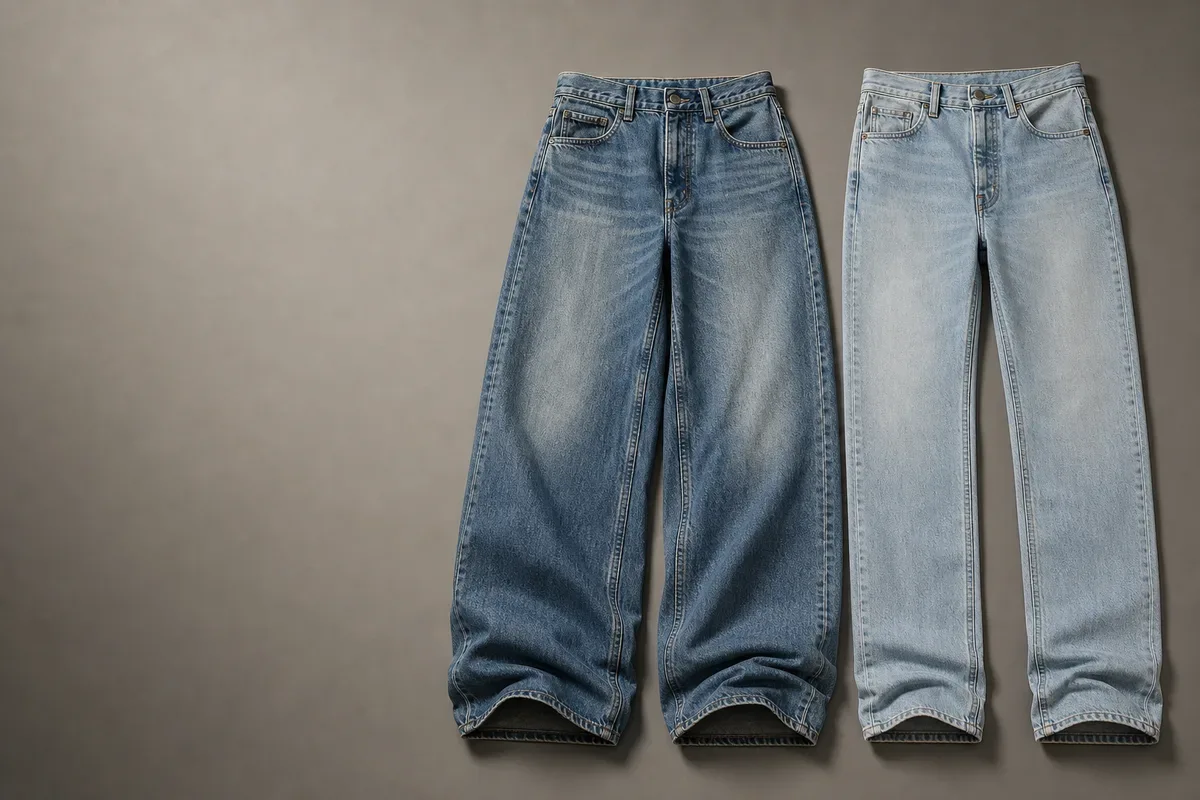
Every position above comes in weights from shirting-light to workwear-heavy, and weight moves drape, wash contrast, silhouette and cost more than any other single line on the spec. Ounces, the gsm conversion and the bands most programs actually buy stay in the denim weight guide; how cloth body carries the baggy, wide-leg and stacked silhouettes is mapped in the fits and cuts guide. For the taxonomy here, one sentence carries it: weight is not a type of denim, it is a dial that every type has.
How to spec denim fabric in one line
A usable fabric brief names a position on each axis at once: “midweight sanforized wide-loom rigid indigo denim, garment wash to follow”, or “heavyweight unsanforized selvedge, raw program, no stretch”. The quote that comes back is for the cloth you meant. If you would rather start from a reference garment or photo, send it to our custom denim team and we translate it into these axes at design review. Production starts from 50 pieces, with the final minimum confirmed at design review. Simple samples in the agreed state typically take 10-18 working days after project details are confirmed; complex washes, styles or processes take longer.
FAQ
How many types of denim are there?
There is no fixed number, because denim names multiply by picking one trait at a time. Counting the axes covers the field instead: finishing state (raw or washed), shrinkage control (sanforized or unsanforized), loom (selvedge or wide), yarn (rigid or stretch) and dye (indigo, black, colored, overdyed or ecru), with weight as a dial across all of them. Any commercial denim is one position on each axis, which is why a single fabric can be raw, selvedge, rigid and heavyweight at the same time.
Which type of denim is best?
“Best” only exists relative to the program. A washed streetwear jean usually wants sanforized wide-loom cloth, rigid or comfort stretch, because the wash house supplies the character; a heritage fade program points toward raw, rigid, often selvedge cloth where the wearer supplies it; a close fit adds measured stretch. The failure mode is mixing positions that fight each other, like paying for selvedge on a design that overlocks the outseam; “best” in production means coherence with the design intent, confirmed on a physical sample.
What is high quality denim called?
The word buyers reach for is “selvedge”, and it is doing shorthand work. Strictly, selvedge names the self-finished edge of shuttle-loom fabric, but because shuttle weaving is slow, narrow and usually paired with ring-spun yarn, the word came to imply the whole heritage package. It signals cost and intent rather than guaranteeing quality; a well-specced wide-loom denim can outlast a carelessly made selvedge one, so a serious spec writes the actual lines: fiber, yarn, weight, loom, shrinkage control and finishing state.