Knit vs Woven Fabric: Fit, Construction and Sampling
Knit and woven fabrics are built differently, so they stretch, drape, cut and recover differently. Compare the two structures and learn what a brand should specify before sampling.
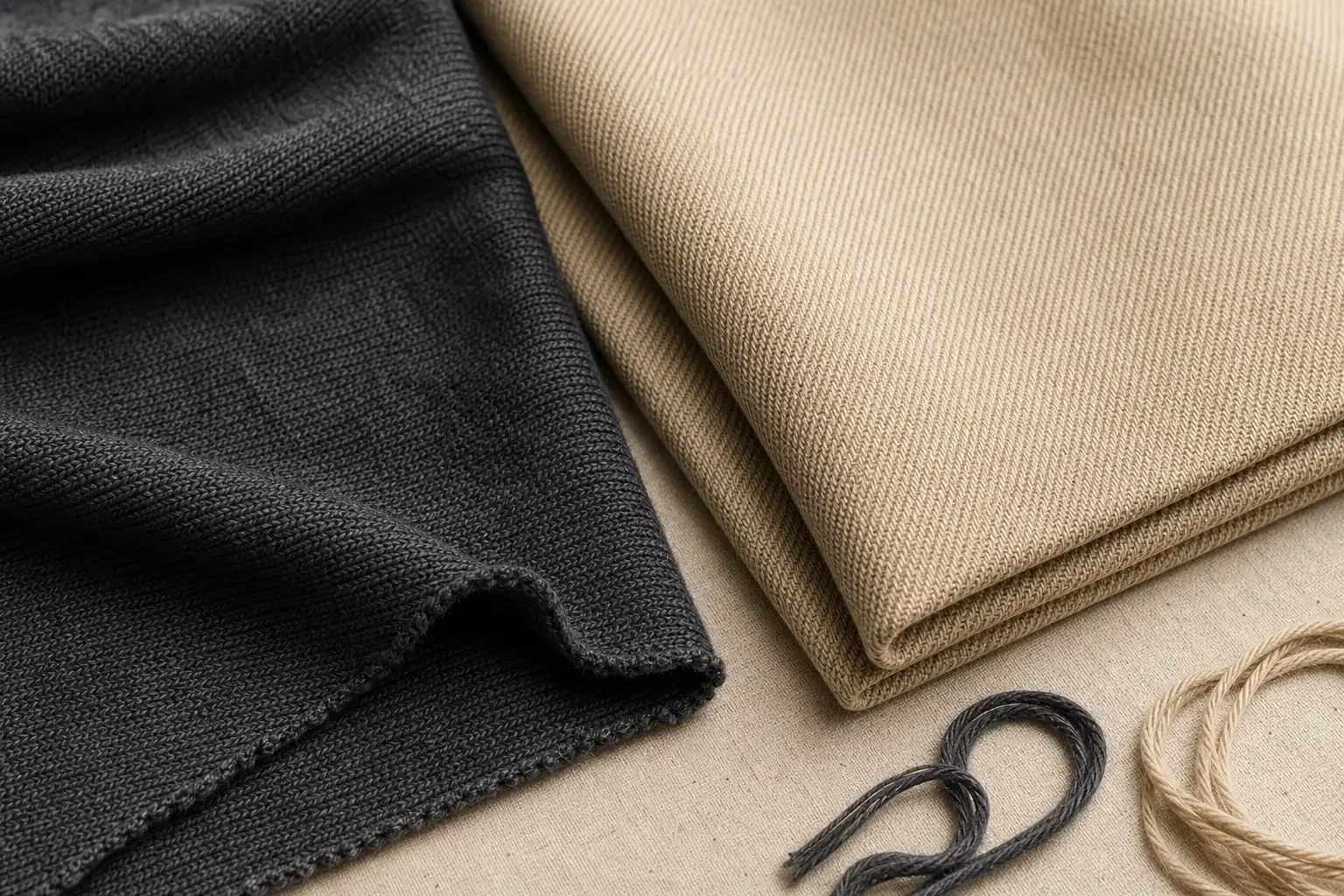
The difference between knit and woven fabric starts with yarn geometry: a knit is built from intermeshed loops, while a woven fabric interlaces lengthwise warp yarns with crosswise weft yarns. That structure affects stretch, recovery, drape, edge behavior, pattern shape, seams and wash results. It does not make either family automatically better.
For an apparel brand, the useful question is: “Which exact construction gives this garment the intended silhouette, movement and finish?” A fitted tee, a boxy hoodie, a crisp shirt and rigid jeans solve different problems. This guide turns that distinction into decisions for a tech pack and sample.
What Is the Structural Difference Between Knit and Woven Fabric?
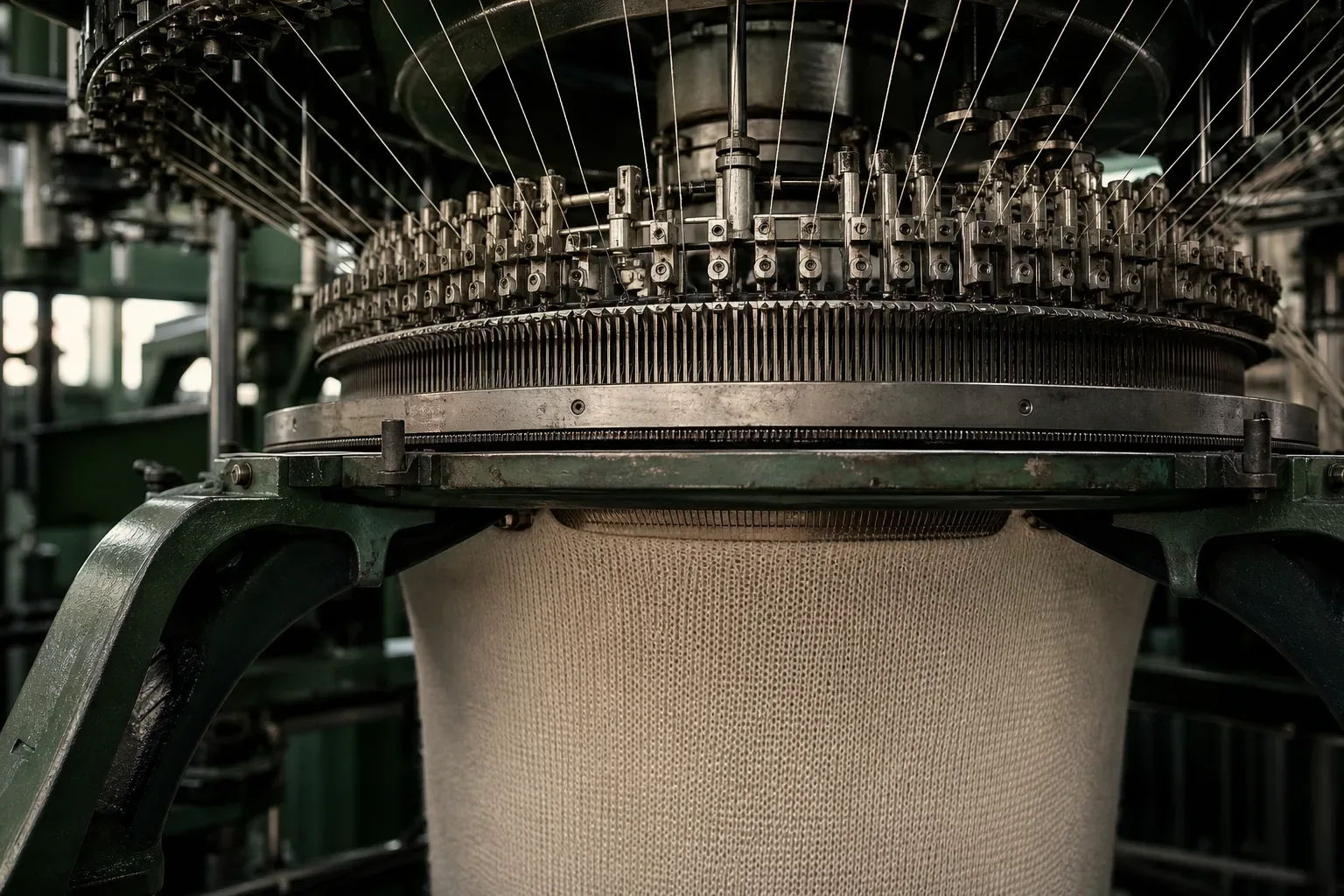
In a knit, yarn forms connected loops. The vertical columns are wales and the horizontal rows are courses. Loops can change shape when pulled, then move back toward their earlier geometry when released. This is why many knits conform to the body without elastane. Single jersey, rib, interlock and french terry are all knits, but they behave differently. Our circular knitting guide shows how a common weft-knit loop is formed.
Within the knit family, the single-jersey-versus-interlock guide owns that narrow comparison; this page retains the broader loop-versus-interlacing decision.
In a woven fabric, two yarn systems cross at planned intervals. Warp runs along the roll; weft crosses it. Plain weave, twill and satin change the over-under sequence. Length and width define the grain, while the diagonal bias can behave differently. The interlacing plan changes stability, drape and surface.
Why Fiber Content Does Not Tell You the Construction
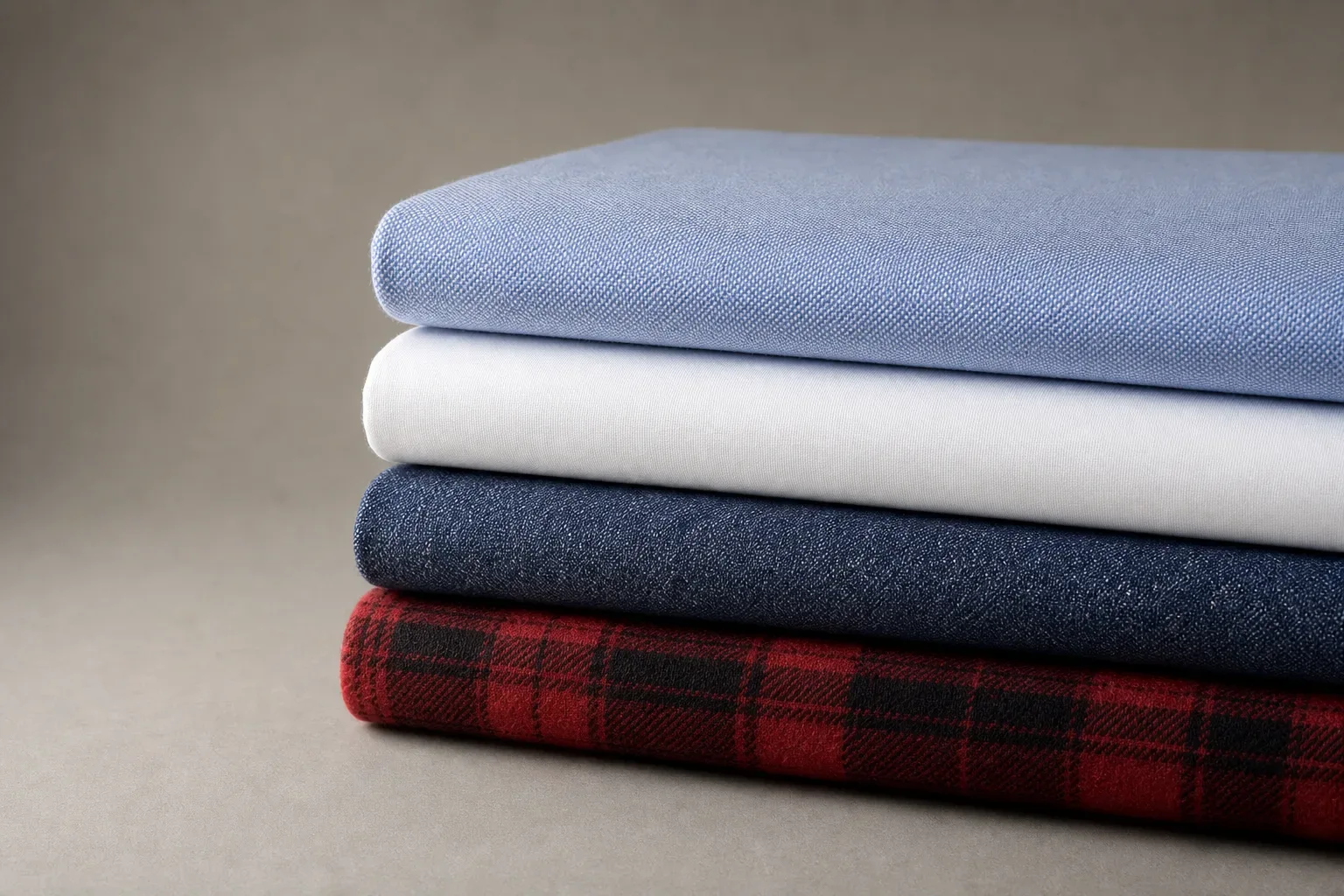
“100% cotton” identifies fiber content, not fabric construction. Cotton yarn can become cotton jersey, cotton rib or cotton french terry through knitting. It can also become cotton poplin, oxford, canvas or denim through weaving. Polyester and wool can likewise appear in either family. A fiber label alone does not tell you GSM, stretch direction, recovery, surface finish or wash response. Within the woven family, the twill vs canvas guide continues this comparison at construction level.
The distinction also prevents a common sourcing error: knit fabric is not a synonym for a supplier's knitwear capability. Here, knit fabric means roll goods made from loops and then cut and sewn. Retail language sometimes uses knitwear broadly, but supplier discussions often use it for sweater-like or fully fashioned garments made directly from yarn. That is a separate product category and capability question; calling jersey “knitwear” can send a brief to the wrong supplier.
A useful fabric line therefore needs more than fiber. “Cotton fabric” is incomplete. “Cotton single jersey, target GSM, selected finish and approved color” is identifiable. Our french terry guide shows why naming the loop-back changes a hoodie brief.
How Can You Tell Knit and Woven Fabric Apart?
Start with structure, then confirm with behavior. Under a loupe or a phone macro lens, a common jersey shows V-shaped loops on its technical face. A woven shows yarns crossing over and under each other. On an unfinished edge, many wovens release separate warp or weft yarns, while some knits curl or unravel by courses. A woven also has an identifiable grain and often a selvage along the roll edge.
Next, pull gently in the length, width and bias directions, then release. Many weft knits extend more across the width, while many non-stretch wovens resist along warp and weft but move on the bias. Use this as supporting evidence, not a pass-or-fail trick.
Two exceptions defeat the usual shortcut. A stable knit may show little usable stretch because of its construction, density, backing or finish. A stretch woven may extend because it uses elastic yarns or an engineered structure. ASTM D2594/D2594M covers applicable low-power fabrics that exhibit high stretch and good recovery; ASTM D3107 covers applicable woven fabrics with stretch yarns within its stated range. Neither is a universal knit-or-woven identification test. Select a method for the actual material and use, then record direction, load or extension, conditions and recovery rather than write “stretchy.”
When buying online, ask for the construction name, close-up face and back images, and a swatch. “Soft,” “premium” and “cotton” cannot identify the structure.
How Should Stretch, Growth and Recovery Be Compared?
Stretch behavior needs its own record because knit versus woven is not a pass/fail test for mobility. A stable knit can move less than a stretch woven, and two fabrics from the same construction family can return to shape differently. Record what happens under a defined procedure before using the result to set pattern ease or approve fit.
Stretch, growth and recovery are different results
Use the terms separately:
- Stretch describes extension while a specified force or extension procedure is applied. It is not the same as elongation at break.
- Growth describes residual enlargement after the applied stress has been removed and the specimen has been allowed to rest under the stated procedure.
- Recovery describes movement back toward the original dimension over a defined interval. A fabric can extend substantially and still recover poorly; another can show lower extension but retain its shape more consistently.
That distinction matters on a garment. Easy extension may help a sleeve or fitted body move, but residual growth can leave a neckline, elbow, knee or hem larger than intended. “Two-way stretch,” “four-way stretch,” “comfort stretch” and “good recovery” are useful commercial descriptions only when the supplier connects them to direction, procedure and results.
Do not compare percentages copied from unrelated reports. A number can change with specimen direction, initial gauge length, applied load or extension, cycles, hold time, recovery interval, conditioning, fabric state and calculation. A hand-pulled swatch can screen a material direction; it is not a substitute for a named method when a measured requirement controls approval.
Select a method for the material and decision
The standard number is part of the result, not a decoration added afterward:
| Source | Public scope relevant to apparel | Boundary the buyer should retain |
|---|---|---|
| ASTM D2594/D2594M-21 | Stretch and growth procedures for fabrics that exhibit high stretch and good recovery from low tension; the scope notes that it can be used for knit fabric | It is not a universal knit test, and ASTM does not recommend it as a commercial-shipment acceptance test because between-laboratory precision is known to be poor |
| ASTM D3107-26 | Stretch, growth and recovery of applicable woven fabrics made wholly or partly with stretch yarns after specified tension and extension | It is intended for the range stated in the method, is not breaking elongation, and is not recommended as a stand-alone commercial-shipment acceptance test |
| ISO 20932-1:2018 | Straight-strip or loop methods for elasticity and related properties of fabrics, excluding narrow fabrics | The selected procedure and current amendment still need to be identified; the standard title alone is not a test result |
| ASTM D1776/D1776M-20(2024) | Conditioning and preconditioning when the chosen textile method requires them | It does not measure stretch by itself and does not authorize one universal waiting condition for every fabric |
These are method families, not a specification for every style. A laboratory or qualified technical party should confirm applicability and the exact procedure. Narrow elastics, waistband systems and support fabrics can require different methods and acceptance logic; they should not be folded into a general body-fabric comparison.
Direction remains explicit. For a common weft knit, record course and wale directions or the corresponding length and width identification used by the report. For a woven, record warp and filling directions. Test only one direction when the applicable method and actual construction justify it; do not relabel one directional result as “four-way.”
Build a comparable stretch-and-recovery record
A useful report or supplier record lets another reviewer understand what was tested and connect it to the garment:
| Record field | Why it matters |
|---|---|
| Fabric identity | Supplier/article code, declared composition, construction, color, finish and lot or submission reference prevent results from floating away from the tested material |
| Material state | Unwashed, finished, relaxed, laundered or otherwise treated specimens can answer different questions |
| Method and edition | Defines the procedure family; include the selected option or agreed modification rather than listing only “ASTM tested” |
| Specimen direction | Separates wale/course or length/width behavior and prevents one direction from being generalized |
| Preparation and conditioning | Shows the relaxation, preconditioning or conditioning actually required and used |
| Applied procedure | Records load or extension, cycles, hold time and other controlling conditions called for by the selected route |
| Recovery interval | Makes an immediate reading distinguishable from a later one |
| Results and units | Keeps stretch, growth and recovery as separate reported outputs with individual results or averages where required |
| Acceptance rule | States the brand requirement and disposition; the method itself does not create a universal pass tolerance |
| Report and sample link | Connects the evidence to the laboratory or responsible party, fabric submission, pattern revision and garment sample |
If two laboratories produce materially different results, do not average them casually. Both D2594 and D3107 flag between-laboratory precision limitations and describe comparative work when bias matters. For a repeat program, keep the agreed laboratory, procedure and material state consistent where practical, or document how a change will be interpreted.
Connect the fabric result to pattern and garment evidence
A fabric number does not approve the finished garment. Use it to control the material direction and pattern decision, then verify the assembled result:
- Identify the fabric. Lock the article, construction, finish and direction represented by the report and retained swatch.
- Select the block deliberately. Record how measured movement informs ease, openings and shaping; do not move a pattern between rigid woven, stretch woven, stable knit and elastic knit without review.
- Fit the production-intent sample. Check the intended base layer, movement and critical zones such as neckline, cuff, elbow, seat or knee as applicable.
- Allow the garment to rest. Record when measurements and appearance are judged so immediate extension is not confused with residual growth.
- Repeat the relevant review after care or finishing. Keep the care route, fabric report and garment measurement chart linked.
- Compare bulk material with the approved evidence. Confirm identity first, then follow the order's sampling and disposition plan rather than treating one development swatch as proof of every roll.
The relationship differs by garment. A rib neckband needs enough usable movement to assemble and pass over the head, then must return toward the intended neckline shape. A boxy french-terry body may use little body-hugging stretch but still needs stable hems and cuffs. A stretch-woven overshirt or jacket can gain movement in a named direction while still depending on pattern ease, lining and seam construction. Denim-specific composition, growth and finished-jean approval remain with the rigid vs stretch denim guide.
This measurement module does not replace physical material approval. Use the fabric swatch approval checklist to state what a cutting, sample yardage or report actually covers, then use the garment sample to decide fit, appearance and function.
How Does Structure Change Fit, Drape and Silhouette?
Knits often create fit through extension and recovery. A T-shirt body can move with the wearer without the darts or extra ease a rigid woven top would need. Rib is used at necks and cuffs because it can open and recover. Heavier or denser knits can also build a firm, boxy silhouette: this French terry cotton essentials hoodie is listed with a solid blank shape and a 100% cotton french terry body. It is a useful catalog example, not a rule for every hoodie.
Wovens usually hold a cleaner edge and create shape through pattern geometry, seams, darts and pleats. That suits button-up shirts, trousers, denim and many jackets. A cropped boxy flannel button-up shows an oversized, cropped silhouette built through pattern proportions rather than body-hugging stretch.
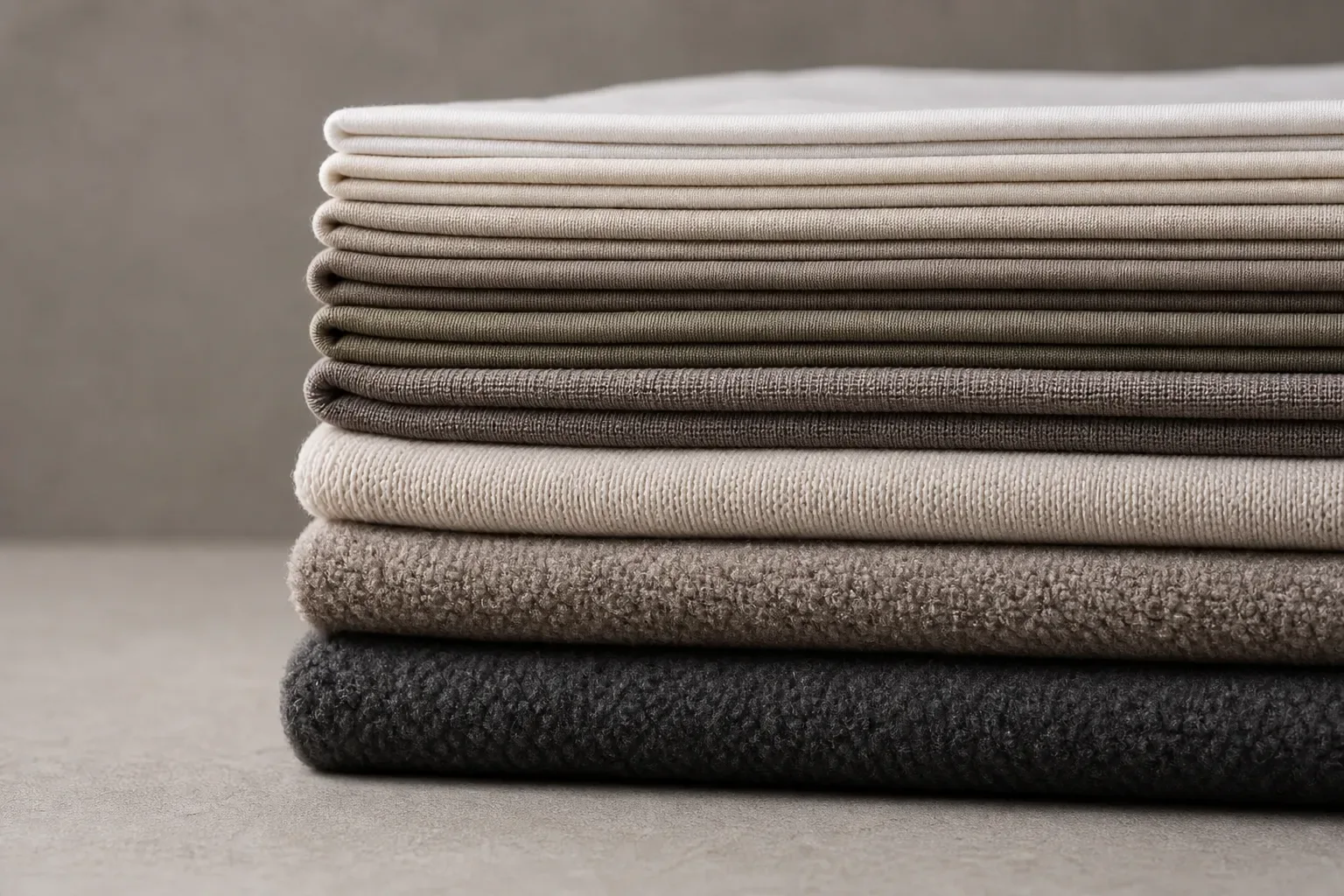
Do not swap one structure into a pattern developed for the other and expect the same garment. A knit pattern may include less ease because the material supplies movement. Cut that shape in a rigid woven and the garment may restrict the wearer. Put a fluid knit into a woven overshirt pattern and the shoulder, pocket and hem may lose the intended line. Even within one family, GSM does not predict drape by itself; use the streetwear GSM guide alongside construction, density, yarn and finish.
What Changes in Pattern, Cutting, Sewing and Decoration?
Pattern and fit: establish the fabric before locking the block. For a knit, record usable stretch and recovery by direction and let it relax before evaluating fit. For a woven, confirm warp, weft and bias behavior, then add the needed ease and shaping. Judge stretch wovens and stable knits by measured behavior, not family name.
Cutting: looped fabric can relax, curl or distort while being spread. Wovens can fray, shift on the bias or show bow and skew. Plaids add matching requirements. The marker, lay direction and handling plan should follow the approved roll goods, not only a generic fabric name.
Sewing: a seam must move with the fabric without damage or distortion. Thread, stitch class, seam type, needle choice, machine setup and feeding interact with the material. ASTM D1683 addresses seam failure in woven apparel fabrics, but no universal needle size, SPI, tension or differential-feed setting suits every fabric. Approve the seam on the chosen material and inspect both sides; our stitch and seam guide provides the vocabulary.
Decoration: approve print and embroidery on the intended substrate. A smooth surface holds detail differently from an open loop, brushed face or elastic base. Stretch can distort a print; embroidery can change drape or cause puckering if its backing and stitch field do not suit the fabric. The construction and finish of the approved swatch matter more to a decoration trial than the garment name alone.
In a common outsourced workflow, a textile mill makes roll goods, a separate finisher may apply selected treatments, and a garment factory sources the confirmed fabric, develops patterns, cuts, sews and samples the garment. Vertically integrated suppliers can combine stages. Jiashun sources fabric and manufactures cut-and-sew garments; the applicable supply and finishing route is confirmed for each project.
What Changes After Washing?
Both families can change after washing. The result depends on fiber, yarn, construction, density, dyeing, finishing, garment process and the wash-and-dry conditions. CottonWorks defines dimensional change broadly enough to include shrinkage or growth and notes related effects such as seam puckering, skew and changed relationships between body fabric and trims. Stretch materials add a separate question: whether their extension and recovery remain suitable after care.
That is why a universal shrinkage percentage is not useful. ISO 6330 defines domestic washing and drying procedures for textile testing, and ISO 5077 covers dimensional change after specified washing and drying. Machine, cycle, detergent, temperature, load and drying route can affect the result. A number without its method is not comparable.
Before sampling, agree on the care route and dimensions to record before and after it. The points should match the approved measurement chart. Also examine twisting seams, rippled hems, stretched knees, lost rib recovery and surface change. A sample can fail even if one headline measurement passes. The cotton shrinkage tolerance guide shows how to write a measurable requirement without promising zero movement.
Use the same agreed conditions when comparing the approved sample with later production material. Otherwise, fabric change and test-condition change become impossible to separate.
Which Structure Should a Streetwear Brand Choose?
Choose from the garment's required behavior, then name the exact construction. This starting table shows the usual logic and the exceptions worth discussing:
| Garment | Useful starting structure | What to confirm on the sample |
|---|---|---|
| T-shirt or fitted top | Single jersey, rib or interlock knit | Recovery, neckline shape, drape and print behavior |
| Hoodie, crewneck or jogger | French terry or fleece knit, often with rib trim | Body, recovery, loop or nap, seam bulk and wash appearance |
| Button-up or overshirt | Poplin, oxford, twill or flannel woven | Ease, grain, collar and placket shape, motif matching |
| Jeans, cargo or structured trouser | Denim, canvas or twill woven | Mobility, seam strength, pocket stability and wash character |
| Jacket | Often a woven shell; knit when softness and give are intentional | Silhouette, edge support, lining relationship and decoration |
“Usually” is not “always.” A stable ponte or backed knit can build structure; a stretch woven can add mobility while keeping a woven surface. Let the intended fit decide.
For a woven reference, these washed baggy denim pants are described as heavyweight denim with a vintage wash, distressed details and embroidered patches. Structure, silhouette, wash and decoration belong in one development conversation.
Put these fields in the fabric specification
- Fiber content and blend order.
- Exact construction, such as single jersey, french terry, poplin or twill.
- Target GSM and the agreed method for checking it.
- Stretch and recovery by direction, recorded under agreed conditions.
- Color, dye route and surface finish.
- Garment wash or care method, if applicable.
- Dimensional-change method, measurement points and tolerance.
- An approved physical swatch or reference garment.
Use a sample-to-bulk gate
Approve more than hand-feel. Confirm the fabric identity against the swatch; fit and balance after relaxation; seam appearance and movement; decoration on the actual substrate; and before-and-after wash dimensions under the agreed method. Then compare production material with the same references before cutting. This gate turns “knit vs woven” from a label into a controlled set of decisions. For sourcing, the fabric sourcing overview is the right place to bring the construction, target hand and reference sample together.
Knit vs Woven Fabric FAQ
What is fabric stretch and recovery?
Stretch is extension under a defined force or extension procedure. Growth is residual enlargement after that stress is removed. Recovery is movement back toward the original dimension over a stated interval. Record all applicable results with method, direction, conditions and material state; a fiber percentage or hand-pulled swatch does not supply them.
Which is better, woven or knitted fabric?
Neither is better in every garment. Knits are often useful where conformity, movement and recovery matter. Wovens are often useful where a crisp edge, stable grain or structured silhouette matters. Stable knits and stretch wovens overlap those territories, so choose against the intended fit and test the exact material.
How can you tell if a fabric is knit or woven?
Look for connected loops versus crossing yarn systems, then check behavior in the length, width and bias directions. Edge curl, fraying and grain can add evidence. Do not rely on stretch alone: a stable knit may barely extend, while a stretch woven can move substantially.
Are T-shirts knit or woven?
Most everyday T-shirts use a knit such as single jersey because the loops provide movement and a soft drape. A brand can still make a woven T-shaped top, but its pattern, openings and fit must account for the woven's different mobility. See how a T-shirt is made for the usual circular-knit route.
Is 100% cotton woven or knit?
It can be either. Cotton is a fiber; knit and woven describe how yarn is assembled. Cotton jersey and french terry are knits. Cotton poplin, oxford and denim are wovens. Ask for both fiber content and exact construction.
What are the disadvantages of woven fabric?
A rigid woven may need more pattern ease and shaping than a knit, can fray at cut edges, and may restrict movement if fit is too close. Those are design trade-offs, not universal defects. Stretch yarns, weave choice, finishing and better pattern engineering can change the result.
References
- CottonWorks™, “Knit Basics” — loop formation, wales, courses and common knit behavior.
- CottonWorks™, “Weaving Basics” — warp, weft and the basic weaving process.
- CottonWorks™, “Basic Woven Fabric Designs” — plain, twill and satin interlacing structures.
- ASTM International, ASTM D2594/D2594M-21 — stretch and growth of applicable low-power fabrics that exhibit high stretch and good recovery.
- ASTM International, ASTM D3107-26 — stretch, growth and recovery of applicable woven fabrics made with stretch yarns within the method's stated scope.
- ISO, ISO 20932-1:2018 — straight-strip and loop methods for fabric elasticity and related properties, excluding narrow fabrics; confirmed current in 2024.
- ASTM International, ASTM D1776/D1776M-20(2024) — conditioning and preconditioning when specified by a textile test method.
- ISO, ISO 6330:2021 — domestic washing and drying procedures for textile testing.
- ISO, ISO 5077:2007 — dimensional change after washing and drying.
- ASTM International, ASTM D1683/D1683M-22 — seam failure in woven apparel fabrics.
- CottonWorks™, “Shrinkage & Skewing” — dimensional change, shrinkage, growth, skew and related garment effects.
Related guides
 Industrial Circular Knitting Machine: 400 Years of Loops
 Oxford vs Poplin Shirt Fabric: How Buyers Compare Specs
 Fabric Weight (GSM) Guide for Streetwear: 180-500 GSM
 How Much Does Cotton Shrink? The Science, the Standards, and the Tolerance to Put in Your Tech Pack
 Stitch Types and Seam Quality: A Garment Approval Guide
 What Is French Terry Fabric? Loop-Back Structure, Snag Risk and Approval