OEM vs ODM Clothing Manufacturing: Responsibilities and Inputs
OEM and ODM usually differ in where product design and development inputs originate. The label alone does not decide sourcing scope, IP rights, price, speed or exclusivity.
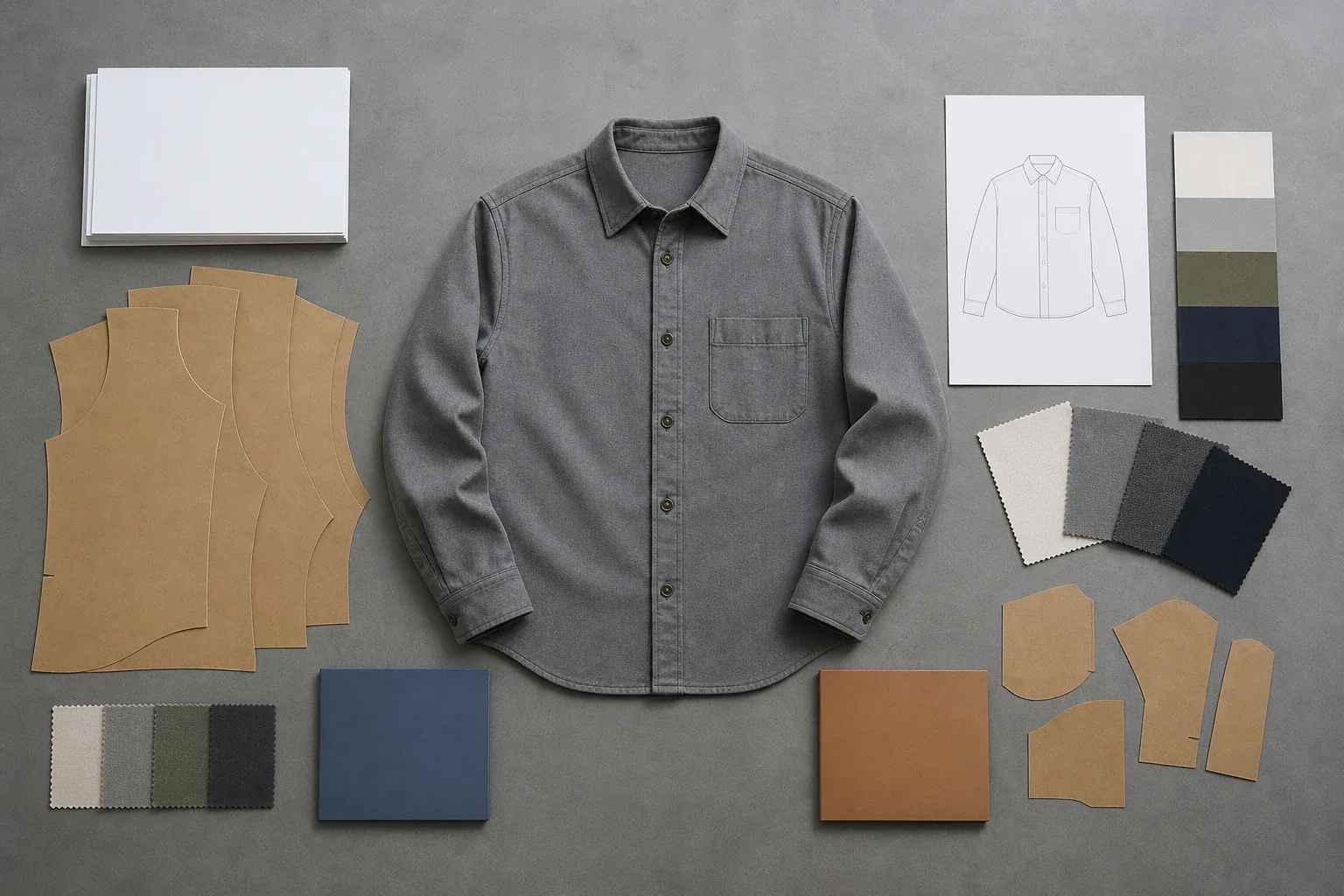
In common apparel usage, OEM clothing manufacturing starts from a buyer-originated design or product specification, while ODM includes supplier contribution to design or product development before manufacturing. That is a useful starting distinction, not a universal legal definition.
The labels do not automatically decide who buys fabric, owns a pattern, pays for samples, controls compliance, receives editable files, gets exclusivity or carries freight risk. They also do not prove that one route is cheaper, faster or higher quality. Those outcomes depend on the product, starting inputs and written project scope.
A World Bank/Duke apparel value-chain report describes OEM and ODM as “rough categories”: OEM adds sourcing and production capability beyond assembly, while ODM adds design and product-development capability. Another World Bank apparel assessment describes OEM as production to a buyer's exact design and specification, with ODM/full-package suppliers contributing design and materials before buyer sample approval. The variation between these descriptions is the point—write the responsibility map instead of buying the acronym.
The Short Answer: Where Do the Design Inputs Start?
| Route | Typical starting input | Evidence the project still needs |
|---|---|---|
| OEM | Buyer tech pack, drawings, measurements, material and construction specifications, reference sample or controlled combination | Input ownership or authorization, manufacturability decisions, sample revision, approved production specification and responsibility schedule |
| ODM | Buyer brief plus supplier-originated or jointly developed concept, product solution, pattern, material proposal or other development input | Design provenance, scope of use, development deliverables, approvals, commercial terms, IP provisions and production specification |
| Hybrid co-development | Buyer controls some product features while supplier develops defined open areas | Field-by-field input owner, decision authority, deliverable, revision and use right |
An OEM project can still need pattern correction and manufacturing feedback. An ODM project can still be constrained by a detailed brand brief. The route is not determined by who typed the tech pack or suggested one pocket; define which inputs are fixed, which are open and which party is accountable for each development decision.
Keep Five Project Axes Separate
Many sourcing errors start when one acronym is allowed to answer five unrelated questions.
| Axis | The question to document | Nearby term that does not answer it |
|---|---|---|
| Design origin | Who supplied or developed each concept, pattern, specification and artwork? | OEM/ODM is only a starting shorthand |
| Procurement scope | Who specifies, sources, purchases and delivers fabrics, trims and services? | CMT vs full package |
| Product route | Is the product made to a brand specification or drawn from an existing generic product? | Private label vs white label |
| IP and use rights | Who owned prior inputs, who owns new work and what may each party use? | No manufacturing label decides this |
| Delivery scope | Where do cost, task and risk allocations change under the agreed delivery term? | An Incoterms® rule does not define design ownership |
An OEM program can be full package when the factory sources approved materials for the buyer's design. It can also use a CMT-like material handoff. An ODM program may be made to one buyer's controlled brief; it is not automatically a ready-made white-label item or a design that can be sold to everyone.
Use the CMT vs full-package guide for procurement responsibility and the white-label vs private-label guide for the product route. Keeping those owners separate prevents a quote from implying rights or services it never states.
What an OEM Clothing Project Needs From the Buyer
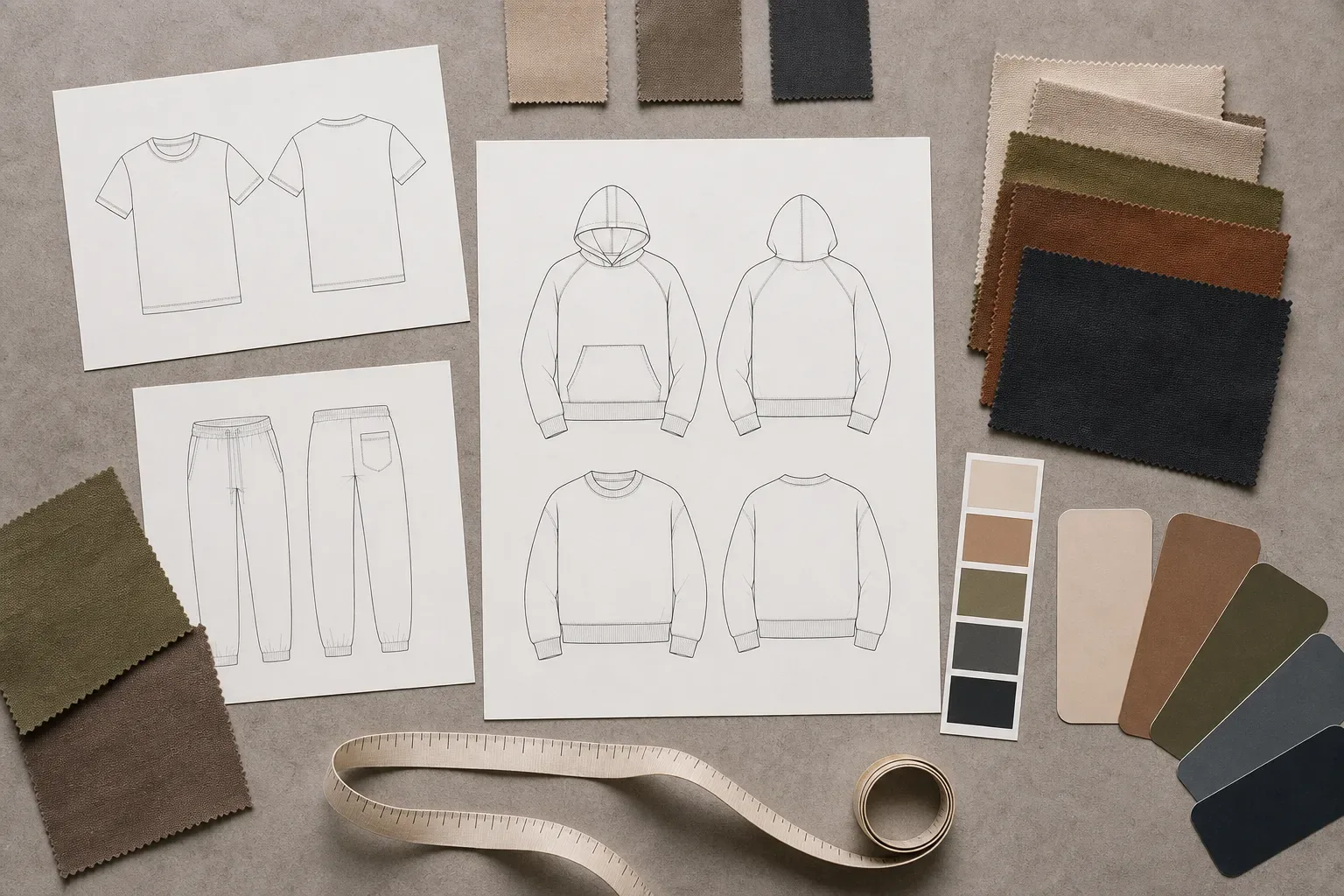
The buyer should identify the product it is authorizing the factory to develop and make. Depending on project maturity, the input packet may include:
- controlled sketches, reference views or a physical sample, with permission to use them;
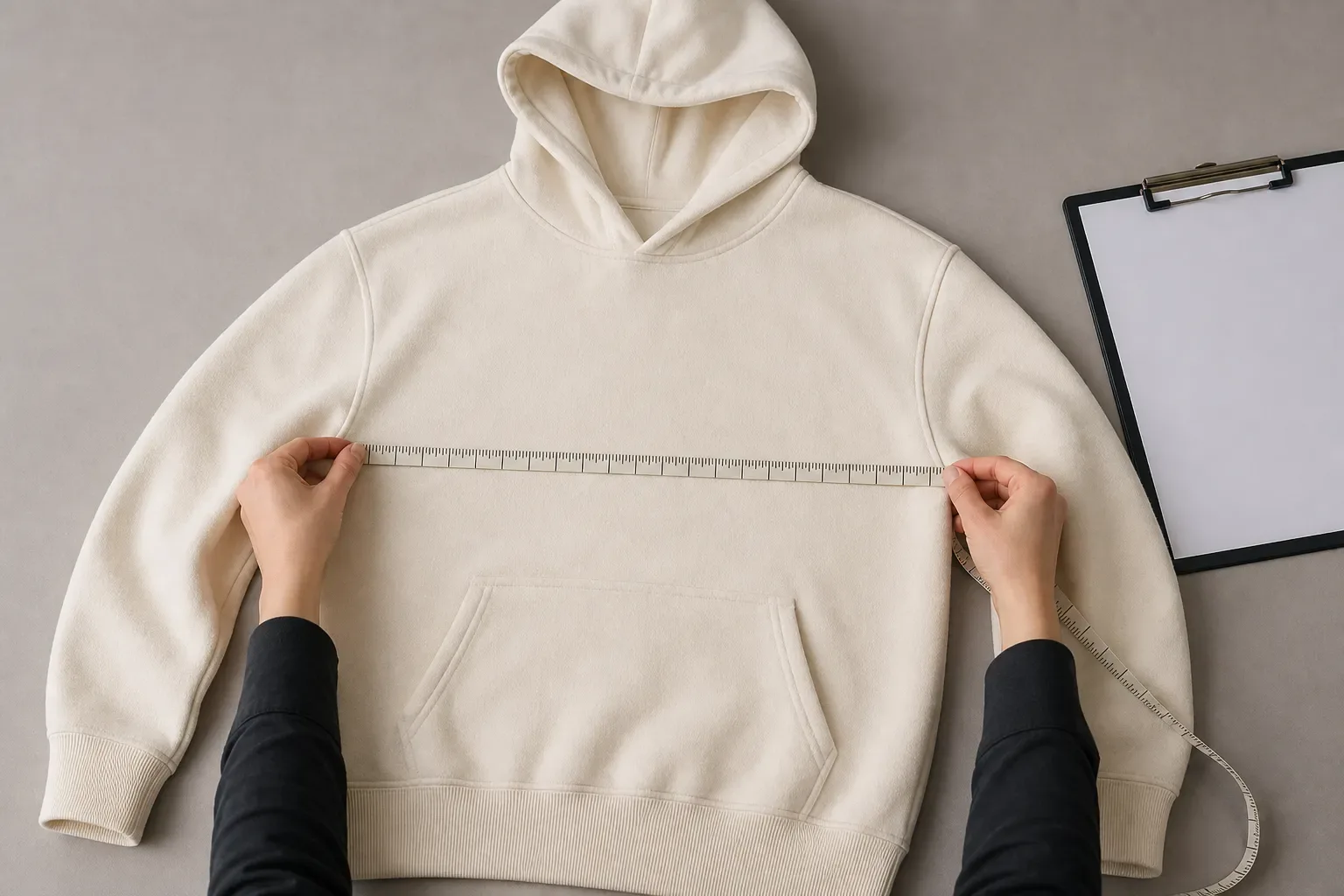
- measurement chart, points of measure, grading state and fit target;
- construction drawings, seam and stitch requirements;
- fabric and trim specifications, nominated articles or proposal boundaries;
- artwork, color standards, placement dimensions and branding files;
- label, packaging and target-market requirements;
- intended use, care route and performance or compliance questions;
- quantity, size-color split, delivery boundary and target dates; and
- a list of fixed, preferred and open decisions.
Missing information should remain visibly open. A factory proposal is not a substitute for buyer approval, and a mood-board image does not silently authorize every visible design detail. The factory-ready tech-pack guide owns the full product-specification packet.
The factory, in turn, should record pre-sample manufacturability questions and proposed changes against that revision. If it changes a seam, construction, material or measurement to make production workable, the new state should move through the sample and approval trail rather than becoming an unrecorded interpretation.
What an ODM Clothing Project Needs to Define
ODM begins with more open design or product-development space, but “design support included” is too vague to quote or approve. Define the development brief:
- target wearer, category, use, silhouette and fit direction;
- non-negotiable brand features and prohibited references;
- target material character, appearance and care needs;
- open areas where the supplier may propose alternatives;
- required deliverables—sketch, pattern, prototype, material set, tech pack or production file;
- number and scope of included concepts and sample rounds;
- approval authority and revision deadlines;
- design, development, tooling and sample charges;
- confidentiality, third-party input and design-provenance requirements; and
- ownership, license, exclusivity and post-project file-access questions.
A supplier catalogue can be one possible starting input, but ODM does not mean “pick a stocked garment and relabel it.” A supplier may develop a new product against a brief. Conversely, starting from an existing product raises its own provenance, modification and availability questions. State the actual route.
No buyer should infer that a supplier-originated design is exclusive. No supplier should infer that contributing development automatically transfers a buyer's existing brand or artwork rights. Put the intended use and ownership in writing.
Build a Design-Provenance Chain
The approval trail should show how the production design came to exist:
authorized starting inputs
→ dated brief and open-decision list
→ concept or technical proposal
→ pattern and material revision
→ identified sample
→ written comments and approved changes
→ approved production specification
For each step, retain the author or provider, date, revision, source files, third-party inputs, approver and permitted use. This is useful in both routes. OEM needs proof that factory changes did not drift from the buyer's controlled input; ODM needs proof of what was contributed and approved.
A WIPO-hosted paper by Donna Ghelfi discusses pre-existing and newly created IP, third-party inputs, confidentiality, ownership or use rights and end-of-contract arrangements in outsourcing. The paper states that its views are the author's rather than WIPO's. WIPO's current business guidance separately encourages companies to integrate IP questions into business decisions. Neither source supplies an automatic ownership answer for an apparel project. Local law and the actual facts matter, so qualified legal advice is appropriate where rights are material.
Use a Responsibility Matrix Before the First Sample
Replace the starting points below with named people and signed project terms.
| Workstream | OEM starting discussion | ODM starting discussion |
|---|---|---|
| Product brief and target customer | Buyer provides and approves | Buyer provides and approves |
| Initial design and specification | Buyer-originated | Supplier-originated or jointly developed within the brief |
| Manufacturability changes | Factory proposes; buyer approves | Factory integrates; buyer approves the resulting product |
| Pattern and technical files | Define provider, deliverable and access | Define creator, deliverable, use rights and access |
| Material and trim decisions | Buyer specifies or approves proposals | Supplier may propose within the brief; buyer approves |
| Samples and revision comments | Factory makes to controlled inputs; buyer approves or rejects | Factory develops against brief; buyer approves or rejects |
| Compliance decisions and evidence | Allocate by market, product and role | Allocate by market, product and role |
| Bulk production authorization | Buyer approves identified production specification | Buyer approves identified production specification |
The buyer remains responsible for making approval decisions it has reserved. “ODM” does not mean the supplier should guess the brand's intended market, claim, age group or legal obligations. “OEM” does not mean the supplier must follow an unsafe, impossible or incomplete detail without raising it.
Sample and Change Control Matter More Than the Label
Every sample should point to the brief, tech pack or development revision that produced it. Comments need a disposition: approved, rejected, revise or informational only. When a change affects appearance, fit, material, construction, evidence, price or timing, record:
- the old and proposed states;
- the requester and reason;
- affected styles, colors, sizes and quantities;
- cost, timing and evidence impact;
- the new sample or document required; and
- the named approver and effective revision.
This prevents two opposite failures. In OEM, an unrecorded “factory improvement” can change the buyer's design. In ODM, an expanding stream of buyer references can turn a scoped development job into a new product without resetting deliverables, time or commercial terms.
The sample approval checklist should identify exactly what the approved sample proves. It does not approve an unnamed material substitution, a changed pattern or a different artwork revision.
Ask About Exit Portability Before Development Starts
If the brand needs to reorder elsewhere later, ask which assets it will receive and may lawfully use:
- editable and export versions of tech packs, artwork and measurement files;
- paper or digital patterns and grading files;
- physical approved samples, swatches, lab dips and trim standards;
- tooling, molds, screens, embroidery files or other production assets;
- supplier article identities and whether nominated sources can be contacted;
- test reports and the exact styles, materials or lots they cover;
- licenses for fonts, artwork, software-generated content or third-party designs; and
- deletion, return, archive and confidentiality duties when the relationship ends.
Do not assume payment for sampling buys every underlying file or right. Do not assume the supplier may reuse confidential buyer inputs because it developed the pattern. These are contract questions, not consequences of the OEM or ODM label.
How to Compare OEM and ODM Quotes
Normalize the same end product and work boundary. One quote may start after the buyer supplies production-ready files; another may include research, concepts, pattern development and several samples. Mark every line as included, excluded, assumed or TBD:
- design and technical-development deliverables;
- pattern, grading, tooling and editable-file access;
- material sourcing and sample quantities;
- included revision and sample rounds;
- testing, inspection and compliance evidence;
- production scope, packaging and delivery boundary;
- licensing, exclusivity and confidentiality terms; and
- change rates, cancellation treatment and timeline triggers.
Neither route is automatically cheaper or faster. OEM can start quickly when the buyer's inputs are production-ready, or stall when they are incomplete. ODM can consolidate development, or take longer because more product decisions remain open. Compare actual inputs, outputs, revisions and commercial assumptions.
Applying the Choice to a Jiashun Project
Jiashun works on made-to-order custom clothing, not stocked, ready-to-ship white-label garments. A brand may arrive with a developed specification or with a brief that needs defined product-development support, but the route must be scoped against the actual project. The label does not imply access to a shared design catalogue, automatic exclusivity or a transfer of unspecified rights.
A heavyweight oversized tee reference, a plain French terry hoodie reference and an acid-washed baggy denim reference expose different fit, material, construction, artwork and wash decisions. These pages are visual references only. They do not prove the design's origin, ownership, exclusivity, contract model or specification for another project.
Bring the starting files, open-decision list and responsibility questions to the clothing-brand manufacturing discussion. The useful outcome is not an OEM or ODM badge; it is one approved product with a traceable design and written responsibilities.
Frequently Asked Questions About OEM vs ODM Clothing
What is the difference between OEM and ODM clothing manufacturing? In common apparel usage, OEM starts from a buyer-originated design or specification, while ODM includes supplier contribution to design or product development. The exact services, deliverables and rights still have to be written for the project.
Is OEM the same as CMT? No. OEM/ODM mainly describes design origin and development role; CMT/full package mainly describes procurement and production-service scope. An OEM project can use buyer-supplied materials or a full-package sourcing arrangement.
Is ODM the same as private label or white label? No. ODM does not automatically mean a stocked generic garment or a private-label commercial arrangement. It can involve a newly developed product. Record the actual product route, design contribution, branding and use rights separately.
Who owns the design and pattern in OEM or ODM? The acronym does not decide. Identify pre-existing buyer and supplier inputs, newly created work, third-party content, ownership or license rights, exclusivity, file access, confidentiality and end-of-contract treatment in writing. Seek qualified legal advice where rights are material.
Can an apparel project be partly OEM and partly ODM? Yes. A buyer may control silhouette, measurements and artwork while asking the supplier to develop a construction or material solution. Assign each open field, deliverable, approver and use right instead of forcing the project into one label.
Is OEM or ODM cheaper and faster? The label alone cannot answer. Product complexity, readiness of inputs, development deliverables, sample rounds, material availability, approval speed, quantity and evidence requirements drive cost and timing. Compare quotes on the same scope.
References
- World Bank and Duke Global Value Chains Center, Pakistan in the Apparel Global Value Chain — apparel value-chain capabilities and OEM/ODM as rough categories.
- World Bank, Improving Trade Competitiveness in Cambodia: An Analysis Using a Trade and Transport Facilitation Assessment (TTFA) — apparel-context descriptions of OEM and ODM/full-package development.
- OECD, OECD Reviews of Innovation Policy: Korea 2009 — a cross-sector terminology example, not an apparel definition.
- Donna Ghelfi, The “Outsourcing Offshore” Conundrum: An Intellectual Property Perspective, hosted by the World Intellectual Property Organization — IP questions in outsourcing; the paper states that its views are the author's.
- World Intellectual Property Organization, Grow by Integrating IP Into Your Business Decisions — identifying and managing IP while a business relationship develops.
Related guides
 CMT vs Full Package Clothing Manufacturing: Scope and Responsibility
 White Label vs Private Label Clothing: What Actually Changes
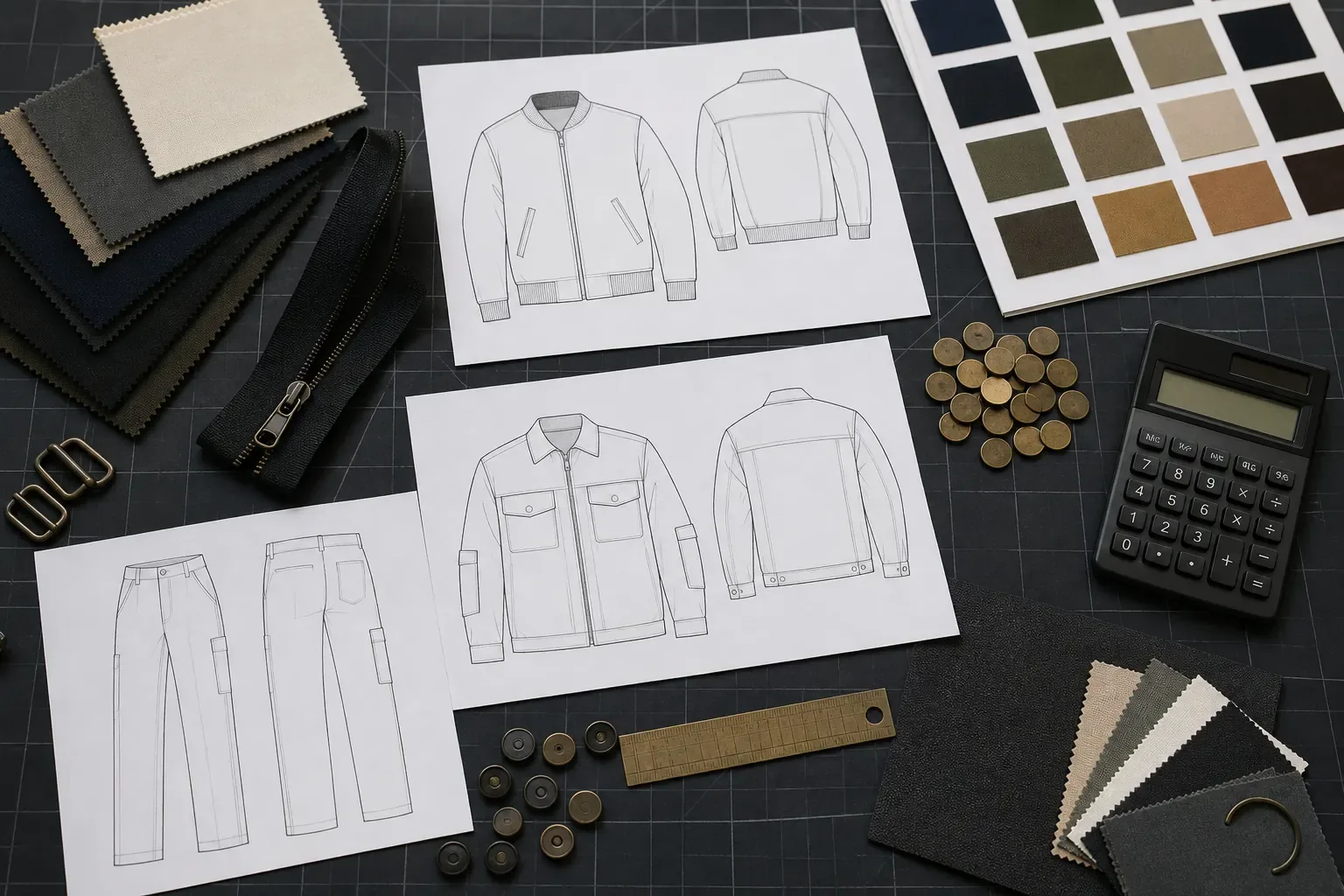 Clothing Manufacturing RFQ Checklist: Quote-Ready Inputs
 How to Prepare a Tech Pack a Factory Can Actually Quote
 Garment Sample Approval Checklist: One Comment Sheet, One Revision Trail