Apparel Design for Manufacturability: What to Review Before Sampling
A buyer-side DFM checklist for apparel: review construction, fabric behavior, trims, artwork, size grading and approval evidence before the first sample.
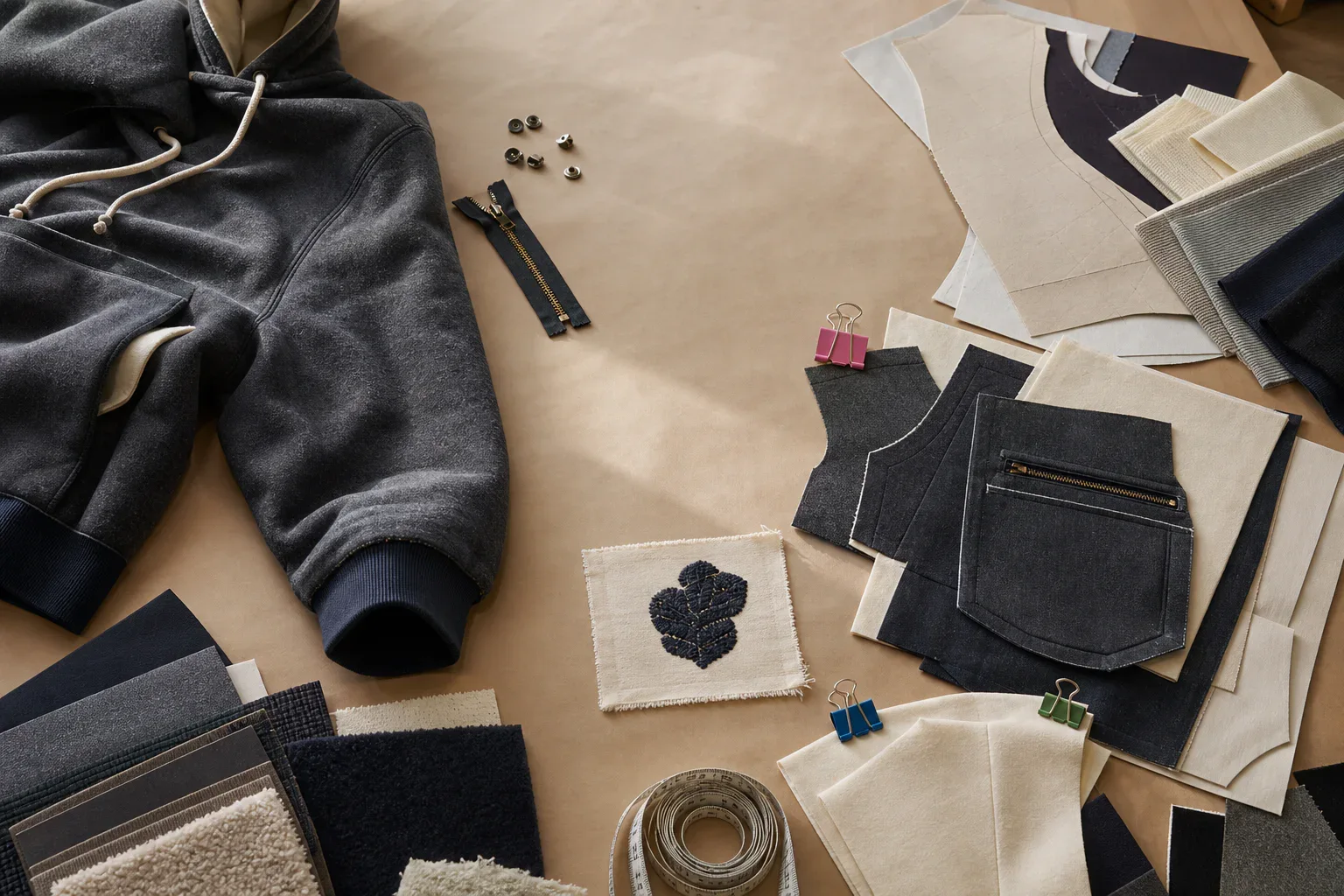
Apparel design for manufacturability is the step where a brand asks a hard question before spending sample time: can this garment be made repeatedly with the chosen fabric, trims, artwork, fit target, tolerances and order route? A beautiful sketch can still hide a seam that will twist, a pocket that cannot sit flat, a print that crosses too much bulk, or a trim that looks right on a card but fails after wash.
This guide owns buyer-side DFM interaction review before sampling. The tech pack for factory quotes owns documentation for pricing, the BOM guide owns material rows, the sample approval checklist owns physical review and approval status, and the pre-production meeting checklist owns the handoff before bulk. DFM sits earlier: it checks where design intent and the proposed material or process route may conflict before the first sample becomes evidence.
What this DFM review does not own
DFM should end with a bounded risk, option or question for the first sample. It does not select the project's sample stages, release bulk work or prescribe one factory procedure. The garment sample types guide owns proto, fit, size-set, pre-production and top-of-production sample definitions. The garment pilot run guide owns a later production-representative trial when the remaining question concerns the proposed route rather than the design on paper.
It is also not a software manufacturability score or an automation promise. A checklist can organize a discussion, but it cannot calculate whether every fabric, seam, decoration and trim interaction will work. Project-specific documents and identified physical evidence still control the decision.
What DFM means in apparel
TWI defines DFM as optimizing a design so a product can be created more easily and at lower manufacturing cost, generally while the product is still being designed. In apparel, that idea must be translated into soft-goods reality. Fabric can stretch, shrink, twist, fray, show shade variation or change after wash. The pattern is not a rigid part; it is a shape that behaves through spreading, cutting, sewing, pressing, finishing and wear.
For a buyer, DFM is not a factory shortcut and it is not permission to weaken the design. It is a structured review of where design intent meets production constraints:
| Review area | DFM question | Evidence to request |
|---|---|---|
| Fabric and fit | Does the chosen material support the target silhouette? | Swatch, weight, composition, stretch/recovery or shrinkage evidence |
| Construction | Can seams, hems and openings be sewn repeatably? | Section sketch, seam type, machine assumptions, sample risk notes |
| Trims | Do closures and labels work with the fabric stack? | BOM rows, trim card, backing or reinforcement notes |
| Artwork | Can print, embroidery or appliqué survive placement, scale and wash? | Artwork file, placement map, mock-up, test panel when needed |
| Sizing | Can grading keep the design logic across sizes? | Base size, size chart, tolerance, grading assumption |
| Approval | What must be signed before the next step? | Fit sample, fabric approval, trim approval, wash/print approval |
The useful outcome is a written list of risks, decisions and sample instructions. It should not become vague advice such as “make it better for production.”
Start with fabric-design fit
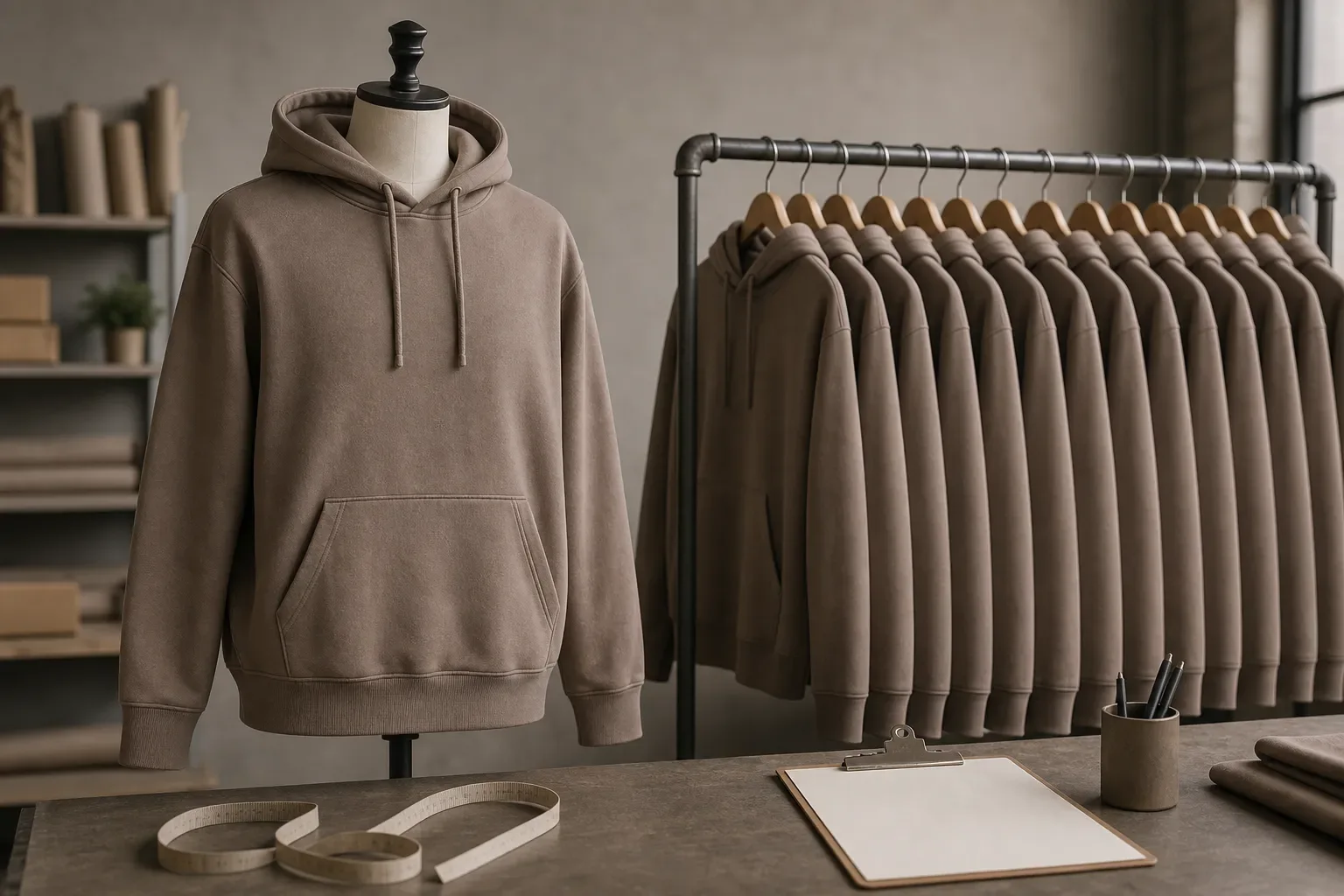
One early DFM risk appears when the design asks the fabric to behave like a different material. A heavyweight fleece may support a boxy hoodie shape while also creating bulky seams and thick hood layers. A soft drapey jersey may suit a relaxed tee but provide too little structure for the intended pocket. Stretch-denim and rigid-denim options can require different ease, recovery evidence and construction decisions.
When reviewing fabric-design fit, separate identity from behavior:
- fiber content says what the fabric is made from;
- weight says mass per unit area;
- stretch, recovery, shrinkage, torque and hand describe behavior;
- finish and wash state describe when the evidence was observed;
- the approved face, nap or direction describes how the fabric must be cut.
Keep the evidence state visible. ISO 139:2005, Edition 2 with Amendment 1:2011 and confirmed in 2025, defines standard atmospheres for conditioning and testing textiles. ISO 5077:2007, Edition 2 and confirmed, covers determination of dimensional change after specified washing and drying procedures. Neither standard supplies a universal pass value for a garment design. Their relevance here is narrower: when a DFM decision depends on a before/after measurement, identify the material or garment, conditioning state, care method and result instead of comparing undocumented numbers.
For a 500gsm hoodie reference, the buyer may be studying structure, not just weight. For a baggy denim reference, leg width, wash and pocket placement are part of the risk. For a varsity jacket reference, fabric contrast, sleeve material, rib and snap-front construction must be reviewed together. Product images help locate design zones; they do not prove the material, test result or final sample behavior for a new order.
Review seams, openings and bulk before sampling
DFM becomes very practical at seams and openings. A sketch may show a clean kangaroo pocket, curved yoke, rib cuff, double waistband, snap placket or layered hem. The factory has to cut those shapes, feed them through machines, control bulk, keep shade and grain direction aligned, press or finish them and repeat the result.
Cotton Incorporated's CottonWorks garment-construction resource shows why route assumptions need to remain garment-specific. Its T-shirt example separates body and sleeve cutting from bias-cut neckline strips; its jeans example describes more pieces, directional spreading, shade matching and off-line steps before assembly. These examples are not universal routes. They support the bounded DFM question: which design zones depend on cutting direction, component matching, operation access or sequence?
Ask four questions:
- Where does fabric thickness stack up?
- Where does the customer pull, sit, bend or open the garment?
- Where does the seam need stretch, strength or visual flatness?
- Where will artwork, pocketing, labels or trims make sewing harder?
Then record the intended construction, not just the appearance. A hoodie hem may need rib, self-fabric, coverstitch or drawcord details. A cargo pocket may need bellow depth, flap size, bartack positions and edge distance. A denim fly may need zipper type, button or snap choice, topstitch width and reinforcement. A jacket snap placket may need interlining or facing so the hardware is not set through an unstable layer.
This is also where DFM protects quote quality. If a style has two possible seam constructions, the quote is pricing two different factory operations. If a pocket can be sewn flat or built as a three-dimensional bellow, the material use, operation time and approval risk change. If a heavy hood uses self-fabric lining, the seam intersection may need different machinery or a construction revision. The point is not to remove those features; it is to name them before the sample becomes the first place anyone discovers the problem.
Keep artwork manufacturable
Artwork is one of the easiest places for a design to look finished on screen and fail in production. Large prints over seams, embroidery across bulky pockets, appliqué near rib, puff ink on unstable fabric and heat transfers over curved zones all need review before the factory treats the art as approved.
A buyer-side DFM record should include:
- artwork file format and final dimensions;
- placement measured from stable garment points;
- whether the artwork crosses seams, pockets, rib, zippers or plackets;
- print, embroidery, appliqué, patch or wash interaction;
- color approval method and light condition when relevant;
- test panel or sample stage needed before bulk approval.
Avoid universal promises such as “this print works on all fleece” or “embroidery always works on denim.” The method, fabric, stitch density, backing, placement and wash route decide the result. If artwork changes after sample approval, reopen the sample record instead of treating the new file as a harmless graphic update.
Connect DFM to tolerances and grading
Manufacturability is also a sizing issue. A design can look strong in one model photo and fail across a size run because the pocket grows awkwardly, the graphic sits too low, the waistband cannot hold the same relationship, or a trim becomes too close to a seam in smaller sizes.
ISO 8559-1:2017, Edition 1 and confirmed in 2026, describes anthropometric measurements used in clothing size and shape work. ISO 8559-2:2025, Edition 2, specifies primary and secondary dimensions for a body-measurement-based clothes size-designation system. These standards do not provide one universal streetwear garment chart. The DFM inference is narrower: the buyer still needs style-specific garment measurements, grading direction, tolerances and fit evidence for the silhouette under review.
DFM should flag:
- design elements that need fixed placement rather than proportional scaling;
- pockets, labels and graphics that collide with seams in small sizes;
- oversized silhouettes that need clear measurement points;
- stretch styles where tolerance must consider fabric recovery;
- washed styles where shrinkage affects final measurements;
- size-specific trim lengths, zippers, drawcords or rib widths.
The goal is not to freeze every grade before the first sample. It is to avoid a base-size-only approval that hides the problem until sales samples or bulk.
Build a DFM decision matrix
Use a decision matrix before sampling. It turns comments into action:
Style / revision:
Design zone:
Risk observed:
Evidence used:
Decision: keep / revise / test / factory to propose / buyer to confirm
Sample instruction:
Owner:
Due date:
Reopen trigger:
Example entries:
| Design zone | Risk | Decision |
|---|---|---|
| Heavy hoodie hood seam | Too much bulk after self-fabric lining | Test construction in first sample; consider lining change if seam will not sit cleanly |
| Denim pocket rivet | Rivet too close to curved pocket edge | Confirm edge distance and backing before sample |
| Chest embroidery | Dense stitch over stretchy jersey | Request embroidery panel before final sample approval |
| Jacket placket | Snap set through unstable layer | Add facing or reinforcement proposal before hardware approval |
This matrix is especially useful for small and mid-size brands because it prevents sampling from becoming a guessing game. The factory can still propose improvements, but every change has a reason and a next checkpoint.
When a DFM change needs reapproval
Not every DFM note needs a new development cycle. A spelling correction on an internal note, a clearer photo or a measurement-label cleanup may simply clarify the existing decision. A change becomes a reapproval issue when it changes what the buyer, factory or end customer will receive.
Reopen the affected approval when a DFM decision changes fabric, trim identity, artwork size, placement, visible construction, fit measurement, wash route, care expectation, reinforcement, seam type, pocket shape, hardware location or any size-specific rule. The reopened record should say what changed, which sample or test now controls the decision, whether earlier samples are superseded, and whether the change affects quote, lead time or bulk readiness.
This is especially important after a “small” factory suggestion. A stronger backing, alternate zipper, revised pocket angle or adjusted embroidery density may be exactly the right manufacturability move, but it still changes the approved product evidence. DFM is successful when improvements are visible in the approval trail, not hidden as production-room memory.
If timing is tight, separate urgent decisions from permanent specification changes. A first sample may test two pocket constructions or two print placements without authorizing both for bulk. Mark the trial purpose, the chosen result and the rejected option, so a later team does not reopen the wrong version from an old photo.
Care assumptions can also reopen an interaction. The U.S. Federal Trade Commission's May 2014 Care Labeling Rule guidance says care instructions need a reasonable basis and must consider non-detachable components such as linings, trim, buttons and zippers. That is U.S.-specific compliance guidance, not a global DFM rule. It supports one useful review principle: evidence for a fabric or trim alone may not prove how the assembled garment behaves under the intended care route.
What to send the factory
Before the first sample, send the factory enough evidence to review both design and manufacturability:
- reference images that show front, back, side and detail zones;
- fabric target and acceptable alternatives;
- base size and intended fit;
- preliminary size chart or measurement targets;
- artwork files with scale and placement;
- trim targets with functional notes;
- wash or finishing intent;
- known no-change items;
- known flexible items;
- deadline and sample objective.
If the sample objective is only “see how it looks,” say that. If the objective is fit approval, artwork method, fabric substitution, wash development or cost reduction, say that too. A factory can give better DFM feedback when it knows which decisions are still open.
Buyer checklist before first sample
- The design intent is written in production language, not only mood-board language.
- Fabric identity and behavior are separated.
- The sample state is defined: raw, washed, printed, embroidered, trimmed or final-like.
- High-bulk zones are reviewed before cutting.
- Stress points and openings have reinforcement assumptions.
- Artwork placement is measured from stable garment points.
- Trims are reviewed with layer stack, backing and function in mind.
- Base size, key measurements and tolerance logic are available.
- Grade risks are flagged before the full size run.
- Open choices are written as test decisions, not verbal memory.
- A substitution is checked against the affected interactions and approval scope.
FAQ
Is apparel DFM the same as a tech pack? No. A tech pack documents the product for quote, sample and production. DFM reviews whether the product decisions are workable before the sample is made.
Should DFM happen before or after the first sample? Review the applicable interactions before the first sample, then reopen affected questions after sample findings or a material design change. The first pass identifies preventable conflicts; the sample supplies physical evidence for questions that paper review cannot close.
Can DFM reduce cost? Sometimes, but cost reduction is not the only goal. DFM can also reduce unclear decisions, unstable construction, late changes and sample rework.
Who owns DFM decisions, the buyer or factory? Both contribute. The buyer owns design intent and approvals; the factory can flag construction, material and process risks. Decisions should be recorded with an owner and reopen trigger.
Does DFM mean simplifying the design? Not automatically. It can keep a complex design, revise one risky detail, add reinforcement, change a method, or plan a test sample. The decision should protect the intended product.
What should a brand send for a pre-sample DFM discussion? Send the current design revision, intended material and finish, fit or silhouette reference, size range, artwork and trim direction, care assumptions and non-negotiable features. The review scope and evidence requests should remain project-specific.
References
- TWI, What Is Design for Manufacturing (DFM)? — institutional overview of early-stage DFM; no apparel procedure or commercial result is inferred.
- Cotton Incorporated, CottonWorks, Garment Construction — first-party apparel education on garment-specific cutting and assembly examples.
- International Organization for Standardization, ISO 8559-1:2017, Edition 1 — current status confirmed in 2026.
- International Organization for Standardization, ISO 8559-2:2025, Edition 2 — current published edition replacing ISO 8559-2:2017.
- International Organization for Standardization, ISO 139:2005, Edition 2, with Amendment 1:2011 — current status confirmed in 2025.
- International Organization for Standardization, ISO 5077:2007, Edition 2 — current confirmed edition.
- U.S. Federal Trade Commission, Clothes Captioning: Complying with the Care Labeling Rule, May 2014 — U.S.-specific reasonable-basis and whole-garment component guidance.
Related guides
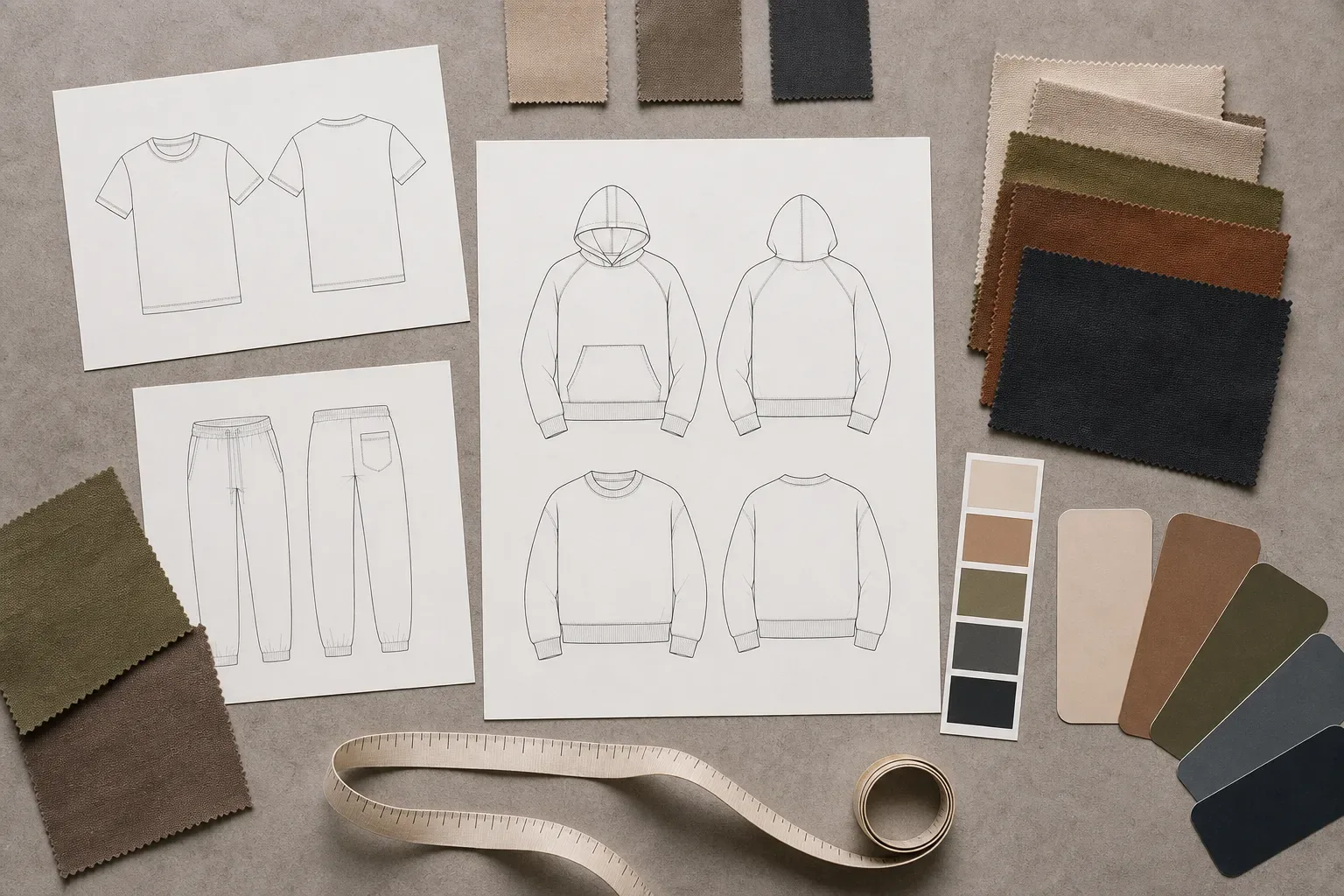 How to Prepare a Tech Pack a Factory Can Actually Quote
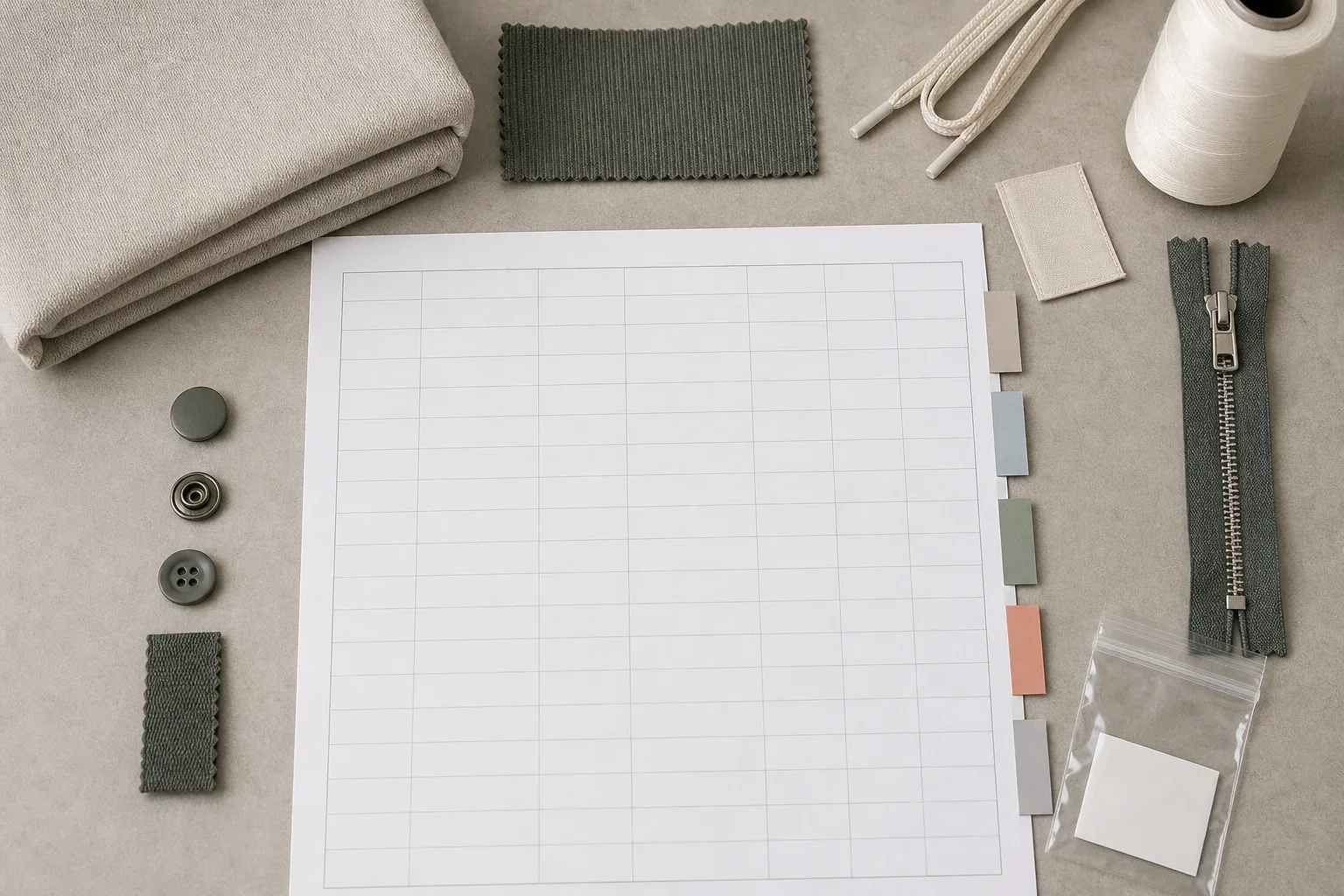 Apparel Bill of Materials: Fields, Versions and Approval Status
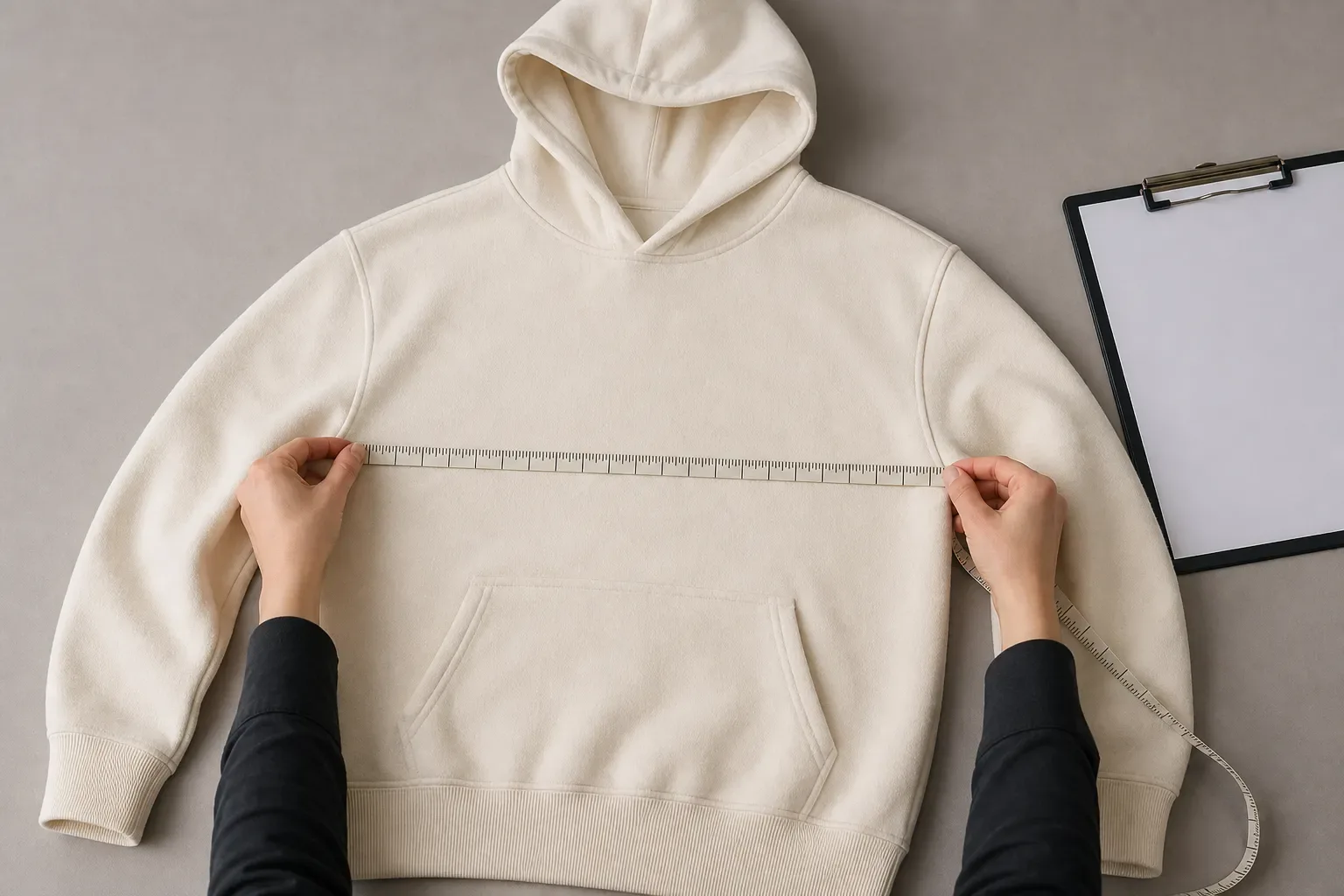 Garment Sample Approval Checklist: One Comment Sheet, One Revision Trail
 Garment Pre-Production Meeting Checklist Before Bulk
 From Sample to Bulk: Realistic Apparel Production Timeline