Oxford vs Poplin Shirt Fabric: How Buyers Compare Specs
Oxford and poplin are construction starting points, not fixed weight or quality grades. Compare yarn count, warp and weft density, finished GSM, thickness and same-state garment evidence before approval.
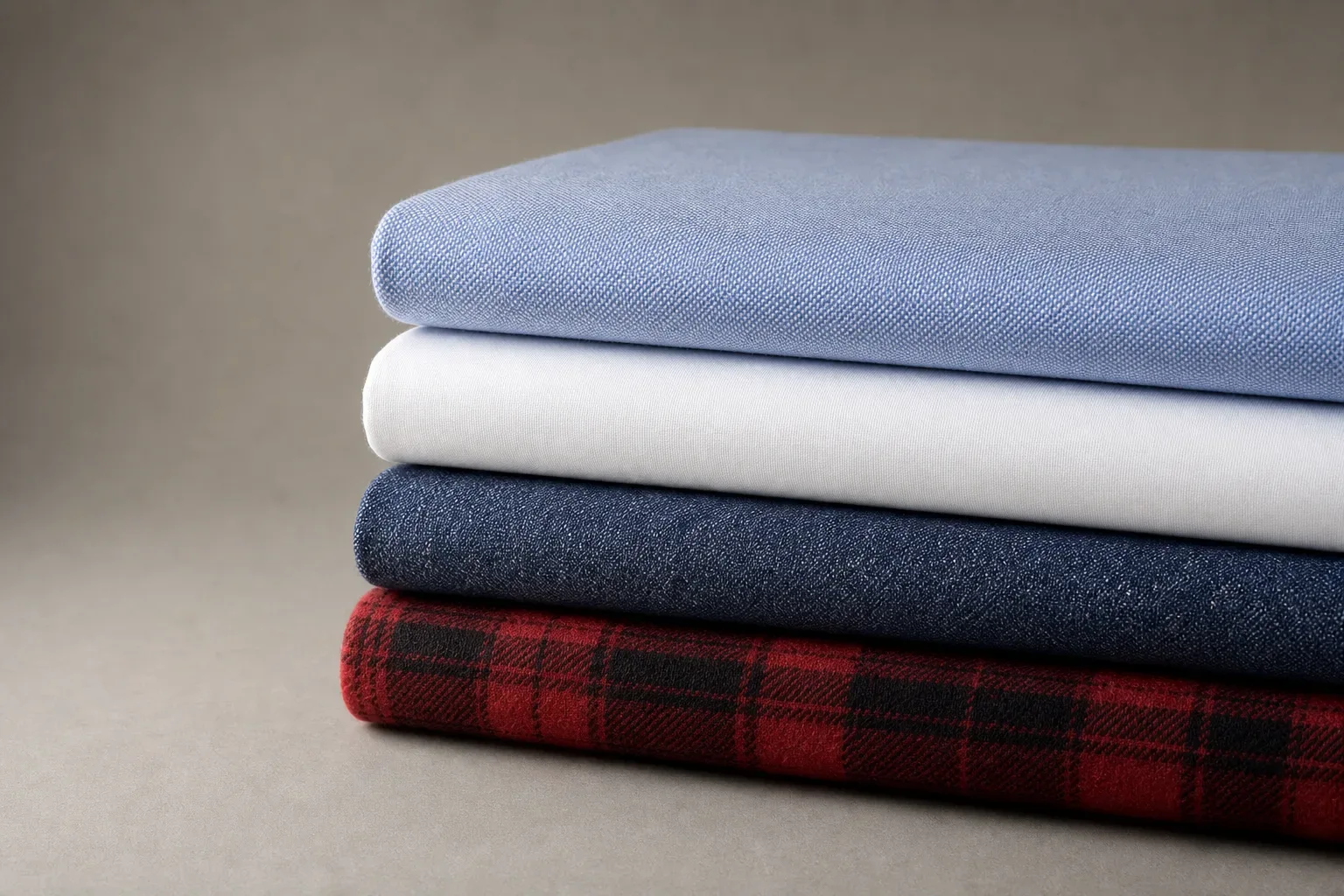
Choose between two identified finished fabrics, not between two fabric-name stereotypes. Oxford and poplin can point a sourcing conversation toward different woven constructions, but neither name fixes weight, thickness, opacity, breathability, wrinkle behavior, durability or decoration performance.
For a custom shirt program, compare the weave, warp and weft yarns, thread density in each direction, finished mass per area, thickness under a named method and the behavior of a physical garment sample. If a supplier sends only “Oxford” or “poplin” plus a color photo, the fabric is not specified well enough for approval.
This refresh deliberately does not publish universal weight bands. Mills can make multiple constructions, yarn combinations and finishes under each commercial name; an unsupported band would turn a variable sourcing category into a false rule.
Oxford vs Poplin at a Glance
| Buyer question | Oxford starting point | Poplin starting point | What still needs evidence |
|---|---|---|---|
| Construction | Commonly supplied as an Oxford or basket-derived shirting construction | Commonly supplied as a plain-weave shirting construction | Weave diagram or supplier construction description for the exact article |
| Surface | Can show a more apparent yarn grouping or texture | Can present a finer, more even visual field | Face-and-back physical swatch in the approved color and finish |
| Yarn arrangement | Basic Oxford may combine finer warp yarns with a more substantial filling system; pinpoint variants differ | Warp and filling yarn choices vary by article | Separate warp and weft yarn identification and count system |
| Fabric density | Not fixed by the word “Oxford” | Not fixed by the word “poplin” | Ends and picks reported separately, with unit and method |
| Finished mass and thickness | Available in multiple finished constructions | Available in multiple finished constructions | Finished GSM and thickness as separate measurements |
| Garment outcome | Must be confirmed on the intended shirt | Must be confirmed on the intended shirt | Same-state swatch, sample identity, care route and buyer disposition |
The table is a screening tool, not a winner table. If the physical fabric contradicts the label-based expectation, approve or reject the physical fabric and correct the specification.
First Separate the Four Numbers Buyers Often Collapse
The most useful information gain in an Oxford vs poplin shirt fabric comparison is to stop calling every construction number “thread count.” A production-ready record keeps at least four quantities separate.
1. Yarn count identifies yarn linear density
ISO 7211-5:2020 covers determination of the linear density of yarn removed from woven fabric. Cotton Incorporated's Textile Yarns technical bulletin explains that yarn-numbering systems can be direct or indirect. Their numbers do not move in the same direction, so a bare number cannot be compared responsibly.
Record the system beside each value and keep warp and weft entries separate. For example, do not write “40-count yarn” without identifying whether the mill means tex, denier, an English cotton count or another system. Also identify whether the value comes from the mill specification, a yarn test or yarn removed from finished fabric.
2. End and pick density count threads per unit length
ISO 7211-2:2024 addresses the number of threads per unit length in woven fabrics. ASTM D3775-17(2023) distinguishes end count in the warp direction from pick count in the filling direction and notes that clearer terminology is preferable to the older umbrella phrase “fabric count.”
Record both directions and the unit: ends and picks per centimetre, or ends and picks per inch. Do not compare one supplier's per-inch figures with another supplier's per-centimetre figures until the units and rounding basis are aligned.
If a vendor sends a compact construction string, ask the vendor to label every field. A string can contain yarn counts, thread densities or both. Its meaning should never be guessed from formatting.
3. GSM is finished mass per unit area
ASTM D3776/D3776M-20(2025) covers fabric mass per unit area. Its public scope also cautions that a small swatch result applies to the tested sample and does not necessarily represent an entire lot.
GSM does not tell the buyer which weave was used, how many ends or picks are present, which yarn systems were selected or how thick the cloth feels. Record the specimen source, fabric state, conditioning, method option, result and agreed tolerance.
4. Thickness is a separate, pressure-sensitive measurement
ASTM D1777-26 covers thickness of textile materials and explains that observed thickness can depend materially on the pressure applied during measurement. A thickness value without the method and pressure is therefore incomplete.
Two fabrics can share a measured GSM and still differ in thickness or surface. Two fabrics can show similar thickness under one condition and still differ in construction and mass. Keep the fields separate in the approval record.
What the Weave Names Can and Cannot Tell You
CottonWorks describes basic woven structures and identifies Oxford as a derivative of plain weave. Its Basic Woven Fabric Designs resource notes that a basic Oxford construction commonly uses a comparatively heavier filling yarn with finer warp yarns, while pinpoint Oxford uses finer yarns. That is a useful identity clue, not a purchase specification for every fabric sold under the name.
Poplin is commonly offered as a plain-weave shirting, but the commercial name still leaves the actual yarns, density, mass, finish and color unresolved. Require a construction description for the submitted article rather than treating “plain weave” as a complete definition.
The names also do not establish a quality ranking. A suitable fabric is the one whose identified construction and garment evidence meet the brief. A poorly controlled Oxford is not rescued by texture, and a well-controlled poplin is not disqualified by a smooth appearance.
The retained construction diagram below is a visual reference for three common interlacing patterns. It does not set yarn count, density, GSM, thickness or the commercial identity of a submitted fabric.
Compare Both Fabrics in the Same Material State
The second information gain is same-state evidence. A finished, washed poplin cannot be fairly compared with an unfinished Oxford cutting, and a showroom card cannot replace production-intent material.
Build the comparison around two traceable candidates:
- Assign an article code to each fabric and record supplier, lot, color and usable width.
- Confirm whether the swatch is greige, finished, conditioned, washed or otherwise treated.
- Record weave, warp yarn, weft yarn, ends, picks, GSM and thickness with units and methods.
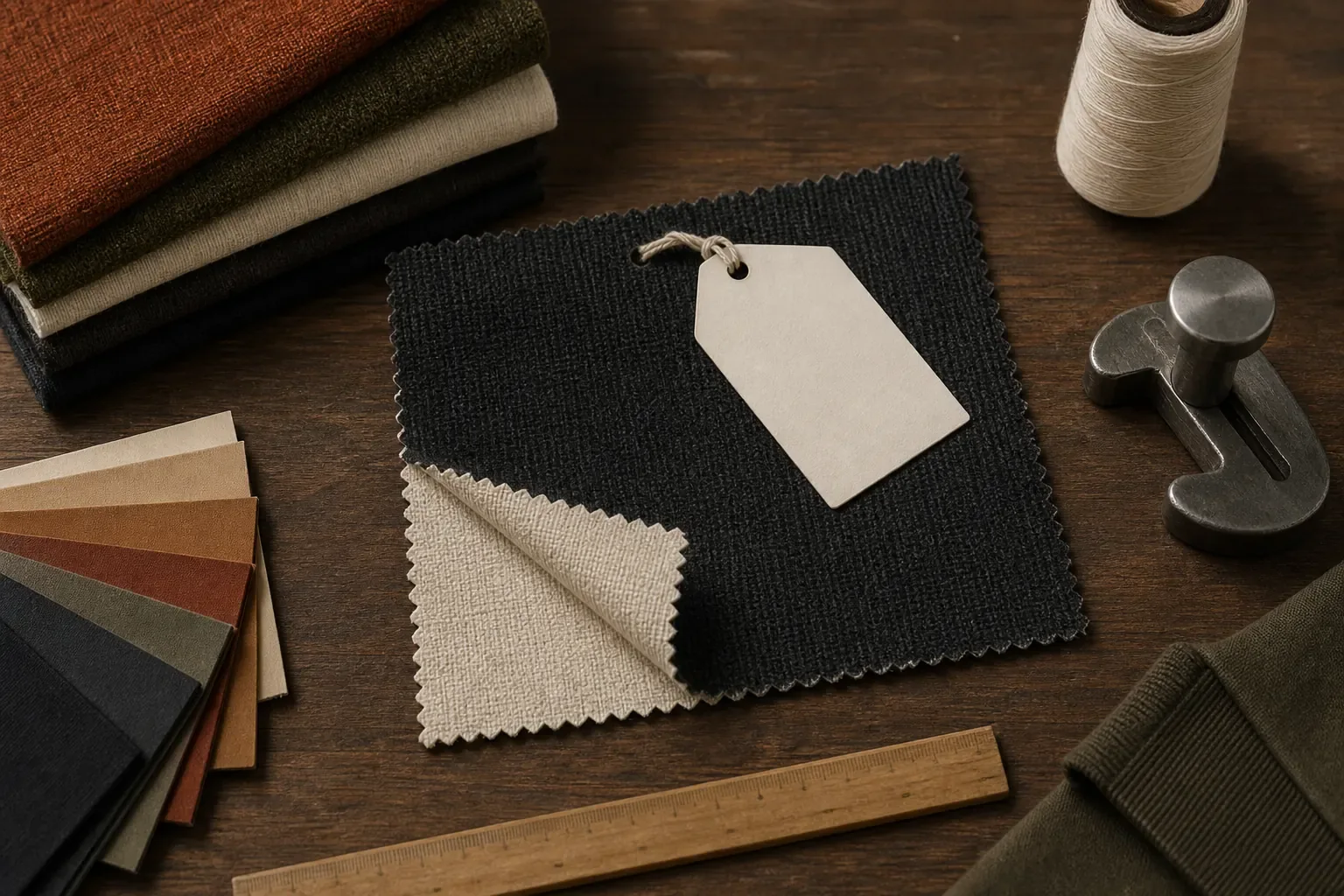
- Mark the face, back, warp and weft direction on the physical swatch.
- Use the intended color and finish because dyeing and finishing can change appearance and behavior.
- Attach each fabric to its garment-sample identity and revision.
- Apply the same agreed care route before making after-care comparisons.
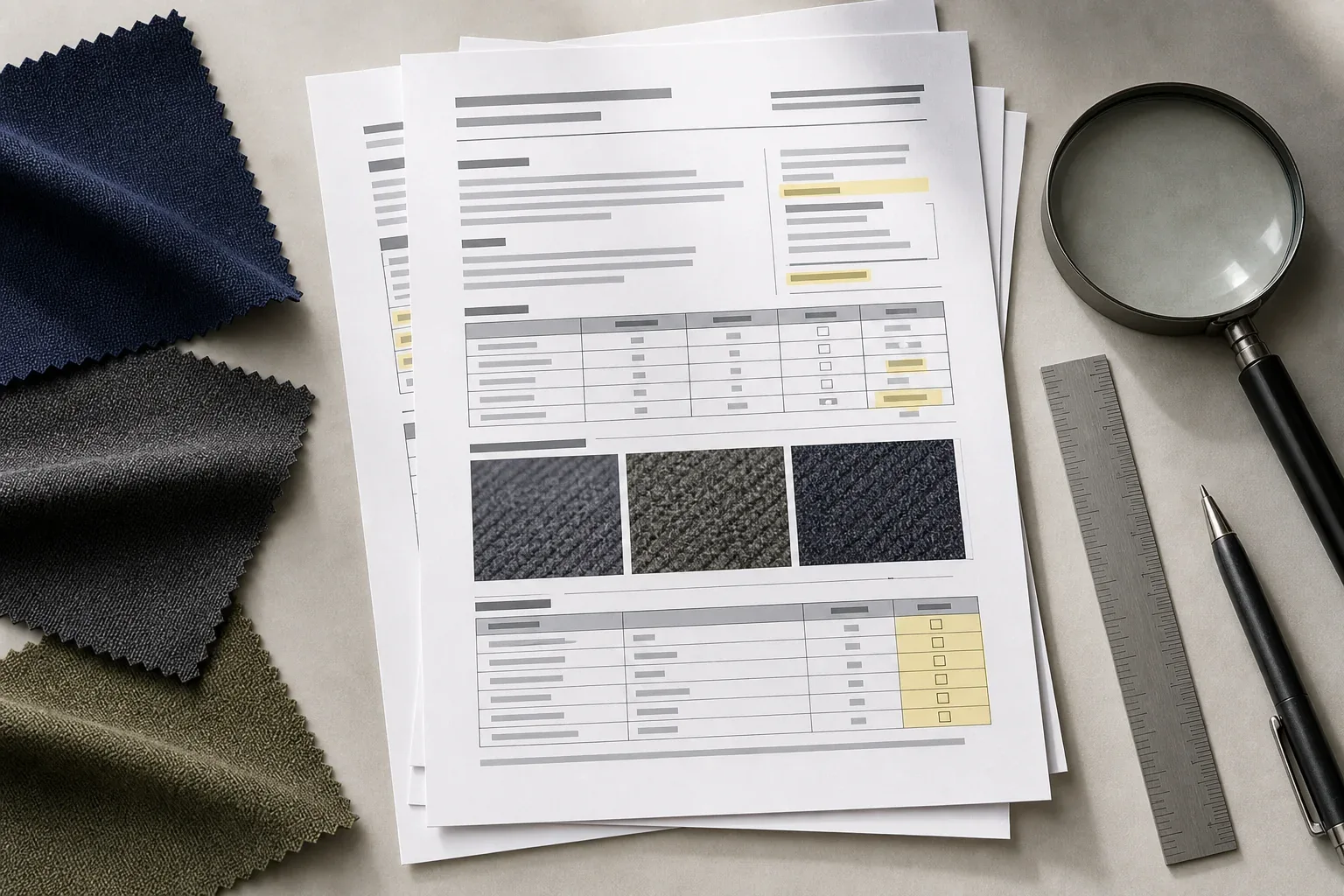
Use the fabric swatch approval checklist to preserve identity and disposition. If the buyer changes from one candidate to the other, treat that as a material change: review the pattern, fusing, sewing, decoration, care and measurement consequences rather than editing only the BOM name.
Let the Shirt Sample Decide the Wear Questions
Avoid shortcuts such as “poplin is always breathable,” “Oxford never wrinkles,” or “the heavier-looking option is more durable.” Those outcomes depend on the actual construction, fiber, yarn, finish, color, garment pattern and care state. If wrinkling controls material approval, compare the identified candidates through the fabric wrinkle recovery guide rather than infer a result from either fabric name.
On a production-intent shirt sample, review:
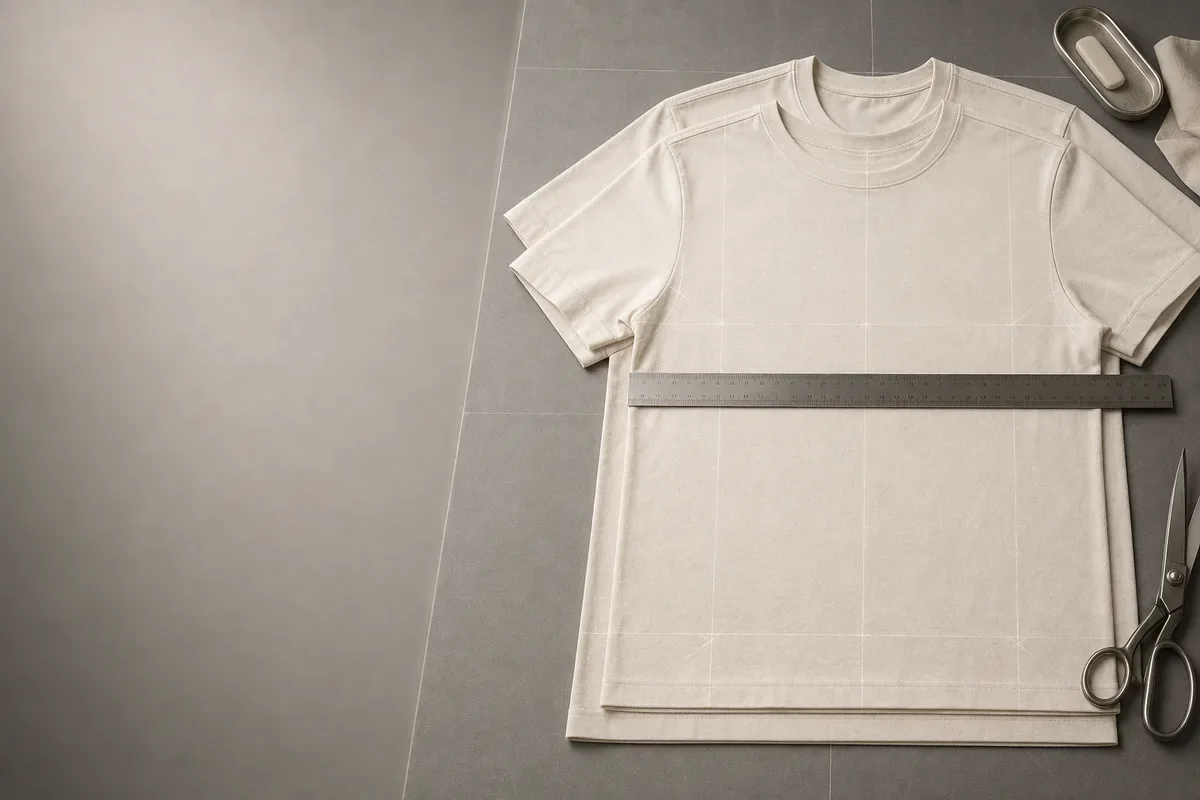
- silhouette and drape at the shoulder, chest, sleeve and hem;
- show-through at the intended color and garment layers;
- collar, cuff and placket response with the specified interlining;
- seam puckering, feed marks and distortion at straight and curved seams;
- buttonhole, button attachment and placket stability;
- mobility at the back, armhole and elbow;
- surface change, skew and dimensional movement after the agreed care route; and
- hand feel and appearance after the agreed handling and pressing state.
Use the same style intent, size, color family and care state when comparing candidates. The pattern or sewing settings may need controlled adjustments for each fabric; record those changes so the comparison remains interpretable.
The cotton shrinkage tolerance guide owns the dimensional-change workflow. This article does not assign a universal shrinkage allowance to Oxford or poplin.
Do Not Pre-Approve Decoration from the Fabric Name
“Use poplin for printing” and “use Oxford for embroidery” are not approval rules. Decoration depends on the submitted fabric surface, yarn movement, finish chemistry, color, artwork, backing or stabilizer, needle and thread, process settings and care route.
Run the actual decoration on the identified candidate. Review it on the garment or a representative panel for:
- line definition and registration;
- strike-through, penetration or unwanted show-through;
- puckering and local distortion;
- needle or heat effects;
- adhesion or surface change where relevant; and
- appearance after the agreed care route.
Approve the decorated sample ID, artwork revision, placement and process settings together. A clean trial on one poplin article does not approve another poplin, and an embroidery trial on one Oxford does not transfer automatically to another weight, finish or construction.
Use a Shirt-Fabric Approval Matrix
The third information gain is one matrix that prevents the fabric name from outranking the evidence.
| Field | What to record | Approval check |
|---|---|---|
| Material identity | Supplier, article, lot, color, face/back and usable width | Matches swatch, report, sample and BOM |
| Construction | Supplier weave description and, where needed, construction diagram | Oxford or poplin label agrees with submitted fabric |
| Warp yarn | Fiber, yarn type, count value and count system | Field is complete and traceable |
| Weft yarn | Fiber, yarn type, count value and count system | Kept separate from warp |
| Thread density | Ends and picks, unit, method and material state | Directions and units are explicit |
| Finished mass | GSM, method option, specimen source and tolerance | Applies to the identified finished candidate |
| Thickness | Result, method, applied pressure and state | Not substituted with GSM or hand feel |
| Finish and care | Finish code, hand treatment and agreed care route | Same state used for comparison and approval |
| Physical swatch | Swatch ID, direction marks, date and approver | Retained as the visual and tactile reference |
| Garment evidence | Style, size, sample stage, revision and decoration | Fit, construction and after-care disposition recorded |
If a field is not needed for the program, mark it “not required” with an owner rather than deleting it silently. That makes the decision different from missing data.
Where Twill, Chambray and Flannel Fit
Twill, chambray and flannel may appear beside Oxford and poplin in a shirt brief, but do not stretch this comparison into a universal shirt-fabric taxonomy.
- Twill identifies an interlacing family with a diagonal structural effect; its actual yarns, density, mass and finish still need specification.
- Chambray is often discussed through its contrasting warp and filling appearance, but a supplier article must still be identified and sampled.
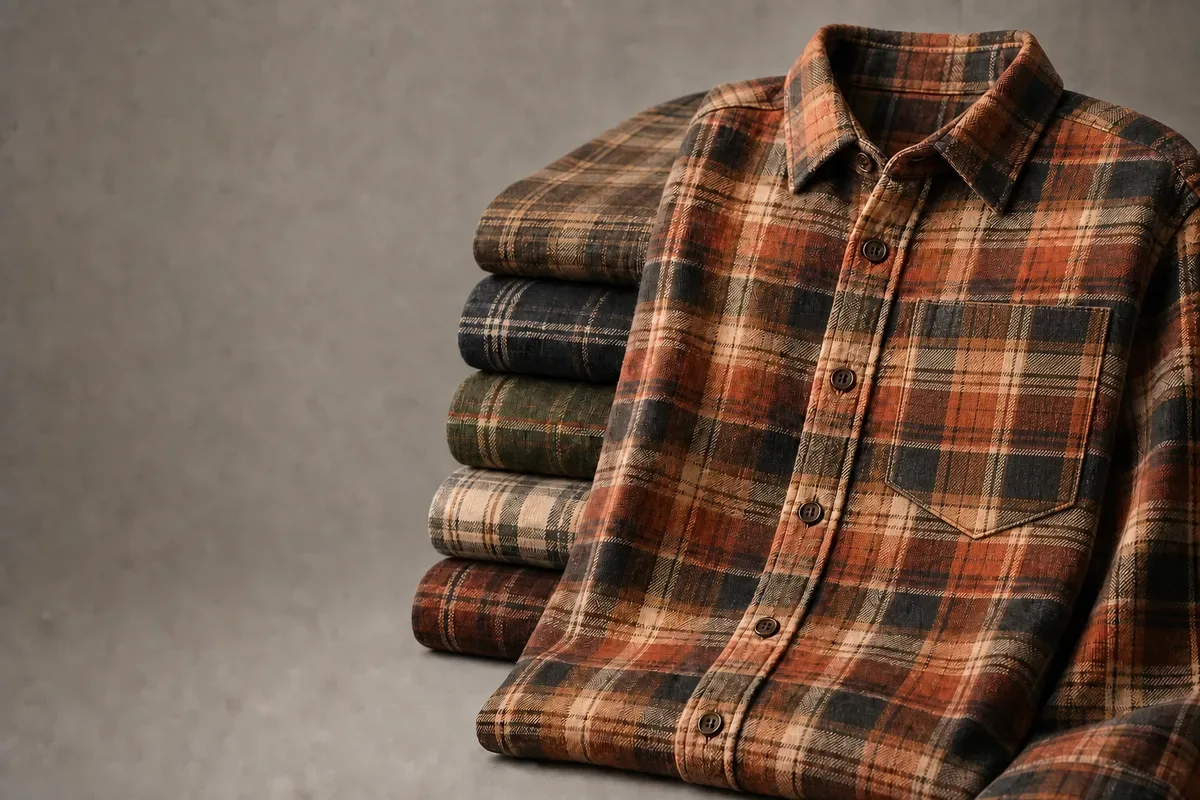
- Flannel is strongly affected by surface finishing as well as its base construction. Use the custom flannel shirt manufacturing guide for that program.
When the design changes fabric family, reopen the relevant approval fields. Do not carry an Oxford or poplin disposition to a different construction by analogy.
Buyer Handoff Checklist
Before asking a factory to quote or sample an Oxford or poplin shirt, send:
- reference silhouette, size basis and intended use;
- physical fabric reference or clearly identified supplier article;
- proposed weave and separate warp and weft yarn specifications;
- end and pick density with units;
- finished GSM, thickness and their method records if they are controlling criteria;
- approved color, finish, usable width and care route;
- collar, cuff, placket, fusing and seam requirements;
- artwork, placement and decoration trial requirements;
- swatch, sample and report identifiers; and
- acceptance criteria, approver and change triggers.
Jiashun can review the shirt brief through its custom men's shirt manufacturing service. Bring the physical reference and intended specification so feasibility can be assessed against actual sourcing and sample evidence. The fabric name alone is not a performance or production guarantee.
FAQ
Is Oxford fabric always heavier than poplin?
No. Oxford and poplin are construction starting points, not fixed GSM ranges. Compare the finished mass and thickness of the identified candidates under aligned methods and material states.
Is poplin always more breathable than Oxford?
No. Breathability cannot be approved from the commercial name alone. Yarn, density, finish, thickness, garment layers, fit and the selected test or wear evaluation all affect the decision.
Does a higher yarn-count number always mean a finer shirt fabric?
No. Yarn-count systems can be direct or indirect, so their numerical direction differs. Record the count system, value, yarn direction and source before comparing two specifications.
Is fabric thread count the same as GSM?
No. End and pick density count warp and filling threads per unit length. GSM is mass per unit area. Yarn count and thickness are separate fields again.
Can a swatch approve an Oxford or poplin shirt for production?
A swatch can approve material identity, appearance and specified fabric fields, but it cannot answer every garment question. Use a traceable production-intent shirt sample for fit, seam, fusing, decoration and after-care decisions.
Which fabric is better for embroidery or printing?
Neither name guarantees decoration performance. Trial the actual artwork and process on the identified finished fabric, then approve the panel or garment after the agreed care route.
Primary Technical Sources
- ISO 7211-2:2024 — Textiles: Methods for analysis of woven fabrics: Determination of number of threads per unit length, accessed August 17, 2026.
- ISO 7211-5:2020 — Textiles: Methods for analysis of woven fabrics: Determination of linear density of yarn removed from fabric, accessed August 17, 2026.
- ASTM D3775-17(2023) — Standard Test Method for End (Warp) and Pick (Filling) Count of Woven Fabrics, accessed August 17, 2026.
- ASTM D3776/D3776M-20(2025) — Standard Test Methods for Mass Per Unit Area (Weight) of Fabric, accessed August 17, 2026.
- ASTM D1777-26 — Standard Test Method for Thickness of Textile Materials, accessed August 17, 2026.
- CottonWorks — Basic Woven Fabric Designs, accessed August 17, 2026.
- CottonWorks — Construction of Fabric, accessed August 17, 2026.
- Cotton Incorporated — Textile Yarns, accessed August 17, 2026.