Custom Flannel and Plaid Shirt Manufacturing: Weights, Washes, Pattern Matching
Premium flannel quality shows in its seams, placket, buttons, and especially plaid alignment. This guide explains the construction choices that turn a custom shirt brief into a factory-ready specification.
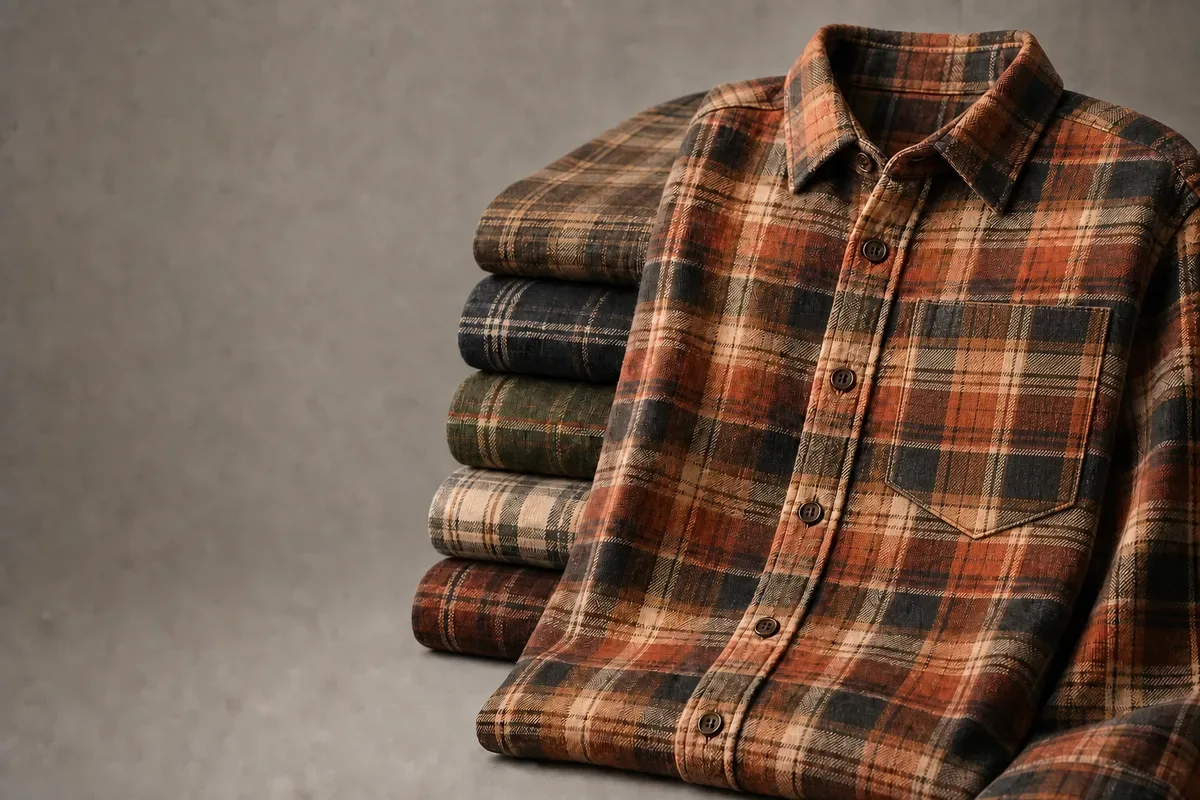
Shirts are the category where construction quality is hardest to fake. A hoodie hides its seams in fleece; a shirt shows every seam, every button placket, and — on a plaid — every place the pattern does or does not line up. This guide covers the decisions that determine whether a custom flannel reads premium or promotional. We run a cut-and-sew factory in Humen, Dongguan; plaid and flannel shirts are one of our core shirt builds.
Pattern matching is the quality signal
On a plaid or check, the first thing a trained eye checks is whether the pattern continues across seams: front plackets, chest pockets, side seams, sleeve-to-body. Matching costs fabric — panels must be cut where the pattern allows, not where the marker is most efficient — which is exactly why mass-market plaids skip it. Decide the matching level upfront:
| Matching level | Fabric consumption | Cost impact |
|---|---|---|
| Full matching (placket, pockets, side seams) | Highest; panels cut where the pattern allows, not where the marker is most efficient | Premium look with the most extra fabric and cutting time |
| Placket and pocket matching only | Lower; front matched, side seams free | The common streetwear compromise |
| Deliberate mismatch / patchwork | Specced as a panel map, not a single fabric | An intentional design language, itemized in the quote |
A plaid patchwork shirt shows the deliberate-mismatch route: the "flaw" becomes the concept, with mixed panels and contrast blocks.
Send reference photos and we will tell you which level they show; it is usually the placket-and-pocket compromise.
Flannel weight and face
Flannel is a brushed woven — the nap is raised after weaving, which is what makes it read soft and warm. Weight and brushing depth set the character: lighter flannels drape and layer under jackets; heavier, deeply brushed cloth stands on its own as outerwear-adjacent. If your reference is a shacket rather than a shirt, say so — the pattern, interlining and button choices all shift.
Two builds from our line show the range: a cropped boxy flannel in oversized proportions — fashion cut, mid weight — and a double-layer flannel with waffle thermal lining and embroidery, which is functionally a light jacket. Same category, very different specs and quotes.
Washes work on wovens too
Acid wash and vintage washes are not just for fleece. On a plaid, an acid or enzyme wash mutes the check, softens the hand and ages the garment into something that looks found rather than bought — see the effect on an acid-washed vintage check flannel. Two spec notes: washed shirts should be cut with shrinkage allowed for (the wash decides the final measurements, so we sample-wash first), and intensive wash programs can raise the final minimum. Our wash comparison guide explains the finish options; denim washes explained covers the same logic on indigo.
Fit: the same streetwear grammar applies
The oversized/boxy/cropped vocabulary from tees and hoodies carries straight into shirts: boxy cropped button-ups, dropped shoulders, oversized silhouettes worn open over a tee. The shirt-specific decisions on top of fit: collar style, cuff construction, button material (including statement choices — frog buttons on a loose short-sleeve plaid change the whole read), and whether the hem is straight (worn open/untucked) or curved.
How to brief a shirt in one message
Send reference photos front and back, the fit in one sentence, the plaid or fabric direction, matching level, wash, decoration, and quantity per colorway. A formal quote follows after sufficient project details are reviewed, and any useful production updates are agreed before work begins.
Planning numbers: MOQ starts at 50 pieces; the final minimum and sample pricing depend on the product, fabric, wash and customization. Simple samples typically take 10-18 working days after project details are confirmed; complex styles or processes take longer. Bulk typically takes 20-30 working days after approval. The full shirt program is on our shirt manufacturer page.
FAQ
Can you match a plaid from a photo? We can get close — plaid repeat, colorway and scale are readable from a good flat photo — but an exact match needs either the fabric source or a physical swatch. Custom-woven plaid to your exact colorway is possible; it changes fabric minimums, and we will quote it explicitly.
Why do plaid shirts cost more than solid ones in the same fabric weight? Pattern matching consumes extra fabric and cutting time, and checks demand more careful sewing — misalignment shows. The quote itemizes it, so you can choose your matching level with the numbers in front of you.
Does embroidery work on flannel? Yes — embroidery is usually the better decoration on brushed cloth, because prints sit unevenly on a napped surface. Chest hits, collar details and back pieces all embroider cleanly; we advise on backing so the nap does not swallow fine lines.
Flannel shirt or shacket — where is the line? Weight and construction. Once you add a thermal or quilted lining, heavier buttons and outerwear seams, it is a shacket: different pattern, different quote. Tell us how you expect it to be worn and we will spec the right build — and if it is truly outerwear, start from the jacket program instead.