Bartack Stitch and Stress-Point Reinforcement in Clothing
A bartack reinforces a defined stress point, but the visible stitch is only one part of the decision. Map the load path, compare backing, rivets and design changes, then approve placement and failure evidence on the real garment.
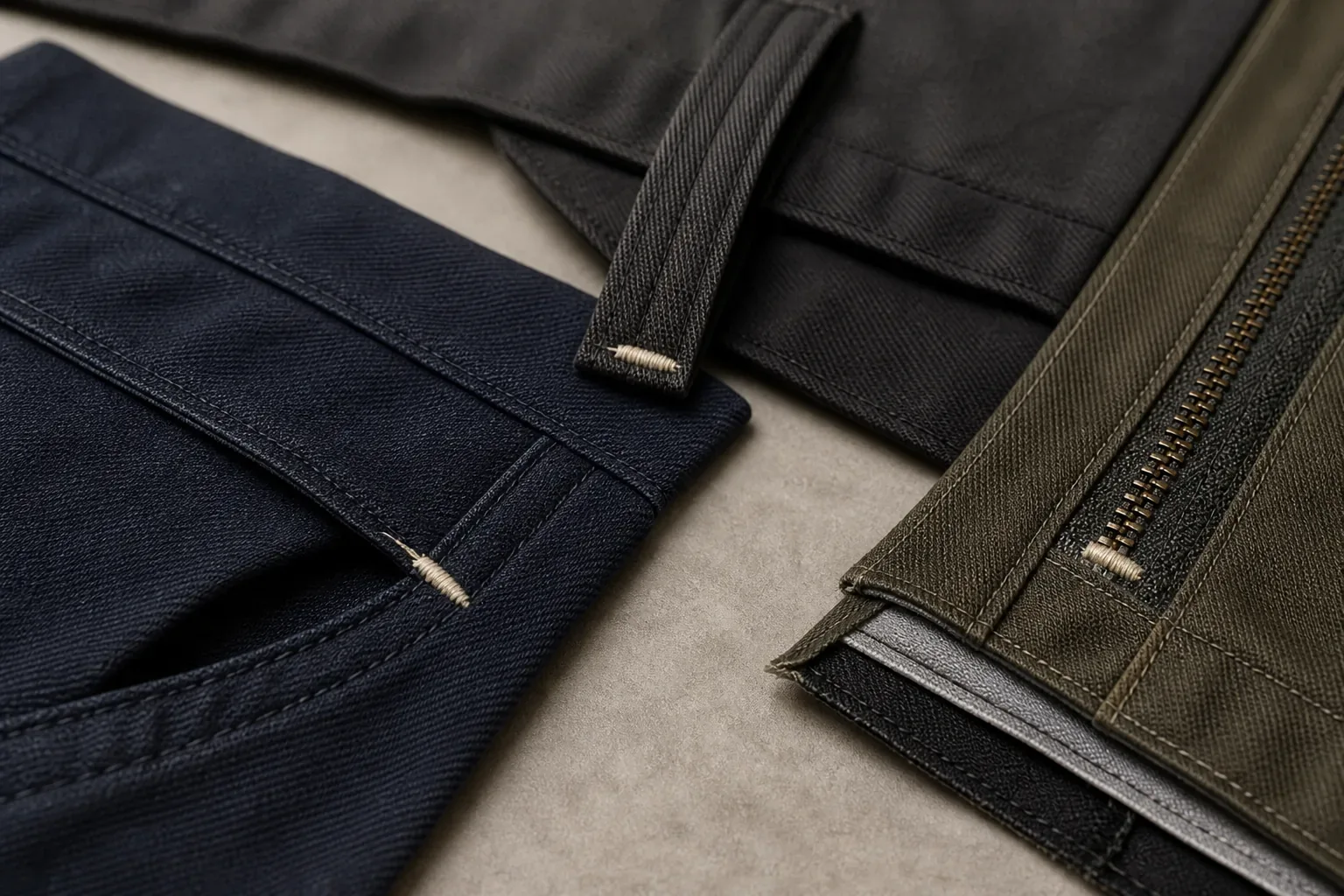
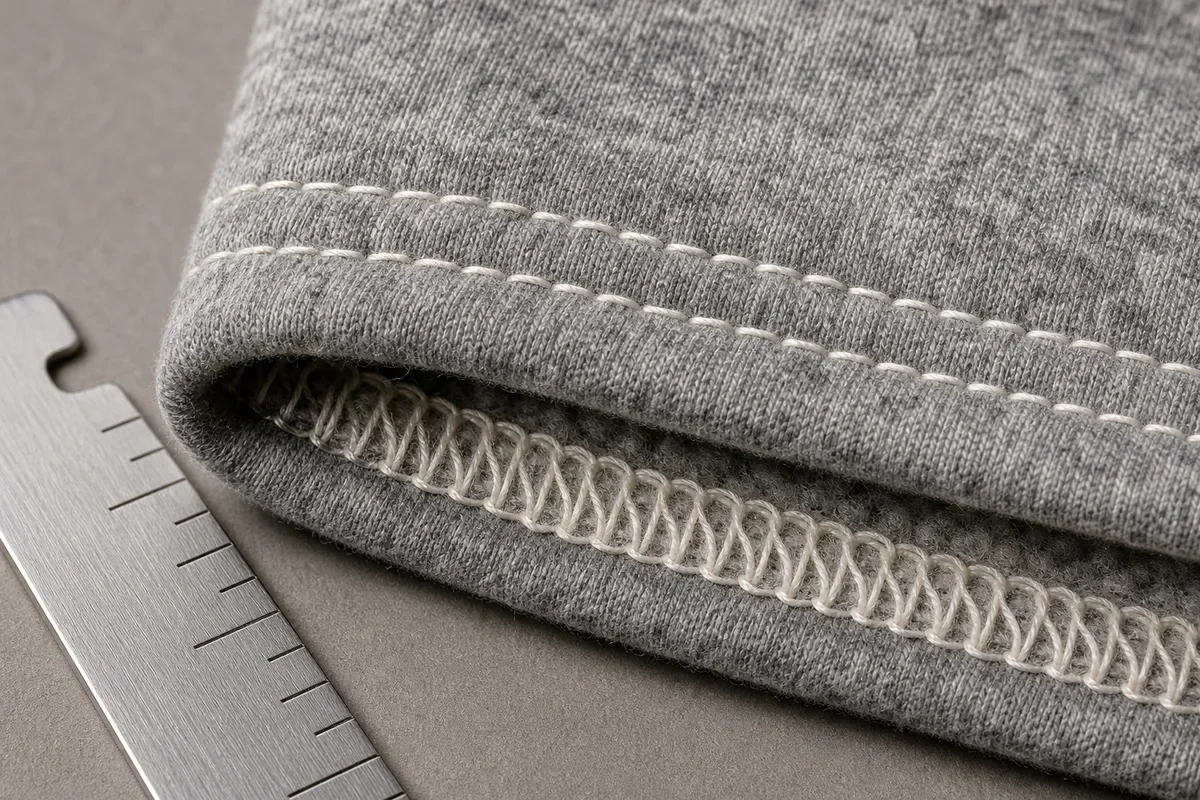
A bartack stitch is a short, dense, localized stitching operation used to reinforce a defined high-stress point in a garment. It concentrates extra thread and penetrations where a load enters, changes direction or ends. Pocket openings, belt-loop attachments, zipper areas and the ends of slits are familiar examples, but none is an automatic instruction: the correct reinforcement depends on the material, layer stack, component geometry, load direction and intended appearance.
A bartack is not a universal stitch-class setting, standard length or guarantee of strength. It can help an engineered load path; it can also cut, distort or visually damage fabric when copied from another product without testing. For a clothing brand, the useful question is therefore not “Do we add bartacks?” but “Where does this garment transfer load, what failure are we preventing, and what evidence approves the chosen reinforcement?”
What Does a Bartack Actually Do?
When a wearer pulls on a pocket edge or belt loop, force travels through the attachment, component layers, any backing and into the body fabric. A sharp corner, seam ending or abrupt change in stiffness can concentrate that force.
A correctly placed bartack can bridge that transition and distribute repeated loading through an anchored zone. Yet denser stitching is not automatically safer. Every needle penetration interacts with the fabric, and a stiff patch can move the next failure to its edge. Delicate, coated, open or highly elastic material may need support or a geometry change instead.
Bartack, Backtack and Temporary Tack Are Different
These terms sound similar but describe different jobs.
| Term | Primary job | What it does not establish |
|---|---|---|
| Bartack or bar tack | Reinforces a localized load or termination point with a dense stitch pattern | The complete seam specification or a universal machine setting |
| Backtack or reverse stitching | Secures the start or end of a conventional stitch line by sewing back over it | Reinforcement for every high-load component |
| Temporary tack or basting | Holds layers or placement during assembly and is often removed or concealed | Permanent strength unless the approved construction says otherwise |
A spoken request for “a tack here” is too ambiguous for production. Name the operation, mark its location and state its purpose. General stitch formation, stitch classes and SPI belong in the stitch-types and seam-quality guide; thread construction and size language belong in the sewing-thread specification guide.
Start With the Load Path, Not a Habitual Location
A stress-point map should connect four things: where the load enters, the direction in which it travels, the failure that matters and the evidence used to approve the response.
| Example zone | Likely load path and failure question | Evidence to examine on the sample |
|---|---|---|
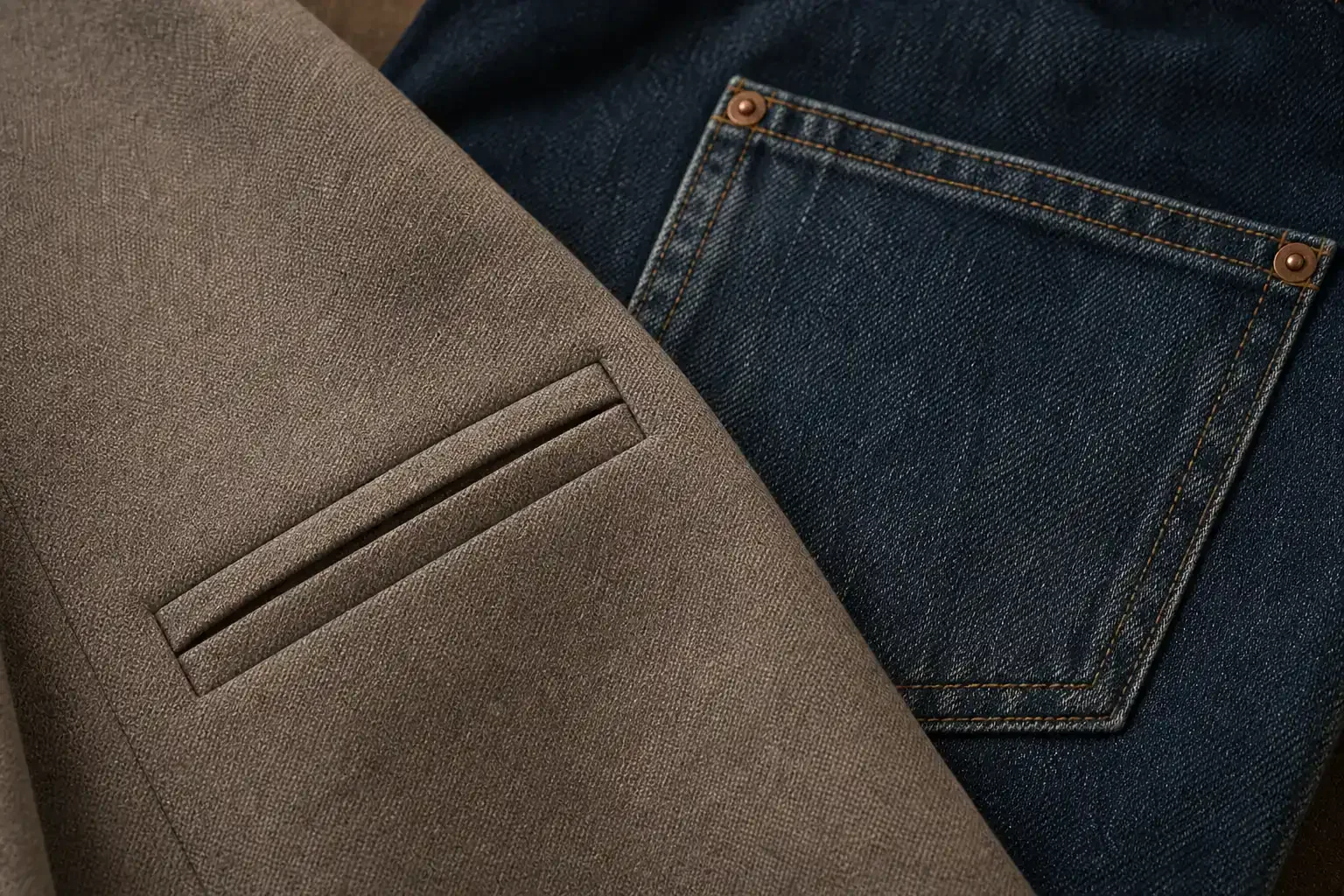
| Pocket opening or corner | Hand or contents pull through the opening into the pocket assembly and body panel; will the corner open, distort or tear? | Location after wear simulation, pocket-layer support, distortion and fabric damage |
| Belt-loop attachment | Belt and handling loads pass through the loop end into the waistband layers; will the loop detach or the ground fabric fail? | Loop alignment, layer capture, thread formation and condition around the attachment |
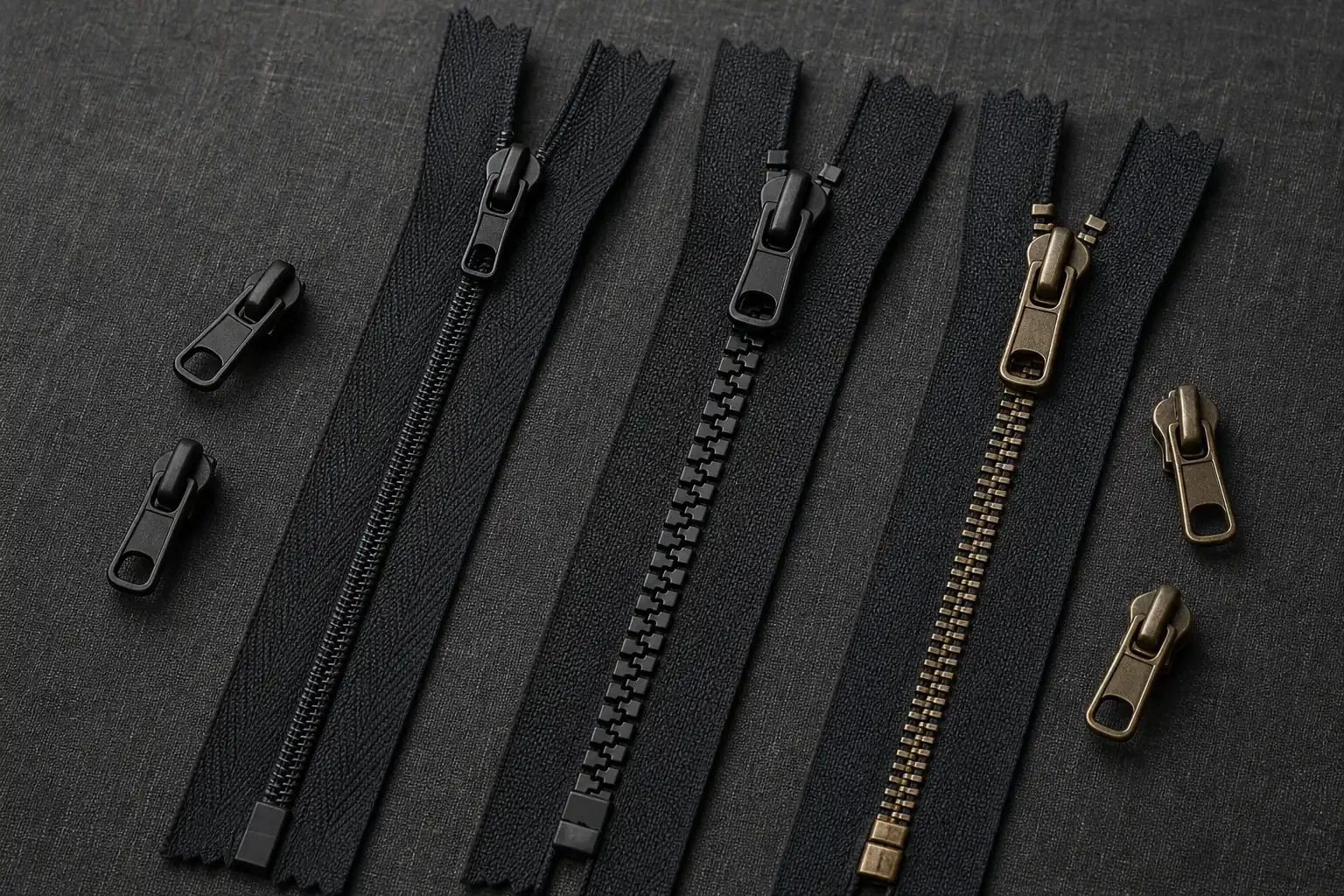
| Zipper or fly termination | Opening and closing loads move through zipper components and surrounding panels; is a stop or adjacent fabric being overloaded? | Position relative to the approved zipper assembly, operation after processing and surrounding damage |
| Slit, vent or opening end | Separation force concentrates where an open edge becomes a closed seam; will the end spread or pucker? | End geometry, direction of reinforcement and change after agreed care testing |
| Strap, tab or drawcord exit | Repeated pulling enters through a narrow component or opening; does the load spread into supported material? | Backing capture, symmetry, edge condition and movement under representative handling |
These are investigation prompts, not a universal placement chart. The pocket guide remains the owner of pocket families, dimensions and construction; the zipper guide owns zipper types and component selection. This article owns the reinforcement decision around a defined stress point.
Bartack, Backing, Rivet or Design Change?
The visible bartack is one option within a reinforcement system. Choose among options by identifying the failure mechanism first.
Use a bartack when localized stitch reinforcement addresses the load
A bartack can be appropriate where a compact, repeatable attachment supports the intended look and where the material tolerates concentrated penetrations. Its orientation should respond to the expected opening or pull direction, not simply copy the angle used on another garment. The approved sample should establish the appearance and placement reference.
Add backing when the face material cannot carry the load alone
Backing, reinforcement tape, an extra ply or a suitably engineered internal piece may spread the load beyond the visible stitch. It is particularly relevant when the surface fabric is light, mobile, open, stretchy or vulnerable to perforation. The key question is whether the bartack captures the support consistently. A backing that shifts away from the stitch path adds complexity without performing its intended job.
Consider a rivet or other hardware only as a different system
A rivet changes the material stack, appearance, hand, weight, corrosion and care considerations. It also creates a hole and a rigid load-transfer point. Hardware is not automatically stronger, and a bartack is not automatically safer. Use an approved hardware construction when the design intent and tested assembly support it; do not treat a rivet as an emergency substitute for an unvalidated sewing operation.
Change the design when reinforcement is treating the symptom
If a corner repeatedly tears beside an intact bartack, the stitch may already be stronger than the fabric around it. Moving a seam, changing a curve, widening a load-bearing area, altering a fold, capturing another layer or removing a sharp transition may address the cause better than adding thread. A design change should return to sampling because it changes fit, appearance or assembly as well as strength.
Coats' The Importance of Fly Bartack illustrates this system thinking for one narrow case: protecting the zipper and bottom-stop area of jeans and casual-trouser flies, including garments exposed to harsh industrial washing. Its position guidance and pilot-trial advice are valuable for that fly construction, but they are not universal dimensions for pockets, loops or other products.
What Should the Tech Pack Specify?
“Bartack at stress points” leaves the factory to decide both the locations and the acceptance criteria. A useful callout makes the approved intent reproducible without pretending that one setting fits every material.
Record:
- the exact component and placement landmarks, supported by an annotated drawing;
- the expected orientation and visible appearance;
- which garment layers and any backing the operation must capture;
- the intended function or failure being controlled;
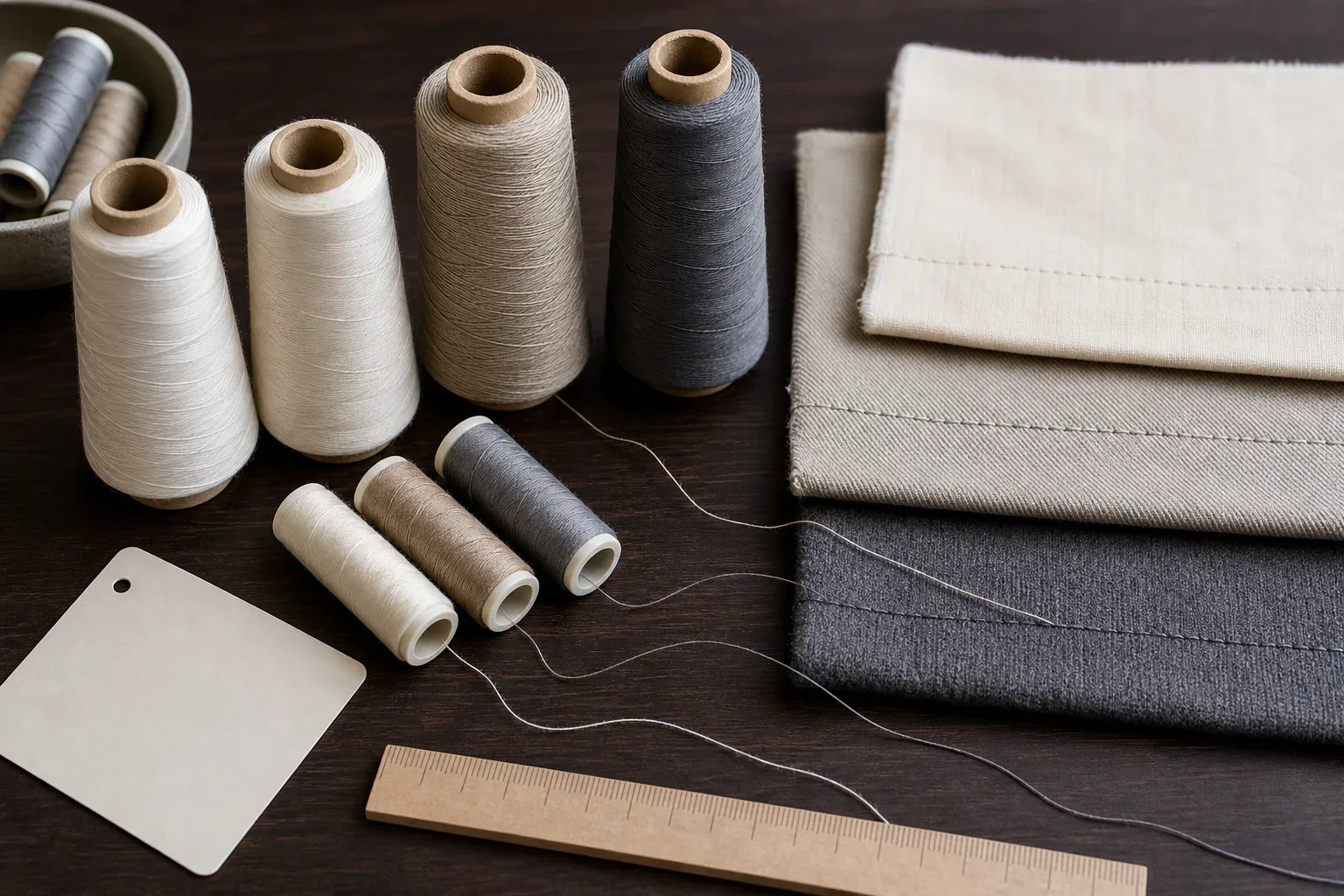
- approved thread color or a reference to the controlled thread specification;
- an approved sample, construction detail or validated program reference where one exists;
- the status of alternatives: allowed, conditional on approval or not permitted;
- the material, colorway, wash and size context covered by the approval.
Do not improvise a universal stitch count, density, length, width, thread size, needle choice, pull force or equipment program. Those details require the real material stack, machine capability and agreed acceptance evidence. If a supplier proposes a different formation, document the proposal and disposition instead of relying on “equivalent” as an undefined promise.
ASTM D6193-16(2025) is a broad practice for the categories, formation, requirements and characteristics of stitches and seams. It explains why seam engineering depends on stitch type, seam configuration, thread and material relationships. It is a technical vocabulary and engineering reference, not proof that one bartack construction has been approved for a particular garment.
How to Validate a Bartack From Sample to Bulk
Approval should connect the sample condition to evidence that can be recognized later.
- Map the stress zone. Mark the load-entry point, expected direction and adjacent seams or edges. Photograph the inside and outside before testing.
- Record the assembly context. Identify the material, color or finish, layer stack, backing, component geometry and relevant thread reference. A result without context cannot control a changed product.
- Inspect formation and placement. Look for complete, balanced-looking coverage; consistent capture of all intended layers; and alignment with the approved landmark and orientation.
- Apply representative handling and the agreed care route. Exercise the component in the way the design anticipates, then assess any wash or finish process that belongs to the product. Avoid claiming that an informal pull predicts consumer life.
- Compare the failure signature. Check whether the bartack opened, shifted or remained intact; whether the fabric tore, puckered or became perforated beside it; and whether backing or hardware moved.
- Approve the evidence, not just the wording. Retain an annotated sample or images and a clear disposition. Bulk inspection can then compare location, appearance, layer capture and damage against something concrete.
ASTM D1683/D1683M-22 measures failure in sewn seams of woven fabrics under force applied perpendicular to the seam. It can support evaluation of sewn-seam strength, seam efficiency and slippage for specified assemblies. The standard explicitly says it does not predict actual wear performance. It should not be presented as a universal bartack test, a knit method or a substitute for product-specific use and care evaluation.
Failure Evidence: What the Defect Is Telling You
A failed reinforcement should be described by where and how it failed:
- Off-location bartack: the stitch looks complete but misses the load-transfer point or intended layer.
- Incomplete or loose formation: gaps, unsecured thread or inconsistent coverage reduce confidence in repeatability.
- Thread break: the reinforcement opens while the surrounding material remains comparatively intact.
- Fabric cutting or perforation: yarns are damaged at penetrations or a tear grows beside the dense stitch. Use the needle-damage guide to distinguish cut yarns from displaced yarns or snags.
- Distortion or puckering: the area is drawn, twisted or visibly changed even if it remains attached.
- Backing shift: the support is present but no longer captured where the load enters.
- Post-wash change: thread, fabric, hardware or surrounding geometry changes after the agreed processing route.
The strongest component is not necessarily the best outcome. An intact bartack beside torn body fabric is system failure, not a pass.
When Must the Approval Be Reopened?
Review the reinforcement again when a change affects its load path or material interaction. Common triggers include a new fabric or finish, altered weight or stretch, a different layer stack, changed pocket or component geometry, a backing or hardware substitution, a thread-identity change, a new placement, a different bartack program or equipment route, and a revised wash or finishing process.
Color can also matter when dyeing or finishing changes surface friction, stiffness or visible needle marking. A previous approval is relevant evidence, but it is not automatic coverage for a materially different build.
A Buyer's Review in One Minute
On the sample, locate each annotated stress point and view both faces. Confirm intended layer capture, landmark, orientation and appearance. Manipulate the component in its use direction. Look beside the bartack for cut yarns, puckering, surface damage or shifted backing, then record and disposition any change.
That evidence-led review fits naturally within quality control and packing: the specification defines what to compare, while the approved sample and disposition define what is acceptable.
The garments where this review earns its minute are the load-bearing ones: heavyweight baggy denim with embroidered patches, camo cargo shorts with multiple pockets and canvas-twill camo work pants all carry pocket corners, belt loops and closure ends that live or die by their bartack plan.
FAQ
What is a bartack stitch used for in clothing?
A bartack reinforces a localized point where load concentrates or a seam or opening terminates. Common examples include pocket openings, belt-loop attachments and selected zipper or slit areas. These are examples, not mandatory locations; the material stack, geometry and load path determine whether a bartack is appropriate.
Is a bartack the same as a backtack or backstitch?
No. A bartack is a localized reinforcement pattern. A backtack usually means reversing over the beginning or end of a conventional stitch line to secure it. Hand-sewing terminology can use “backstitch” differently again. A tech pack should name the required operation and show its position.
Is a bartack stronger than a rivet?
There is no universal ranking. A bartack transfers load through thread and repeated penetrations; a rivet transfers load through hardware and a prepared hole. Their performance depends on fabric, backing, geometry, installation, finishing and the failure being prevented. Compare approved assemblies, not isolated components.
How can a brand inspect bartacks in bulk?
Compare bulk units with the approved sample or annotated reference: placement, orientation, visible formation, intended layer capture and surrounding material condition. Include relevant post-process checks when washing or finishing can affect the area. Do not reduce acceptance to a generic visual bar if the load point or backing is missed.
Does passing ASTM D1683 prove a garment will survive wear?
No. ASTM D1683/D1683M-22 addresses specified sewn seams in woven fabrics under a defined perpendicular force and explicitly does not predict actual wear performance. Product use, multidirectional loading, repeated cycles, washing and nonwoven or knit constructions may require other evidence.
References
- Coats Group, The Importance of Fly Bartack — a fly-zipper protection case for jeans and casual trousers, not a universal bartack specification.
- ASTM International, ASTM D6193-16(2025), Standard Practice for Stitches and Seams.
- ASTM International, ASTM D1683/D1683M-22, Standard Test Method for Failure in Sewn Seams of Woven Fabrics — woven scope; the method does not predict actual wear performance.
- Coats Group, Seam Types — seam classes, load-bearing context and seam-quality terminology.