Needle Damage in Garment Sewing: Holes, Cuts and Snags
A hole beside a seam does not establish one diagnosis. Learn how cut yarns, heat damage, pulled loops and off-line marks differ, then use location, ply and wash evidence to validate a correction before bulk.
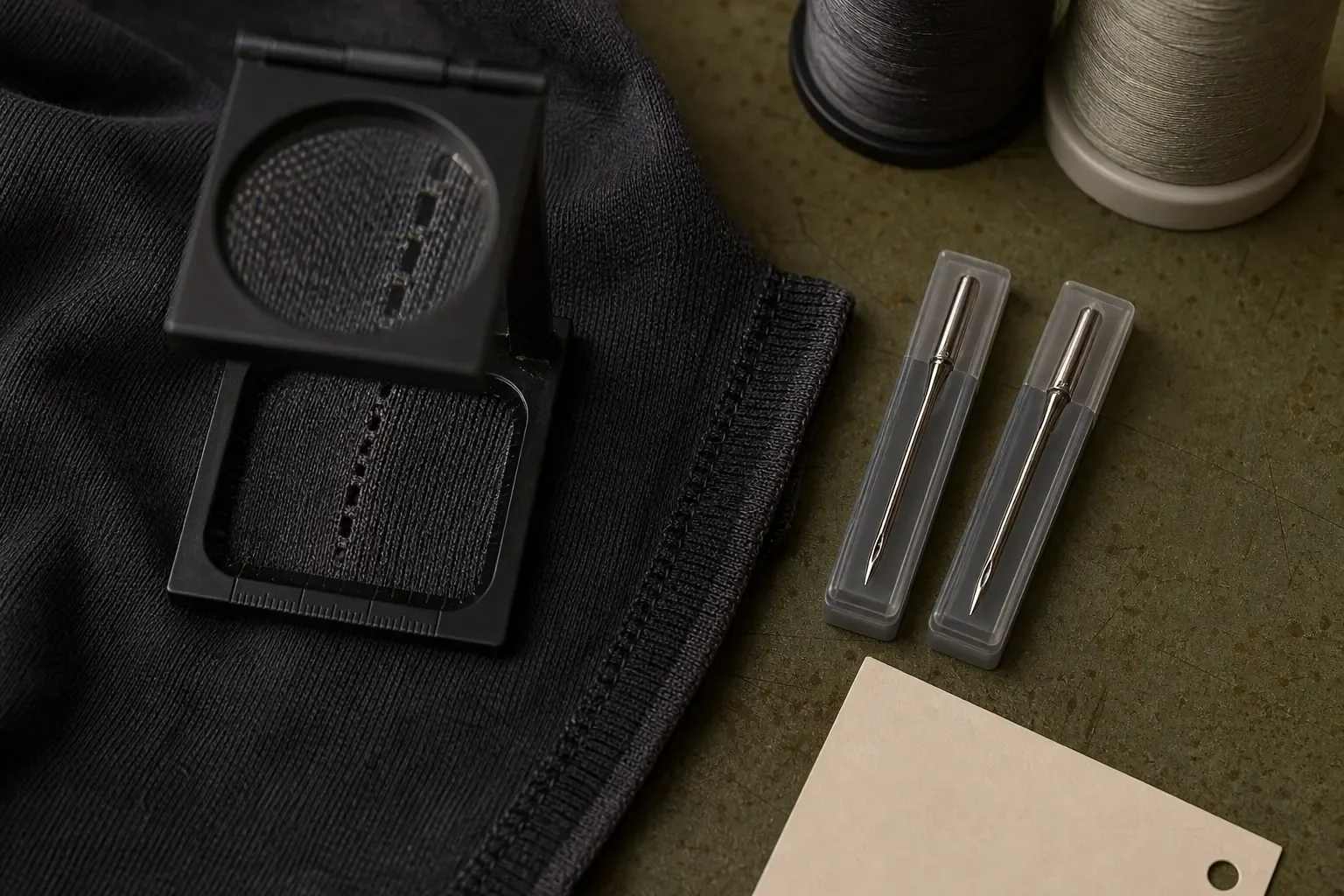
Needle damage in garment sewing means the material has been cut, weakened, melted or abraded during or around a sewing operation. A visible hole alone does not prove the cause. Inspect whether yarns are severed or merely displaced, whether the mark follows the stitch line, which ply is affected, and whether it grows after gentle stress or the agreed wash route.
This article concerns damage to garment material. It is not a broken-needle control policy, a guide to machine repair or a general test of fabric snagging resistance. Those questions require different evidence and responsibilities.
What Counts as Sewing Needle Damage?
A sewing needle is meant to pass through or between fabric yarns while carrying thread and forming a stitch. Damage occurs when that interaction breaks or weakens the fabric structure instead of leaving a stable seam.
American & Efird defines needle cutting on knits as yarn breakage when the needle enters the seam. Because knit fabrics are built from interlooping yarns, one severed yarn can create a run along the stitch line. Needle heat can create another signature by melting heat-sensitive fibers around the penetration point. Burrs or sharp surfaces on nearby machine parts can snag or abrade material without the needle point being the sole cause.
The practical question is not “Which needle caused this?” It is “What material failure is visible, where did it begin, and which controlled trial shows it has stopped?”
Which Failure Signature Are You Seeing?
Start with the yarn, not the size of the opening.
| Visible signature | What may have happened | What to inspect next |
|---|---|---|
| Severed yarns aligned with needle penetrations | Mechanical needle cutting or a damaged point may be involved | Both sides, yarn continuity, needle condition and size/point relationship |
| A run or ladder extending from a knit seam | A cut loop yarn has released adjacent loop structure | Origin at the stitch line, direction of propagation and after-wash change |
| Glazed, fused or melted fibers around a hole | Needle heat or another thermal contact may be involved | Fiber composition, exact operation, speed/heat evidence and machine contact points |
| A pulled loop or displaced yarn without a clean break | A burr, rough guide, plate, foot, folder or handling surface may have snagged it | Whether the mark follows the needle path or a handling path |
| Hole away from the stitch line | Damage may predate or follow sewing | Cutting, marker attachment, transport, rough work surfaces and finishing |
| Opening with yarns apparently intact | The yarns may be displaced rather than severed | Backlight or magnified inspection, gentle stress and comparison after care |
A snag and a cut are not interchangeable. A snag pulls yarn out of its normal position; a cut breaks it. A rough needle point can contribute to either appearance, but so can another rough surface in the material path. General fabric snagging resistance remains a fabric-performance question, not proof of what caused one seam defect.
What Does the Damage Location Reveal?
Map every mark against the stitch line and fabric ply before changing the setup.
Is the damage exactly on the needle line?
Repeated breaks centered on penetrations make the sewing operation a strong investigation point. Marks between penetrations or away from the seam require a wider search. A&E specifically advises checking whether holes occur where the needle enters or elsewhere, because off-line holes can come from earlier attachment or rough handling surfaces.
Is only the upper or lower ply affected?
If one ply is repeatedly damaged while the other remains sound, inspect the machine surface contacting that ply. A sharp edge on the needle plate, feed dog, presser foot or folder can create a one-sided pattern. A&E's troubleshooting logic treats a consistent top-only or bottom-only condition as evidence to investigate parts other than the needle point.
Does the condition appear across many operations?
Damage across unrelated seams can point toward material susceptibility or conditioning rather than one isolated machine. Fabric construction, finish, yarn mobility, moisture condition and the selected needle/thread combination can all influence penetration.
Is it intermittent on both plies at one operation?
That pattern supports checking needle point condition, point style, diameter, deflection and metal-to-metal contact. It still does not authorize a universal replacement needle. Test the actual material and thread on the actual operation.
Record the operation name, machine identity, needle system/size/point as actually used, top or bottom ply, fabric direction and material lot. Without that map, a new needle can make the symptom disappear once without proving the root cause.
Which Variables Can Cause Needle Cuts, Heat Damage or Snags?
Needle point, size and condition
Groz-Beckert's selection guidance states the useful principle: a needle should be as thin as possible and as thick as necessary. Its suggested seam trial uses gentle pulling and shearing to reveal damage, then evaluates a smaller size if damage remains. The point style must also suit the material.
“Use a ball point for knits” is too broad. A&E notes that a ball point intended to move knit yarns aside still has to match the yarn and fabric: a point that is too large can burst a fine knit, while one that is too small can pierce or weaken a larger yarn. The selected needle must also carry the thread, form the stitch and remain stable through the layer stack.
A worn, bent, burred or damaged point changes the interaction. Needle contact with a plate, guard or another metal part can damage a new point repeatedly, so replacement without alignment investigation may only reset the clock.
Needle-to-thread relationship
The thread needs to move through the needle eye without excessive rubbing, while the needle must create a path suitable for both material and thread. Groz-Beckert recommends checking that the needle can slide freely along the thread as a practical relationship test. A thick thread paired with too little clearance can contribute to thread problems and penetration stress; a larger needle chosen only to make clearance can increase material displacement.
Thread taxonomy and stitch-class selection remain with the stitch and seam quality guide. This diagnosis records the actual combination and the corrected trial; it does not prescribe one Tex or ticket size.
Fabric construction and condition
Tightly constructed or fine fabrics leave less room for yarns to move aside. Knit loop size, yarn friction, finish and direction also matter. Dry or brittle material can behave differently from conditioned goods. If damage is common across operations, retain roll and lot identity and involve the fabric supplier or a competent laboratory rather than assuming every machine is independently wrong.
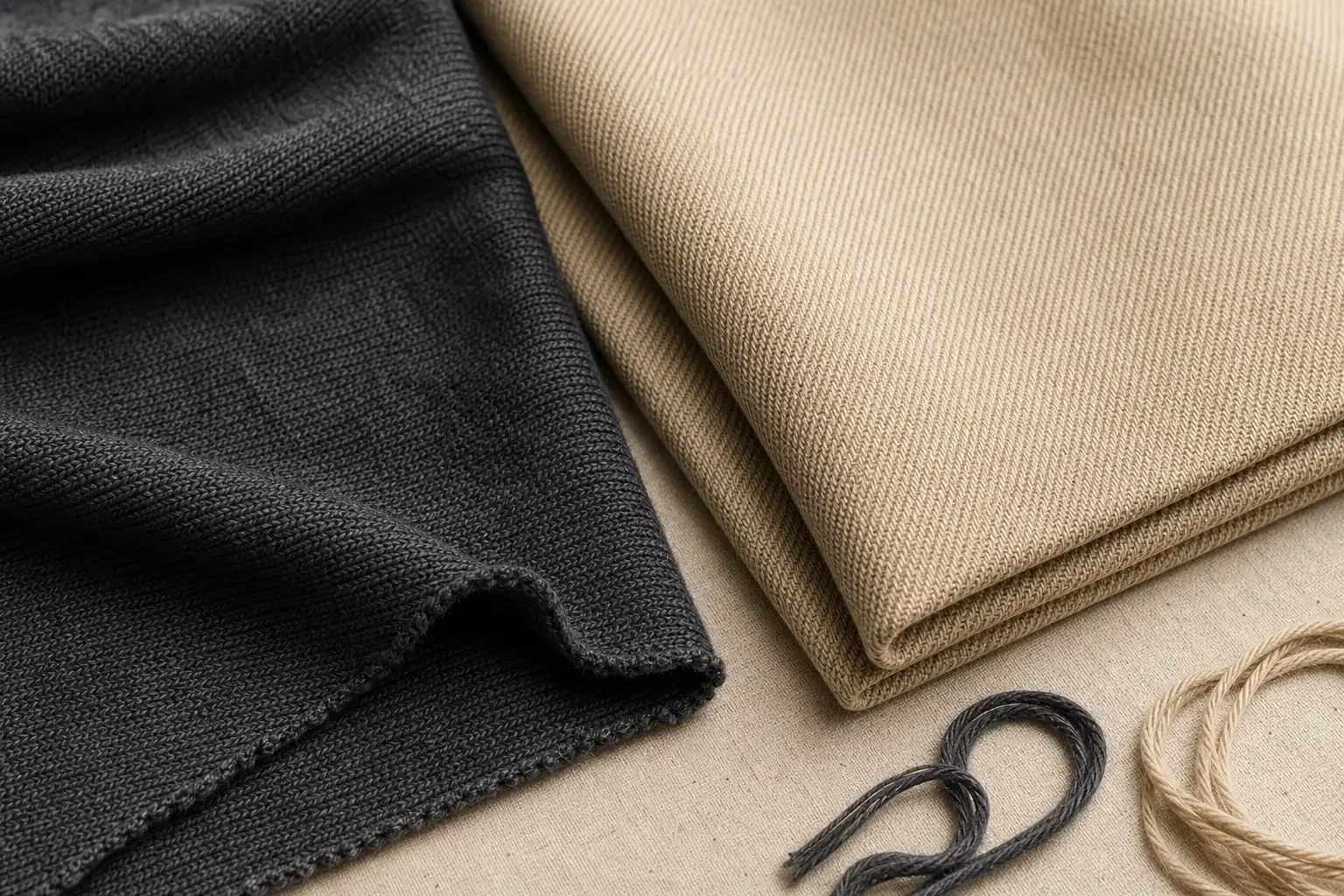
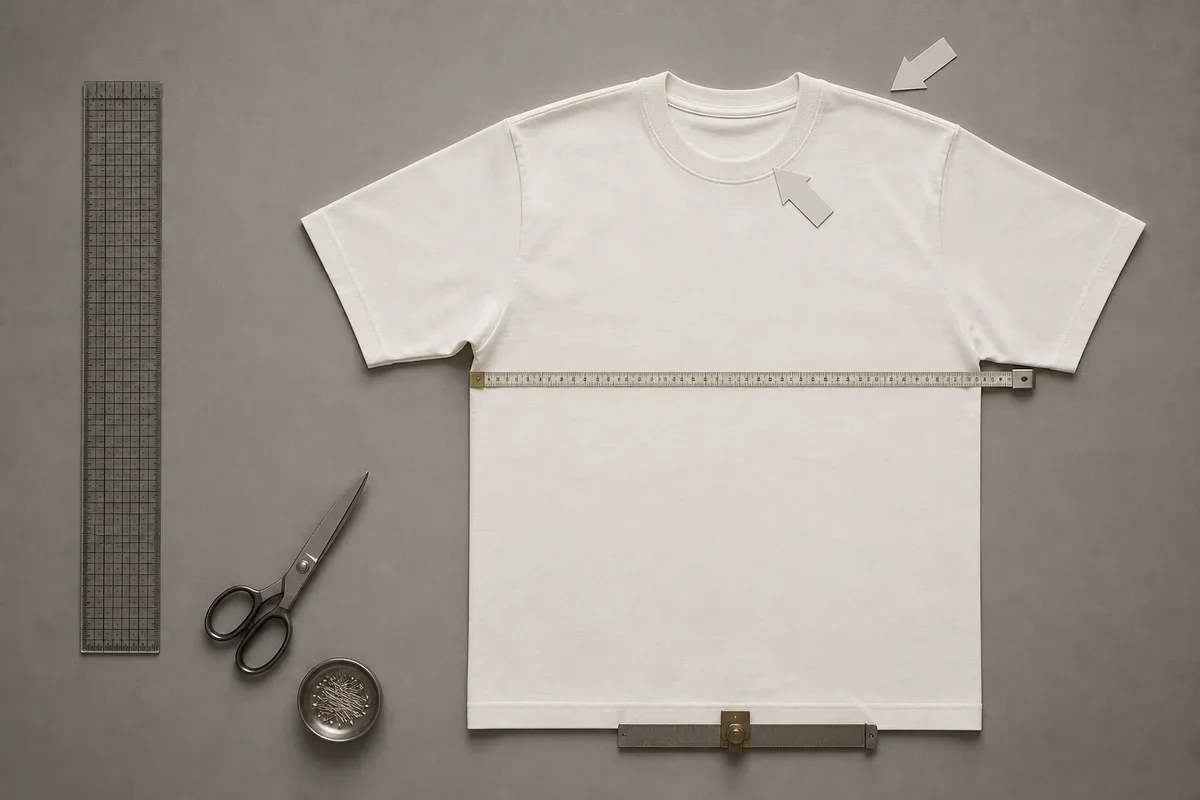
The visual difference matters across products. A heavyweight boxy cotton T-shirt uses knit panels whose loops can run if a yarn is severed. A baggy washed denim pant uses woven denim and includes multilayer seam crossings. These examples show different construction questions; they do not assign a needle size to either garment. The knit-versus-woven guide owns the broader structure comparison.
Plate, feed, foot, folder and material path
A needle is not the only hard surface near a seam. A burr on the plate, feed dog, presser foot, guide or folder can catch a yarn. Material can also be pinched or dragged across a rough edge. Inspect the full path, especially when damage stays on one ply or appears beside rather than at the penetration.
Needle heat
High-speed penetration and friction can heat a needle. A&E recommends looking for melted fibers around the needle hole before classifying heat as the problem. A 2022 ASTM Journal of Testing and Evaluation study found that fabric and sewing-parameter combinations affected measured needle temperature under its experimental conditions.
Do not turn that finding into one universal speed or temperature limit. Fiber composition, layer count, thread, stitch formation, machine and operation change the thermal system. Heat belongs in the root-cause record when there is thermal evidence, not whenever a hole appears.
Why Can Holes Appear or Grow After Washing?
A cut yarn can be hard to see while neighboring loops or yarns still hold it in place. Stretch, wear and laundering can let the damage open. This is especially consequential in a knit, where one broken loop yarn may release a run.
A 2022 peer-reviewed study of sewing damage in six single-jersey fabrics measured needle-hole area before and after repeated washing. Under that study's conditions, fabric type, sewing direction, sewing thread type and needle size affected damage, and washing increased the measured damage. Its result supports a post-wash check; it does not supply a universal needle or acceptance value for every knit.
Inspect the same marked seam at three stages:
- Immediately after the trial seam.
- After gentle movement or the agreed functional stress check.
- After the agreed wash-and-dry route, when the garment is intended to be washable.
Use consistent lighting and magnification. Photograph both faces and keep the sample ID in frame or in the linked record. A new hole found only after wash should be traced back to its exact pre-wash location rather than described from memory.
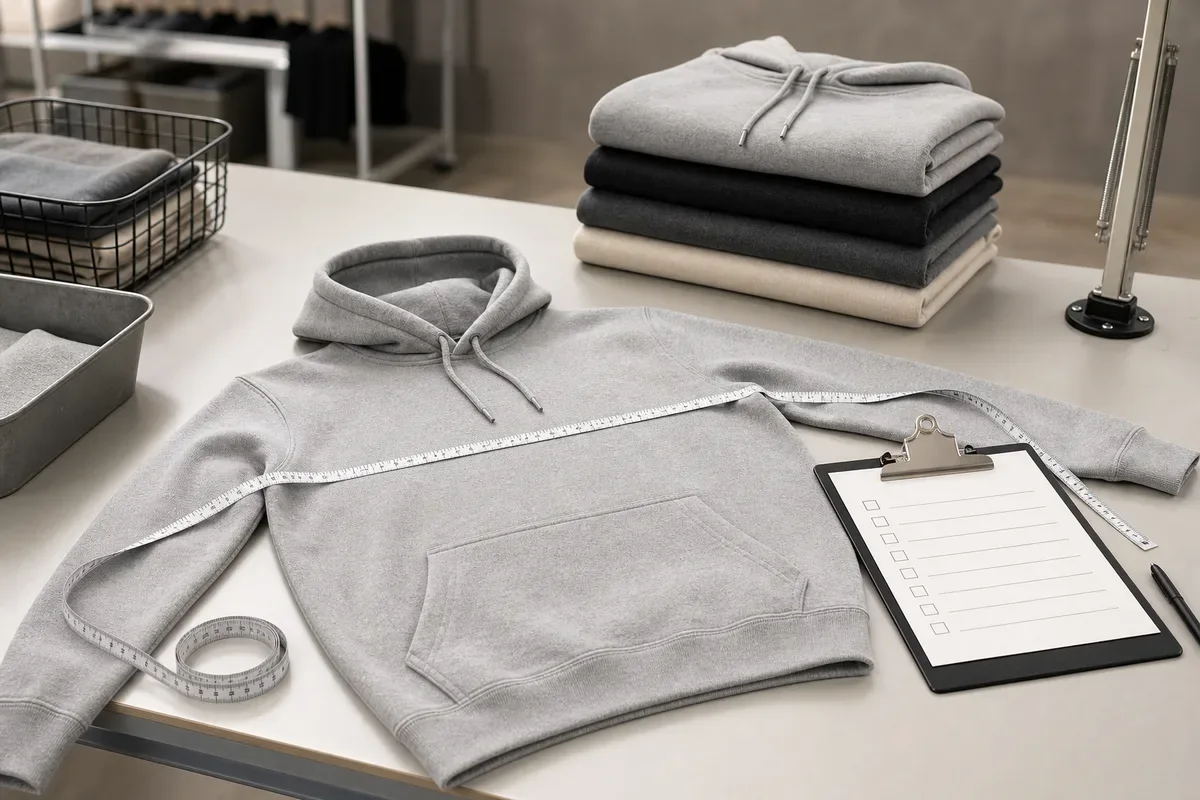
A French terry essentials hoodie illustrates why one garment may combine body seams, rib, pockets and thick crossings. A correction proven only on a single flat ply has not yet been proven at those operation-specific stacks.
How Should a Brand Validate the Correction Before Bulk?
Use a controlled seam trial on production-representative material.
Preserve the starting evidence
- Identify fabric and trim lots, face/back and direction.
- Record the operation, layer stack, machine and actual needle/thread combination.
- Photograph the defect under normal light and backlight or magnification where helpful.
- Keep an unaltered defect sample; do not unpick every example.
Change a defined variable set
The technician may need to change more than one interacting variable, but the record should say what changed. Possible investigation areas include needle condition, point and size relationship; thread relationship; alignment and deflection; speed or cooling when thermal evidence exists; presser-foot control; and sharp surfaces in the material path.
The brand approves the outcome, not an isolated machine value. A trial is unsuccessful if the hole disappears but the new setup creates skipped stitches, unstable stitch formation, weak seams or unacceptable appearance.
Repeat the relevant exposure
Sew the same direction and layer stack, including crossings. Inspect both plies. Apply the same movement, finish and care route that revealed the original damage. Compare the corrected sample with the preserved defect and approved appearance reference.
Define the production gate
State which operation receives inline attention, how a recurring mark is escalated and who can release production after correction. Finished-lot sampling, defect severity and acceptance belong in the garment inspection and AQL plan; one corrected test panel does not prove an entire lot.
What Should the Damage Record Capture?
| Field | Useful evidence |
|---|---|
| Product identity | Style, color, size, sample revision and material lot |
| Exact origin | Operation, seam name, position and distance or span from a landmark |
| Material map | Knit/woven construction, direction, face/back and top/bottom ply |
| Failure signature | Severed yarn, run/ladder, melted fiber, pulled loop, abrasion or unclassified opening |
| Process identity | Machine, needle system/size/point, thread and relevant attachment as actually used |
| Detection stage | Immediately sewn, after movement, after finish, after wash or final inspection |
| Corrective trial | Variables changed and why they were selected |
| Verification | Matched before/after photographs and post-treatment result |
| Disposition | Hold, retest, approve or reject under the controlled comment revision |
The sample approval checklist provides the revision and disposition workflow. This defect record supplies the technical evidence to attach to it.
Which Shortcuts Should Brands Avoid?
- Do not assume every hole near a seam was cut by the needle.
- Do not use one fixed needle number for all jerseys, fleece, denim or layer stacks.
- Do not specify one replacement interval without process evidence; point wear and contact conditions differ.
- Do not call every knit mark a needle cut. Confirm whether yarns are severed, melted, pulled or still intact.
- Do not treat a ball point as automatically safe for every knit or an acute point as automatically correct for every woven.
- Do not copy a needle manufacturer's application table into a universal factory SOP.
- Do not classify broken-needle fragment control as fabric-damage diagnosis. A foreign-object incident requires its own documented containment and accountability.
- Do not use a general snag-resistance test to prove the origin of one sewing-line snag.
DIN 53882 covers determination of needle-cutting damage in the sewing behavior of knitted fabrics. Its existence does not create a project acceptance level. If laboratory evaluation is needed, agree the material, applicable method, conditioning, specimen preparation, report and decision criterion with the laboratory and buyer.
Frequently Asked Questions About Needle Damage in Garment Sewing
What does needle cutting look like on a knit garment?
Look for a severed yarn at or beside a needle penetration, sometimes followed by a run or ladder along the loop structure. Backlight or magnification and a gentle agreed stress check can make the broken yarn easier to distinguish from simple displacement.
Is a ball-point needle always correct for knit fabric?
No. Point geometry and size must match the yarn and construction. A&E notes that a ball point that is too large can burst a fine knit, while one that is too small can pierce or weaken larger knit yarns. Prove the choice with the actual seam trial.
Is the smallest needle always the safest choice?
Use the thinnest needle that can still carry the selected thread, form a stable stitch and withstand the operation. A needle that is too thin for the thread or layer stack can deflect, break or create other sewing faults.
Why do holes appear only after washing?
A weakened or severed yarn may remain visually constrained until washing and movement let the opening grow. A matched pre-wash and post-wash inspection can show whether the same marked location changed.
Can a rough machine part cause what looks like needle damage?
Yes. Burrs or sharp edges on a plate, feed dog, foot, guide or folder can snag or cut yarns. Repeated damage on only one ply or away from the exact needle line is a strong reason to inspect the material path.
Is needle damage the same as a broken-needle incident?
No. Needle damage describes harm to the fabric or garment. A broken-needle incident adds worker-safety and foreign-object-control questions, including containment and fragment accountability, which require a separate documented procedure.
The most defensible correction begins with a mapped defect. Identify the yarn signature, stitch-line relationship, ply and detection stage; preserve the original evidence; then approve a production-representative trial after the same stress, finish and care route.
References
- American & Efird, Reducing Needle Cutting on Knits — yarn cutting, runs, point/size matching, heat evidence and location/ply troubleshooting.
- Groz-Beckert, “Selecting needles for knitted and woven fabrics” — material-specific seam trials, needle/thread relationship and point selection.
- Groz-Beckert, “Sewing problems and how to solve them” — material damage involving needle size, point style, wear, machine parts, fabric and speed.
- SCHMETZ, “Point shapes for sewing machine needles” — how acute and rounded point geometries interact with different materials; applications remain material-specific.
- Yıldız and Pamuk, “A novel method of identifying sewing damage in single jersey fabrics”, International Journal of Clothing Science and Technology 34(5), 2022 — image-based needle-hole assessment and repeated-wash findings under the study conditions.
- Jayakumari et al., “Investigation of Change in Sewing Needle Temperature: Part I”, Journal of Testing and Evaluation, 2022 — experimental investigation of fabric and sewing parameters affecting needle temperature.
- DIN Media, DIN 53882:1990-09, Testing of textiles; determination of the sewing behaviour of knitted fabrics; needle cutting damage.
- ASTM International, ASTM D3990-12(2020), Standard Terminology Relating to Fabric Defects — woven and knit fabric-defect terminology.
Related guides
 Stitch Types and Seam Quality: A Garment Approval Guide
 Knit vs Woven Fabric: Fit, Construction and Sampling
 Garment Sample Approval Checklist: One Comment Sheet, One Revision Trail
 AQL 2.5 Explained: What Garment Buyers Should Specify
 Why Sewing Robots Still Struggle With a T-Shirt
 The Anatomy of a T-Shirt — as a Factory Actually Reads It
 Seam Puckering Causes: A Brand QC Guide