Sewing Thread Types for Clothing: A Brand Specification Guide
Construction thread is defined by more than fiber. Learn how spun, corespun and filament builds, Tex or ticket designations, finishes and sample evidence fit into a clothing BOM.
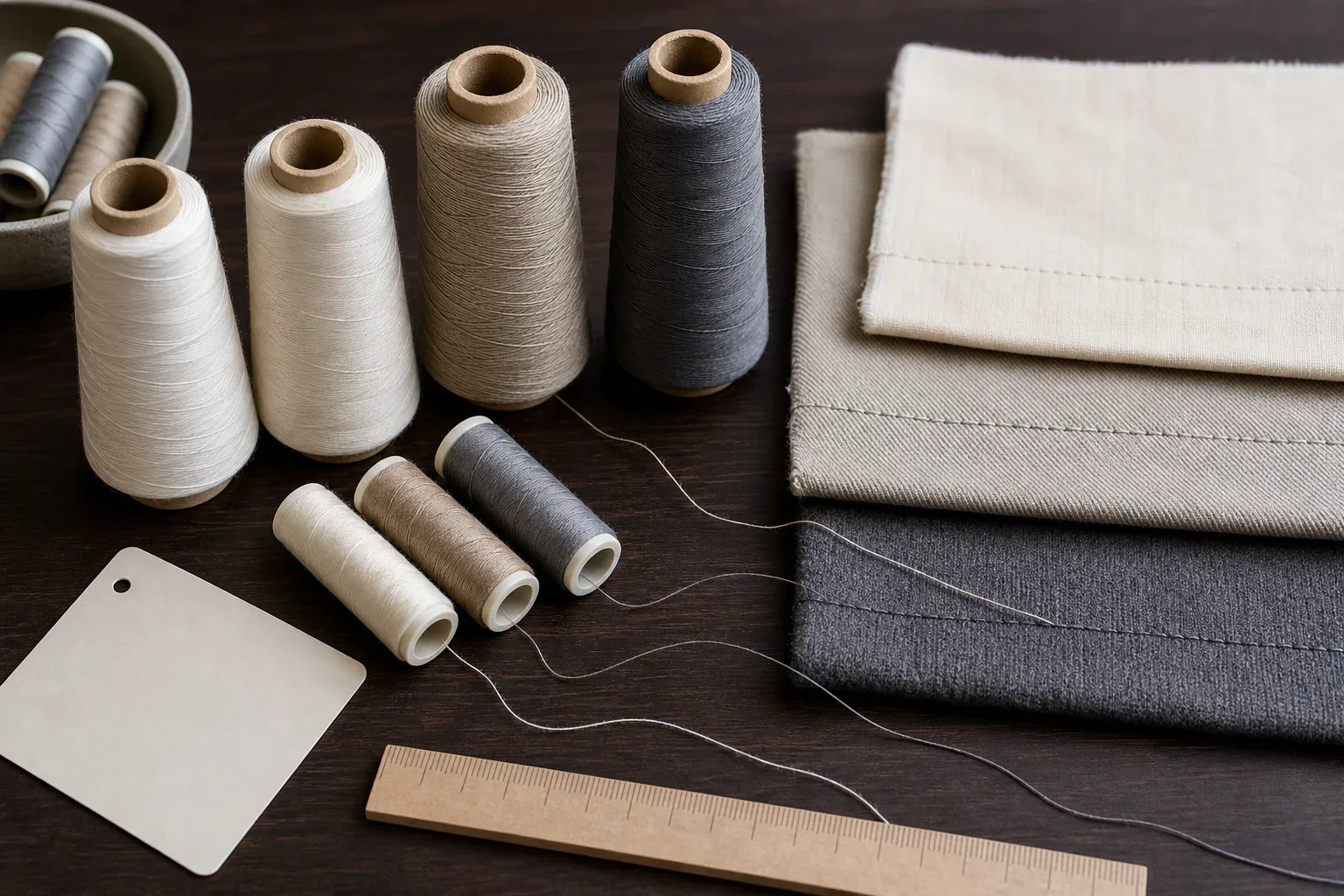
For clothing, a sewing thread type should be identified on four separate axes: fiber or substrate, thread construction, finish, and supplier-declared size. Common garment construction threads include spun, corespun, smooth multifilament, textured filament and, for limited applications, monofilament thread. None is universally best. The right choice depends on the fabric, operation, thread position, required seam result and intended wash or finishing route.
Two threads can share a fiber label yet behave differently because their constructions, finishes or linear densities differ. For development and bulk control, record the exact approved identity in the bill of materials (BOM), then confirm it on a production-intent sample.
The quick taxonomy of garment sewing thread
Thread construction describes how the component fibers or filaments are assembled. It is not the same thing as fiber content.
| Construction | What it is | Typical decision point |
|---|---|---|
| Spun | Staple fibers twisted into yarn and then made into thread | Familiar textile-like surface; verify strength, lint, sewability and seam appearance for the application |
| Corespun | A continuous-filament core wrapped with staple fibers | Combines a filament core with a spun surface; assess the required seam strength, appearance and sewing conditions |
| Smooth multifilament | Multiple continuous filaments combined into thread | Can provide a smooth, strong thread; check sheen, hand and suitability for the visible or hidden operation |
| Textured filament | Continuous filaments processed to create bulk and extensibility | Often considered where coverage, softness or extension matters, including some looper positions |
| Monofilament | One continuous filament | Can reduce visual prominence in a narrow use case, but its hand and end-use suitability require careful approval |
This is a taxonomy, not a purchase recommendation. “Spun polyester,” “polyester corespun” and “textured polyester” all use polyester, but they are not interchangeable. Cotton, nylon and specialty fibers also appear in sewing threads. If a product has a documented safety or regulatory requirement, identify the applicable product standard and required evidence; do not infer finished-product compliance from a thread fiber, construction name or supplier datasheet alone.
Specify thread on four independent axes
1. Fiber or substrate
The fiber family influences extension, abrasion response, heat response, chemical resistance, moisture behavior and colorfastness. Polyester is widely used, but is not the automatic answer for every style. Cotton may suit a surface or finishing concept; nylon and specialty fibers belong where documented properties answer a defined need.
Avoid the shortcut that a natural fabric must always use a natural thread, or that a stretch fabric always needs one named fiber. The seam is a system: fabric, thread, needle, stitch formation, feeding, tension and finishing interact. The useful question is whether the proposed thread supports the intended result on the actual material stack.
2. Thread construction
Construction changes how thread presents its surface, carries load and passes through sewing. Spun and corespun products can look similar while having different internal builds. Smooth and textured filament constructions also differ in bulk, coverage and hand.
Record the construction explicitly. A BOM line that says only “100% polyester thread” leaves too much room for an unreviewed change between spun, corespun and filament products.
3. Finish
Sewing thread comes with finishes that support processing or an end use. Lubrication, bonding and other treatments can alter sewability, surface feel or later-process response. Identify the finish from the supplier's product specification rather than appearance.
Do not assume that two products with matching fiber, construction and nominal size are equivalent if their finishes differ. If a supplier proposes a change, treat finish as one of the comparison fields and rerun the relevant approval evidence.
4. Supplier-declared size
Thread size communicates linear density or a related commercial designation. It needs a value and the system behind it. “Thread 40” is incomplete because conventions differ.
The ISO Tex system expresses linear density as grams per 1,000 metres. A higher Tex value therefore means greater linear density, or a coarser thread. Some ticket systems, including Metric Ticket, run in the opposite numerical direction, while count and commercial-size definitions can vary by supplier or market. There is no safe universal conversion based only on the printed number.
Preserve the supplier's exact product code, declared size and named system. Compare data only when systems and test bases are known. A garment category does not justify one fixed Tex, ticket or needle size.
Match the thread to the fabric, operation and seam result
A practical selection matrix starts with the use case and the evidence needed, not a universal thread-size chart.
| Application context | Selection questions | Approval evidence |
|---|---|---|
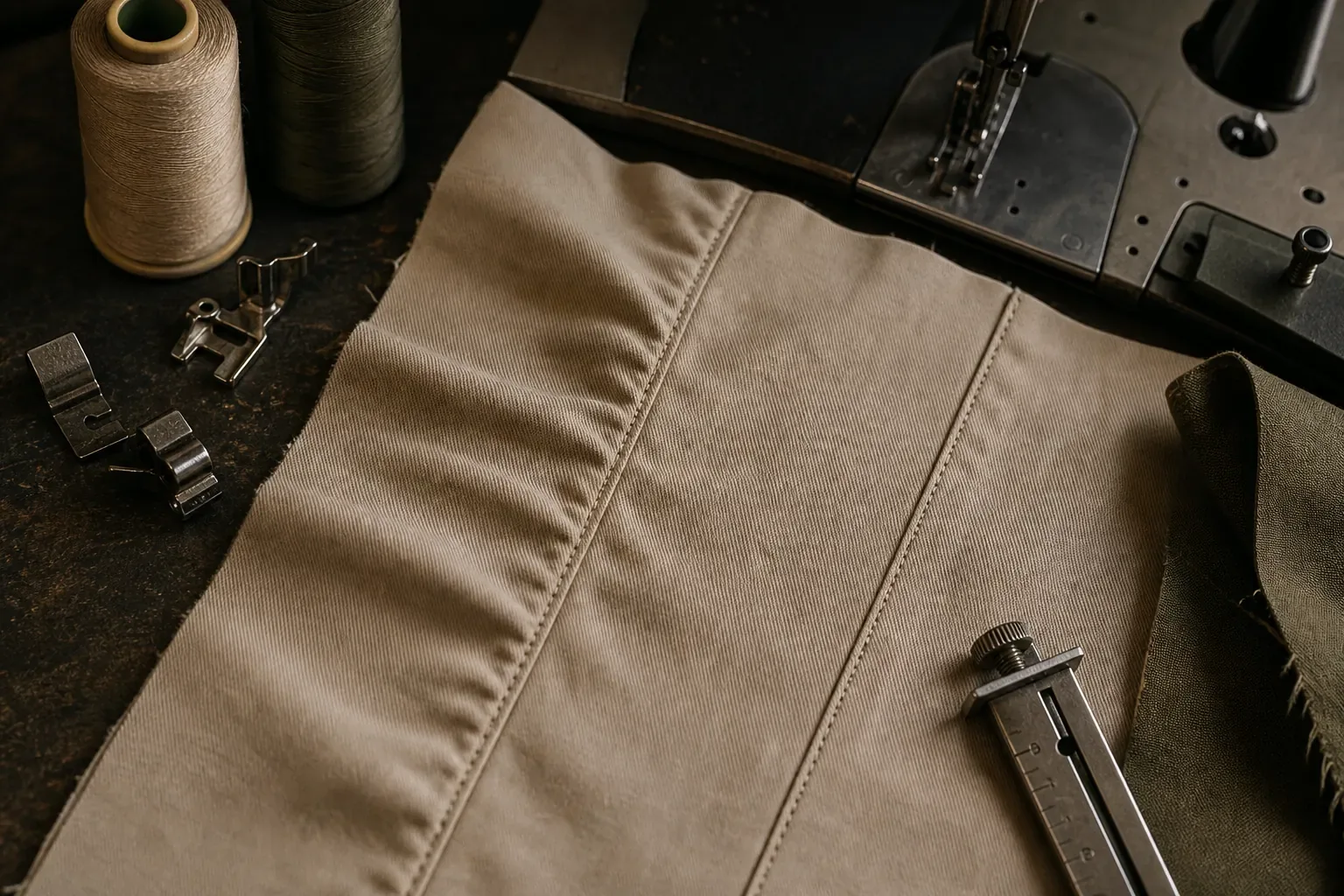
| Lightweight woven, lining or delicate surface | Will the thread dominate the surface, distort the material or feel too firm? | Inspect seam profile, hand, show-through and damage on the production-intent layers |
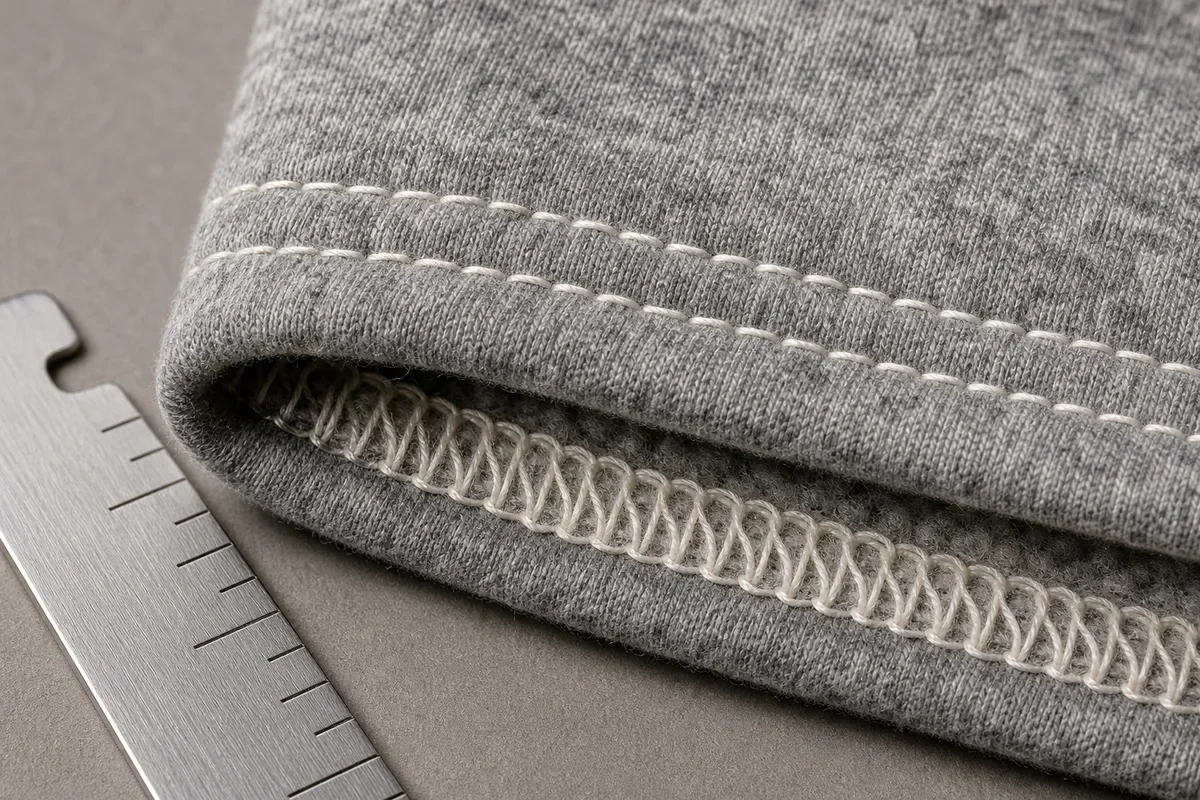
| Stretch knit assembly | Can the completed seam extend and recover for the intended wear without thread or stitch failure? | Exercise the sample in the relevant direction and assess appearance, hand and recovery |
| Visible topstitching | Is the desired line subtle, crisp or deliberately prominent, and is the sheen acceptable? | Approve appearance, shade, line consistency and reverse-side result on the actual colorway |
| Dense layers or higher-load zones | Does the thread and complete seam support the defined use without unacceptable breaks or abrasion? | Test the assembled zone under a product-relevant load or wear simulation |
| Garment-dyed, washed or specially finished style | Will shade, hand, extension and seam appearance remain acceptable after the intended route? | Review an approved sample after the representative wash, dye or finishing sequence |
The thread position matters too. A needle thread, bobbin thread and looper thread do not necessarily have the same job, so one garment can legitimately specify more than one thread product. Textured filament, for example, may be evaluated for coverage or softness in a looper position while another construction is used in the needle position.
Thread choice still does not define the stitch class, seam geometry or stitch density. Put those decisions in the operation and construction specification; see the garment stitch types and seam quality guide for that layer of the tech pack.
What to put in the BOM or tech pack
A useful thread line identifies what was approved and where it applies. It should be specific enough that sourcing, sampling and production teams can recognize a proposed substitution before it reaches bulk.
Include these fields:
- Supplier name and exact product or article code
- Fiber or substrate and thread construction
- Supplier-declared size value and named size system
- Color name plus supplier color code, where applicable
- Finish or treatment stated in the supplier specification
- Garment application and thread position
- Applicable style, colorway or operation if the thread is not universal across the product
- Substitution status: not permitted, approval required, or an explicitly approved alternative
- Approval reference, revision and date
A compact controlled line can follow this pattern:
Thread: [supplier + product code] / [fiber + construction] / [size value + system] / [color + code] / [finish] / [application and position] / substitution [status] / approval [reference and revision].
This is a buyer-side specification template, not a claim about any factory's internal SOP. The governing detail should come from the approved supplier record and the product's own development evidence.
“Same type” is not a sufficient substitution rule. If a proposed alternative carries a different product code, construction, finish or size designation, compare like-for-like documentation and sew a controlled sample. Where supplier data use different methods or size systems, note the limitation instead of inventing equivalence.
Approve the thread from sample to bulk
Thread selection is complete only when identity and end-use evidence agree. A sensible approval sequence is:
- Confirm identity. Match the cone label, product code, construction, declared size system, color and finish to the current BOM revision.
- Use production-intent materials. Sew the relevant fabric layers, trims and reinforcement with the intended operation setup. A swatch on an unrelated fabric cannot approve the garment seam.
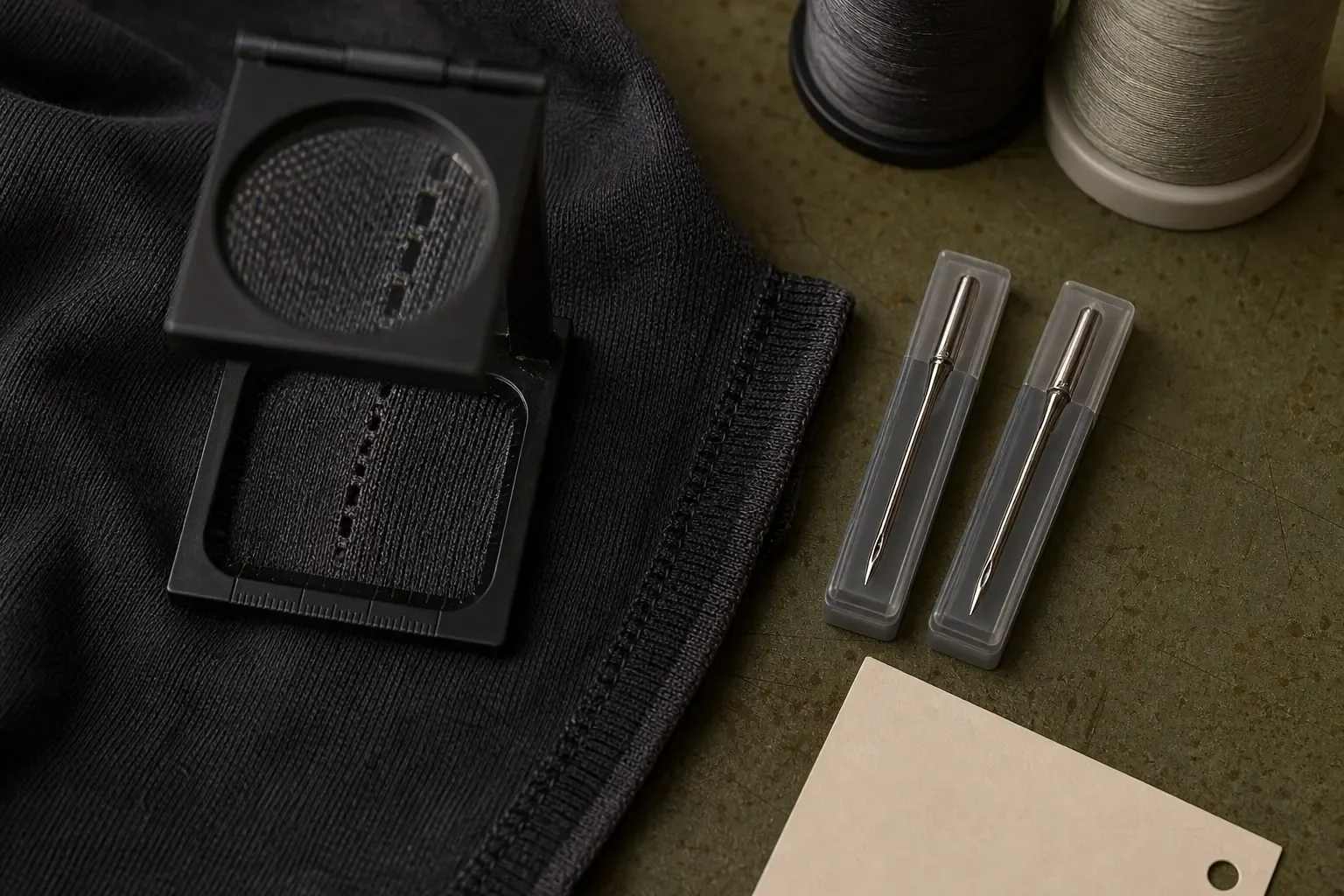
- Review sewability evidence. Record thread breaks, fraying, skipped stitches or unstable appearance observed during the sample run. These symptoms can have several causes, so keep the setup and material context with the result.
- Review the completed result. Check seam appearance, surface damage, hand, coverage and visible thread prominence from both relevant sides.
- Exercise the seam. Assess extension, recovery or product-relevant loading where the garment will experience it; do not treat unsewn thread strength as proof of whole-seam performance.
- Run the intended finish route. Recheck shade, hand, extension and seam appearance after the representative wash, dye, press or other finishing process.
- Freeze the approved identity. Attach the result to a sample or approval reference and carry the exact thread fields into the production BOM.
ASTM D204 provides test methods for physical properties of sewing thread, but its scope does not cover every aspect of end-use performance. Supplier test data can support comparison; they do not replace an assembled seam review on the intended garment.
When to reopen approval
Reopen the relevant checks when any input that supported the decision changes, including:
- Supplier or product code
- Fiber or thread construction
- Declared size value or size system
- Finish, treatment or lubrication specification
- Color specification or an unacceptable shade change
- Fabric construction, weight, coating, stretch or layer stack
- Stitch or seam specification, operation position or visible design intent
- Wash, dye, heat or other finishing route
The rerun can be proportionate to the change, but it should be documented. A color-only change may focus on shade and finish response; a construction or size change can require the full sewability and seam-result review.
Route defects to the right owner
Not every seam symptom is a thread-type problem. Use the symptom to decide what needs investigation, while retaining the approved thread identity as evidence.
| Symptom | First distinction to make | Detailed owner |
|---|---|---|
| Thread breaks or frays during sewing | Confirm product identity, threading path, needle condition, tension context and material contact points | Thread and operation troubleshooting |
| Stitch skips, cracks or opens under extension | Separate thread failure from stitch formation, stitch choice and seam geometry | Stitch types and seam quality |
| Rippling or puckering beside the seam | Check whether the driver is feeding, tension, structural jamming, shrinkage or construction | Seam puckering causes |
| Holes, cuts or laddering near needle penetrations | Distinguish needle damage from thread breakage | Needle damage in garment sewing |
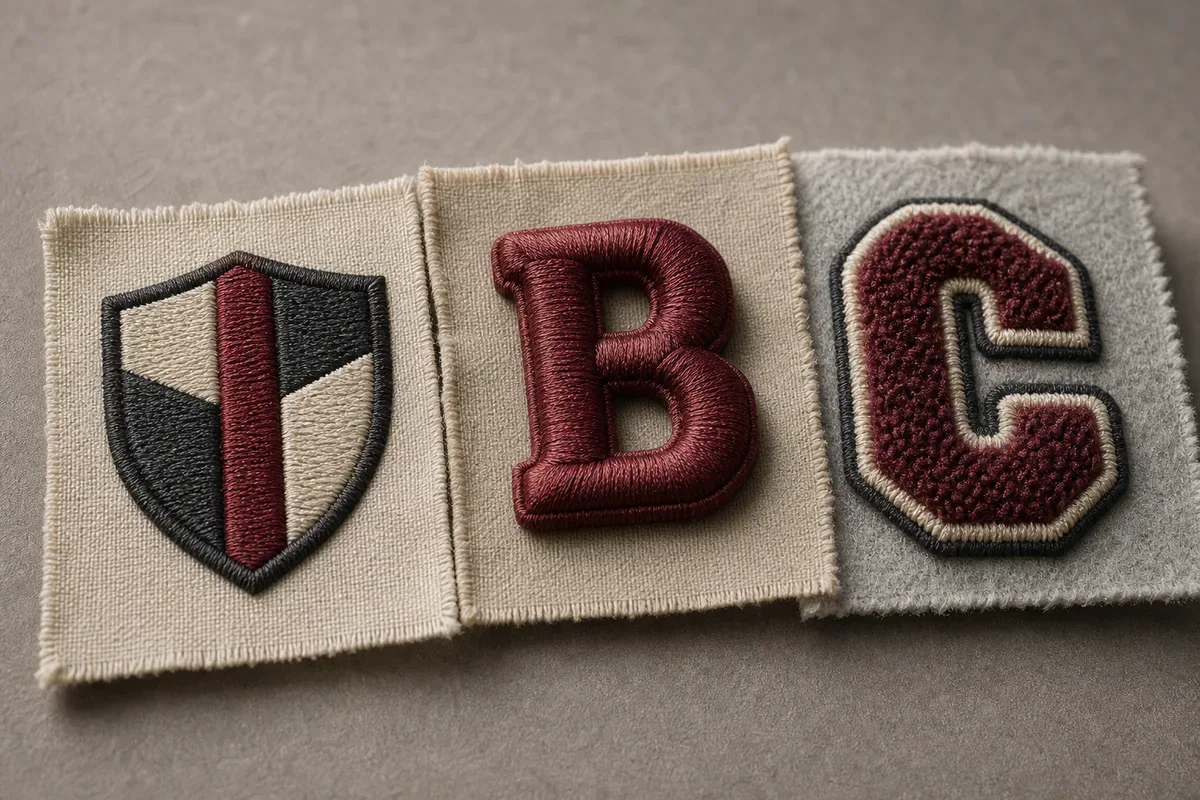
| Decorative embroidery has poor coverage or dimensional form | Treat the embroidery system separately from construction sewing thread | 3D puff and chenille embroidery guide |
If shade changes or transfers after care or finishing, route the evidence through the garment colorfastness testing guide. A different thread may be one possible response, but the observed failure and test condition should lead the decision.
Construction thread is not embroidery thread
Garment construction thread primarily participates in joining or securing components. Embroidery thread is selected as part of a decorative system involving digitizing, stitch coverage, backing, machine setup and the intended visual effect. Both may use polyester or another shared fiber label, but that does not make them interchangeable.
Keep the specifications separate in the BOM. Name embroidery thread by its own product, color and application, and do not use a decorative-thread approval to authorize a construction-thread substitution—or the reverse.
Thread choices surface everywhere in the catalogue once you look for them: the topstitching on stone-washed baggy heavyweight denim, the embroidery on a sun-faded terry hoodie with embroidered graphics and the seams of a camouflage canvas zip-up jacket each answer the fiber, construction and size questions in this guide differently.
Buyer review checklist
Before approving a garment sewing thread, confirm that:
- The fiber and construction are both named.
- The finish is captured from the supplier specification.
- The size includes its system, not just a number.
- The exact supplier product and color codes are traceable.
- Each operation or thread position using a different product is identified.
- The sample uses production-intent fabric layers and trims.
- Appearance, hand and extension are reviewed for the intended use.
- The representative wash or finishing response is accepted.
- Substitute status and the person or record authorizing it are clear.
- A material, operation or finish-route change triggers a documented review.
This turns “use matching polyester thread” into a controlled sourcing instruction. It also makes later troubleshooting faster because the team can separate a known thread identity from changes in fabric, operation or finishing.
FAQ
What are the main types of sewing thread used in clothing?
The main construction groups are spun, corespun, smooth multifilament, textured filament and monofilament. Each group can include different fiber substrates, finishes and size designations, so the construction name alone is not a complete specification.
Is polyester thread always the best choice for clothing?
No. Polyester is widely used, but selection should follow the fabric, operation, thread position, intended seam result and finishing route. A production-intent sample is better evidence than a fiber-only rule.
What does Tex mean on sewing thread?
Tex is linear density expressed as grams per 1,000 metres, so a higher Tex number describes a coarser thread. Ticket and commercial systems may use different or inverse conventions; always retain the named system with the value.
Should a tech pack or BOM specify thread size?
Yes. Record the supplier-declared size value and the size system, together with the supplier product code, construction, color, finish, application and substitution status. A number without its system is ambiguous.
Is embroidery thread the same as garment construction thread?
No. They may share a fiber label, but embroidery thread belongs to a decorative system while construction thread is approved for joining or securing garment components. Specify and approve them separately.
References
- ISO 1144:2016 — Textiles: Universal system for designating linear density (Tex System)
- ASTM D204-02(2021) — Standard Test Methods for Sewing Threads
- Coats — Selecting Your Sewing Threads
- Coats — Thread Production 101
- American & Efird — Writing Thread Specifications to Assure Seam Integrity (PDF)
- American & Efird — Thread Selection by End Use (PDF)