Jeans Leg Twist: Causes, Wash Evidence and Bulk Approval
Jeans leg twist is a visible rotation, not a root-cause verdict. Learn how brands separate denim skew, pattern or cutting asymmetry, sewing displacement and wash response before bulk approval.
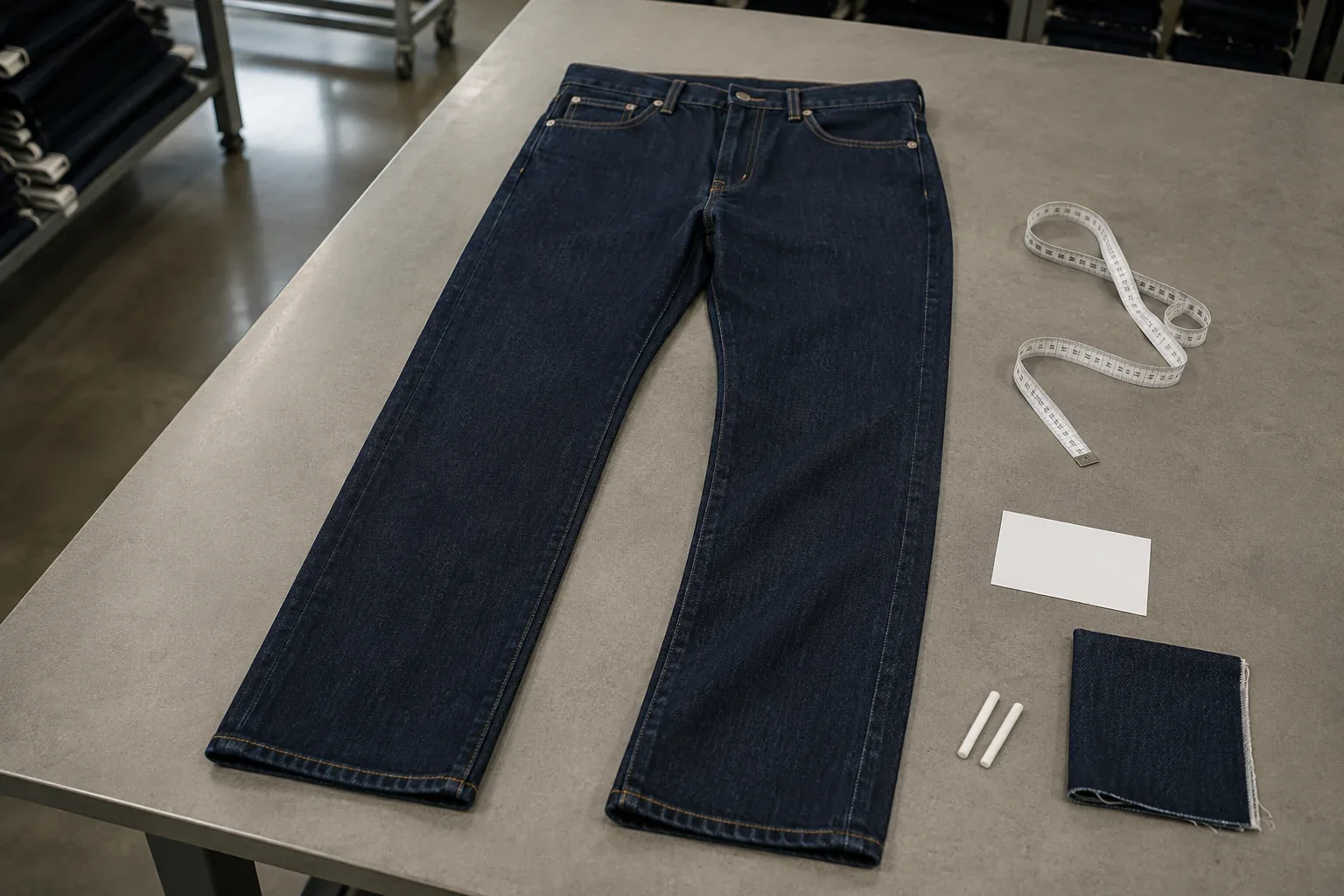
Jeans leg twist is the visible rotation of a trouser leg or its seam around the leg. It may become more obvious after washing, but the final appearance alone does not identify the cause. Denim geometry and finishing, pattern or cutting alignment, sewing displacement, and the garment wash can each contribute. A brand should compare the same identified garment before and after the declared treatment before deciding whether it is intentional character, an accepted variation or a nonconformance.
There is no universal leg-twist limit that this guide can assign to every jean. The acceptable direction, amount, measurement route and garment state belong in the buyer-supplier specification. That matters especially in raw or heritage-inspired denim, where some rotation may be part of the intended appearance, while a different program may require a straighter post-wash seam.
This page owns finished-jeans leg-twist diagnosis and approval evidence. The denim twill-direction guide owns right-hand, left-hand and broken-twill selection. The T-shirt side-seam-twist guide owns knit-garment spirality. The garment wash-defect guide owns the wider finish investigation.
Is Leg Twist in Jeans Always a Defect?
No. “Leg twist” is first an observation. Whether it is a defect depends on the approved design, reference sample, test method, tolerance and garment state.
ISO 16322-3:2021 covers measuring spirality or torque in woven and knitted garments after domestic laundering. Its public abstract specifically notes that denim may have spirality intentionally introduced during manufacturing. ASTM D3882-08(2025) covers bow and skew in fabric before laundering and notes that, in some cases, a specified amount of skew is needed to help prevent twisting in trouser legs.
Those statements do not make every twist acceptable. They show why a buyer cannot diagnose the result from a product photo or the words “right-hand twill” alone. Approval needs an identified sample and an agreed comparison condition.
Use these three possible dispositions:
| Observation | Possible disposition | Evidence needed |
|---|---|---|
| Rotation matches the approved washed reference | Intentional or accepted appearance | Signed reference, garment ID, wash state and comparable views |
| Rotation differs but remains inside an agreed limit | Accepted variation | Named method, result, sample scope and approved tolerance |
| Rotation exceeds the agreed limit or changes the intended silhouette | Nonconformance requiring review | Same evidence plus affected lot scope and hold/rework decision |
Do not decide the disposition from a generic online tolerance. A result can only pass against the project requirement that was actually agreed.
What Causes Jeans Leg Twist?
The visible result can come from more than one stage. Treat the following as diagnostic branches, not automatic blame assignments.
1. Denim skew and twill-related torque
Denim is commonly woven in a twill construction. CottonWorks explains that yarn twist affects characteristics including fabric skew, while denim construction creates a directional twill line. Fabric manufacturing and finishing can therefore leave, remove or deliberately introduce angular displacement before the garment is cut.
ASTM D3882 says bow or skew can be introduced during manufacturing, dyeing, tentering, finishing or other operations that distribute tension unevenly across the fabric width. The same standard separates original-fabric geometry from the later garment result. A roll-level skew observation can inform the diagnosis, but it is not the finished-jeans measurement.
Record the supplier article, color, roll or lot, approved face, twill direction and material state. If a mill or fabric supplier describes the cloth as pre-skewed or otherwise engineered for a particular result, retain that claim with the exact article and document instead of applying it to all denim from that supplier.
2. Pattern, marker, spreading or cutting asymmetry
A leg can rotate because the panels did not begin in the intended relationship to the fabric or to each other. Possible evidence includes an altered pattern revision, an off-grain placement, an unintended one-way rotation, fabric distortion during spreading, or panel mismatch during bundling.
Do not infer an off-grain cut from twist alone. The garment panel-mismatch guide requires the pattern grain line, marker orientation, fabric reference and paired-panel evidence before making that claim. A controlled lay or recut comparison is stronger evidence than a photograph of one finished leg.
3. Local sewing displacement
If one seam section moves while the rest of the leg does not rotate consistently, inspect the assembly path. Panel notches, inseam and outseam lengths, ply alignment, differential feeding, seam construction and operation sequence may reveal a localized displacement.
Mark whether the seam was already displaced before washing. A pre-wash mismatch points to a different branch from a straight sewn leg that rotates only after the approved finish. Also compare both legs: one isolated section is not the same pattern as consistent rotation in the same direction across several garments.
4. Washing, drying and relaxation
Wet processing can release stresses and change the relationship among fabric, seams and garment dimensions. CottonWorks describes dimensional change as a system affected by fabric construction, processing forces, finishing, sewing, garment care and the application or removal of stress. This is why “after one wash” is not a reproducible condition.
Separate an industrial garment wash from a domestic laundering test. The denim-washes guide owns the production finish direction. A standards-based care test answers a different question and needs its own machine, cycle, detergent, drying and preparation record.
Length or width change can occur together with rotation. Keep those results separate. A shorter inseam is not itself a leg-twist measurement, and a rotated seam does not prove excessive shrinkage.
How to Tell Which Stage Introduced the Twist
Build a matched evidence chain instead of starting with a cause label:
| Checkpoint | Preserve | What it can show |
|---|---|---|
| Finished denim before cutting | Article, roll or lot, face, twill direction, width, skew record and finish state | Whether angular fabric geometry existed before garment making |
| Relaxed lay and marker | Lay ID, relaxation condition, pattern revision, grain lines and panel orientation | Whether the panels followed the approved fabric and marker relationship |
| Cut panels | Paired front/back panels, notches, reference lines and bundle identity | Whether panel geometry or matching changed before sewing |
| Sewn jeans before wash | Garment ID, style, size, both legs, inseam/outseam landmarks and dimensions | Whether rotation or local displacement was already present |
| Same jeans after declared treatment | Same views, rest/conditioning state, wash and drying route, dimensions and rotation result | What changed during the selected exposure |
| Approved comparison | Approved washed sample or identified acceptable production garment | Whether the observed result matches the project target |
Photograph the full front and back on a flat, repeatable surface. Add close views only after the full-garment position is captured. Keep the waistband, crotch, knee, hem, inseam and outseam visible enough to trace the rotation. A tight crop of the hem cannot show whether the movement began at the thigh, knee or lower leg.
One garment can establish a symptom; it does not automatically establish lot prevalence. If the finding may affect bulk, use the agreed sampling and acceptance plan to define how many garments, sizes, colors, wash batches or fabric lots must be checked.
How Should Jeans Leg Twist Be Measured?
Choose the method before comparing results. The public scope of ISO 16322-3 covers post-domestic-laundering spirality or torque in garments and warns that results from different procedures might not be comparable. AATCC also distinguishes among original-fabric skew, change in fabric skew after laundering and seam twist in garments before and after laundering.
That creates three separate evidence questions:
- Original fabric: use the selected fabric bow/skew method and identified roll state when the question concerns material before laundering.
- Change after laundering: use the selected fabric or garment method with paired before-and-after marks when the question concerns the effect of care.
- Finished-garment appearance: compare the seam or landmark rotation on the identified jeans in the agreed pre-wash and post-wash states.
The purchase specification or test request should name:
- standard and edition, or the buyer-defined method;
- sample stage and garment identity;
- reference points and whether the result is linear, angular or percentage-based;
- laundering and drying procedure, including cycle count;
- conditioning or resting state before measurement;
- sizes, colors, fabric lots and wash batches in scope;
- approved tolerance and rounding rule; and
- who may accept, reject or request a resample.
Do not compare an angle from one method with a percentage from another as though they were the same result. Do not copy a laboratory standard's name into a report unless the stated procedure was actually followed.
A Practical Diagnosis Sequence for Brands
Use the sequence below when a sample or production garment shows rotation.
Step 1: Define the symptom without assigning blame
Write which leg moved, which seam or landmark rotated, the direction, the garment state, and whether the observation appears on one section or the whole leg. Attach full views.
Step 2: Compare pre-wash evidence
If the sewn leg was already displaced, inspect panel identity, notches, inseam/outseam matching, pattern revision, grain/marker relationship and operation records. If the pre-wash leg was straight, preserve that fact before moving to the wash branch.
Step 3: Reconstruct the actual exposure
Identify the production wash or the domestic test, the batch or machine record, drying route and post-treatment rest condition. “Same wash” is not enough if the formula, load, timing, temperature, mechanical action or drying route changed.
Step 4: Compare material and garment patterns
If multiple garments from one roll or lot rotate consistently, examine the material evidence. If only one localized section moves, examine cutting, bundling and sewing. If the result follows one wash batch across material lots, investigate the processing branch. These patterns narrow the investigation; they do not replace confirmation.
Step 5: Change one controlled variable
Where feasible, retain the same pattern, size, fabric identity, construction and wash reference while testing the proposed correction. Changing the fabric, pattern and wash together may improve the sample without showing which change worked.
Step 6: Recheck against the buyer-approved state
Approve the correction in the same relevant state that exposed the issue. A straight unwashed leg cannot close a post-wash leg-twist concern. Preserve the new sample ID and the decision that controls bulk.
What Should Be Approved Before Bulk Cutting?
Leg twist is easiest to manage when its evidence fields are included in denim development rather than added after a complaint.
- Appearance target: approved washed garment or annotated reference showing whether rotation is intentional, acceptable within a defined limit or expected to be visually straight.
- Fabric identity: supplier article, color, roll/sample-lot, weight, composition record, twill direction and supplied finishing claim.
- Pattern and cutting: approved pattern revision, grain lines, marker orientation, face direction and any one-way rule.
- Construction: inseam/outseam types, topstitch direction, notches and operation details that control panel matching.
- Processing: approved production-wash reference and the stage at which dimensional and rotation observations are made.
- Verification: named measurement or comparison method, sample scope and tolerance.
- Change control: which substitutions or process changes reopen the sample or test.
Weight records feed this approval too — when supplier sheets and your swatch data use different units, the gsm to oz calculator converts either direction before the spec is locked.
The how-jeans-are-made guide connects these decisions across fabric approval, pattern, cutting, sewing, washing and final inspection. Leg-twist approval should travel through that same handoff, not remain in a private chat message.
Copyable Jeans Leg-Twist Approval Brief
Style / revision / size:
Approved washed reference or sample ID:
Intended appearance: intentional rotation / defined limit / visually straight
Fabric supplier article, color and lot or sample-lot:
Approved face and twill direction:
Fabric finish or pre-skew claim and supporting document:
Pattern revision and marker / grain-line reference:
Inseam and outseam construction:
Production wash reference:
Pre-wash garment photos and measurement state:
Post-wash treatment, drying and rest condition:
Leg-twist method, edition and reference points:
Tolerance and rounding rule:
Sampling scope by size, color, fabric lot and wash batch:
Approval authority and resample / hold trigger:
If several fields are unknown at quotation stage, label them open. The factory can then confirm which fabric, sample and test evidence are needed before bulk instead of treating a visual reference as a complete specification.
When Should Production Stop or Reopen Approval?
A single unusual garment may justify segregation and investigation. A repeated pattern may justify a wider hold. The decision should follow the agreed quality plan and the evidence scope, not a universal internet rule.
Reopen approval when a change can alter the result, including a new fabric article or lot, a revised pattern or marker, a different wash route, an altered drying process, a seam-construction change, or a fit revision that changes panel geometry. Retain the previous approved reference so the new result can be compared rather than described from memory.
For production, record the affected units or batches precisely. Do not hold or reject an entire order based only on one cropped photograph, and do not release the whole order because one selected garment looks straight. Apply the project's sampling, tolerance and disposition authority.
FAQ
Why do jeans legs twist after washing?
Washing and drying can reveal or change angular relationships already present in the fabric and garment, but the final twist may also involve pattern, cutting or sewing. Compare the same jeans before and after the declared treatment and preserve fabric, pattern and process identities before deciding the cause.
Does right-hand twill always twist in one direction?
Do not use the twill-direction label as a finished-garment prediction. Yarn, weave, fabric finishing, deliberate skew, pattern orientation, construction and wash all contribute to the observed jean. Approve the actual fabric and washed garment result.
Can pre-skewed denim prevent all leg twist?
No universal guarantee follows from the phrase “pre-skewed.” ASTM notes that a specified amount of fabric skew can be used in some cases to help prevent trouser-leg twisting, but the actual result still needs identified material and garment evidence. Verify the supplier claim for the selected article and test the intended garment route.
Is jeans leg twist the same as T-shirt spirality?
They are related garment-rotation observations, but the material systems and diagnostic owners differ. Jeans are woven denim garments; T-shirt spirality commonly involves knitted body geometry and yarn/loop torque. Do not copy a knit diagnosis or tolerance into a denim program.
Should leg twist be checked before or after the production wash?
Both states can matter. Pre-wash evidence shows whether rotation or local displacement existed before wet processing; the approved post-wash state shows the finished appearance. For care-performance testing, use the separately declared laundering method and evaluation point.
What should a brand send a jeans manufacturer?
Send the tech pack or reference, size chart, denim and twill-direction requirements, approved wash target, seam construction, trim and decoration details, order quantities, and any leg-twist method or tolerance. Jiashun can review those inputs for a custom men's denim program; the exact fabric source, process route and approval evidence are confirmed per project.
References
- International Organization for Standardization, ISO 16322-3:2021, Textiles — Determination of spirality after laundering — Part 3: Woven and knitted garments — post-domestic-laundering scope, method-comparability limitation and note that some denim may have intentionally introduced spirality; official standard linked in the opening section; retrieved 2026-09-04.
- ASTM International, ASTM D3882-08(2025), Standard Test Method for Bow and Skew in Woven and Knitted Fabrics — original-fabric bow/skew scope, manufacturing and finishing causes, and use of specified skew in some trouser applications; official standard linked in the opening section; retrieved 2026-09-04.
- AATCC, AATCC TM179-2025, Skew Change in Fabrics After Home Laundering — fabric-skew-change scope and paired marking principle; retrieved 2026-09-04.
- AATCC, Making AATCC Methods More Meaningful — distinction among AATCC TM207 garment seam twist, AATCC TM179 fabric skew change and ASTM D3882 original-fabric skew; retrieved 2026-09-04.
- CottonWorks by Cotton Incorporated, Denim Basics — denim yarn, yarn twist, twill construction and finishing context; retrieved 2026-09-04.
- CottonWorks by Cotton Incorporated, Shrinkage & Skewing — construction, processing, finishing, sewing and care factors in dimensional response; retrieved 2026-09-04.
Related guides
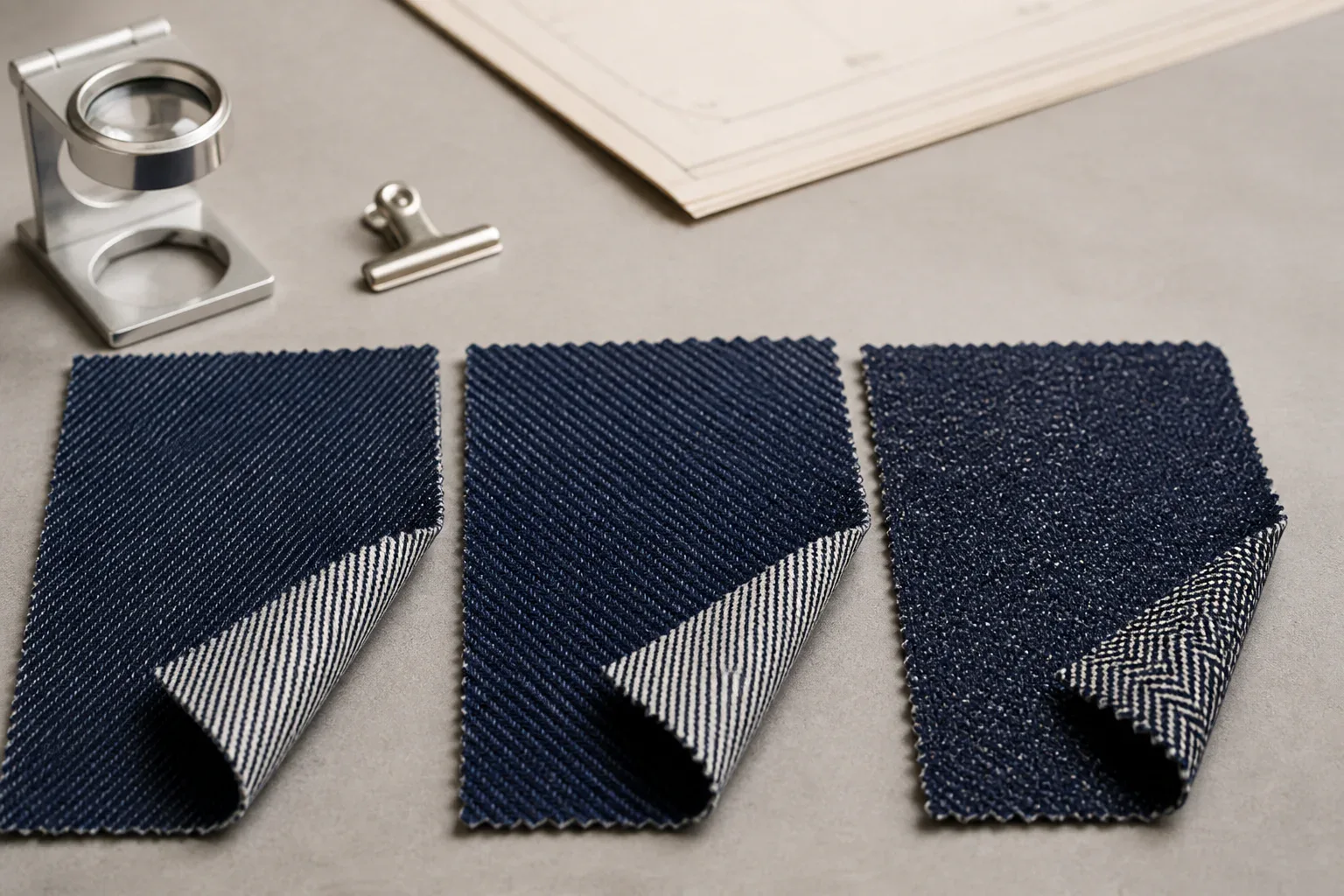 Right-Hand, Left-Hand and Broken Twill Denim: A Brand Selection Guide
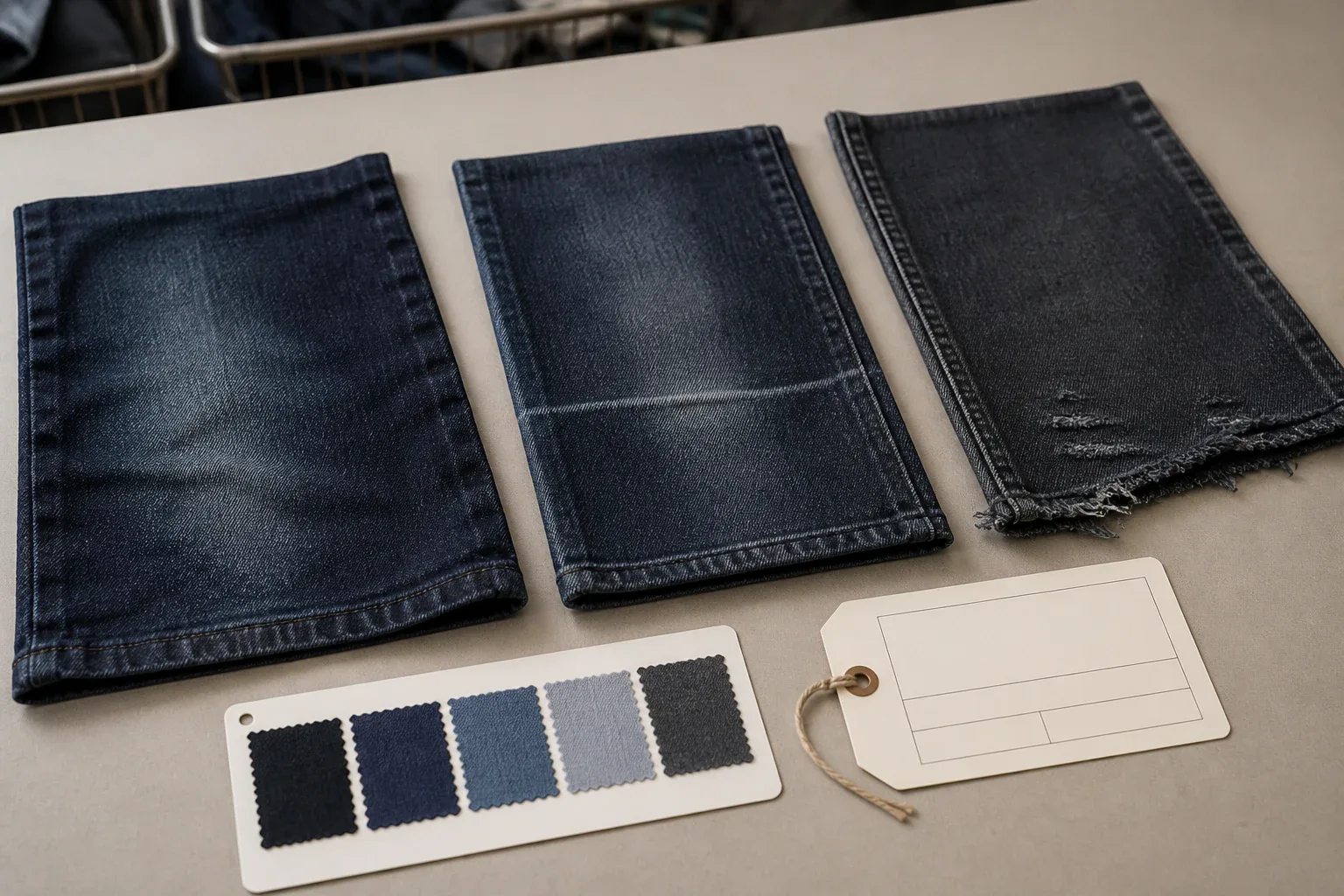 Garment Wash Defects: Causes, Evidence and Approval Questions
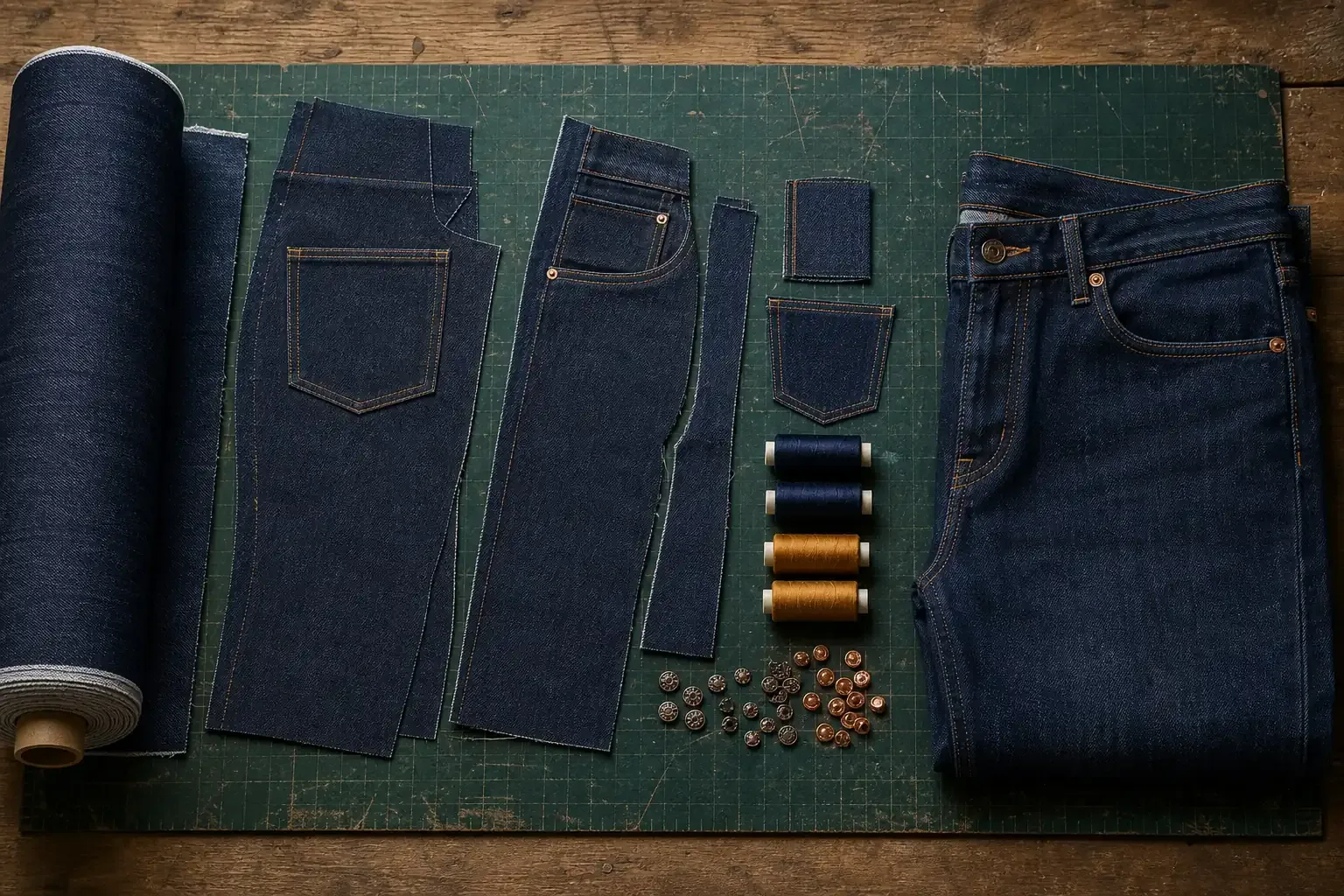 How Are Jeans Made? From Denim to Final Inspection
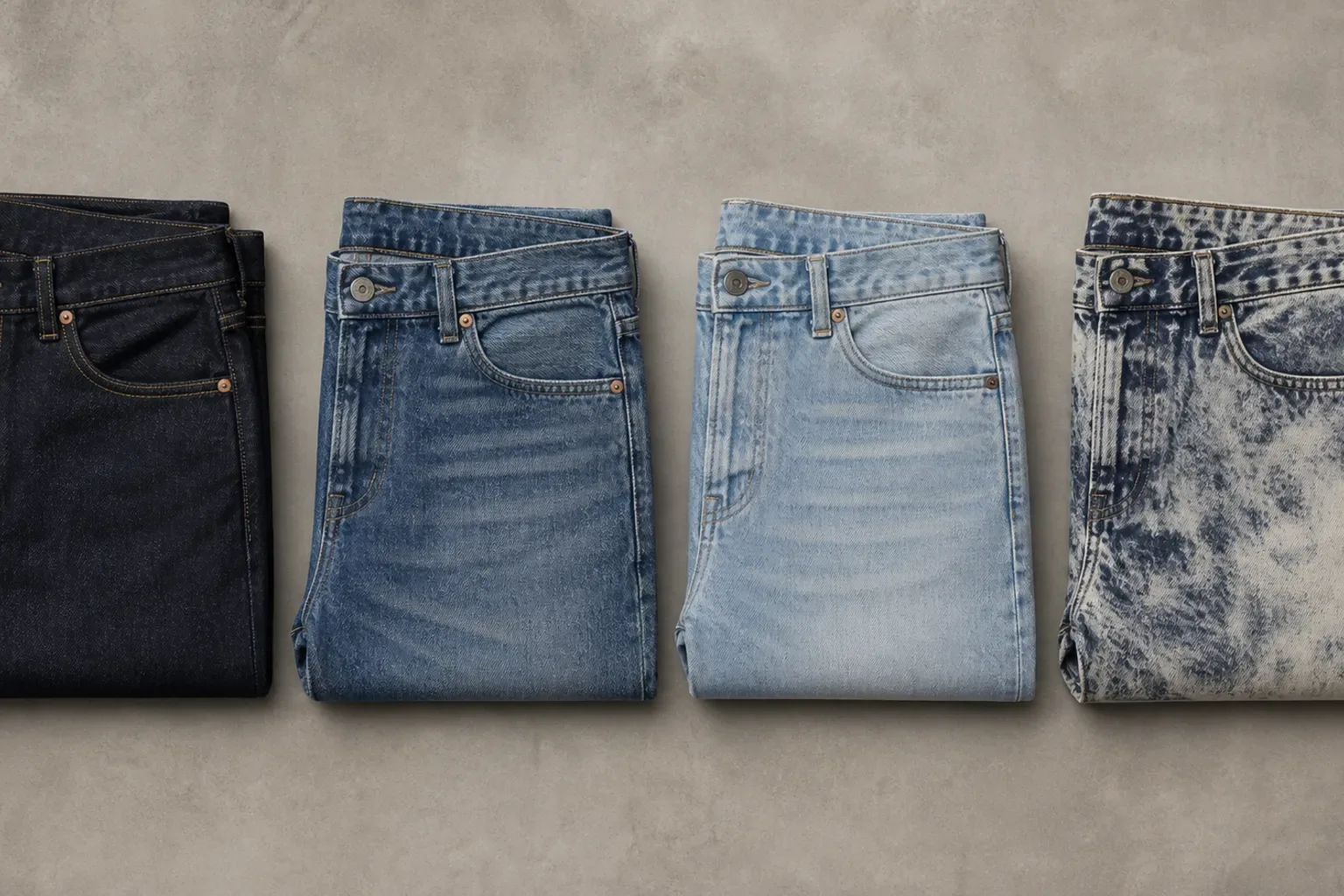 Denim Washes Explained: Stone, Enzyme, Acid and Sun-Fade — and How to Approve Them
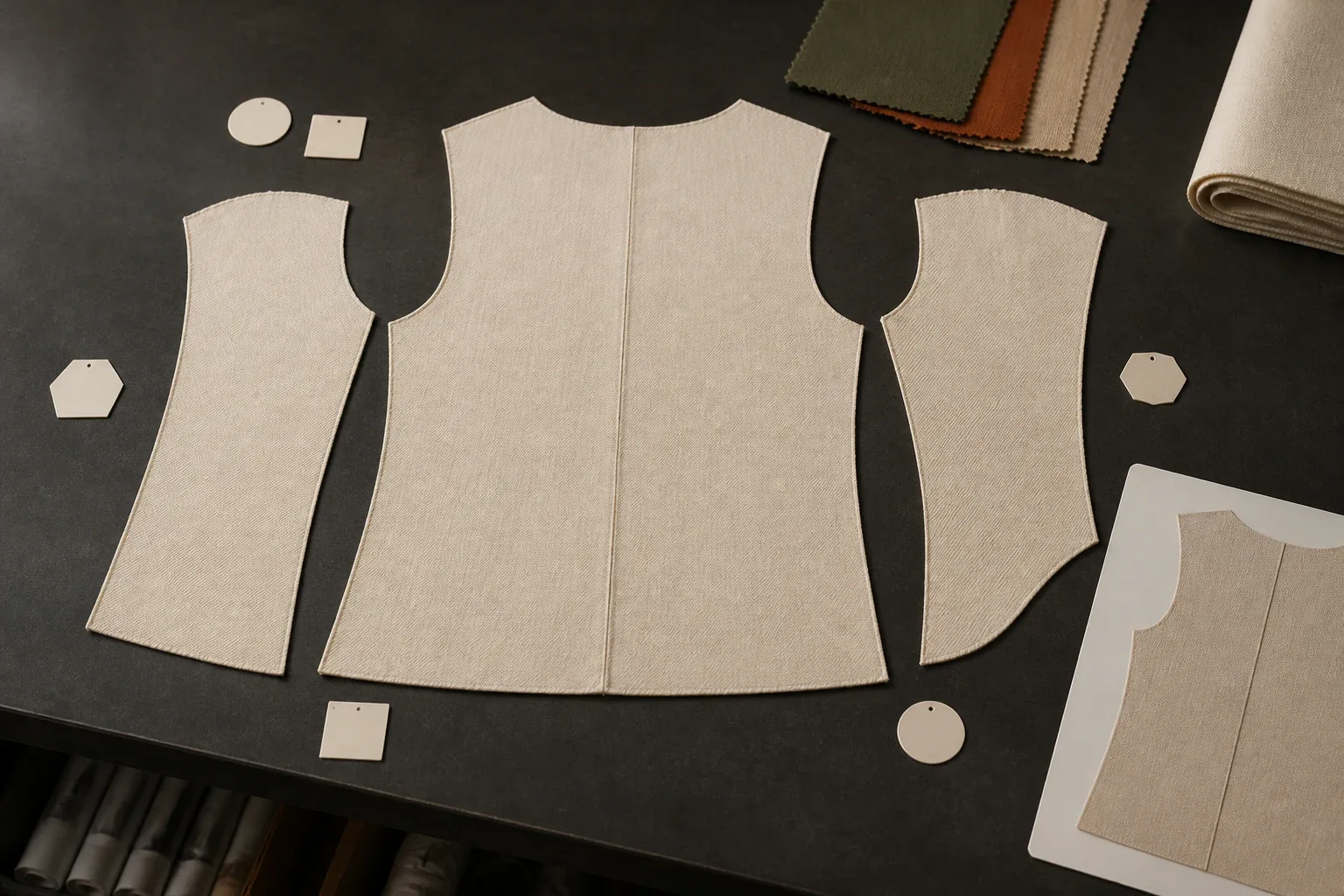 Garment Panel Mismatch: How to Verify the Wrong Piece