Garment Panel Mismatch: How to Verify the Wrong Piece
Verify a suspected garment panel mismatch against controlled piece identity, side, direction, pairing and the contract-effective pattern revision before disposition.
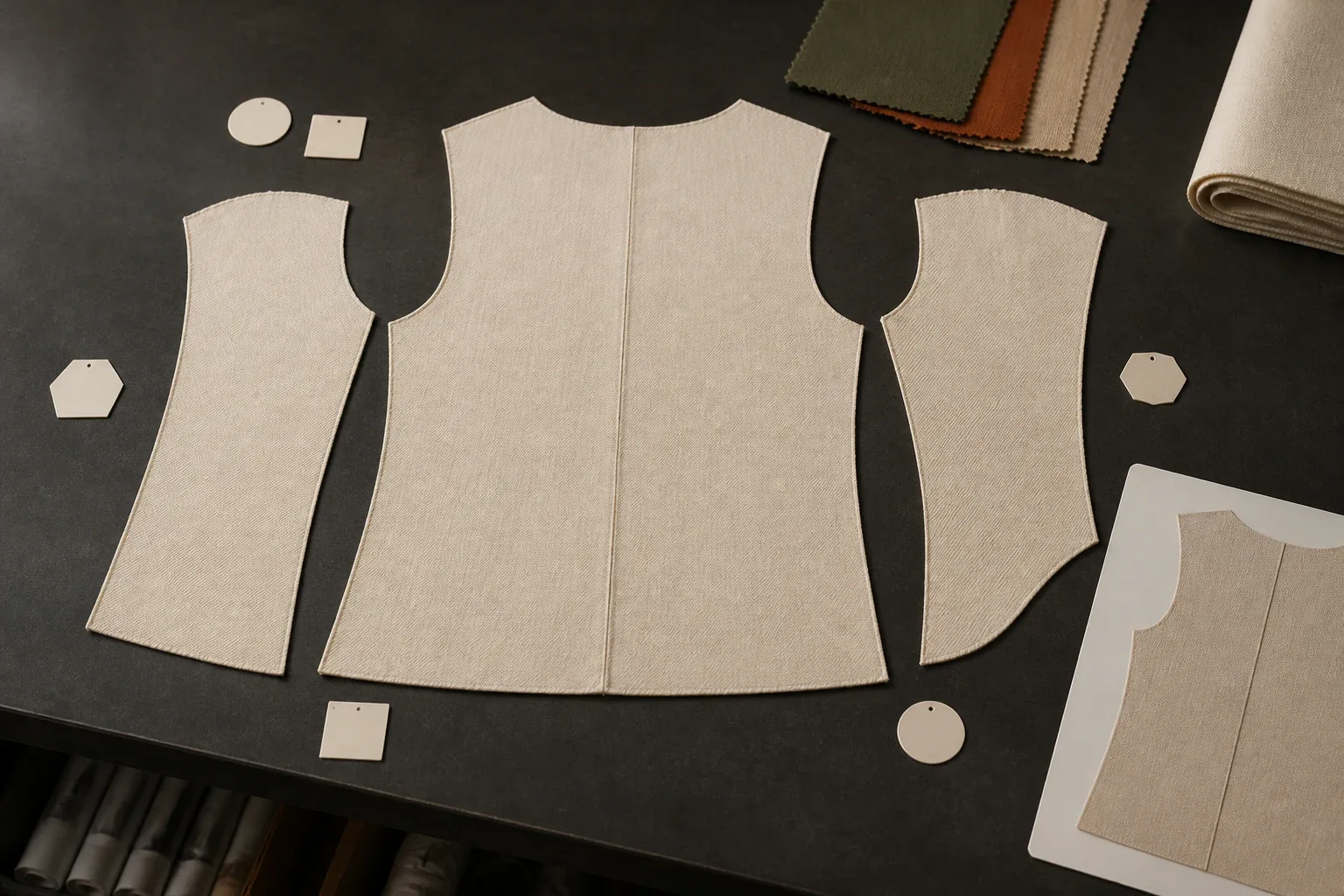
A garment panel mismatch is an assembled-item configuration problem in which a component does not agree with the approved identity, side, direction, revision or intended pair for that garment. That is the working definition used in this guide, not a standardized ISO or ASTM defect term.
The central rule is simple: an unusual-looking garment is a finding, not a root-cause diagnosis. A photo may show that two sides look different, a pocket shape appears unexpected or one directional feature faces another way. It cannot establish by itself whether the cause sits in a pattern, a component handoff, assembly or another production event.
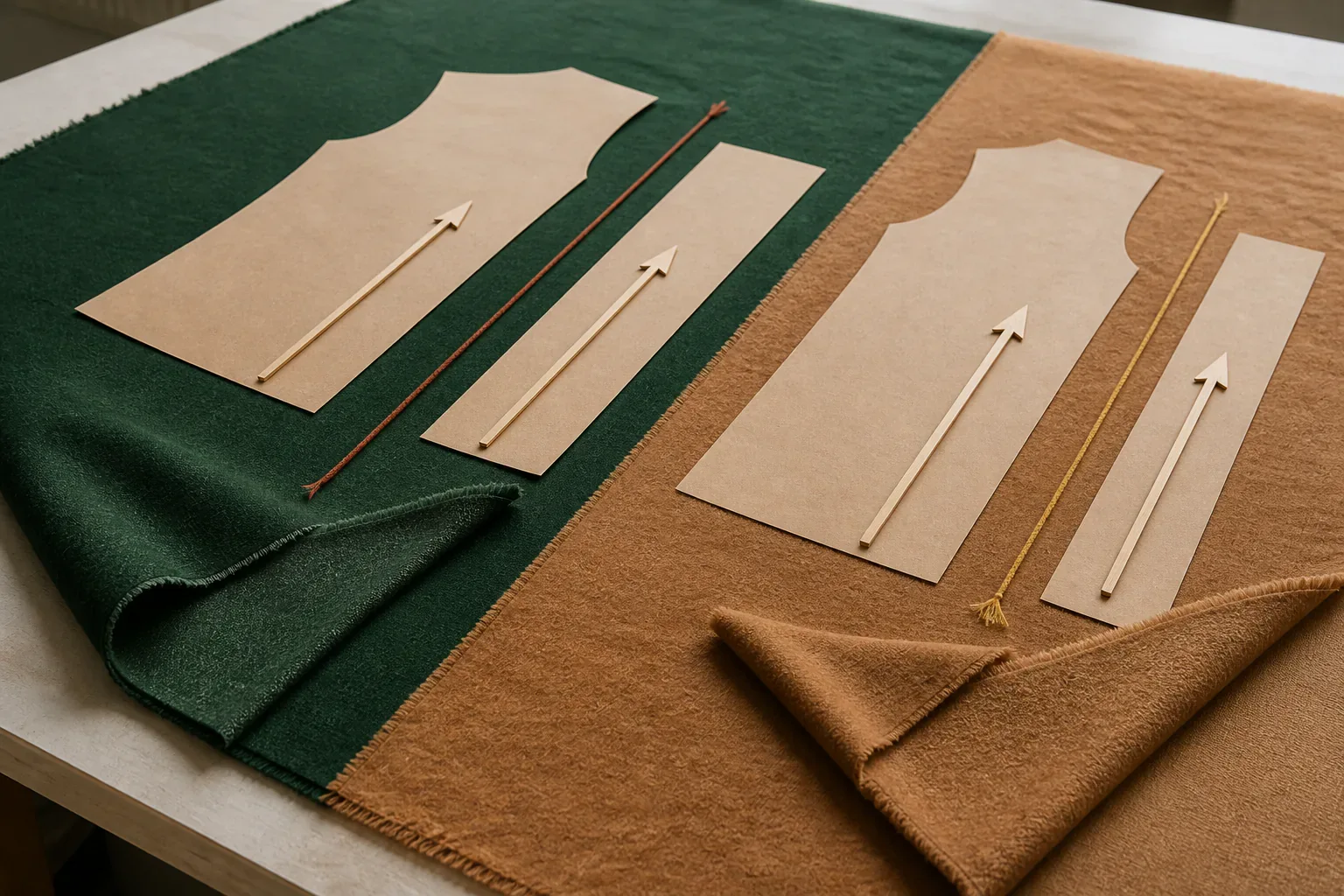
This guide therefore starts after panels or components have been assembled. It does not teach cutting, marker planning or machine operation. Pre-assembly panel checks belong to the garment cutting defects guide, while the approved direction rules belong to the fabric grain, nap and one-way cutting guide. Here, the task is narrower: identify the assembled component, compare it with a controlled reference and report only what the evidence supports.
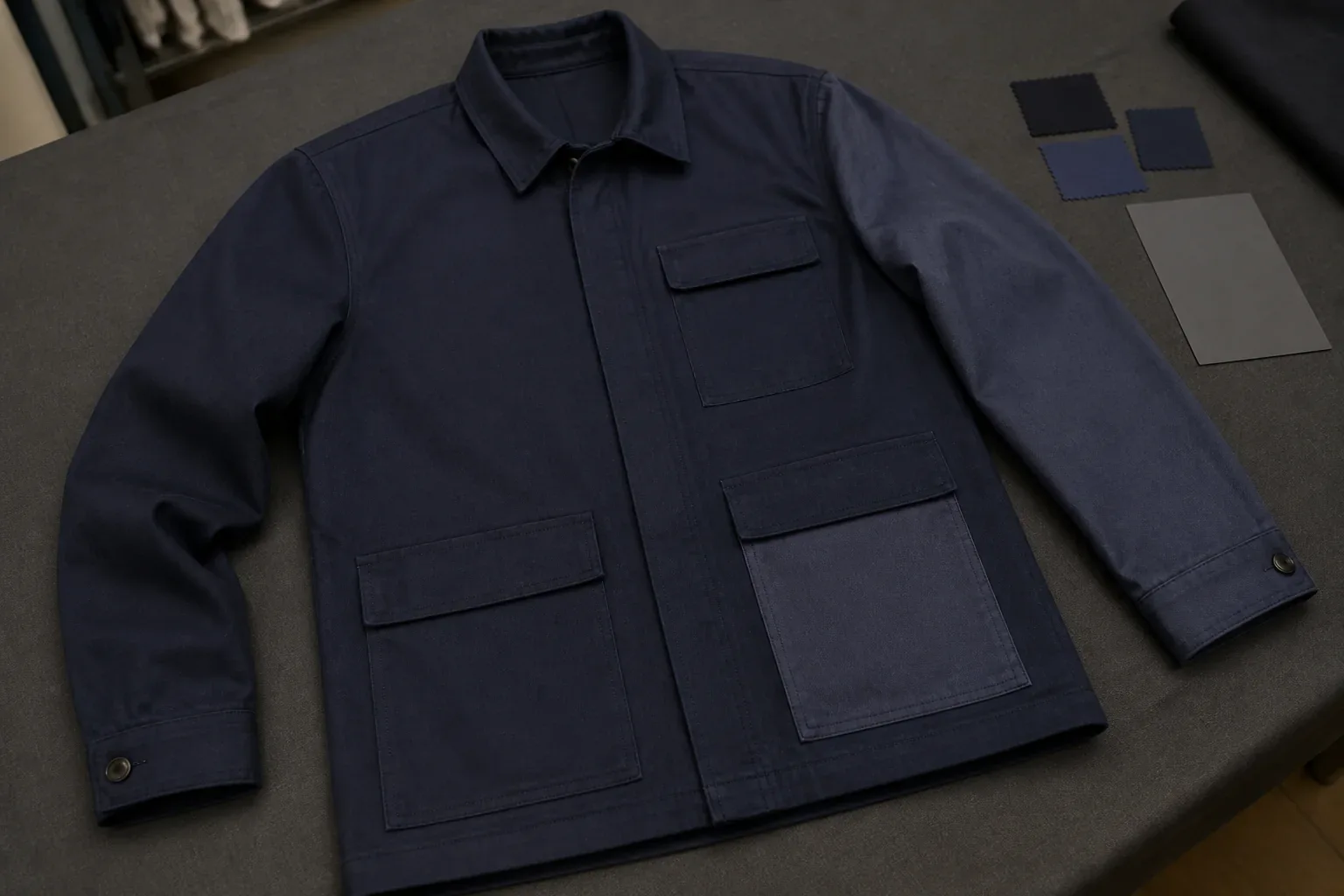
Route a color or shade difference first to the panel-to-panel shade-variation owner, which maps the assembled location and then routes target, shade-band, material, nap or wash-state questions to their respective owners. Route seam-fed distortion or rippling to the seam-puckering owner, and a finished dimension or fit discrepancy to the size-chart and measurement owner. Those symptoms can resemble a wrong panel in a photograph, but this page does not decide their criteria or disposition.
What Counts as a Panel Mismatch?
The word panel can include a body front, back, sleeve, hood side, pocket, yoke, gusset, waistband section, lining section or another shaped component named in the product record. A useful finding identifies the component rather than saying only that “the garment is wrong.”
| Suspected mismatch | Evidence needed for confirmation | Safe finding language |
|---|---|---|
| Wrong component identity or shape | Controlled component name or ID, approved outline reference and applicable revision | “Component P-07 does not agree with the approved P-07 reference in revision R4.” |
| Wrong left or right component | Side-specific reference, garment orientation and intended side | “The component assembled at wearer left agrees with the controlled right-side identity.” |
| Wrong direction | Approved directional indication plus observable direction evidence or a traceable component record | “The observed feature direction disagrees with the approved arrow for component S-02.” |
| Wrong revision | Approved effective baseline for the order and evidence identifying the component version used | “The installed component agrees with R3 while the order identifies R4 as effective.” |
| Incompatible pair | Written pairing rule plus identities, sides, sizes or configurations of both components | “The two installed components do not form the intended pair defined for this garment.” |
An intentionally asymmetric design may have different left and right pieces, while visually similar pieces may carry different side, direction or revision identities. Appearance alone does not resolve the question.
Start With a Controlled Configuration Reference
ISO 10007:2017 provides organization-level guidance for configuration management across a product or service life cycle. ISO confirmed the 2017 edition as current in 2023, although a revision is under development. Its public abstract does not prescribe an apparel form or buyer-approval workflow.
The official ISO/TC 176 terms listing, Version 1 dated September 29, 2022, describes a configuration baseline as approved information that establishes product or service characteristics at a point in time. It also describes configuration status accounting as recording and reporting configuration information, proposed-change status and implementation status for approved changes.
Applied carefully to an apparel order, those concepts support a practical question: which approved reference was effective for this garment when the relevant work was authorized? The answer may be a named pattern release, component drawing, tech-pack page, approved change record or another document identified by the order. “Use the newest file” is not enough because a later development revision may not apply to work already released, while an approved change may apply only after a named effective point.
Before comparison, collect the garment's style, order, colorway, size and item ID; the controlling tech-pack and component revision; that revision's effective scope; the component ID, side, direction and pairing attributes; approved change status; and the physical garment with retained trace records.
The apparel BOM guide owns the component-and-material list for the style. The BOM can help identify where a component belongs, but a copied component name does not replace the controlled pattern or drawing that establishes its shape and side.
Use an Evidence Hierarchy, Not a Photo Guess
Evidence strength depends on what the order actually controls. A practical hierarchy is:
- Applicable written reference: the approved, effective pattern, drawing, tech-pack page or change record that defines the component attribute under review.
- Designated physical reference: an approved sample or first article, but only for characteristics and order scope that the written record assigns to it.
- Identified assembled item: the actual garment with enough orientation, scale and identity to repeat the comparison.
- Trace records: component labels, bundle or lot references, issue records, inspection records or other available links between the item and its source evidence.
The contract may set a different order of precedence. The practical aim is to prevent a catalogue image, chat screenshot or unidentified sample from replacing governing product information.
Photos remain useful. Capture overall and detail views, identify wearer left and right, include scale when needed and link every image to the garment and component. State only what the image shows: “wearer-left pocket opening differs from wearer-right,” not a claim about how it happened.
Verify Component Identity and Shape
Name the suspected component and location first. “Front panel” may be too vague when the design contains several front components. Compare only landmarks the reference defines, such as outline, a shaped corner, a distinctive internal boundary or a controlled assembly mark. The question is whether the installed piece agrees with the reference, not how it was produced.
The active U.S. Department of Defense detail specification MIL-DTL-32741, Amendment 1 incorporated, dated March 25, 2024, provides one concrete apparel example. Section 3.6 says the furnished patterns carry size and directional information and use marks or notches for component placement and assembly; its component list helps establish whether the set is complete. This is a contract-specific government specification, not a rule imposed on every clothing factory. It demonstrates why an identified pattern can contain several kinds of comparison evidence at once.
A notch or matching mark is supporting evidence, not proof of everything. A mark that meets another mark does not establish that the component has the correct identity, side, direction and revision. Confirm each attribute against the reference qualified to control it.
Verify Left and Right Before Calling Pieces Interchangeable
For an asymmetric component, two pieces present does not necessarily mean one valid pair. Record the garment orientation from the wearer's perspective, identify both components and compare each with its assigned side.
MIL-DTL-32709A, dated January 30, 2024, is an active government glove specification that illustrates this distinction. It defines a matched pair as one left and one right glove of the same size, and its pattern table identifies left and right versions of multiple components. The example does not make glove construction a garment-wide standard. It supports the narrower principle that side identity and intended pairing can be controlled attributes, so a quantity count alone is insufficient.
Use the actual product definition. A style may intentionally have two different pocket panels, one directional overlay or a side-specific closure detail. Another may use a truly common component on both sides. Do not infer interchangeability from similar appearance; look for the controlled side or common-part designation.
Record the pair name, component IDs, wearer-left/right assignment, applicable configuration, revisions, defining reference and installed identities. The pair then either agrees with that definition, disagrees with it or remains unverified.
Treat Direction as a Separate Attribute
Direction is not automatically proven by shape. A controlled pattern may carry a directional line while the material, artwork or surface has another observable top-to-bottom feature. The assembled-garment review should compare existing evidence; it should not invent the missing pre-production direction map.
Confirm a directional mismatch only when two conditions are met:
- The applicable pattern, drawing or tech-pack reference defines the direction for that component.
- The direction on the assembled component can be observed reliably or recovered from a traceable record.
If the first condition is missing, the requirement is undefined in the evidence set. If the second is missing, report orientation unverified. Do not turn curl, twist, drape or another visual symptom into proof that a panel is off direction. Those symptoms can have more than one explanation, and this article does not diagnose them.
MIL-DTL-32741 is a bounded example because its directions have an expressly defined meaning. A private order may define direction differently or only for selected components, so follow its approved reference.
Check Revision and Effective Scope
A revision mismatch requires two distinct facts: what configuration the order authorized and what configuration the installed component represents. Having only one of those facts is not enough.
If the component agrees with an older outline but no record shows which revision the garment used, write “component resembles R3; installed revision unverified.” Do not upgrade resemblance into traceability. If an approved change was effective only after a named sample, date or quantity, record that boundary before classifying earlier work.
An approved garment can be useful, but its scope must be known. MIL-DTL-32709A applies first-article and conformance inspection only when specified, and limits its standard-sample clause to referenced characteristics. A private project should likewise state what a sample controls. The garment sample types guide distinguishes sample roles; the sample approval checklist records the decision and exclusions.
Use Product Images Only to Locate the Question
Product pages can help remote teams point to a visible component zone. A color-block windbreaker shorts reference shows multiple named-looking body sections; a plaid flannel shirt reference makes top-to-bottom orientation easy to discuss; and a faux-leather-sleeve varsity jacket reference gives clear left/right sleeve and body locations.
These are visual references only. Their images do not reveal controlled pattern IDs, approved direction, actual materials, pattern revisions, pair rules or defect status for another order. Convert a visual comment into a component-specific evidence request instead of treating a product photo as the approval reference.
Record a Reproducible Finding
A useful panel-mismatch record separates observation, comparison and decision:
PROJECT IDENTITY
Brand / project:
PO / order:
Garment / sample ID:
Size:
Review date and reviewer:

CONTROLLED REFERENCE
Tech-pack reference and revision:
Pattern / drawing reference and revision:
Approval and effective point:
Component name and ID:
Required side:
Required direction:
Required pair or configuration:

OBSERVED EVIDENCE
Installed location:
Observed component identity:
Observed side:
Observed direction or trace record:
Comparison landmarks:
Unavailable evidence:

FINDING AND DISPOSITION
Finding: suspected / confirmed against named reference / unverified / no mismatch found
Exact disagreement, if confirmed:
Affected identified items:
Immediate hold or segregation scope:
Decision owner:
Required next evidence / disposition / authorization:
Closure evidence and date:
This is a recommended record, not an ISO or DLA form. Adapt it to the order's document system, authority and risk. Do not populate unavailable evidence with assumptions.
Separate Item Confirmation From Lot Disposition
One confirmed garment can justify identifying and containing that item and may trigger a wider review. It does not, by itself, establish how often the condition occurs across a production lot. Equally, one conforming garment does not clear every other unit.
ISO 2859-1:2026 defines an acceptance-sampling system for lot-by-lot inspection by attributes. This guide does not reproduce its tables or teach an AQL plan. If a buyer needs to decide lot acceptance, use the order's agreed inspection plan and the garment inspection AQL guide. Keep the component finding, containment scope and lot decision as separate records.
Possible item-level dispositions include hold for evidence, repair under an authorized instruction, replacement, acceptance by an authorized concession, or rejection. The right option depends on the requirement, product and contract. A factory reviewer should not silently swap a component, relabel a revision or extend a one-item decision across a quantity without the named authority.
Buyer Review Checklist
- The garment, order, size, orientation and suspected component ID are recorded.
- The applicable reference, revision, approval and effective scope are named.
- Left/right and pairing are checked against the product definition, not quantity alone.
- Direction is confirmed only from an approved requirement and observable or traceable evidence.
- Photos distinguish observation from suspected cause.
- The approved sample is used only for characteristics it controls.
- Missing evidence produces an
unverifiedresult rather than a guess. - The item finding, containment scope and lot disposition are separate.
- The record names the authority, next evidence and closure condition.
- Any open revision question returns to the pre-production decision record before affected work proceeds.
Common Panel-Mismatch Reporting Failures
Naming a cause in the first photo caption. Report the visible difference and location first. Root-cause work requires additional process evidence outside this guide.
Calling every difference a wrong panel. Intended asymmetry, side-specific details and controlled variants can differ legitimately. Verify the product definition.
Using the latest email attachment automatically. File recency is not configuration authority. Confirm approval and effective scope.
Extending an item result to the whole order. Record the confirmed item, containment and lot decision separately.
Frequently Asked Questions About Garment Panel Mismatch
What is a garment panel mismatch?
In this guide, it is an assembled component that disagrees with the approved identity, side, direction, revision or intended pair for the garment. This is an operational definition for a controlled review, not a standardized global defect category.
Can a photo prove that the wrong panel was used?
No. A photo can document a visible difference and help identify the area to investigate. Confirmation requires comparison with a qualified component reference and, where needed, revision, side, direction or trace records. A photo alone cannot establish the production cause.
How do I confirm whether a left and right panel were swapped?
Orient the garment from the wearer's perspective, identify both component IDs and compare each side with the applicable controlled reference. Confirm that the design actually uses side-specific parts; similar outlines do not prove interchangeability.
Does a matching notch prove that the correct component was assembled?
No. A notch or mark can support a placement comparison, but it does not by itself establish component identity, direction, side, pair or revision. Review each required attribute against its controlling evidence.
Which pattern revision should the factory use for the check?
Use the revision that the order's approved configuration record makes effective for the garment or quantity under review. A newer file is not automatically applicable, and an older component resemblance does not prove which version was installed.
Does one confirmed panel mismatch mean the whole lot fails?
Not automatically. It supports an item-level finding and may justify containment or wider inspection. Lot acceptance or rejection must follow the agreed inspection plan, lot definition and decision authority rather than extrapolation from one garment.
Make the Finding Traceable Before Making It Broad
A reliable garment panel mismatch decision is deliberately narrow. It identifies the assembled component, names the governing reference and effective revision, checks side, direction and pairing only where evidence exists, and states what remains unknown. That discipline prevents a strong photograph from becoming a weak diagnosis.
For a custom men's streetwear project, assemble the identified garment, current tech pack, applicable pattern or drawing revision, approved sample record and clear wearer-oriented images into one comparison packet. Return evidence gaps to the appropriate development owner. Final acceptance, concessions and lot disposition remain subject to the buyer's specifications and agreed authority.
Sources
- International Organization for Standardization, ISO 10007:2017, Quality management — Guidelines for configuration management, Edition 3, published March 2017, confirmed current in 2023 and under revision; official public scope used without reproducing the licensed standard; retrieved 2026-08-20.
- ISO/TC 176, Terms in TC 176 Standards Alphabetical Listing, Version 1, September 29, 2022; used for the public configuration-baseline, configuration-information and status-accounting terms; retrieved 2026-08-20.
- U.S. Department of Defense ASSIST, MIL-DTL-32741, Undershirt, Mesh, Cold Weather Baselayer, Amendment 1 incorporated, active document dated March 25, 2024; used as a contract-specific example of pattern identity, direction and assembly-reference information; retrieved 2026-08-20.
- U.S. Department of Defense ASSIST, MIL-DTL-32709A, Glove, Intermediate Cold Weather, Revision A, active document dated January 30, 2024; used as a contract-specific example of left/right identity, pairing and conditional first-article or sample references; retrieved 2026-08-20.
- International Organization for Standardization, ISO 2859-1:2026, Sampling procedures for inspection by attributes — Part 1, Edition 3, published January 2026; used only to bound lot-level acceptance sampling from an item-level finding; retrieved 2026-08-20.
Related guides
 Panel-to-Panel Shade Variation in Garments: Evidence Before Diagnosis
 Apparel Bill of Materials: Fields, Versions and Approval Status
 Garment Sample Types Explained: Proto, Fit, Size Set, PP and TOP
 Fabric Grain, Nap and One-Way Cutting for Apparel
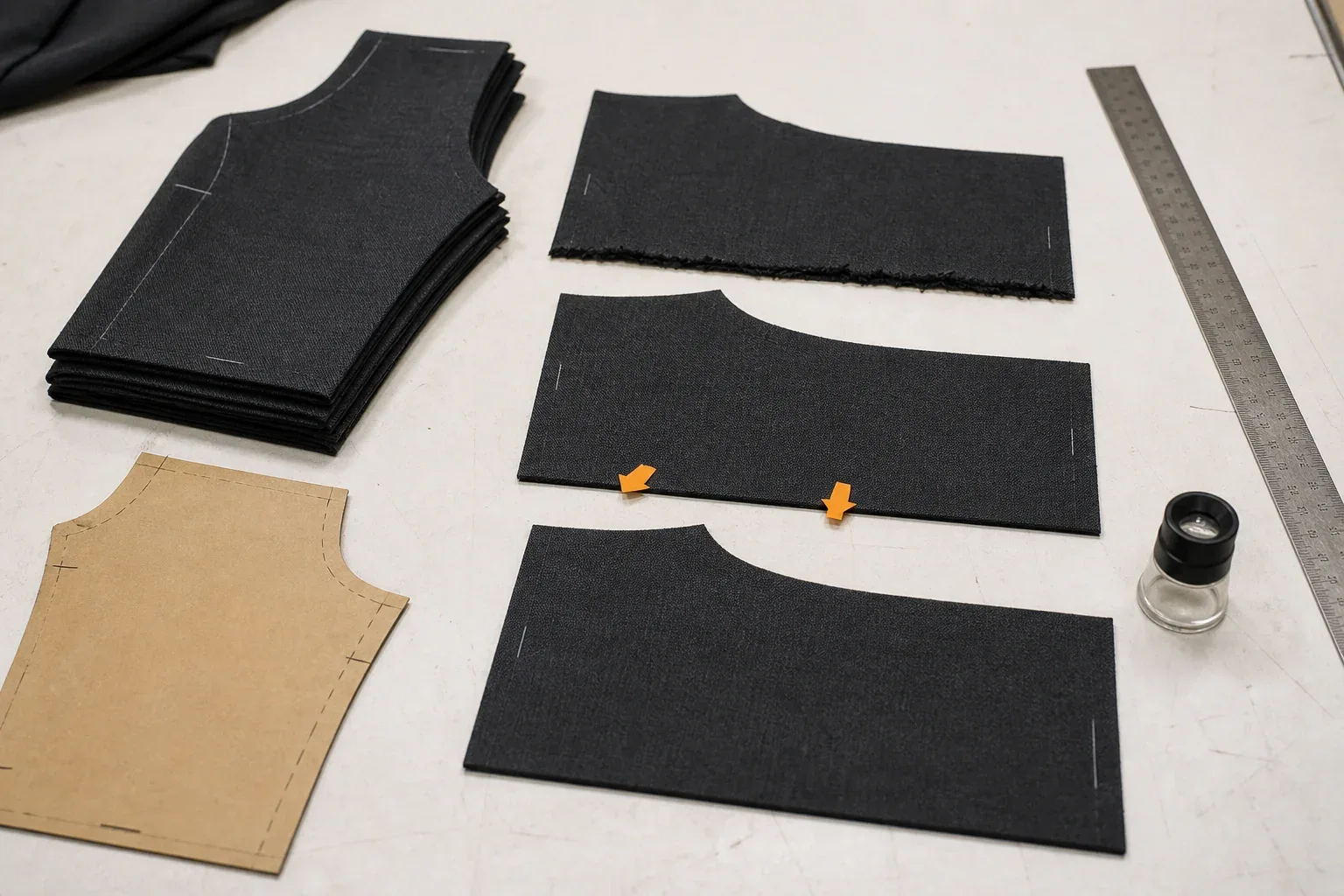 Garment Cutting Defects: A Cut-Panel Evidence Guide
 AQL 2.5 Explained: What Garment Buyers Should Specify