Garment Wash Defects: Causes, Evidence and Approval Questions
A wash defect name is an observation, not a root-cause verdict. Learn how brands separate backstaining, uneven shade, abrasion, component damage and dimensional change with controlled evidence.
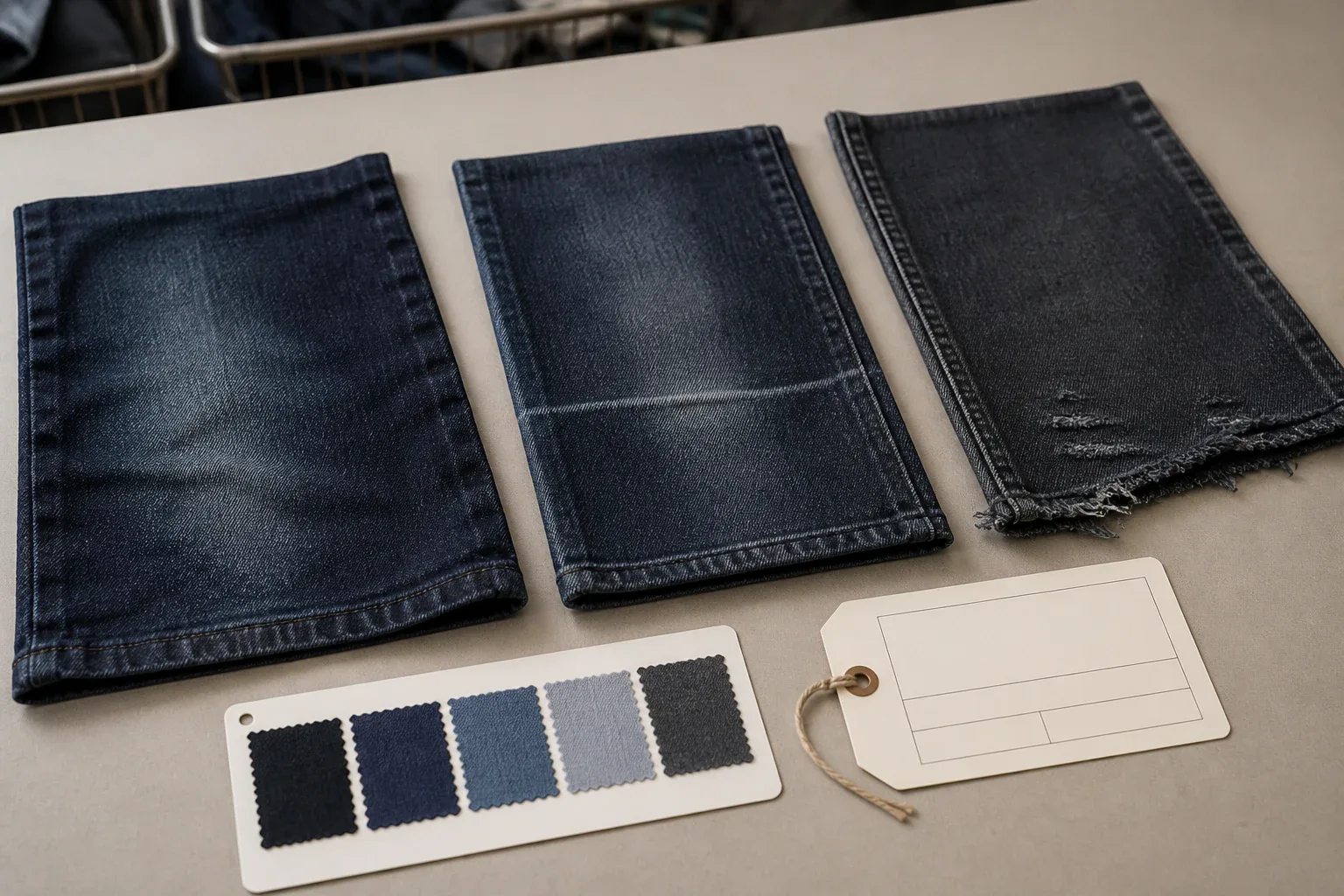
Garment wash defects should be diagnosed from a matched before-and-after record: identify the garment and wash lot, map the visible signature and location, preserve an approved reference, then compare material, construction, components and the declared process history. Backstaining, uneven shade, crease lines, excessive abrasion, holes, trim damage and dimensional change are different evidence problems. A photograph can reveal a symptom; it rarely proves one root cause.
This guide is for brand and factory review after a garment-level finish or wash exposure. It does not prescribe a wash recipe, chemical concentration, machine setting, load size, universal shade tolerance or lot-sampling rule. The denim wash guide owns finish selection, the denim chemistry guide owns process mechanisms, and the stone-versus-acid-wash guide owns those process differences. The garment washing explainer owns the general definition of washing as a manufacturing stage. This page owns the diagnostic handoff when the result does not match the approved target.
Start With the Defect Signature, Not a Process Guess
Write down what can actually be seen or measured before naming a cause. “Bad washing” is not actionable. “Dark redeposited color inside the pocket bag and along a pale rib edge” is.
| Visible signature | Evidence to capture first | Questions it can open |
|---|---|---|
| Unwanted color on a lighter area | Face/back, adjacent materials, seam or fold location, matched pre-wash sample | Color transfer, desorption, redeposition, material interaction or handling |
| Patchy shade or strong panel-to-panel difference | Panel/component topology map, matched pre/post state, wash-lot identity | Whether the open question first appears after the named wash/dry exposure |
| Sharp pale line at a fold or crease | Line path, fold geometry, inside/outside faces and stage when first seen | Local mechanical action, temporary folding, pressure or material response |
| Abraded edge, open hole or exposed yarns | Exact zone, layers, seam condition, decoration and pre-existing distress map | Intended abrasion versus over-processing, weak/damaged material or construction interaction |
| Button, zipper, print, label or patch damage | Component identity, attachment, protective arrangement and before/after function | Component compatibility, impact, heat, chemistry or attachment weakness |
| Length, width, torque or shape change | Named measurement points and aligned pre/post images | Dimensional response, spirality, construction balance or drying route |
The last column contains hypotheses, not conclusions. Several mechanisms can produce similar marks, and one mechanism can create more than one symptom. Keep the sample while the investigation is open; a written conclusion without the affected garment loses the strongest physical evidence.
Backstaining Is Not the Same as the Intended Fade
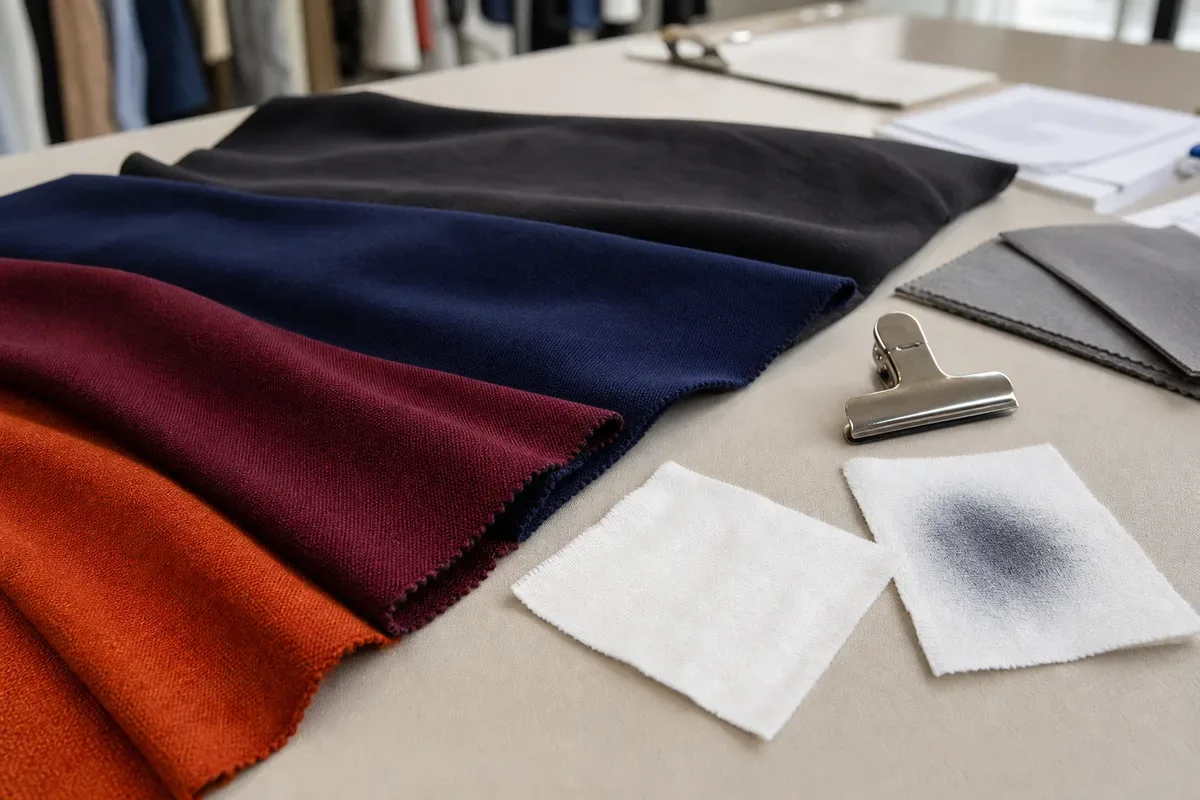
A designed washed effect removes or redistributes color to create an approved surface. Backstaining is unwanted color deposited on an area that should remain cleaner or lighter. It may be most visible on pocketing, labels, contrast stitching, pale rib, lining, exposed weft or distressed zones. Photograph both the overall garment and the boundary where the unwanted color begins.
The official abstract for ISO 105-C06:2010 distinguishes color loss and staining associated with desorption and/or abrasive action during a specified laundering test. It also limits interpretation to the stated detergent and bleach systems. That is a useful evidence boundary: color change on the source material and staining of an adjacent material are separate observations, and a test route is not a duplicate of an undisclosed production wash.
For a backstaining review, retain the exposure and assessment basis from the garment colorfastness owner when the project requires controlled color-change or staining evidence. Also retain:
- The approved washed sample and an unwashed production-intent reference when available.
- Body fabric, rib, pocketing, label, thread and decoration identities by color and lot.
- A location map showing outside, inside, seam allowance, fold and contact zones.
- The declared production history for the affected wash lot and a matched acceptable lot.
- Any controlled colorfastness or wash evidence requested by the project owner.
Do not call every dark area backstaining. A shadow from pile direction, wet handling, an intentionally dirty finish or the original fabric construction can look similar in one phone image. Compare dry garments in consistent light and preserve the intended finish target.
Route Broad Shade Mapping Before Opening a Wash Cause
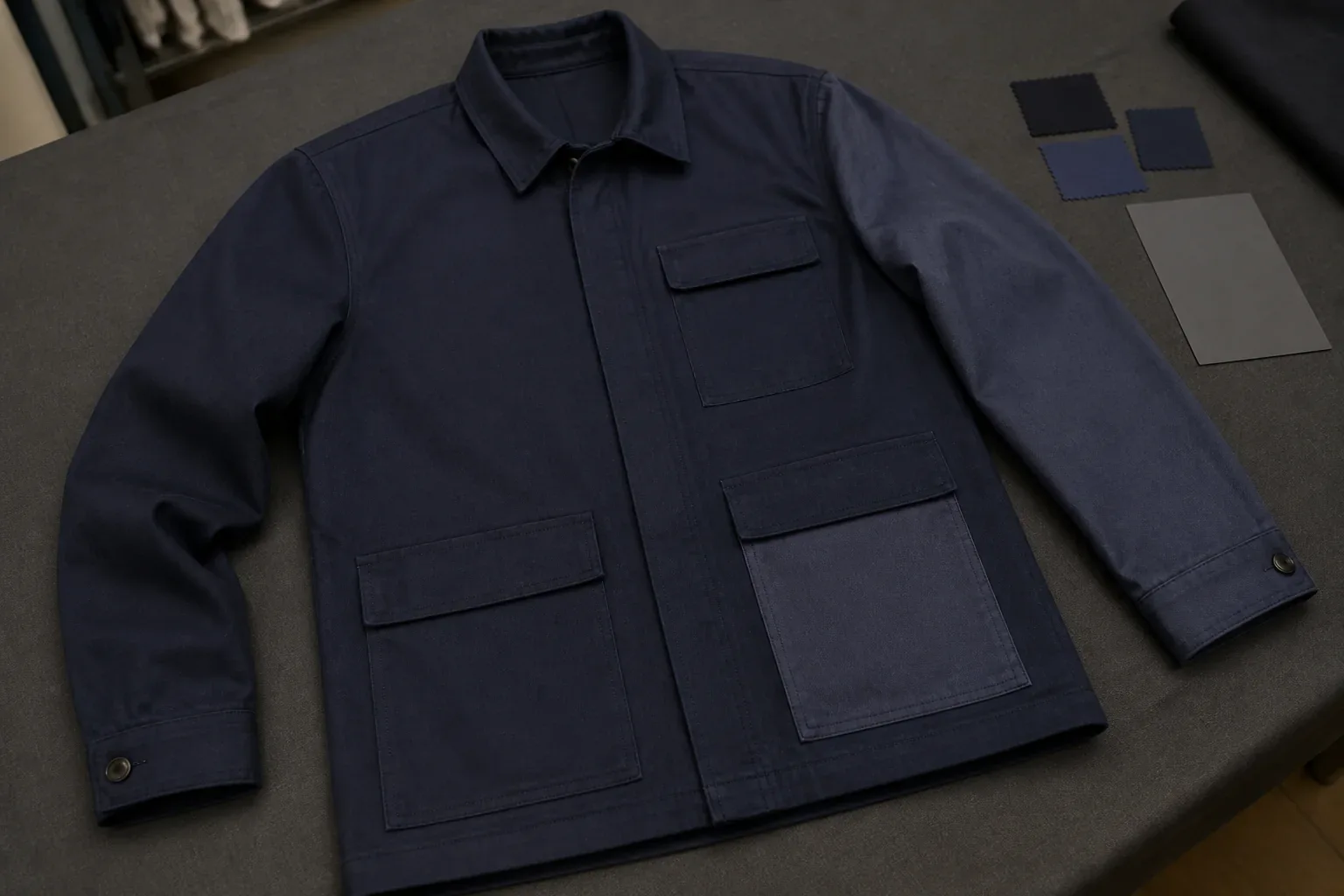
Use the panel-to-panel shade-variation guide to map within-panel, panel-to-panel and garment-to-garment appearance, viewing state, material identity, face, orientation, roll/lot and shade-group evidence. That owner keeps a broad shade observation from being labeled a wash fault merely because it was noticed on a finished garment.
This wash-defect owner resumes when matched pre-wash and post-wash evidence, or another traceable state history, places the open question after a named garment wash, finish or drying exposure. Retain the panel map, garment and wash-lot IDs, approved target, declared exposure and a matched acceptable result. If the earlier state is unavailable, record that limitation; do not reconstruct it from the finished appearance.
Abrasion Must Be Split Into Intended Effect and Damage
An intentionally distressed garment can contain fading, worn edges or opened areas, but the approved distress map should say where and how far. Compare every affected zone with the signed sample or artwork rather than treating “vintage” as unlimited permission.
Record whether the change is:
- surface color loss with intact yarns;
- raised fuzz or exposed yarn structure;
- an open hole through one or more layers;
- a seam opening with intact body fabric;
- broken stitching or a detached reinforcement; or
- decoration cracking, lifting or edge damage.
These signatures route to different owners. A hole extending from an approved distressed opening may reopen the material-strength or distress-geometry decision; the abrasion-versus-tear owner separates surface wear from initiated-tear evidence. A gap beside intact stitches may belong to the seam-failure guide. A damaged print belongs to the print durability owner. Lot acceptance remains with the garment AQL guide, not with the wash-defect name.
Components Can Fail Even When the Fabric Looks Right
Review the whole garment system after the intended exposure. Operate zippers and snaps; compare button faces and edges; inspect pullers, eyelets, rivets, labels, patches, elastic, drawcord ends and decoration. Then inspect their attachment zones for cracking, distortion, corrosion-like appearance, sharp edges, color change, adhesive separation or stitch damage.
ISO 15487:2018 is currently published while a replacement is under development. Its public scope shows why finished-product appearance is broader than shade: it includes color change, pilling, fuzzing, matting, smoothness of fabric and seams, crease retention and damage to components such as buttons, press fasteners and slide fasteners after domestic washing and drying. The standard is not a production-wash recipe or universal acceptance table. It supports the principle that fabric, seams and components need separate observations.
A component failure should retain the supplier/article identity, finish, attachment specification, sample revision and affected wash lot. If a protective arrangement or temporary closure state was required, record what was actually used. Do not silently replace a component and keep the old approval.
Separate Appearance From Dimensional Change
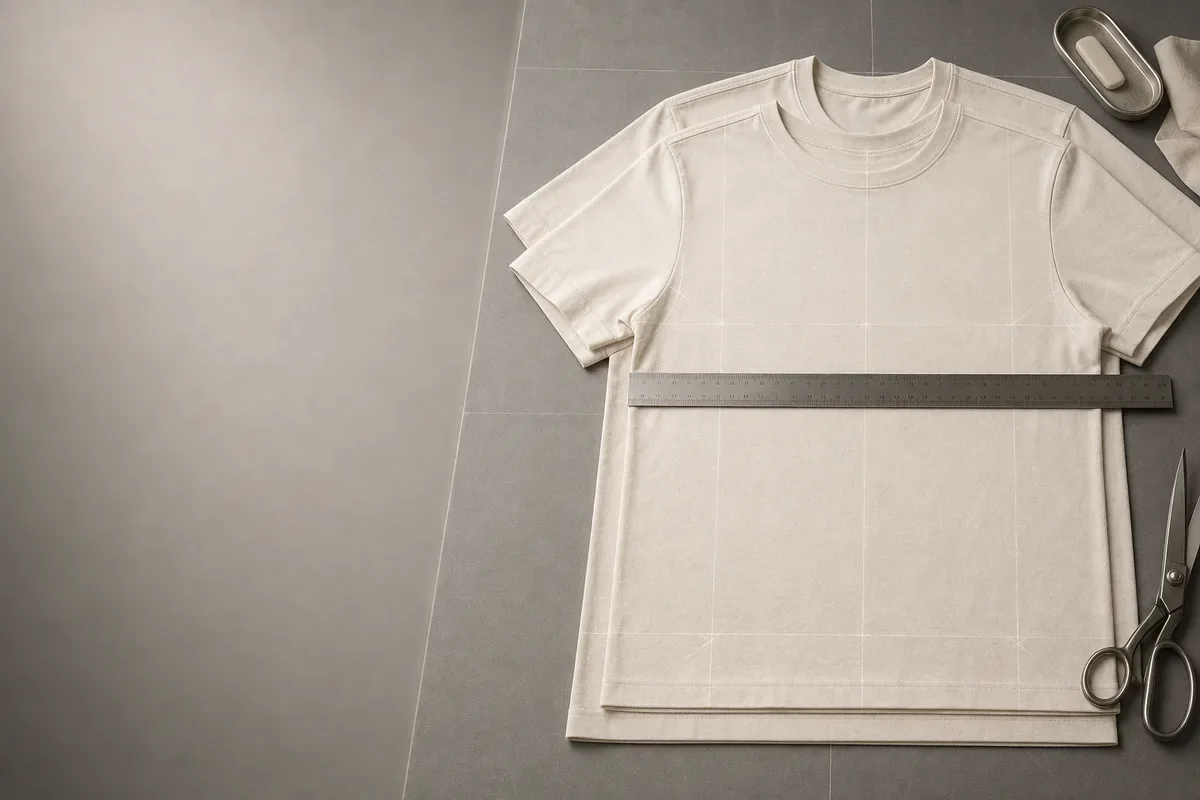
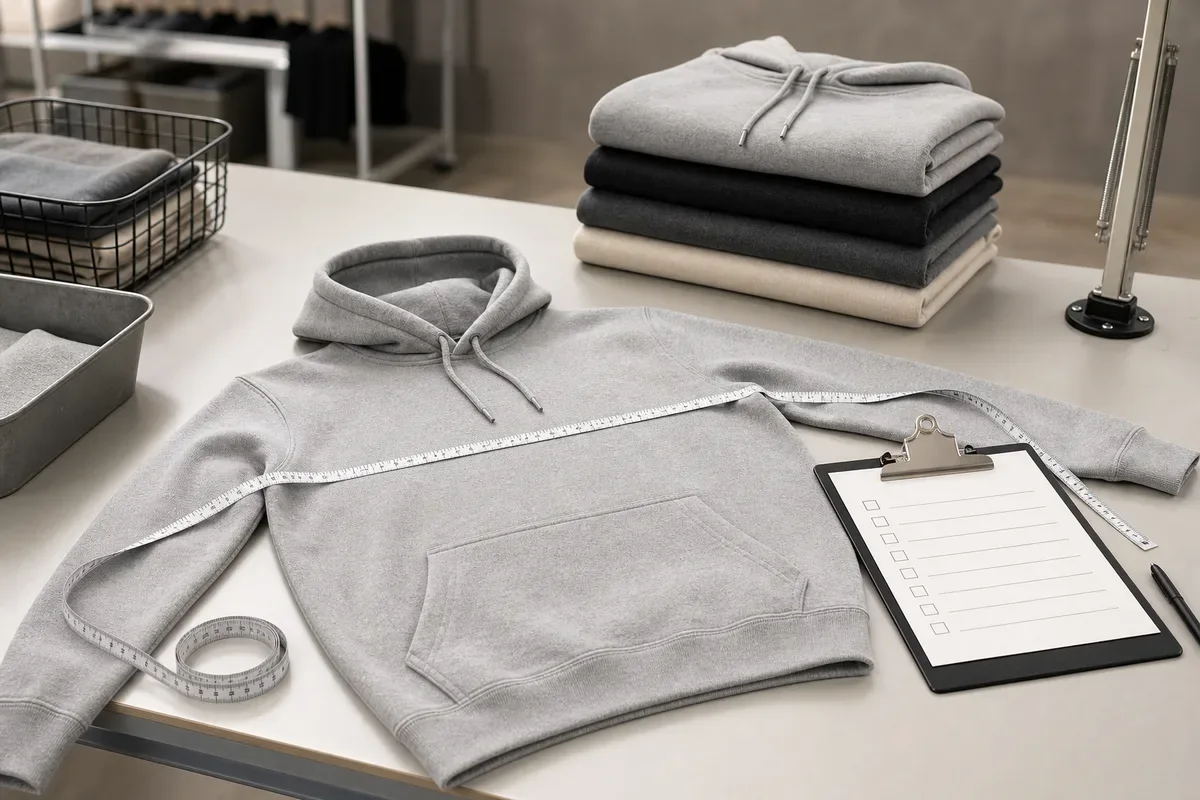
A garment can match the desired shade and still change length, width, symmetry or torque. Measure named points before and after the agreed exposure, using the same garment identity and preparation state. Keep linear change separate from rotation: a shorter body is not the same observation as a twisting side seam.
ISO 5077:2007 specifies determining dimensional change in fabrics, garments or other textile articles after an appropriate combination of specified washing and drying procedures. ISO 6330:2021 supplies multiple domestic washing and drying procedures and explicitly notes that machine, detergent and dryer parameters can affect results. Therefore, “washed once” is not a complete comparison condition.
Use the shrinkage guide for dimensional planning. Route woven-denim trouser rotation to the jeans leg-twist guide, and knit-body rotation to the T-shirt side-seam-twist guide. This wash-defect page only ensures those observations are not hidden inside a general appearance verdict.
Build a Matched Investigation Pack
A useful pack can be compact:
- Identity: style, color, size, garment ID, material/component lots and wash-lot reference.
- Target: approved sample, finish image or signed comment with revision and date.
- Before state: production-intent garment or material evidence before the questioned wash.
- After state: consistent whole-garment views, close-ups, location map and functional checks.
- Declared exposure: the wash and drying route recorded for that lot, without rewriting it from memory.
- Comparison: a matched acceptable garment processed under the relevant approved route when available.
- Disposition: hold scope, investigation owner, proposed controlled change, resample ID and approval authority.
Change one controlled variable at a time where feasible. If material, color, component, construction and process all change in the next sample, a better result will not show which correction mattered. Recheck the full garment after the proposed correction; solving backstaining while damaging hand, dimensions or trim is not closure.
Close the Corrective Loop in Order
- Hold the identified garment, wash lot or affected scope without assuming every unit has the same symptom.
- Clarify the observation, approved target, identities and declared exposure; route color, material, seam, print, dimension or lot questions to their canonical owners.
- Run a controlled trial with the proposed change, trial ID and unchanged comparison fields recorded.
- Retest and recheck the corrected sample under the applicable approved appearance, function, dimensional and special-test routes.
- Reopen the decision when material or component identity, color/lot, construction, decoration, wash/dry route, care requirement or acceptance criterion changes—or when the corrected sample creates a new symptom.
Only the authorized project owner should release the held scope after the corrected evidence is accepted. A successful trial is not automatically a production-lot disposition.
What Jiashun Can Review
Jiashun supports garment-wash development within custom cut-and-sew programs and can review an approved visual target, garment construction, materials, components, decoration and project-specific evidence. The appropriate wash route, sample sequence, special testing, criterion and third-party involvement depend on the product and order.
Jiashun does not publish one universal wash recipe, defect tolerance or laboratory grade. Send the reference garment, tech pack, material and component identities, intended effect, care context and any buyer test requirement so the discussion starts from a defined product rather than a finish name alone.
Frequently Asked Questions
What are the most common garment wash defects?
Useful diagnostic groups include unwanted staining, uneven shade, crease or fold marks, excessive abrasion or holes, component and decoration damage, seam appearance change, and dimensional or torque change. The group describes the observation; it does not prove the cause.
What causes backstaining in garment washing?
Backstaining describes unwanted color on an area that should remain cleaner or lighter. Desorbed color, abrasive action, material contact and the stated detergent or process system can be relevant questions, but the cause must be established from matched materials, locations and process evidence rather than one image.
How should a brand approve an intentionally uneven wash?
Approve a physical or controlled visual reference with the garment, material, color and revision identity. Define which zones may vary, which must remain protected and what evidence will be used for comparison. “Vintage” or “random” is not a complete approval instruction.
Does one good washed sample approve the production lot?
No. A development sample shows the result on that identified garment under its stated history. Production-lot sampling, defect classification, acceptance rules and disposition authority must be defined separately in the inspection plan.
Should a factory fix a wash defect by changing the recipe immediately?
Not before the symptom and scope are established. Preserve the affected garment, compare the approved target and matched evidence, then let the responsible technical parties choose a controlled trial. An unrecorded recipe change can hide the original cause or create a new shade, dimension or component problem.
References
- International Organization for Standardization, ISO 105-C06:2010, Textiles — Tests for colour fastness — Part C06: Colour fastness to domestic and commercial laundering — public scope for color loss, staining, stated laundering systems and interpretation limits; retrieved 2026-08-10.
- International Organization for Standardization, ISO 15487:2018, Textiles — Method for assessing appearance of apparel and other textile end products after domestic washing and drying — current published scope and replacement status for appearance, seams and component damage; retrieved 2026-08-10.
- International Organization for Standardization, ISO 5077:2007, Textiles — Determination of dimensional change in washing and drying — dimensional-change scope for fabrics, garments and textile articles; retrieved 2026-08-10.
- International Organization for Standardization, ISO 6330:2021, Textiles — Domestic washing and drying procedures for textile testing — washing/drying procedure choices and parameter-comparability warning; retrieved 2026-08-10.
Related guides
 Panel-to-Panel Shade Variation in Garments: Evidence Before Diagnosis
 Denim Washes Explained: Stone, Enzyme, Acid and Sun-Fade — and How to Approve Them
 Stone Wash vs Acid Wash: What Actually Happens in the Drum
 Colorfastness and Crocking Tests for Clothing Brands
 How Much Does Cotton Shrink? The Science, the Standards, and the Tolerance to Put in Your Tech Pack
 AQL 2.5 Explained: What Garment Buyers Should Specify