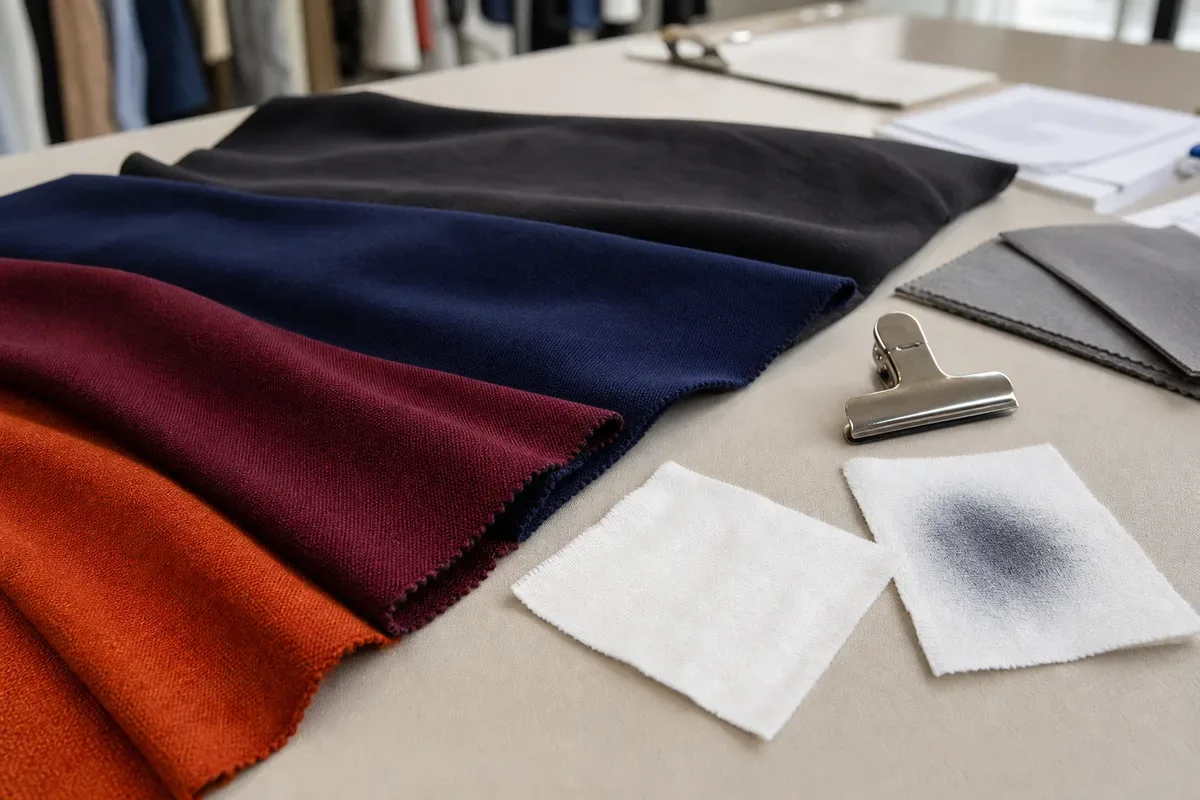
Duck Canvas vs Denim for Workwear Programs
Compare identified duck canvas and denim candidates by garment zone, hand, finish, construction, test context and approval evidence—not a universal durability ranking.
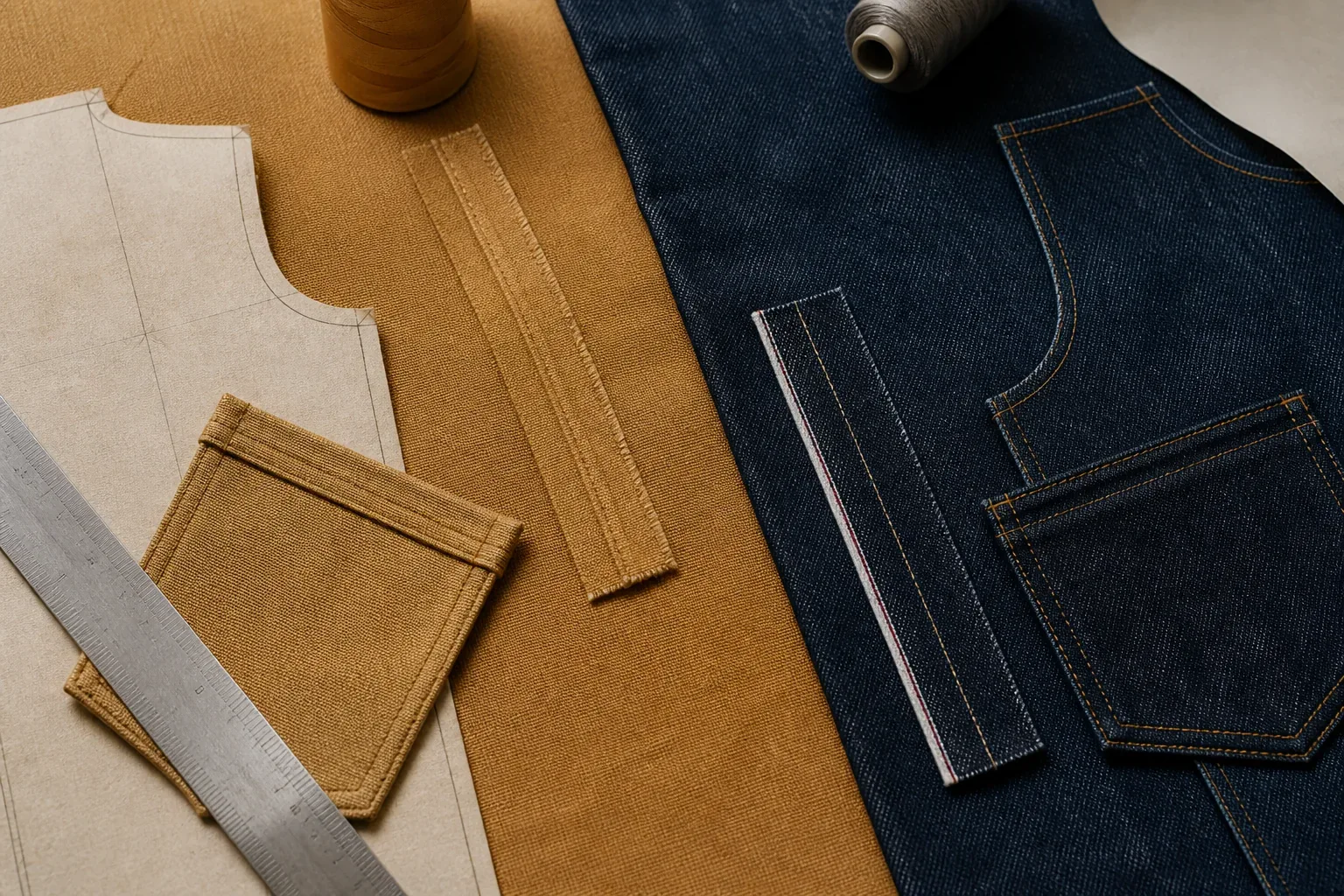
Duck canvas vs denim is not a choice between one universally durable fabric and one less durable fabric. It is a comparison between two identified cloths for one workwear garment program. Choose from the intended silhouette, movement, surface, garment zones, finish, decoration, care route and evidence from matched samples.
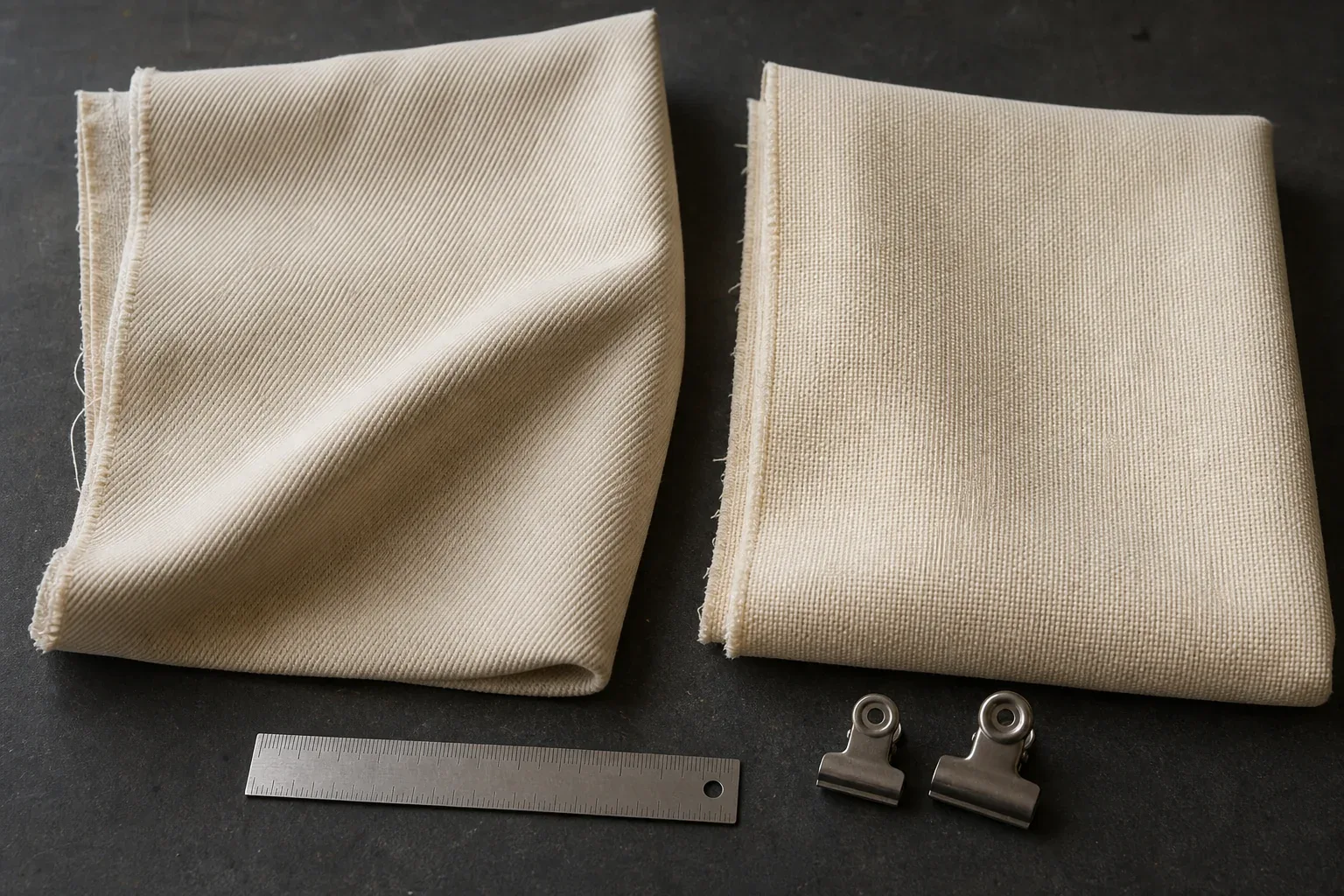
As a starting point, duck canvas commonly presents a firm plain-weave surface, while denim is a twill family with a diagonal structure and its own yarn-color and finishing conventions. Those family differences can affect hand and appearance, but they do not settle abrasion, tearing, shrinkage, comfort or wear life. Fiber, yarn, mass, density, finish and specimen condition still matter.
This guide owns the program-level choice between an identified duck-canvas candidate and an identified denim candidate. The twill-versus-canvas guide retains generic weave and structure education. Denim ounce weight, stretch, washing and jeans production remain with the site's dedicated denim owners.
What Is the Practical Difference Between Duck Canvas and Denim?
Cotton Incorporated's basic woven-fabric guide lists canvas among common plain-weave fabrics. Its denim overview describes denim as a twill cloth and traces its workwear history. That establishes useful family context, not a specification for the roll in front of you.
In a garment-development room, the first visible signals are often:
| Comparison point | Duck-canvas starting signal | Denim starting signal |
|---|---|---|
| Surface | Flatter grid or plain-weave face | Diagonal twill line, often with stronger face/back distinction |
| Initial hand | Can feel firm or stand away from the body | Can bend and fold along a more yielding twill structure |
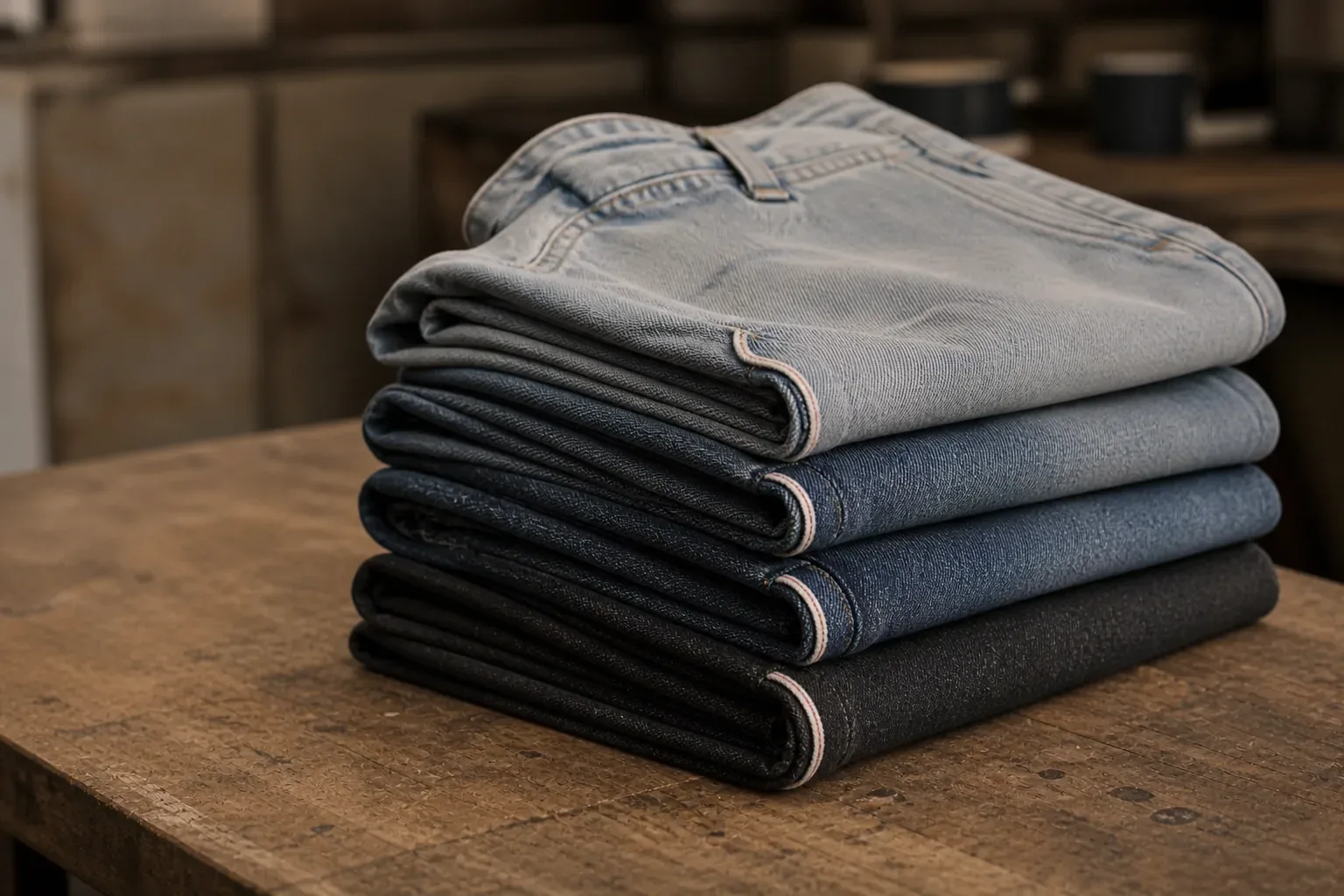
| Color expression | Piece-dyed, printed, coated or otherwise finished according to the selected article | Often built around a denim-specific yarn-color and wash relationship |
| Garment character | Utility, chore or structured panel language | Jeans and denim-jacket language, including wash-driven contrast |
Every word in that table is conditional. A softened light duck can feel more yielding than a dense rigid denim. A coated duck and an untreated duck are different material states. A stretch denim and a rigid denim should not share one movement assumption. Approve the actual article, not the family stereotype.
Compare the Fabric Record Before Comparing Performance
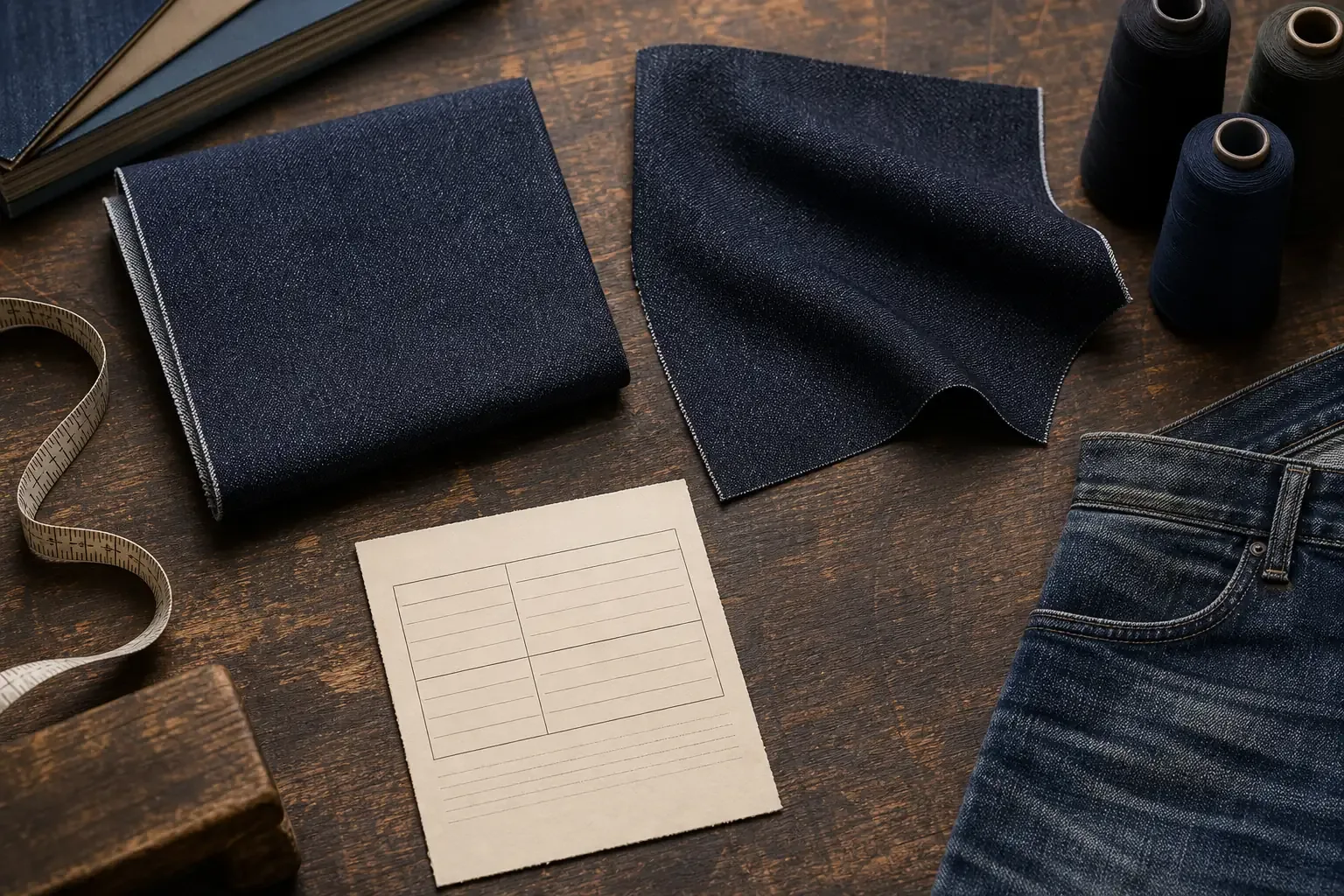
Ask both candidates to arrive with the same minimum identity fields. If one record says only “12 oz denim” and the other says only “heavy duck,” there is not yet a controlled comparison.
| Field | What to record | Why it matters |
|---|---|---|
| Supplier identity | Mill or supplier, quality code, lot or sample-lot status | Prevents a familiar name from standing in for a reproducible cloth |
| Declared composition | Fiber names and percentages, plus verification status if required | Duck and denim do not prove cotton content, blend or stretch fiber |
| Construction | Duck/canvas construction or denim twill; face, back and direction | Connects visual structure to pattern orientation and trial results |
| Mass per area | Value, unit, method and material state | Makes “heavy” auditable without turning weight into durability |
| Width | Full and usable width, with measuring state | Affects marker planning and whether the compared cost basis is equivalent |
| Color and finish | Dye route, coating, mechanical finish, garment finish or wash | Can change hand, shade, surface and later test results |
| Stretch or movement | Direction, method and recovery or growth evidence where relevant | Separates actual movement from assumptions about the fabric family |
ISO 3801:1977, confirmed current by ISO in 2023, distinguishes mass per unit length from mass per unit area and notes that fabric structure can make that distinction important. For apparel comparison, use mass per area with a named material state; do not compare a finished denim garment number with an unfinished duck roll number as though they were equivalent.
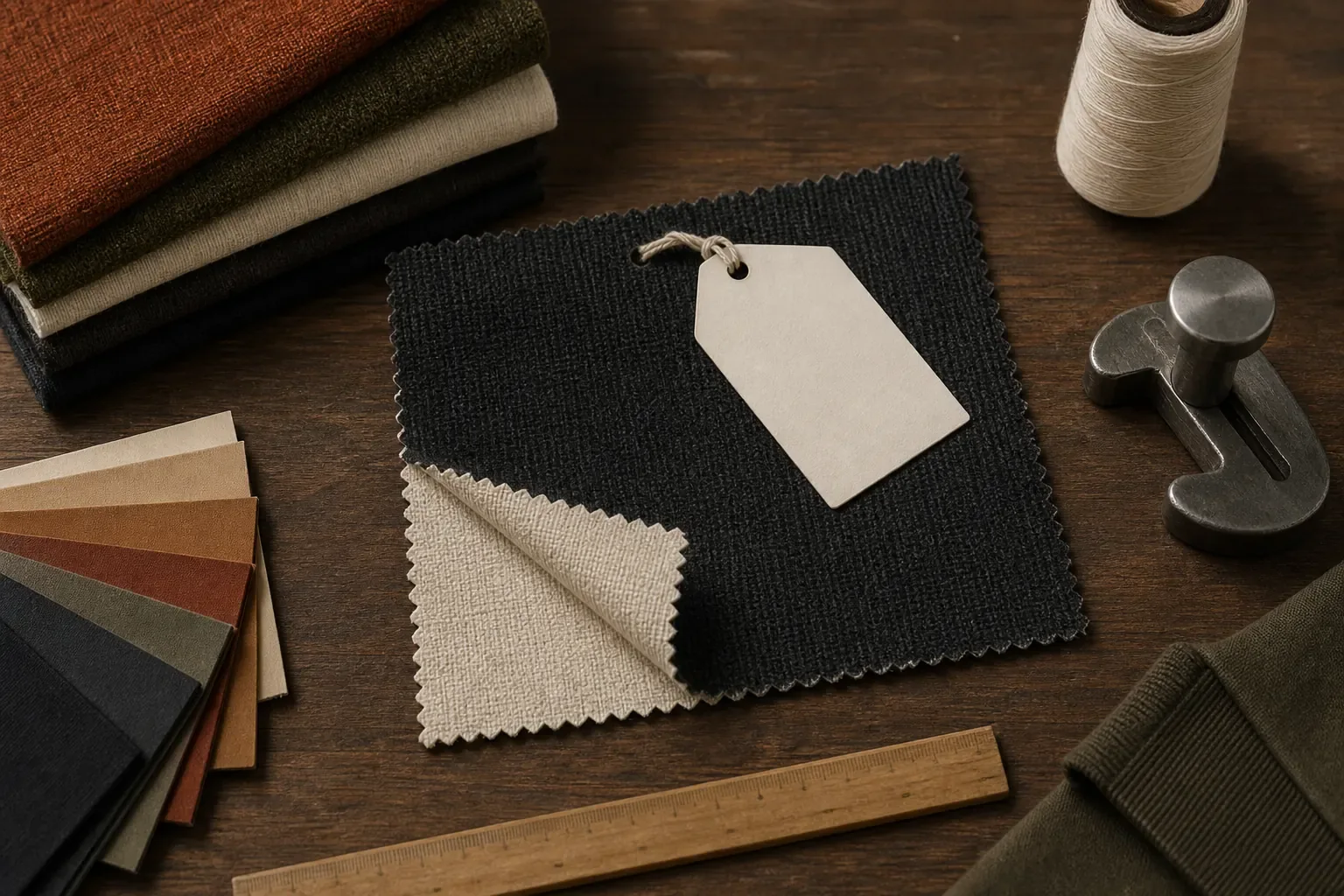
The same rule applies to width and composition. Record whether a swatch is loomstate, finished, washed or coated. Mark a supplier declaration as a declaration; do not upgrade it to a laboratory result without evidence.
Map the Choice to Workwear Garment Zones
“Workwear” covers many garments and loads. A carpenter-style pant, utility overshirt and chore jacket do not ask the same thing from cloth. Map the decision to zones before selecting a winner.
| Garment zone | What the cloth changes | What to inspect on the sample |
|---|---|---|
| Knee and elbow | Bending resistance, fold memory and surface change | Movement, recovery after rest and intended appearance after care |
| Seat, rise and armhole | Mobility across shaped seams and body movement | Fit in motion without relying on unapproved stretch |
| Pocket opening and corner | Added plies, local stiffness and load transfer | Opening shape, reinforcement transition and distortion |
| Fly, placket and zipper edge | Layer bulk beside hardware and topstitching | Flatness, closure operation and pressure points |
| Cuff, hem and waistband | Multiple folds and seam intersections | Manageable thickness, edge appearance and comfort |
| Decorated panel | Interaction with print, embroidery, patch or wash | Registration, hand, support, face appearance and post-process result |
A vintage-washed quilted duck-fabric jacket, a canvas work jacket with zipper pockets and an embroidered acid-washed denim pant make those zone differences visible. The product pages are design references only. They do not prove hidden fiber content, fabric weight, test performance or the construction required for another program.
How Should Hand and “Break-In” Be Evaluated?
Break-in is often used loosely to mean that a garment becomes more yielding, creased or visually personal through wear and care. It is not one standardized property and it is not guaranteed by either name.
Evaluate the intended experience in controlled stages:
- Compare full-size swatches in the same known material state.
- Sew the same critical fold, seam and pocket stack in each candidate.
- Review the complete garment for reach, bend, sit and recovery after rest.
- Apply the agreed garment finish or care procedure.
- Compare dimensions, hand, surface, edge bulk and shade again.
- If a wearer trial is part of the project, define the activity, duration and observations before it begins.
Do not use an aggressively softened sample to represent an untreated bulk article. Do not promise that a stiff first sample will soften to an acceptable result later. The approved state should already be compatible with the product brief, and any expected change should be supported by the agreed trial.
Abrasion and Tear Strength Answer Different Questions
The common SERP question—“Is duck canvas stronger than denim?”—collapses several properties into one word. Separate them.
| Evidence question | What a named result can address | What it cannot establish alone |
|---|---|---|
| Surface abrasion | Response under a stated apparatus, abradant, load and endpoint | Universal wear life or resistance to an initiated tear |
| Tear propagation | Force required to continue a defined tear under the stated method | Whether a cut or puncture will start in normal use |
| Breaking force | Response to a tensile load in the tested direction | Surface wear, seam strength or garment comfort |
| Dimensional change | Measured change after the stated treatment | Abrasion, tear or recovery during wear |
| Color transfer by rubbing | Color rubbed off or staining under the stated dry/wet route | General colorfastness under every exposure |
ASTM's public guidance for D3884-22 says abrasion results depend on material and test variables and should not predict actual wear life without evidence connecting the test to the intended end use. ASTM D1424-25 answers a different question: the force required to propagate a single-rip tear that begins from a cut.
A useful comparison report therefore carries the method and edition, fabric identity and state, warp/filling or relevant direction, specimen conditioning, units, result and project criterion. “Passed abrasion” or “strong tear” is incomplete. A higher number from a different method, endpoint or material state is not a like-for-like win.
This is a buyer-side evidence framework, not a claim that Jiashun operates an in-house textile laboratory. When special evidence is required, the test route, party, sample and acceptance criterion are agreed for the project.
Washing, Finishing and Decoration Can Change the Decision
Denim is often selected partly for a wash-driven visual language. Duck can also be washed, printed, coated or mechanically finished. Treat each finish as part of the material identity because it can change shade, hand, dimensions, surface contrast and sewing behavior.
Run finish and decoration trials in the intended sequence. A panel embroidered before garment washing can respond differently from one embroidered afterward. A coating may affect print or adhesive compatibility. Thick topstitching and multi-ply corners can change the hand more than the flat swatch suggests.
For each candidate, record:
- Material and color article before processing.
- Garment-wash or finishing route and sample revision.
- Decoration artwork, size, placement and process revision.
- Before/after measurements and consistent photographs.
- Face appearance, hand, seam and hardware behavior.
- Accepted range and retained reference.
Color transfer, wash appearance and dimensional change are separate approval questions. Route those details to the garment colorfastness guide and the fabric swatch approval checklist instead of inventing one “workwear durability” score.
A Paired Sample Plan for Duck Canvas and Denim
The cleanest comparison changes one major material input while holding the product intent stable.
- Lock the brief. Use the same silhouette, movement needs, component map, decoration intent and care route.
- Identify both cloths. Complete the comparable material record before cutting.
- Build critical mock-ups. Sew the pocket corner, zipper edge, waistband or cuff stack that concentrates bulk.
- Make production-intent samples. Keep pattern and construction revisions visible; record any candidate-specific change rather than hiding it.
- Apply the intended finish and decoration. Compare in the same approved sequence.
- Inspect by zone. Review mobility, hand, surface, edge bulk, hardware operation, shade and dimensions.
- Review relevant evidence. Request only the test results tied to the product risk and agreed criterion.
- Select and retain. Name the approved cloth, garment sample and limits of the approval.
If the two fabrics require different pattern ease, seam construction or finishing to reach the product intent, document those differences. A fair program choice is not always an identical build; it is a controlled record of what changed and why.
What Belongs in the Final Material Approval?
PROGRAM AND COMPONENT
Style / revision:
Garment component and zones covered:
Intended silhouette, movement, finish and care route:

APPROVED MATERIAL
Supplier and quality code:
Declared composition and verification status:
Construction, face/back and direction:
Mass per area, usable width and material state:
Color, finish and lot/sample-lot identity:

EVIDENCE
Critical seam and layer mock-up:
Production-intent sample ID:
Decoration and finish trial ID:
Applicable test method, edition, direction, result and criterion:
Before/after measurement and appearance record:

CONTROL
Approved colorways / sizes / lots or stated scope:
Retained reference location:
Authorized approver and date:
Reopen triggers and substitute-material route:
Reopen the decision when the supplier quality, construction, composition, mass, finish, color route or intended garment zone changes beyond the approved scope. “Same duck” or “same denim” is not enough when the controlled identity has changed.
Claims to Avoid in a Workwear Material Comparison
- Do not say duck canvas always outlasts denim, or denim always tears more easily.
- Do not use fabric weight as a synonym for strength, comfort or quality.
- Do not turn an abrasion cycle count into years of wear without end-use correlation.
- Do not claim puncture, flame, chemical, weather or other protective performance from a fabric family name.
- Do not describe ordinary fashion workwear as PPE or certified protective clothing.
- Do not infer composition, coating, test grade or wash process from a product photograph.
- Do not imply that a shown fabric is Jiashun-held inventory; sourcing and availability are project-specific.
Jiashun can develop custom men's pants and jackets using project-selected materials and compare a production-intent garment with its approved sample. The useful outcome is an identified cloth and controlled garment record—not a blanket promise attached to “duck” or “denim.”
Frequently Asked Questions About Duck Canvas vs Denim
Is duck canvas stronger than denim?
Not as a universal rule. Strength may refer to breaking force, tear propagation, puncture, seam behavior or another property. Compare identified fabrics in the same relevant state and direction under the same applicable method, then confirm the result on the intended garment.
Is duck canvas more abrasion resistant than denim?
The names alone cannot answer that. Abrasion results depend on fiber, yarn, fabric construction, finish, specimen state, apparatus, abradant, load and endpoint. Even a laboratory result should not be converted directly into wear life without end-use correlation.
Which fabric is better for work pants?
Choose by the actual pant. Inspect mobility at the rise, seat and knee; bulk at the fly, waistband and pockets; decoration and wash response; and the approved evidence for the product's risk. Either family can be the better candidate for a particular program.
Does duck canvas soften more slowly than denim?
There is no reliable family-wide timetable. Initial hand and later change depend on the identified construction, mass and finish plus the wear or care route. Approve the starting state and any expected change through a defined trial instead of promising break-in.
Can duck canvas and denim use the same garment construction?
Sometimes, but do not assume it. Layer bulk, bending, surface, stretch and finishing can change seam, pocket, hem, closure and decoration needs. Compare critical mock-ups and record any construction difference before approving the garment.
References
- Cotton Incorporated, “Basic Woven Fabric Designs” — plain-weave context and canvas as a common example; retrieved 2026-08-08.
- Cotton Incorporated, “Denim Basics” — denim's twill and workwear context; retrieved 2026-08-08.
- International Organization for Standardization, ISO 3801:1977, Textiles — Woven fabrics — Determination of mass per unit length and mass per unit area — current-status and public abstract; retrieved 2026-08-08.
- ASTM International, D3884-22, Standard Guide for Abrasion Resistance of Textile Fabrics (Rotary Platform Abrader Method) — abrasion variables and end-use limitations; retrieved 2026-08-08.
- ASTM International, D1424-25, Standard Test Method for Tearing Strength of Fabrics by Falling-Pendulum (Elmendorf-Type) Apparatus — single-rip tear-propagation scope; retrieved 2026-08-08.