Twill vs Canvas Fabric for Pants and Jackets
Twill and canvas differ first in construction, but the name alone cannot predict strength or wear. Compare structure, hand, garment consequences and the evidence a brand should approve.
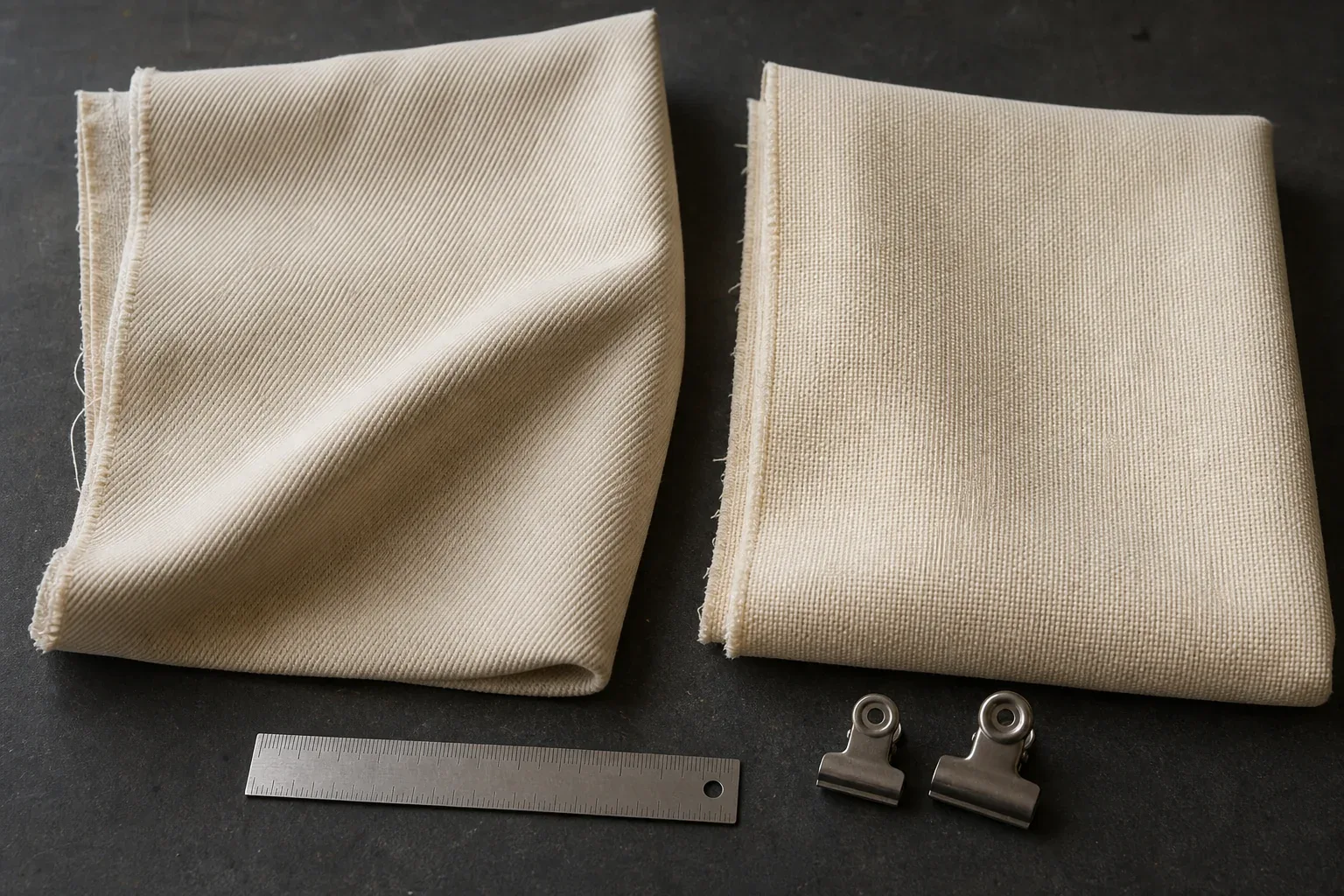
Choose twill when the approved cloth gives the garment the movement, drape and diagonal surface you want; choose canvas when the approved cloth gives it the flatter face, body and structure you want. Do not choose either name as a shortcut for “more durable.” Twill and canvas can each vary in fiber, yarn, weight, density and finish, so strength and wear claims only become useful when the fabrics and test evidence are actually comparable.
There is also a vocabulary trap. Twill is a weave family. Canvas is a fabric name most commonly associated with a firm plain weave. Cotton Incorporated's weaving guide identifies plain, twill and satin as the three basic weave designs and lists canvas among common plain-weave fabrics. A supplier name such as “twill canvas,” “duck,” or “workwear twill” still needs a construction line, close-up and physical sample; the market name does not prove how the yarns interlace.
For a clothing brand, the practical decision is not canvas versus twill in the abstract. It is one identified candidate versus another for one pair of pants or one jacket, after the intended finish, construction and care route.
When the actual shortlist is specifically duck canvas versus denim for one workwear garment, use the duck-canvas-versus-denim program guide to compare identified candidates by zone, finish and matched evidence rather than reopen this generic weave lesson.
The Structural Difference Comes Before the Fabric Name
A plain weave alternates each crossing over one yarn and under the next. On a typical canvas, that produces a grid-like face with frequent interlacings. The exact hand can still range from pliable to board-like because yarn size, set, fiber and finish change the result.
A twill offsets its crossings to form a diagonal wale. The yarns may float over more than one crossing before interlacing again. Twill includes many constructions and products, from relatively light cotton trouser cloth to heavy denim. That range is why “twill” alone does not specify weight, softness, stretch or end use.
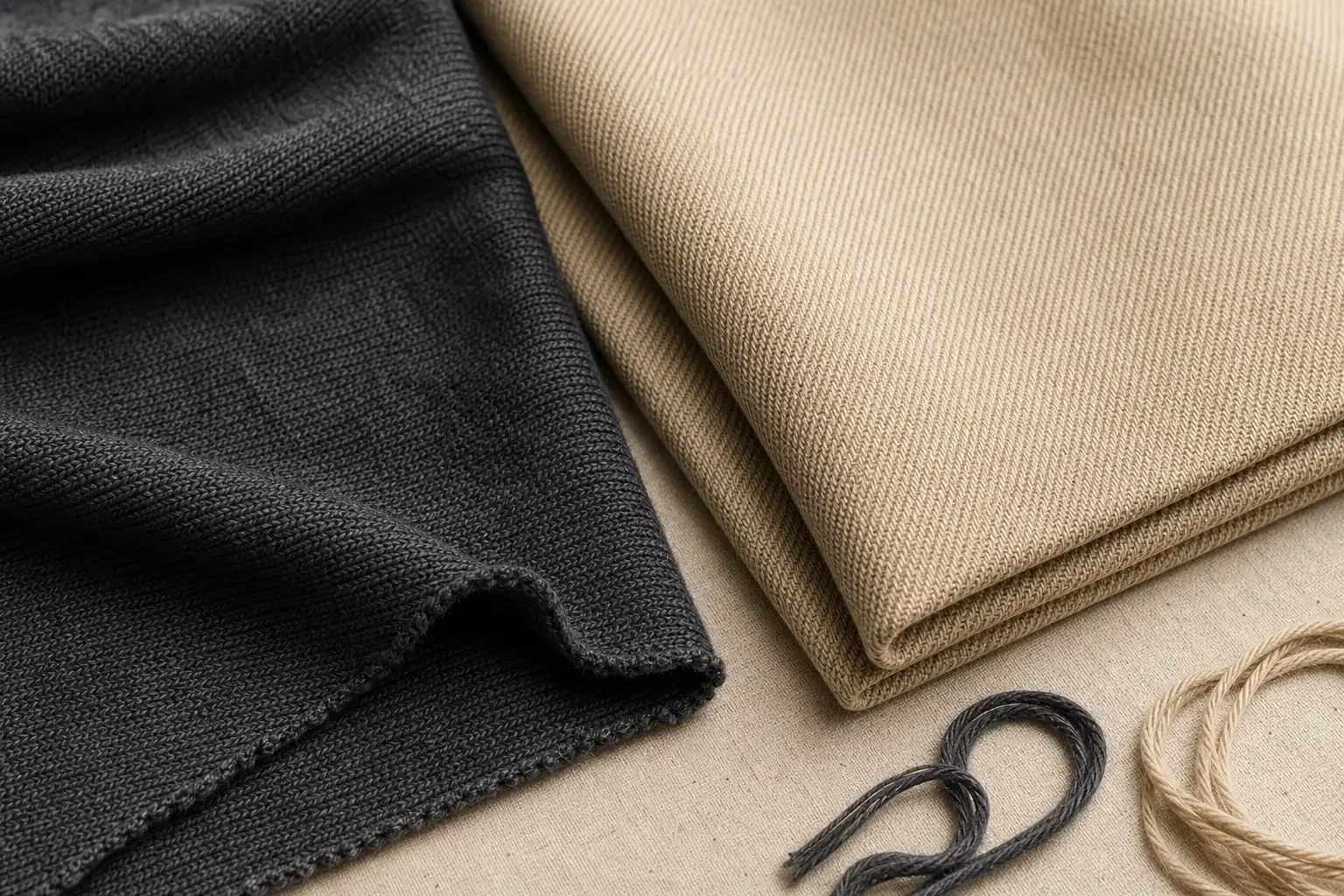
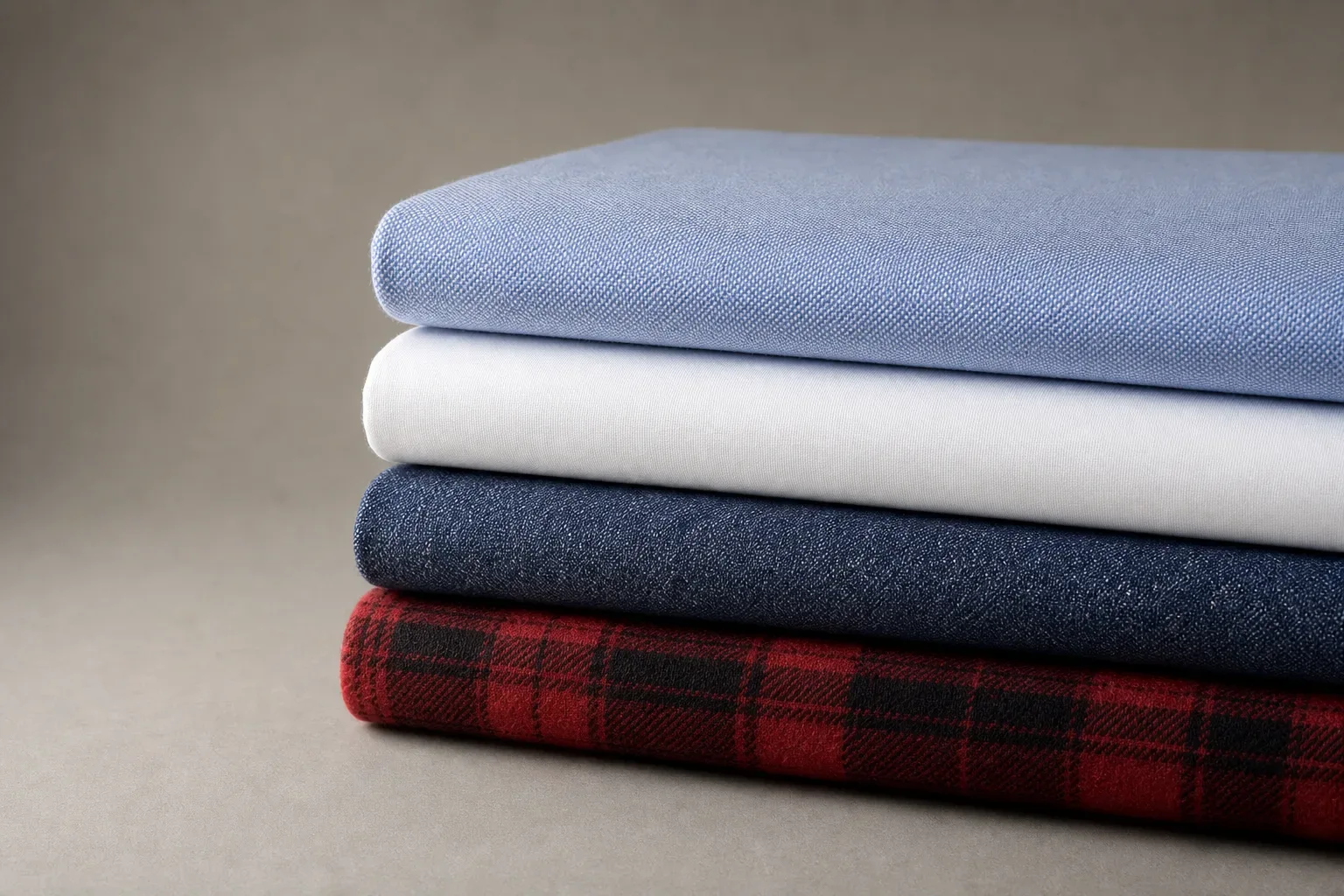
Both are woven fabrics. The broader difference between looped knits and interlaced wovens belongs to our knit vs woven fabric guide. Shirting-specific poplin, oxford and light twill remain covered by the shirt fabric comparison. This page stays with pants and jackets.
| What you inspect | Typical canvas signal | Typical twill signal |
|---|---|---|
| Surface | Flat or grid-like face | Visible diagonal wale |
| Hand | Often firm when yarns are heavy and tightly set | Often more yielding when floats permit yarn movement |
| Face and back | May look similar in a balanced plain weave | Face and back may show different wale prominence |
| Silhouette | Can support a stand-away shape | Can follow bends and folds more readily |
| Proof needed | Actual construction, mass, finish and sample | Actual twill repeat, mass, finish and sample |
These are identification clues, not guaranteed performance rankings. A light, softened canvas can drape more than a dense, heavy twill. A coated or resin-finished fabric can behave very differently from an unfinished fabric with the same weave name.
“Which Is Stronger?” Is the Wrong First Question
Current comparison pages often declare one fabric the abrasion winner and the other the tear winner. The claims are not even consistent from page to page. That is a warning to separate the properties and inspect the underlying evidence.
Fabric mass, fiber, yarn size and twist, thread density, finish, specimen direction, conditioning and test method can all change a result. Comparing a heavy canvas with a lighter trouser twill mainly proves that two different fabrics are different. Even equal mass does not control every other variable.
Use the intended failure question to request the relevant evidence:
| Buyer question | Evidence to identify | What it does not prove |
|---|---|---|
| How heavy is the cloth? | Mass per unit area under a named method, such as ASTM D3776/D3776M | Tear, abrasion, drape or finished-garment comfort |
| How does it resist a pulling load? | Breaking force and elongation under the reported method and direction | Resistance to an initiated tear |
| How does an existing cut propagate? | Tear result under a named method, such as ASTM D2261 | Puncture initiation or general wear life |
| How did the surface respond to rubbing? | Abrasion method, abradant, endpoint and result | A universal number of years in use |
| What changes after care? | Wash/dry procedure plus dimensional and appearance results | Bulk-lot conformity unless the sampling plan covers it |
ASTM D4966-22(2026) is especially useful as a caution. Its public significance statement says abrasion results can vary with the abradant, equipment, operator and evaluation, and that laboratory abrasion should not be treated as a prediction of actual wear life without end-use correlation. A high cycle number copied without its method, endpoint and specimen context is not a buyer-ready durability claim.
The same restraint applies to tear testing. ASTM D2261-13(2024) measures force after a tear has been initiated and says its comparative values are meaningful for similar fabrics tested in the same way. It does not establish one weave as the universal tear winner.
Twill and Canvas Change a Pants Sample in Different Places
Pants make fabric behavior visible at the hip, seat, knee, pocket opening and hem. Evaluate those zones rather than approve a hanging swatch and assume the garment will follow.
A twill candidate may suit chinos, cargo pants or relaxed trousers when its approved drape and bending behavior support movement. The diagonal surface can also be a visible design element. But a twill label does not tell you whether the cloth will hold a wide leg, recover at the knee, shrink after laundering or tolerate the planned wash. Those remain sample and evidence questions.
A canvas candidate may suit a carpenter, utility or structured streetwear pant when the actual cloth holds the intended silhouette. The same body can increase bulk at doubled hems, fly extensions, belt loops, cargo-pocket corners and multi-ply waistband areas. The sewing plan may need to respond to that thickness, but a brand should not prescribe a universal needle, thread or machine setting. Ask the manufacturer to return the proposed construction and approve the sewn sample.
Review a pants prototype in motion and after the agreed care or garment finish:
- Does the rise and seat permit movement without relying on unapproved fabric stretch?
- Does the knee retain the intended line after bending, sitting and relaxation?
- Do cargo pockets, patch pockets and belt loops pull the base cloth out of shape?
- Are thick intersections flat enough at the waistband, fly, pocket corners and hem?
- Does the finished surface show the approved shade, texture and high-low effect?
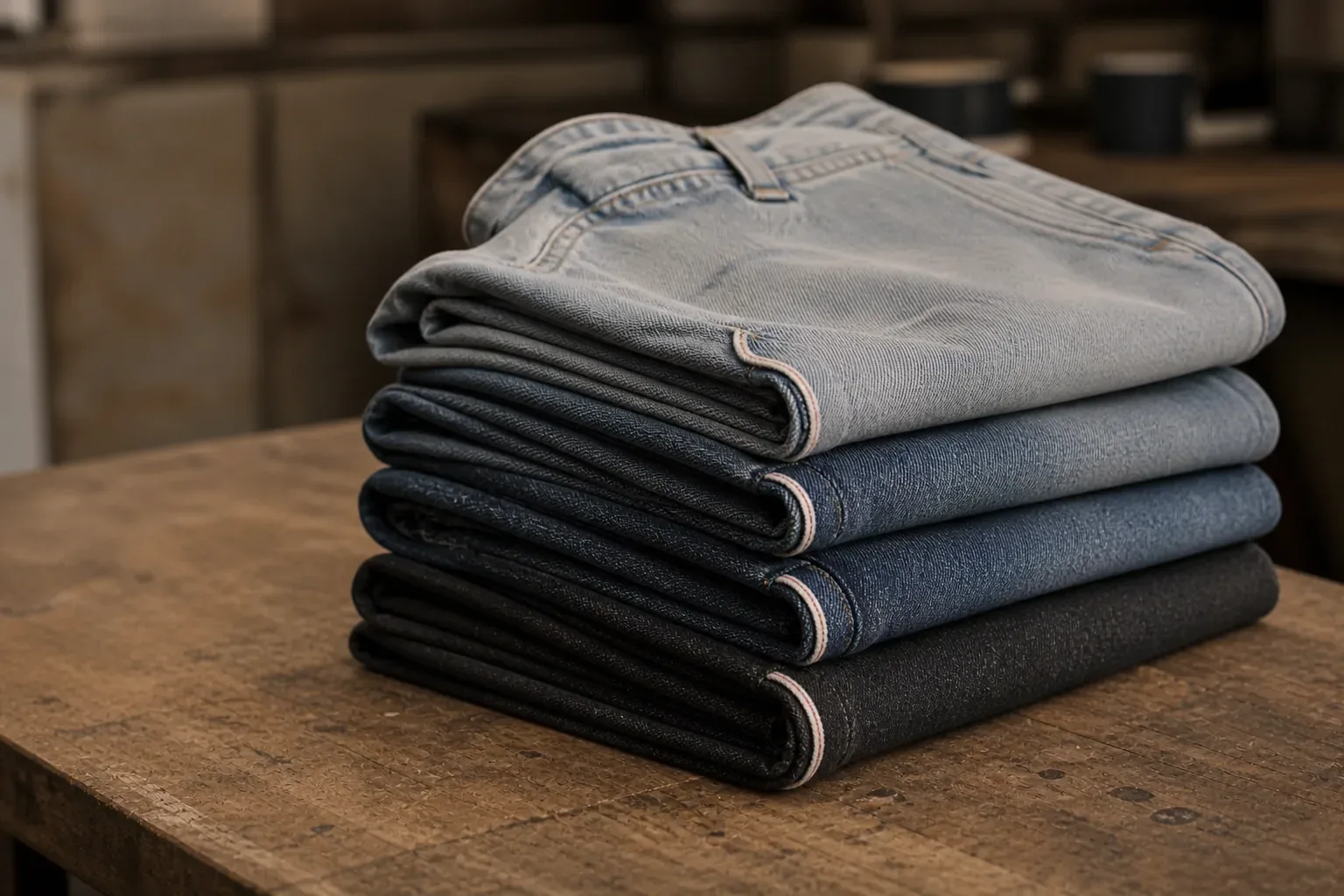
Denim is a twill family with its own yarn-color relationship, weight language, wash behavior and approval needs. Its cloth weight belongs to the denim weight guide, while rigid-versus-stretch behavior belongs to the rigid vs stretch denim guide. This article does not turn every twill-versus-canvas decision into a denim comparison.
Jacket Selection Starts With Shape, Layers and Movement
For jackets, look at the whole assembly: shell, interlining or lining, seam allowances, pockets, collar, cuffs, hem and closure. A shell that feels reasonable as one layer can become restrictive or bulky once those layers meet.
A canvas shell can support a chore-jacket or utility silhouette when the selected quality has the right body. Inspect collar roll, sleeve bend, placket overlap and turned edges. If the jacket is lined, approve how the shell and lining move together instead of judging either separately. If the canvas is waxed, coated or otherwise finished, treat that as a different material state; do not transfer claims from untreated canvas.
A twill shell can support a cleaner drape and easier articulation when the actual fabric bends as intended. Check whether the diagonal face is oriented consistently, whether panels shade differently when reversed and whether topstitching changes the visual line. The cloth may still be heavy or firm, so the word “twill” does not remove the need to inspect bulk.
| Jacket zone | Approval question |
|---|---|
| Collar and lapel | Does the shell roll or stand as designed after pressing and care? |
| Elbow and sleeve | Is movement comfortable with the intended lining and seam construction? |
| Front closure | Do placket layers, zipper tape or snaps sit flat without distortion? |
| Patch or welt pocket | Does the opening stay stable without making the body too rigid? |
| Cuff and hem | Are folded layers manageable and visually even? |
The best evidence is a garment sample in the correct material state. A mock-up in substitute cloth can verify some pattern and construction ideas, but it cannot approve the final shell's hand, shade, shrinkage, decoration or wash response.
Washing and Decoration Can Reverse the First Impression
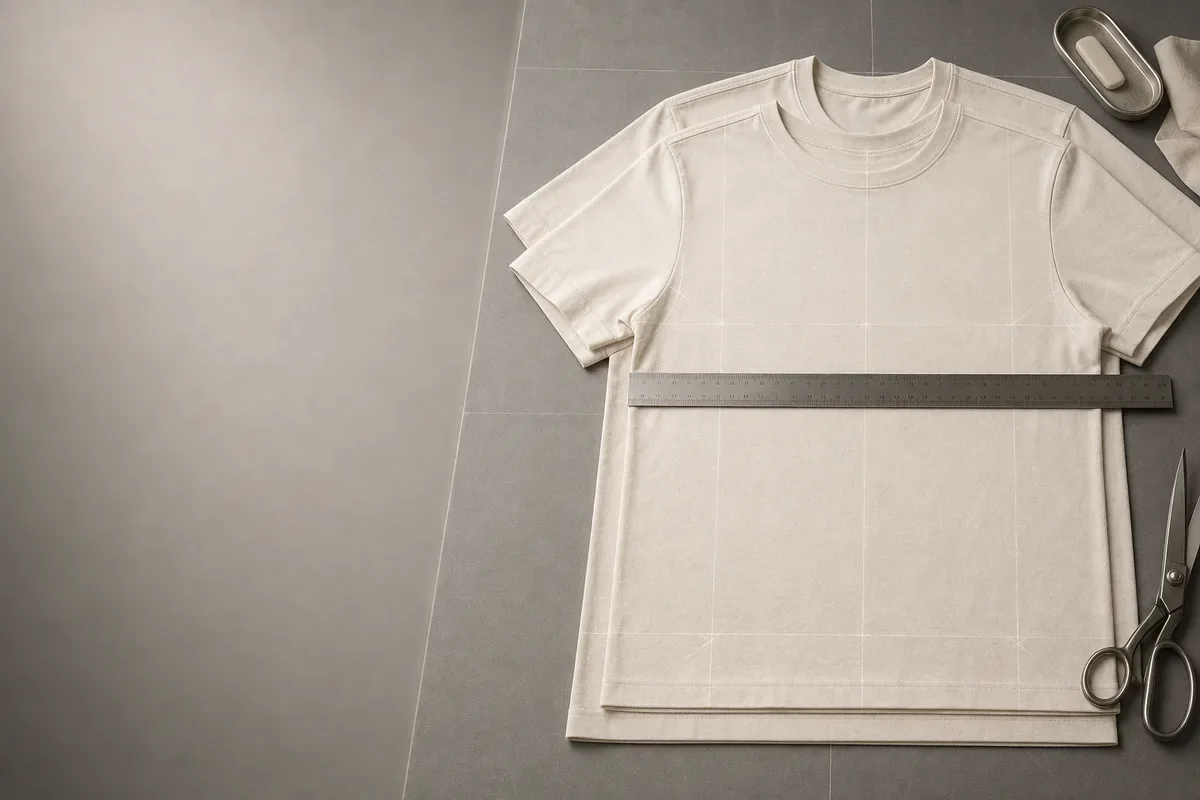
A fabric selected before finishing may not feel or look the same afterward. Laundering or a garment wash can change dimensions, hand, surface contrast and seam appearance. AATCC TM135-2025 provides standardized home-laundering options for measuring fabric length and width change; the chosen procedure and result still need to match the intended care route. Dimensional-change planning remains covered in depth by our cotton shrinkage guide.
Decoration also interacts with the surface and garment zone:
- Fine artwork may reproduce differently on a flat canvas grid and a pronounced twill wale.
- Embroidery adds thread and stabilizer to a structure that may already be firm.
- A large patch adds another layer across bending zones.
- Garment washing can change the contrast between decoration, shell and seams.
- Coatings or finishes may affect adhesion or process compatibility and need supplier review.
Do not approve decoration from a digital mock-up alone. Test the chosen method on the identified fabric, in the intended placement, then review the decorated garment after the agreed finish or care exposure. Method selection can be cross-checked against our embroidery vs screen printing guide.
A Buyer-Ready Twill or Canvas Specification
“Heavy cotton canvas” and “premium cotton twill” are descriptions, not reproducible specifications. A useful fabric line records the identity and separates required values from pending decisions. Live catalogue styles show the family in use: a camouflage canvas zip-up jacket, DTG-printed canvas cargo shorts with raw edges and canvas-twill camo work pants — same fiber family, different construction records.
| Field | What to record |
|---|---|
| Intended component | Pants body, jacket shell, pocketing or another named use |
| Fiber declaration | Supplier-declared composition; verification status where required |
| Construction | Plain canvas or stated twill repeat; warp/weft and face/back identification |
| Mass and width | Target and agreed tolerance; usable width stated separately |
| Yarn and set | Supplier quality/article code and available construction details |
| Color and finish | Color code, piece/garment state, coating or mechanical finish |
| Care route | Intended wash and dry procedure for development review |
| Performance evidence | Property, method, direction, unit, specimen state and agreed requirement |
| Approval object | Swatch, sample yardage, sewn panel or finished garment revision |
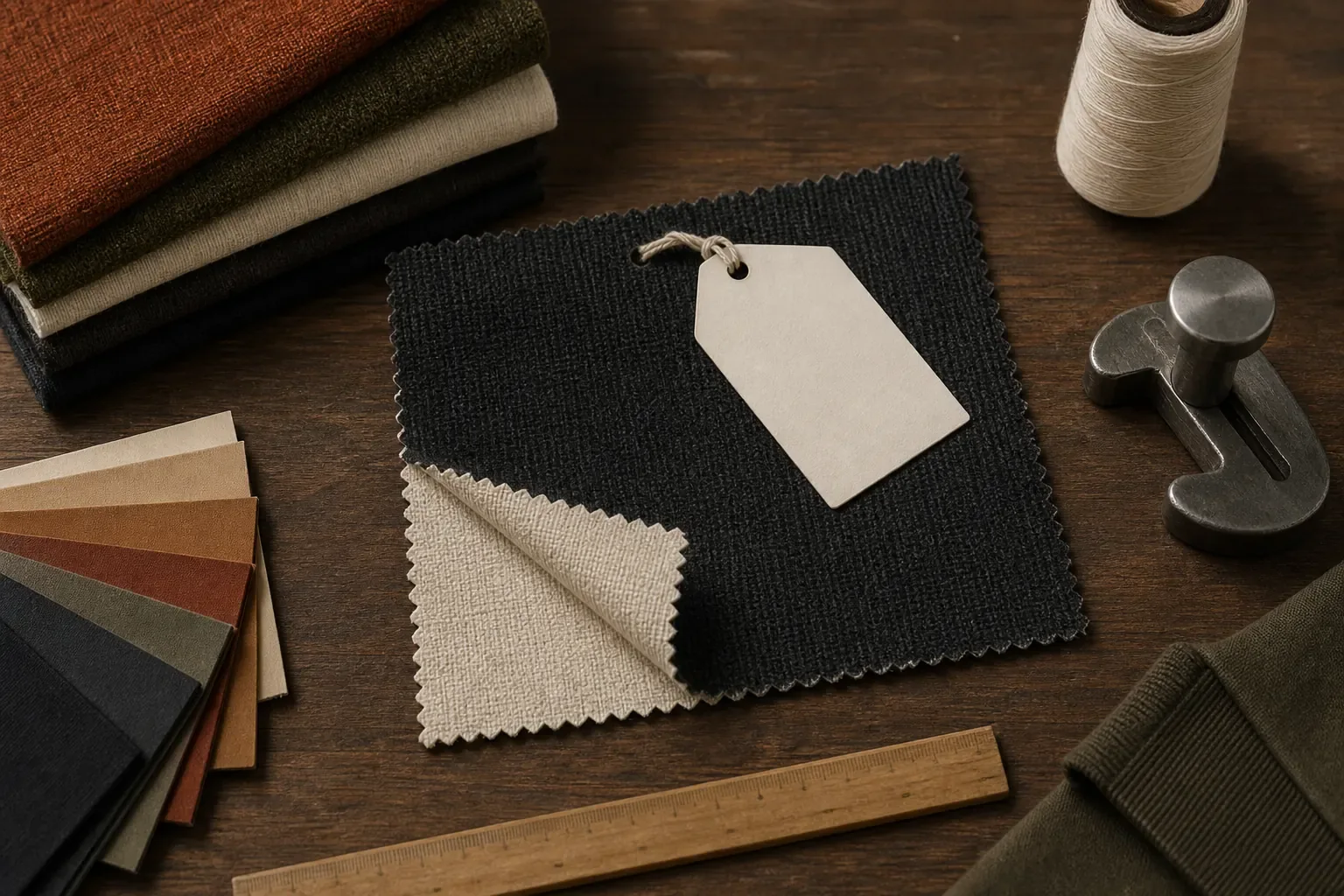
Use the fabric swatch approval checklist to identify the physical sample and the limits of its approval. A small cutting can confirm surface direction and hand. It cannot prove full-width quality, bulk-lot consistency, finished drape or production conformity.
The most defensible sequence is simple:
- Define the garment silhouette, movement, surface and care intent.
- Compare identified twill and canvas candidates in the same relevant material state.
- Record construction, mass, width, finish and source codes before testing.
- Request only the performance evidence that answers the product's actual risk.
- Sew critical intersections and decoration trials before committing to the full sample.
- Approve a finished pants or jacket sample and retain its material revision.
- Reopen approval when the supplier, quality code, construction, finish or lot changes beyond the agreed boundary.
If you are choosing cloth for a custom pants or jacket program, bring the reference garment, target silhouette, intended finish, decoration and care route into the fabric-sourcing discussion. The useful outcome is not a generic winner. It is an identified material plus an approved sample showing how that material performs in the design; bulk conformity remains a separate control.
References
- Cotton Incorporated, Textile Weaving — https://www.cottonworks.com/wp-content/uploads/2018/01/Weaving_booklet-for_web.pdf
- ASTM International, D3776/D3776M-20(2025), Mass Per Unit Area (Weight) of Fabric — https://store.astm.org/d3776_d3776m-20r25.html
- ASTM International, D5034-21(2025), Breaking Strength and Elongation of Textile Fabrics (Grab Test) — https://store.astm.org/Standards/D5034.htm
- ASTM International, D2261-13(2024), Tearing Strength of Fabrics by the Tongue Procedure — https://store.astm.org/d2261-13r24.html
- ASTM International, D4966-22(2026), Abrasion Resistance of Textile Fabrics (Martindale) — https://store.astm.org/d4966-22r26.html
- AATCC, TM135-2025, Dimensional Changes of Fabrics after Home Laundering — https://members.aatcc.org/store/tm135/543/
FAQ
Is twill stronger than canvas?
Not as a universal rule. Twill and canvas names do not control fiber, yarn, mass, density, finish, test direction or specimen condition. Compare identified fabrics under the same relevant method, and keep breaking, tearing, abrasion and puncture as separate questions.
Is canvas or twill better for pants?
Choose by the intended silhouette and sample evidence. A canvas candidate may provide useful body for a structured utility pant, while a twill candidate may provide the drape and movement wanted for chinos or relaxed trousers. Confirm knee behavior, seat movement, pocket distortion, folded-seam bulk and the post-care result on the actual garment.
Is canvas or twill better for jackets?
Canvas can suit a firm chore or utility shell, while twill can suit a jacket that needs a more yielding drape. Neither label settles the choice. Review collar shape, sleeve movement, placket and pocket layers, lining interaction, decoration and the finished sample.
Is denim a twill or a canvas?
Denim is generally a warp-faced twill, not canvas. Its yarn-color structure, ounce weight, wash response and jeans-specific approvals are distinct enough to keep denim selection with the site's denim guides rather than treat it as a generic twill example.
What should a tech pack say besides “cotton twill” or “canvas”?
Record the garment component, supplier quality code, declared fiber, exact construction, mass, usable width, color, finish, face/back and direction, care route, required evidence and approved sample revision. Mark unknown fields as pending instead of replacing them with adjectives such as heavy, premium or durable.
Related guides
 Knit vs Woven Fabric: Fit, Construction and Sampling
 Oxford vs Poplin Shirt Fabric: How Buyers Compare Specs
 Denim Weight Explained: Oz, GSM and Choosing the Right Cloth for Your Jeans
 Fabric Swatch Approval Checklist for Clothing Brands
 How Much Does Cotton Shrink? The Science, the Standards, and the Tolerance to Put in Your Tech Pack