Elastic Waistband Types: Materials, Construction and QC
Separate elastic material construction from waistband incorporation, then control the BOM, sewn sample, care exposure and bulk approval without relying on a universal elastic ratio.
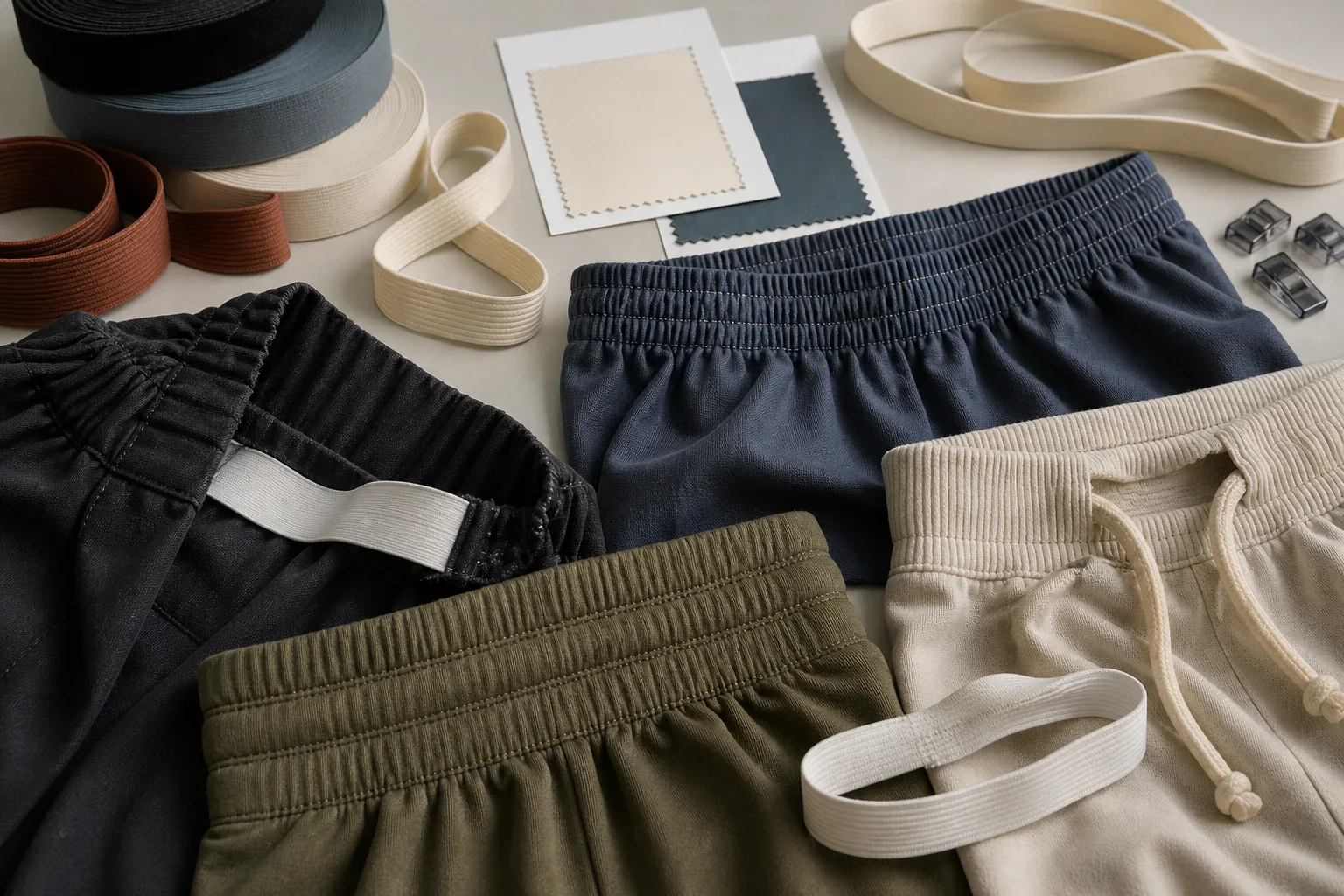
Elastic waistband types need to be defined on two separate axes: the elastic material and the way that material is incorporated into the garment. “Woven elastic waistband” identifies a component construction, while “encased waistband” identifies an assembly. A woven, knitted or braided elastic may be evaluated for a casing; an exposed elastic may also be woven or knitted. Mixing the two axes creates incomplete sample comments and uncontrolled substitutions.
This guide owns that cross-garment decision: elastic identity, incorporation construction and the sample-to-bulk controls that connect them. It does not choose a sweatpant silhouette, classify every rib structure, replace a product's measurement chart or set universal tolerances. Those decisions belong in the custom sweatpants and joggers guide, rib knit trim guide, apparel BOM guide and size chart guide.
There is also no responsible universal rule such as “elastic must be a fixed percentage shorter than the waist.” The result depends on the identified elastic, load, extension, join, shell fabric, channel, stitching, size, body target and care route. Develop the relationship on the actual garment and retain the approved evidence.
Elastic Material Constructions
The labels below describe useful sourcing families. They do not create an automatic quality ranking. Supplier article, yarn system, width, thickness, finish and measured behavior matter more than the category name alone.
| Material callout | Construction distinction | What to verify on the actual article |
|---|---|---|
| Woven elastic | Elastomeric yarns are supported in an interlaced woven structure | Width and profile under use, edge behavior, force at agreed extension points, residual growth, hand and compatibility with the assembly |
| Knitted elastic | Elastomeric yarns are held with knitted supporting yarns | Curl, thickness, extension response, recovery after the agreed cycle, sewability and whether the edge or face becomes visible |
| Braided elastic | Yarns follow a braided path; the tape's width or profile may change as it extends | Narrowing, thickening, rotation and friction inside the proposed channel, plus behavior at the join and under stitching |
| “Non-roll” elastic | A supplier product designation for a tape intended to resist folding or rolling; it may overlap another construction family | The named supplier article and how it performs inside the real waistband—“non-roll” is not a universal grade or guaranteed garment result |
Do not approve from a category swatch alone. Firmness, hand, profile and channel behavior must be checked on the actual article. Record the supplier's construction declaration and article code, retain a physical reference, and treat any proposed “equivalent” as a substitution requiring evidence.
Five Ways to Incorporate Elastic into a Waistband
The assembly controls how force reaches the garment, whether elastic can move and which surfaces remain visible. New Mexico State University Guide C-234 distinguishes fabric casings from elastic used as the waistband itself and shows both extension and separate-piece casings. Its home-sewing guidance supplies vocabulary, not an industrial specification or acceptance standard.
| Incorporation | What the construction means | Approval focus |
|---|---|---|
| Encased elastic | Elastic sits in a shell-fabric tunnel made by folding an extension or attaching a separate waistband | Channel clearance, rotation, join bulk, gather distribution, seam security and whether elastic is free-moving or intentionally anchored |
| Exposed elastic | Elastic forms the visible inner or outer waistband surface and is joined directly to the garment | Face and edge quality, color, join finish, stitch appearance, skin contact and visual change under extension |
| Stitched-through elastic | One or more stitch rows catch the elastic through the shell or secure it directly, limiting independent movement | Row placement, stitch extensibility, needle damage, channel flatness and whether the approved stretch remains available |
| Drawcord-integrated elastic | Elastic supplies continuous support while a drawcord adds user adjustment through an internal or external route | Which component carries load, cord path and exits, reinforcement, end security, hardware and entrapment requirements for the intended market |
| Elastic-assisted rib | Elastic is combined with a rib waistband so the elastic and rib share the finished system | Rib identity, elastic position, seam bulk, differential response and post-care appearance; rib taxonomy remains in the separate rib guide |
Constructions can overlap: an encased waistband may have stitched-through rows and a drawcord. Name every functional addition and reference the pattern piece or section drawing; the elastic BOM row cannot define the whole assembly.
Why There Is No Universal Elastic-to-Waist Ratio
Elastic length is sometimes expressed against a waistband seam line or garment opening. The number is meaningful only when both dimensions, material states and measurement locations are defined. A relaxed cut tape, a joined elastic loop, a shell cut edge and a finished garment waist are not interchangeable references.
A useful development record identifies the garment target; elastic article, width and conditioned state; cut length and join geometry by size; shell seam-line and channel; distribution points; finished relaxed measurement method; and care exposure.
Do not copy one percentage from another garment. Even within one style, grading can alter the relationship across the size range. A ratio that appears acceptable in the development size is not proof for unchecked sizes.
ASTM D4964-96(2020) covers tension and elongation of wide or narrow elastic fabrics on a constant-rate-of-extension tensile machine. Its public scope requires selected tension or elongation points and agreed laundering conditions when laundering is used. It supplies a measurement framework, not a waistband ratio, recovery threshold or product pass limit. Comparisons also require comparable machine and specimen details.
Build an Executable Elastic BOM and Specification
The apparel bill of materials guide owns the full document system. For this component, create a dedicated BOM row and link it to the waistband construction detail, graded dimensions, care route and approval record.
| Field | What to record | Control question |
|---|---|---|
| Component and application | EL-01; waistband; mapped styles, colorways and sizes | Is every use of this article explicitly authorized? |
| Supplier identity | Supplier, article code, construction family and retained reference | Can bulk be matched to the nominated material rather than a generic description? |
| Material declaration | Supplier-declared fiber/elastomer system, supporting yarns and relevant finish | Are declarations traceable and suitable for product labeling review? |
| Physical profile | Nominal width, thickness or profile where controlled, edge/face requirement and color | Will the tape fit the channel and approved appearance? |
| Behavior evidence | Named method, material state, direction, load or extension points, cycles, agreed result and report ID | Are comparisons made under the same conditions without inventing a universal limit? |
| Cut and join | Cut length or consumption by size, relaxed-state definition, join type, overlap/allowance and join location | Can cutting and sewing reproduce the approved loop? |
| Incorporation | Pattern/detail ID, encased or exposed status, stitch rows, distribution marks, anchoring and drawcord relationship | Is the assembly defined beyond “insert elastic”? |
| Approval scope | Sample revision, size and colorway, care exposure, date, approver and substitution rule | Does approval say exactly what may proceed to bulk? |
Keep tolerances in the controlled specification. Machine settings must likewise be developed for the approved material stack and recorded in the factory operation standard, not copied as universal values.
Use a Sample-to-Care-to-Bulk Approval Sequence
An elastic waistband passes as a system only after the material, sewn assembly and care result have been checked in a defined order.
- Identify the candidate. Match supplier article and BOM revision; record width, face, color and available lot data. Do not let unlabelled tapes become interchangeable.
- Establish comparable evidence. If ASTM D4964 is selected, agree the measurement points, specimen details, conditioning and reporting basis. Product acceptance criteria remain project-specific.
- Sew the actual waistband. Use production-intent shell or rib, join, stitch arrangement, channel and drawcord. Inspect fit, movement, comfort, distribution, seams and visible surfaces. A strip test cannot approve the assembly.
- Apply the intended care route. AATCC TM150-2025 addresses garment dimensional change under selected home-laundering procedures. Its public scope says it may not apply to garments made from certain stretch fabrics. Confirm applicability and procedure with the laboratory; it supplies no brand pass criteria.
- Set approval coverage. Choose physical sizes and colorways by fit and material risk, and record those checked. Do not silently extend one result to every variant.
- Seal and verify. Retain the sample or controlled images, elastic reference, measurements, wash record and revision. Confirm bulk identity, authorized lots, first output construction and appearance against that package. The sample approval checklist explains comment closure.
After care, also record band width and flatness, gathers, puckering, twist, material exposure, join, drawcord route, stitch condition and fit. Photograph consistent before-and-after points.
Diagnose Symptoms Before Issuing a Change
One symptom can have several causes. Shortening elastic whenever a waistband gapes, or selecting a firmer tape whenever it rolls, can hide a construction, sewing or care problem.
| Sample or bulk symptom | Controls to investigate | Controlled next change |
|---|---|---|
| Waistband rolls or folds | Elastic profile, channel clearance, stitch rows, bulk, join and shell behavior | Compare one identified material or assembly change, then repeat wear and care review |
| Gathers look uneven | Distribution marks, operator feeding, channel friction, anchoring and elastic rotation | Correct mapping or assembly before changing elastic length |
| Waist grows, gaps or slips | Elastic identity, residual extension, cut/join records, shell change and care | Isolate material, assembly and size target before revising geometry |
| Waist feels too tight | Garment target, grade, relaxed measurement, extension force, join and seam restriction | Reopen the size-specific material-and-geometry decision |
| Elastic twists in a casing | Channel space, elastic width/profile, join flatness, anchoring and distribution | Trial the smallest defined construction change that addresses rotation and reapprove it |
| Stitching restricts stretch or damages elastic | Stitch arrangement, seam extension, needle interaction, row placement and operator setup | Develop and document a production-intent operation on the nominated tape |
| Failure appears after laundering | Procedure, exposure, material compatibility, shell change and stitch condition | Repeat the care gate with traceable before-and-after measurements |
If the change alters the elastic article, cut length, join, stitch rows, channel, rib or care result, issue a new sample revision. “Same quality, better elastic” is not a change-control record.
Control Substitution and Bulk Lots
Compare packing labels, supplier article and authorized lot information with the BOM and approved reference. Check first output before the full run: a correct tape can still have the wrong join, distribution, channel or stitching. Quarantine substitutions, unexpected profiles, failed comparisons and unapproved lots for material-deviation review; similar color and relaxed width are insufficient.
For a custom cut-and-sew program, Jiashun can review elastic candidates with the actual waistband construction, develop a production-intent sample and return the approved component and assembly details to the tech pack. Elastic is a sourced component; this does not claim that the tape itself is manufactured in-house. Bring the intended garment, size range, shell or rib, care route, drawcord details and target fit to the custom pants manufacturing discussion.
Waistband references from the live catalogue make that discussion concrete: acid-washed wide-leg french terry sweatpants, distressed dirty-wash baggy sweatpants and heavyweight wide-leg sweatpants with a textile belt design all resolve the waistband differently; the approved tape, join and channel for each lives in its tech pack, not in the style photo.
References
- New Mexico State University, Guide C-234, Waistbands Made Easy — https://pubs.nmsu.edu/_c/C234/
- ASTM International, D4964-96(2020), Standard Test Method for Tension and Elongation of Elastic Fabrics (Constant-Rate-of-Extension Type Tensile Testing Machine) — https://store.astm.org/d4964-96r20.html
- AATCC, TM150-2025, Dimensional Changes of Garments after Home Laundering — https://members.aatcc.org/store/tm150/556/
FAQ
What are the main elastic waistband types?
Use two classifications. Materials include woven, knitted and braided elastic; “non-roll” is a supplier designation that can overlap them. Assemblies include encased, exposed, stitched-through, drawcord-integrated and elastic-assisted rib. Specify one identified material and the complete assembly.
Is woven elastic always better than knitted or braided elastic?
No. A category name does not establish comfort, force, recovery, roll resistance or garment suitability. Compare identified articles under agreed conditions and approve the candidate in the real shell, channel, seam and care route.
How much shorter should elastic be than the garment waist?
There is no universal percentage. Define measurement locations and material states, then develop cut length and join by size using the nominated elastic, garment target, assembly and care result. Retain those dimensions instead of transferring a ratio.
Can a drawcord replace waistband elastic?
Only if the product is designed and assessed for that function. In a combined system, state whether elastic supplies continuous support and the cord provides adjustment. Review cord exits, end security, hardware and intended-market safety separately.
What should be approved before elastic waistband bulk production?
Approve the exact elastic article, BOM and construction revision; cut and join by required size; production-intent sample; specified material evidence; care result; and authorized sizes, colorways and lots. Check bulk identity, first output and in-process work against that package.
Related guides
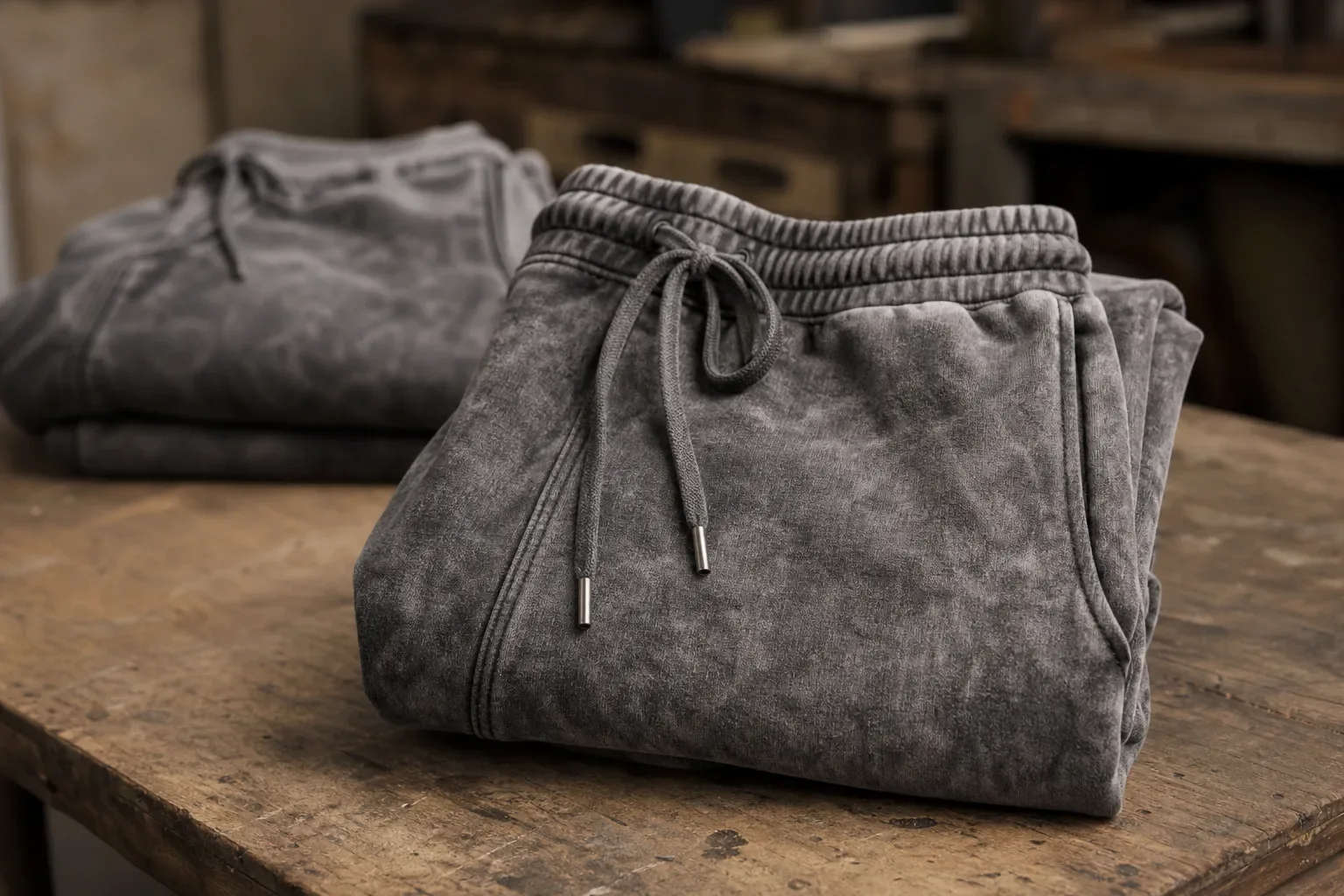 Custom Sweatpants and Joggers: Fits, Fabric and Construction
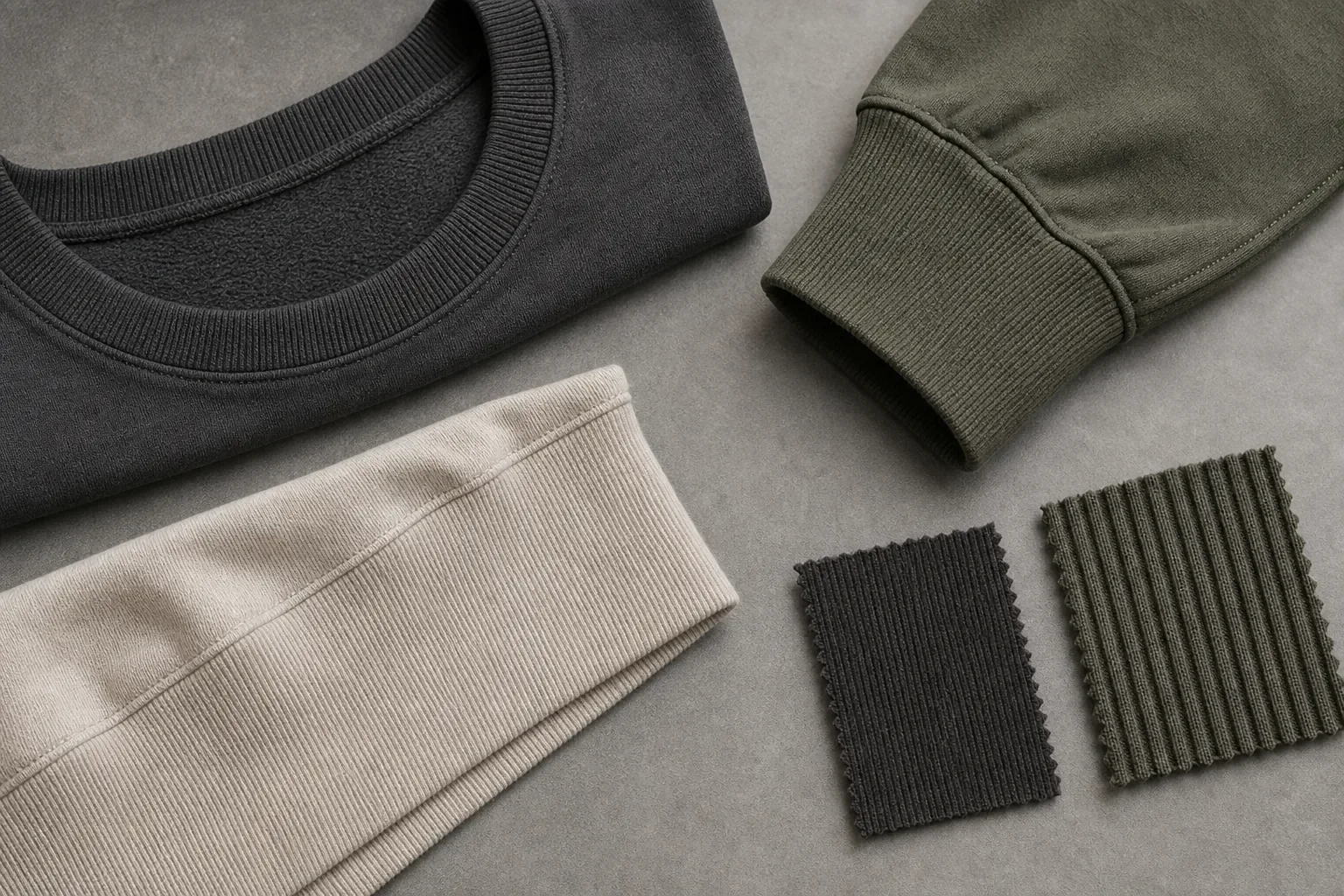 Rib Knit Fabric Types for Neckbands, Cuffs and Hem Bands
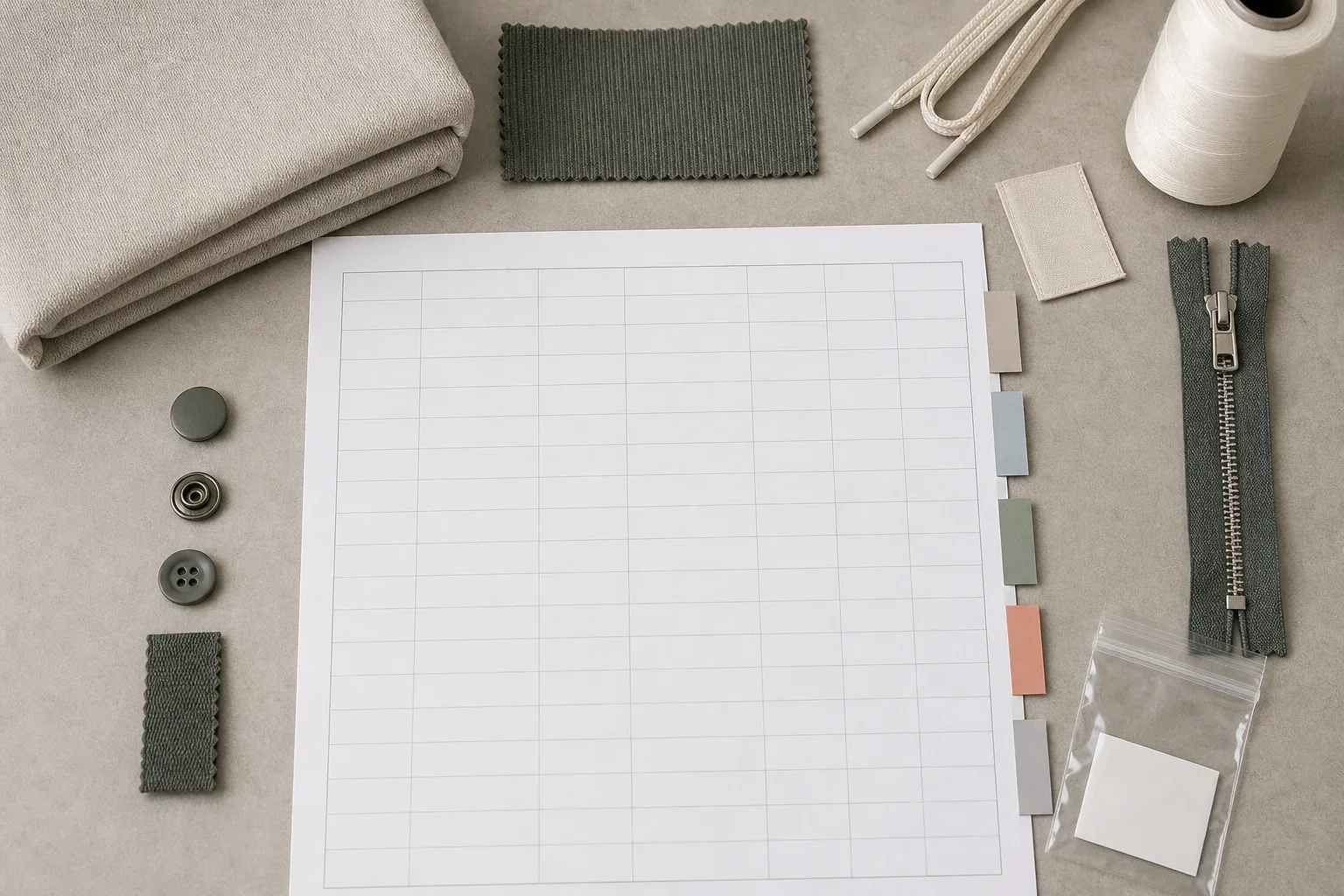 Apparel Bill of Materials: Fields, Versions and Approval Status
 Building a Size Chart for Your First Collection: A Factory Walkthrough
 Garment Sample Approval Checklist: One Comment Sheet, One Revision Trail