Rib Knit Fabric Types for Neckbands, Cuffs and Hem Bands
Compare rib structures without treating 1x1, 2x2 or 2x1 as a performance grade, then build a factory-ready trim specification and approve rib with the body fabric.
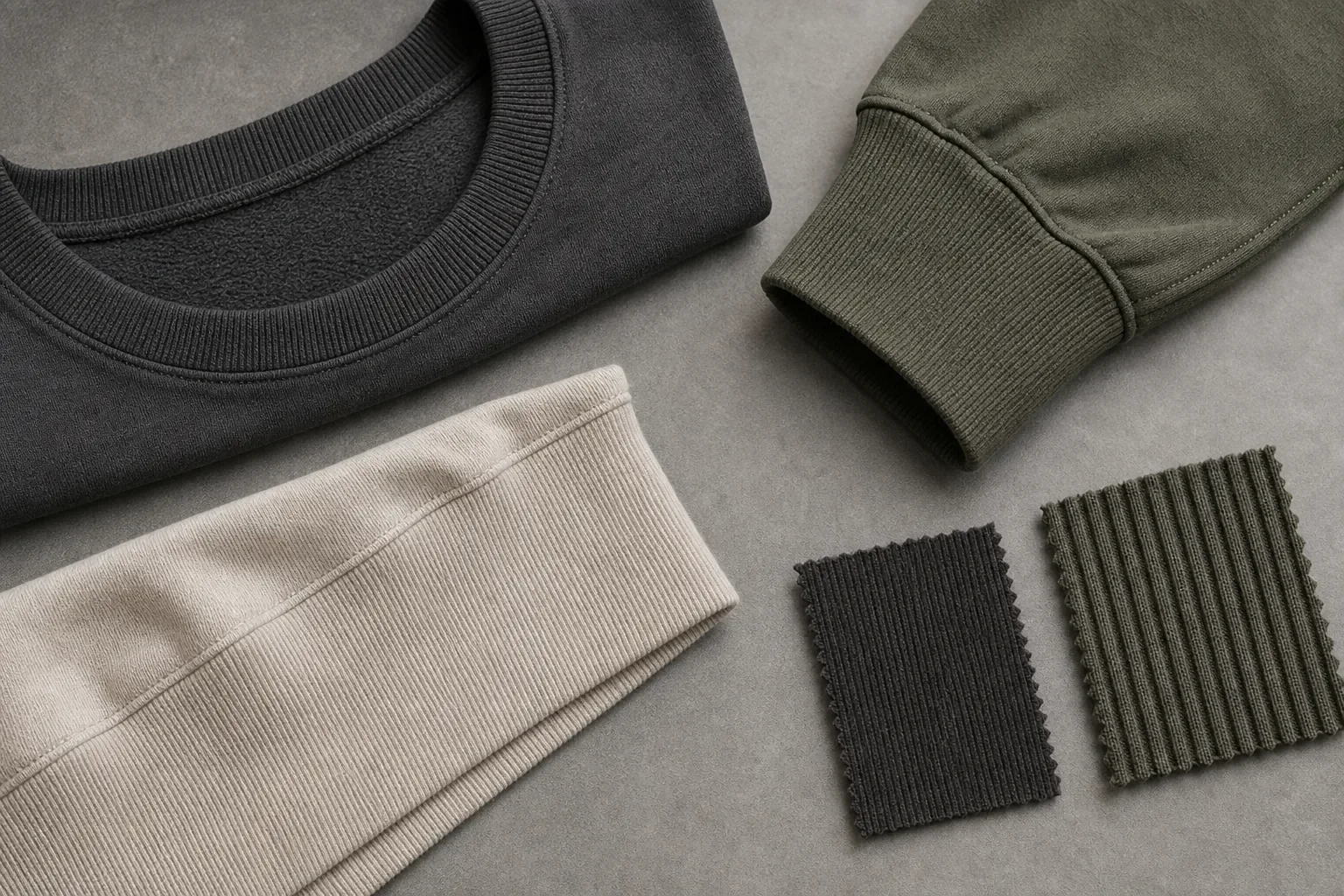
Choose rib trim by the behavior of an identified fabric and an approved garment sample, not by treating 1x1, 2x2 or 2x1 as a performance grade. Those names describe a stitch arrangement. They do not, by themselves, guarantee stretch, recovery, thickness, softness, shrinkage, colorfastness or durability.
For a factory, “black 2x2 rib” is therefore not a complete instruction. A usable specification identifies the component, supplier quality, structure, fiber content, weight, usable width or tubular format, color, finish, stretch and growth evidence, cut geometry, finished dimensions, attachment construction and approval reference. The body fabric and rib then need to be sampled and washed as one garment system.
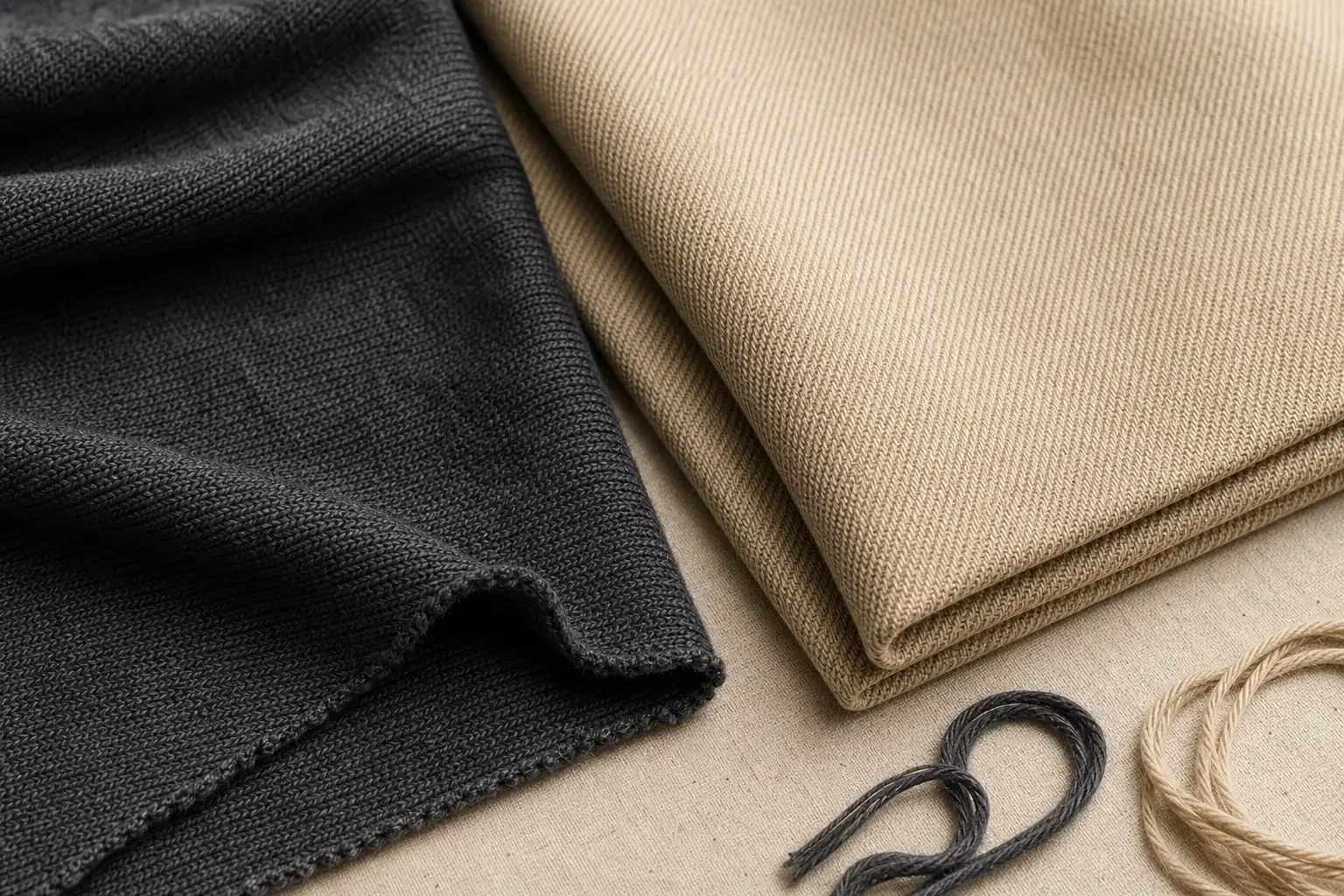
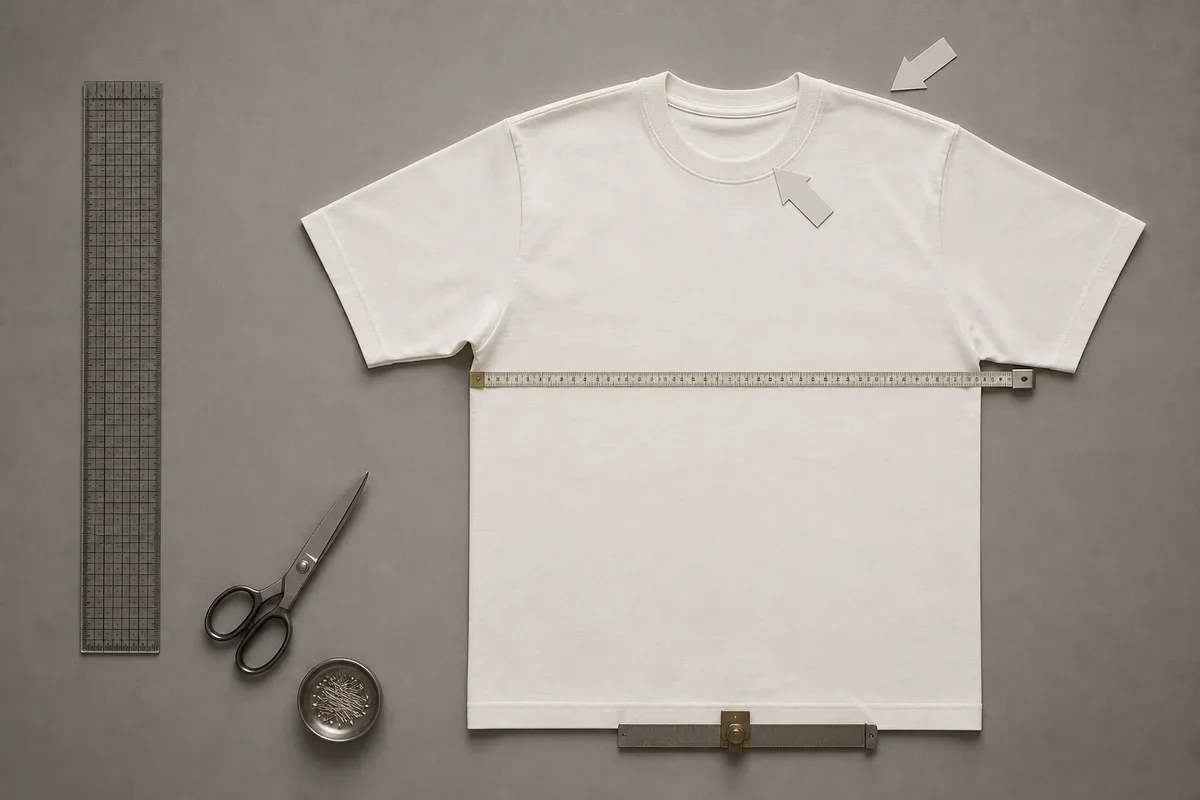
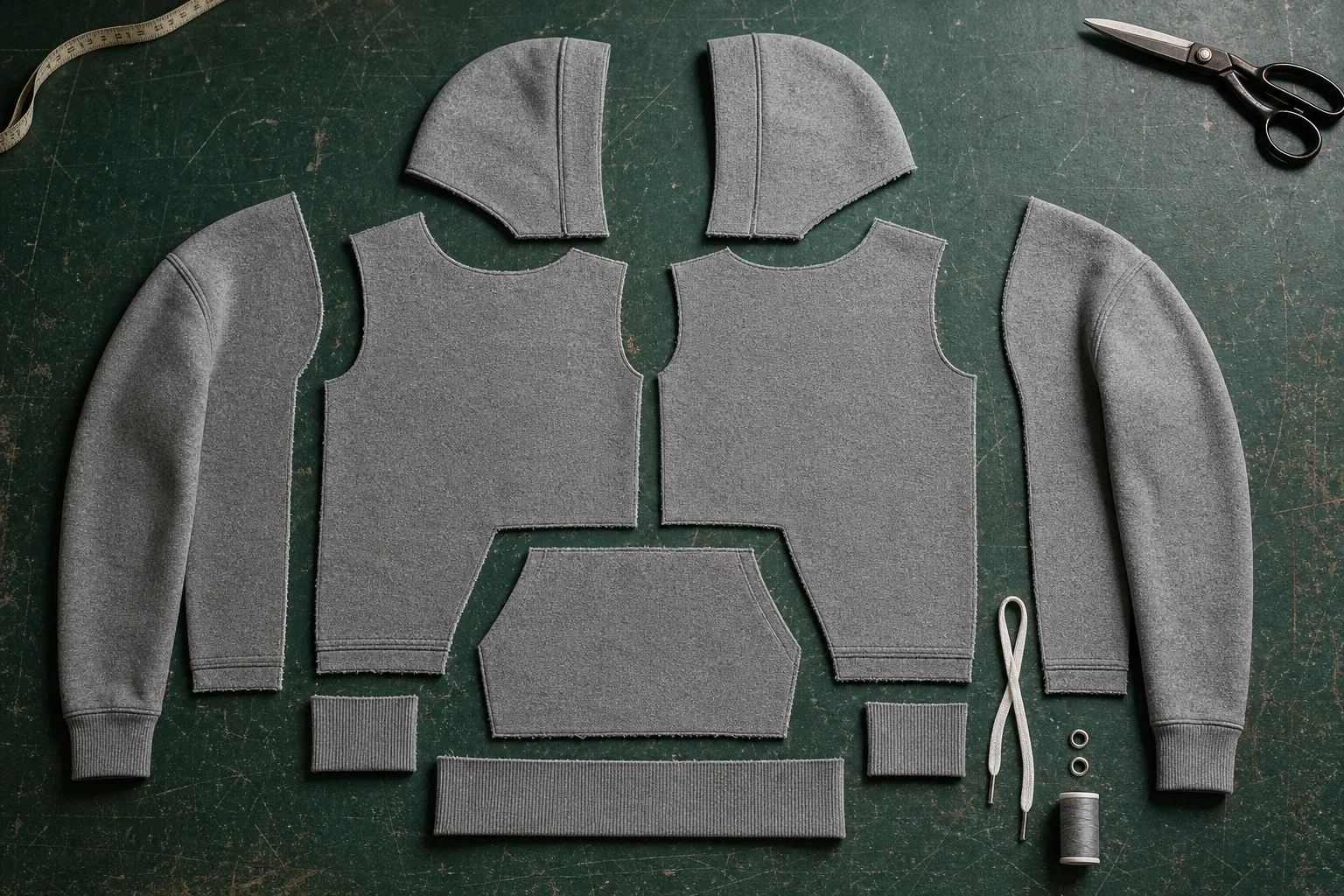
This guide owns that cross-garment trim decision for neckbands, sleeve cuffs and hem bands. For the surrounding garment components, see the T-shirt anatomy guide and hoodie parts guide. The wider choice between looped knits and interlaced wovens remains in the knit vs woven fabric guide.
What Is Rib Knit Trim?
Rib is a knitted structure with alternating face and reverse wales. CottonWorks classifies basic rib as a double knit and explains that its wales can open in width like an accordion. This extensibility makes rib useful for openings that stretch during dressing and then sit close to the body.
Rib trim is not automatically the same material as the garment body. A jersey T-shirt or fleece sweatshirt may use a separate rib quality. Body and trim can differ in structure, composition, weight, dye lot, finish and dimensional response.
CottonWorks' Digital Cotton Basics collection illustrates cotton and cotton/spandex rib options. It is a category example, not a rule that every trim needs elastane. Composition remains a product and approval decision.
What Do 1x1, 2x2 and 2x1 Mean?
The numbers normally identify the repeating arrangement of face and reverse wales. A 1x1 rib alternates one face wale with one reverse wale. A traditional 2x2 alternates two with two. A 2x1 generally describes an asymmetric two-to-one repeat, but a buyer should still obtain the supplier's construction notation or close-up because naming conventions and selling descriptions are not always applied consistently.
| Structure callout | How to read and verify it | What the name does not prove |
|---|---|---|
| 1x1 rib | Alternating single wales; verify face close-up, gauge or supplier construction, weight and composition | Light weight, soft hand, high recovery or a specific stretch percentage |
| 2x2 rib | Alternating groups of two face and two reverse wales; inspect relaxed and extended appearance, seam thickness and wash result | Greater recovery, durability or cuff performance than 1x1 |
| 2x1 rib | Two-to-one repeat; confirm notation, face side, orientation and physical sample | Fixed stretch or identical appearance across suppliers |
There is no absolute performance ranking among these structures. A fine 2x2 in one yarn and finish can behave differently from a heavy 2x2 with another blend. A 1x1 containing an elastic yarn may recover differently from an all-cotton 1x1. Gauge, yarn count, loop length, fabric density, fiber, elastane percentage and insertion, dyeing, compaction, heat setting and other finishes can all affect the result.
Even “same as body” needs clarification: it may mean shade, fiber family or matching yarn. It does not prove equal shrinkage or post-wash color. Treat each nominated rib article as its own material.
Stretch, Growth and Recovery Are Separate Decisions
Stretch describes extension under stated conditions; growth is residual extension after stress is removed. Recovery is the practical return toward the prior dimension. A trim may open for dressing yet gape if it grows and does not recover as required.
ASTM D2594/D2594M-21 covers stretch under a known load and growth after a known extension is applied and removed for low-power knits. It does not assign a universal neckband or cuff limit; its public statement also cautions about commercial-shipment acceptance because of laboratory precision.
A buyer-ready requirement names the property, method, direction, material state, unit, limit and report. “Good recovery” and an undocumented hand-pull comparison are not measurable results.
Use laboratory evidence for relevant properties and the sewn sample for garment behavior. A strip test cannot reproduce seam bulk, curved attachment, stitch tension, pressing and laundering.
Match the Rib to the Garment Function
A neckband must open for dressing, lie cleanly around a curve and retain its shape. Inspect the curve, join and topstitching after relaxation and care. The T-shirt anatomy guide owns neckline construction; this guide owns rib selection with the body.
A cuff must pass over the hand, return toward the wrist and meet the sleeve without unintended pleats or waviness. Finished depth, circumference, fold and attachment affect the result. Different cuff designs should not inherit one material decision merely because both say “2x2.”
A hem band controls the lower opening and silhouette. Fitted, straight and blouson effects place different demands on the same nominal rib. Review side-seam junctions, circumference, fold and how the body hangs above the band.
Rib may also be one material in a waistband assembly, but elastic type, encasement, extension and waistband construction require a separate specification rather than being inferred from this trim guide.
Write an Executable Rib BOM Row
Put the rib on its own BOM row even when its color is intended to match the body. Link that row to the pattern piece, construction detail and approved physical reference. If neckband, cuffs and hem use different qualities or finished dimensions, separate the rows.
| BOM field | Executable entry example | Why it matters |
|---|---|---|
| Row ID and application | RB-01; neckband; all colorways unless mapped otherwise | Removes ambiguity about where the component is used |
| Supplier quality | Supplier name + article code + mill lot reference when issued | Distinguishes the approved rib from a visually similar substitute |
| Material identity | 1x1 rib; supplier-declared fiber percentages; elastane/yarn detail if controlled | Separates structure from composition and elastic-yarn construction |
| Physical specification | Target mass and tolerance; usable width or tubular width convention; gauge/construction data if controlled | Defines the supplied material more fully than a trade name |
| Color and finish | Brand color code; matching standard; piece-dyed or other material state; approved finish | Establishes what “matching” and the approval state mean |
| Behavior evidence | Named stretch/growth method, direction, agreed limits and report ID | Turns “stretchy with good recovery” into traceable evidence |
| Cut and placement | Pattern piece ID; wale direction; face side; cut quantity; notch mapping | Controls orientation and assembly |
| Finished geometry | Finished visible width/depth; component seam-line length or circumference by size; seam allowance owned by pattern | Gives the factory measurable garment outcomes |
| Attachment | Seam/stitch reference; join location; topstitch or coverstitch detail; stabilization if approved | Connects material behavior to the sewing operation |
| Approval control | Swatch/sample revision, colorway, size, date and authorized use; substitution requires review | Prevents sample approval from becoming unlimited bulk approval |
An example row could read: RB-01, neckband, supplier article R104, 1x1 cotton/elastane rib, approved black standard, mass per MS-07, pattern NK-01, finished width and seam-line length by graded pattern, attachment C-12, authorized against fit sample FS3 and wash review WR2. Replace every placeholder with project values.
For the physical sample set behind the approval-control row, use the garment trim-card guide; it retains the approved rib or trim reference without replacing the rib specification or BOM.
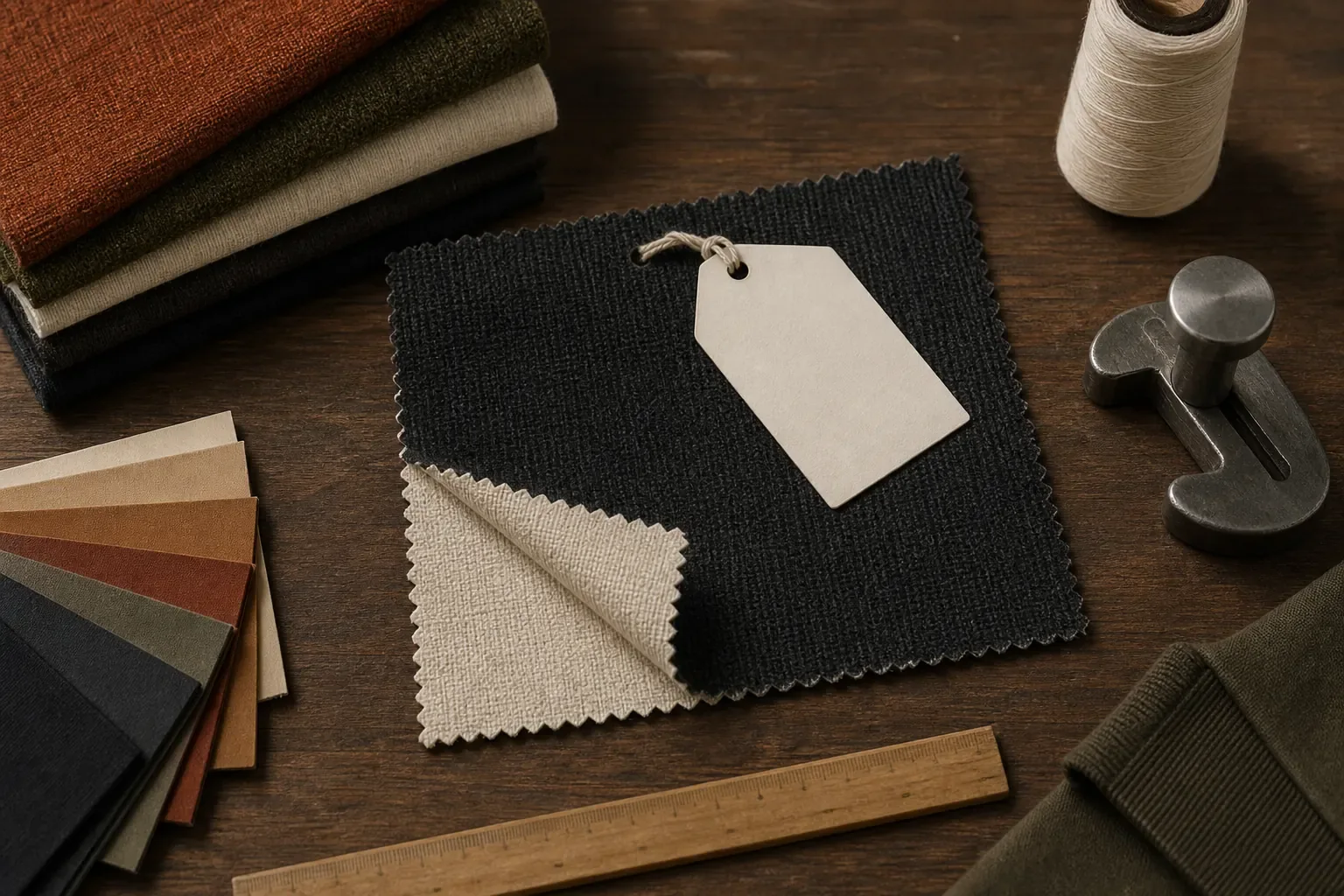
The fabric swatch approval checklist defines approval scope. A cutting can establish hand, surface and shade, but not garment geometry, seam behavior or bulk-lot conformity.
Attachment Geometry Has No Universal Ratio
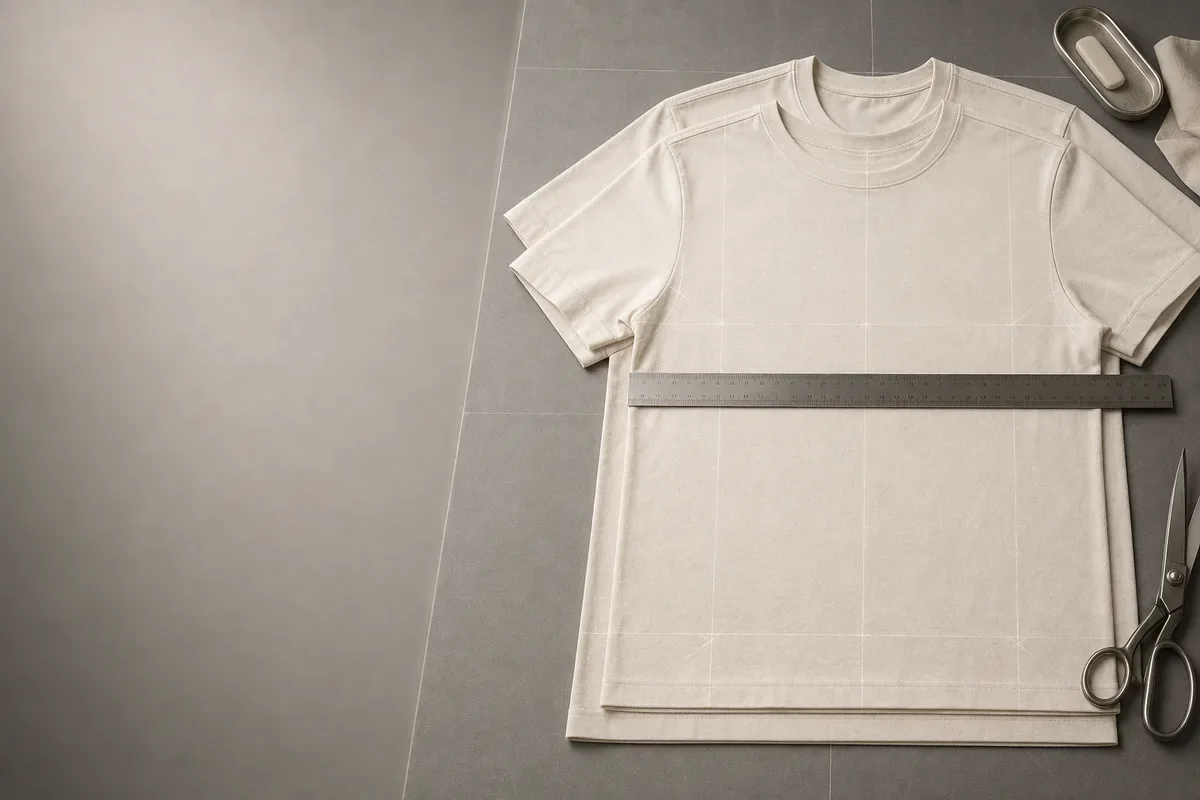
Factories may record rib length as a ratio to the opening. It is useful only when both measurements share a defined seam line and material state. No universal neckband, cuff or hem-band ratio fits every fabric, size and design.
Compare the rib attachment seam-line length with the body opening seam-line length, excluding seam allowances. Develop the acceptable relationship from the actual rib, body, curve and construction; the same number can produce different tension with different materials.
Control the geometry with these linked records:
- Measure the body opening and rib at the stitching line, not at inconsistent cut edges.
- State whether the rib is measured relaxed and before or after a defined conditioning step.
- Map quarter points or other notches so distribution is intentional rather than corrected by the operator at the machine.
- Record join seam position, finished visible width, fold direction and allowed appearance.
- Grade and review seam-line dimensions by size; do not assume one percentage transfers across the range.
If a neckband stands away, causes can include rib length, poor recovery, a stretched body opening, stitch tension, pressing or differential shrinkage. Shortening it blindly can replace gaping with puckering.
Approve Body Fabric and Rib as One Wash System
Identify body and rib individually, then approve their interaction on the sewn garment because they can change differently during laundering and drying.
AATCC TM135-2025 determines fabric length and width changes under selected home-laundering procedures. AATCC TM150-2025 addresses garment dimensional change; its public scope notes that it may not apply to certain stretch-fabric garments. A laboratory should confirm applicability and procedure. Neither method supplies product pass criteria.
Record the care route, wash temperature, agitation, drying procedure, cycle count and measurement points—not only “wash test.” Use fabric results for each component and the finished garment for their interaction. Our cotton shrinkage tolerance guide ties tolerances to method and direction.
A sample gate retains before-and-after dimensions and photographs for the opening, rib seam line, finished band or cuff, overall garment and appearance. Review the development size and expand size coverage by fit risk; do not claim unchecked sizes passed.
Diagnose the Failure Before Changing the Pattern
When a sample fails, describe the symptom, location, material revisions and care state before issuing a correction:
- Gaping or poor return: check residual growth, rib length, body-opening stretch during sewing, join bulk and pressing.
- Wavy or puckered attachment: check distribution marks, feeding, stitch differential or tension, seam-line mismatch and whether either cut edge was distorted.
- Narrowed, flared or torqued opening after wash: compare body and rib dimensional change by direction, wale orientation and garment measurements.
- Cuff too tight over the hand: check the required donning extension, seam allowance bulk, stitch extensibility and graded circumference—not only relaxed wrist appearance.
- Shade mismatch after care: confirm the body and rib material codes, dye/finish state, approved standard, lots and post-wash evaluation conditions.
- Cracking or broken attachment stitches: inspect seam and topstitch extensibility with the actual opening movement; do not assume a stretch fabric makes every stitch construction extensible.
Change one controlled variable where possible, identify the new sample revision and repeat the relevant gate. A pattern correction should not silently compensate for a substituted rib quality.
Sourcing Rib Trim for a Cut-and-Sew Program
For a custom cut-and-sew program, Jiashun can use the brief and tech pack to source rib candidates, return supplier identifiers and available construction data, and develop the trim with the garment sample. Rib is a sourced component; this does not state that it is knitted in-house. Separate sweater or fully fashioned knitwear requests require capability confirmation.
Bring the body article, reference, component, color standard, care route, size range and geometry to the fabric-sourcing discussion. The output should be a controlled BOM row and approved body-and-rib sample—not a generic “best” structure.
Trim decisions read differently across catalogue styles: a waffle-knit and nylon reversible camo bomber, a heavyweight 450 GSM oversized hoodie and a cropped waffle long-sleeve pullover each pair their body with cuff and hem trims under different recovery demands — the same rib article would not survive all three briefs.
References
- CottonWorks, Single & Double Knits — https://cottonworks.com/learning-hub/knitting/single-and-double-knits/
- CottonWorks, Digital Cotton Basics — https://cottonworks.com/product-innovation/digital-cotton-basics/
- ASTM International, D2594/D2594M-21, Stretch Properties of Knitted Fabrics Having Low Power — https://store.astm.org/d2594_d2594m-21.html
- AATCC, TM135-2025, Dimensional Changes of Fabrics after Home Laundering — https://members.aatcc.org/store/tm135/543/
- AATCC, TM150-2025, Dimensional Changes of Garments after Home Laundering — https://members.aatcc.org/store/tm150/556/
FAQ
Is 2x2 rib better than 1x1 rib for cuffs?
Not as a general rule. The names describe wale arrangements, while cuff performance also depends on yarn, gauge, density, composition, elastic yarn, finish, geometry and sewing. Compare identified candidates and approve the cuff on the actual sleeve after the agreed care exposure.
Does a 1x1 rib always stretch more than a 2x2 rib?
No. Structure notation alone cannot rank stretch or recovery across different fabrics. Request comparable evidence with the method, direction and material state identified, then confirm whether the sewn component performs as intended.
What should a tech pack specify for rib knit trim?
Identify the application, supplier article, structure, declared composition, physical specification, color and finish, cut orientation, finished geometry, attachment detail, behavior evidence and approved sample revision. Link these fields to the pattern and BOM rather than relying on “matching rib.”
Is there a standard neckband-to-neckline ratio?
No universal ratio applies to every rib, body fabric, neckline shape, stitch construction and size. Develop the relationship at the defined seam lines, distribute it with mapped notches, and approve the actual garment after relaxation and the agreed wash route.
Why did the neckband look correct before washing but wave afterward?
The rib and body may have changed dimensions differently, or sewing distortion, stitch tension and finishing may have become visible after care. Compare retained before-and-after measurements, material identities and seam details before changing the pattern.
Related guides
 Knit vs Woven Fabric: Fit, Construction and Sampling
 The Anatomy of a T-Shirt — as a Factory Actually Reads It
 Parts of a Hoodie — and How a Factory Sews Them Together
 How Much Does Cotton Shrink? The Science, the Standards, and the Tolerance to Put in Your Tech Pack
 Fabric Swatch Approval Checklist for Clothing Brands