Custom Sweatpants and Joggers: Fits, Fabric and Construction
The bottom half of streetwear finally gets the spec treatment — fits from stacked to wide-leg, french terry vs fleece, waistband engineering and the washes that make sweats look expensive.
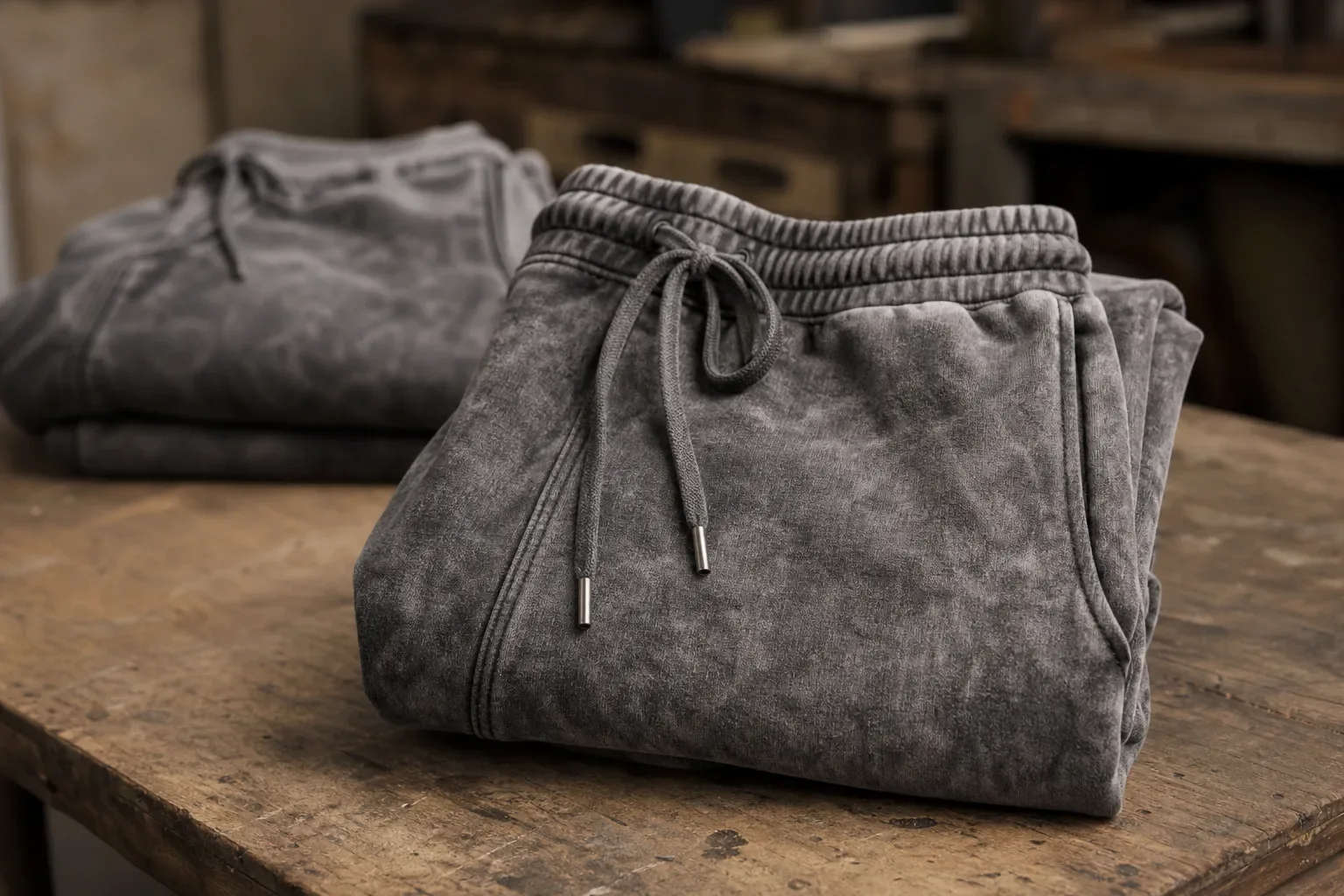
Program numbers first: MOQ starts at 50 pieces, with the final minimum depending on the product, fabric, wash and customization. Simple samples typically take 10-18 working days after project details are confirmed; complex styles or processes take longer. Bulk takes 20-30 working days after approval. Sample pricing is project-specific. Published price anchors from our own pants range: a 400 gsm french terry acid-wash jogger with patch embroidery tiers at USD 25.66-28.99 per piece, and a cotton fleece wide-leg striped sweatpant at USD 27.60-30.90.
Sweatpants get less spec attention than hoodies, which is strange, because they're the same fabric platform doing harder work: a pant pattern has to resolve waist, seat, thigh and hem into a silhouette, and the silhouette is the product. Here's how a sweatpant program actually gets specified.
Sweatpants fit families: silhouette is the purchase decision
Nobody buys sweatpants for the fabric first. The fit families that dominate current streetwear programs, all present in our 120-style pants catalog:
| Fit | Silhouette logic | Spec notes |
|---|---|---|
| Straight leg | Clean column from thigh to hem | The versatile default; hem width defines it |
| Stacked | Extended inseam bunching over the shoe | Inseam runs deliberately long; cuff keeps the stack in place |
| Baggy / wide-leg | Volume through seat, thigh and hem | Consumes noticeably more fabric — it shows in the quote |
| Flared | Fitted thigh, opening to a wide hem | The seam line placement makes or breaks it |
| Cargo | Any of the above plus utility pockets | Every pocket is a component with operations |
Fit is a measurement decision, not an adjective. "Baggy" on a tech pack means nothing; a thigh measurement, a hem opening and an inseam mean production. The honest shortcut is the same one we recommend for hoodies: send a reference pant whose fit you love, and we'll decode the numbers at design review.
Jogger fabric: french terry or fleece, and how heavy
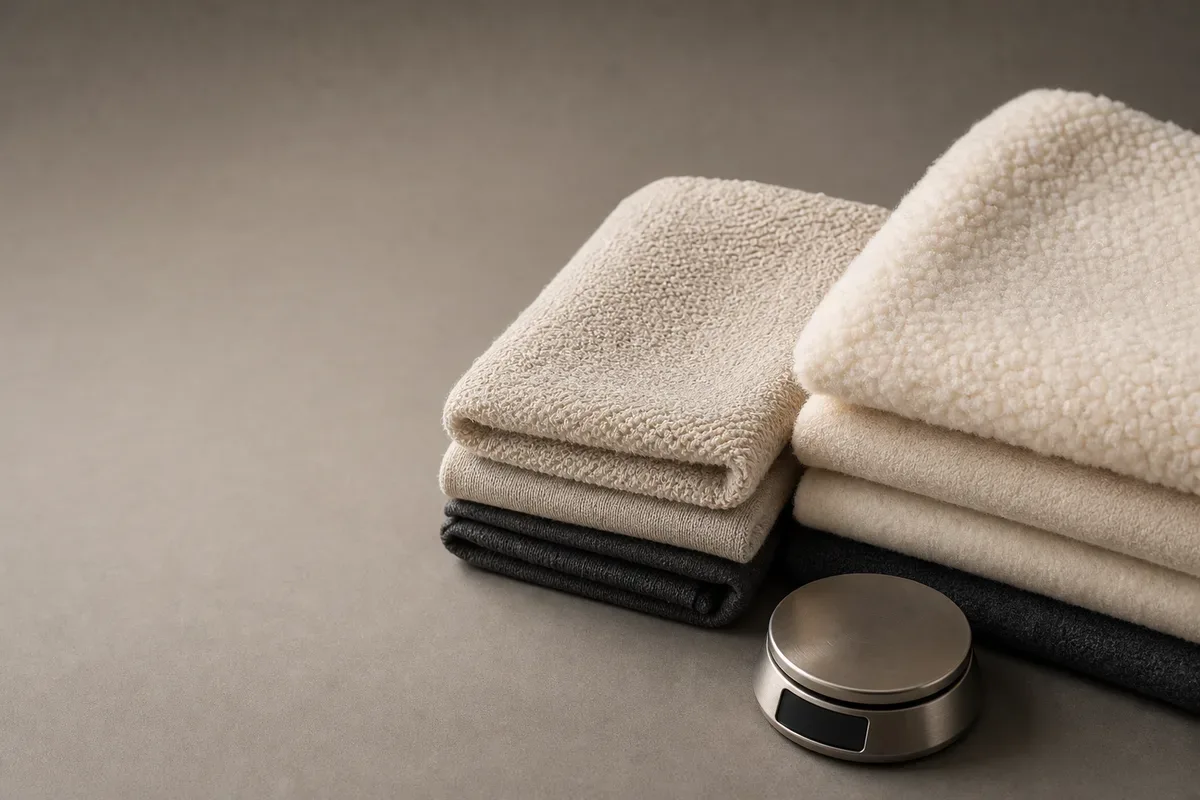
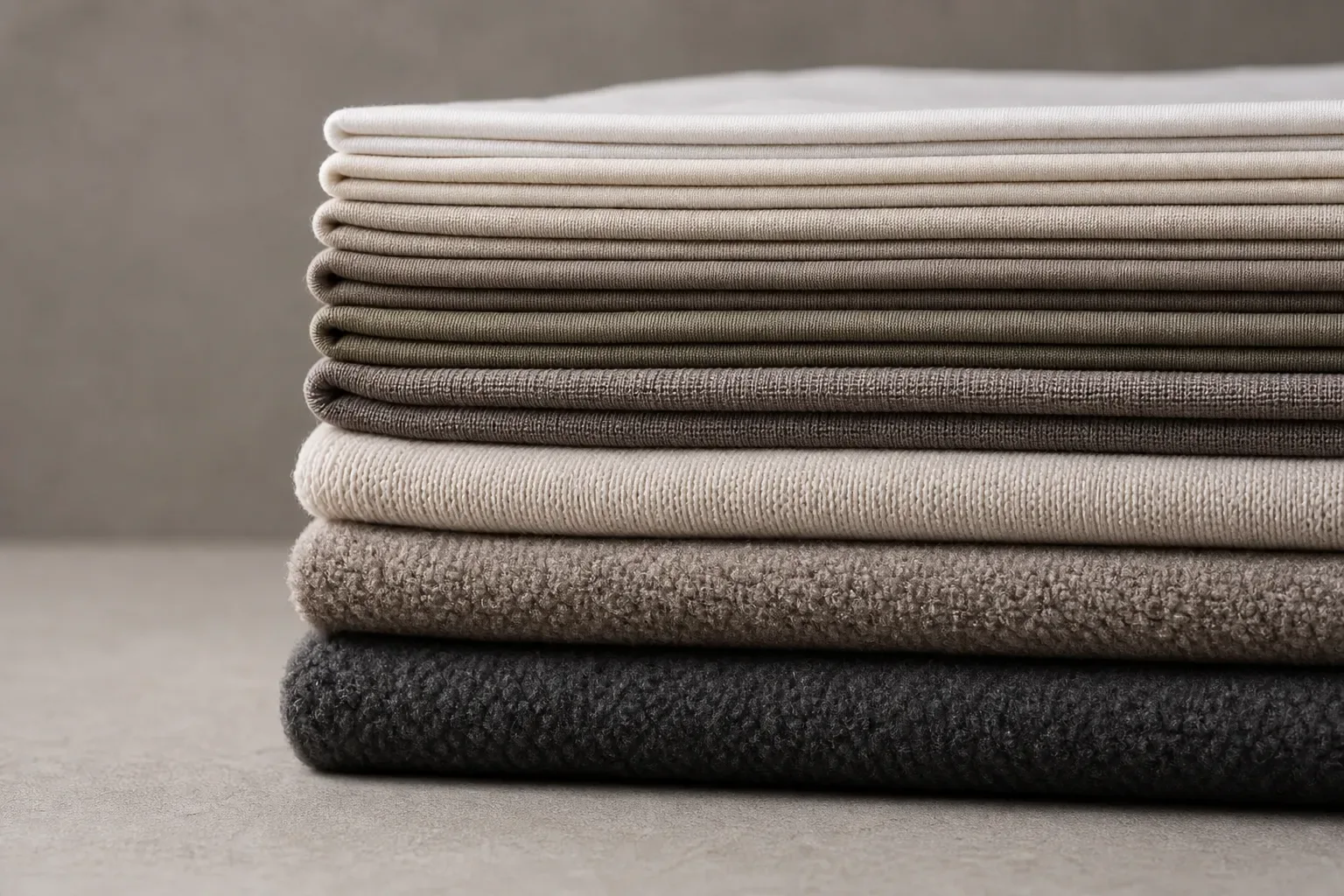
The sweatpant fabric decision is two questions. Loop-back french terry or brushed-back fleece? Terry runs cooler and drapes cleaner; brushed fleece is warmer and softer with more surface to show a wash. How many grams? Streetwear sweats live roughly in the 300-420 gsm band — the full weight-by-weight logic is its own guide, and gsm across knit garments generally is another. The working rule: the heavier the fabric, the more structure the silhouette holds — a wide-leg pant in a light fleece collapses; the same pattern at 400 gsm stands.
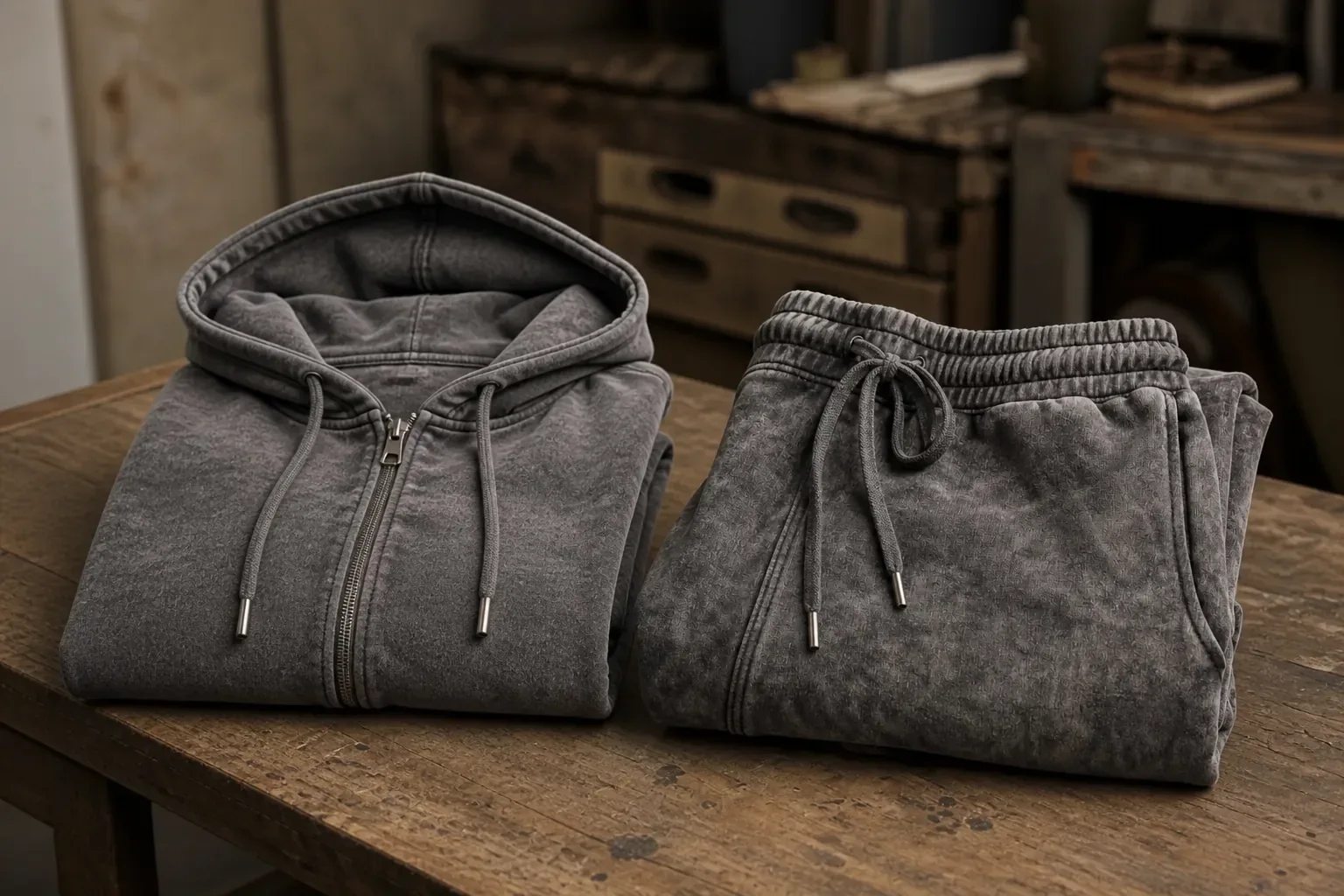
Match the top and bottom deliberately if you're building toward sets: same fabric batch, same wash run, or the "matching" set won't match under daylight. That coordination is the entire reason sets programs run as one production, not two — the full set logic is its own guide.
Construction: the waistband does the living
A sweatpant succeeds or fails at the waistband, because it's the structure the whole garment hangs from — the component-level decisions behind each build are cataloged in the elastic waistband guide:
- Elastic plus drawcord is the standard build — the spec choices are elastic width, single or double waistband, and whether the drawcord runs internal or external with metal or dipped tips.
- Double waistband — the stacked, two-layer look from our catalog — reads premium and adds a visible design line for a modest operation cost.
- Hem: ribbed cuff, elastic, or open. Cuffs make a jogger a jogger and hold a stack in place; open hems make a straight or wide leg drape like trousers. This single choice moves the garment between categories.
- Pockets: side-seam pockets are near-invisible operations; patch, zip and cargo pockets are visible components — each one adds hardware, fabric and sewing minutes, the same economics jeans hardware follows in a stiffer fabric.
Wash and finish: where sweats stop looking basic
An unwashed sweatpant is a commodity; the finishing stage is where the vintage-streetwear read comes from. Acid wash on fleece — the mottled, sky-and-cloud surface — behaves exactly as it does on hoodies, and that full guide applies: every piece emerges unique, which is the point. Garment dye delivers the sun-faded uniform tone; enzyme washes soften hand and quiet the surface. All of it runs in-house here, on the same lines that wash our tops — which is what makes washed sets in one consistent shade possible at all.
One spec note from the floor: washes shrink garments, so washed programs are cut from adjusted patterns to land on spec after the tank, not before. It's handled at pattern stage — but it's why "same pattern, add a wash later" is never quite that simple, and why shrinkage tolerances belong in the tech pack.
Decoration: placement rules are different below the waist
The techniques are the familiar ones — embroidery, patches and appliqué, puff and screen prints — but pant placement has its own physics. Thigh placements read cleanly and survive wear; hem-adjacent placements fight the cuff seam; seat placements take abrasion every time the wearer sits. Small left-thigh embroidery is the proven default for a first program, with patch-work and bolder prints as the personality layer. Separately made components need attachment, edge, and post-care evidence for the actual garment build. On washed programs, decoration and wash are sequenced per design — one more reason the whole garment belongs under one roof.
If you're building a bottoms program — standalone or matched to a hoodie — send the reference to our pants team; with a complete spec, quotes follow once sufficient project details are reviewed.
FAQ
What's the minimum order for custom sweatpants? MOQ starts at 50 pieces, the same as our tops, while the final minimum and design breakdown depend on the product, fabric, wash, and customization. A matching hoodie-and-sweatpant set contains two designs; we confirm the minimum for each during design review and coordinate production so fabric and wash shade match across the set.
What fabric weight should joggers be? Streetwear sweats generally spec between 300 and 420 gsm. Around 300-360 gsm suits year-round and warmer climates; 400 gsm and up delivers the heavyweight structure that holds baggy and wide-leg silhouettes. Heavier fabric costs more per piece and reads more premium — decide by silhouette and season.
How much do custom sweatpants cost to produce? Our published pants tiers run roughly USD 18-39 per piece at made-to-order quantities, with washed heavyweight jogger styles typically in the mid-to-high USD 20s. Fabric weight, wash treatment and pocket count are the main movers, plus a project-specific quoted amount for the sample.
Can you match sweatpants to a hoodie I've already developed? Yes — that's a sets program: same fabric direction, same wash run, cut as one production so the shades genuinely match. Send the existing hoodie spec or a physical piece and we'll build the bottom against it.