Heavyweight T-Shirt Trends 2026: Four Directions for Brands
A September 2026 review of official brand examples: boxy proportions, neckline details, washed surfaces and contrasting approaches to graphics, with practical questions for your next sample.
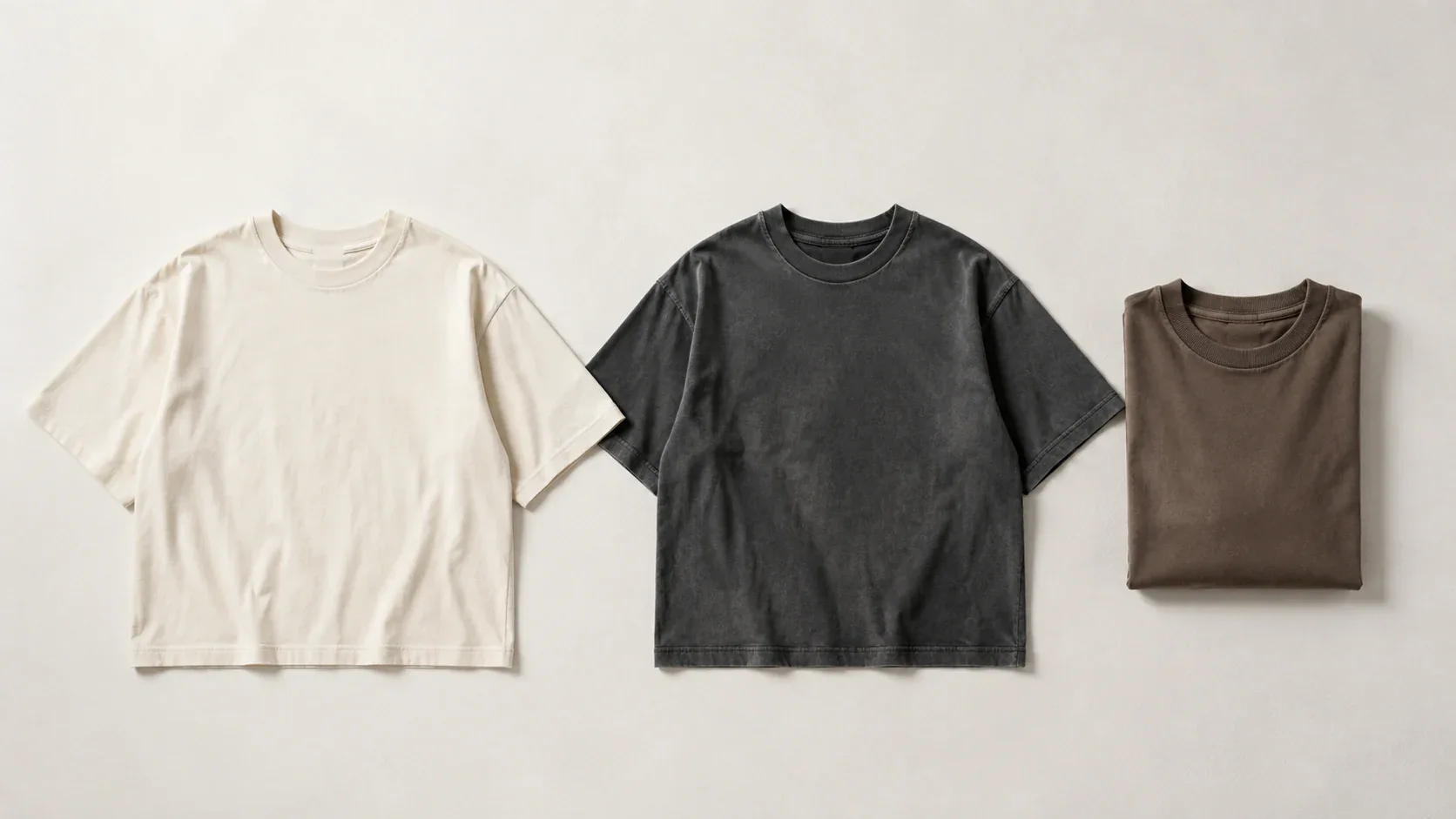
Four useful directions emerge from this review of heavyweight and substantial cotton T-shirts: a wider body with controlled length, a deliberately specified neckline, distinctive washed surfaces, and a choice between restrained branding and a graphic story. For a clothing brand developing its next tee, the useful question is how those details work together in one product.
This is a September 5, 2026 snapshot of selected official brand and blank-supplier pages. AS Colour's dated Box Collection article and Cole Buxton's SS26 product description provide explicit 2026 anchors. Other examples are current catalogue observations with no verified launch date. They show available design choices; they do not establish sales growth, market share or that a feature first appeared this year.
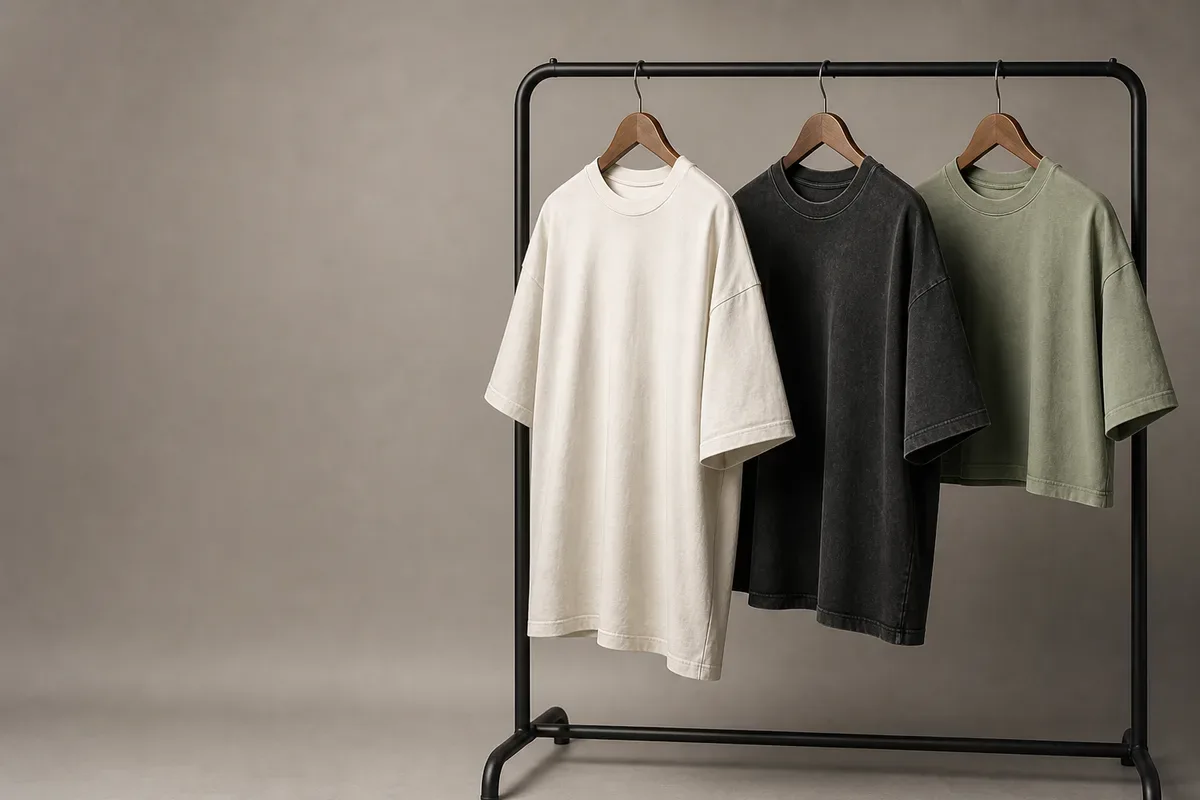
The cover is an AI-generated concept illustration, not a photograph of the cited products or a Jiashun production sample.
Key takeaways
- Translate a reference into separate fit, neck, finish and artwork decisions.
- Treat published fabric weights as product specifications, not a quality ranking.
- Keep garment dye, garment wash and overdye distinct when describing an effect.
- Use trend research to choose a development direction, then evaluate the actual sample.
What the Published Examples Show
The starting points below are brand-stated specifications, checked on September 5, 2026. They are a small editorial selection, not a representative market survey. The term "heavyweight" is not consistent across these sources: Represent's 230 GSM Initial tee sits alongside products that AS Colour explicitly markets as heavyweight. Our GSM guide explains how to compare the weight field without treating it as a complete fabric specification.
| Official example | Detail to investigate |
|---|---|
| AS Colour Box Collection, April 1, 2026 | 240 GSM cotton jersey tees, wider proportions and wide neck ribbing |
| Represent Initial Boxy T-Shirt, Coffee, undated product page | 230 GSM cotton, boxy cropped body, rib collar and discreet branding |
| Cole Buxton Sport T-Shirt, Vintage White, explicitly SS26 | 280 GSM cotton, a corporate-inspired graphic story and garment-washed finish |
The spread of numbers is useful because it discourages one shortcut: choosing a heavier fabric and assuming the design is finished. The remaining decisions are visible in the official examples, and each deserves its own line in a development brief.
1. Boxy Width and Shorter Length Are Separate Choices
AS Colour's Box Tee 5030 describes dropped shoulders, a relaxed fit and a shorter body. Represent's Initial tee pairs a boxy cut with a cropped body. Together, they provide concrete references for a wide silhouette whose length is intentionally controlled.
For your own design, decide where the hem should sit on the intended wearer and how much width you want through the chest. Then consider shoulder position, sleeve length and sleeve opening. A word such as "oversized" leaves those relationships unresolved; the T-shirt fit guide explains the measurement vocabulary.
An effective reference note might say: "We want the broad chest and dropped shoulder of this direction, but a hem that covers the waistband." That gives a pattern discussion a clearer starting point than asking for an identical branded garment.
Sample question: Does the intended silhouette still read correctly when the wearer moves, sits and raises their arms? Review the sample in the planned size and finishing state. Do not approve a pattern merely because its flat photograph looks boxy.
2. The Neckline Is Part of the Design
The AS Colour examples specify wide ribbing and twin stitching. Represent specifies a 1×1 rib collar. Cole Buxton describes a coverstitched neckline on its Sport tee. These are different construction descriptions, even when the products share a broad streetwear context.
The practical design opportunity is a neckline with an intentional proportion and finish. A product photograph may help you describe how wide the visible band looks, but it does not reveal the rib's full specification or prove its recovery after wear and washing.
In a brief, distinguish the neck opening from the visible rib width. Add a clear neckline reference and identify the appearance you want at the seam. If the aim is a close neck with a broad band, state both. The rib knit guide covers the material and approval questions behind that choice.
Sample question: After the agreed care check, does the neckline keep the intended opening and lie as approved? Set the comparison and acceptance requirement with the supplier. A wide collar is a design feature, not evidence that another garment will resist stretching.
3. Washed Surfaces Offer Different Routes
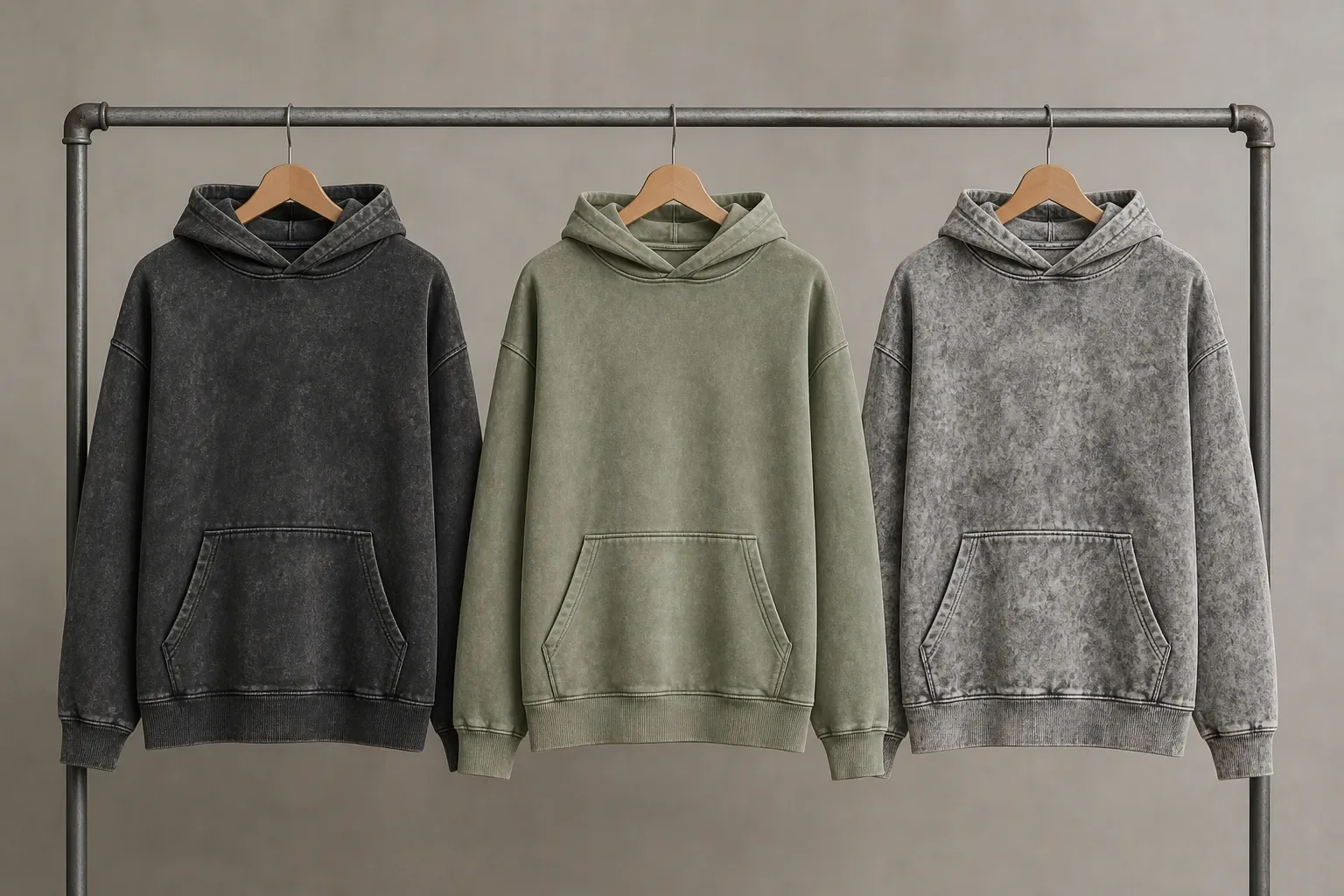
The AS Colour Heavy Faded Tee 5082 describes a garment-dyed finish on a boxy, relaxed tee. Cole Buxton lists its Sport tee as garment washed. Represent's Initial Overdye Realtree Boxy T-Shirt describes a black overdye applied to an existing camouflage design to mute its tones.
These examples make surface character a useful development topic, but they do not describe interchangeable processes. "Faded," "washed" and "overdyed" are not enough to infer the same dye system, chemistry or production sequence. Nor should every vintage-looking finish be called acid wash. The finish comparison guide helps separate the terms before a supplier proposes a route.
Start by identifying the appearance you are trying to achieve: an overall softened colour, a contrast around seams, or a subdued pattern. Use an original design and a clearly identified reference. Ask which process could achieve that appearance on the proposed fabric, and what variation would need approval.
Sample question: Which parts of the effect must remain consistent, and where is variation acceptable? Record the answer against an approved physical reference. Review the finished garment and intended decoration together rather than approving a colour swatch as if it settled the whole design.
4. Restrained Branding and Graphic Stories Coexist
Represent's Coffee Initial tee places its branding at the back neck and hem. Cole Buxton's SS26 Sport tee takes a different approach: its product description identifies a graphic story inspired by 1990s corporate branding. These examples support two creative directions within substantial cotton tees; they do not prove that small logos are replacing graphics, or the reverse.
Choose what should carry the identity of your own product. If the answer is the silhouette and finish, a restrained mark may suit the concept. If it is a visual story, develop original artwork whose placement and scale work with the garment. Neither choice dictates a print method by itself.
Use the decoration comparison once the artwork, fabric and finish are defined. Assess the proposed result on the actual sample; the cited brand page may show the graphic without disclosing the exact ink, embroidery setup or finishing sequence.
Sample question: Does the decoration still look balanced on the intended fit and across the size range? Identify the placement reference and the size of the artwork instead of relying on a loosely positioned mockup.
Turn One Direction into a Development Brief
Pick the design feature that matters most to your audience, then make the other choices support it. A short, broad tee with a quiet mark and a washed graphic tee are different briefs, even if both start with cotton jersey.
For a first discussion, prepare:
- The design intention: one sentence explaining the silhouette or visual identity you want.
- The reference set: links or permitted images, with notes identifying the detail you want to learn from in each.
- Fit and fabric inputs: intended size, key measurements, fabric reference and any proposed weight. Mark undecided fields clearly.
- Neck, finish and decoration: describe them separately, then ask how they interact in the finished sample.
- The approval question: explain what the sample needs to resolve before an order decision.
This keeps trend inspiration useful without turning a reference into a promise of an identical result. The tech-pack guide shows how to organise those inputs for a quotation discussion. For a Jiashun project, send your original design, quantity, size range, fabric or garment reference and finish direction through our custom T-shirt manufacturing page.
Questions Brands Ask About Heavyweight Tee Trends
Are heavyweight T-shirts better?
They may suit a particular product brief, but weight alone cannot answer that question. Compare the proposed garment with your requirements for fit, hand, comfort, decoration and care. The three numerical examples in this review are brand specifications, not a ranking of which tee is best.
Which T-shirt trend should a small brand choose in 2026?
Use the observed directions as options: controlled boxy proportions, a considered neckline, a distinctive finish, or a clear graphic approach. Select the combination that serves your audience and test it through your own design and sample review. These sources provide product-development references, not evidence that one direction will sell better for your brand.