Pique vs Jersey Fabric: Choosing Knit for Polos and T-Shirts
Pique and jersey are knit structures, not quality grades. Compare their surface, drape, decoration behavior, and approval tests before assigning either fabric to a polo or T-shirt program.
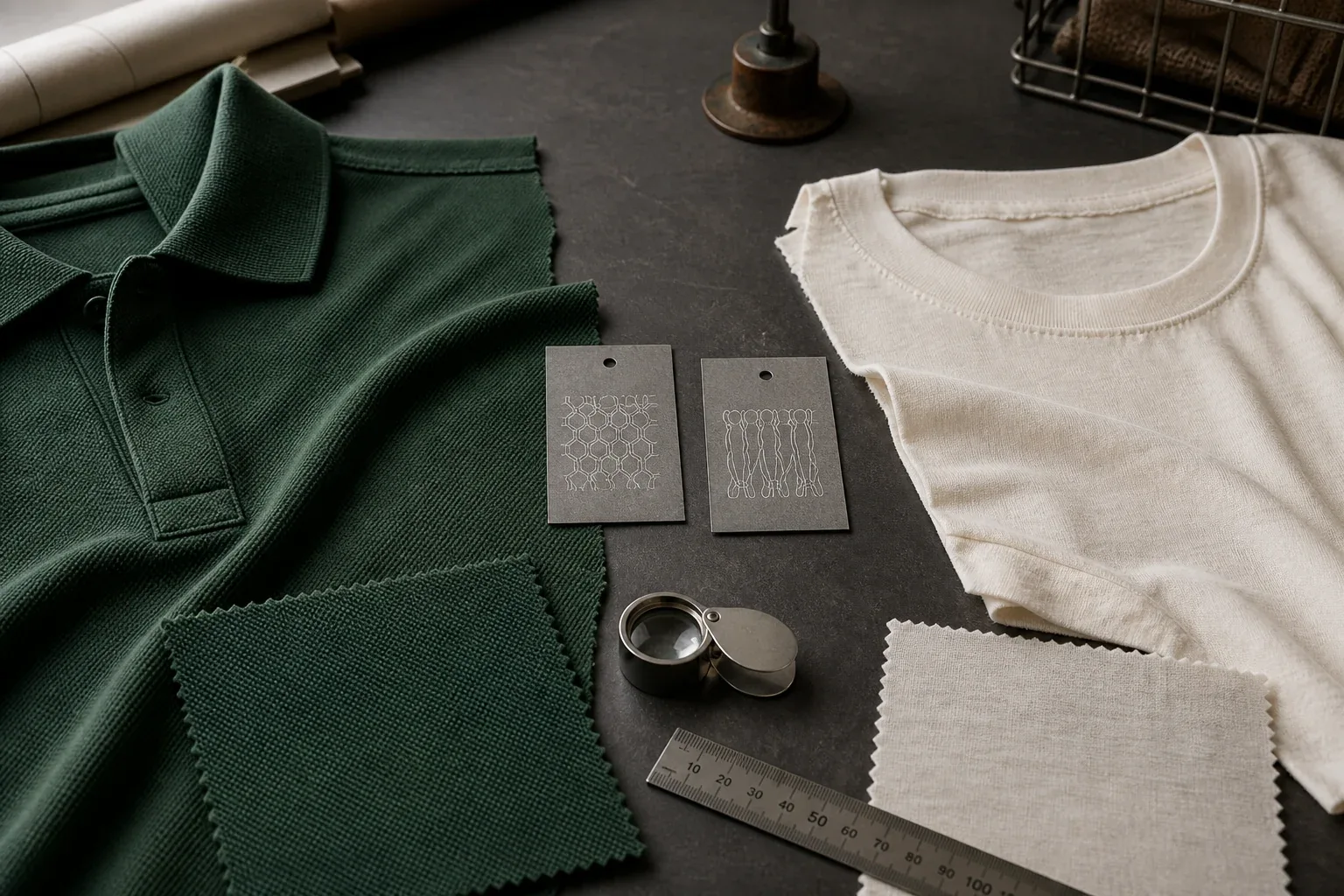
Choose knitted pique when a polo program needs a visibly textured, more structured surface. Choose single jersey when a T-shirt program needs a smoother face, softer drape, and a straightforward base for print. Neither fabric is automatically cooler, heavier, more durable, or higher quality. Those outcomes depend on the exact yarn, fiber blend, fabric mass, stitch density, finishing, and garment construction submitted for approval.
This comparison is deliberately narrow: it covers knitted pique for polos and single jersey for tees. It does not treat either name as a complete fabric specification, and it does not assume that changing the knit structure lets a factory reuse the same pattern unchanged.
Pique vs Jersey at a Glance
| Decision point | Knitted pique | Single jersey |
|---|---|---|
| Surface | Cellular or geometric texture made with knit and tuck stitches | Smooth face with visible vertical wales; looped appearance on the back |
| Typical program | Polo shirts and other knit tops that benefit from surface definition | T-shirts and other knit tops that benefit from a smooth face and fluid drape |
| Silhouette tendency | Often reads more structured at the same garment concept | Often reads softer and more relaxed at the same garment concept |
| Decoration starting point | Embroidery and badges are common; texture must be considered in sampling | Screen print, DTG, DTF, embroidery, and other methods are possible; each still needs sampling |
| Edge behavior | Depends on the specific pique construction and finish | Cut edges can curl, so cutting and sewing controls matter |
| Buyer decision | Approve the exact structure, face, weight, stretch, and wash result | Approve the exact structure, face, weight, stretch, and wash result |
The table is a sourcing shortcut, not a substitute for a swatch or test report. “Pique” includes several knit arrangements, and “jersey” is available in many weights and fiber combinations. A supplier's fabric code and an approved physical reference are more reliable than either family name alone.
What Is Jersey Fabric?
In this guide, jersey means single-knit jersey: a weft-knit structure formed with knit stitches across each course. Its face shows vertical wales; its back shows the curved parts of the loops. Cotton Incorporated's technical overview identifies single jersey as a common T-shirt fabric and notes that it is produced in different weights. It also notes two practical handling traits: single jersey tends to curl at cut edges and can run if a loop is broken. See CottonWorks: Single & Double Knits.
When the choice is single jersey versus interlock rather than jersey versus pique, use the single-jersey-versus-interlock approval guide for face/back, edge, drape, opacity and panel-handling evidence.
Those structural facts help explain why jersey is a familiar T-shirt starting point. Its relatively even face can present graphics cleanly, while its drape can follow a relaxed or close-to-body silhouette. But “jersey” does not tell a product developer whether the fabric is cotton, polyester, or a blend; whether the yarn is combed or carded; whether elastane is present; or whether the finish has changed the hand. Fiber content and knit construction must be specified separately.
That distinction matters when evaluating catalog references. A 230 g boxy cotton tee and a 280 GSM cotton long-sleeve tee illustrate how weight and silhouette can vary within a tee program. Their product pages are design references, not permission to omit the fabric construction, finish, and test requirements from a new brief.
What Is Pique Fabric?
Knitted pique is a textured weft-knit structure built by combining knit and tuck stitches in a repeating arrangement. The resulting face can look cellular, dimpled, honeycombed, or subtly geometric, depending on the repeat. CottonWorks describes single pique as a micro-mesh structure commonly used for polo knit shirts and distinguishes it from double-pique and six-feed-pique constructions. That is why “pique” by itself is not precise enough for bulk approval: two suppliers may both use the word while submitting visibly different structures.
An embroidered pique polo is a direct product reference for this route. The texture gives the body of the polo a different visual rhythm from a smooth tee, while the collar, placket, cuffs, embroidery, and body fabric still need their own specifications and approval points.
The accent in the French spelling—piqué—does not change the sourcing question. This guide covers the knitted pique structures used in polo shirts. Because “pique” alone does not identify the exact construction, write knitted pique, identify the approved structure or supplier code, and attach a face-and-back swatch.
Why Pique Is Common in Polos and Jersey in T-Shirts
The familiar pairing is partly visual and partly structural:
- A polo already has a collar and placket. A textured body fabric supports that more constructed visual language without requiring a printed surface.
- A T-shirt is usually read through its silhouette, hand, and graphic. A smoother jersey face gives print and garment shape a quieter base.
- Pique and jersey present different face textures, so each program needs its own approved standard for yarn, knitting, finishing, and surface uniformity.
- Single jersey's cut-edge curl requires handling discipline, but it is also a well-established base for tee cutting and assembly.
These are program tendencies, not design laws. A designer can use jersey for a polo or pique for a collarless knit top. The correct question is not “Is that allowed?” It is “Does the approved fabric, pattern, trim package, decoration, and wash result deliver the intended garment?”
If a polo moves from pique to jersey, its body may drape differently and its placket can require different support. If a tee moves from jersey to pique, the neckline, sleeve opening, hem, and overall ease can read differently. Treat either switch as a material change: recheck the pattern and make a new sample rather than approving the substitution from a fabric name in an email.
Is Pique More Breathable Than Jersey?
Not as a universal rule. Pique's cellular surface can look more open, but appearance alone does not establish how much air passes through a finished fabric. Yarn size, stitch density, fabric mass, fiber, wet processing, coatings, compacting, and other finishes can all change the result.
ASTM D737 is a test method for air permeability of textile fabrics, including knits, and its scope notes that fabric construction and finishing can appreciably affect permeability. If airflow is an actual performance requirement, compare production-representative samples under the same method and conditions. Do not convert a generic “pique is breathable” statement into a product claim without evidence for the exact fabric. See ASTM D737, Air Permeability of Textile Fabrics.
The same discipline applies to comfort. Air permeability, moisture behavior, thermal sensation, hand feel, fit, and climate are related but not interchangeable. A wearer may perceive two fabrics differently even when a single laboratory result is similar. Define the requirement first, then choose evidence that measures it.
Weight, Fiber, Yarn, and Finish Can Change the Answer
Fabric mass is usually recorded in grams per square metre, but GSM is only mass per unit area. ASTM D3776/D3776M provides methods for measuring that property; it does not turn GSM into a grade for thickness, opacity, airflow, recovery, or quality. The ASTM scope also cautions that a result from a small swatch represents that sample, not automatically the entire lot. See ASTM D3776/D3776M, Mass Per Unit Area.
For an apples-to-apples comparison, keep these fields visible:
| Specification field | Why it matters | Approval evidence |
|---|---|---|
| Knit construction | Distinguishes single jersey from the specific pique repeat | Face-and-back swatch, supplier code, construction description |
| Fiber content | Changes hand, care, moisture behavior, and labeling obligations | Composition declaration and required verification |
| Fabric mass | Controls mass per area, not every other performance property | Test result with method, conditioning, and sample identity |
| Yarn details | Can alter surface clarity, softness, pilling tendency, and appearance | Supplier specification plus approved swatch |
| Stretch and growth | Affects fit retention, seams, necklines, and plackets | Agreed method, direction, load or extension, result, and acceptance limit |
| Finish and color | Can change hand, dimensions, surface, and permeability | Finished color swatch and washed sample from the intended route |
| Lot identity | Connects an approval or report to material that can actually be traced | Mill or supplier, batch/lot reference, date, and report ID |
For low-power stretch fabrics within its scope, ASTM D2594/D2594M provides a framework for measuring stretch and growth under specified conditions. It does not create one universal pass limit for every polo or T-shirt. The brand and supplier still need project-specific acceptance criteria, directions of test, conditioning, and specimen identity.
Decoration: Embroidery, Print, and Surface Texture
Pique's relief and jersey's flatter face change the starting conditions for decoration, but neither structure guarantees success. Sample the intended artwork at production size, on the finished fabric color, with the intended backing, underlay, ink system, curing route, and wash protocol.
| Decoration goal | Pique control | Jersey control |
|---|---|---|
| Small chest embroidery | Check whether texture shows through; approve density, underlay, backing, distortion, and reverse-side finish | Check hooping or framing marks, puckering, backing, distortion, and reverse-side finish |
| Screen print or transfer | Confirm that the textured face produces the intended edge and coverage | Confirm opacity, hand, stretch response, cure, and wash result |
| DTG artwork | Do not assume the relief will present fine detail like a flat surface | Approve pretreatment, color, detail, hand, and wash durability on the exact fabric |
| Badge or patch | Approve attachment stitch, backing, placement, and local distortion | Approve attachment stitch, backing, placement, and local distortion |
A DTG boxy oversized tee can help communicate artwork scale and silhouette. It still cannot serve as the decoration standard for a different fabric or color. Use an approved strike-off or garment sample as the controlling reference, and label it with the fabric and artwork revisions it represents.
Pattern, Cutting, and Sewing Controls
Changing from jersey to pique is not a text-only tech-pack revision. It can alter drape, extension, recovery, seam response, neckline behavior, and the apparent volume of the same pattern. A responsible development loop checks the material and the garment together:
- Approve a finished-fabric swatch. Record face, back, color, construction, composition, mass, finish, width, supplier code, and lot identity where available.
- Measure the properties that affect the pattern. At minimum, document stretch and growth in the relevant directions using an agreed method. Add air permeability only when it is a stated performance requirement.
- Cut a development sample in the intended fabric. Do not infer garment fit from a hanger swatch.
- Review high-risk areas. On jersey tees, examine neckline recovery, shoulder stability, hem appearance, seam grin, torque, and edge handling. On pique polos, examine placket support, collar/body compatibility, embroidery distortion, hem, side seams, and surface uniformity.
- Wash under the labeled care route. Re-measure the defined garment points, inspect skew and appearance, and compare the result with project-specific tolerances.
- Seal the approved reference. A verbal “same as sample” is weak unless the sample number, fabric code, color, measurement chart, decoration file, and approval date are linked.
AATCC TM135 addresses dimensional change after home laundering, while AATCC TM179 addresses skew change after home laundering for knitted and woven fabrics. Name the test method and selected laundering conditions in the approval plan; “wash tested” alone does not explain what was done.
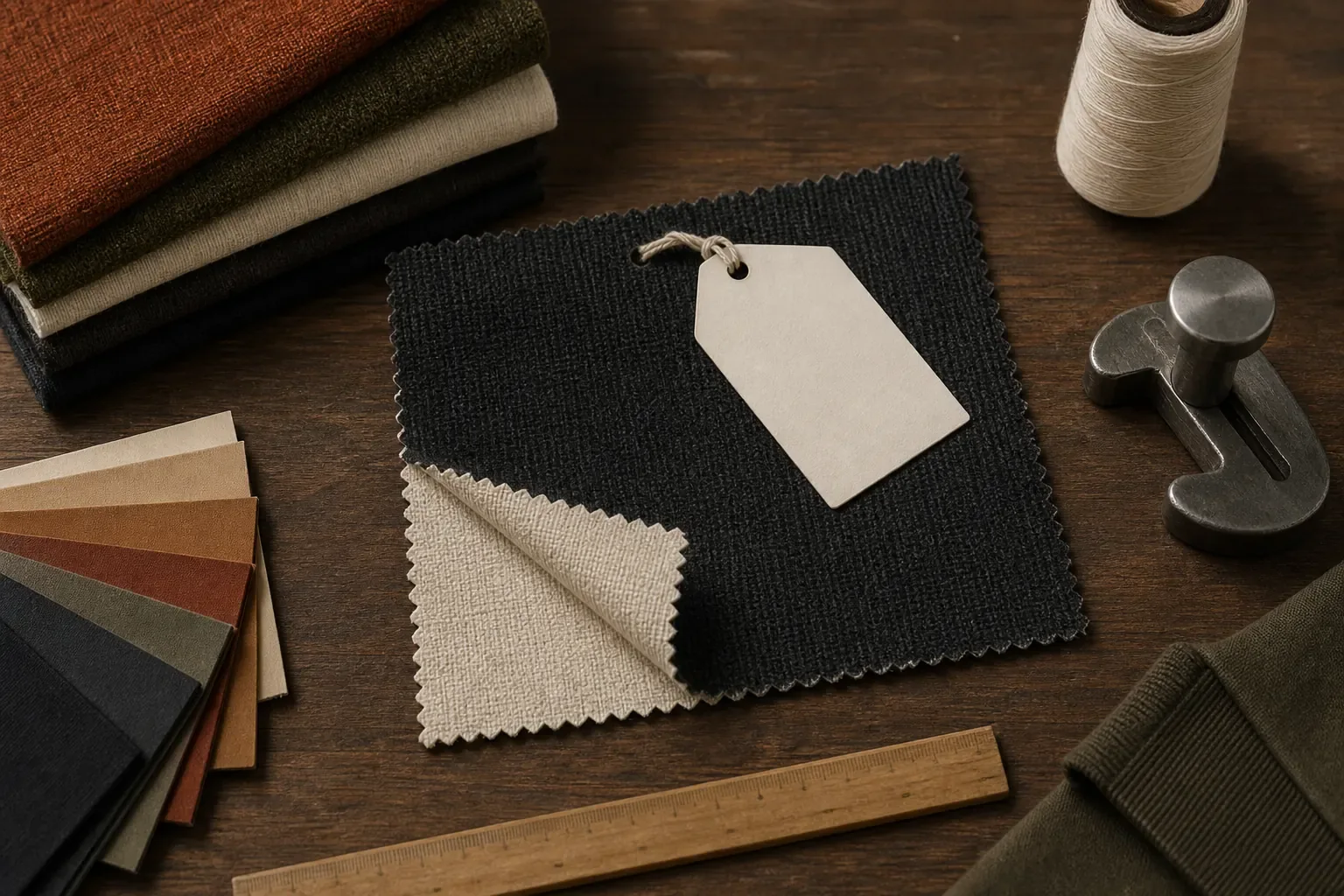
For a practical receiving workflow, use the fabric swatch approval checklist before cutting and the cotton shrinkage tolerance guide when defining how the garment will be measured before and after laundering.
What to Put in the Tech Pack
The phrase “cotton pique polo” or “heavy jersey tee” leaves too many choices open. A sourcing-ready fabric callout should identify:
- knit family and the specific construction or approved supplier article;
- fiber composition, including elastane if present;
- target fabric mass and the agreed measurement method;
- usable width and color reference;
- yarn and finish details that are material to the design;
- stretch and growth requirements by direction, with the method and acceptance criteria;
- dimensional-change and skew requirements, with laundering conditions;
- face side, grain or course orientation, and nap or one-way restrictions if applicable;
- decoration route and its approved sample reference;
- supplier, fabric code, batch or lot identity, and substitution rules.
Then connect the fabric to the garment BOM, measurement chart, pattern revision, and sample comments. This prevents an approved hand swatch from being separated from the polo or tee it was supposed to control. If your team is still choosing the material, Jiashun's fabric sourcing service can develop candidate options against a product brief; final claims and tolerances should be based on the selected fabric and agreed evidence.
Which Fabric Should Your Program Choose?
Use knitted pique as the first candidate when the brief prioritizes a classic polo identity, visible surface texture, a more structured visual impression, and embroidery-led branding. Specify which pique construction you approved rather than accepting any material sold under the family name.
Use single jersey as the first candidate when the brief prioritizes a T-shirt silhouette, smoother print ground, softer visual drape, or alignment with an existing jersey tee program. The T-shirt fit and construction guide helps connect that fabric choice to body width, length, sleeve, neck rib, and seam decisions; the ring-spun cotton guide separates a yarn description from the knit structure.
Ask for both when the design direction is unresolved. Compare like-for-like finished swatches, then make sample garments in the most credible candidates. Approve the combination that meets the design, fit, decoration, care, performance, cost, and availability requirements—without turning either fabric name into a quality ranking.
FAQ
Is pique better than jersey?
No. Pique and jersey are different knit structures, not quality grades. Pique is often selected for a textured polo body; jersey is often selected for a smoother, more fluid T-shirt body. Quality depends on the exact yarn, knitting, dyeing and finishing, test results, cutting, sewing, and consistency of the production lot.
Is pique more breathable than jersey?
Not necessarily. A pique surface may look more open, but actual air permeability depends on construction, yarn, stitch density, mass, fiber, and finishing. If breathability is a product requirement, test production-representative samples under the same stated method instead of relying on the fabric family name.
Can jersey be used for a polo shirt?
Yes. Jersey can be used for a polo if its drape, recovery, opacity, placket support, collar compatibility, and wash result meet the design brief. Because it may behave differently from the original pique, make and approve a jersey sample rather than carrying the pique pattern and construction assumptions over unchanged.
Is pique knitted or woven?
This guide covers knitted pique used in polo shirts. CottonWorks describes polo-knit pique structures made with knit and tuck stitches. Because “pique” alone does not identify the exact construction, specify knitted pique plus the approved supplier article and swatch.
What should a pique or jersey tech pack specify?
Specify the exact knit construction, fiber content, target mass, usable width, color, finish, stretch and growth requirements, dimensional-change and skew requirements, decoration route, test methods, acceptance criteria, and approved supplier code or swatch. Link those details to the garment pattern, measurement chart, BOM, and sample revision.
References
- Cotton Incorporated, CottonWorks: Single & Double Knits — single-jersey and pique construction, appearance, handling, and common end uses (accessed August 14, 2026).
- ASTM International, ASTM D3776/D3776M-20(2025) — fabric mass per unit area and sampling scope (accessed August 14, 2026).
- ASTM International, ASTM D2594/D2594M-21 — stretch and growth of applicable low-power fabrics (accessed August 14, 2026).
- ASTM International, ASTM D737 — air permeability of textile fabrics and sensitivity to construction and finishing (accessed August 14, 2026).
- AATCC, TM135-2025 — dimensional changes after home laundering (accessed August 14, 2026).
- AATCC, TM179-2025 — skew change after home laundering (accessed August 14, 2026).
Related guides
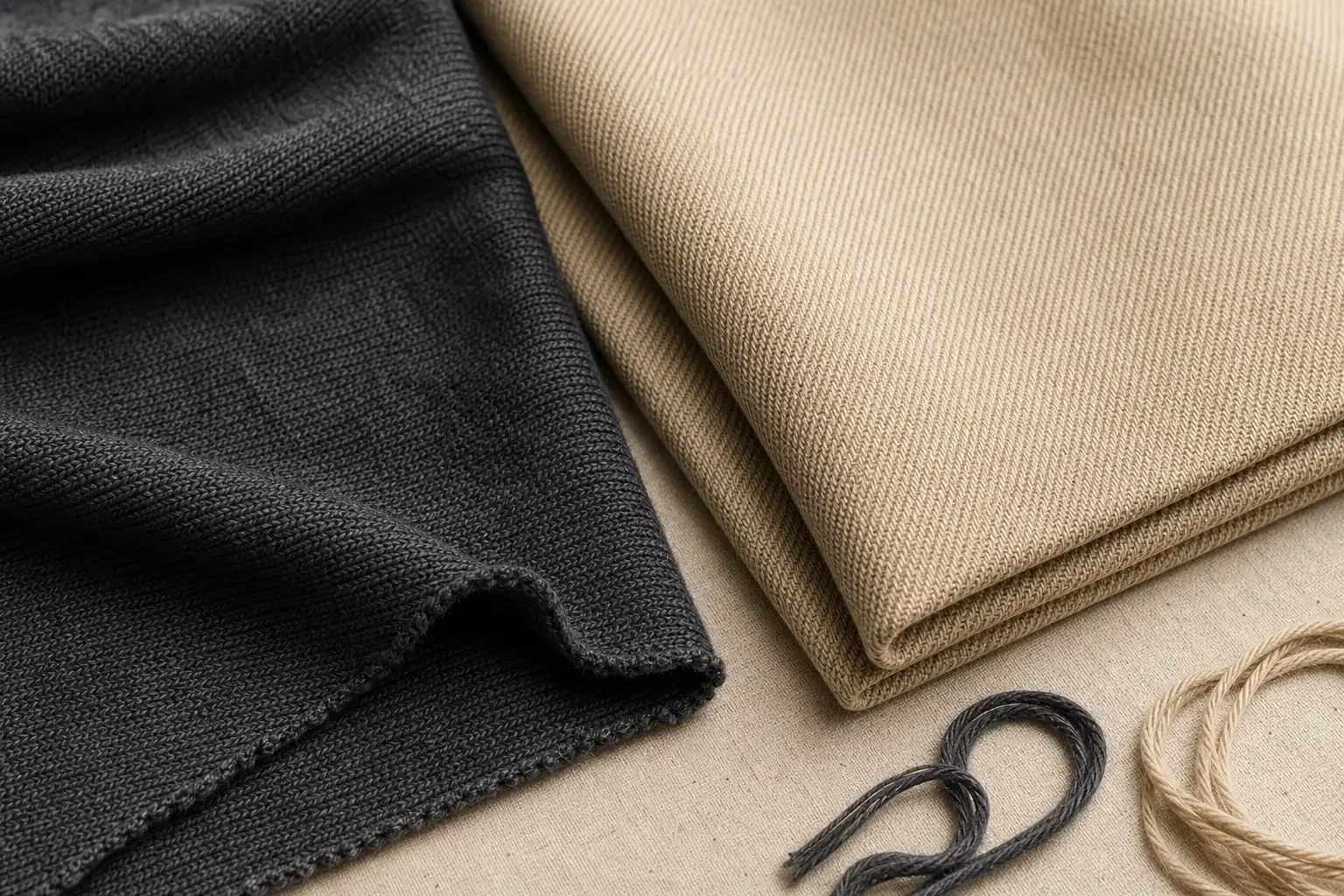 Knit vs Woven Fabric: Fit, Construction and Sampling
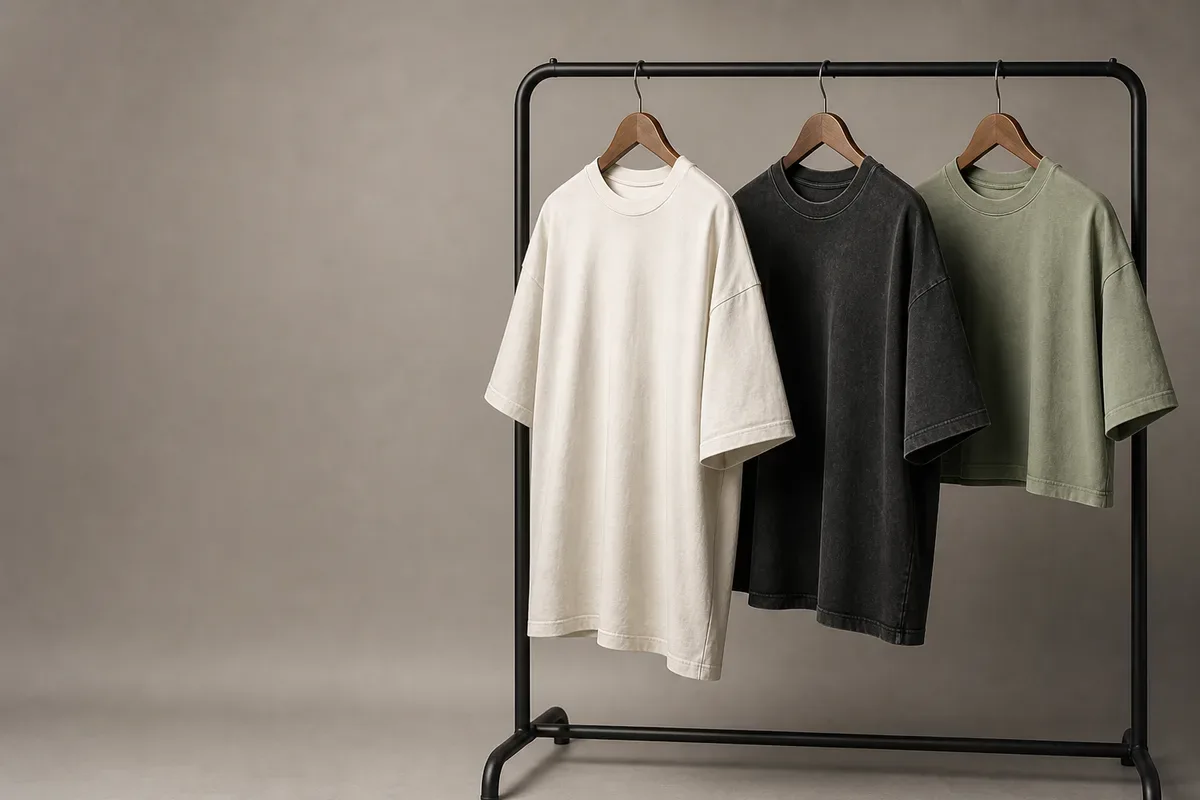 T-Shirt Fits Explained: Oversized, Boxy, Cropped and What to Spec Before Sampling
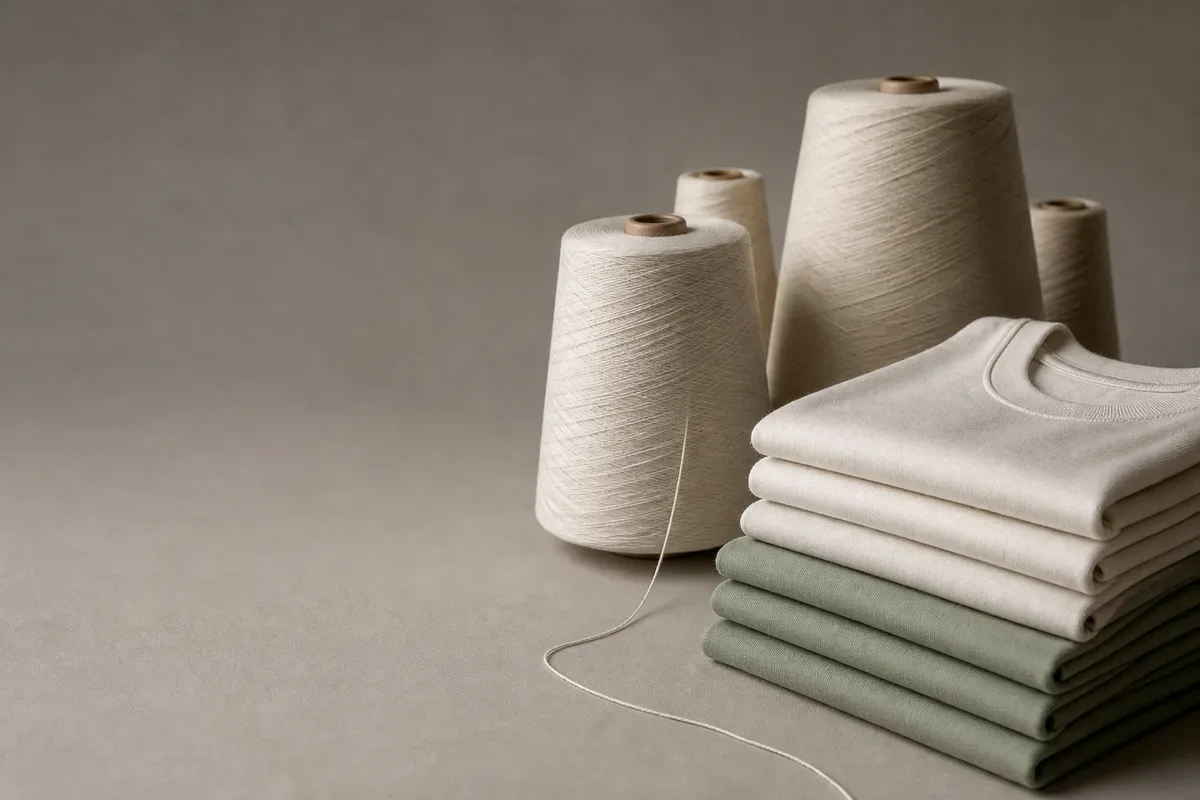 Ring-Spun vs Open-End Cotton: The Yarn Decision Hiding Inside Every T-Shirt
 Fabric Swatch Approval Checklist for Clothing Brands
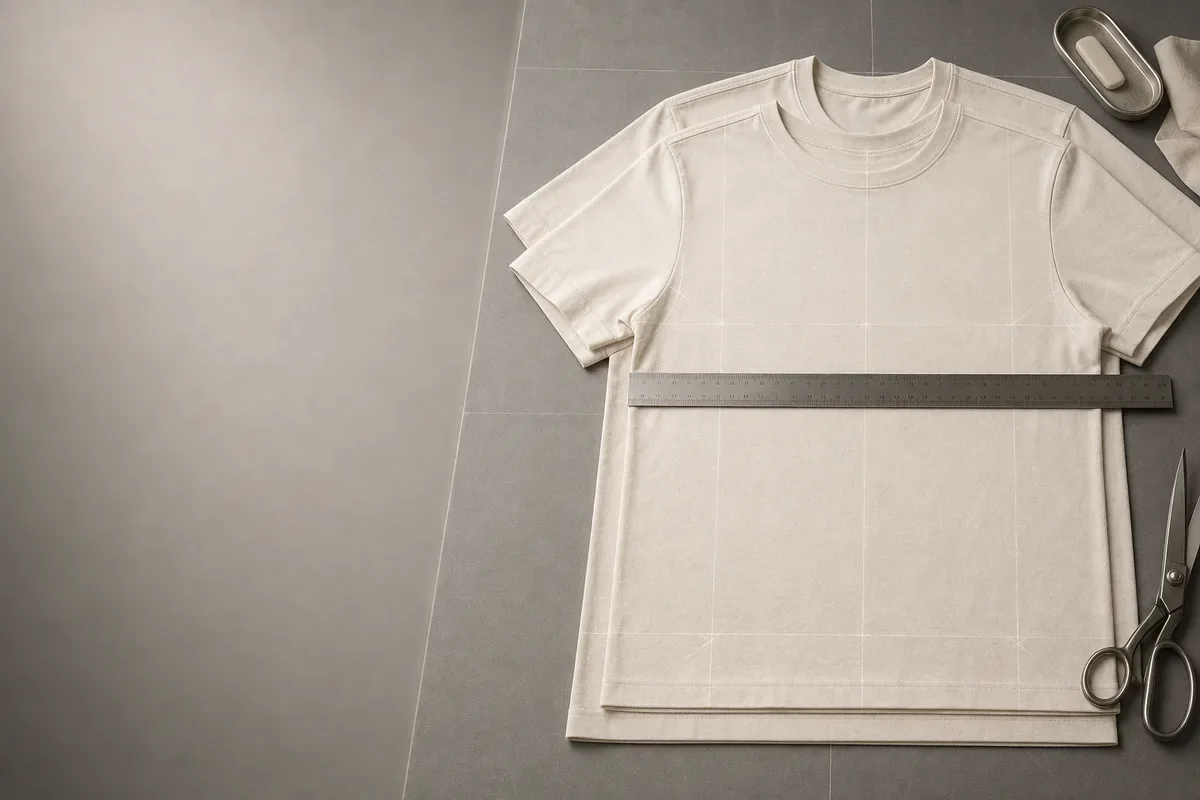 How Much Does Cotton Shrink? The Science, the Standards, and the Tolerance to Put in Your Tech Pack