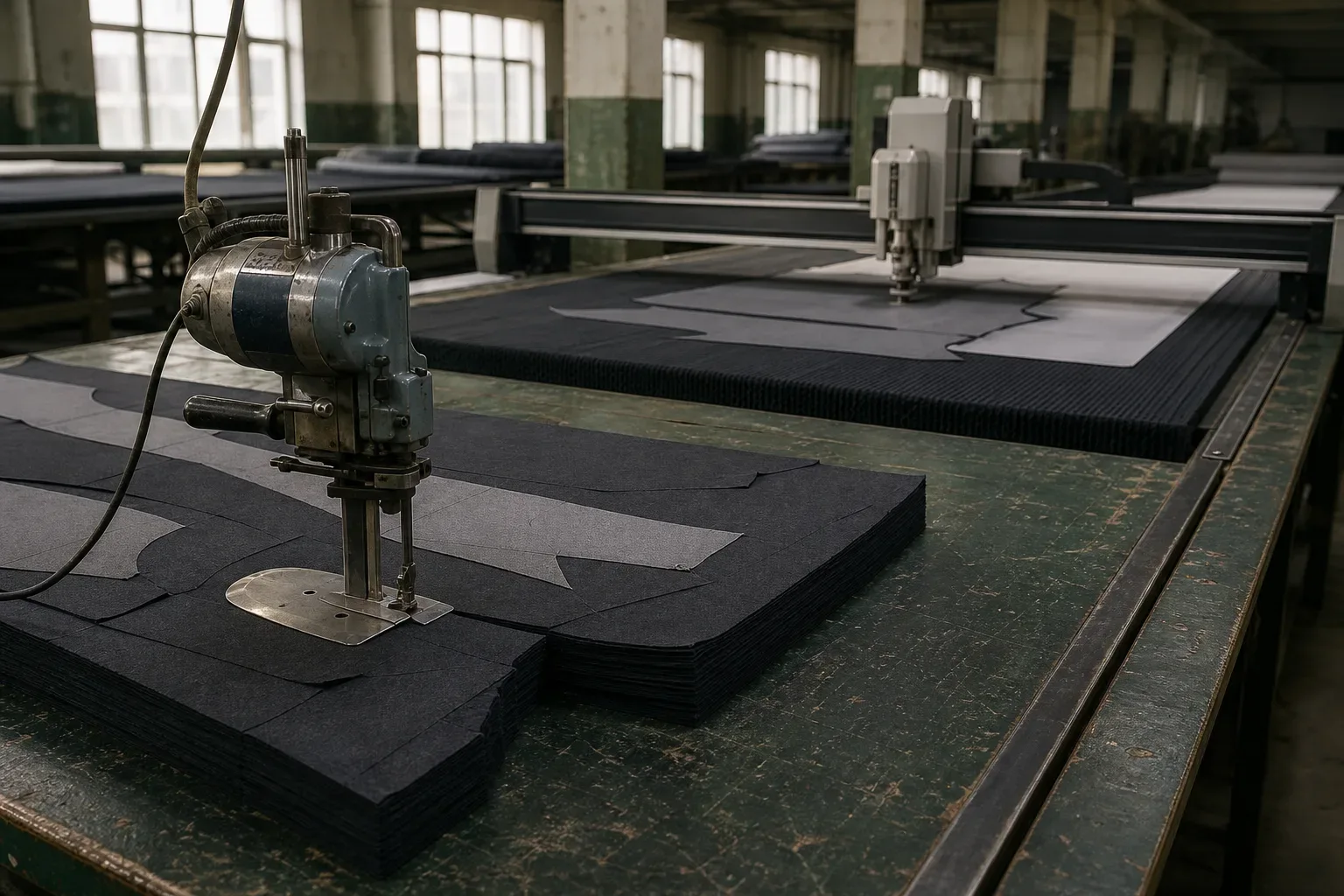
Fabric Consumption in Garment Manufacturing: What Sets the Estimate
Fabric consumption is not one permanent yardage per style. It changes with pattern revision, usable width, size mix, direction rules, lay planning and recorded cutting losses.
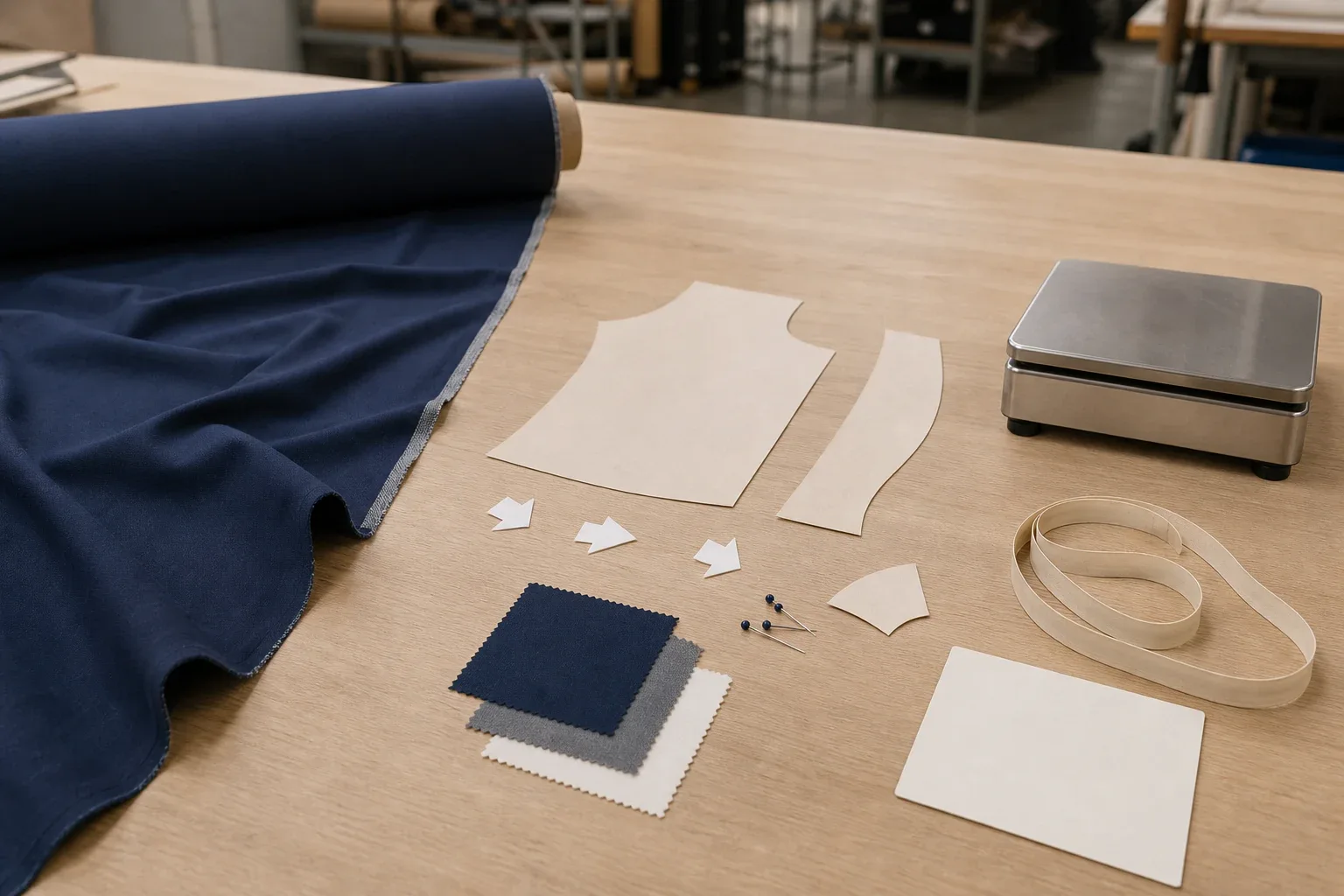
Fabric consumption in garment manufacturing is the quantity of fabric assigned to a defined garment or production order on a stated basis. It is not an unchanging property of a hoodie, shirt or pair of jeans. The number can move when the pattern revision, usable fabric width, size ratio, directional rule, motif repeat, lay plan or cutting evidence changes.
That is why a useful estimate arrives with its inputs. A number expressed only as “metres per garment” is incomplete unless the record says which fabric, width and state were used; which pattern pieces and sizes were included; whether the figure covers marker length only or also spreading and cutting losses; and which revision produced it.
This guide separates four numbers that are often collapsed into one, then shows what a brand should ask for before a quote, material booking or bulk approval. The marker efficiency guide remains the owner of marker geometry and its layout KPI. Here, the subject is the wider consumption trail from estimate to actual use.
Four Fabric Numbers That Should Not Be Mixed
The word consumption may refer to different checkpoints. Name the checkpoint before comparing two figures.
| Number | What it represents | What it does not yet prove |
|---|---|---|
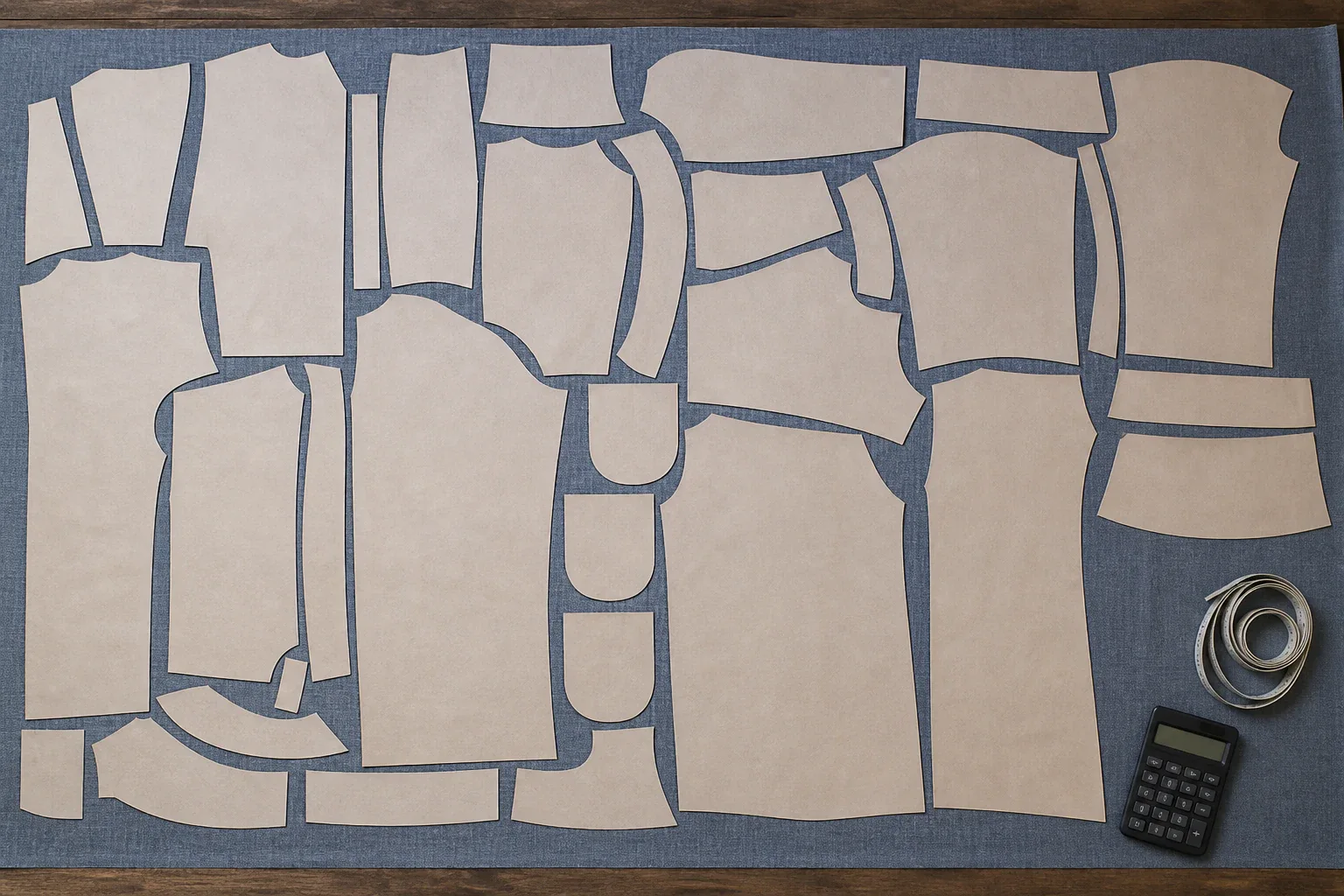
| Net pattern requirement | Area or piece set represented by the approved garment patterns | A cuttable marker, lay or purchase quantity |
| Marker or cut requirement | Fabric length represented by an identified marker and its garment count | End loss, splices, defects, recuts or every order-level allowance |
| Booking quantity | Fabric ordered or allocated for the production scope and declared contingencies | The quantity ultimately issued, cut or consumed |
| Actual usage and balance | Fabric issued and reconciled against cut output, recorded losses and remnants | A universal rate that can be copied to another style or fabric |
The distinction prevents double counting. If a booking figure already contains a named cutting contingency, adding the same percentage again to the purchase order does not create safety; it creates an unexplained duplicate allowance.
It also makes improvement claims reviewable. A shorter marker can reduce one part of the requirement while a changed roll width, one-way rule or higher recut quantity increases another. “Consumption fell” is meaningful only when the compared scope and accounting boundary are the same.
Start With a Consumption Basis Card
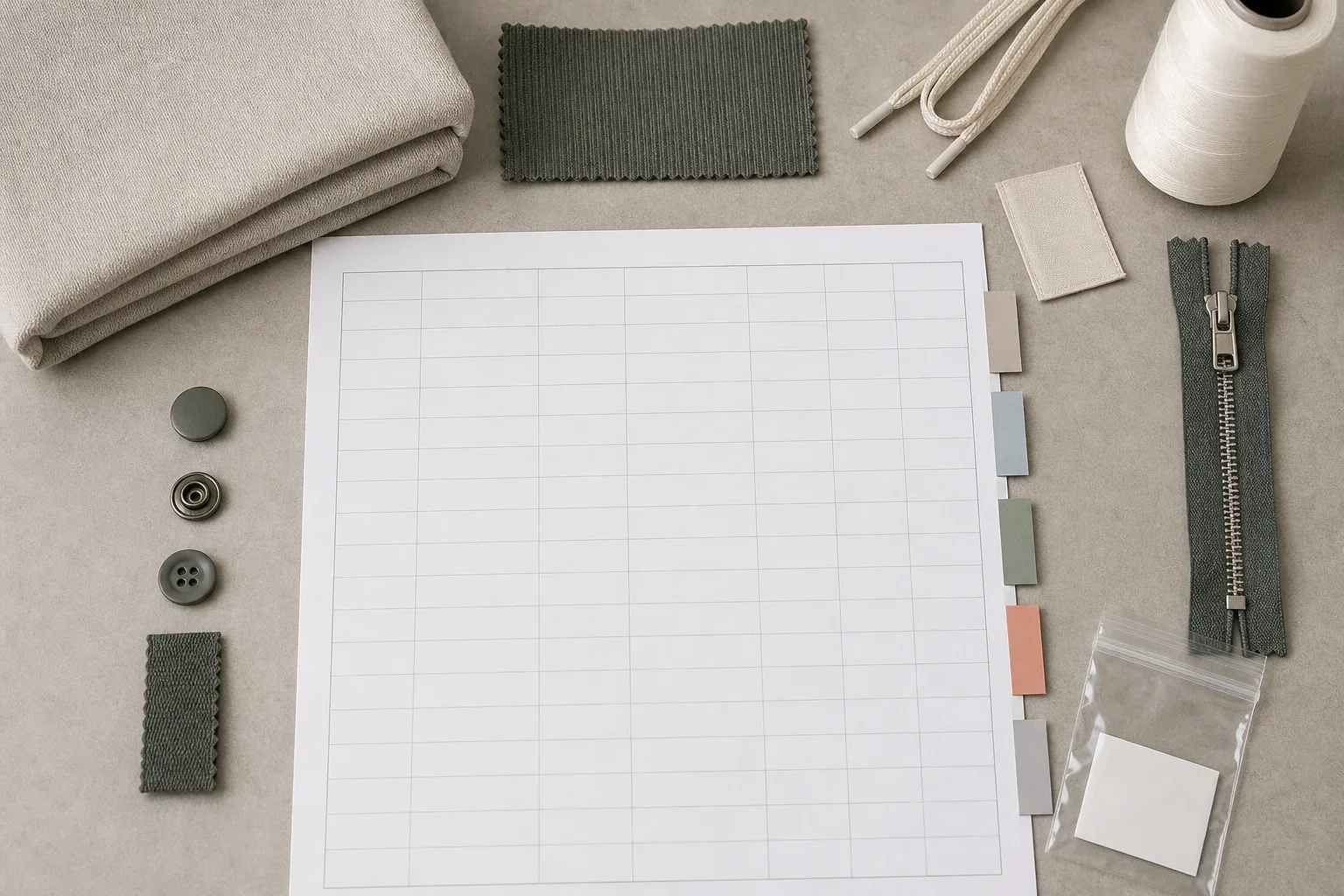
Before asking for a number, freeze a small basis card beside it. At minimum, record:
- style, colorway and fabric BOM row;
- pattern and tech-pack revision, including all shell, lining, pocketing, rib or contrast pieces inside the figure;
- sample state used to create the estimate;
- order quantity and size ratio represented;
- fabric construction, face, lot assumption and usable width;
- relaxed or supplied state and the width-measurement method;
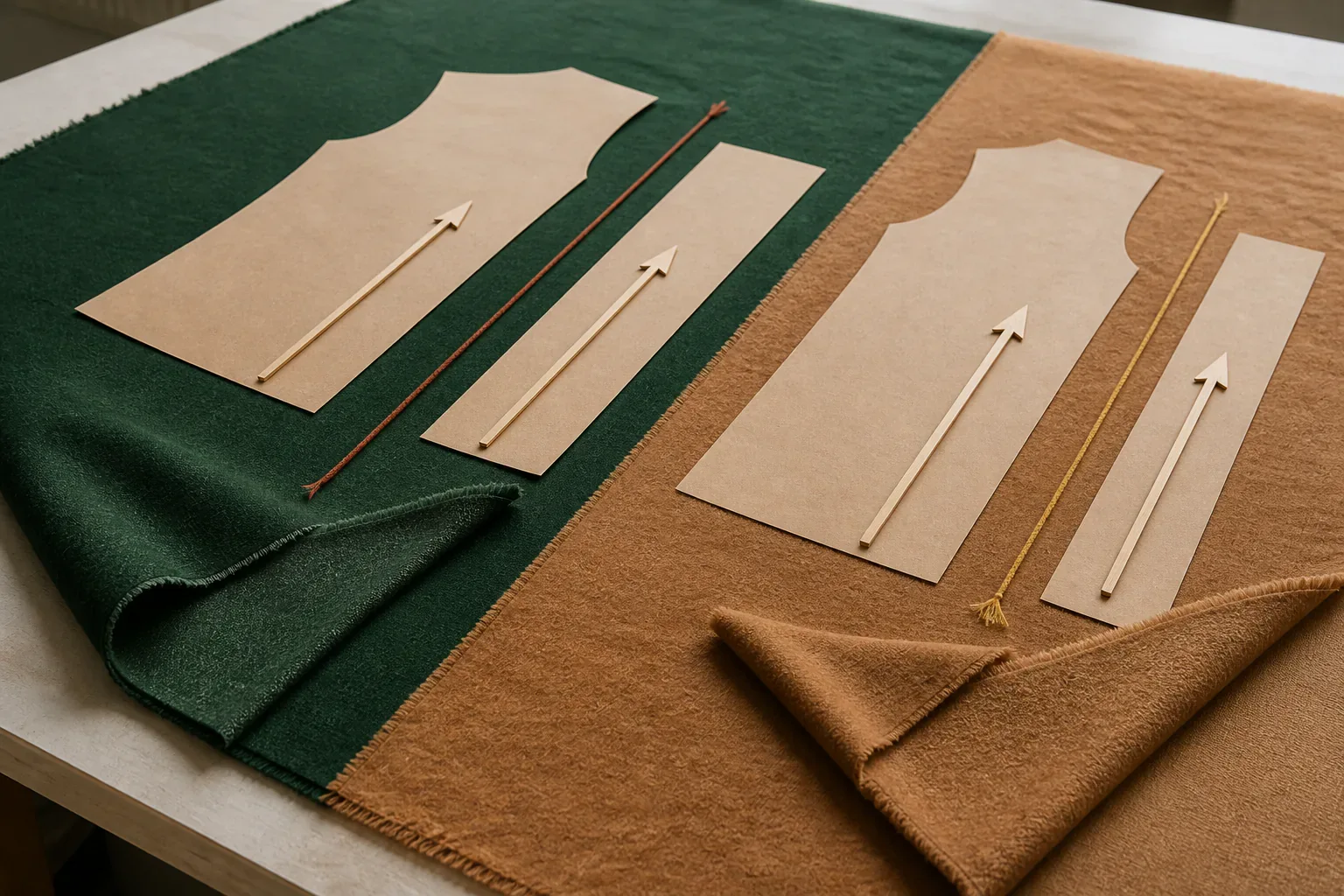
- grain, nap, face, motif and one-way or pair-matching rules;
- marker, lay or cut-plan identity;
- unit and accounting boundary; and
- every included allowance, excluded allowance and still-unknown input.
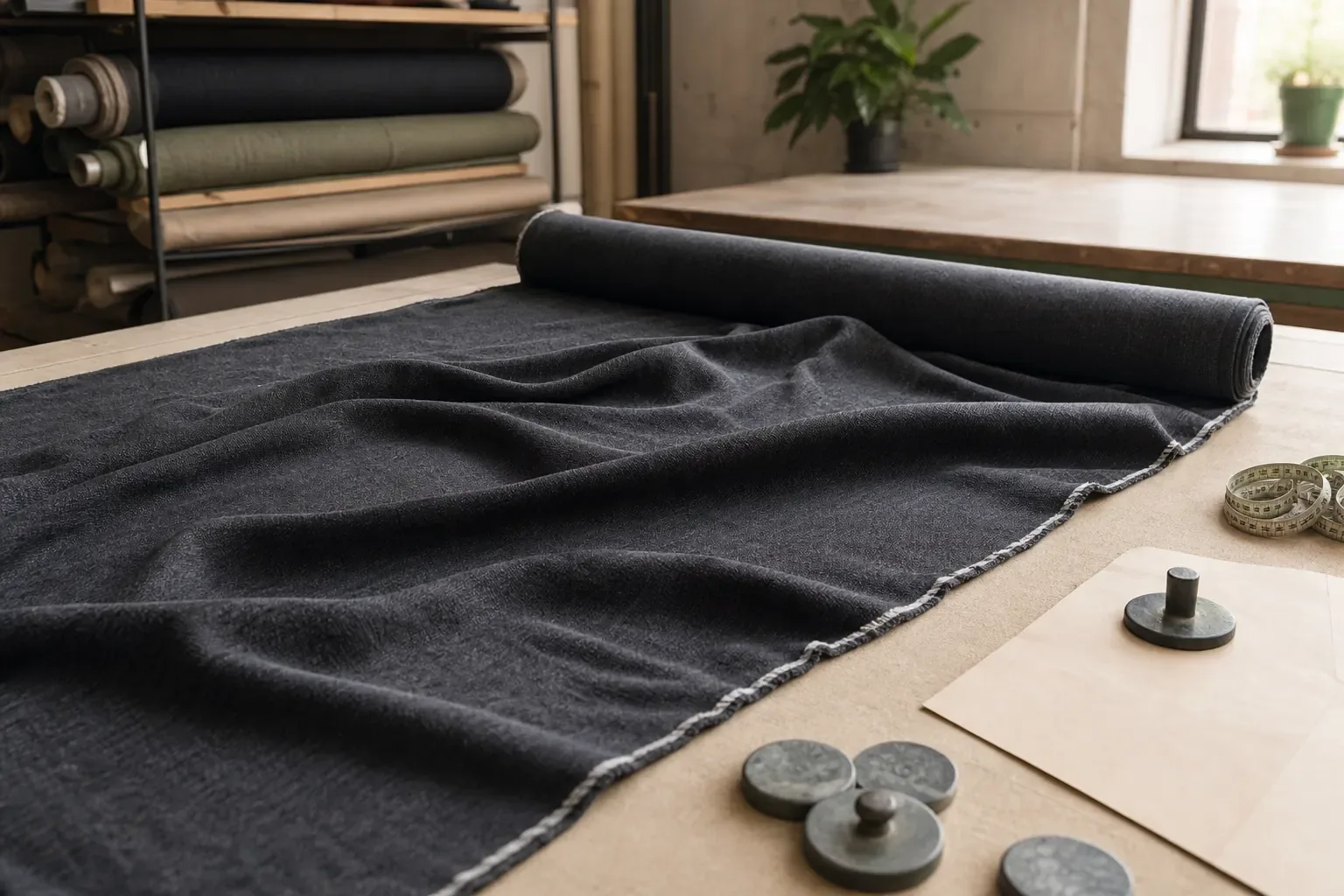
Usable width matters more than a roll's advertised nominal width. ASTM D3774 covers fabric-width measurement and distinguishes the usable width under the selected procedure; it is a width method, not a garment-consumption formula. ISO 22198 measures textile length and width in a relaxed, tension-free state. Those scopes explain why the state and method belong beside the number: a fabric pulled open during one measurement should not silently become the basis for relaxed cutting.
The fabric relaxation guide owns conditioning and release evidence. Consumption records should point to that approved state rather than invent a generic resting time.
The Inputs Behind a Garment Fabric Estimate
Pattern revision and component set
Consumption begins with the pieces actually being cut. A longer body, deeper hood, larger pocket, added yoke, self-fabric binding or revised seam allowance changes the set. So can a decision to cut pocket bags, facings or internal supports from the shell instead of a secondary fabric.
Record the component list by BOM row and pattern revision. A front, back and sleeve set at revision B cannot validate a quote for revision D after the hood and pocket were redrawn. The apparel BOM guide explains how material identity and component ownership stay connected.
Size mix and order structure
A single medium sample is not an order average. Larger sizes commonly occupy more marker area, but the result also depends on which sizes share a marker, how many garments each marker represents and the required color or lot separation.
The estimate should therefore state the ratio it models—for example, the exact planned count of each size—without implying that the ratio will remain unchanged. If sales converts units from smaller to larger sizes, or splits one color into separate lays, reopen the calculation rather than preserving the old average.
Usable width, fabric state and units
Linear metres or yards describe length, not mass. Kilograms describe mass, not length. Converting between them requires a consistent width, mass per unit area and unit system. ASTM D3776/D3776M covers fabric mass per unit area; it does not supply the other missing inputs or validate a garment yield.
Write conversions as traceable unit work, not a memorized constant:
mass for the stated fabric area
= measured or agreed length
× stated width boundary
× mass per unit area measured on the same area boundary
The units, fabric state and area boundary must be compatible. A full-roll mass reconciliation may include selvages and the complete roll width; an estimate of usable cut area may exclude them. Do not multiply a usable-width figure by a mass-per-area result defined on a different boundary. A quoted GSM, nominal width and supplier roll weight can be useful cross-checks, but they do not replace measured roll evidence when exact reconciliation is required. ASTM D3773/D3773M separately covers woven-fabric roll length, reinforcing that width, length and mass are different observations.
Grain, nap, face and motif rules
Pattern pieces may be allowed to rotate, or they may need one orientation. Napped surfaces, directional graphics, plaids, stripes and engineered motifs can constrain placement and pairing. The grain, nap and one-way cutting guide maps those controls.
Do not assume wider fabric always consumes fewer linear metres. A different width can create a better or worse fit for the actual pattern geometry and repeat. One published summer-dress case found that fabric width, piece direction and asymmetry affected marker waste for that studied garment; that is evidence that the variables matter, not a benchmark that predicts another program.
Marker and lay plan
An identified marker translates a pattern set, width and constraint set into a cut length for a represented garment count. It is one layer in the estimate, not the whole purchase quantity.
Cut-order planning can also determine which sizes and colors share markers, the number of plies, the number of lays and any extra garments. Research on apparel cut-order planning treats those as connected decisions rather than one universal per-piece constant. This article uses those choices only as inputs to fabric-quantity accounting; the full workflow that translates approved PO demand into marker, ply, lay and cutting-instruction identities belongs to the apparel cut order planning guide. Keep the marker ID, represented quantity and lay plan together so a later change is visible.
Losses outside the marker
Fabric can be recorded outside the marker boundary for reasons such as end allowances, roll changes, splices, unusable width, documented defects, shade or lot separation, cut damage and approved recuts. A PolyU study of spreading loss explicitly separated marker-internal fallout from external losses such as end, width and splice loss. Its model assumptions are not a universal allowance table; the useful lesson is to keep the loss categories separate.
Use a ledger with a reason and quantity for each event. Do not hide all differences inside “wastage.” Named categories let a buyer distinguish a planning assumption from an observed bulk event and avoid adding the same risk twice.
Build a Consumption Waterfall Instead of One Opaque Percentage
A controlled record can be written as a waterfall:
identified marker or cutting requirement
+ documented spreading and cutting categories outside that boundary
+ approved contingency for risks not already counted
= booking or allocation basis

fabric issued
- accepted returns and identified reusable remnants
= net issued quantity

net issued quantity
- identified output requirement
= recorded loss and unresolved variance
This is an accounting structure, not a prescription to add every line. Some operations may be measured inside an existing figure, and some may not apply. Define the local boundary first.
For audit purposes, a revision-delta table is often more useful than a fresh unexplained total:
| Changed input | Required response | Evidence to retain |
|---|---|---|
| Pattern or component revision | Regenerate the affected marker or estimate | Old/new revision, changed pieces, marker IDs |
| Usable width or fabric state | Recheck compatibility and length basis | Width record, state, roll or lot identity |
| Size ratio, color split or quantity | Rebuild the represented marker/lay mix | Order matrix and cut-order revision |
| Direction, matching or repeat rule | Replan affected placements | Approved rule, artwork or swatch reference |
| Recorded defect, splice or recut | Post the event once to the named loss category | Quantity, reason, disposition and approval |
The table answers the buyer's real question: what changed, and why did the number move?
A Synthetic Audit Example
Consider a fictional overshirt order. The first estimate used sample patterns, one medium size and a nominal fabric width. Before bulk, the brand approved a longer body, added self-fabric pocket flaps, supplied a full size ratio and selected a directional plaid. The mill then confirmed a usable width in the agreed relaxed state.
The correct response is not to keep the original per-piece figure and add a generic buffer. The team should:
- identify the new pattern and component revisions;
- replace the single-size assumption with the order's actual size ratio;
- record the plaid matching and one-way constraints;
- use the confirmed usable width and state;
- generate or update the marker and lay evidence; and
- add only separately defined order-level risks that are not already inside that basis.
After cutting, issued quantity, accepted remnants, actual cut output and named loss events can be reconciled. This example is deliberately synthetic: it illustrates the evidence chain and supplies no yardage, efficiency target or standard allowance for a real order.
What Brands Should Approve Before Fabric Booking
Ask the factory or cutting partner to place these items in one approval packet:
- consumption basis card and revision date;
- fabric identity, agreed usable width, state and unit;
- pattern/component revision and size-color order matrix;
- direction, nap, face and matching decisions;
- marker or cut-plan identifiers and represented garment counts;
- included and excluded loss categories;
- booking calculation with any contingency named once;
- trigger list for recalculation; and
- post-cut reconciliation format.
Catalogue images can help locate the questions. A French terry hoodie reference combines body, sleeve, hood, pocket and rib zones. A cropped flannel shirt reference adds plaid direction and matching. Stone-washed baggy denim pants add shaped legs, waistband, yokes and pockets. These product pages are visual design references only. They do not prove fabric composition, usable width, pattern revision, consumption, allowance or actual yield for another program.
Bring the approved basis to the fabric-sourcing discussion. A project-specific estimate should follow the actual fabric and design inputs; no fixed yardage or loss rate is promised from a garment name alone.
Frequently Asked Questions About Garment Fabric Consumption
Is fabric consumption the same as marker efficiency? No. Marker efficiency compares pattern area with the marker area under a defined layout basis. Consumption covers a wider quantity trail and may include marker length, the represented garment count, spreading or cutting categories, booking assumptions and actual reconciliation. Compare neither number without its scope.
Can fabric consumption be converted from metres to kilograms? Only with compatible units and reliable inputs for length, a stated width boundary and mass per unit area measured on that same boundary. Full-roll reconciliation may use the complete roll width, while a usable-area estimate may use usable width. A nominal GSM or width may not match the confirmed bulk state, so retain the measurements and conversion rather than using an unexplained constant.
How much fabric allowance should a clothing order include? There is no universal percentage. Define the risks and measurement boundaries for the actual fabric, roll plan, defect evidence, size-color order, cut process and recut policy. Add each approved contingency once and reconcile it after production.
Does wider fabric always reduce consumption? No. Width changes the placement space, but the result also depends on pattern geometry, sizes, repeats, direction rules and the usable—not merely nominal—width. Test the actual constraint set instead of assuming a monotonic saving.
When should a fabric consumption estimate be recalculated? Recalculate when a material input changes in a way that affects the basis: pattern or component revision, size ratio, color or lot split, usable width or state, nap or motif rule, marker/lay plan, quantity scope or an approved cutting-risk assumption.
References
- ASTM International, ASTM D3774-18(2024), Standard Test Method for Width of Textile Fabric — fabric-width scope and procedures; not a garment-consumption formula.
- ISO, ISO 22198:2006, Textiles — Fabrics — Determination of width and length — measurement in a relaxed, tension-free state.
- ASTM International, ASTM D3773/D3773M-10(2024), Standard Test Methods for Length of Woven Fabric — roll-length measurement scope.
- ASTM International, ASTM D3776/D3776M-20(2025), Standard Test Methods for Mass Per Unit Area (Weight) of Fabric — mass-per-area measurement scope.
- Ng, Hui and Leaf, “A mathematical model for predicting fabric loss during spreading” — distinction between marker-internal and external spreading losses within the paper's assumptions.
- Wong and Leung, “Genetic optimization of fabric utilization in apparel manufacturing” — cut-order planning variables and model-specific optimization research.
- Enes and Kipöz, “The role of fabric usage for minimization of cut-and-sew waste within the apparel production line: Case of a summer dress” — single-garment case evidence on width, direction and pattern asymmetry; not an industry benchmark.