Types of Sleeves: A Factory Guide from Set-In to Bell
Nearly every sleeve ever sewn is three decisions: how it joins the body, how much volume the shape carries, and how it ends at the wrist. The sleeve types worth knowing by name, from set-in and raglan to bishop and bell, and what each one asks of the pattern room and the sewing floor.
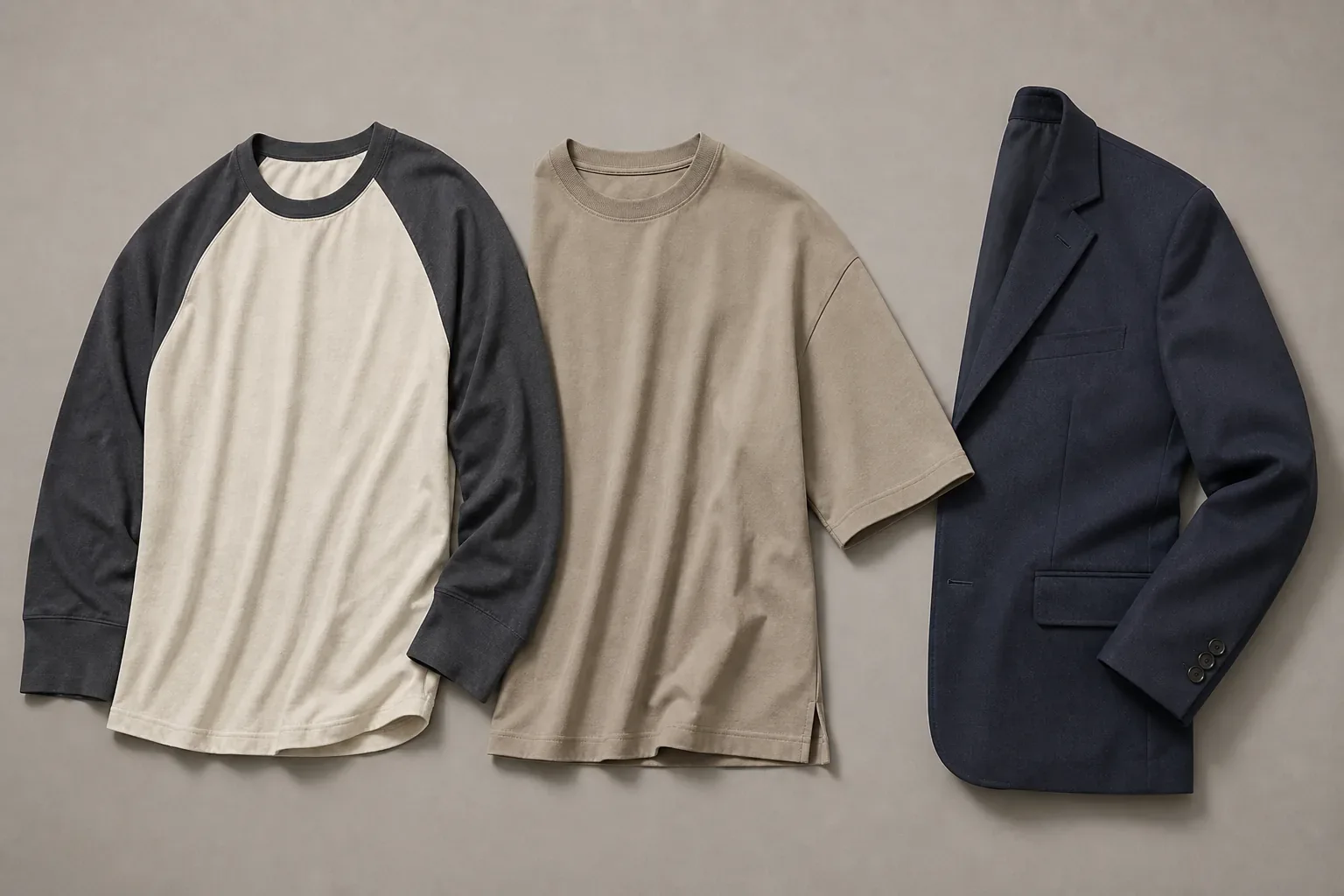
Strip away the style names and every sleeve ever sewn answers three questions. How does it join the body: set into a shaped armhole, attached on a diagonal raglan seam running to the neckline, hung from a lowered drop-shoulder seam, or cut in one piece with the body like a dolman? What do length and volume do: a bare cap, a standard short or long sleeve, or the gathered and flared fullness of puff, bishop, bell and flutter shapes? And how does it end: plain hem, ribbed cuff, elastic, or a buttoned cuff on a placket? Every named sleeve type on a mood board is a combination of those three answers, which is exactly how a pattern room reads a reference photo.
| Question | The options | Named sleeve types they produce |
|---|---|---|
| How it joins the body | shaped armhole, diagonal seam, lowered seam, cut with the body | set-in, two-piece tailored, raglan, drop shoulder, dolman/batwing, kimono |
| Length and volume | cap to full-length; fitted, gathered or flared | cap, short, three-quarter, long, puff, bishop, bell, flutter |
| How it ends | hem, rib, elastic, cuff with placket | plain-hem, cuffed, elasticated, shirt-cuff sleeves |
The sleeve type map
How the sleeve joins the body
Set-in is the default of garment-making: the sleeve is sewn into a shaped armhole and the seam rings the shoulder joint. Its defining discipline is invisible. The sleeve cap, the curved top edge of the sleeve pattern, is drafted slightly longer than the armhole it fills, and that surplus (cap ease) is worked in as the seam is sewn so the sleeve rolls over the shoulder without a pucker. Cap and armhole are one system; when we regrade one without touching the other, the sample comes back twisting or puckered at the shoulder, which is why sleeve changes are pattern changes, never just cutting changes. To recognize it, trace the seam: if it circles the natural shoulder point, the sleeve is set in.
Two-piece tailored is the dressed-up branch of set-in. Jackets and coats split the sleeve into an upper and an under panel, and the two seams build a permanent forward curve so the sleeve hangs slightly bent, the way an arm actually rests. It costs an extra pattern piece and a second long seam per sleeve, and it is the reason a tailored sleeve presses clean while a one-piece sleeve in the same fabric wants to crease across the elbow.
Raglan replaces the armhole with a diagonal seam running from the underarm to the neckline, so the shoulder itself belongs to the sleeve (the name comes from Lord Raglan, whose coats were cut this way). With no cap to ease, the join is friendlier to sew and freer to move in, which is why raglan owns athletic styles, and why the contrast-sleeve baseball tee is its most recognizable form. The production note buyers miss: that diagonal seam crosses the upper chest, so it clips the corners of a full-front print placement. Colorblocking loves a raglan; a big square chest graphic does not, and when a brief asks for both, we resolve the artwork placement at pattern stage rather than at the printer.
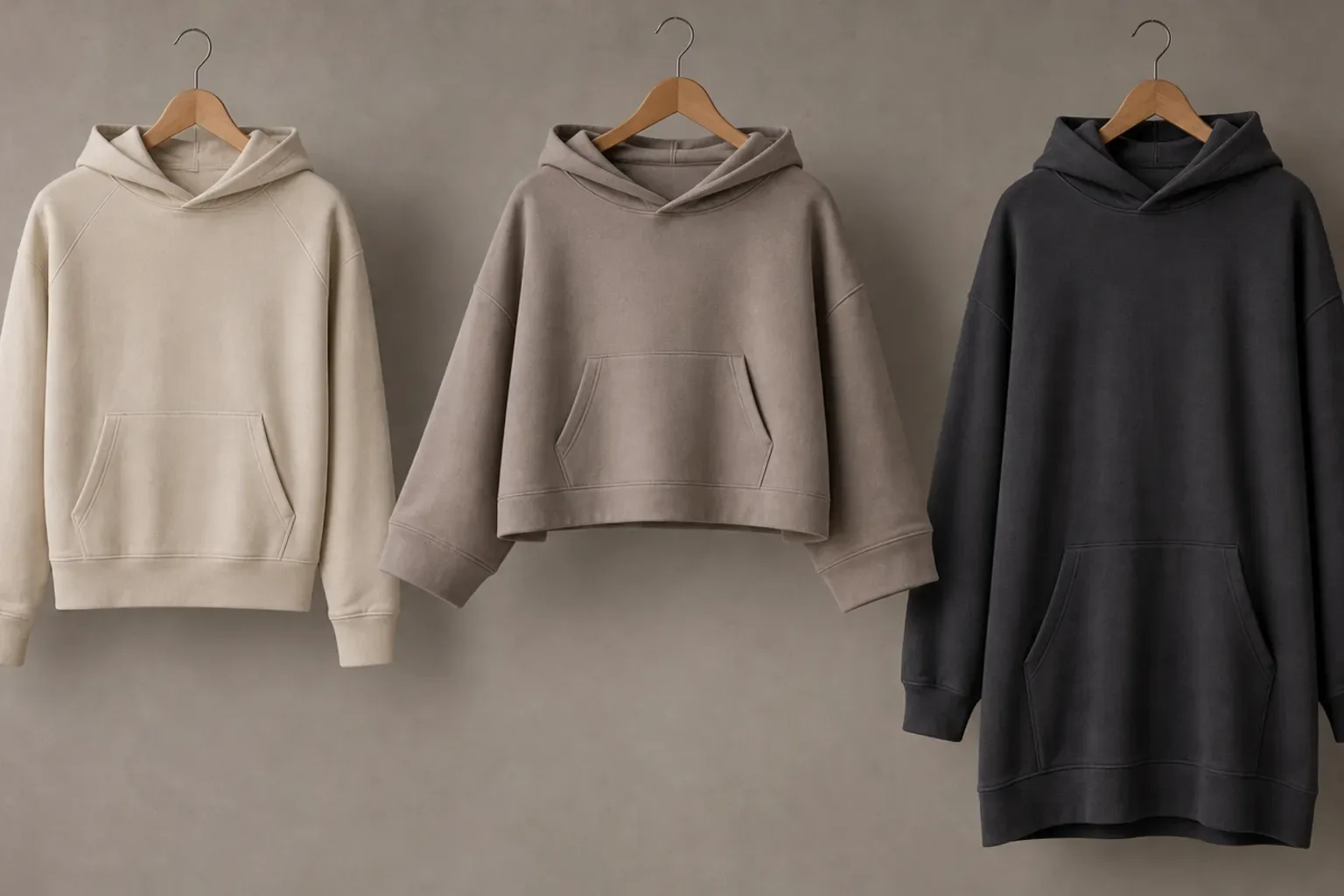
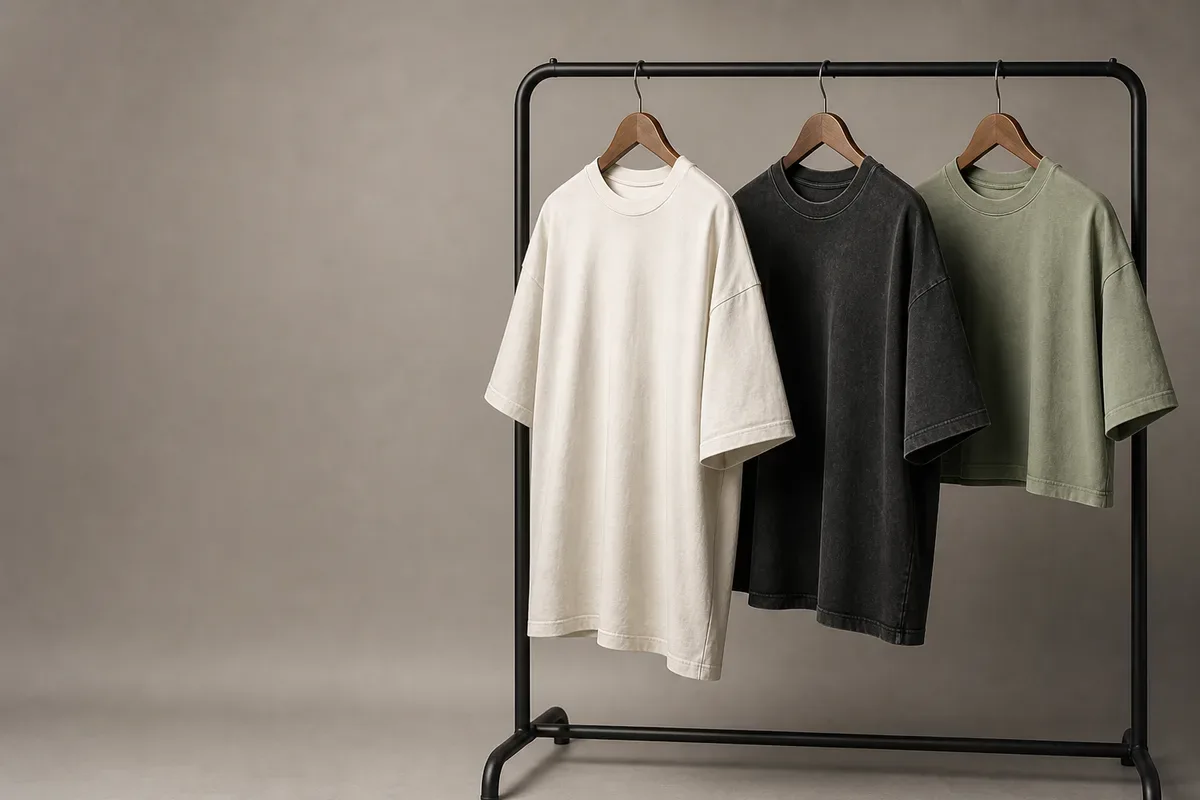
Drop shoulder is still a set-in sleeve by construction; the seam has simply moved off the natural shoulder and down the upper arm. That lowers the cap, flattens the armhole curve and removes most of the ease, which makes it easier to sew and gives the relaxed silhouette that boxy and oversized cuts are built on, the default in current streetwear briefs for tees and hoodies alike. The silhouette leans on the fabric: a dropped shoulder in a heavier fabric holds a clean line off the shoulder, while the same cut in a light jersey collapses against the arm (our GSM guide covers the weight side of that pairing).
Dolman, batwing and kimono delete the armhole altogether: the sleeve is cut in one piece with the body, or joined with a seam so deep it reads as part of the side. The batwing version drops the underarm toward the waist and tapers to the wrist. The kimono sleeve, in Western patternmaking usage, means a sleeve cut as one with the bodice — a borrowed name, since an actual kimono is assembled differently — and the draft often adds a small underarm gusset to buy back arm lift. One-piece cuts want fluid fabric, and they pay a real consumption penalty: the pattern piece is wide, so it places less efficiently on the marker than a separate sleeve.
Sleeve length, briefly
Length names are points on the arm: cap (barely past the shoulder, more shoulder cover than arm), short, elbow, three-quarter and long, with streetwear cutting its short sleeves wider and lower toward the elbow on boxy bodies. One vocabulary trap: the word cap does double duty, because the sleeve cap is the curved top edge of any sleeve pattern while a cap sleeve is a very short sleeve. The spec note that saves a sample round is the measuring method. On a set-in sleeve, length runs from the shoulder point down the arm; on a raglan or drop shoulder there is no seam at the natural shoulder to measure from, so length is taken from the center-back neck over the shoulder to the hem. Either method works, but the chart has to say which one it uses (our size chart guide covers how to write that down so it survives grading).
Shape and volume: puff, bishop, bell, flutter
These four read as dress and blouse territory, but the shape logic is neutral and worth knowing whatever you make.
Puff gathers fullness into the armhole at the cap, and usually again into a band at the hem, so the volume sits at the top of the arm. Crisp, lightweight fabrics hold the puff; soft heavy ones deflate it. Gathering is a controlled operation, not decoration: the pattern decides how much extra fabric is gathered into each finished length, and the operator has to distribute it evenly, because uneven gathers show instantly on a plain sleeve head.
Bishop is the puff reversed: a smooth, fitted cap with fullness accumulating down the arm, gathered into a cuff or elastic at the wrist. It reads as movement, and it belongs to fluid, draping fabrics.
Bell widens through the arm and flares to an open hem with no gathering and no cuff; the flare is cut into the pattern as a spread, part-circle piece, which consumes noticeably more fabric than a straight sleeve. The long curved hem edge is the quality tell: a narrow hem on a curve that ripples was hemmed in a hurry.
Flutter is the shortest and lightest of the family, a short flared sleeve usually cut as a part-circle so the hem falls in soft waves and floats when the arm moves. It only works in light fabric, and it shares the bell sleeve’s discipline: a clean narrow hem on a tight curve is skilled work.
The rest of the catalog maps onto the same frame. A balloon sleeve is a puff grown longer and fuller; a lantern seams a flare that widens and then closes back toward the hem; leg-of-mutton (gigot) is full at the cap and fitted from elbow to wrist; petal (tulip) overlaps two curved pieces at a short cap; Juliet sets a small puff above a long fitted arm. Meet a new name and the questions stay the same: where does the volume sit, and how is it controlled into the seam.
How the sleeve ends: hems and cuffs
The finish is the third naming decision, and it changes the operation list more than most buyers expect.
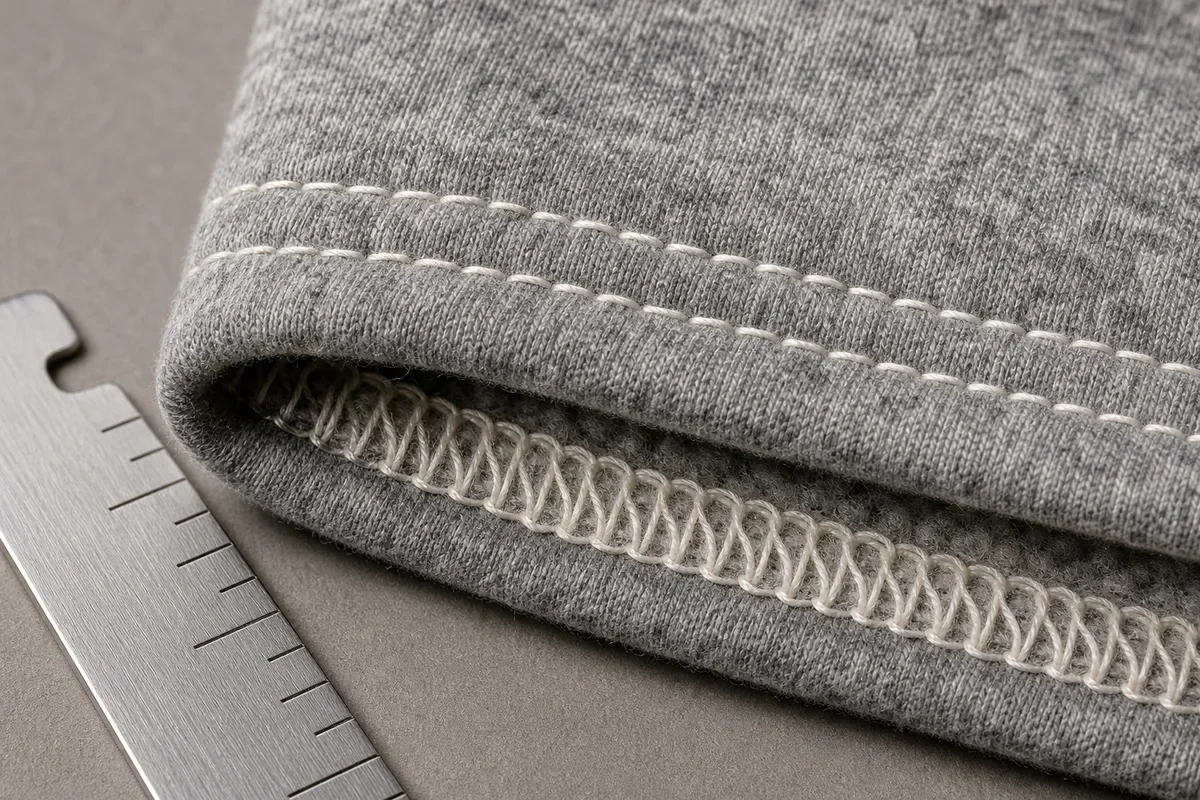
- Plain hem: folded and stitched, which on knits means the coverstitched hem that finishes almost every tee sleeve (the stitch formations behind it are mapped in our stitch and seam guide).
- Ribbed cuff: a knit rib closes the long sleeve on hoodies, sweats and bombers. Rib width and tension decide whether the sleeve blouses above the cuff or hangs straight, the same decision every custom hoodie program locks at spec stage.
- Elastic: a casing or band gathers the hem without rib, the standard ending of a bishop sleeve and of blouson shapes generally.
- Buttoned cuff on a placket: the shirt-sleeve finish and the heaviest operation stack of the four, with a placket to make, a cuff to make and attach, then buttonhole and button.
That is why “cuffed sleeve” on a spec sheet needs one more word. Ribbed, elastic and buttoned are three different builds and three different quotes.
Speccing sleeves so the first sample lands right
A sleeve line in a tech pack needs five things: the join (family plus a reference sketch), finished length with the measuring method named, bicep and opening widths, the hem or cuff treatment, and the decoration plan checked against the seams. The last one earns its place: on a drop shoulder, part of what reads as sleeve is actually body panel, so a sleeve-hit logo sits differently than it would on a set-in tee, and on a raglan the seam itself decides where a shoulder placement can live. We settle all of it at pattern stage as part of pattern and fit development, because a sleeve corrected on paper costs a revision and a sleeve corrected after cutting costs fabric. Production starts at 50 pieces per style; the final minimum for a specific garment depends on its fabric, colors and decoration, and a project-specific quote follows once the complete details are reviewed. As a worked example, drop shoulder plus plain coverstitched hems essentially defines an oversized tee program, while set-in plus placket cuffs defines a shirt program.
FAQ
What are the different types of sleeves?
Grouped by construction: set-in sleeves (including the two-piece tailored sleeve and the drop shoulder), raglan sleeves, and cut-on sleeves (dolman, batwing, kimono) cover how the sleeve joins the body. Cap, short, elbow, three-quarter and long cover length; puff, bishop, bell and flutter cover volume; and the finish (plain hem, ribbed cuff, elastic, or buttoned cuff) completes the name.
What are the 10 different types of sleeves?
Lists vary by author, but these ten cover most garments: set-in, raglan, drop shoulder, dolman (batwing), kimono, cap, puff, bishop, bell and flutter. The two-piece tailored sleeve is the eleventh worth knowing if jackets are in your range.
How many kinds of sleeves are there?
There is no fixed number; dressmaking references name dozens of styles. Nearly all of them reduce to combinations of three decisions: how the sleeve joins the body, how much length and volume the shape carries, and how it ends at the hem. Factories therefore spec those three answers, and the style name falls out on its own.
What is the difference between set-in and raglan sleeves?
Seam position. A set-in sleeve is sewn into a shaped armhole, so the seam rings the shoulder joint and the sleeve cap is eased in for a clean, structured shoulder. A raglan seam runs diagonally from the underarm to the neckline, so the shoulder belongs to the sleeve: easier movement, a sportier line, natural colorblocking, but a seam that cuts through full-front print placements.
References
- Helen Joseph-Armstrong, Patternmaking for Fashion Design (Pearson): sleeve foundation drafts for the set-in cap and its ease, raglan, kimono/dolman, puff, bishop, bell and flutter
- Winifred Aldrich, Metric Pattern Cutting for Menswear (Wiley-Blackwell): sleeve and armhole blocks, two-piece tailored sleeve drafting
- Glock & Kunz, Apparel Manufacturing: Sewn Product Analysis (Pearson): operation analysis behind gathering, cuff and placket costs
- Sleeve-by-sleeve construction notes: Jiashun production floor, Humen