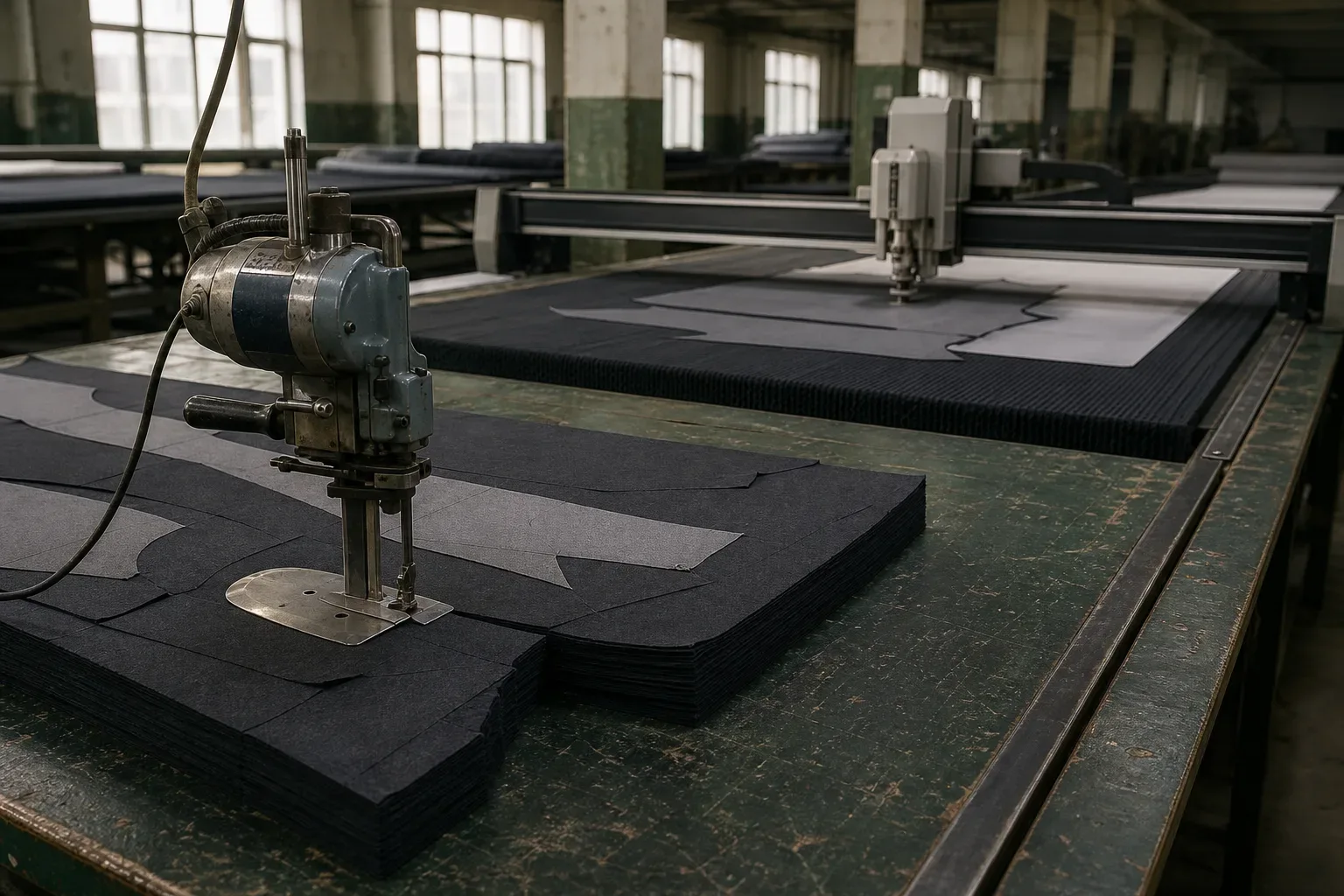
Apparel Cut Order Planning: From PO Demand to Cutting Instructions
Translate approved style, color and size quantities into identified markers, plies, lays and cutting instructions that reconcile back to the purchase order.
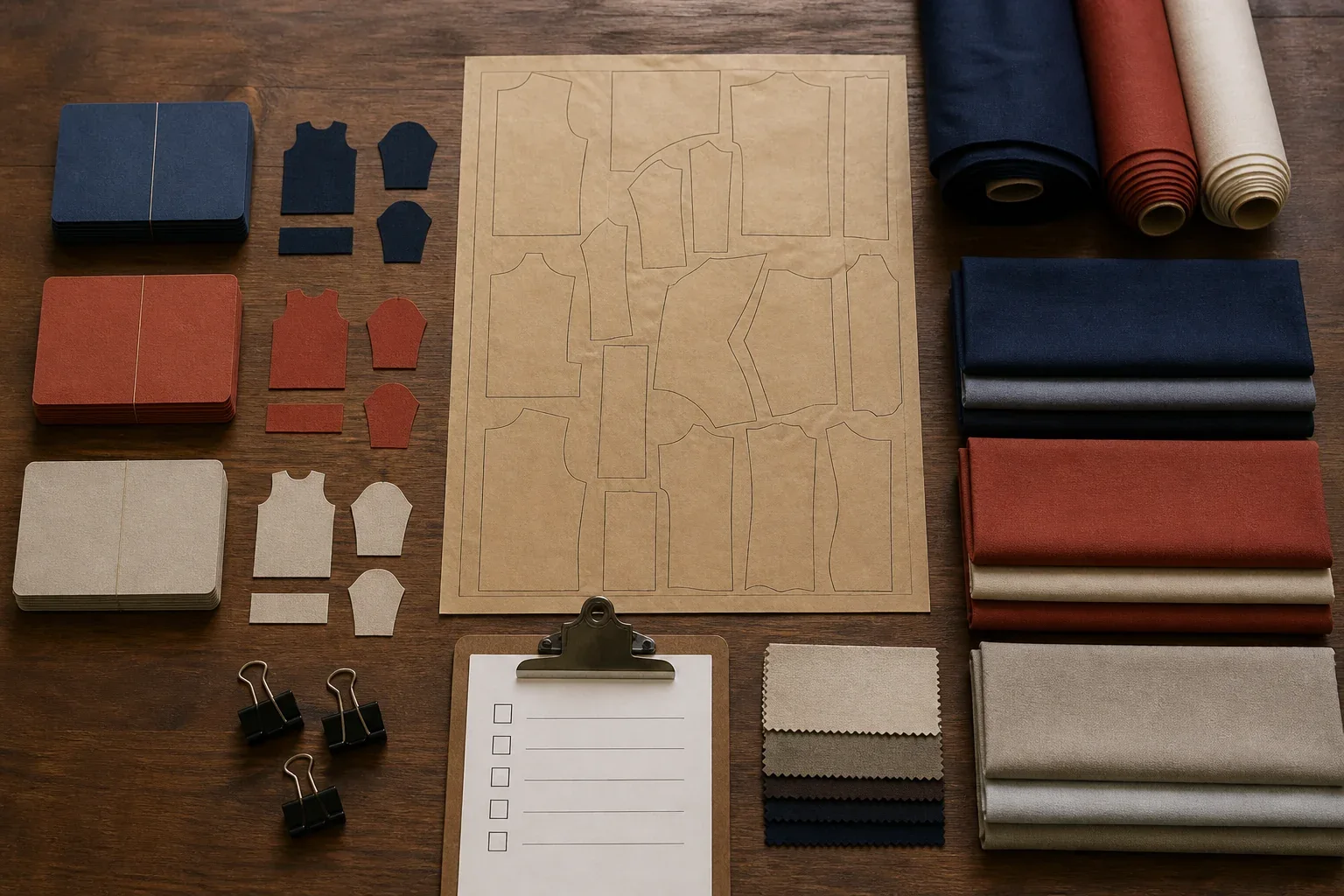
Apparel cut order planning translates an approved garment order into controlled instructions for the cutting room. It connects each style, color and size quantity to identified markers, fabric or material groups, ply counts and lays, then reconciles the planned cut output back to the order.
That job sits between the commercial order and physical cutting. The PO states what was ordered; the pattern and marker define the pieces representing each size; and the cut order plan distributes them across planned lays. A buyer does not need the factory's nesting algorithm, but should be able to trace which approved demand, pattern and material revisions the released plan represents.
Operations research defines cut order planning as planning fabric cuts for apparel orders. Wong and Leung make the bridge explicit: quantities by size and color become decisions about marker contents, required markers and plies. This guide takes a narrower buyer-control view: identify, reconcile and revise the plan without claiming a universal optimization target.
What Does a Cut Order Plan Control?
A cut order plan controls the quantity translation from approved demand to cutting instructions. It should answer:
- Which purchase-order and product revisions are being cut?
- Which style, color, size and material quantities are represented?
- Which marker revision represents each garment occurrence for its material scope?
- How many plies and lays are planned for that marker?
- Which fabric color, roll group or lot restriction applies?
- What quantity does each released instruction produce?
- Where are approved extras, shortages, holds and recuts recorded?
- Which event makes the plan valid, superseded or open for revision?
It is not a second purchase order, size chart, bill of materials or marker-efficiency report.
The clothing purchase order checklist owns the accepted-quote-to-order handoff and the authoritative style-color-size lines. The size chart guide owns points of measurement, graded targets and tolerances. The apparel BOM guide owns component and material identity. Cut order planning consumes those controlled inputs; it does not silently rewrite them.
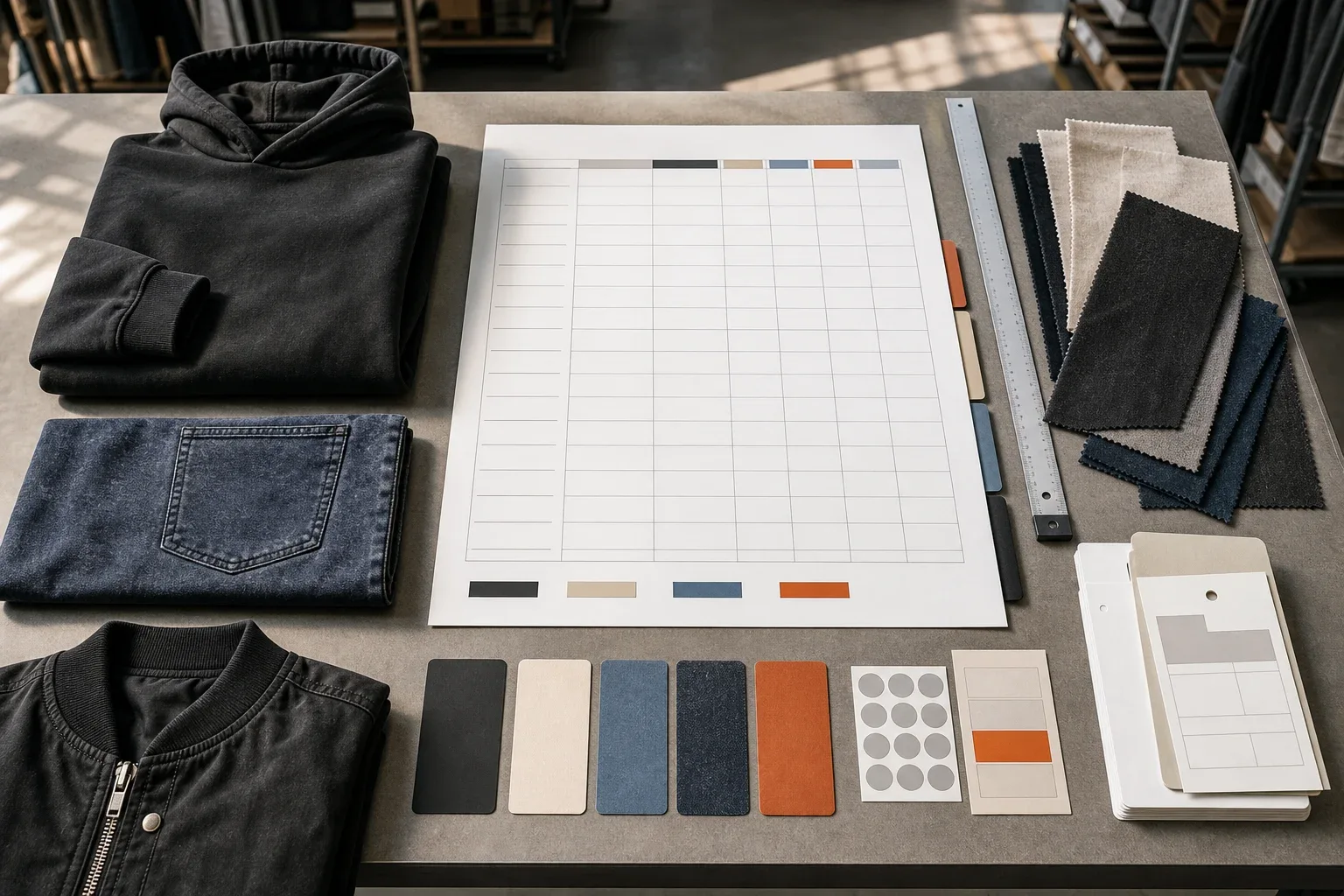
Start With Approved, Identified Inputs
Do not begin from a chat message saying “cut 500 pieces.” First freeze the records that define those pieces.
| Input | Identity to record | Keep with its owner |
|---|---|---|
| Purchase order | PO number, revision and order-line IDs | Commercial authorization and ordered quantities |
| Product specification | Tech-pack and pattern revision | Construction and approved garment geometry |
| Size specification | Size-chart and grade revision | POM targets, grade rules and tolerance |
| Material list | BOM row and revision for each cut material | Fabric, lining, pocketing, rib and other component identity |
| Color approval | Approved color or finish reference | Target appearance and approval scope |
| Fabric basis | Material state, usable width and roll or lot references | Consumption, relaxation and material evidence |
| Direction rules | Grain, nap, face, motif and pair requirements | Legal orientation and matching constraints |
| Quantity decision | Approved style-color-size matrix | Demand that the plan must reproduce |
OASIS UBL 2.3 provides a useful upstream principle: an Order can contain identified Order Lines, and an Order Change reflects the transaction's current state. A cut order plan is an internal production record, not a UBL document, but should preserve that discipline. Name the source line and revision; do not rely on “latest PO” or a detached spreadsheet quantity.
Check for conflicts before planning. If the PO says 240 black hoodies but the accepted quote, packing brief or latest buyer message says another quantity, the cut plan should not choose a winner. Log the discrepancy, identify the controlling record and hold the affected instruction until the commercial owner resolves it.
Give Every Plan, Marker and Lay a Stable Identity
A useful plan is auditable without opening the planner's software. At minimum, each released line should carry:
| Control field | What it identifies | Failure signal |
|---|---|---|
| Cut-plan ID and revision | The complete issued planning record | Filename such as “final-new-2” |
| Source order line | Exact style-color-size demand | Quantity copied with no PO reference |
| Pattern and marker IDs | Pieces, sizes and arrangement represented | Screenshot without revision |
| Material group | BOM row, color and applicable lot or roll group | “Main fabric” only |
| Marker contents | Complete occurrences by size for its material scope | Size names with no counts |
| Ply and lay instruction | Planned stack depth and number of executions | One total with no lay identity |
| Represented quantity | Output by style, color and size | Grand total only |
| Status and approval | Draft, checked, released, held or superseded | No effective state or date |
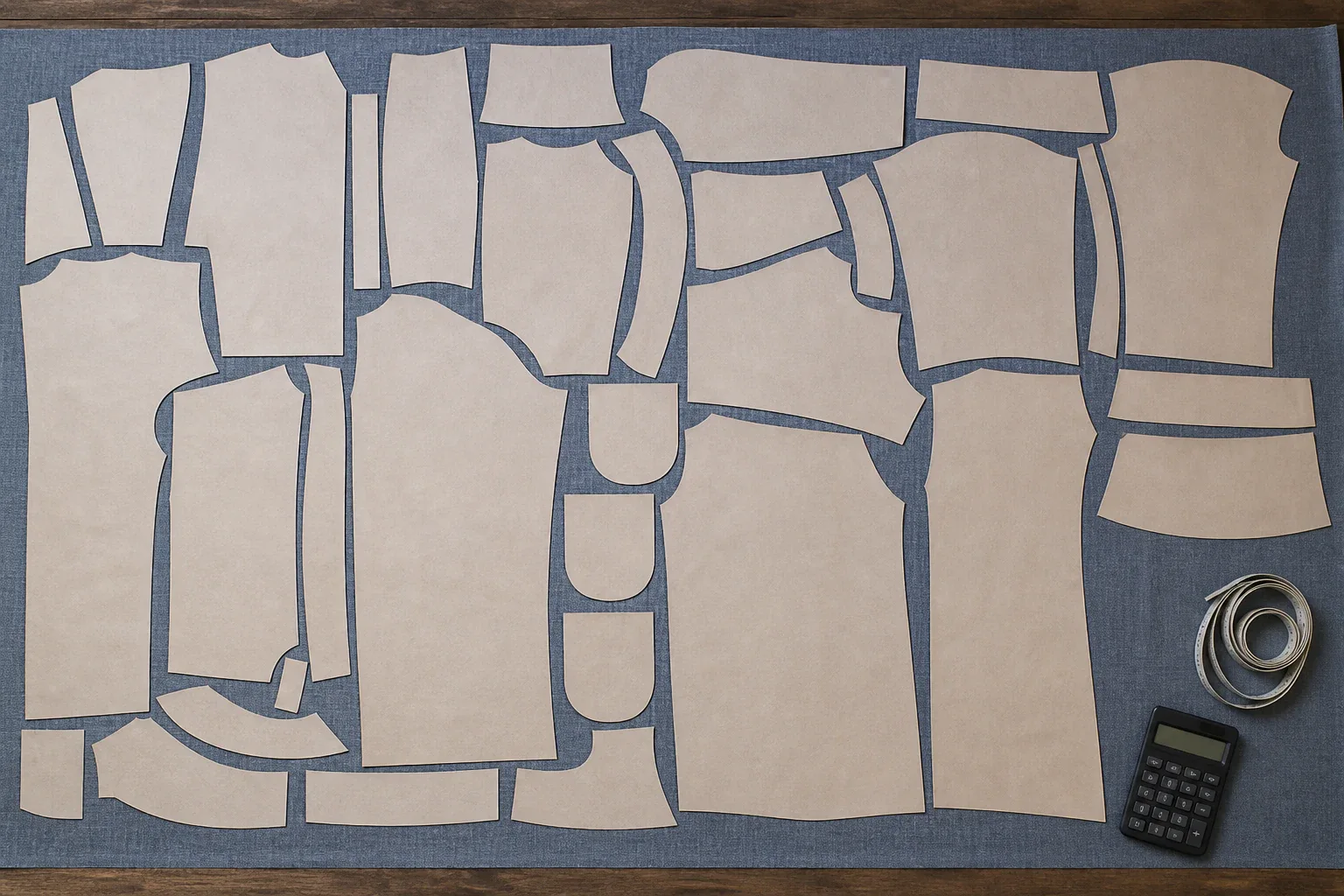
The marker identity matters because one marker is not interchangeable with every other marker for the style. It may contain a different size combination, component set, usable width or directional rule. The marker-efficiency guide owns the geometry and denominator behind its utilization percentage. Here, the marker is an identified building block in a quantity plan.
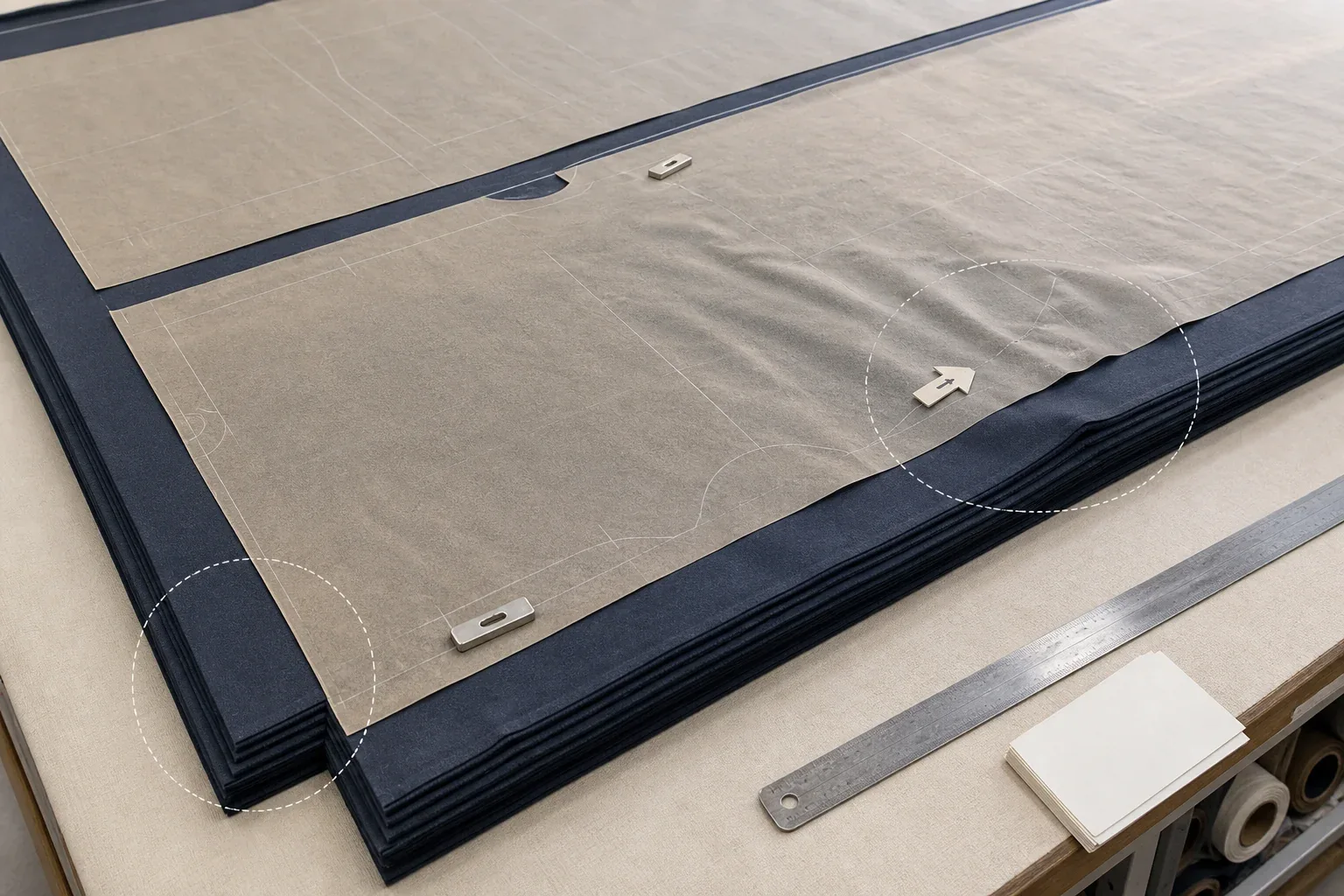
Lay identity matters for the same reason. Research models lays as planning objects connecting component demand with cutting-bed use. In the buyer record, “Lay 4” should point to a marker, material group, planned ply count and represented scope.
Translate Order Demand Into Cutting Instructions
The planning sequence can be reviewed in four passes.
1. Normalize the approved demand
List every orderable combination as a positive quantity, an explicit zero or an unresolved value. Zero means the buyer has deliberately ordered none of that combination. Blank or TBD means there is no executable instruction yet.
Keep sales forecasting outside this record. The cut plan does not decide how many small or large garments the brand should sell. It receives the approved quantity split and proves how the cutting instructions represent it.
2. Assign complete represented sets to markers
For each marker, record how many complete represented sets of each size it contains for the named material scope. A marker containing two medium sets and one large set differs from a marker containing one of each size, even when both use the same pattern revision.
Do not count individual panels as finished units. A front, back and pair of sleeves may form part of one represented set, but its required pieces depend on the approved pattern, BOM and material scope. Missing a pocket bag, hood panel, lining piece or facing cannot be repaired by declaring the marker quantity correct.
3. Assign plies and lays by compatible material scope
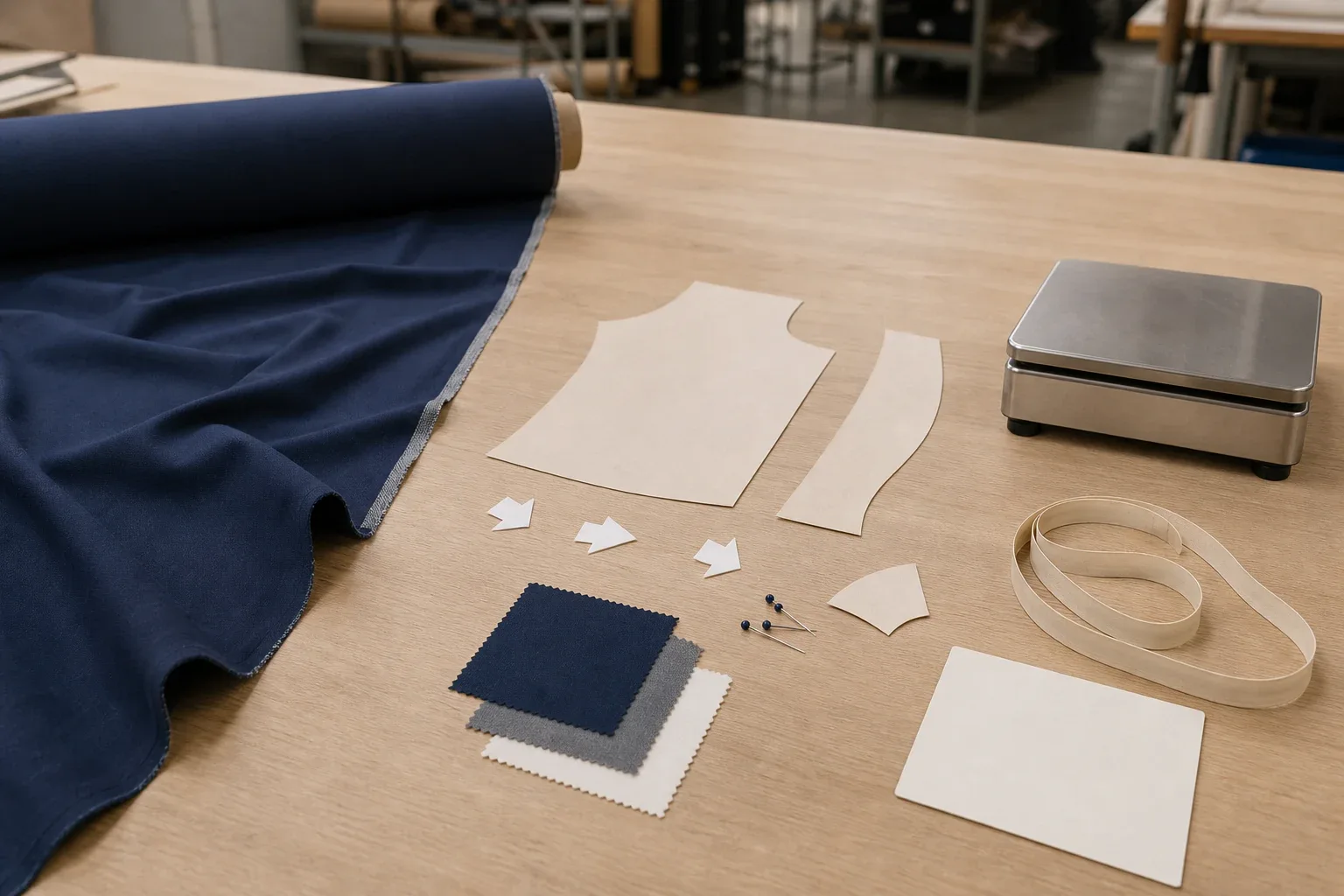
Connect each marker execution to the fabric or cut-material group it can legally use. Color, face, nap, motif, shade or lot separation may prevent two apparently similar quantities from sharing one physical lay. A repeated marker geometry can still be referenced by separate lay instructions when the material identity changes.
The plan should state the intended ply count for each lay, but it should not turn another factory's number or one machine limit into a universal standard. Material behavior, equipment, quality controls, lay length, pattern complexity and project requirements can all change the feasible instruction.
4. Sum every released contribution back to demand
For one size in one lay:
represented units for the material scope = complete occurrences of that size in the marker × planned plies
Across the plan:
planned cut units by style, color and size = the sum of that combination across all released lays
Run the comparison at the smallest controlled demand cell, then roll it upward to color, style and PO totals. A matching grand total can hide 20 extra medium units and 20 missing large units. Reconciliation must preserve the size and color identity, not only the arithmetic total.
A Synthetic Example of Quantity Reconciliation
Assume a fictional PO line for one black overshirt has this approved demand:
| Size | Ordered quantity |
|---|---|
| S | 30 |
| M | 60 |
| L | 50 |
The example planner uses two identified markers:
| Released instruction | Marker and ply arithmetic | Represented output |
|---|---|---|
| Lay BLK-01 | Marker M-A contains 1 S, 2 M and 1 L; 30 plies | S 30, M 60, L 30 |
| Lay BLK-02 | Marker M-B contains 1 L; 20 plies | L 20 |
The released plan therefore represents S 30, M 60 and L 50. Each demand cell reconciles, not just the 140-unit total.
This is teaching arithmetic, not a recommended marker, lay depth or production plan. A real plan must also identify approved pattern pieces, marker lengths and revisions, fabric basis, material restrictions, equipment constraints and any authorized extra quantity. Another garment or fabric can require a different decomposition.
Keep Material, Color and Lot Restrictions Visible
The same style can contain several cut-material groups: shell, lining, pocketing, rib or contrast panels. Do not force them into one plan line merely because they belong to one garment. Connect each group to its BOM row and its own marker or pattern-piece assignment.
Color is also an identity, not a note beside a total. If black and navy use the same pattern and marker geometry, the plan can reference the same approved marker revision while issuing separate physical lay instructions and quantity reconciliations. If one color uses a revised component, finish or material width, that difference must be visible before release.
Roll and lot rules should follow the project's approved material evidence. Do not infer that every roll can mix freely or that every lot must be isolated. Record the actual rule, affected scope and source. The fabric relaxation guide owns the pre-cut material state, while the grain, nap and one-way guide owns direction and matching constraints.
Product references make the consequence concrete. A 450 gsm acid-wash zip hoodie, stone-washed baggy denim pants and a reversible flannel zip-up hoodie do not share one assumed component set or cutting rule. Those pages are visual style references only. The production pattern, BOM, fabric evidence and cut-plan revision must still be confirmed for the actual project.
Separate Planned Extras, Shortages and Recuts
An order quantity and a planned cut quantity are not automatically identical. Any difference needs a named reason and approval state.
| Quantity state | Record separately | Do not call it |
|---|---|---|
| Approved planned extra | Quantity, reason, affected cells and authorizer | Invisible “factory allowance” |
| Short plan | Missing cells, cause, hold and recovery decision | Close enough because the total is large |
| Replacement recut | Defect or loss reference, panels or sets, approval and new instruction | Original demand repeated |
| Cancelled instruction | Superseded lay or line and effective point | Deleted history |
| Actual cut output | Recorded result linked to released instructions | Planned quantity |
The fabric-consumption guide owns the wider quantity accounting from estimate and booking basis through actual usage and balance. The cut order plan contributes identified garment quantities, markers and lays to that accounting. It should not hide material losses, remnants or issued quantities inside an unexplained garment overcut.
Likewise, the plan is not a defect report. The fabric spreading defects guide owns completed-lay acceptance, and the garment cutting defects guide owns ragged edges, fused plies, ply drift and missing cut marks after execution. If either stage creates a recut need, the approved recut should return as a new identified instruction rather than overwrite the original plan.
Control Revisions, Release and Reopen Triggers
Use explicit states:
- Draft: quantities or constraints are still being assembled; not executable.
- Checked: arithmetic and source revisions have been independently reconciled.
- Released: the named instruction is authorized for the stated scope.
- Held: a discrepancy or material condition blocks execution.
- Superseded: another identified revision replaces it; preserve the history.
Reopen the affected plan when a controlling input changes. Common triggers include:
- PO quantity, style, color or size split;
- pattern, grading or included component revision;
- BOM material or color applicability;
- usable width, material state or roll/lot restriction;
- grain, nap, face, motif or pair-matching rule;
- marker contents or marker revision;
- approved extra, shortage disposition or recut; and
- cancellation or split of a previously released scope.
Do not issue a whole-plan revision when only one line changes without identifying the affected boundary. Conversely, do not amend one line quietly when the change invalidates totals or other lays. State the old value, new value, reason, affected instructions, effective point, checker and release status.
Buyer Release Checklist
Before treating a cut order plan as ready, confirm:
- PO number, revision and every represented order line are identified.
- Style-color-size demand matches the approved order matrix.
- Pattern, grade, marker and BOM revisions are named.
- Every marker lists complete occurrences by size for its material scope.
- Every lay names its material/color scope, marker and planned plies.
- Released lay contributions reconcile to each demand cell.
- Zeros, blanks, approved extras, shortages and recuts remain distinct.
- Fabric state, usable width, direction and lot restrictions cite their source.
- A checker, release date and effective status are recorded.
- Reopen triggers and superseded instructions are preserved.
Jiashun can review these inputs for a custom cut-and-sew project, but the plan remains project-specific. Send the current PO, tech pack, size breakdown, pattern or development reference, BOM and known fabric constraints. Do not copy marker combinations, ply counts, lay depths, losses or timelines from another order.
Frequently Asked Questions About Apparel Cut Order Planning
Is a cut order plan the same as a clothing purchase order? No. The purchase order controls the authorized commercial order and its style-color-size quantities. The cut order plan translates those approved quantities into identified marker, ply, lay and cutting instructions. It must reconcile to the PO without replacing it.
Is cut order planning the same as marker planning? No. Marker planning arranges approved pattern pieces within a defined width and constraint set. Cut order planning decides how identified markers, sizes, plies and lays combine to represent the order. Marker efficiency remains one layout metric, not proof that the whole order quantity is correct.
How do you verify the quantity in a garment cut order plan? For every style, color and size, multiply the complete occurrences in each marker by the plies assigned to its released lay, then sum all released contributions. Compare each resulting demand cell with the approved PO matrix. Investigate extras, shortages and unresolved values separately.
Can different colors or fabric lots share one cut order plan? They can appear under one controlled plan when each material scope and instruction remains separately identified. That does not mean different colors or lots should share one physical lay. Follow the project's approved color, roll, lot, face, nap and matching rules.
When must a cut order plan be reissued? Reissue or reopen the affected scope when a controlling quantity, pattern, grade, component, material, usable width, direction rule, marker, lot restriction, extra or recut decision changes. Preserve the superseded instruction and state when the new revision becomes effective.
Make the Cutting Instruction Traceable Before Fabric Is Cut
A production-ready cut order plan is not the longest spreadsheet or the highest optimization score. It is the plan whose demand, marker, material, ply, lay and revision identities can be traced and whose released quantities reconcile at every style-color-size cell.
That trace lets the buyer and factory discuss the same production scope. It also gives spreading, cutting, consumption and recut records a stable instruction to reference after work begins.
References
- Jacobs-Blecha, Ammons, Schutte and Smith, “Cut order planning for apparel manufacturing”, IIE Transactions 30(1), 1998 — original formulation of the apparel cut order planning problem; retrieved 2026-08-13.
- Wong and Leung, “Genetic optimization of fabric utilization in apparel manufacturing”, International Journal of Production Economics 114(1), 2008 — original research connecting order quantities, sizes and colors with markers, plies and feasible cutting plans; retrieved 2026-08-13.
- Shang et al., “A Heuristic Algorithm for the Fabric Spreading and Cutting Problem in Apparel Factories”, IEEE/CAA Journal of Automatica Sinica, 2019 — original research treating lays as planning objects that connect cutting demand with spreading and cutting resources; retrieved 2026-08-13.
- OASIS Open, “Universal Business Language Version 2.3 — Ordering”, 2021 — primary standard for identified Order Lines, Order responses and controlled Order changes; retrieved 2026-08-13.