Fusible vs Sew-In Interfacing: A Garment Production Guide
Choose fusible or sew-in interfacing from the shell, garment zone, intended hand, care route and approval evidence—not from a universal quality ranking or fusing recipe.
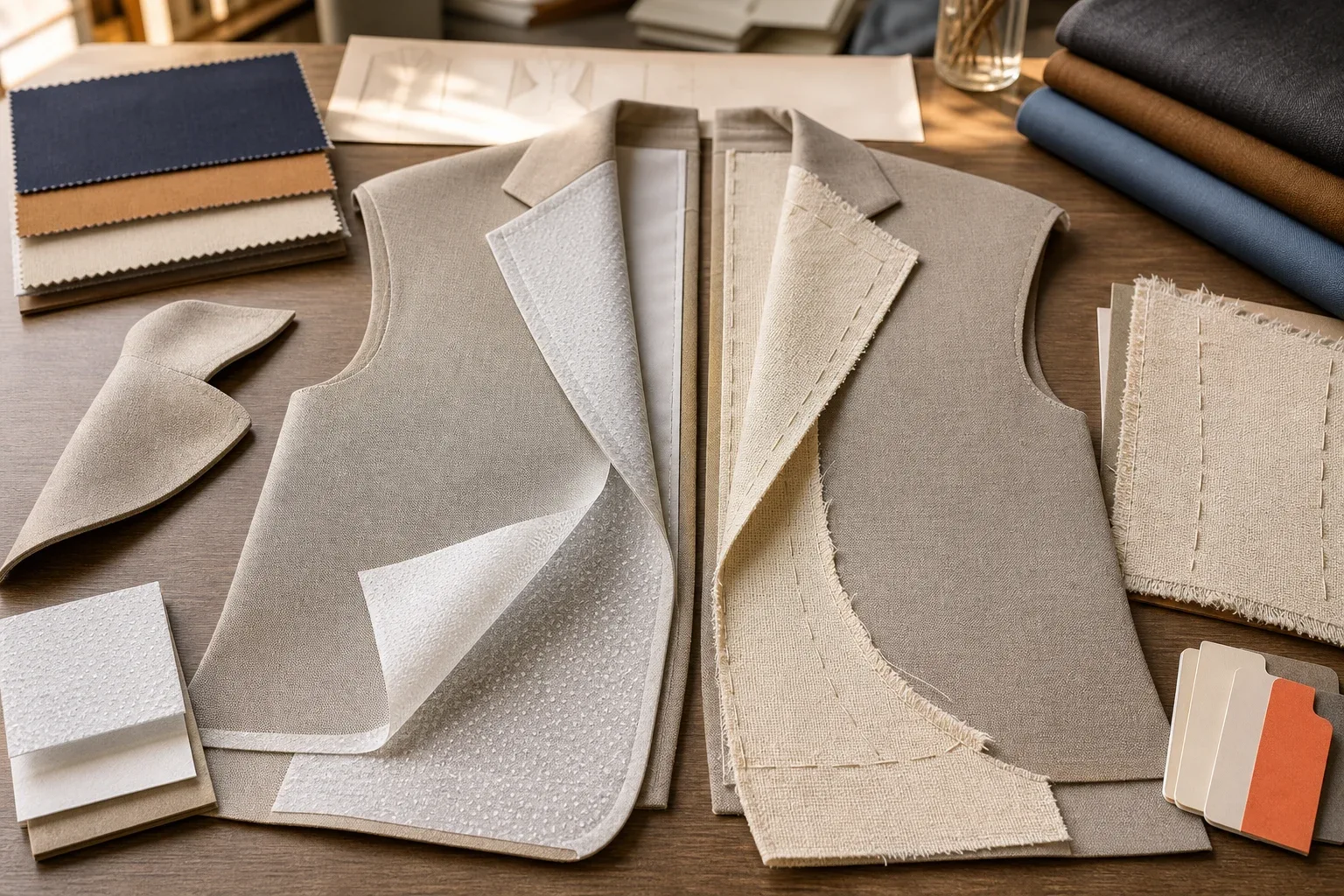
Fusible vs sew-in interfacing is a choice between two attachment systems, not a ranking from basic to premium. A fusible article is bonded to a garment layer through a supplier- and process-specific route. A sew-in article is secured by stitching or captured within the construction without that adhesive bond. The useful choice depends on the identified shell, garment zone, intended hand and support, manufacturing route, care exposure and evidence from the real sample.
This guide owns that cross-garment decision: compatibility, attachment route, bond or sewn-assembly evidence, bubbling and delamination diagnosis, and sample-to-bulk control. It does not own collar styles, dress-shirt anatomy, jacket lining, the structure of a complete BOM or a universal fusing recipe. Those jobs remain with the shirt collar guide, dress-shirt anatomy guide, jacket and coat lining guide and apparel BOM guide.
What Interfacing Does—and What the Name Does Not Tell You
New Mexico State University's Guide C-208, Selecting Interfacings, Underlinings, and Linings, describes interfacing as a knitted, woven or nonwoven layer placed between the garment fabric and facing to reinforce or add body in selected areas. It lists openings, collars, cuffs, waistbands and pocket flaps among common applications and distinguishes interfacing from underlining and lining.
That extension guide supplies useful construction vocabulary, but it is not an industrial fusing specification. A production brief still has to identify the actual component and what it must do in the actual garment.
Keep two classifications separate:
- Base construction describes the interfacing itself: woven, knitted or nonwoven in the NMSU vocabulary, plus the identified supplier article and its declared characteristics.
- Attachment route describes how it joins the garment: fusible or sew-in.
“Woven” therefore does not mean “sew-in,” and “nonwoven” does not automatically mean “fusible.” Nor does a category name establish stiffness, drape, stretch behavior, bond performance, thickness, care response or suitability for a specific shell. Compare identified articles, not labels alone.
Fusible and Sew-In Interfacing Compared
| Decision axis | Fusible interfacing | Sew-in interfacing |
|---|---|---|
| Layer relationship | A bonding system joins the interfacing to the nominated garment layer | Stitching, catch points, seams or the surrounding assembly retain the interfacing |
| Support character | Can make the shell and support act as a more integrated composite in the bonded zone | Can support an area while remaining physically separate between attachment points |
| Development question | Can this exact shell, interfacing and process produce the intended face, hand and bond? | Can this exact support be held smoothly without shifting, bulk, edge visibility or unintended restriction? |
| Evidence priority | Bonded trial, face/back appearance, hand, flex, care response and bond evidence where specified | Cut orientation, layer control, attachment, edge behavior, sewn-zone appearance and care response |
| Characteristic failure clues | Bubbles, blisters, edge lift, separation, strike-through, shine, impression or an unintended hand change | Migration, rolling, ridging, bulk, show-through, loose edges or support that no longer sits in the intended zone |
Neither column guarantees a better garment. Fusible interfacing avoids some layer movement but creates a bond that must be compatible and controlled. Sew-in interfacing avoids an adhesive bond to the shell but creates its own pattern, attachment and bulk decisions. One garment may legitimately use different routes in different zones.
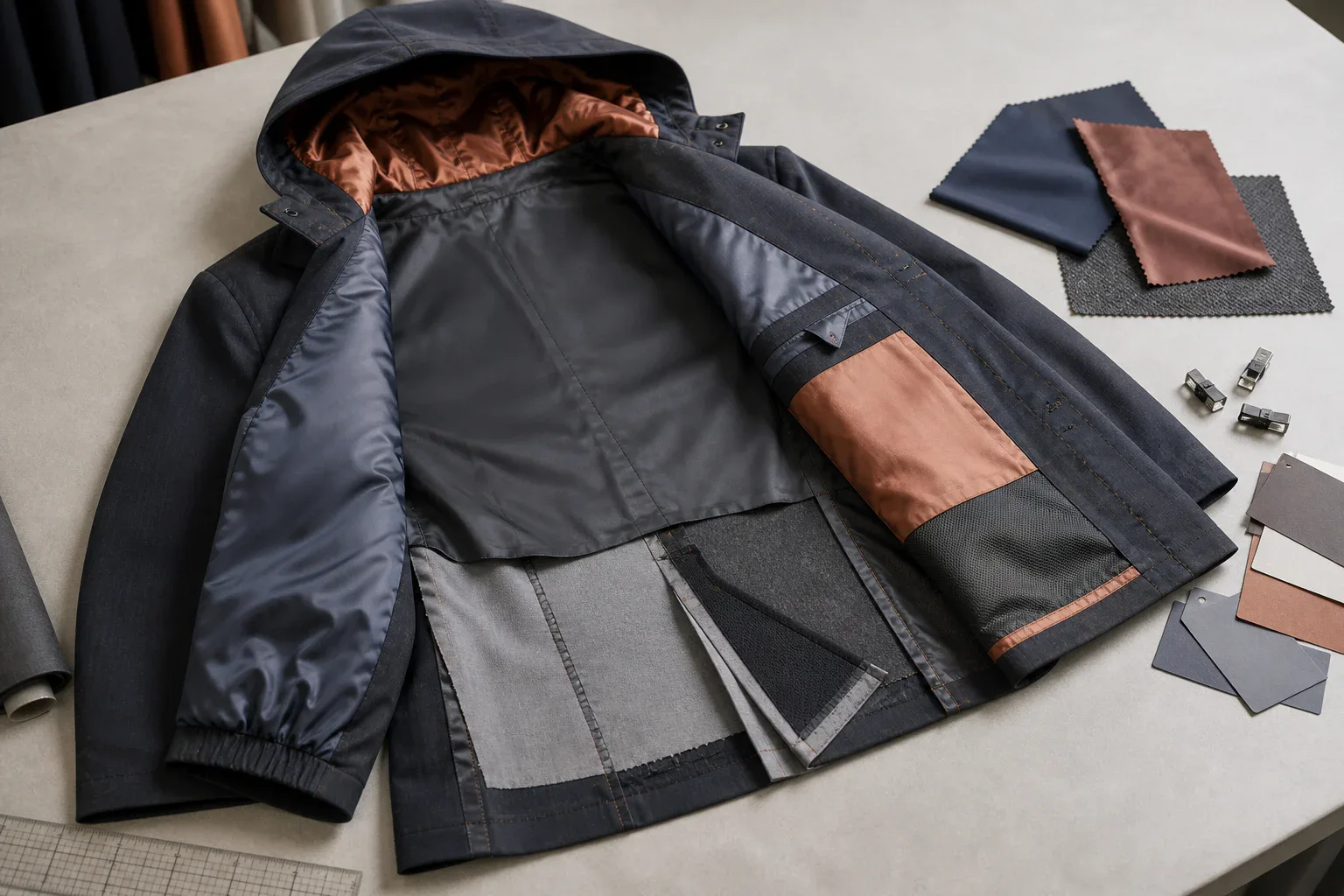
NMSU Guide C-233, Facings Made Easy, illustrates the route distinction on facings: its fusible example is bonded before the next construction steps, while its sew-in example is catch-stitched in place. Treat that as vocabulary for how the layers enter an assembly, not as a universal factory sequence for every collar, waistband, jacket front or technical fabric.
Choose From the Shell, Zone and Intended Result
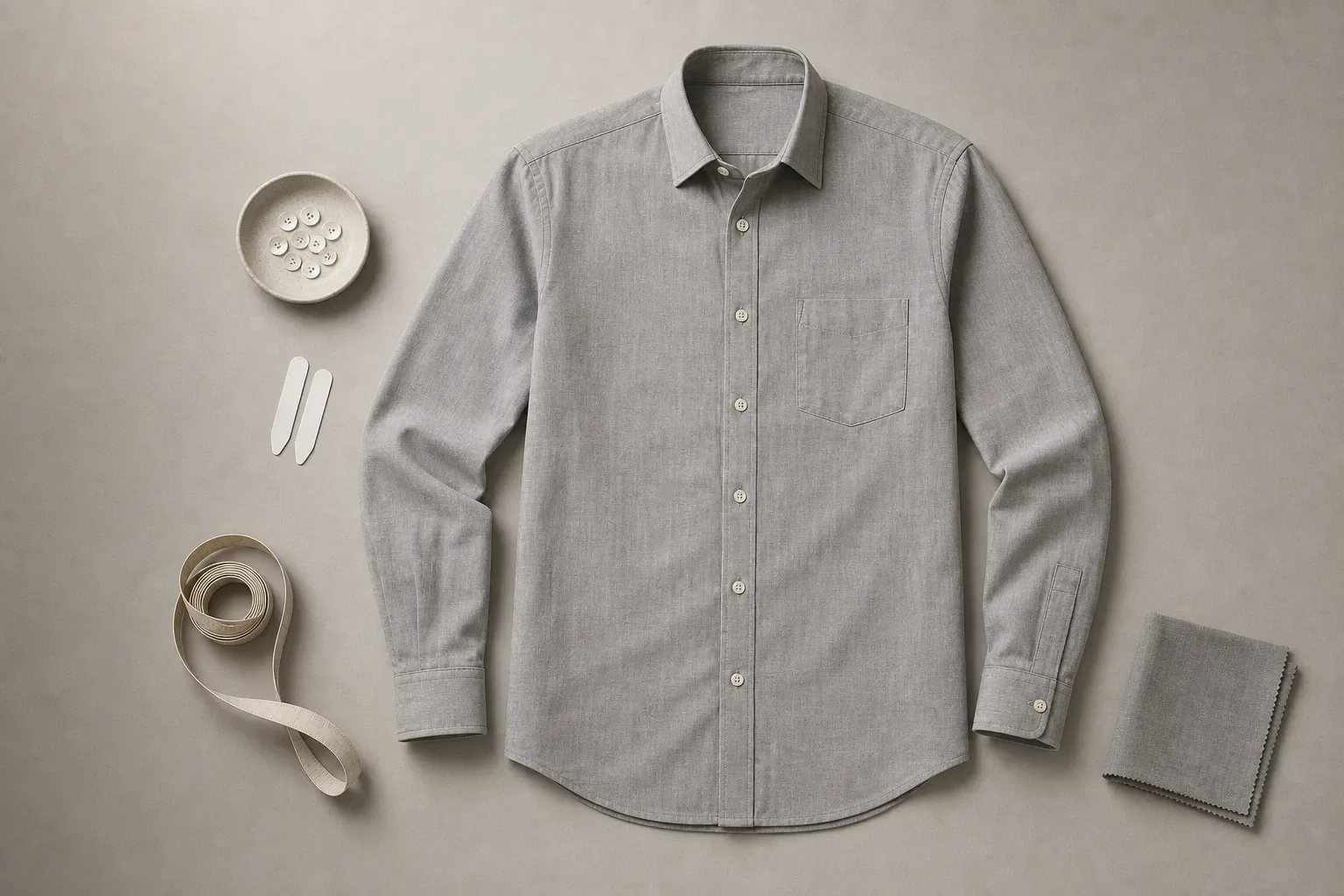
Start with what the supported zone must do. A front opening may need clean edge stability; a waistband may need shape without an uncomfortable board-like hand; a pocket opening may need local support; and a collar may need a particular roll rather than maximum stiffness. The product specification should name the result in observable terms.
Then compare the candidate with the shell as a system:
| Input to review | Questions for the sample | Evidence to retain |
|---|---|---|
| Shell identity and state | Is the production-intent fabric, color, finish, coating, nap, stretch direction and care route represented? | Supplier/article references, face and back, lot or swatch ID and applicable revision |
| Interfacing identity | Is the exact base, color, weight or thickness where specified, bonding status and supplier article controlled? | Label or technical reference, nominated zones, cut direction and approved substitute rules |
| Garment zone | Which pattern piece and area need support, and where must support start and stop? | Marked pattern or drawing, zone map and inside/outside sample views |
| Target hand and form | Should the area bend, roll, drape, recover, stay crisp or resist local stretching? | Physical comparator, approved sample comments and observable acceptance language |
| Process and care | What pressing, washing, garment finishing, drycleaning or other exposure belongs to this product? | Approved process reference, before/after views and measurements where relevant |
NMSU C-208 advises considering garment-fabric weight and care when selecting interfacing. That is a compatibility prompt, not a formula that makes every lighter article acceptable. A deliberately structured style may need a different relationship, while a sensitive, elastic or visibly textured shell may reject a candidate that looks suitable on paper. The production-intent trial decides.
Do Not Copy a Universal Fusing Setting
Temperature, pressure, dwell time and handling are not transferable editorial constants. The correct production window depends on the nominated interfacing and bonding system, shell construction and finish, layer stack, equipment, contact conditions and the outcome the supplier and garment developer have validated. Even two products both sold as “lightweight fusible” can require different instructions.
Vlieseline's official instructions for H 180 and H 609, for example, publish different processing routes for different articles and advise users to test suitability. Those product pages support article-specific trials; their settings are not a factory-wide recipe.
A useful technical record does not publish one recipe. It records the approved one for the exact combination:
- Shell and interfacing supplier/article identities and applicable lots.
- Garment zone, pattern revision, face/back orientation and cut direction.
- Supplier instruction or technical-reference version used for the trial.
- Equipment and actual controlled process record retained by production.
- Trial ID, operator or responsible owner, date and resulting sample state.
- Face appearance, hand, shape, bond evidence and care or finishing result.
- Authorized sizes, colorways and substitutions, plus the trigger for reopening approval.
For sew-in construction, replace the fusing instruction with the approved cut, attachment and layer-control details. Do not describe “floating canvas” or another tailoring route as automatically superior; it is a different system with a different development and workmanship burden.
Build a Sample Gate Before Bulk
The strongest decision trail moves from material identity to the finished garment instead of approving a loose square and assuming the assembly will behave the same.
- Confirm both materials. Identify the production-intent shell and interfacing, their faces, directions, color, finish and nominated garment zone.
- Run a compatibility trial. For fusible, use the candidate supplier route and inspect both faces plus the combined hand. For sew-in, prepare the nominated attachment and look for shifting, bulk, ridging or restriction.
- Build the actual zone. A flat coupon cannot prove collar roll, placket hang, pocket-opening behavior, waistband comfort or jacket-front drape. Use the current pattern and adjacent layers.
- Expose the sample to the agreed process. Apply the relevant garment finish and intended care route where they belong to the product. Compare the same marked zones before and after.
- Record disposition. Approve, reject or revise with the exact article, pattern, process state, size and colorway scope. “Interfacing approved” is too broad.
- Recheck first output and bulk identity. Confirm component labels and authorized lots, then compare face, hand, supported shape, attachment and applicable care evidence with the approved reference.
The fabric swatch approval guide keeps initial material identity traceable, while the sample approval checklist keeps the finished-garment decision and revision trail separate. Neither approval should silently cover a later material or process change.
Where ASTM D2724 Fits—and Where It Does Not
The current public page for ASTM D2724-19(2025)e1 describes a test method for characterizing the bond strength of bonded, fused and laminated apparel fabrics before or after drycleaning and laundering. ASTM also positions the method for acceptance testing of commercial shipments of bonded and laminated apparel fabrics.
That scope can support a project that requires comparable bond-strength evidence. It does not provide a universal garment pass value, choose the interfacing, prescribe a factory's fusing settings, approve surface appearance or evaluate a sew-in attachment. If a project invokes D2724, the parties and laboratory still need the exact standard version, specimen and exposure details, reporting requirements and project acceptance criteria.
Visible bubbling or delamination should not be converted automatically into a bond-strength number. First preserve the symptom and compare material identity, process record, garment zone and care state. A laboratory method and a visual sample decision can answer different questions.
Diagnose the Failed State Before Changing the Route
| Observed symptom | Evidence to compare | Decision boundary |
|---|---|---|
| Bubbles or localized blisters | Face/back images, location pattern, shell and interfacing identity, process record and before/after care state | Determine whether bond distribution, differential change, surface geometry or another input changed before replacing the whole route |
| Edge lift or layer separation | Separation location, cut edge, bonding record, care exposure and lot identity | Confirm whether the bond failed and whether evidence is local or systematic; do not infer a universal cause from one photograph |
| Shine, strike-through or press impression | Unprocessed control, face texture, color, layer stack and processed trial | Treat surface appearance as its own approval criterion rather than assuming adequate bond strength makes it acceptable |
| Zone feels too stiff or dead | Approved hand reference, bend or roll behavior, coverage area and adjacent unsupported shell | Recheck article, coverage and design intent; more bond is not automatically the answer |
| Sew-in support shifts, rolls or shows | Pattern shape, grain or stretch direction, attachment points, seam capture and movement | Correct the sewn system before concluding that fusible is required |
| Shape changes after care | Marked measurements, shell/interfacing response, attachment or bond condition and care record | Separate dimensional change from bond loss, pattern error and assembly distortion |
Keep the description neutral: location, direction, extent, process state and affected layers. “Bad interfacing” erases the evidence needed to reproduce a correction.
Put the Decision Into the Existing Control Documents
The interfacing page does not replace the BOM or tech pack. Use the apparel BOM owner for component identity, applicability, revision and approval status. Use the technical package to show the pattern zone, attachment route and current construction reference.
At minimum, make the handoff reconcile the component name, supplier article, base and bonding status, color, physical specification used by the project, pattern piece and zone, direction, fusible-process or sew-in-attachment reference, intended finish and care route, approved trial/sample ID, status and approver. If one field changes, identify which evidence must be repeated.
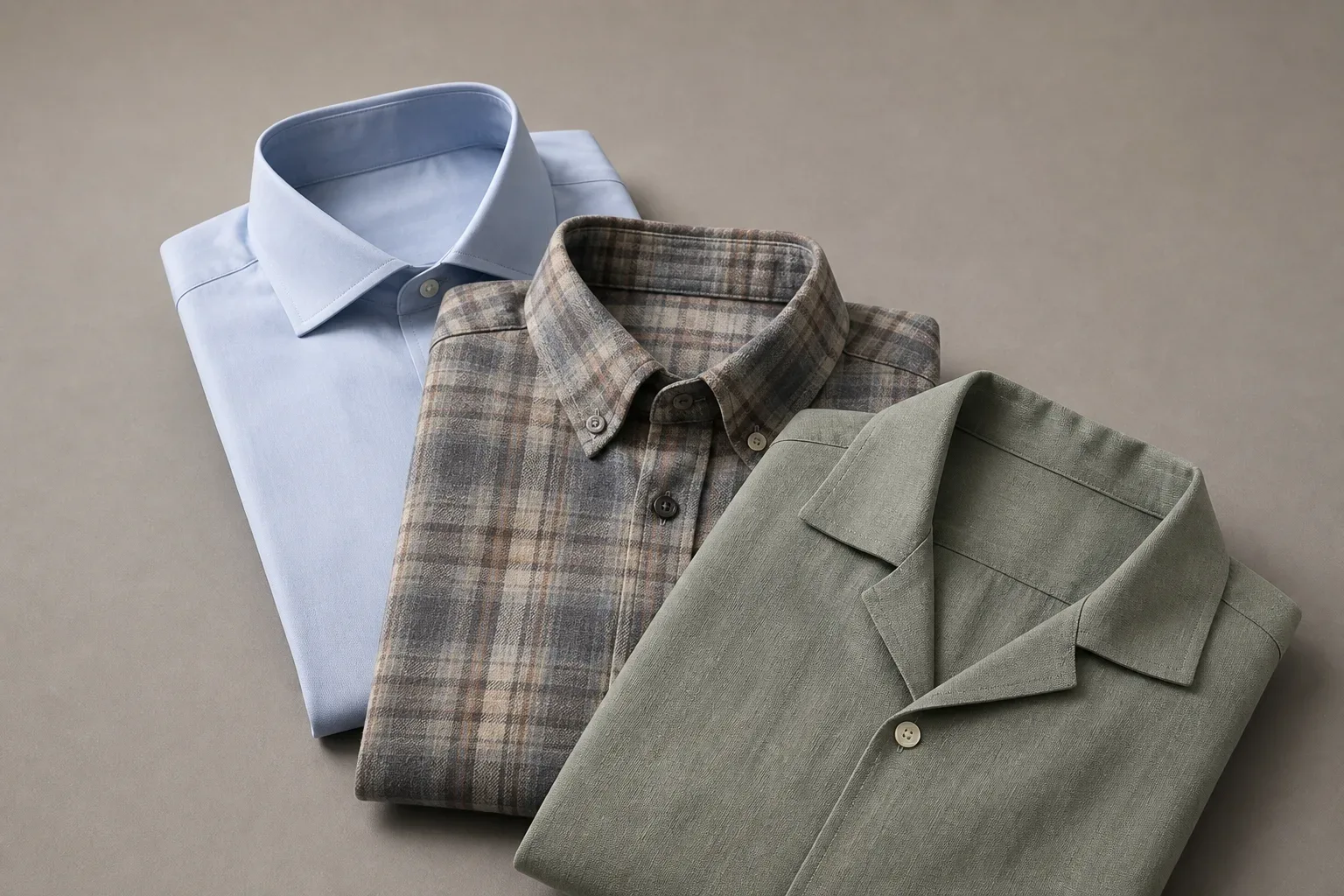
Live catalogue styles help a brand locate the questions without revealing their hidden internal construction. On a heavyweight plaid button-up, review the collar, cuffs and placket as separate zones. On a canvas work jacket with a corduroy collar, compare support across dissimilar surfaces and openings. On a quilted stand-collar jacket, account for the complete layer stack. A product photograph does not prove whether any of those zones are fused or sewn in.
Jiashun can review sourced interfacing candidates inside a custom garment sample and return the selected component, zone and approval evidence to the production package. This does not claim that Jiashun manufactures the interfacing or adhesive in-house, and it does not make laboratory testing a default service. Any special method, report and acceptance criterion must be agreed for the project.
References
- New Mexico State University, Guide C-208, Selecting Interfacings, Underlinings, and Linings, retrieved 2026-08-07.
- New Mexico State University, Guide C-233, Facings Made Easy, retrieved 2026-08-07.
- ASTM International, D2724-19(2025)e1, Standard Test Method for Bond Strength of Bonded, Fused, and Laminated Apparel Fabrics, retrieved 2026-08-07.
- Vlieseline by Freudenberg, official product instructions for H 180 and H 609, retrieved 2026-08-07.
FAQ
Is fusible interfacing better than sew-in interfacing?
No. Fusible and sew-in describe different attachment systems. Choose from the shell, garment zone, intended hand and support, production route, care exposure and evidence from the real sample. Either route can fail when the material, pattern, process or approval scope is wrong.
Can fusible interfacing be used on stretch, coated or visibly textured fabric?
The category name cannot answer that. Confirm the exact shell and interfacing with their suppliers, then run a production-intent compatibility trial and inspect face appearance, hand, stretch or movement where relevant, supported shape and care response. Do not transfer a setting or result from another fabric.
Why does fusible interfacing bubble or delaminate after care?
Possible contributors include changed material identity, incomplete or uneven bonding, incompatible shell and interfacing response, surface geometry, an unapproved process change or the care exposure itself. Preserve before-and-after evidence and the process record before assigning one cause.
Does ASTM D2724 provide a universal bond-strength pass value?
No. Its public scope covers characterization of bond strength before or after drycleaning and laundering. The project still needs an applicable method version, specimen and exposure details, reporting requirements and acceptance criteria. It does not evaluate a sew-in attachment or approve the garment's appearance.
What should be approved before interfaced garments enter bulk production?
Approve the exact shell and interfacing articles, garment zones, pattern and construction revision, fusible-process or sew-in-attachment record, production-intent sample, applicable finishing or care result, and authorized size/color/lot scope. Bulk identity and first output should match that controlled package.