Parts of a Dress Shirt — the Vocabulary a Factory Sews From
Yoke, placket, gauntlet, band, leaf, gusset: a woven shirt is about twenty named pieces, and every one is a decision. This guide names them the way a cutting room does — for dress shirts and the casual shirts built on the same anatomy.
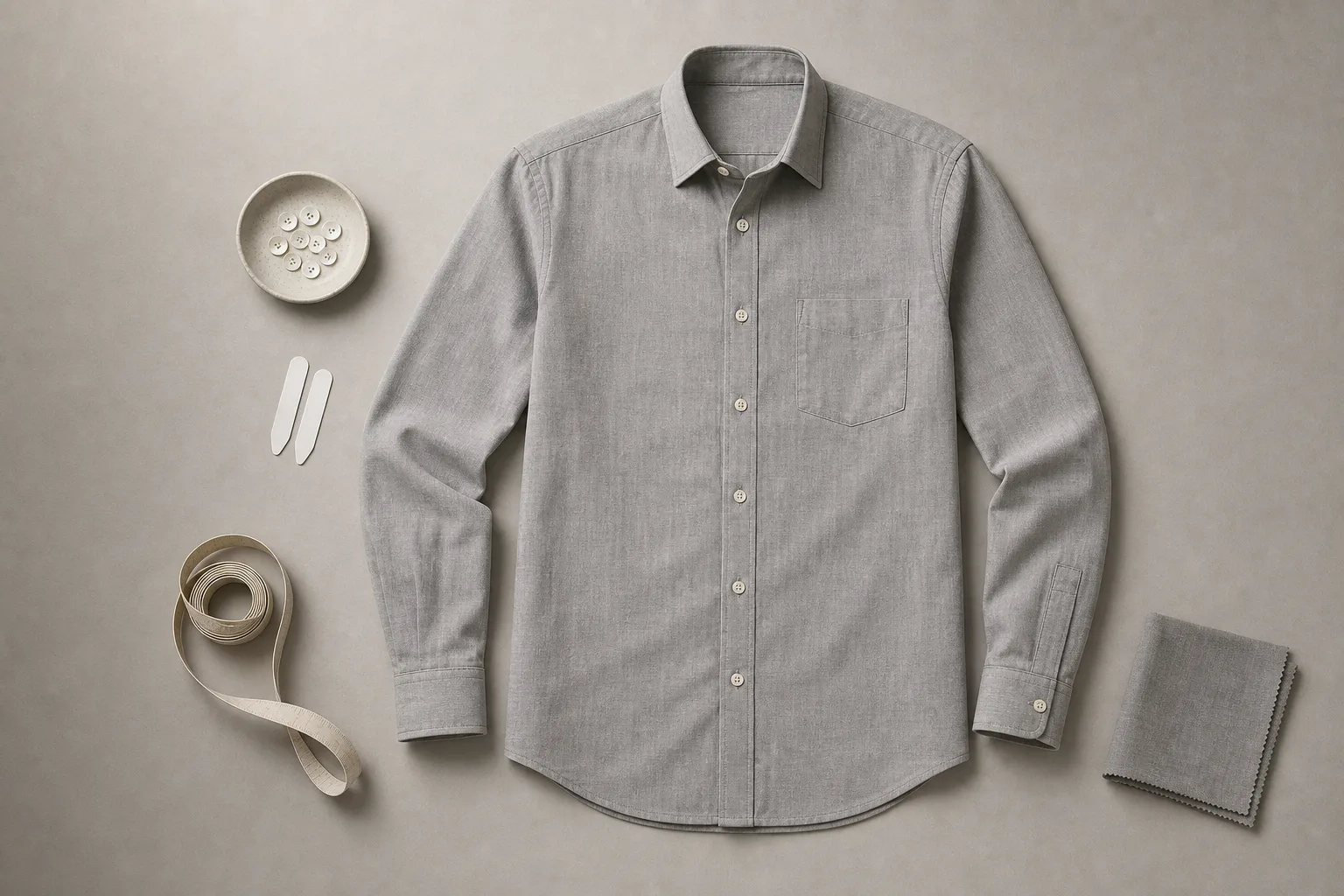
A dress shirt looks like one piece of tailoring and cuts like about twenty: two fronts and a back, a yoke (often split in two), a collar band and leaf, two sleeves, two sleeve plackets, two cuffs, a chest pocket if the style takes one, and a trim list of interfacings, buttons and stays. This is the third garment in our anatomy series — after the tee and the hoodie — and it follows the same rule: shared names make specifying, quoting and inspecting a garment less ambiguous. The vocabulary below is dress-shirt vocabulary, but dress shirt anatomy carries over piece for piece to the flannels, waffles and washed camp shirts we actually cut every week.
Dress shirt anatomy: the technical flat
A working tech pack adds a back view, measurements and construction notes; the front view above carries the vocabulary. Top down:
Collar: a band, a leaf, and three numbers
The dress shirt collar is a two-piece assembly — a band (stand) circling the neck and a leaf (fall) folded over it — controlled by point length, spread and band height, stiffened by fused or floating interfacing, and optionally disciplined by collar stays. It's the single most specified component on the garment, which is why it has its own collar types field guide; here it's enough to say that the collar is built complete before it ever meets the shirt, and that its quality shows in the points.
Yoke: the shoulder engine
Bridging the shoulders between the back and the collar, the yoke is the piece that makes a woven shirt hang from the shoulders instead of the neck. A one-piece yoke is standard production. A split yoke — two pieces seamed at the center back — is the premium version, and not only for the label: cutting each half separately lets the maker angle the fabric grain to each shoulder and true up pattern matching on stripes and plaids across the seam. The test takes two seconds on a check. It's one of the first places a trained eye looks — which is exactly why we pattern-match the yoke on a boxy heavyweight plaid button-up at the marker stage, not at final inspection.
Under the yoke, the back body manages ease: a center box pleat, twin side pleats, back darts for a trimmer line, or a plain back on boxy cuts where the oversized pattern carries the room on its own.
Plackets: two of them, and they aren't the same
The front placket is where the shirt closes. Three constructions cover the market: the standard placket (a stitched, visibly doubled strip — the default), the French front (no separate strip, a clean fold, dressier and quieter), and the covered (fly) placket that hides the buttons entirely. Buttonholes run vertical down the placket but horizontal at the collar and cuffs — the horizontal holes take directional strain where the garment actually pulls.
The sleeve placket (gauntlet) is the tapered opening above the cuff that lets a hand pass through. A proper one is a small tailoring exercise — a shaped binding with a neat point, often with a tiny gauntlet button halfway up to keep the forearm closed. Skipping the gauntlet button is a legitimate cost decision on casual shirts; sewing the placket badly isn't, because it's at eye level every time a wearer rolls a sleeve.
Cuffs: barrel, French, convertible
Production shirts overwhelmingly wear barrel cuffs — a rectangle (or angled/rounded variant) closing with one or two buttons; two buttons side by side make it adjustable. French (double) cuffs fold back and close with links, live almost exclusively on formalwear, and roughly double the cuff's fabric and pressing work. A convertible cuff buttons normally but also accepts links. Like the collar, cuffs are interfaced — fused for crisp, floating for soft — and on washed programs the cuff corners are where careless fusing shows first.
| Cuff | Closure | Where it lives | Cost note |
|---|---|---|---|
| Barrel, 1-2 button | sewn buttons | the production default | baseline |
| Adjustable barrel | two buttons side by side | ready-to-wear staple | negligible over baseline |
| French (double) | cufflinks | formalwear | ~2x cuff fabric and pressing |
| Convertible | buttons or links | crossover styles | small premium |
On heavier casual builds the cuff conversation changes fabric mid-sentence: a waffle-knit double-sleeve shirt treats the cuff as a knit trim, closer to a hoodie rib than a dress cuff — same anatomy slot, different machine.
Body, pocket, hem: where the quality markers hide
Two front panels and a back panel make up the body, and its seams are the quiet quality signal: better woven shirts run flat-felled side seams sewn with a single needle — ISO 4915 class 301 lockstitch, the same class doing the collar topstitching — where budget shirts overlock and topstitch. Stitch density is the other tell. Quality woven-shirt seaming runs noticeably denser than knitwear; coarse, long stitches on a placket edge are a shortcut you can read from arm's length (stitch classes and what they look like from inside are in the stitch and seam field guide).
The chest pocket is optional and, on patterned fabric, expensive to do right — a matched pocket disappears into the plaid, an unmatched one advertises the cutting room's hurry. The hem finishes either straight or with the classic curved tail, and where the curve climbs the side seam, better shirts add a side gusset — a small triangle reinforcing one of the garment's highest-stress points. On washed styles like a vintage-wash long-sleeve shirt, the gusset also keeps the softened side-seam bottom from opening after repeated wear.
The trim list rounds out the anatomy: buttons (plastic as standard; mother-of-pearl, corozo or horn as upgrades — each with its own tolerance for industrial washing), interfacings in collar, cuffs and plackets, collar stays, and the labels. None of that is optional paperwork — buttons, tapes and interfacings each arrive from their own supplier on their own schedule, so even a deliberately minimal shirt ends up owning a trim sheet.
From vocabulary to a sewable brief
Written in component language, a shirt brief stops being a mood board: split yoke, pattern-matched; standard placket, vertical holes; two-button adjustable barrel cuff, fused; box pleat; curved hem with gussets; band collar — six phrases, each mapping to a pattern piece or an operation a factory can price and repeat. Turning those phrases into measurements and operations is exactly what a tech pack exists to do. Whether the fabric under it is a crisp poplin or a brushed flannel changes the machine settings, not the map (the fabric decision is its own guide). Production starts at 50 pieces per style; the final minimum for a specific shirt depends on its fabric, colors and decoration, and a project-specific quote follows once the complete details are reviewed — the full program lives on our custom shirt manufacturer page.
FAQ
What are the parts of a dress shirt called? Collar band and leaf, yoke (one-piece or split), front placket, chest pocket, front and back body panels, back pleats or darts, sleeves, sleeve plackets with gauntlet buttons, cuffs, curved hem with optional side gussets — plus trims: buttons, interfacing, collar stays and labels. Around twenty cut pieces in total.
What is the yoke on a shirt? The yoke is the shoulder panel between the back body and the collar; it carries the shirt's weight across the shoulders. A split yoke — seamed at center back — lets each half be cut on its own grain angle, which improves drape over sloped shoulders and enables pattern matching on stripes and checks.
What is the difference between a placket and a gauntlet? The front placket is the strip where the shirt buttons closed down the chest. The gauntlet — sleeve placket — is the tapered opening above the cuff that lets the hand through, usually with a small gauntlet button halfway up. Same word family, different pieces, sewn in different operations.
What makes a dress shirt high quality? Look past the fabric: single-needle flat-felled side seams, dense even stitching, pattern matching at the yoke and pocket, cleanly turned collar points, a shaped sleeve placket, side gussets at the hem, and buttons better than standard plastic. Each is a visible construction choice, not a marketing line.
Do casual shirts use the same parts as dress shirts? Yes — flannels, waffles and camp shirts are cut from the same anatomy; they just choose differently. A camp shirt deletes the collar band, a boxy flannel may drop the pleats and pocket matching moves to the plaid, and knit-trim styles swap the cuff for rib. The vocabulary transfers one to one.
References
- Glock & Kunz, Apparel Manufacturing: Sewn Product Analysis (4th ed., Pearson) — shirt components, seam constructions and operation breakdowns
- Lee & Steen, Technical Sourcebook for Apparel Designers — technical flats, plackets, cuffs and trim conventions
- ISO 4915 stitch classification and American & Efird, ISO Stitch Terminology matrix — lockstitch, felled-seam and overedge constructions
Related guides
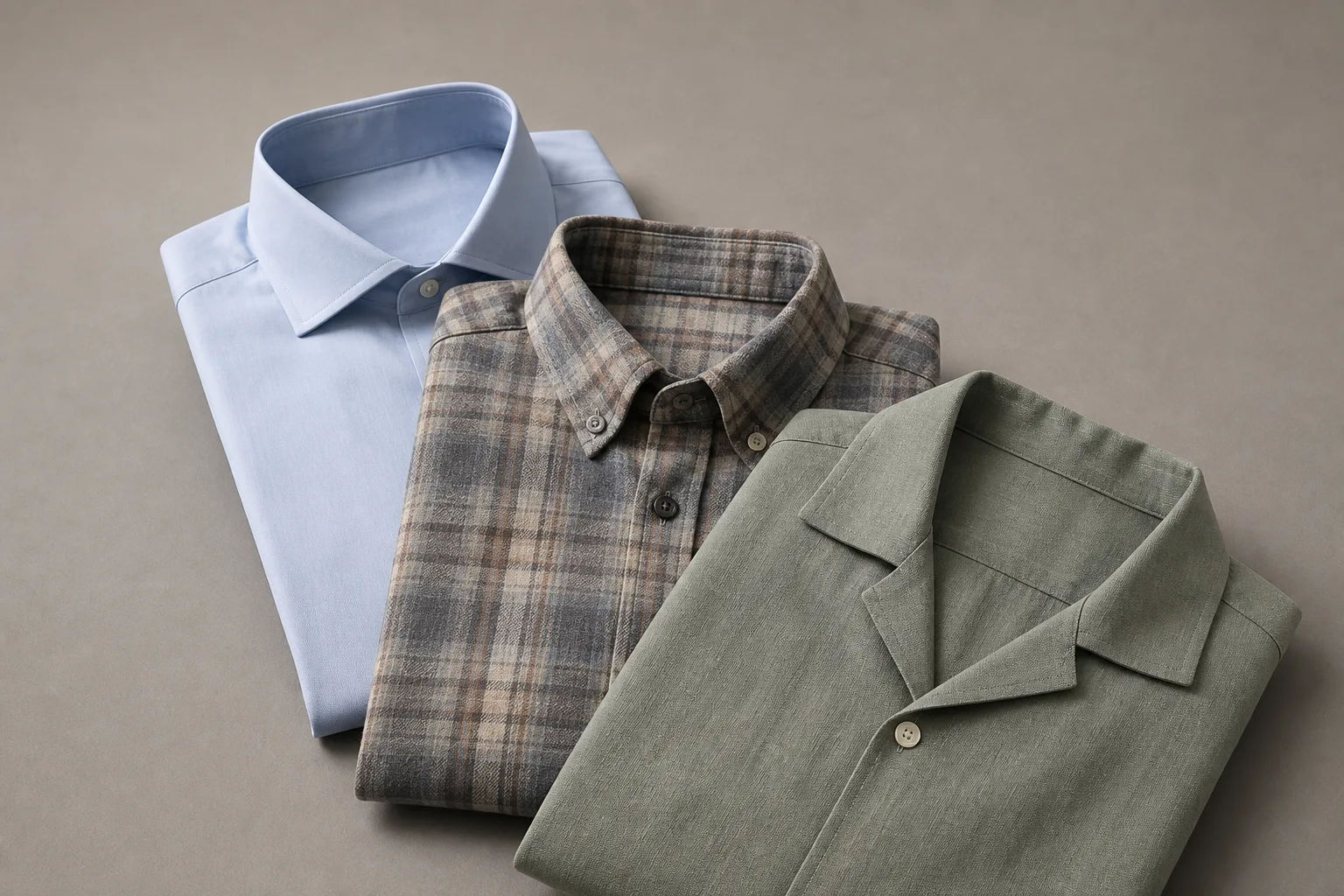 Shirt Collar Types: A Factory Field Guide from Band to Camp
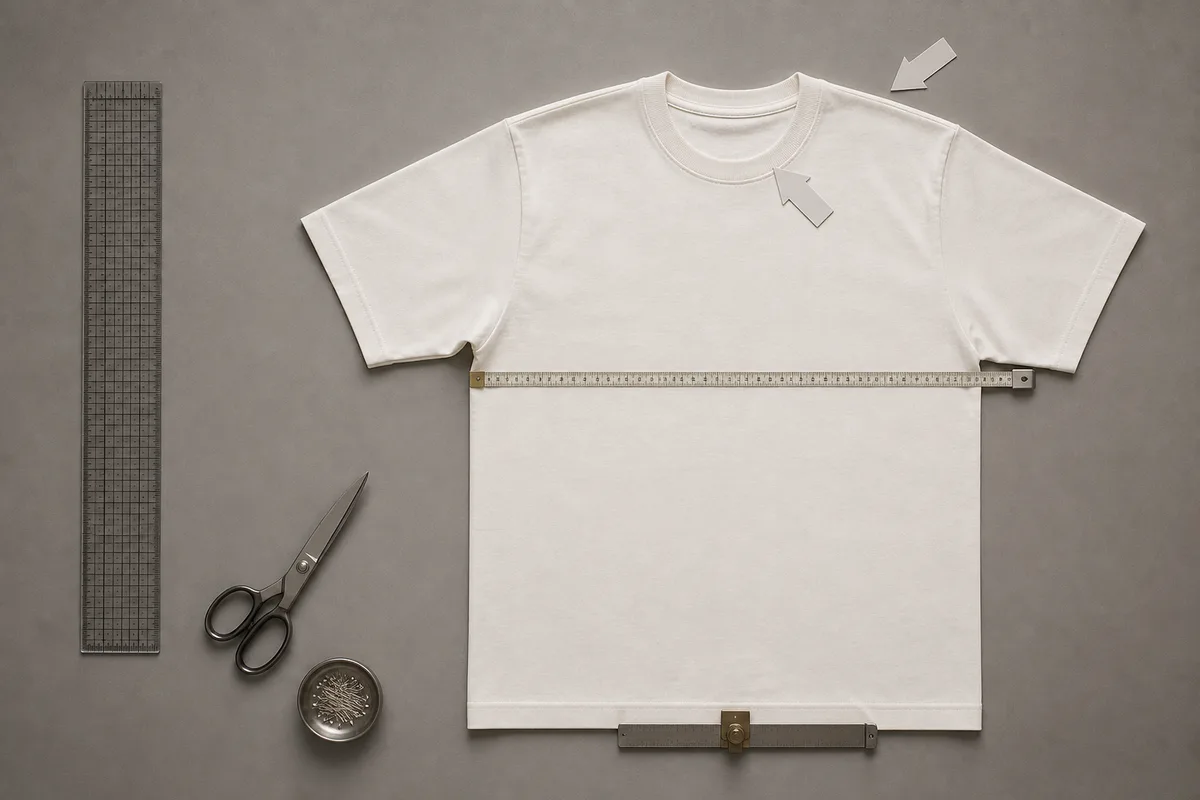 The Anatomy of a T-Shirt — as a Factory Actually Reads It
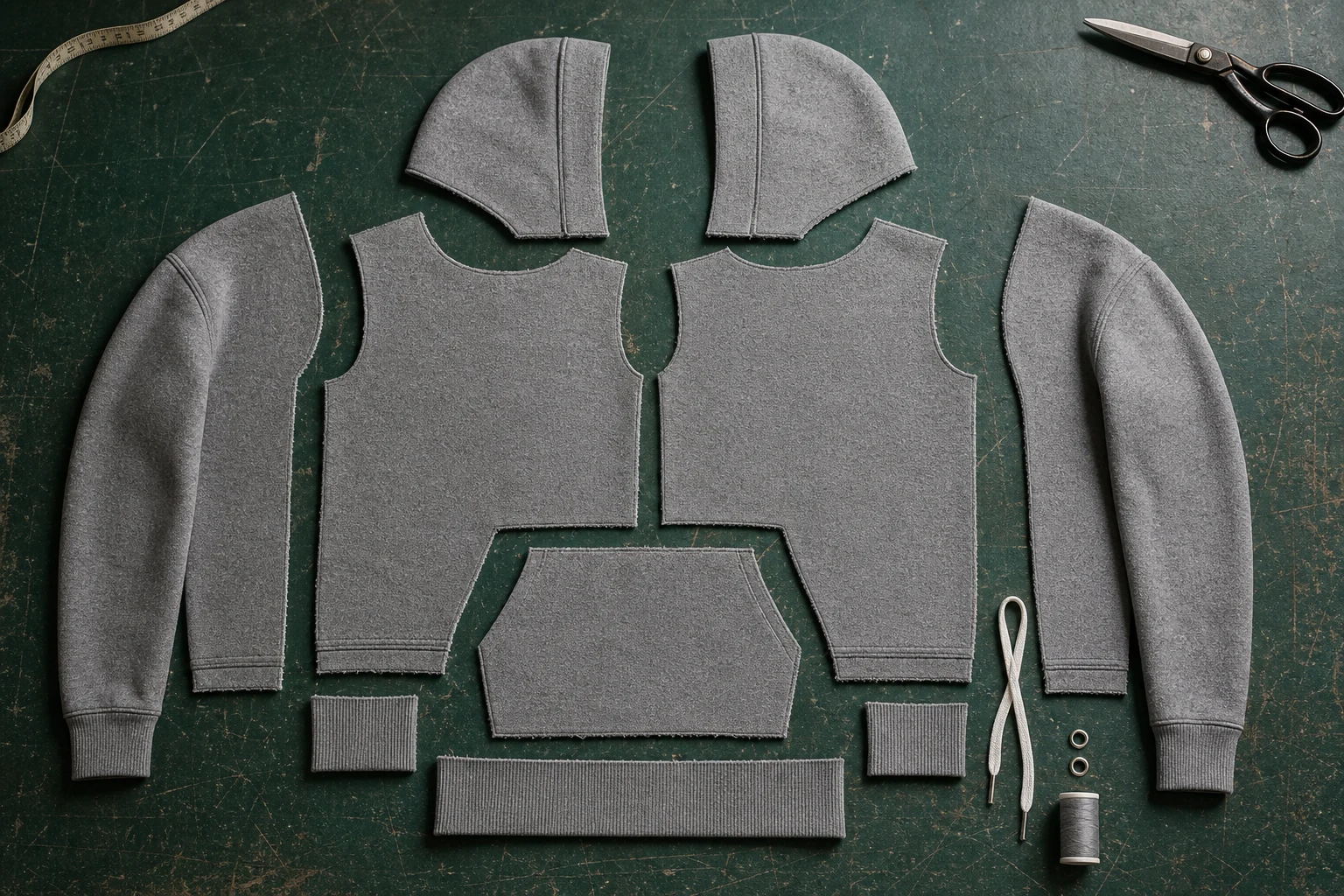 Parts of a Hoodie — and How a Factory Sews Them Together
 Oxford vs Poplin Shirt Fabric: How Buyers Compare Specs
 Custom Flannel and Plaid Shirt Manufacturing: Weights, Washes, Pattern Matching
 Stitch Types and Seam Quality: A Garment Approval Guide