How Much Do Jeans Cost to Manufacture? A Denim Cost Anatomy
A pair of custom jeans is five stacked costs — denim, sewing, wash, hardware and decoration. Here is where each dollar goes, anchored by our published tier pricing.
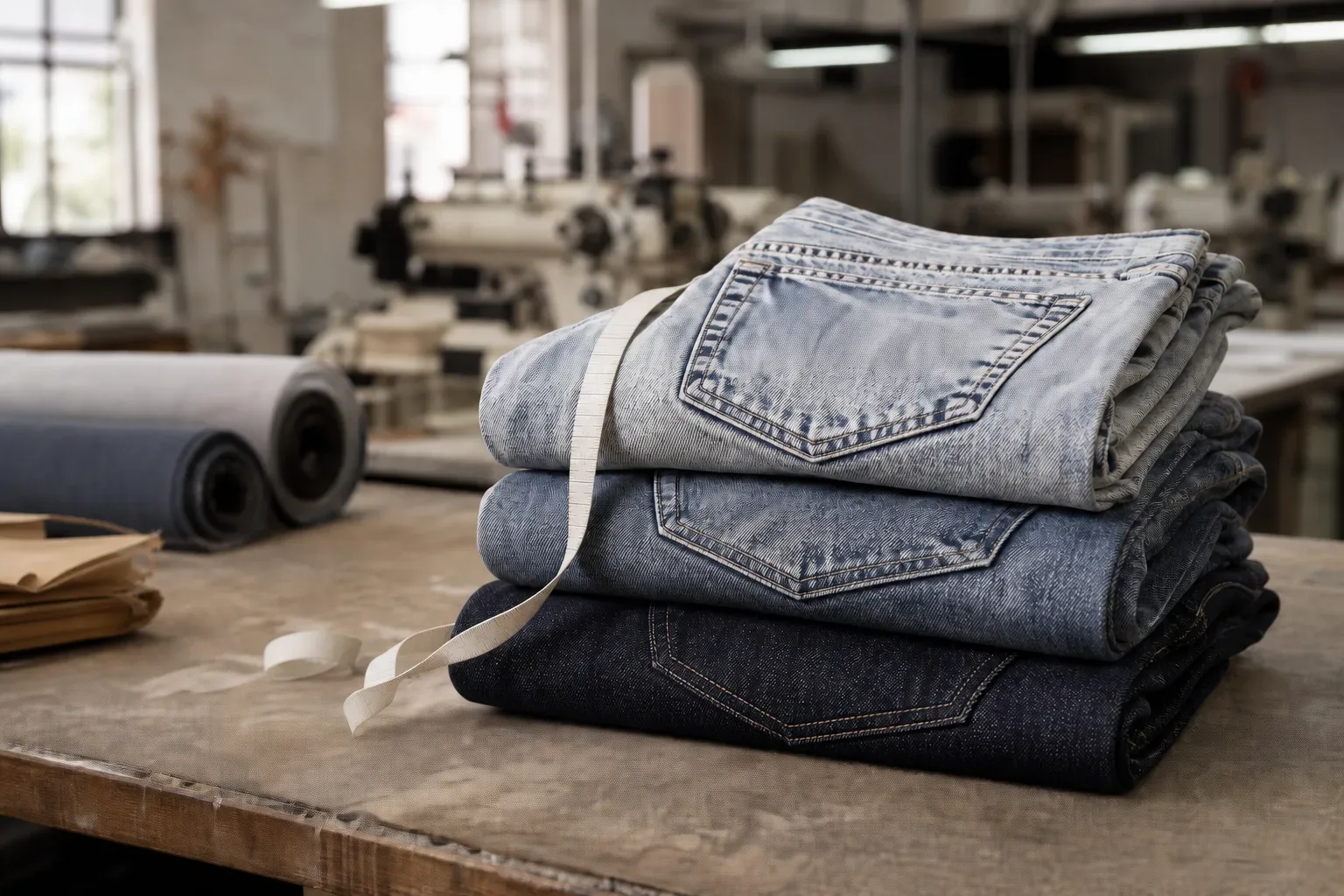
Real numbers first: our published tier pricing for an acid wash baggy wide-leg jean with embroidery runs USD 26.80-30.90 per piece depending on quantity, and a heavily worked distressed, frayed, vintage-washed style runs USD 34.90-38.90. Across our denim catalog, published tiers span roughly USD 18-41 per piece at made-to-order quantities.
That spread is not noise. It is the cost anatomy of a jean showing through: five stacked layers, and your design decisions choose how tall each one gets. Compare the anchors above with a heavyweight boxy tee at USD 13.60-17.60 and you can already see what denim adds: more fabric, more sewing operations, a mandatory wash stage, and metal.
Layer 1: denim — a yard and a half of woven fabric
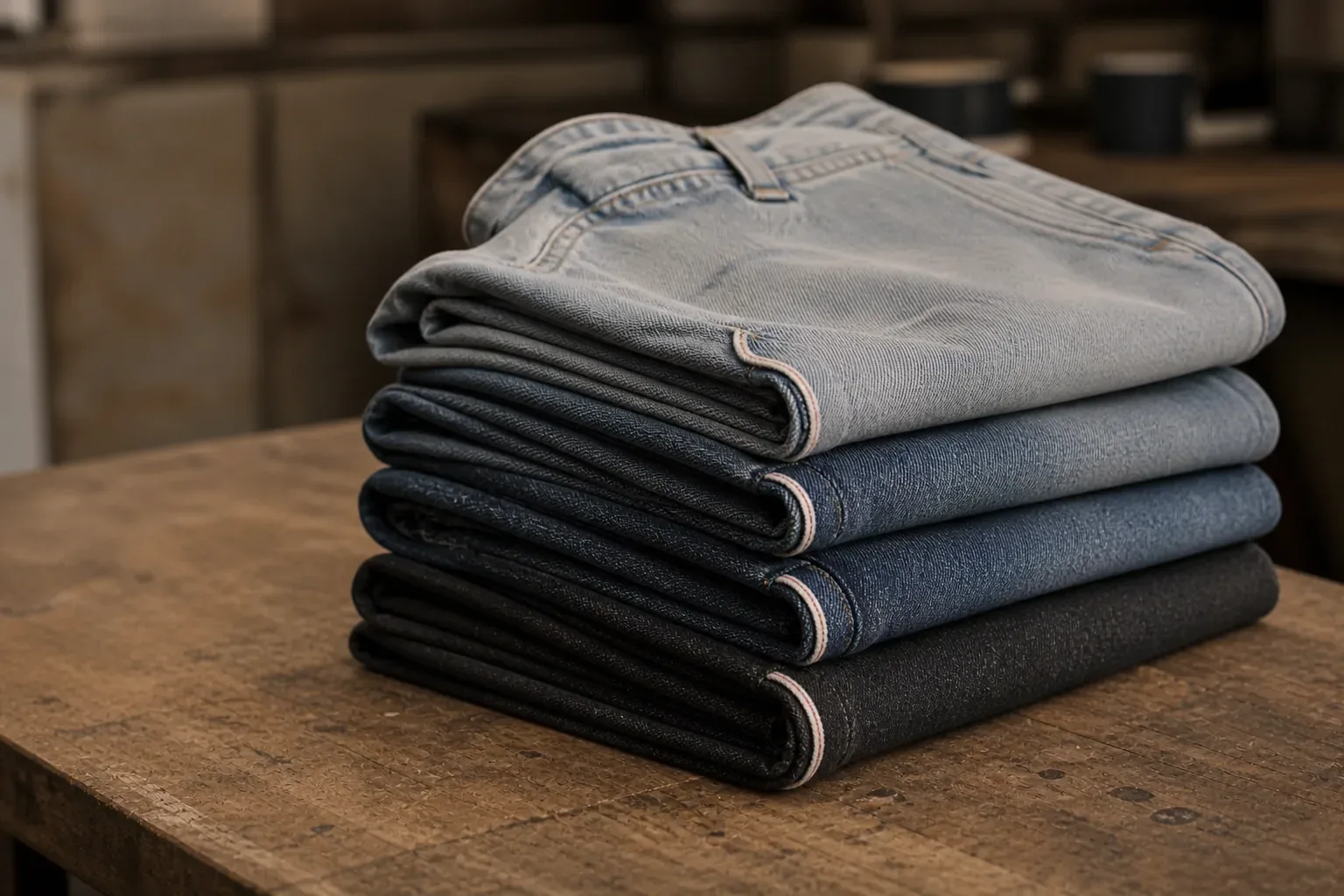
A pair of jeans consumes roughly a yard and a half of denim, and denim is priced by weight and construction. Most streetwear jeans sit in the 11-14 oz per square yard range — heavy enough to hold a silhouette and take distressing, light enough to wear year-round. Push into heavier rigid denim and the per-yard price climbs with it; add elastane for stretch and you pay for the yarn technology instead.
We buy denim against your confirmed direction — weight, stretch content, base shade — rather than off a fixed house menu, so the fabric line in your quote tracks what you specify. Wide-leg and baggy cuts deserve one honest note: a bigger pattern consumes more yardage than a slim one, and at these fabric weights the difference is visible in the quote.
Layer 2: cut and sew — the most operations of any basic garment
A five-pocket jean out-sews almost everything else at the same price point. Felled or safety-stitched seams, a set-on waistband, belt loops, pocket bags in a separate lining fabric, a fly assembly, and bar tacks at every stress point — each is its own operation at its own machine. That is why a jean can never quote like a sweatpant: the construction differences between fits change the pattern, but the operation count stays high in all of them.
Details multiply operations. A double waistband, splice panels, carpenter loops or stacked hems each add sewing minutes, and sewing minutes are a line item. Keep the details that define the design; question the ones that don't.
Layer 3: wash — denim's mandatory stage, and its biggest wildcard
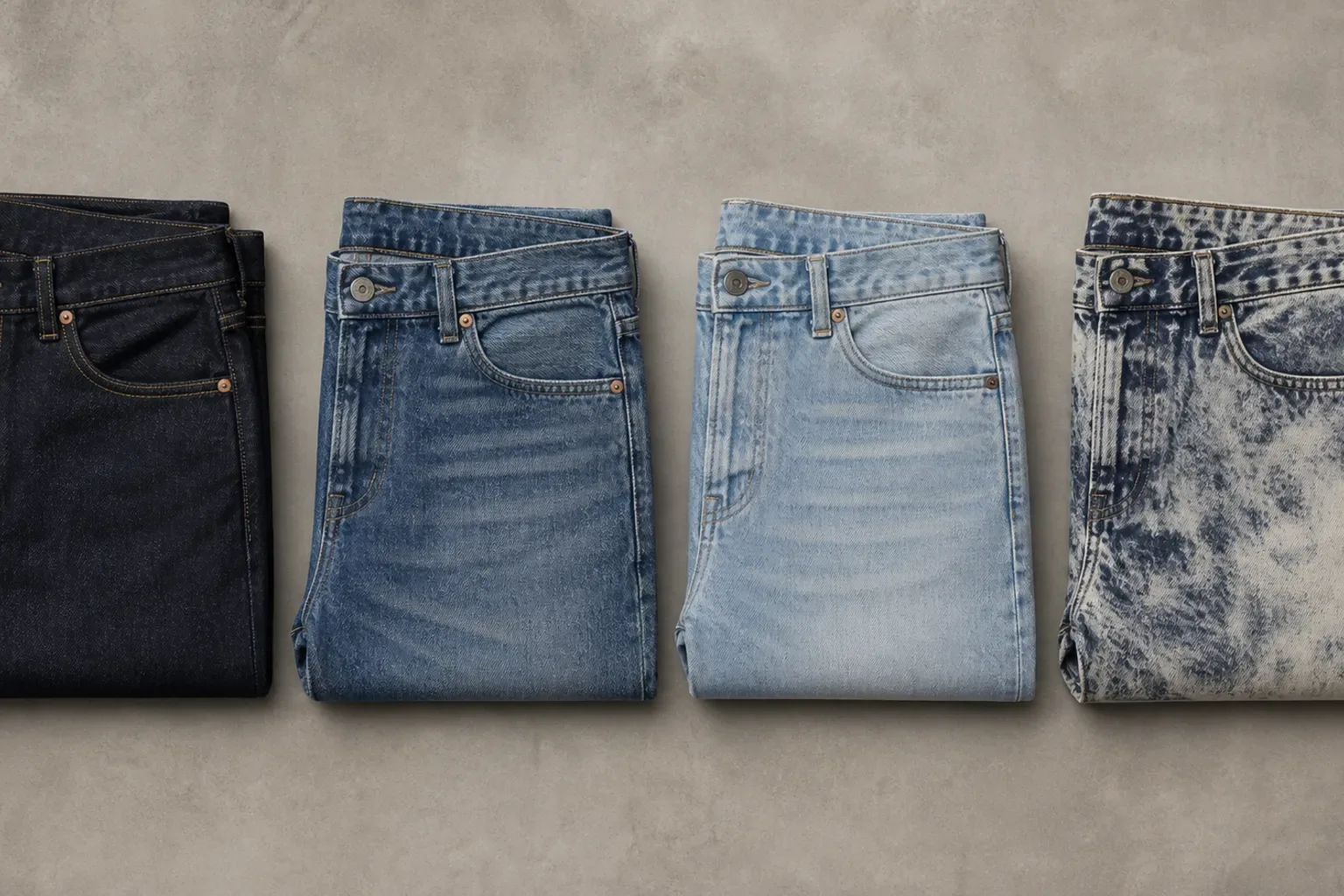
Knits can ship raw. Jeans essentially can't — nearly every pair you have ever bought went through a laundry, and that stage is where denim budgets swing hardest. A single stone or enzyme wash sets the base shade at a predictable cost. From there, every hand operation — whiskers, grinding, ripping, fraying, patch-backed repairs — is per-piece labor by a worker with a tool, and prices accordingly.
That is exactly the gap between our two anchor styles: the USD 26.80 baggy jean carries an acid wash and embroidery, while the USD 34.90 style adds distressed stitching, fraying and heavier hand work. The wash recipes themselves and the chemistry behind them are covered in their own guides; for costing purposes, the rule is simple — machine time is cheap per piece, hand time isn't.
Layer 4: hardware and trims — small parts, real money
Jeans are the most hardware-dense basic garment: a shank button (or a full button fly), rivets at the pocket corners, a zipper if the fly takes one, a back patch, woven labels and hang tags. Each part is inexpensive alone. Ten of them on every pair, at metal prices, is a visible line — and upgrading to custom-engraved shanks and rivets moves it again.
The pocket bag is the trim buyers forget: it is a second fabric, cut and sewn into every pair, and printing it with your logo turns a hidden component into a brand moment for a modest add.
Layer 5: decoration — embroidery, patches and prints on denim
Decoration on denim behaves like decoration anywhere: you pay per location, per technique. Embroidery and patches need build-specific evidence after the actual wash route; screen prints on denim read boldest when placed after wash. One planning note that saves money: decoration and wash interact, so the sequence is engineered per design — booking both with the same factory avoids the coordination tax of splitting them.
The quantity multiplier
Published tiers show the honest curve: stepping from the minimum tier toward a few hundred pieces typically moves the unit price by a few dollars as fabric buying and setups amortize. The curve flattens quickly after that — the meaningful saving is getting off the first tier, not chasing thousands. Simple washed samples typically take 10-18 working days after project details are confirmed; complex washes, styles or processes take longer. Pricing is confirmed after project review because a sample carries every setup with none of the amortization. Production starts at 50 pieces, while the final minimum depends on the product, fabric, wash and customization; bulk typically takes 20-30 working days after sample approval.
How to read — and compress — a jeans quote
When a jeans quote lands above budget, the compression levers are ranked, because the same five layers explain most quote differences:
| Lever | What it saves | What it costs you |
|---|---|---|
| Reduce hand-distress operations | The largest per-piece labor block | Less worn-in character |
| Consolidate to one base wash across colourways | Wash setups | Shade variety |
| Simplify hardware (zip fly, standard shanks) | Metal and operations | Hardware as a design feature |
| Drop to a mid-weight denim | Per-yard fabric cost | Heft and drape |
| Move decoration to fewer locations | Per-location charges | Coverage |
What we don't recommend cutting: the wash stage itself. An unwashed jean at this end of the market reads unfinished, and re-adding a wash later costs more than specifying it right the first time. If you're weighing a denim program, send us the reference — with a complete spec, quotes follow once sufficient project details are reviewed.
FAQ
How much does it cost to manufacture a pair of jeans? At made-to-order quantities, our published denim tiers run roughly USD 18-41 per piece, with most washed styles quoting in the mid-USD 20s to high 30s. Where a design lands depends mainly on wash and hand-distress work, then fabric weight, hardware and decoration.
Why do jeans cost more than sweatpants to produce? Three structural reasons: woven denim requires more sewing operations than knit fabric, every pair passes through a wash stage that knits can skip, and jeans carry metal hardware — rivets, shanks, zippers — that sweatpants don't. Each is a real line item, not a markup.
Does distressing really change the price that much? Yes, because distressing is hand labor: whiskers, grinding, rips and fraying are applied piece by piece. A machine wash prices flat across the run; hand operations scale with every unit. Our two anchor styles differ by about USD 8 per piece largely on this layer.
Is a button fly more expensive than a zip fly? Modestly — a button fly replaces one zipper with four or five shank buttons and their setting operations, which usually prices slightly above a standard zip. Choose it as a design decision; at these quantities the difference won't decide your budget.
Will a fully custom design quote at these catalog prices? Catalog tiers are made-to-order prices for those exact reference styles, so they anchor the honest range. A fully custom jean — your pattern, your denim spec, your wash recipe — carries its own development and setup, and quotes above a comparable catalog reference until quantities amortize it.